
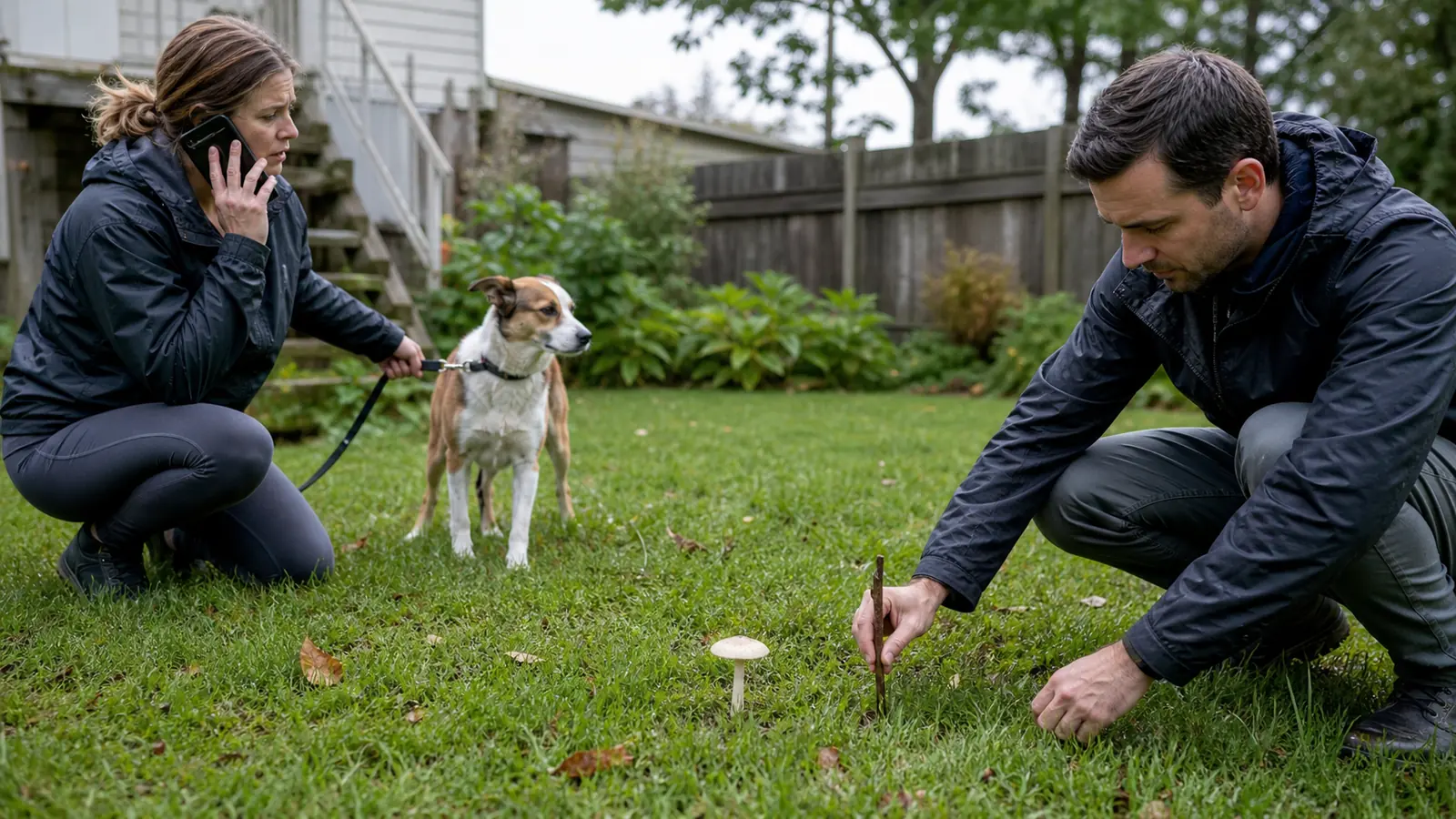
Move your dog away from the mushroom and call veterinary help now, even if the dog looks normal. Contact your veterinarian, the nearest emergency veterinary hospital, ASPCA Animal Poison Control at 888-426-4435, or Pet Poison Helpline at 855-764-7661, and go directly to emergency care for seizure, collapse, breathing trouble, unconsciousness, bleeding, or rapid decline.
Do not make the dog vomit or give peroxide, salt, charcoal, oil, milk, food, or medicine unless a veterinary professional directs that action for this dog and exposure. A normal first hour cannot clear a toxin that affects the liver or kidneys later.
Treat an unknown wild mushroom as a veterinary risk
The first goal is containment rather than identification. Leash or confine the dog in a clean area, keep other pets away, and stop anyone from handling or tasting the remaining mushrooms casually.
Look at the dog before looking at image matches.
Note whether the dog responds normally, walks steadily, breathes comfortably, swallows, drools, vomits, trembles, seems unusually restless or sleepy, and has normal gum color. A life-threatening change sends the dog to an emergency veterinary hospital without waiting for a species name.

An unknown dose adds to the uncertainty.
A dog may swallow a whole mushroom, tear off a cap, chew and spit pieces, lick a cooked dish, or eat vomit from another pet. Body weight changes the dose per kilogram, so a missing small mushroom can represent a different concern for a toy breed than for a large adult dog.
Each exposed dog or pet needs a separate dose and symptom record.
One pet may have reached the patch first or eaten a different product amount, and another may have underlying liver, kidney, heart, neurologic, or metabolic disease. Do not use one dog's normal behavior to clear the rest of the household.
Many wild mushrooms are not toxic, but visual screening by an untrained owner cannot reliably identify the dangerous minority. The veterinary service can decide how urgently expert identification is needed while the exposure details are still fresh.
A plain grocery-store mushroom creates a different starting history from an unknown lawn mushroom, but the dish around it can still matter.
Butter, rich sauce, onions, garlic, alcohol, chocolate, xylitol, cannabis, and discarded packaging can add digestive, toxic, or obstruction risks. Tell the veterinary service the full recipe and amount instead of ending the call after naming a cultivated mushroom.
SafetyAte a Poisonous Mushroom? Do These Things NowUse veterinary contacts, not the human pathway
Veterinary poison services assess animal patients using species, breed, age, weight, health, amount, product, time, and current signs. Human Poison Control does not manage the dog's case, so use a veterinarian, veterinary emergency hospital, or animal poison service.
| Dog's condition | First contact | What to do while connecting |
|---|---|---|
| Seizure, collapse, breathing trouble, unconsciousness, severe bleeding | Nearest emergency veterinary hospital | Leave now and have another person call ahead |
| New vomiting, tremor, unsteady gait, heavy drooling, unusual behavior | Veterinarian or emergency hospital | Prepare transport and follow the veterinary direction |
| No signs after a witnessed or possible unknown mushroom bite | Veterinarian or animal poison service | Call immediately and keep the dog away from more exposure |
| Mushroom-containing chocolate, gummy, powder, or edible | Veterinarian or animal poison service | Bring the package and report every ingredient and amount |
ASPCA Animal Poison Control is available at 888-426-4435, and Pet Poison Helpline is available at 855-764-7661. Consultation fees may apply, and both services can work with a local veterinarian when examination or treatment is needed.

Have the dog's facts ready without postponing the call.
Report breed, age, weight, health conditions, medicines, the earliest and latest possible access time, estimated amount, current signs, and whether vomiting has occurred. Tell the service whether this was a fresh lawn mushroom, dried mushroom, cooked food, supplement, gummy, chocolate, or another manufactured product.
The product form can change the emergency.
A chocolate bar can add theobromine, a sugar-free gummy can add xylitol, and a psychoactive product can contain cannabis or other undeclared substances. Save the entire package and do not assume the word mushroom identifies the only hazard.
Call the emergency hospital before arrival when another person can safely make that call. Staff can prepare for airway, seizure, circulation, or decontamination needs while the driver focuses on transporting the dog.
Which signs mean emergency transport now
Seizure, collapse, serious breathing difficulty, unconsciousness, inability to respond, severe bleeding, or rapid deterioration requires immediate veterinary care. These signs threaten the brain, airway, breathing, or circulation regardless of which mushroom was eaten.
Do not let a neurologically abnormal dog walk to the vehicle alone.
An unsteady, trembling, agitated, disoriented, weak, or profoundly sleepy dog can fall, bite unexpectedly, aspirate vomit, or wander into traffic. Use a leash, carrier, blanket, or assistance appropriate to the dog's size and condition without delaying departure or putting a person's hands near an unsafe mouth.
Repeated vomiting and diarrhea can become an emergency through dehydration and electrolyte loss. Small dogs, puppies, older dogs, and animals with heart, kidney, or liver disease may have less reserve when fluid losses accelerate.
Heavy drooling deserves a fuller description.
Some muscarinic mushroom exposures can cause drooling with tearing, vomiting, diarrhea, small pupils, a slow heart rate, weakness, or breathing secretions. Drool alone can also follow nausea, mouth irritation, dental pain, or another toxin, so the pattern and direction matter.
Delayed organ signs need urgent assessment even after a quiet period.
Loss of appetite, unusual tiredness, yellow eyes or gums, black or bloody stool, bruising, unusual bleeding, dark urine, increased thirst, increased urination, reduced urine, swelling, or recurrent vomiting can mark liver, kidney, or clotting injury. Report the earlier mushroom access even when it happened the previous day.
A change during transport should update the receiving clinic.
Have a passenger call if breathing, consciousness, seizures, bleeding, or vomiting worsens. Do not stop to collect better photos once emergency transport has started.
SafetyFirst Aid for Mushroom Poisoning Starts With One CallDo not trigger vomiting unless a veterinarian directs it
Making a dog vomit can sometimes be considered soon after selected ingestions, but the decision belongs to a veterinarian or veterinary poison specialist. The dog's alertness, swallowing, breathing, seizure risk, product, time, amount, and medical history can make emesis useful, ineffective, or dangerous.
Reduced consciousness creates an aspiration risk.
A sleepy, confused, trembling, seizing, weak, or poorly coordinated dog may inhale vomit into the lungs. A caustic, oily, sharp, or foaming product can also cause more injury on the way back up.
Warning
Do not give a home emetic or detox product without veterinary direction | Hydrogen peroxide can irritate the stomach and cause complications, while salt can produce dangerous sodium poisoning. Household charcoal, milk, oil, bread, food, and supplements do not replace a veterinary plan.
The swallowed product may contain several hazards.
Chocolate, xylitol, cannabis, caffeine, alcohol, raisins, macadamia nuts, medications, or unknown psychoactive ingredients can change whether vomiting is appropriate and which monitoring the dog needs. Report the label exactly rather than treating the product as a plain mushroom.
For a multi-hazard product, activated charcoal shares the same veterinary decision boundary.
Its possible use depends on the toxin, timing, vomiting, bowel function, and protected airway. Powder or capsules given at home can be aspirated, delay transport, and fail to deliver the veterinary formulation or amount intended for a poisoning case.
Wait for a veterinary instruction before giving water or food as well.
A fully alert dog with mild signs may receive different advice from a dog that is vomiting repeatedly, sedated, bloated, diabetic, or at risk of a procedure. Following one case-specific direction is safer than applying an online recipe to every dog.
Preserve the dog record and the mushroom evidence
The veterinary record and mushroom evidence answer different questions. The dog record shows dose, vulnerability, symptoms, and progression, while the specimen evidence helps an expert narrow the mushroom group.
Start the dog record with the earliest possible bite and the last moment the dog had access.
Add the dog's weight, possible amount, whether pieces were chewed or swallowed, every symptom time, vomiting, bowel movements, urination, food, medicines, and any home substance already given. Keep a separate line for every exposed pet.
After the dog record is secured, collect a matching mushroom only when it is safe and transport is not waiting.
To collect the matching mushroom, wear gloves, lift a whole fruit body with the stem base and attached substrate, and place it in paper rather than leaving a fresh specimen sealed wet in plastic. Keep it away from the dog, children, food, and other pets.

Photograph the cap surface, underside, gills or pores, stem, base, bruising, cross-section, surrounding patch, and the material it grew from. Neutral light and a size reference are more useful than filters or a single close crop.
The collection place can reveal other exposures that resemble mushroom poisoning.
Photograph nearby fertilizer, pesticide pellets, slug bait, compost, moldy food, animal waste, standing water, or discarded products without letting the dog return to them. The veterinarian needs to know when the dog could have reached more than one hazard because a convincing mushroom story should not hide a second toxin.
Keep the mushroom patch and the dog physically separated during evidence collection.
An owner who kneels to photograph the underside can miss another bite, and loose fragments can stick to a leash, shoe, or glove. Secure the dog with another adult or inside the vehicle before collecting evidence, and wash hands after the specimen is contained.
- Dog evidence includes weight, health, medicines, access window, amount, behavior, gait, vomiting, stool, urine, and every change.
- Mushroom evidence includes a whole matching specimen, cap, underside, stem base, substrate, patch photographs, and collection location.
- Product evidence includes the package, ingredient list, strength, missing amount, purchase source, and lot when available.
- Care evidence includes call time, case number, veterinary instructions, treatments already given, and test results.
Vomit can contain useful fragments, but it is also a biohazard and a source of repeat exposure. Ask the veterinary service whether to save it, use a leakproof disposable container if directed, and prevent another animal from eating it.
Do not return to a trail or park while the dog is becoming ill because an existing phone photograph and rough map location are enough to begin the handoff while another person handles emergency care.
SafetyDeadly Mushrooms: The Most Lethal SpeciesSymptoms can involve the gut, brain, liver, or kidneys
Mushroom poisoning in dogs can begin within 15 to 30 minutes, within a few hours, or after a quiet interval approaching a day. Timing helps the veterinary toxicologist narrow a syndrome, but it does not prove that the dog is safe or identify the mushroom by itself.
- Gut
- Vomiting, diarrhea, abdominal discomfort, loss of appetite, dehydration, and electrolyte disturbance
- Brain
- Unsteady gait, tremor, agitation, disorientation, unusual sensitivity, depression, sleepiness, or seizure
- Cholinergic
- Heavy drooling, tearing, sweating at paw pads, vomiting, diarrhea, small pupils, slow pulse, or secretions
- Liver and kidney
- Low energy, jaundice, bleeding, black stool, thirst or urine changes, swelling, and organ-test abnormalities
Gastrointestinal irritation often begins with vomiting, but its severity ranges widely.
One episode of vomiting is different from repeated losses with weakness, dry gums, poor circulation, or very little urine. The veterinary team also considers whether early stomach signs could be the first phase of a delayed liver syndrome.
Neurologic signs can be excitatory or depressive.
Some dogs become restless, vocal, hypersensitive, disoriented, wobbly, trembling, or aggressive, while others become profoundly quiet or difficult to wake. A dog can move between those states, which changes the airway and injury risk.
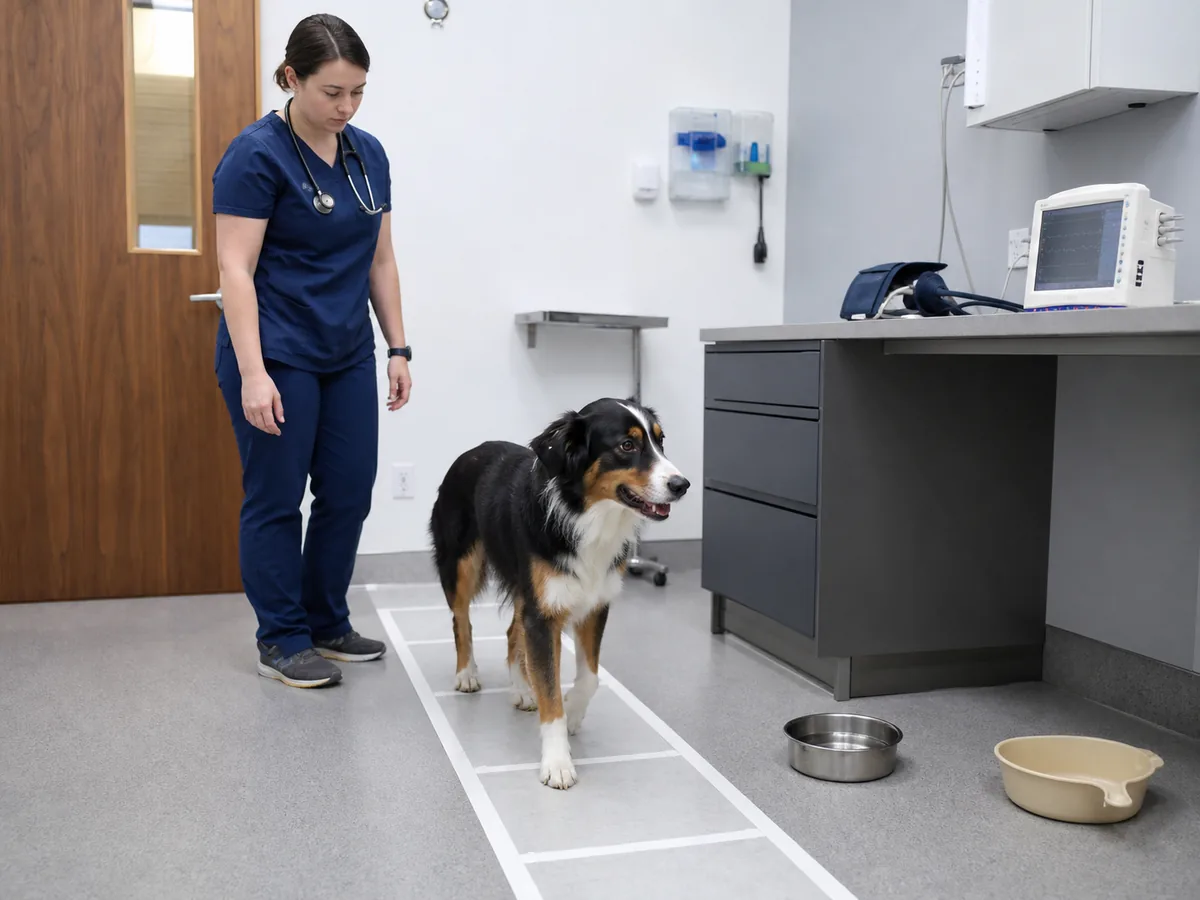
Death-cap and related amatoxin-containing mushrooms show why a quiet interval can create dangerous reassurance before vomiting, appetite loss, lethargy, jaundice, bleeding, or liver failure appears, although timing alone cannot identify the species.
Kidney-toxic patterns may involve vomiting, appetite loss, unusual thirst, increased urination, reduced urination, weakness, or kidney failure. The dog may encounter many non-mushroom causes of those signs, so blood, urine, hydration, history, and specimen evidence need to be interpreted together.
Gyromitrin-containing false morels can cause gastrointestinal and neurologic illness and may injure the liver. A common name or yard photograph cannot predict toxin amount, and seizures or marked neurologic change require immediate veterinary care.
After gastrointestinal or neurologic mushroom symptoms appear, their direction matters as much as the first change.
Record whether vomiting is becoming frequent, gait is worsening, the dog is harder to wake, drooling is increasing, urine has changed, or appetite and energy fail to return. Call again when the course differs from the original veterinary plan.
What the veterinary team may do
The veterinary team begins with the dog's airway, breathing, circulation, temperature, neurologic state, hydration, and exposure history. A specimen or product package can refine the risk, but care for a seizure, shock, breathing problem, or severe dehydration starts immediately.
Veterinary decontamination remains specific to the dog's patient history and condition.
When the ingestion was recent and the dog can safely vomit, a veterinarian may consider emesis. Activated charcoal may be considered for selected toxins, while reduced consciousness, aspiration risk, severe vomiting, bowel concerns, or delayed arrival can change that plan.

Supportive care can include airway management, oxygen, IV access, measured fluids, nausea control, seizure management, temperature control, electrolyte correction, and close observation. The exact combination depends on the threatened body system and the dog's heart, kidney, liver, age, and overall condition.
- Assessment
- Dog weight, amount, timing, product or specimen, symptoms, examination, and other exposures
- Testing
- Glucose, electrolytes, liver, kidney, blood, coagulation, urine, heart rhythm, or other syndrome-directed checks
- Treatment
- Selected decontamination, airway and circulation support, symptom control, organ support, and consultation
- Disposition
- Home monitoring, repeat evaluation, hospital observation, intensive care, or specialist transfer based on the whole case
Some injuries require serial tests because one early result can be a baseline rather than clearance. Liver, kidney, glucose, electrolyte, clotting, and neurologic changes can emerge after the dog initially looks better.
When serial tests permit home observation, that veterinary disposition still includes treatment instructions.
The owner should receive a named monitoring period, feeding and water instructions, activity limits, medicine directions when prescribed, and exact signs that trigger another call or emergency return. Write down appetite, vomiting, stool, urination, gait, alertness, and any new yellowing or bleeding rather than relying on a general impression that the dog seems quiet.
Keep the animal poison case number with the clinic discharge papers.
If the dog worsens, the next team can compare the original exposure, advice, examination, treatments, and tests without rebuilding the case from memory. Do not repeat an earlier decontamination instruction after the allowed time or give it to another pet.
The dog's prognosis cannot be read from a mushroom photo or the first treatment response alone.
The toxin, dose per kilogram, delay to care, clinical signs, organ injury, response to support, and access to intensive treatment all matter. Ask which changes require another call and how long the monitoring window lasts for this dog.
Prevent the next yard or trail exposure
Mushrooms can fruit quickly after rain, irrigation, warm weather, or overnight humidity. A yard that was clear yesterday can contain new caps before the next morning walk.
Inspect the dog's yard and usual route for new mushroom caps before off-leash access.
Remove whole fruit bodies with gloves, collect visible pieces, bag them away from pets and children, and follow local disposal guidance. Removing caps does not eliminate underground mycelium, so repeat the sweep during favorable weather.
- Use a leash in unfamiliar wet lawns, wooded areas, campsites, and trail edges.
- Practice a reliable leave-it cue while continuing physical supervision.
- Check fenced yards after rain and around mulch, stumps, roots, compost, and irrigation.
- Store mushroom chocolates, gummies, powders, supplements, and cooked dishes in pet-proof locations.
- Keep veterinary clinic and animal poison numbers saved with the dog's current weight and medicines.
Training reduces a dog's opportunity to swallow a mushroom, but it does not make a patch safe. Curious dogs can eat before a cue is given, and scenting or pawing can expose fragments hidden in grass.
Product storage belongs in the prevention plan too.
A sealed edible can contain several pet toxins and a concentrated amount that cannot be judged from the missing bite. Preserve packaging and call veterinary help rather than waiting for behavior to change.
Warning
Treat every new dog exposure as a new veterinary case | Remove access, assess the dog, call a veterinarian or animal poison service immediately, and use emergency transport for seizure, collapse, breathing trouble, unconsciousness, bleeding, or rapid decline. Do not reuse instructions from another pet or an earlier incident.