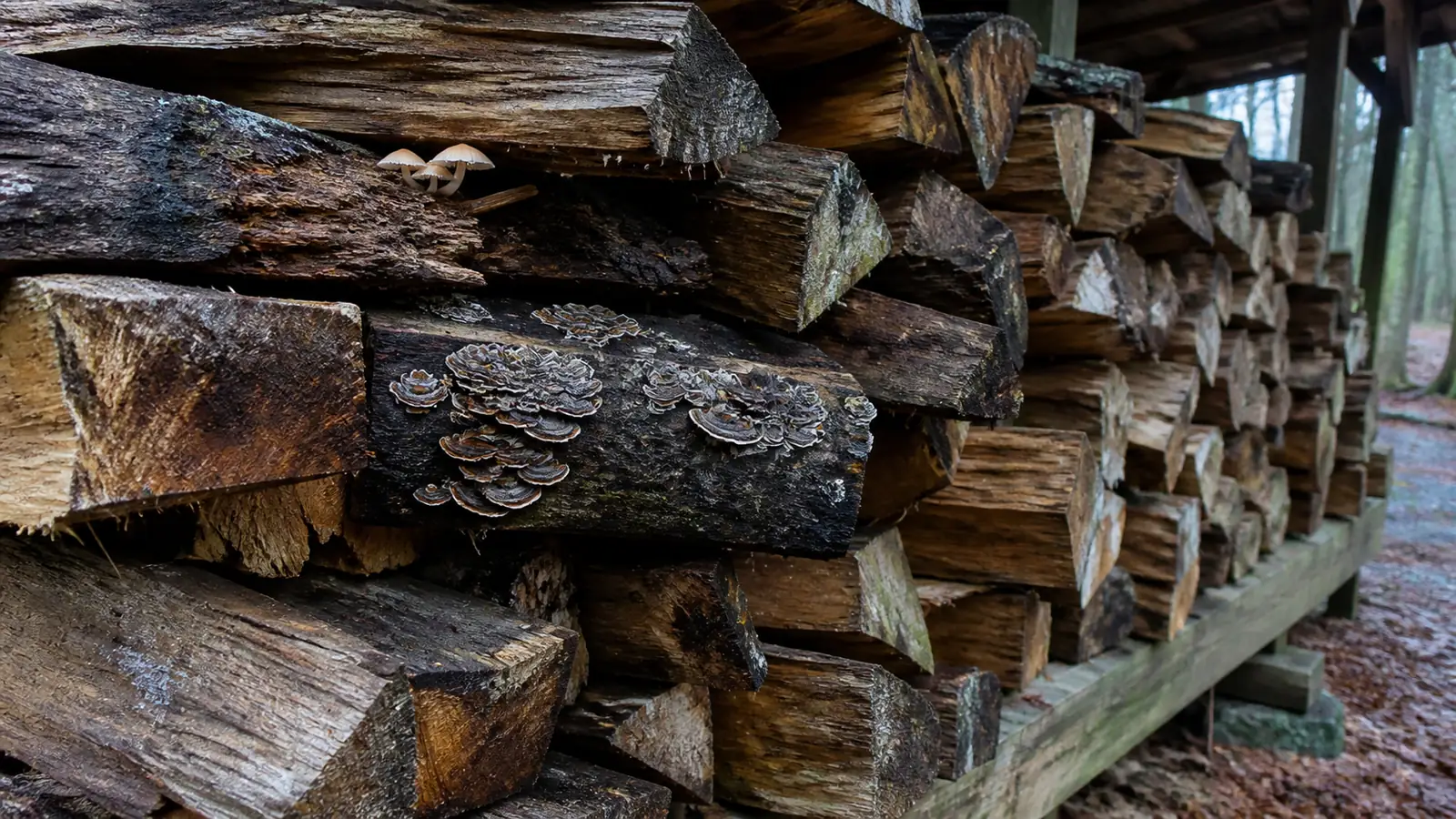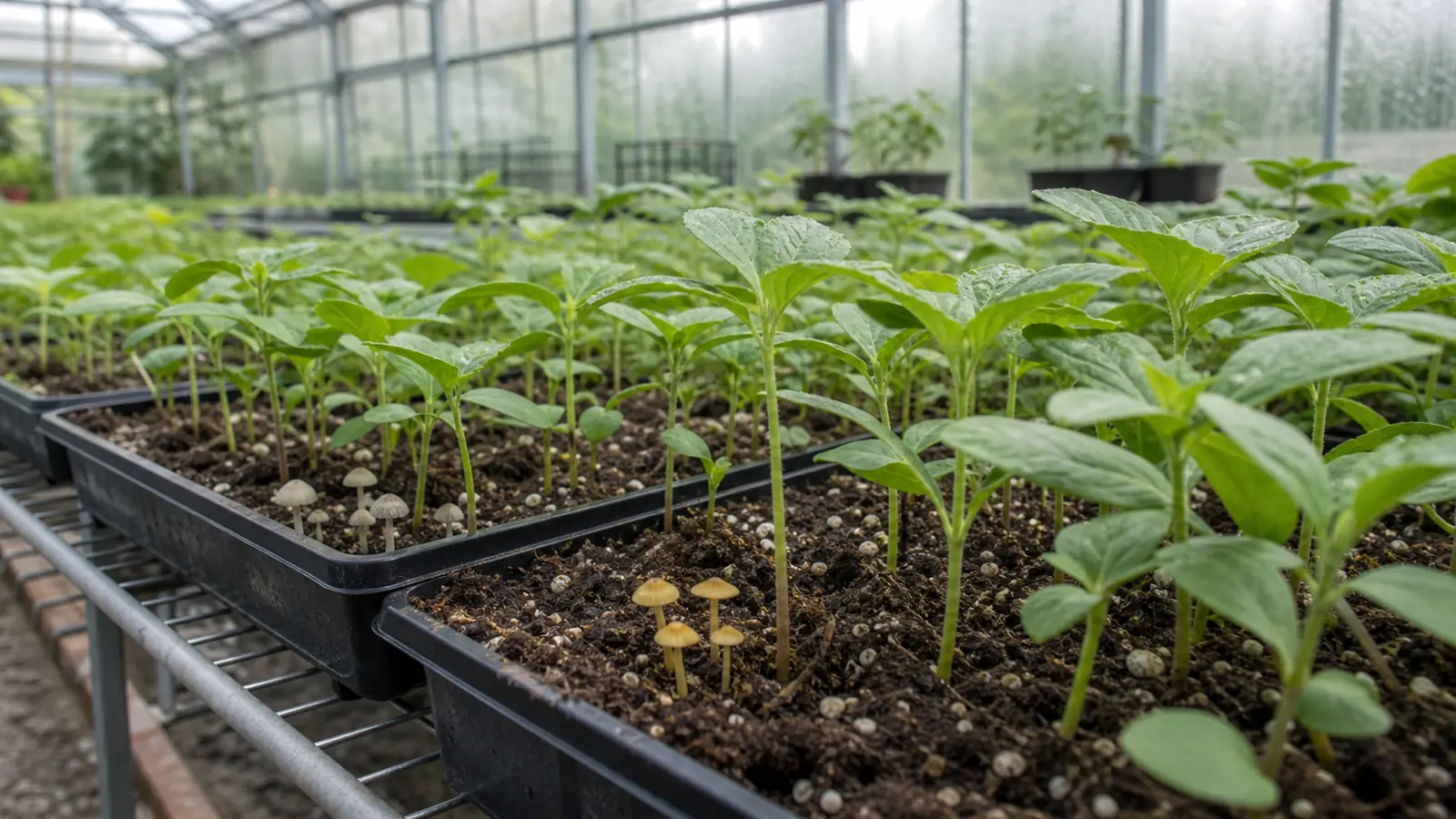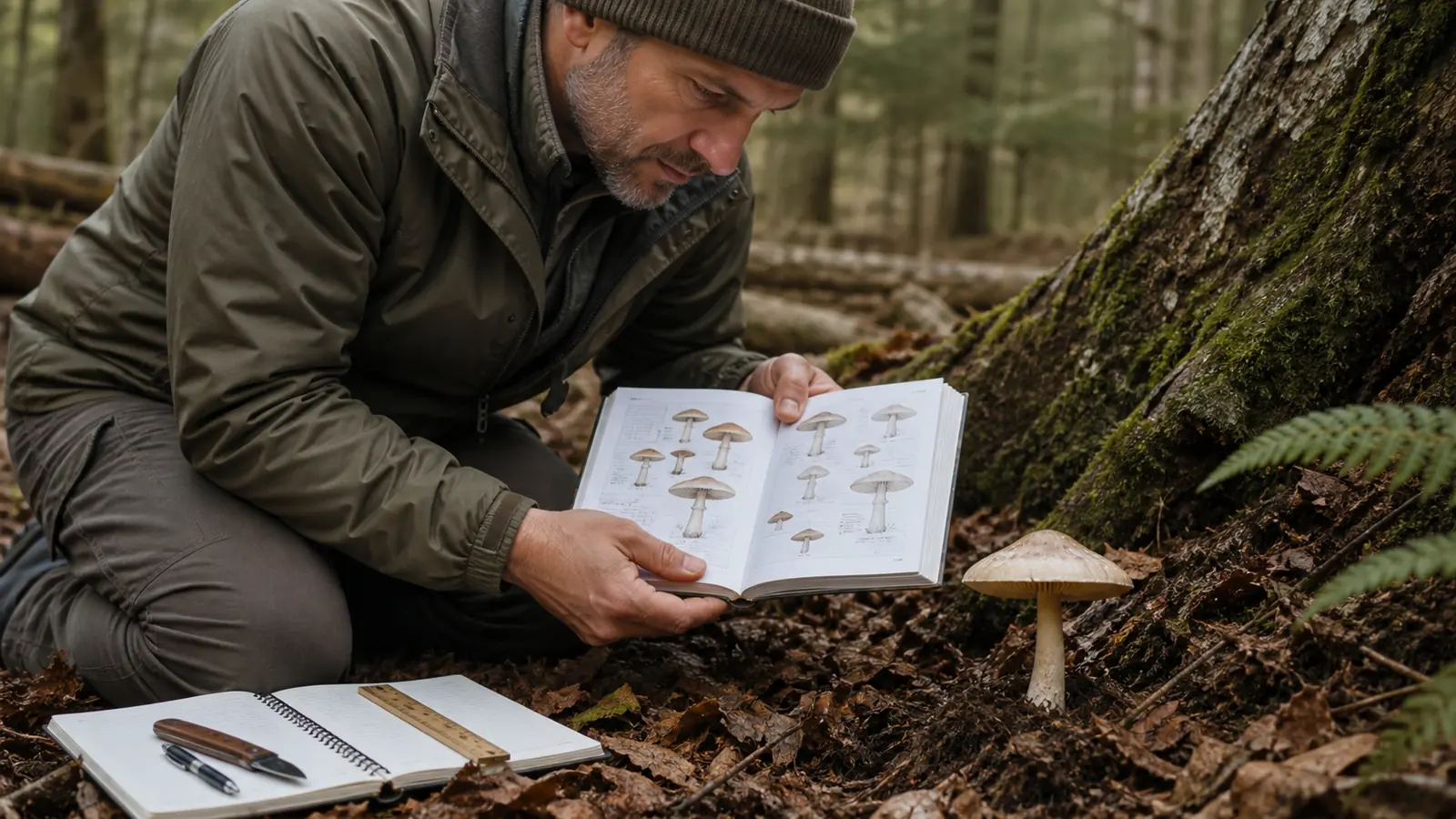
Use a mushroom field guide as a sequence of comparisons. Document the intact specimen and habitat, follow the key from observed features, then test the result against the full species description and stop when essential evidence is missing.
A mushroom field guide is a branching comparison tool, not a picture catalog. Use it to test an identification feature by feature, then challenge the result against the complete species account.
The reliable sequence starts before you pick the mushroom. Record its setting, preserve the whole specimen, translate what you see into the book's terms, follow the key, and treat the resulting name as a proposal that still needs verification.
Note
A field guide can narrow an identification, but one book and one photograph cannot certify a wild mushroom as safe to eat. Edibility demands confirmation from a qualified local identifier who has the evidence needed for that decision.
Choose a current guide for the place you are standing
A guide for western North America may omit an eastern lookalike, while a broad continental book may compress a difficult group into a few representative species. Geographic fit decides which candidates the book can consider at all.
Check the publication or revision date, the area covered, and the organisms included. A current scientific name also makes it easier to compare the same species across another book, a local club checklist, or a herbarium record when common names differ.
The most useful field guide gives you a key, a glossary or diagrams, full species descriptions, distribution notes, and clear photographs of structures rather than beauty shots alone. Carrying a compact guide in the field and checking a more detailed regional reference at home is often more practical than asking one book to do both jobs.
| Check before using the book | Useful sign | Warning sign |
|---|---|---|
| Geographic coverage | Your state or region is explicitly included | The range is continental and species coverage is selective |
| Edition and names | Recent revision with scientific-name notes | Old names with no cross-reference |
| Identification path | Keys lead to full descriptions | Photographs are the main way to browse |
| Species accounts | Habitat, season, range, size, and lookalikes appear | Accounts give color and edibility with little diagnostic detail |
| Terminology help | Diagrams define the structures used in the key | Technical terms appear without explanation |
An older guide can still contain excellent descriptions, but taxonomic names and known ranges change. Use it as one source of evidence rather than forcing every fresh specimen into the smaller set of names it recognizes.
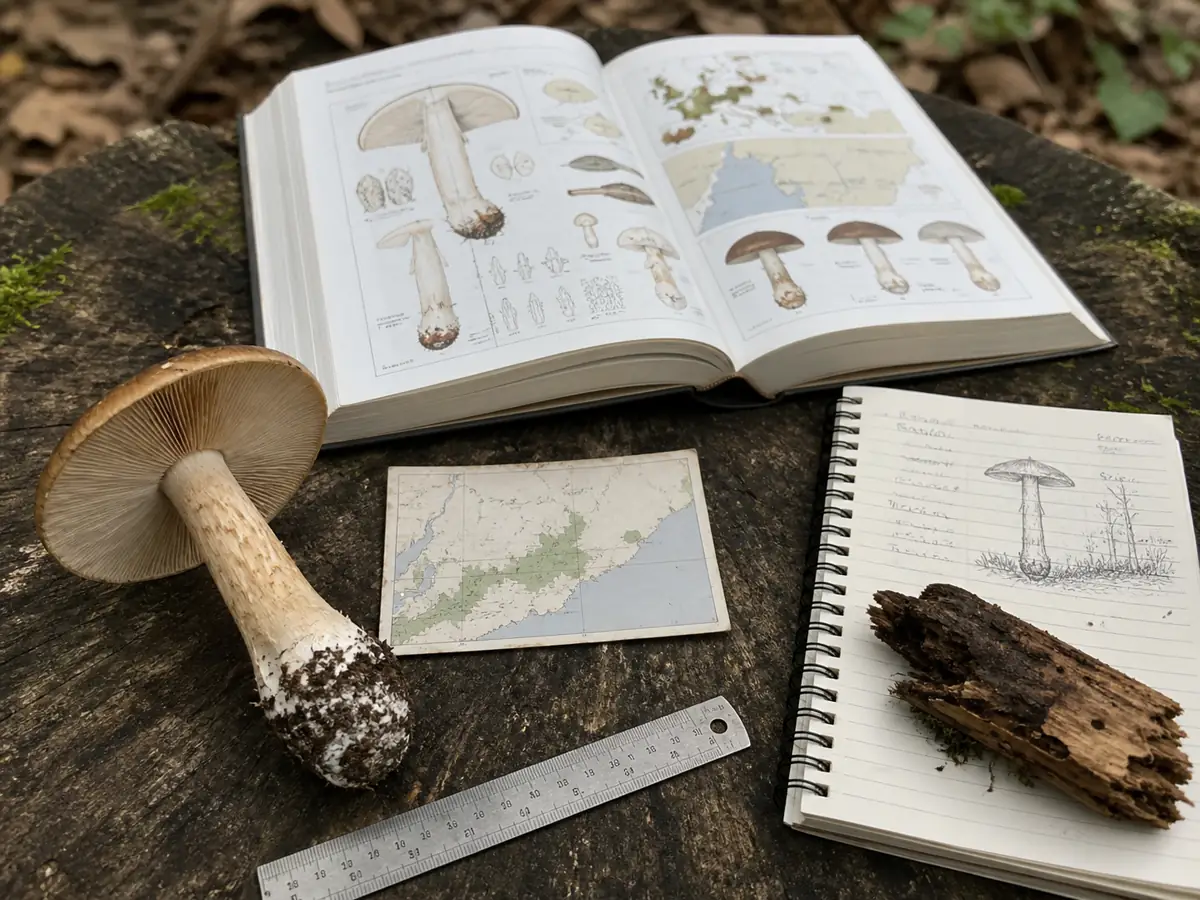
Build the Feature Record Before Opening the Guide
The mushroom's position answers questions the specimen cannot answer later.
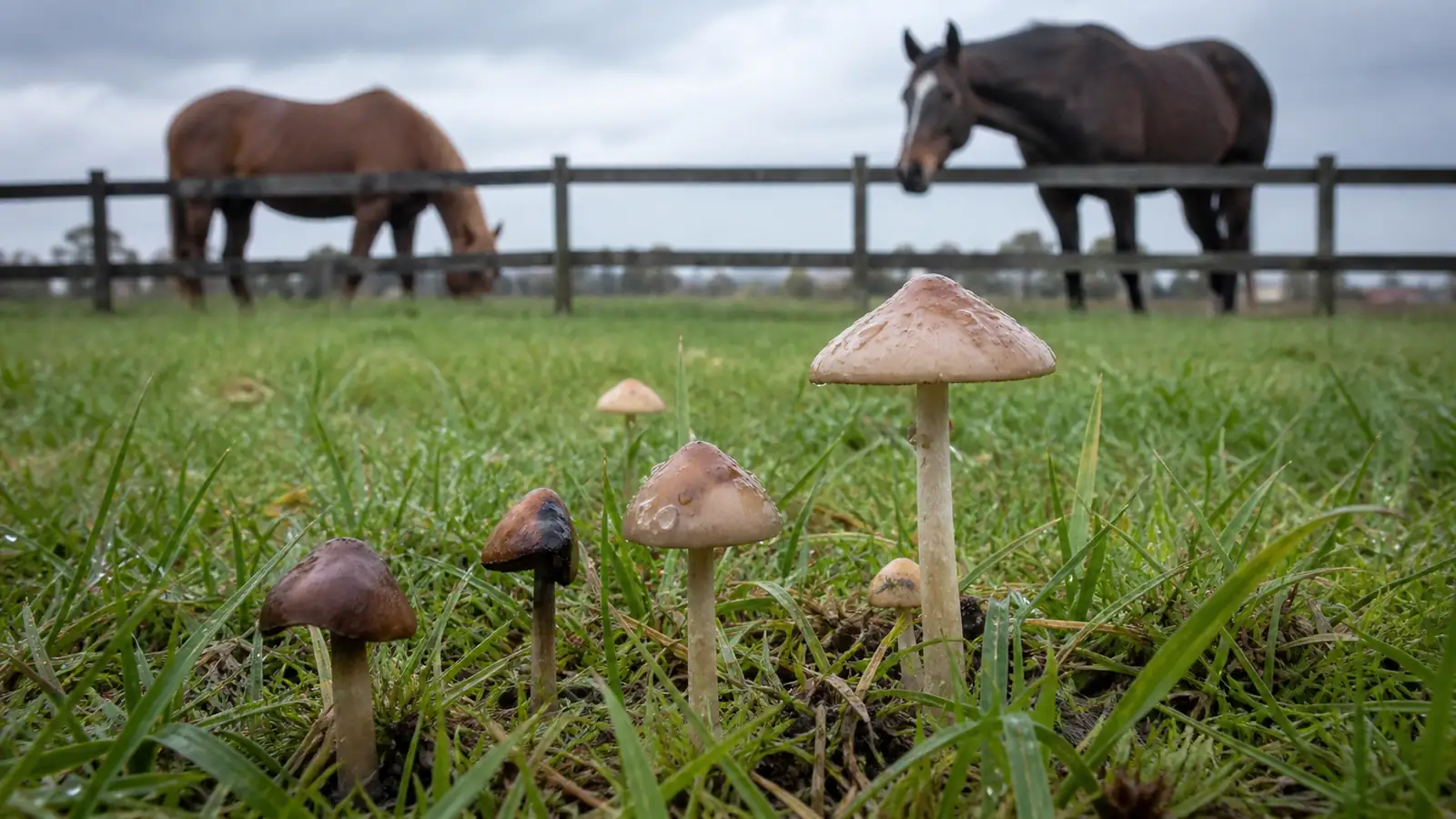
Note whether it grows from soil, leaf litter, dung, a living tree, a dead log, or wood buried beneath the surface, since a photograph of the cap on a table erases that distinction.
Photograph the group before touching it, then take the cap, underside, stem, and base from several angles.
Put a ruler or familiar scale beside the mushroom, keep one image without flash for color, and include enough background to show the substrate and nearby trees.
Color change may begin within seconds, while odor and surface moisture can fade on the trip home.
Write the first observation before later handling changes it.
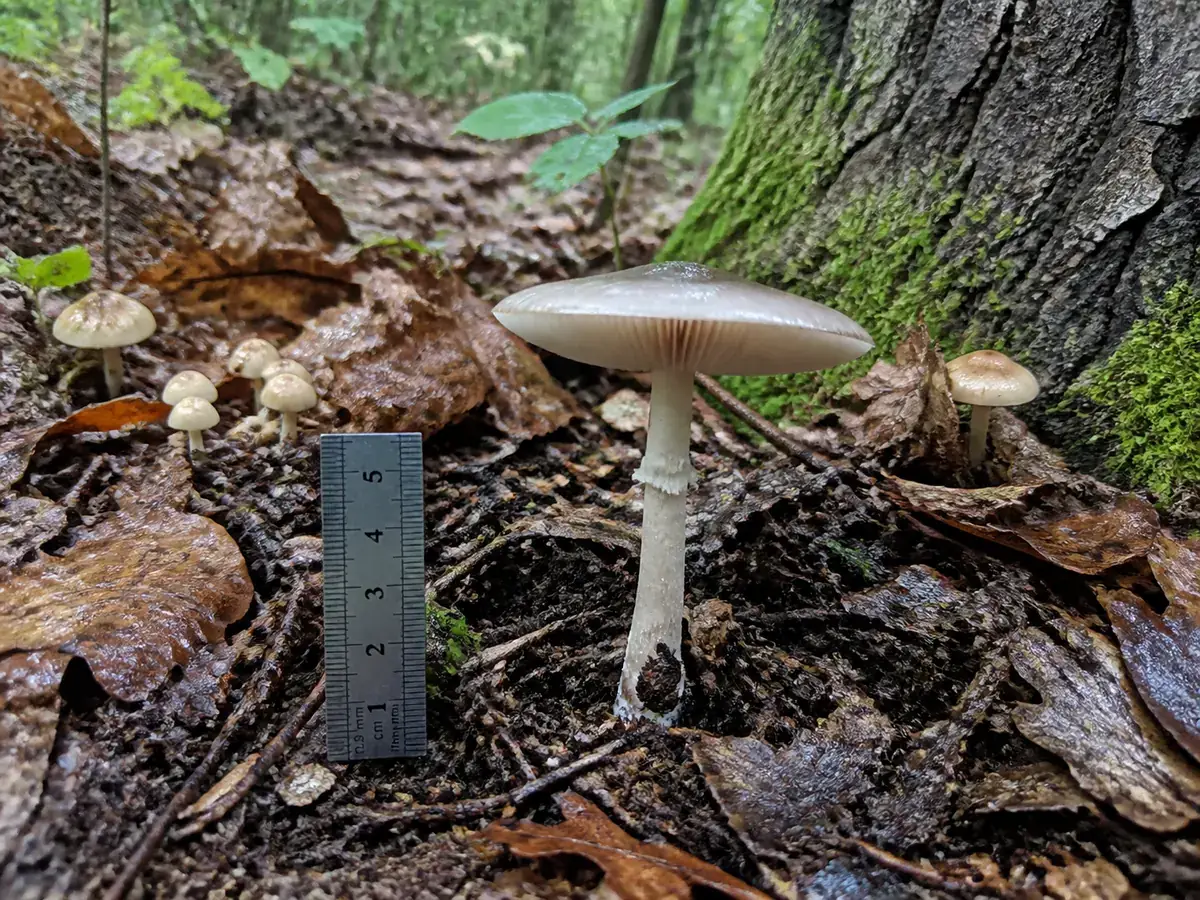
Take only what the identification requires and leave the rest of the group in place. When several fruiting bodies are abundant, a young, mature, and aging specimen can reveal changes that one stage hides, but scarce or protected fungi should not be collected casually.
Keep the whole mushroom, especially the base
Pulling straight upward or cutting the stem at ground level can leave the most important structure underground.
A cup-like volva, bulb, rooting extension, or abrupt change in stem shape may sit below the litter, and losing it can turn a useful specimen into an unsafe guess.
Loosen the soil around the stem with a small knife or digging tool, lift from beneath the base, and retain a little surrounding material until you can see where the tissue ends. Never trim an unknown mushroom to make it tidy.
Once the base is intact, keep different collections in separate wax-paper bags or folded paper packets, then label each packet to match its photographs and notes. Plastic traps condensation and accelerates decay, which can soften gills, erase surface textures, and blend specimens from different sites into one misleading collection.
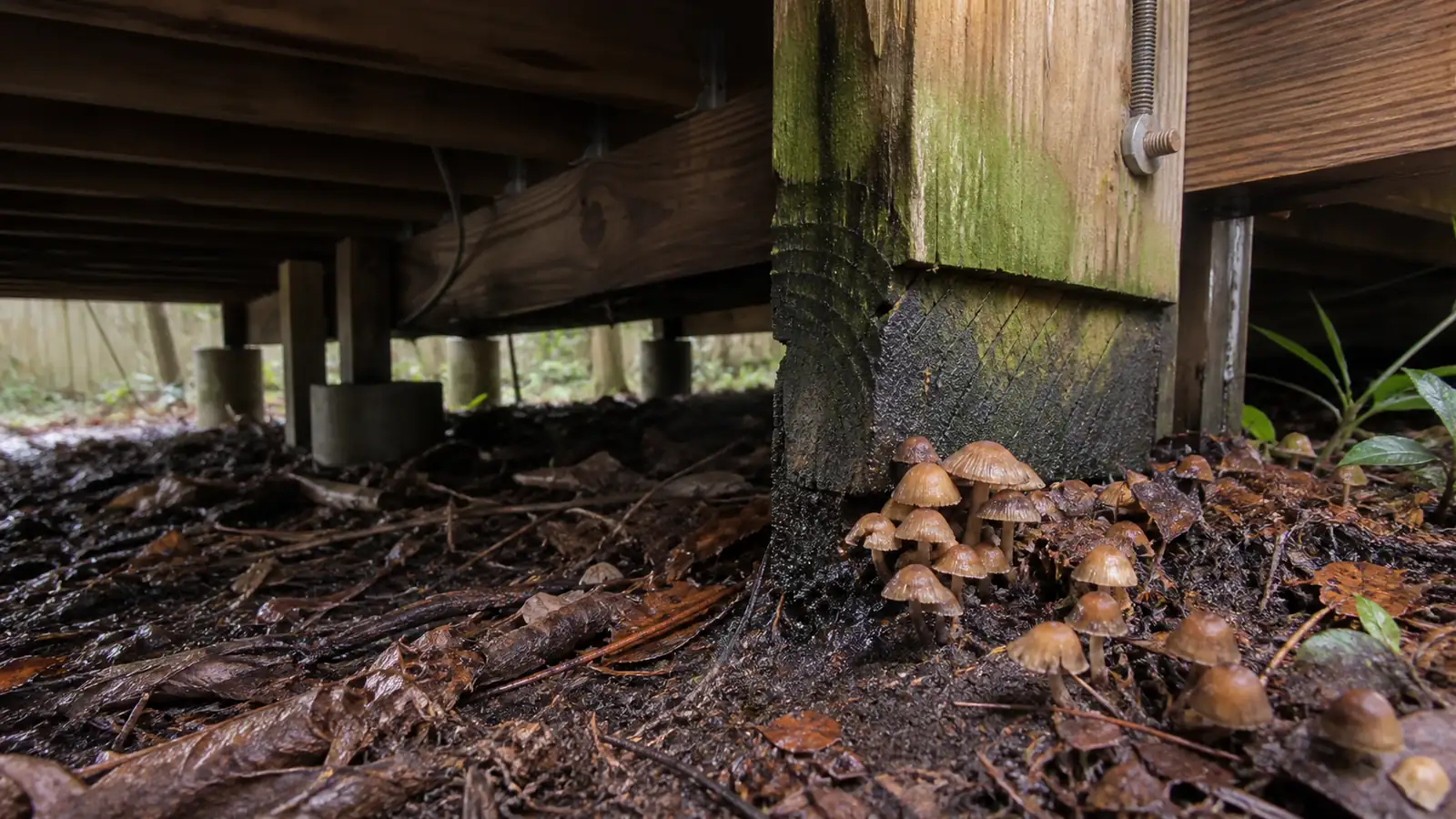
If the mushroom is attached to wood, include a photograph of the attachment and collect only enough substrate to preserve that junction.
A clean cut through the wood can be more informative than tearing off the fruiting body and leaving its attachment behind.
Turn the specimen into a feature set
Before opening the key, describe the mushroom in neutral terms. “Brown cap†is an impression, while “45 mm convex cap, dry, finely fibrillose, darker at the center†gives the key several observations it can actually use.
Start with the fertile surface
Turn the mushroom over and identify whether it has gills, pores, teeth, folds, or a smooth spore-bearing surface.
This broad division often determines which key you should enter, so a cap photograph alone may not even place the specimen in the correct starting group.
For a gilled mushroom, record whether the gills reach the stem and how they meet it. Free, attached, notched, decurrent, crowded, distant, forked, and cross-veined describe different structures, and a side view cut through the center can resolve an attachment that is hard to see from below.
Read the cap, stem, and veil together
Measure cap and stem separately, then record shape, surface texture, stickiness, scales, fibers, grooves, hollowness, and any color zones. Look for a ring on the stem, patches or warts on the cap, and a sheath or cup at the intact base because veil remnants may be divided across all three places.
A ring can disappear with age, and rain can wash material from a cap.
Absence on one weathered specimen is weaker evidence than presence on a fresh one, which is why several developmental stages can matter.
Record reactions without improvising a taste test
Note odor while the mushroom is fresh, but compare it with a concrete reference such as flour, radish, almond, chlorine, or decaying cabbage. “Mushroomy†is too broad to separate candidates.
Cut or bruise a small area only when the guide asks for a color reaction, then record the original color, changed color, and time taken.
Do not taste an unidentified mushroom merely because a book lists taste as a character, since that test belongs to experienced identifiers working within groups where it is known to be appropriate.
IdentificationWhat Should You Do About Mushrooms in a Horse Pasture?Work the Key, Then Verify the Name
A dichotomous key presents two contrasting statements at each numbered choice. Read both statements before choosing, compare each one with your notes and specimen, then follow the number attached to the better-supported statement.
Start in the correct broad group
Use the fertile surface, overall form, and the guide's regional scope to choose the appropriate key.
Read both sides of each choice
One statement may sound plausible until its paired alternative names a feature that fits much better.
Check the specimen, not your memory
Measure or re-examine the exact structure the choice names instead of choosing by overall resemblance.
Record the choice number
A written trail lets you return to the first uncertain branch without starting from memory.
Mark unknown characters honestly
If the base is missing or the cap is too old, write unknown rather than converting missing evidence into a match.
Backtrack when the result conflicts
Return to the earliest doubtful choice, reread the definition, and test the other path against all subsequent features.
The separate mechanics of reading a mushroom key can become technical, but the operating rule stays simple. A choice is defensible only when the specimen supplies the character the choice asks for.

Keys sometimes end at a genus, group, or species complex rather than one species. That is a legitimate result, especially when the remaining separation requires a microscope, chemical reagent, DNA evidence, or a structure your specimen no longer has.
Test the proposed name against the full account
Reaching a name at the end of the key begins verification. Read the complete description from the top and compare it independently with the specimen, photographs, measurements, habitat record, date, and location.
Do not count similarities as votes. A common brown cap may agree with dozens of species, while a white spore deposit where the description requires dark purple-brown spores can reject the candidate immediately.
| Evidence result | What it means | What to do next |
|---|---|---|
| Specific agreement | A discriminating structure, ecology, or spore character matches | Keep the candidate and test the remaining characters |
| Expected variation | The account explicitly allows change with age, rain, or handling | Document why the difference is explainable |
| Missing observation | The specimen is damaged or the feature was never recorded | Leave that character unknown and seek another specimen if appropriate |
| Critical contradiction | Range, substrate, fertile surface, veil structure, or spores conflict | Reject the name or return to the uncertain key branch |
| Test beyond your tools | Separation requires microscopy, chemistry, or specialist literature | Stop at the supported genus or group |
Range and ecology deserve the same weight as anatomy. A description limited to conifer forests in the Pacific Northwest does not become a match for a lawn specimen in Florida because its cap resembles the photograph.
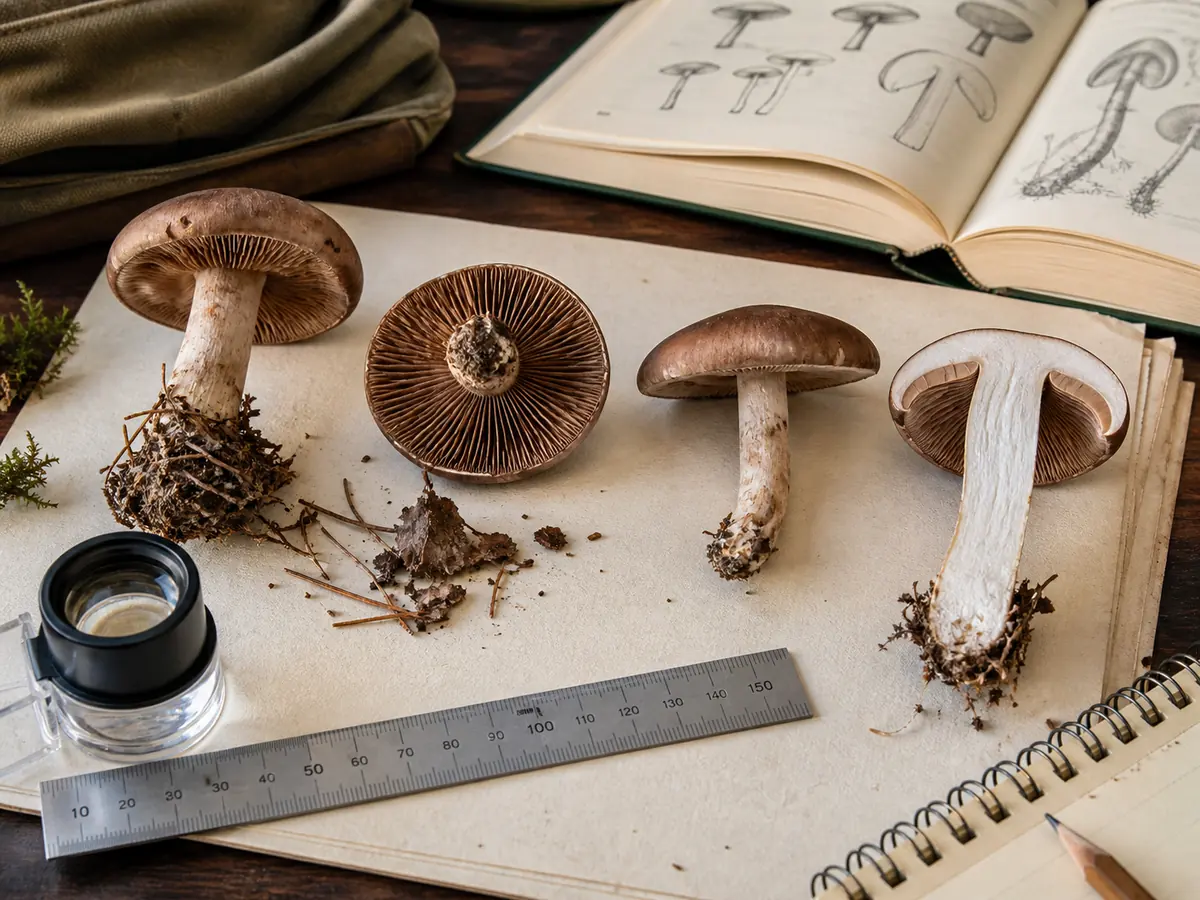
Compare a second current regional source when the identification matters, and read the dangerous or confusing lookalikes named in both accounts. One critical contradiction outweighs several loose similarities.
Use a spore print when the guide needs one
Spore-deposit color can separate candidates that otherwise share cap, gill, and stem features. Make the print when the key or species account uses it as a deciding character, not as a ritual for every mushroom.
Choose a mature cap that is still producing spores, remove the stem, and place the fertile surface downward across adjoining dark and light paper. Cover it with a bowl or container to reduce drafts, but avoid sealing in so much moisture that condensation floods the deposit.
Leave the setup undisturbed for several hours or overnight, then lift the cap straight up. Judge the deposit itself in neutral light and record a useful color family such as white, cream, pink, rusty brown, purple-brown, or black rather than copying the cap color.
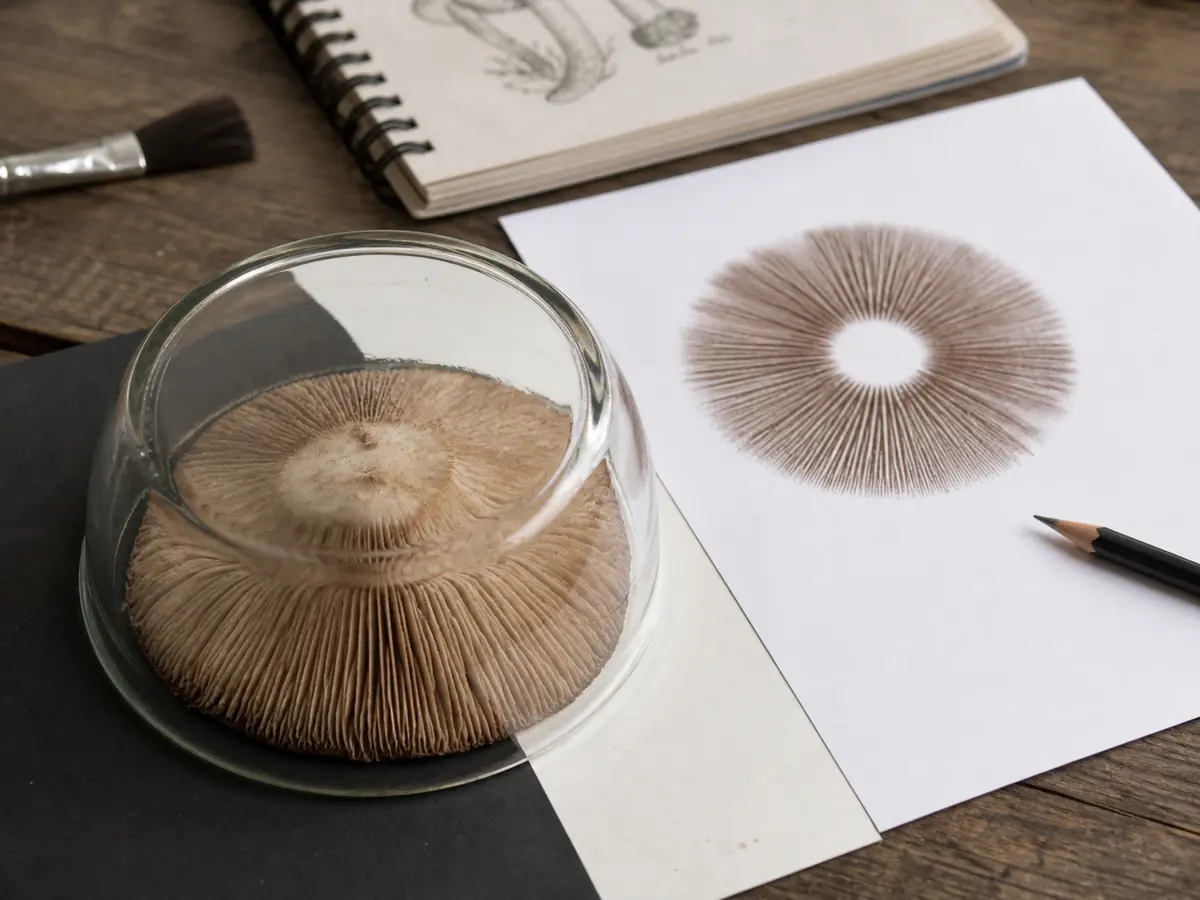
A failed print does not establish a color. The cap may be immature, overmature, dry, damaged, or simply no longer releasing spores, so try another suitable specimen if that character is essential.
Spore color narrows the field but does not name the mushroom by itself. Return the result to the key and full description alongside the other characters.
Stop when the evidence cannot support the name
Leave the identification at genus, family, or “unknown†when the base is missing, the specimen is badly decayed, the decisive character cannot be observed, or the available guide does not cover the region. A precise label unsupported by evidence is less useful than an honest broad identification.
Photographs can help an experienced identifier triage possibilities, but they rarely capture texture, odor, spore deposit, internal staining, and hidden basal structures together. Send the habitat views, every side of the specimen, measurements, location and date, substrate, nearby trees, spore information, and your uncertain key choices when asking a local mushroom club, extension specialist, or mycologist for help.
Warning
Do not eat a wild mushroom because one field guide, application, photograph, or online discussion produced a name. Get confirmation from a qualified local expert who can evaluate the complete evidence and dangerous lookalikes.
What should you do after a suspected mushroom ingestion?
If a person or pet may have eaten an unknown mushroom, preserve the remaining specimen and photographs, but do not wait for a field identification before seeking help. In the United States, call Poison Control at 1-800-222-1222 for a person, or contact a veterinarian or animal poison service for a pet.
The best field-guide session does not always end with a species name. It ends with a record another careful identifier can audit, a result that states its limits, and no safety decision resting on a resemblance.