Illinois morels start in the Shawnee Hills in late March once soil reaches 50 degrees, reach central Illinois around the middle of April, and finish in the north near Mother's Day. Any single piece of ground gives only five days to two weeks, and the season there does not fade out so much as stop, because several days running above 85 to 90 degrees ends it for good.
Illinois morels start in the far south in late March and finish around Mother's Day in the north.
- Statewide span
- Late March in the far south to about Mother's Day in the north
- Southern Illinois
- Early to late April
- Central Illinois
- From roughly the fifteenth to the twentieth of April
- Soil trigger
- 50 degrees, first reached in the Shawnee Hills
- What ends it
- Several days running above 85 to 90 degrees
Any one spot in Illinois gives you five days to two weeks, and that is the number worth planning against.
The season does not fade out in Illinois. It gets shut off.
Five days to two weeks, and why
A statewide range of six weeks sounds generous until you notice it is a relay rather than a season.
That front starts in the Shawnee Hills when soil reaches 50 degrees, moves into central Illinois around the middle of April, and carries on north through the rest of the month.
No single hillside sees more than a fraction of that. Your own timber gives you five days to two weeks, and then it is finished whatever the state map says.
That short window changes what a wasted trip costs. Missing the right week at home is not an inconvenience here, it is most of the year.
The relay is worth running rather than watching, because a hunter in central Illinois can drive south for the opening weeks, work their home ground through the middle, and finish north of it, which turns two weeks of local season into a month of hunting.
Distance is the honest cost. Illinois runs close to four hundred miles end to end, so following the whole front is a real commitment rather than a Saturday habit.
It also explains why Illinois hunters talk about the forecast more than the calendar. The calendar tells you roughly when to start looking, and the forecast tells you how long you have left.
ForagingMushroom foraging laws in France: what the five liter rule meansWhich part of Illinois is running
Mother's Day is the rough end of it statewide, and northern Illinois is usually the last ground still worth walking.
Illinois is long rather than tall in the way that matters, running from the Ohio River to the Wisconsin line. That distance is what turns one season into a relay a hunter can follow.
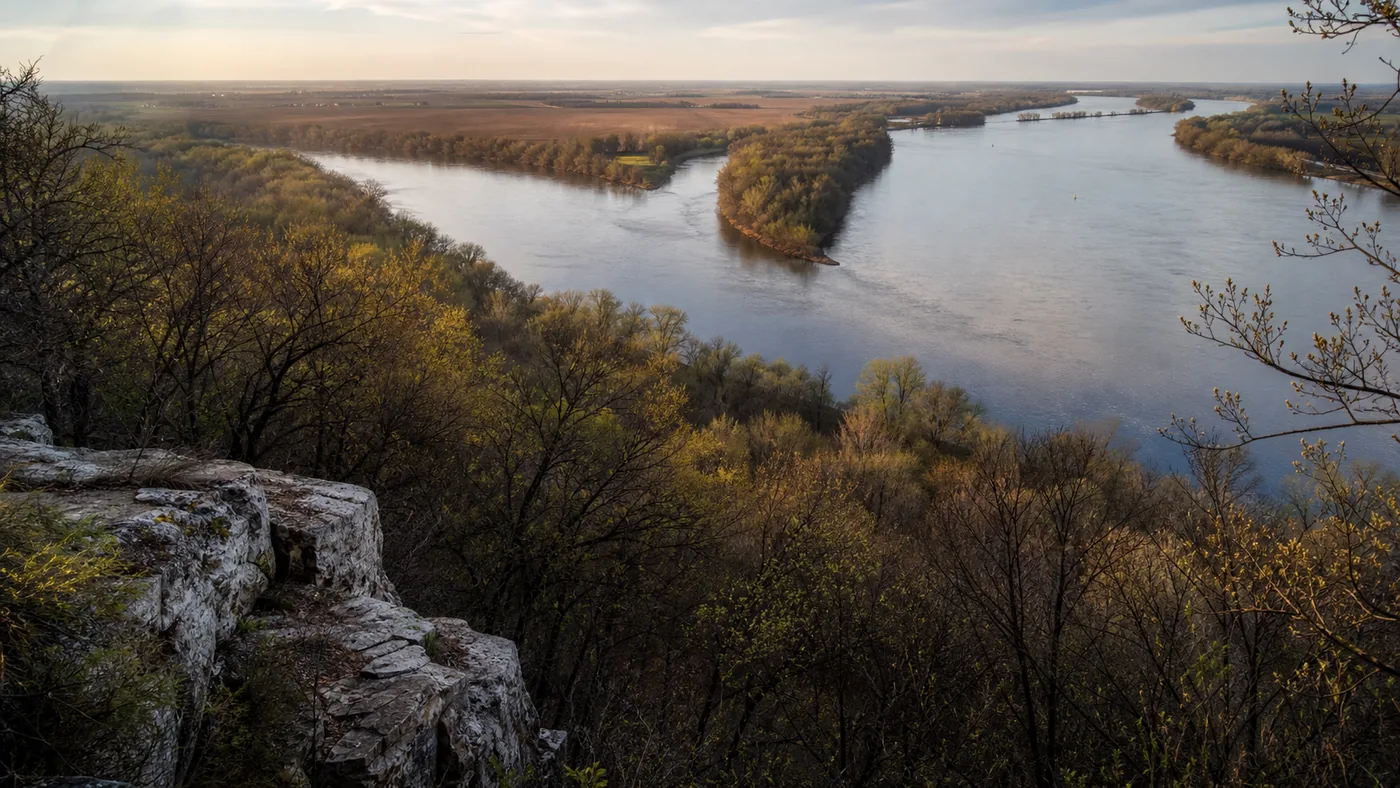
The river bluffs are the exception to the flat-state picture. Pere Marquette and the ground around the Illinois and Mississippi confluence, and the sandstone canyons at Starved Rock and Matthiessen, all give real slope and shade in a state that is mostly level.
On flat ground the whole woodlot warms and finishes together, which is why a level Illinois timber strip turns on all at once and gives a sharper, shorter run than a bluff does.
ForagingMushroom foraging laws in Germany: protected species and small quantitiesThe heat is what ends it
Most states let the season fade. Illinois takes it away.
Warning
A run of several days above 85 to 90 degrees ends morel season on that ground, and it does not come back. Once the forecast shows that stretch coming, the days before it are the last days you have, and no amount of rain afterwards will restart it.
That is a deadline you can see coming, which is more than most foraging weather gives you.
A ten day forecast with a warm block at the end of it is a schedule.
Rain still sets the pace up until then. A soaking rain on ground already sitting at 50 degrees brings a flush within the week, and the response takes several days rather than arriving overnight.
Nobody checks soil temperature daily, and the woods keep the same calendar anyway.
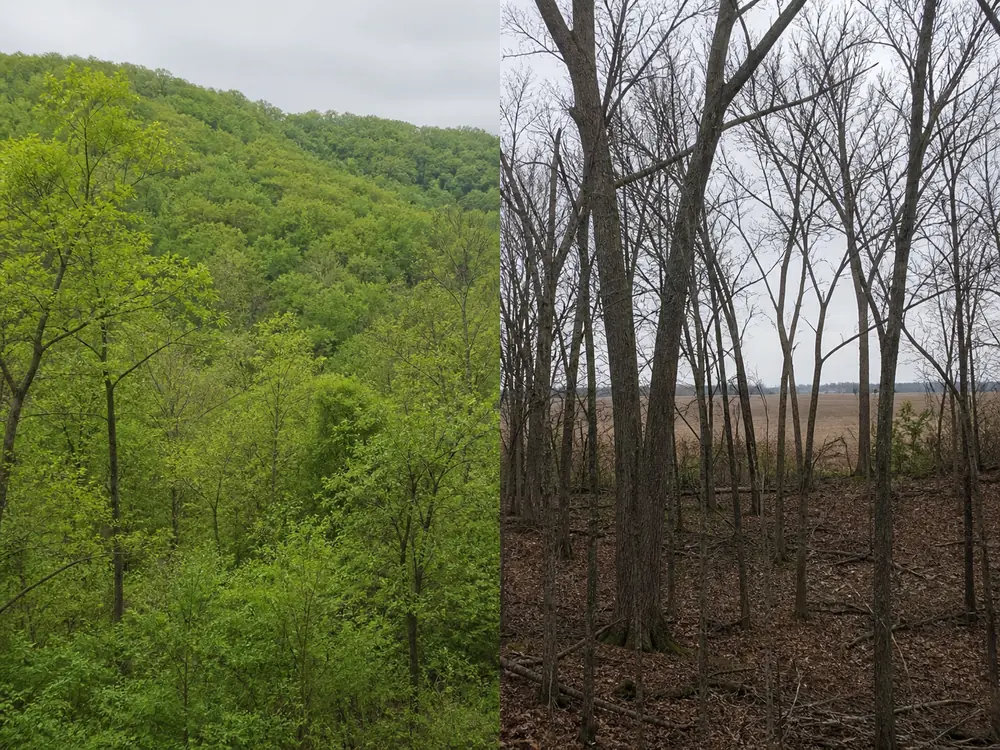
Bare woods are early, woods in light open leaf are usually in it, and woods closed over into deep shade have generally finished. That last state and a run of hot days tend to arrive together, which is why they are easy to confuse.
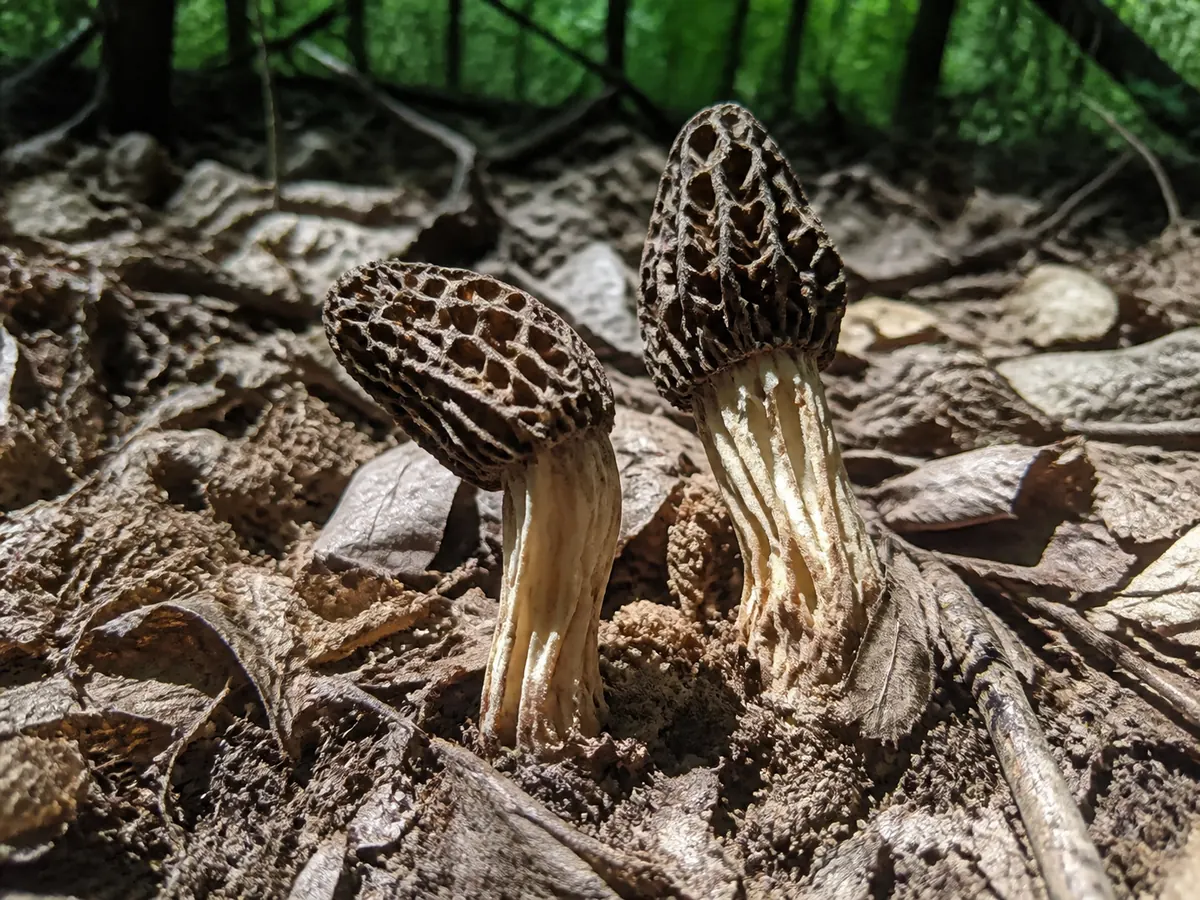
Heat does its damage through the ground rather than through the air. Warm days dry the top few inches of soil and the litter above it, and a fruiting body that needs damp ground simply stops.
The last days before a heat block are worth spending badly rather than not at all, so walk the ground you know rather than scouting new timber, because there is no second attempt once the warm stretch arrives.
The evidence is easy to read once you know it. Shriveled caps, darkened ridges and papery split stems mean that flush has ended rather than that you arrived early.
Where to walk in a farm state
Illinois is row crops with timber left in the corners, so the search starts by finding the timber.
- Dying and recently dead elm, which is still the best single tree in the state
- River bottoms and creek timber, which hold moisture after the uplands dry
- Old orchard apple at farmsteads that have gone back to woods
- Remnant oak, hickory, maple and tulip poplar woodland
Elm is the tree to learn first. A trunk that still holds its bark while the crown has gone bare is the productive stage, and one that has already dropped its bark has usually finished.
Work outward from the trunk to about the spread the crown used to have, because that is the ground the roots held.
River and creek timber carries the last week of a local season. Bottom ground holds moisture after the open uplands have dried, so it is worth saving rather than starting on.
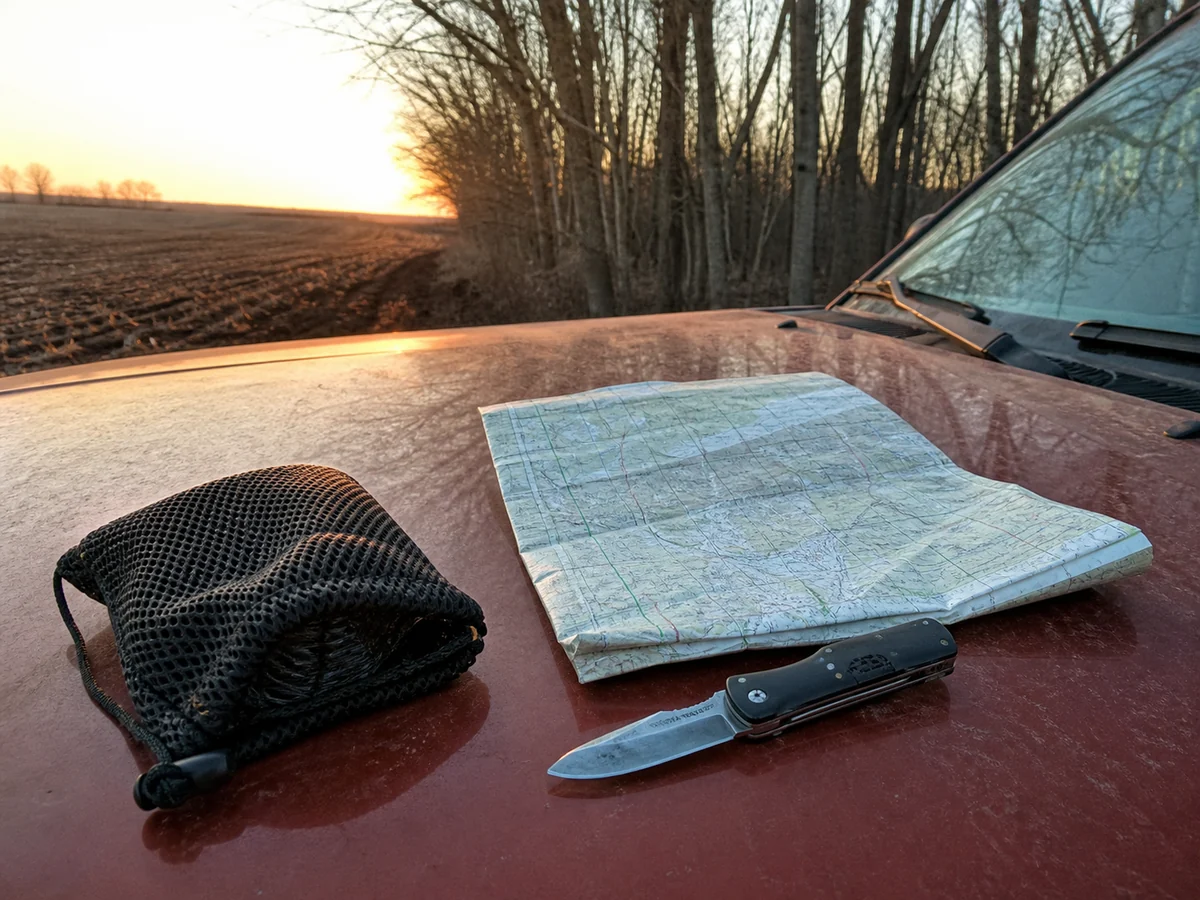
Pick in a way that lets the spot pay again. Cut or pinch the stem at ground level rather than pulling the mushroom up with a plug of soil, and carry the take in a mesh bag so spores fall as you walk.
Leave the litter as you found it, because raking through leaves to expose more ground disturbs the damp layer the fungus is living in.
Most Illinois timber is private, so permission comes before any of this. Ask in February rather than on the first warm Saturday in April, when every other hunter in the county is asking too.
ForagingMushroom foraging laws in the UK: what is actually legalWhat the rules cost you in a short season
Illinois asks for no license to pick mushrooms, and that is the easy part.
Collecting is allowed on many Illinois Department of Natural Resources sites, including state parks and fish and wildlife areas, but it is prohibited outright in any dedicated nature preserve.
That turkey season rule is the one that bites, because it lands on exactly the weeks you want.
Sites that offer spring turkey hunting stay closed to mushroom collecting until after 1 p.m. every day, which removes the cool damp morning from a window that was already five days long.
Plan public ground for the afternoon and save your private permission for first light. A season this short cannot afford a morning spent waiting at a gate.
The other half of turkey season is who else is out there. Armed hunters work from concealment and call birds toward themselves, and a mushroom hunter moving quietly through cover is the last thing anyone in that situation wants to see.
Wear blaze orange and skip red, white and blue, because those are the colors a turkey hunter is looking for.
An afternoon start already puts you in the woods after most turkey hunters have gone home, so the 1 p.m. rule works in your favor on that one count.
Call the individual site before the drive. Rules vary between properties, and the office knows what its own ground allows better than any state-wide summary does.
Which morel you are holding
Those are not all one mushroom, and the differences decide both your timing and your safety.
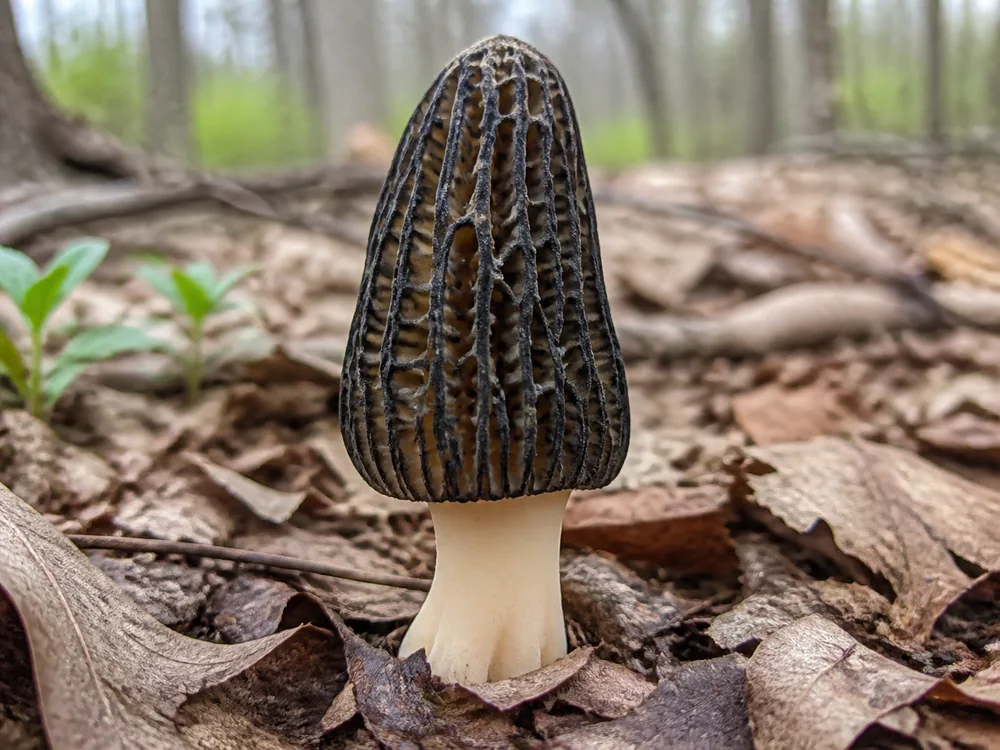 First upBlack morelEarliest of the run, and easy to walk over in dark litter
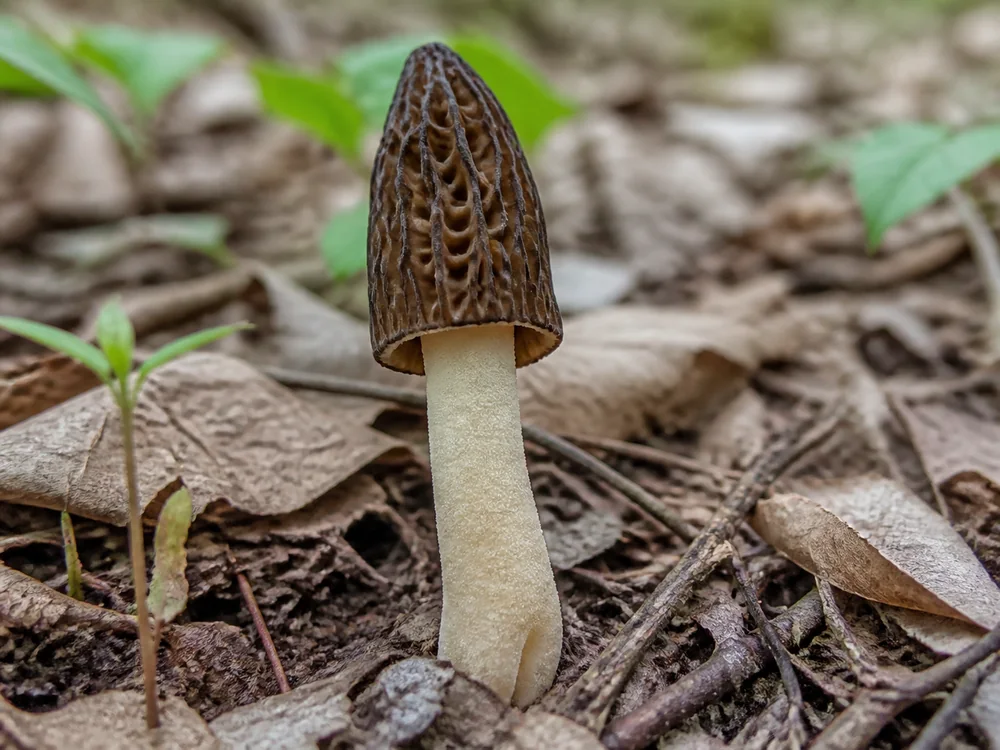 Middle of the runHalf-free morelCap hangs loose below where it joins the stem
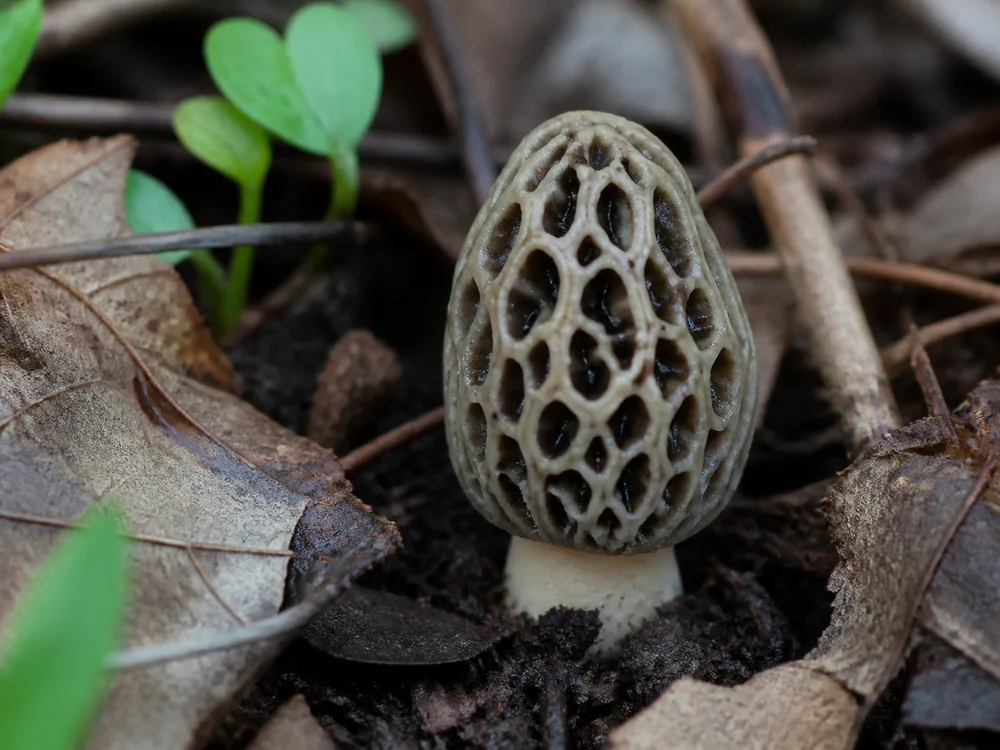 Early to middleGray morelThe young form most people find first
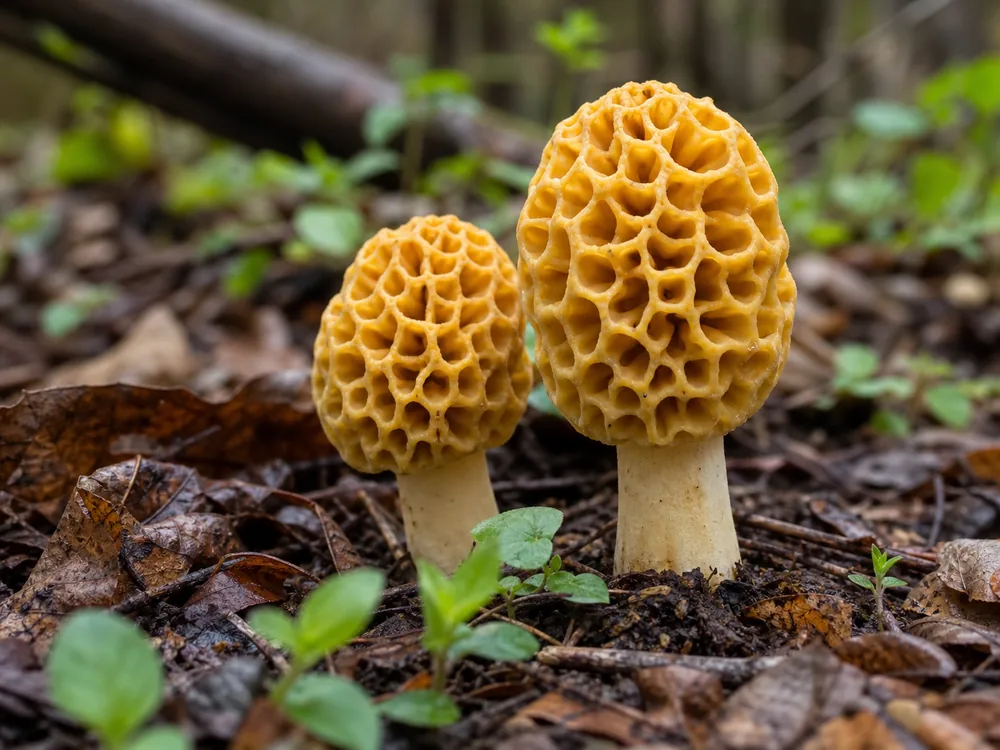 Last and largestYellow morelCarries the end of the season
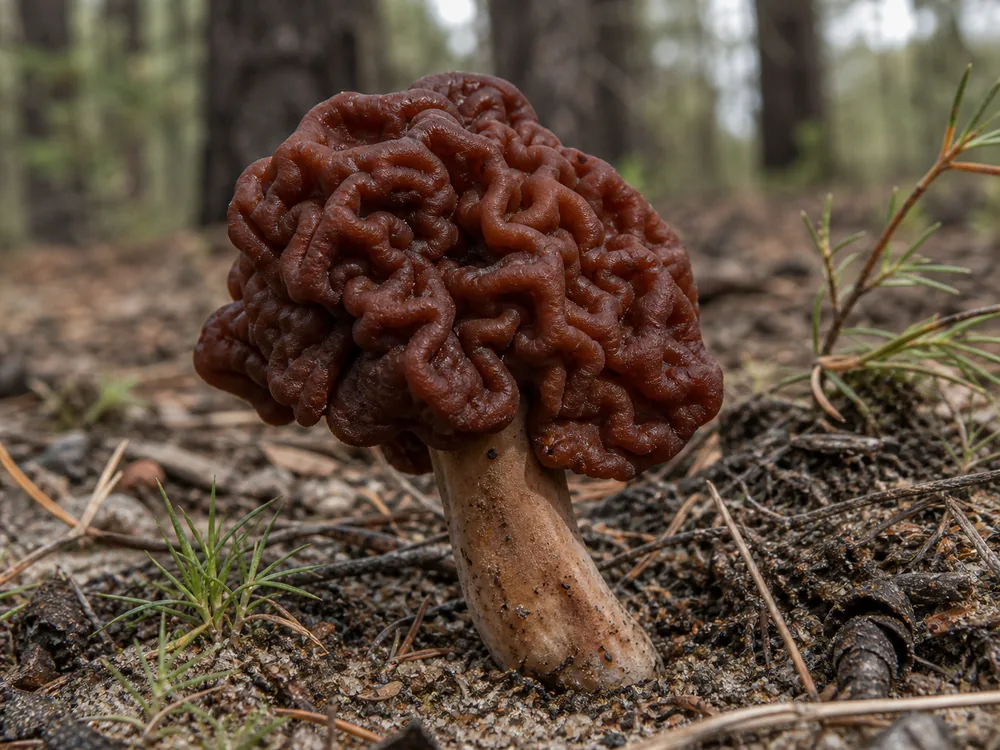 Same weeks, never edibleFalse morelWrinkled and lobed, with no honeycomb pits
Finding a half-free is the useful signal in that set, because it means the largest yellows on that ground are still ahead of you.
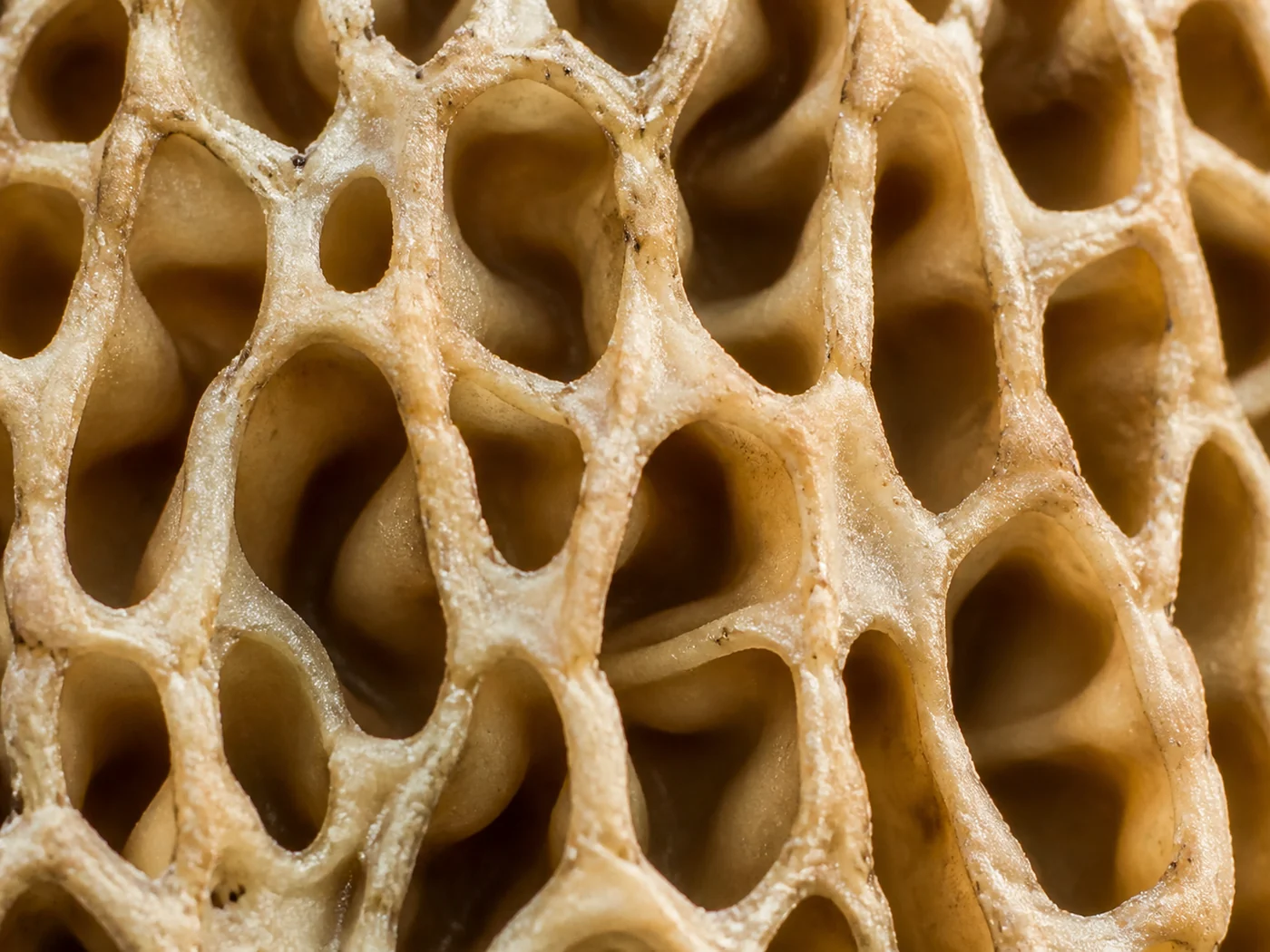
The cap is the first read. A true morel is pitted like a honeycomb with raised ridges between the pits, while a false morel is wrinkled, folded and brain-like with no real pits at all.
Pits alone are not proof, so cut every one lengthwise.
A true morel is one continuous hollow chamber from the tip of the cap to the base of the stem, and a false morel is packed with cottony tissue or divided into pockets.

The cut is one identification check, not proof that a mushroom is safe. Do not eat false morels, because the Finnish Food Authority found that boiling leaves residual gyromitrin.
Correctly identified morels still ask something of the cook. Raw morels sicken people who named the mushroom right, so cook them through, take a small portion the first time from new ground, and skip alcohol with that meal.
If someone becomes ill after eating foraged mushrooms, call Poison Control at 1-800-222-1222 immediately. Poison Control advises getting help without waiting for symptoms, because serious poisoning can develop after a delay.