Indiana morels run for roughly a month, beginning in late March or early April in the southern hill country and finishing in the north in the first week of May, with mid April through early May the most reliable stretch. Indiana carries four morels rather than one, and because blacks come first, half-frees and tulip morels sit mid-run and whites finish, the one in your hand tells you how much of the month is left.
Indiana morels run for about a month, from late March or early April in the south into the first week of May.
Indiana hunters do not say morel season so much as name which one is up. That habit is more useful than it sounds, because the four arrive in an order.
Which part of Indiana is running
The most reliable stretch is mid April through early May, and southern Indiana holds the strongest claim on it.
About a month is what the state gets end to end, which is short enough that the order of the four matters more here than a date does.
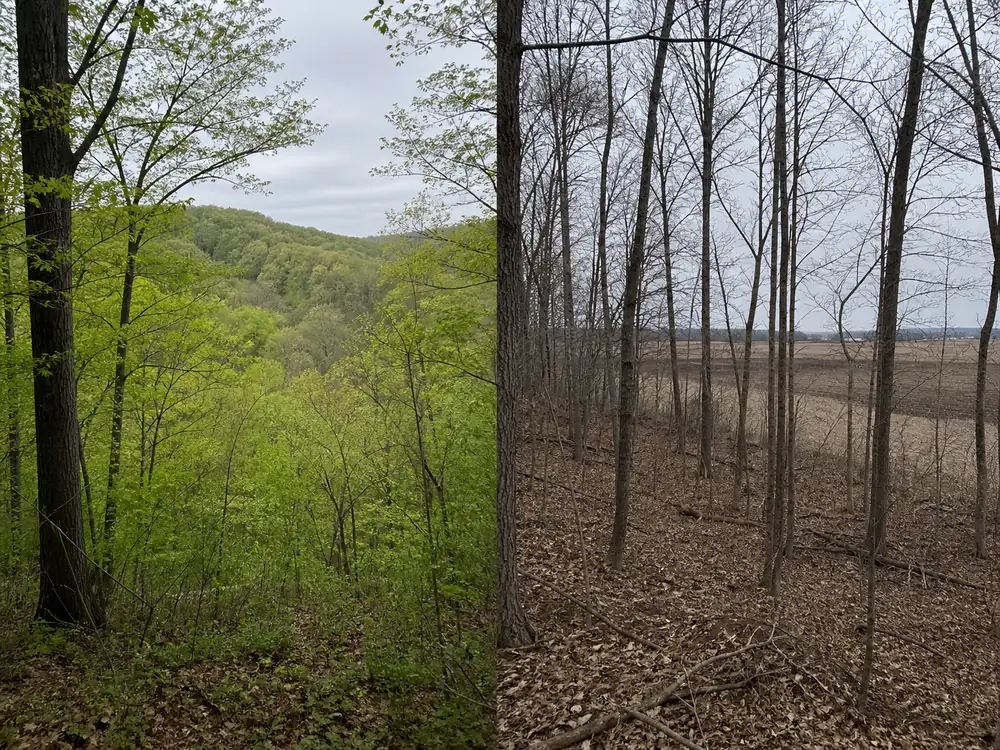
Southern Indiana is hill country in a way the rest of the state is not. Ridges, hollows and creek bottoms give slope and shade there, so one property can be walked more than once as the season works down into the cool ground.
Slope aspect is what gives a southern property its second pass. Warm south and west faces reach fruiting temperature first, while the shaded north faces and the hollow bottoms run a week or more behind them.
Soil between 50 and 60 degrees is the working band, which is wider than most states quote, and the bottom of it starts the blacks while the top is where the whites finish.
Rain is what moves things inside that band. A soaking rain on ground already sitting in the fifties brings a flush within the week, and the response takes several days rather than arriving overnight.
That lag is why the morning after a storm disappoints so often. Give the ground a few days, and give it longer when the nights behind the rain stayed cold.
Air temperature is the number people quote and the one that misleads them, because a warm afternoon does very little to soil that spent the night near freezing.
The four morels, and what each one tells you
Knowing which one is in your hand tells you how much of the month is left.
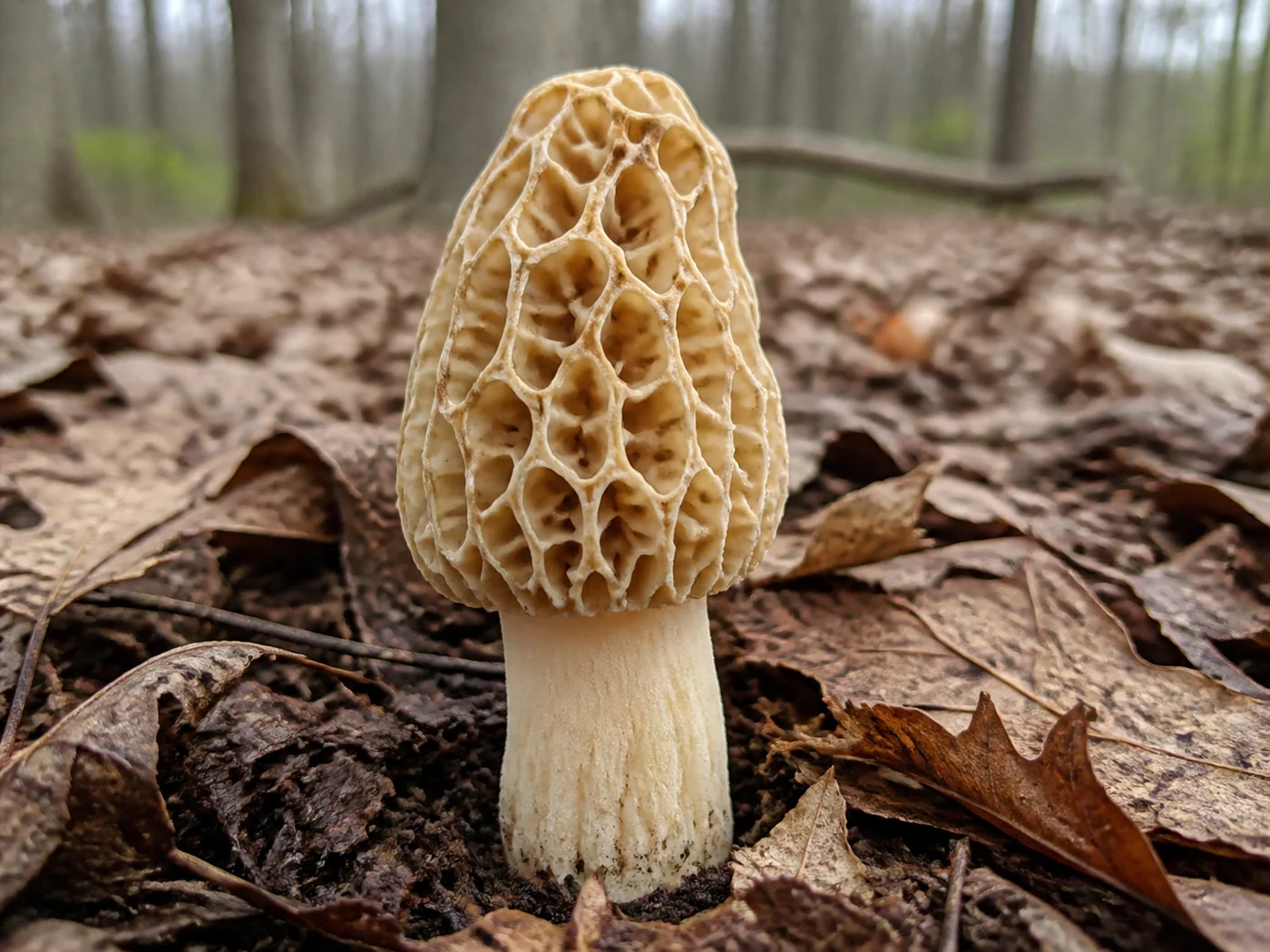
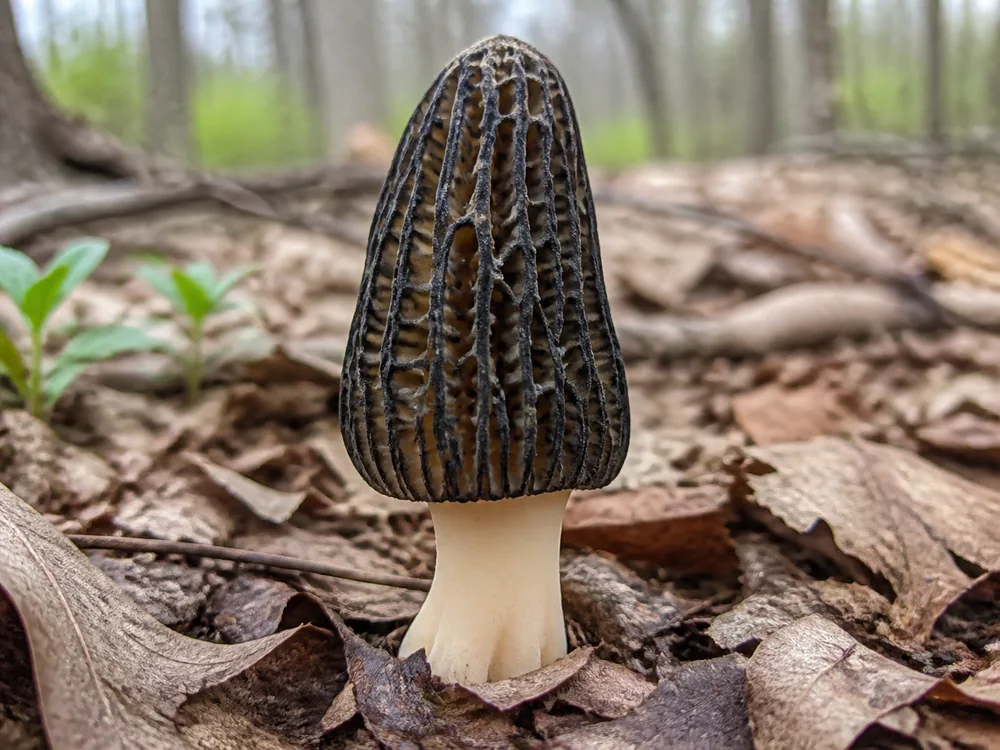 First upBlack morelDark enough to vanish into the litter, often on ash and tulip poplar
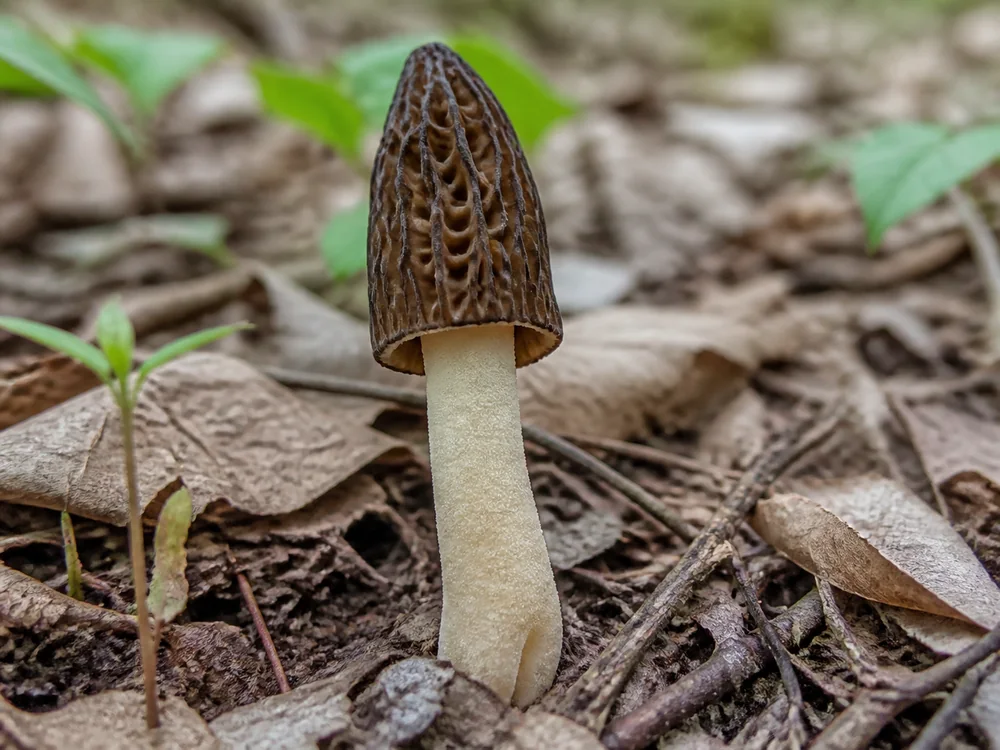 Mid-run, the gooseneckHalf-free morelCap skirt joins the stem about halfway down, so the lower edge hangs free
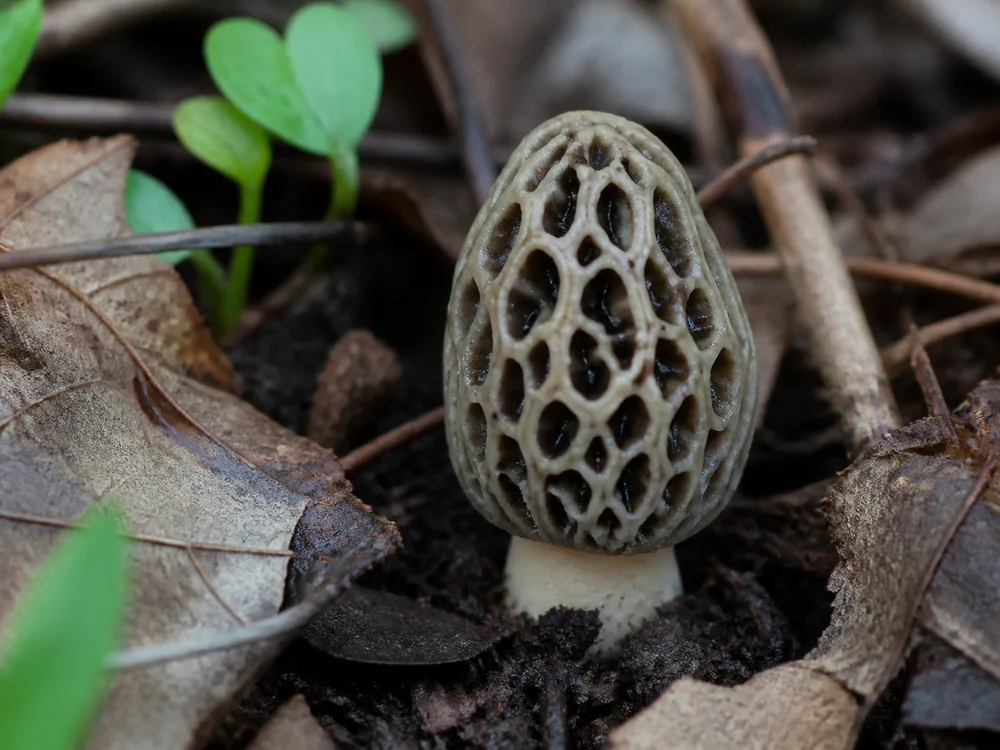 Early to middleGray morelThe young form, before the cap pales and expands
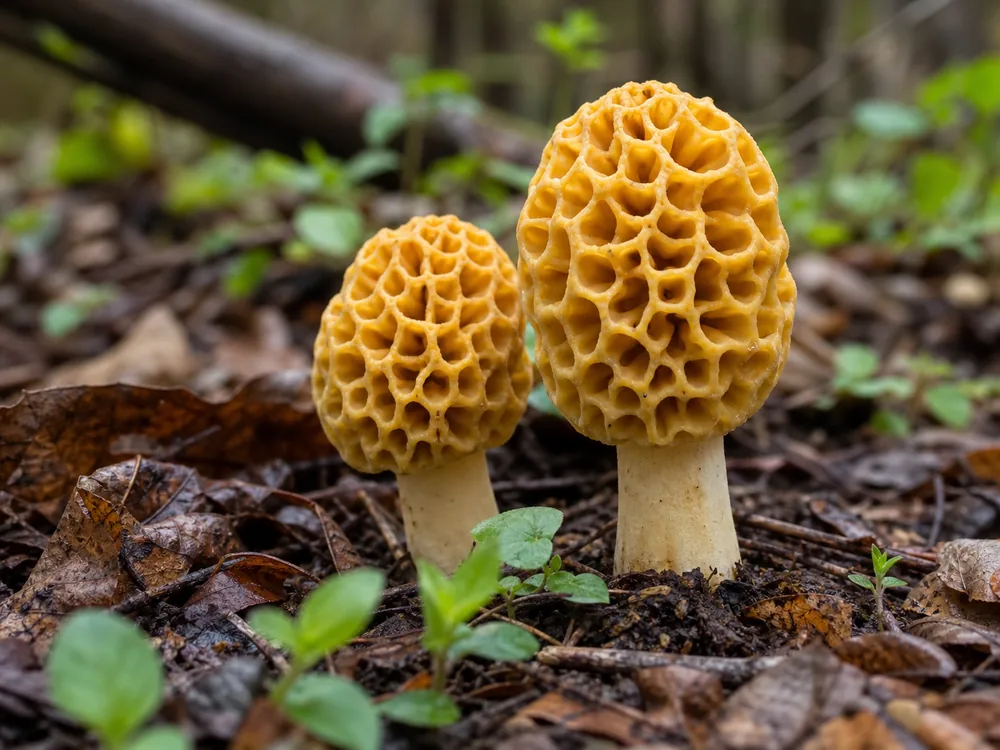 Last and largestWhite morelThe one most people picture, and the end of the run
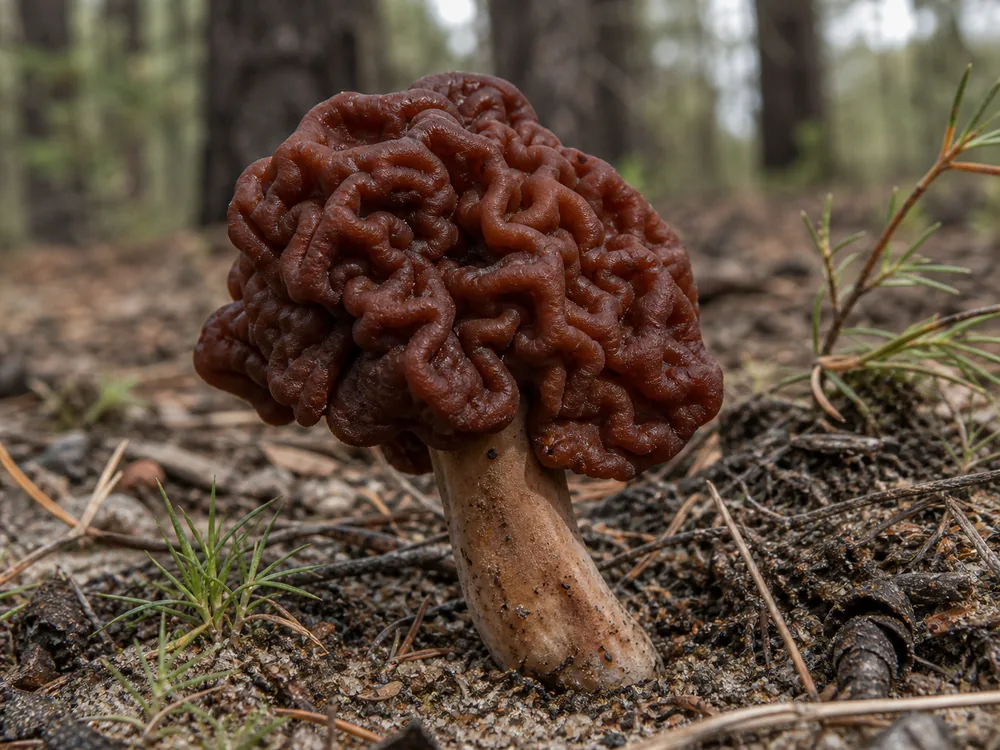 Same weeks, never edibleFalse morelWrinkled and lobed, with no honeycomb pits
Goosenecks and peckerheads are both local names for the half-free, and both describe the same thing, which is a cap that hangs loose below where it joins the stem.
That loose cap alarms people who have just learned that a false morel's cap can hang free. A hollow interior does not clear a half-free-looking specimen for eating.

Finding goosenecks is the signal worth acting on. They sit in the middle of the run, which means the largest whites are still ahead of you on that ground.
Tulip morels are the Indiana name that confuses visitors most, because they come up on tulip poplar ground in the middle of the run and the name describes the tree rather than the shape of the mushroom.
Whether those four are four species is a separate question from whether the names are useful. Indiana hunters sort them by when they appear and what they grow under, and that sorting works in the field regardless of how the taxonomy eventually settles.
Treat the names as a calendar rather than a classification, because a gooseneck tells you where you are in the month, which is what you needed from it.
Where to walk, and what the ground tells you
Indiana's host list is short, and the ground cover does half the work of finding it.
- Best single tree
- Dying and recently dead elm, bark still on
- The named host
- Tulip poplar, which gives the tulip morel its name
- The forest type
- Beech and maple woodland through the south and center
- The indicator
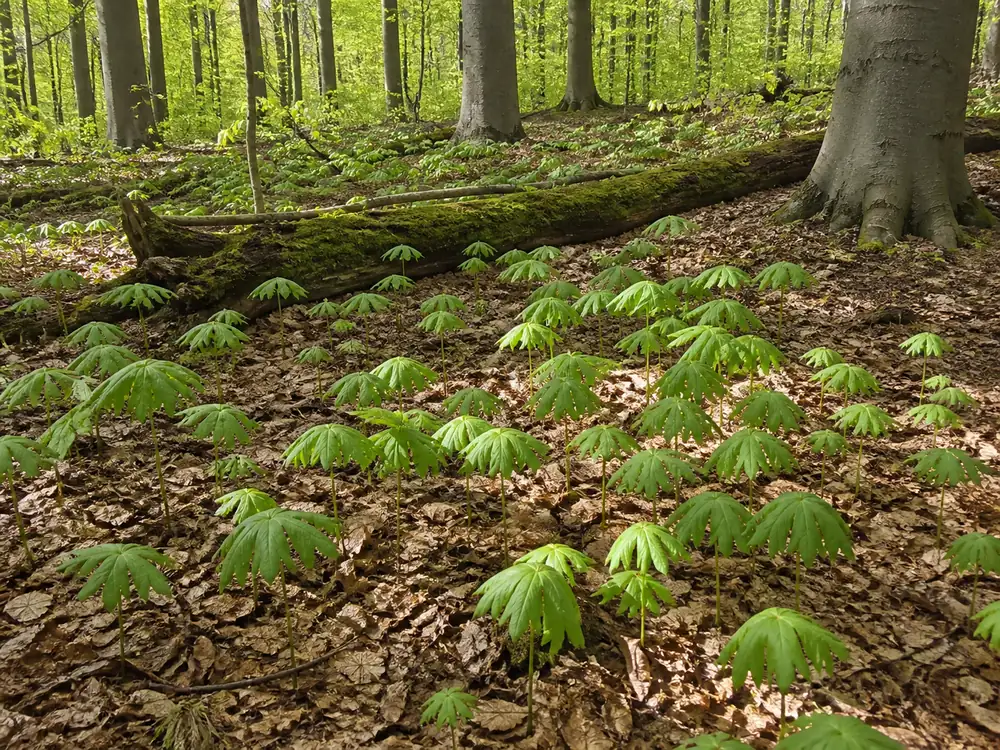
- Mayapples unfurling on the woodland floor
- The soil range
- 50 to 60 degrees
Mayapples are the cue worth learning because you can see them from standing height. When the umbrellas are unfurling across the floor, the ground beneath them has usually caught up.
Elm is still the tree to learn first. A trunk that holds its bark while the crown has gone bare is the productive stage, and one that has dropped its bark has usually finished.
Beech and maple woodland is the setting rather than the host. It holds damp, deep litter and it covers a great deal of southern Indiana, which is why so much of the state's hunting happens in it.
Work outward from that dead elm to about the spread the crown used to have, because that is the damp ground the roots held.
Southern Indiana rewards a second visit to the same hollow rather than a new one. The rim, the mid slope and the bottom each come in at their own time, so one property worked three times over the month usually beats three properties walked once.
Creek bottoms carry the last week of a local run. Bottom ground holds moisture after the ridges above have dried out, which makes it worth saving rather than starting on.
A blank walk is worth reading rather than repeating. Bare buds over cold litter mean come back, while dry crumbling litter under a closed canopy means that ground has finished for the year.
Southern Indiana gives you somewhere to go when that happens, because the ridge tops and the northern counties are usually a week or two behind the hollows.
Most Indiana timber outside the public ground is private, so permission comes first. Ask in February rather than on the first warm Saturday in April, when every other hunter in the county is asking the same question.
ForagingMushroom foraging laws in the UK: what is actually legalWhere you may pick, including off the trail
Indiana is one of the easier states in the region to hunt legally.
No license is needed for personal, non-commercial mushroom hunting on state parks or on Department of Natural Resources forest land. Collecting on the Hoosier National Forest is legal too, for personal use rather than for sale.
Public ground is not scarce here either. Between the Hoosier National Forest across the southern hills, the Department of Natural Resources state forests and the state park system, an Indiana hunter has a great deal of walkable timber without knocking on a single door.
That combination is what makes the state easy on a beginner, with somewhere legal to walk, no permit to buy, and no requirement to stay on a path.
The unusual part is the trail rule, or rather the absence of one. Indiana allows mushroom hunting in state parks even off marked trails, which is a rare exception among states.
That matters more than it sounds. Ohio, one state east, permits collecting in many state parks but requires collectors to stay on the trail, which rules out most of the hillside work morel hunting involves.
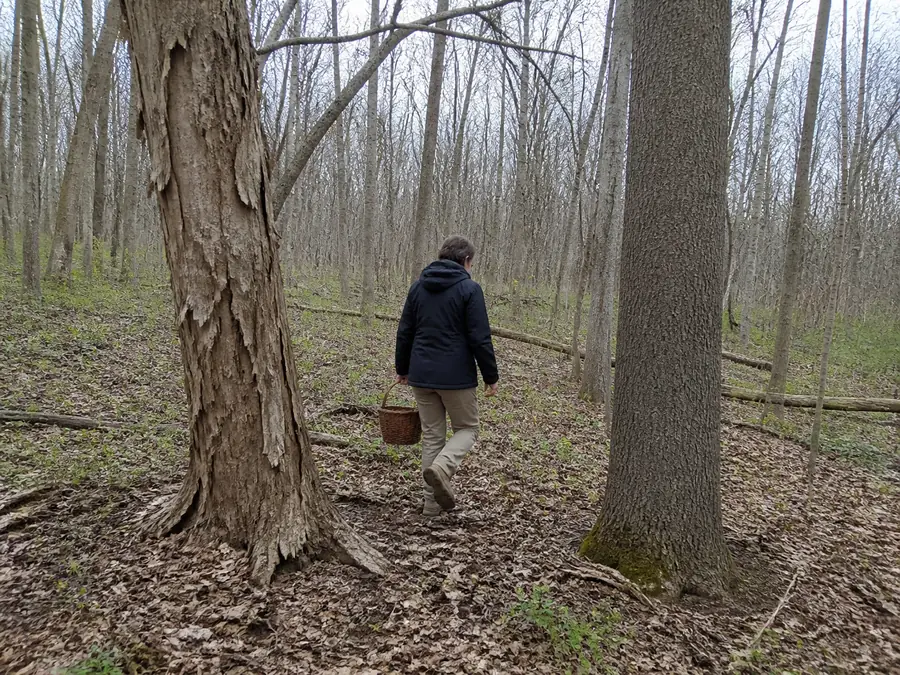
Off-trail access is a privilege with a cost attached. The Department of Natural Resources asks hunters to tread carefully for the sake of fragile ground, and a state that lets you leave the path is relying on you to leave it as you found it.
Cut or pinch the stem at ground level rather than pulling the mushroom up with a plug of soil, carry the take in a mesh bag, and leave the litter unraked.
Beech and maple woodland earns its place for a practical reason. It drops a deep, slow-rotting litter that holds damp long after thinner woods have dried, and it is where a good many of the state's dying elms happen to be standing.
Spring turkey season overlaps the best weeks, so wear blaze orange and avoid red, white and blue, which are the colors of a tom turkey's head.
Before any of it reaches the pan
False morels come up in the same Indiana weeks and the same woods, and a state that lets you wander off-trail puts more people in front of them.
The cap is the first read. A true morel is pitted like a honeycomb with raised ridges between the pits, while a false morel is wrinkled, folded and brain-like with no real pits at all.
Pits alone are not proof, so cut every one lengthwise before it joins the others in the bag.
A true morel is one continuous hollow chamber from the tip of the cap to the base of the stem, and a false morel is packed with cottony tissue or divided into pockets.
Do not use the cut to clear a gooseneck lookalike. Ask an experienced identifier to examine the complete specimen.
Do the cut in the woods rather than at the kitchen sink. A wrong mushroom cut open on the spot gets left where it stood, while the same mushroom carried home has spent the afternoon in a bag with everything you meant to eat.
That habit costs a second and it is the one worth building first, ahead of learning any species by name.
That rule exists because of gyromitrin, which the body converts to monomethylhydrazine. Cooking does not drive it off, so a chambered specimen is a discard rather than a cooking problem.
Correctly identified morels still ask something of the cook. Raw morels sicken people who named the mushroom right, so cook them through, take a small portion the first time from new ground, and skip alcohol with that meal.
Warning
If symptoms arrive hours after eating rather than minutes, treat the delay as the warning it is and call Poison Control at 1-800-222-1222. Keep any uncooked mushrooms so they can be identified.