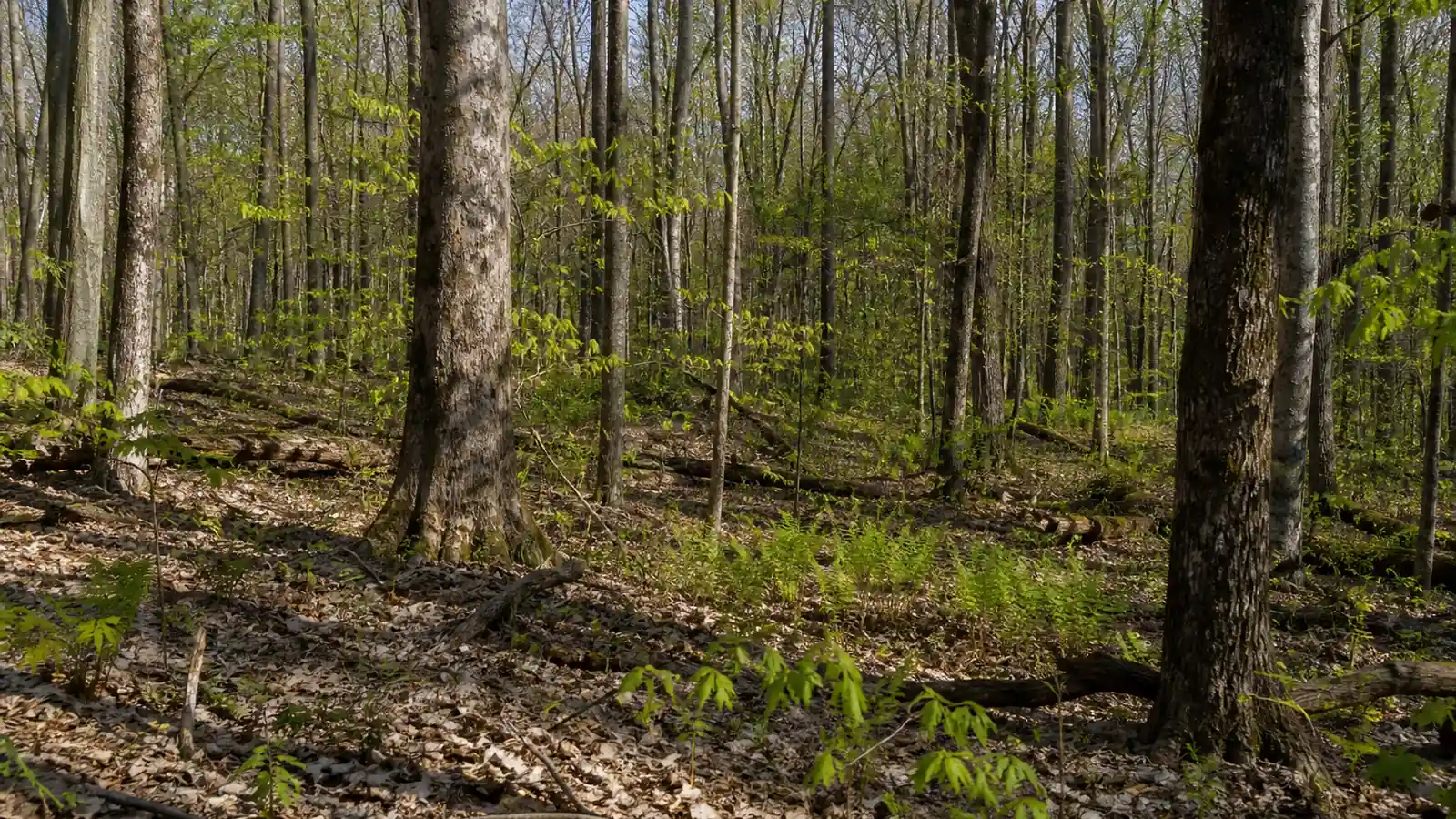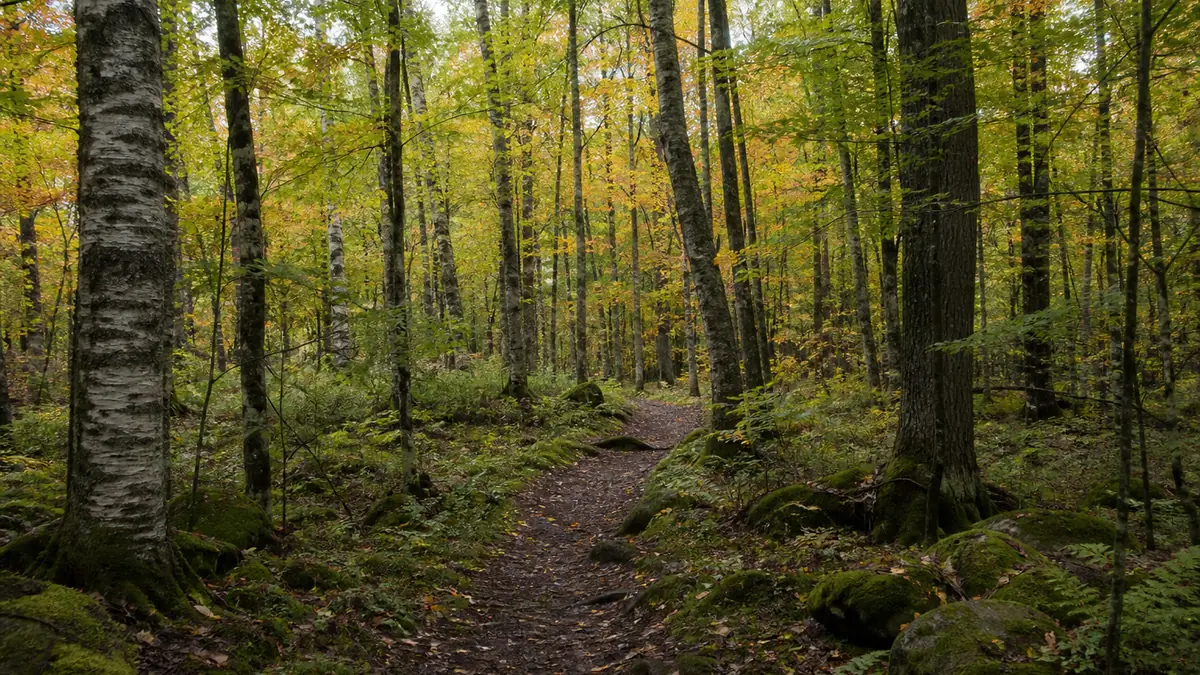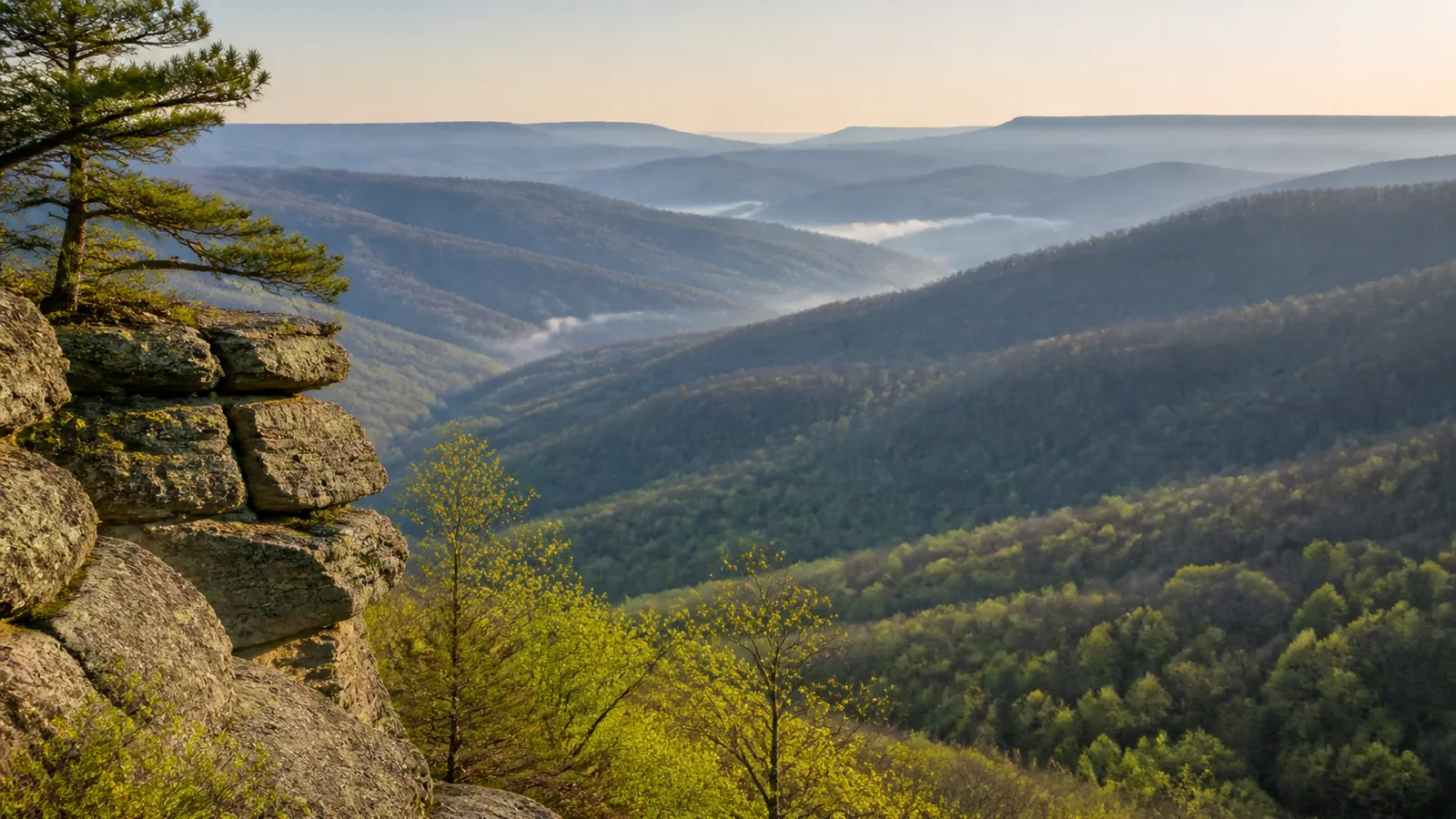
Kentucky's low western and southern country can produce morels from late March, ahead of the states across the Ohio River, and the season then climbs. Because morels fruit first at low elevation and on south-facing slopes and later higher up and on north faces, a hunter who follows the ground upward keeps finding them for weeks after the bottoms have finished.
Kentucky opens the region's morel season. Low ground in the west and south can produce from late March, while the mountains in the east are still weeks away.
That spread is the whole story here, and most Kentucky hunters only use half of it.
- Opening ground
- Low western and southern Kentucky, from late March
- Soil trigger
- The low fifties, after a heavy rain
- Statewide close
- Into May on the high eastern ground
- Forest cover
- About 12.4 million acres, roughly 48 percent of the state
- The advantage
- A season you can follow uphill rather than one that simply ends
When Kentucky's season opens
Kentucky produces before the states across the Ohio River do. The low country in the western and southern counties warms first, and a hunter there can be picking while the north bank is still frozen ground.
Soil in the low fifties after a heavy rain is the working trigger. Rain on cold ground does nothing, and rain on ground that has been sitting warm for several days is what brings a flush.
Starting too early has a cost on that same ground.
A hunter who walks the same bottom every weekend from mid March mostly walks bare litter, and the ground gets trampled before it produces. Waiting for the temperature and then walking hard is a better use of the same weekends.
Kentucky's other spring mushrooms overlap the same weeks, so an early walk that turns up no morels is not a wasted one.
Kentucky's opening week moves around a lot between years. A warm second half of March can start the west two weeks ahead of a cold one, which is why the temperature matters more than the date.
Kentucky is wide rather than tall, which is part of why it opens early. The Jackson Purchase and the Pennyroyal country in the west sit low and warm, and they carry the state's first flushes most years.
The Bluegrass follows them in that order, then the Knobs, then the plateau.
That order holds even in a cold spring, because it is driven by ground rather than by date.
Hunters on the north bank of the river watch Kentucky reports for exactly this reason. Ground on the Kentucky side runs ahead, which makes it a usable preview for anyone in southern Ohio.
ForagingMushroom foraging laws in France: what the five liter rule meansThe season climbs as the ground rises
Here is the part most Kentucky hunters leave on the table. When the bottoms finish, the season has not ended, it has moved uphill.
Morels fruit first at low elevation and on south-facing slopes, then later at higher elevations and on north-facing slopes, which is what makes the season climb.
That is the same organism responding to the same warmth arriving at different times.
Kentucky gives a hunter real vertical range to work with. The Cumberland Plateau upland sits roughly 900 to 1,300 feet above the lowland country, and the state's eastern corner rises past 4,000 feet.
That is enough relief to stretch one person's season by weeks.
Not every county gives you the whole climb. A hunter at the flat western end has a shorter season than one within reach of the plateau, and the fix for that is a drive rather than more weekends.
A hunter who starts in a western river bottom in late March and finishes on high eastern ground in May has hunted the same species through most of a spring, without ever leaving the state.
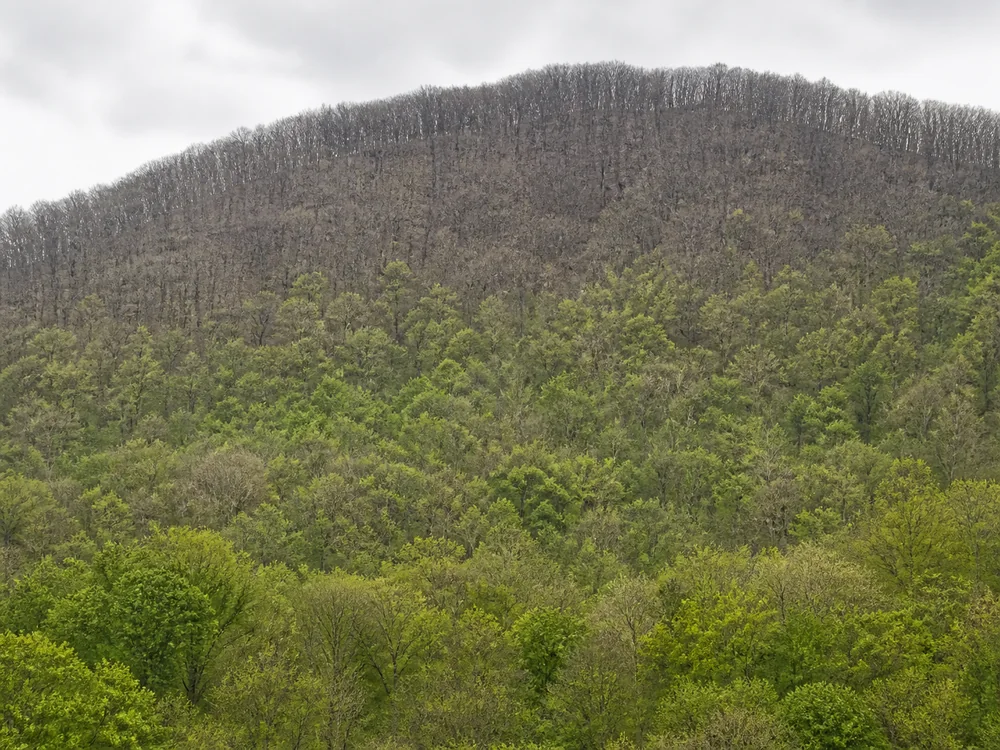
A few hundred feet a week is the working pace. That is not a rule so much as what the ground does, and a hunter who moves faster than the season arrives at bare litter.
The route across Kentucky writes itself once you accept that. Start in the western bottoms, work the Bluegrass and the Knobs through April, then spend May on the plateau and in the mountains.
Aspect works inside elevation rather than against it.
On any given slope the south and west faces run ahead of the north and east ones, so a single hollow gives a second week to whoever turns around and walks the other side.
ForagingMushroom foraging laws in Germany: protected species and small quantitiesWhich Kentucky ground holds morels
River bottoms and disturbed ground are the two settings that pay most often in Kentucky. Both give morels what they want, which is moisture in the soil and light reaching the floor.
| Kentucky setting | What it gives you | When to walk it |
|---|---|---|
| River and creek bottoms | Damp silt soil and a long window | Opening weeks, and again after rain |
| Tulip poplar and sycamore stands | Named Kentucky hosts on bottomland ground | Through the early and middle run |
| Dying elm and ash | The classic decline hosts, wherever they stand | The one or two springs after they die |
| Hickory and oak slopes | Mid-slope ground that carries the middle of the season | Middle weeks, following aspect |
| Logged or burned ground | Sunlight on disturbed soil, often heavy production | The spring after the disturbance |
Tulip poplar is worth learning by its trunk. It grows tall and straight with a buttressed base on Kentucky bottomland, and it stands in exactly the damp ground morels favor.
Sycamore is easier still, because its mottled white and gray bark shows from a long way off through bare April woods.
Disturbance is the wildcard that beats every host list. Ground that was logged or burned the previous year can produce heavily, because the canopy that used to shade it is gone and the soil is warmer and more open than the woods around it.

Dying elm and ash still matter on this ground as everywhere else.
Kentucky lost its elms to disease and is losing its ash now, and both leave standing dead wood on ground that produces for a season or two.
Logged ground deserves its own attention in a state with this much working forest. A tract cut last year has sunlight on open soil, which is close to the condition that burned ground creates.
Sunlight is the thread running through all of it. Bottoms, edges and cut ground all put more light on the soil than closed forest does.
Kentucky's true morels are the same handful of species from the Mississippi bottoms to the Virginia line, so the trees change across the state while the mushroom does not.
Black morels are usually the first thing up in the low country, ahead of the yellows by a week or more.
How to tell your local season has finished
A finished flush and a bad year look identical to a hunter who does not know the difference. The mushrooms themselves tell you which one you are looking at.
Late-season morels dry rather than rot. The caps shrivel, the ridges darken, the stems go papery and split, and the whole mushroom gets light in the hand.
A spent flush looks the same under any canopy, and the calendar matters less than what the litter and the stems are doing.

Canopy closure is the underlying cause, because it takes the light away.
Once the leaves are out, the ground below stops getting the direct light and warmth it was running on, and it dries.
That is also why the calendar disagrees with itself so often across Kentucky. Leaves close over a valley floor weeks before they close over a ridge top.
The finish moves uphill in the same order the start did. Bottoms close first, mid slopes next, and the high ground last, which is the opening sequence run backwards.
Write down the date each spot finished. Two seasons of those notes turn the climb into a schedule rather than a guess, and they tell you which ground to skip next April.
Walking the same finished bottom a fourth time is the most common way a Kentucky season gets wasted.
The ground has told you it is done, and there is higher ground an hour away that has not started.
ForagingMushroom foraging laws in the UK: what is actually legalWhat you may pick, and where
Kentucky is unusually well supplied with woods. About 12.4 million acres are forested, close to 48 percent of the state, and many eastern counties run over 80 percent forest cover.
That changes the problem from finding trees to knowing the rules on each kind of ground.
- Daniel Boone National Forest, where roughly a gallon of mushrooms may be taken for personal use without a permit
- Wildlife management areas, which generally allow personal collection
- Mammoth Cave National Park, where foraging is permitted, unlike most national parks
- State nature preserves and some private preserves, where removal is prohibited outright
Wildlife management areas are the underused option in Kentucky. They are scattered across the state, they generally allow personal collection, and they get a fraction of the pressure the national forest sees on an April weekend.
The gallon figure is worth holding onto. It is a personal-use allowance rather than an unlimited one, and collecting in larger quantities or for sale on the national forest requires a permit.
Preserves are the exception that catches people out.
Some Kentucky preserves prohibit harvesting entirely to leave the mushrooms as wildlife food, and a preserve boundary is easy to cross on foot without noticing.
Check the specific property before the drive rather than after. Rules differ between a national forest, a state park, a wildlife area and a preserve, and the sign at the trailhead is the one that governs.
Pressure on the easy ground is real, and it concentrates near the trailheads.
National forest trailheads within an hour of Lexington or Louisville get walked hard on an April Saturday, so a weekday or a longer drive is often worth more than a better map.
Generous access also puts a lot of first-season hunters in the woods with a legal bag limit and no experience. The field discipline of mushroom foraging for beginners is worth having before the bag rather than after it.
None of that access is worth much without the identification behind it. A gallon of the wrong mushroom is still the wrong mushroom.
Knowing the dangerous lookalikes matters more where the rules let you fill a gallon in an afternoon.
Every morel gets cut before it gets cooked
Color is the first thing people notice and the weakest thing to trust. False morels tend to run red, purple or brown, while true morels are yellow, tan or gray, but a young specimen of either can sit outside those ranges.
The cap shape is better evidence. A true morel is pitted like a honeycomb, and a false morel is wrinkled, folded, or lobed like a brain.
The cut reveals internal structure, but it does not establish that the specimen is safe to eat.
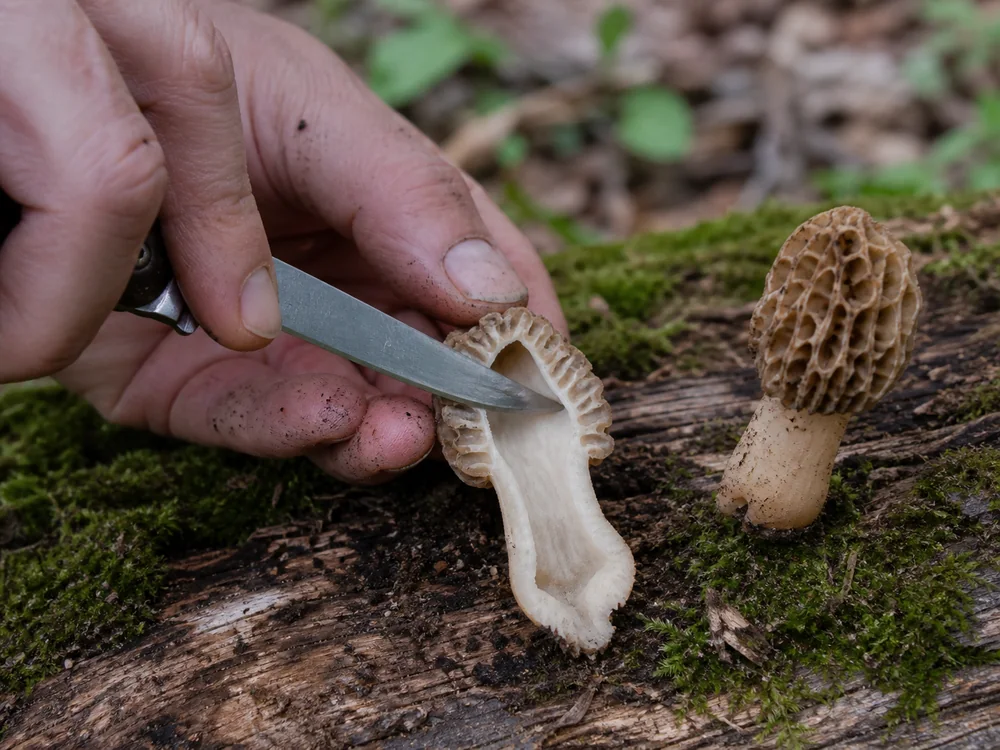
Slice from the cap tip down through the stem. A true morel is one continuous hollow chamber, and a false morel holds cotton-like fibers or chunks of tissue.
Kentucky's woods hold the same handful of morels from the Purchase to the mountains, and they arrive in an order.
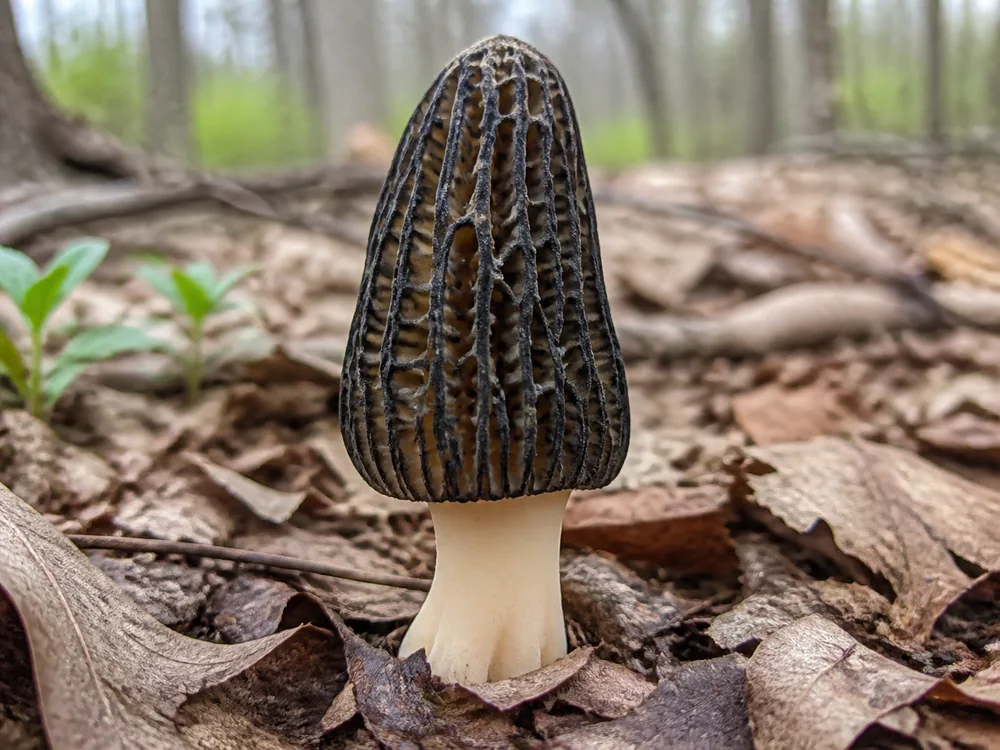 First upBlack morelEarliest of the run, and easy to walk over in dark litter
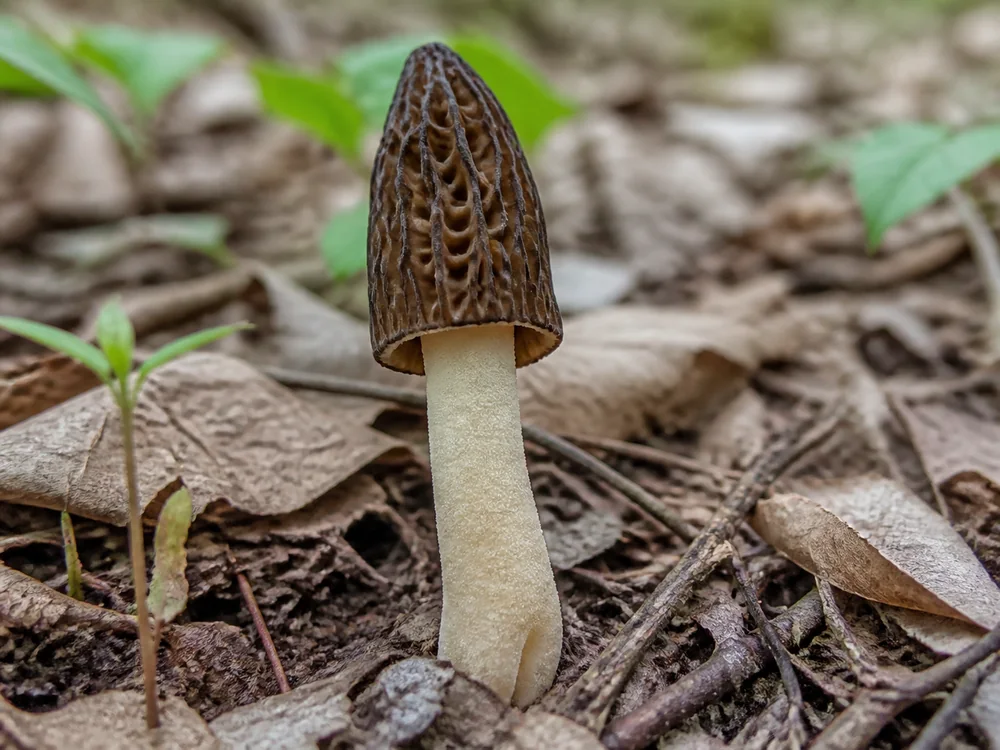 Middle of the runHalf-free morelCap hangs loose below where it joins the stem
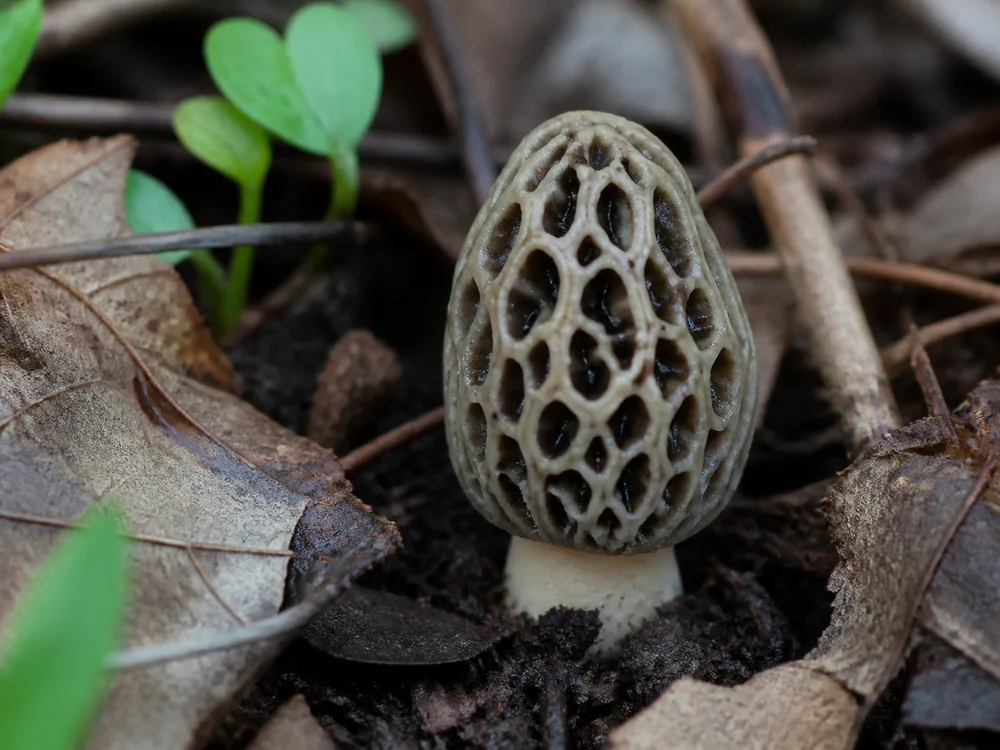 Early to middleGray morelThe young form most people find first
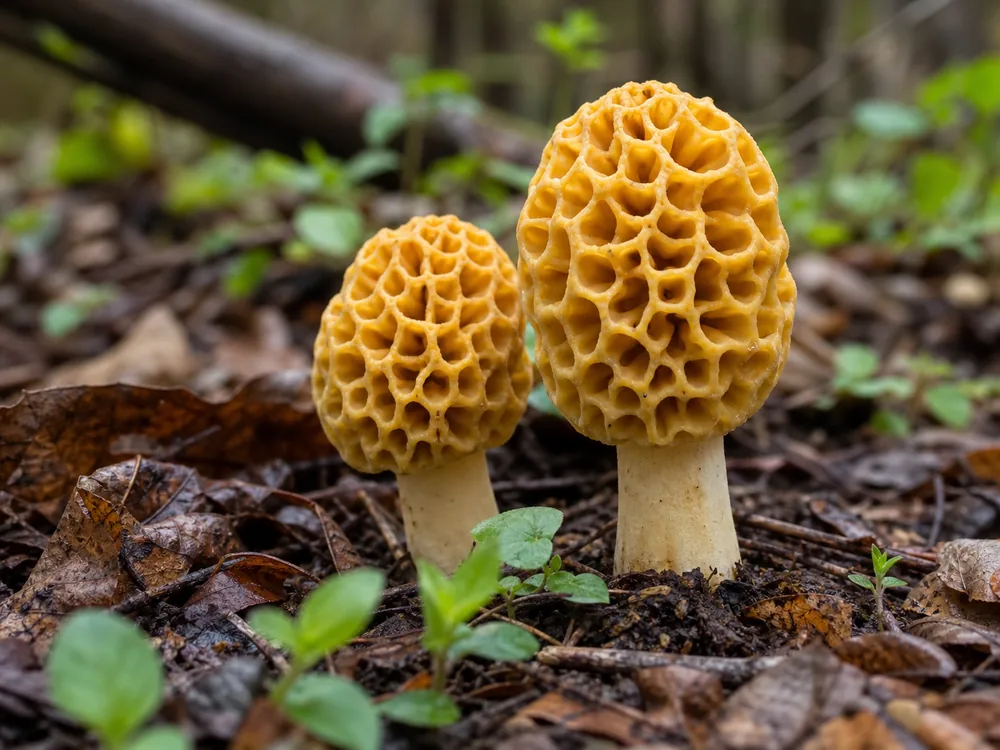 Last and largestYellow morelCarries the end of the season
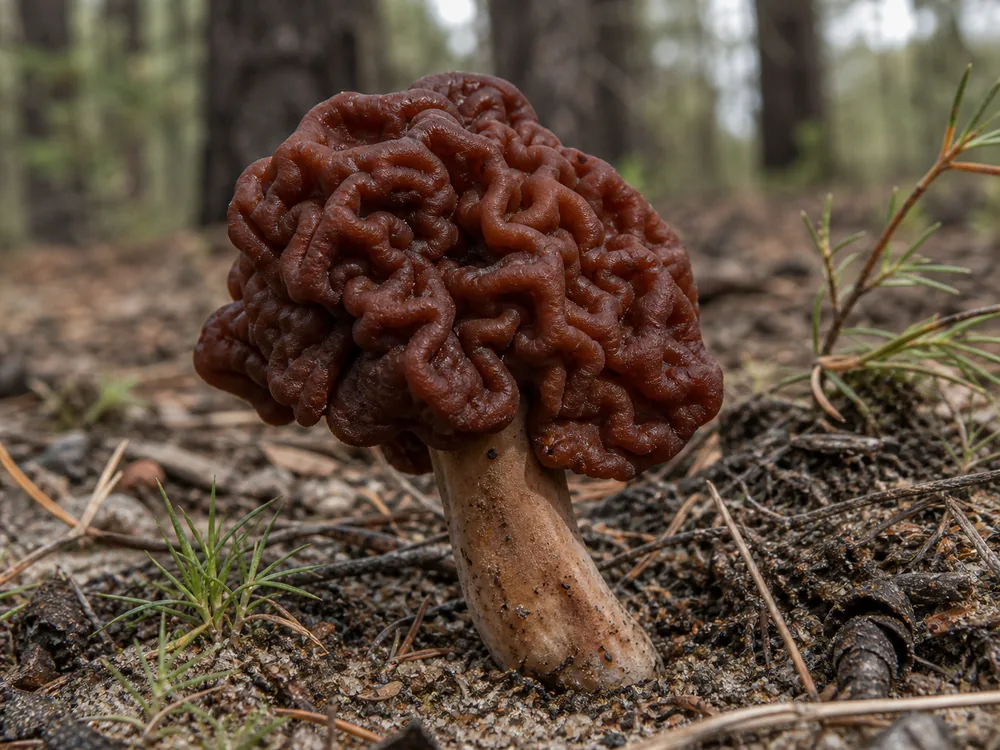 Same weeks, never edibleFalse morelWrinkled and lobed, with no honeycomb pits
Half-free morels cause a scare here every April. Their cap hangs loose below the point where it joins the stem, which looks wrong to somebody who has just learned that a free-hanging cap is a warning sign, but a half-free is hollow the whole way down.
The toxin behind that rule is gyromitrin, which the body converts to monomethylhydrazine.
It damages the liver and the nervous system, and cooking does not make a false morel safe.
Eat a small portion the first time you take morels from new ground, and skip alcohol with that meal. A few people react badly to well-cooked morels that everyone else at the table handles.
Cooking still matters for the real ones. Raw morels sicken people who identified the mushroom perfectly, so cooking morels thoroughly is part of the safety step rather than a question of taste.
Warning
If in doubt, leave it in the woods, because a gallon allowance is not a reason to keep a mushroom you are unsure about. Symptoms from a false morel usually arrive hours after the meal rather than minutes, so call Poison Control at 1-800-222-1222 and keep any uncooked mushrooms for identification.
Sources & References
- Best Practices for Mushroom Foraging in Kentucky (FOR-171), University of Kentucky Forestry and Natural Resources
- Non-Wood Forest Products, Daniel Boone National Forest, USDA Forest Service
- Forest Facts, Kentucky Energy and Environment Cabinet
- Morel Mushroom Hunting in Kentucky, Bernheim Arboretum and Research Forest