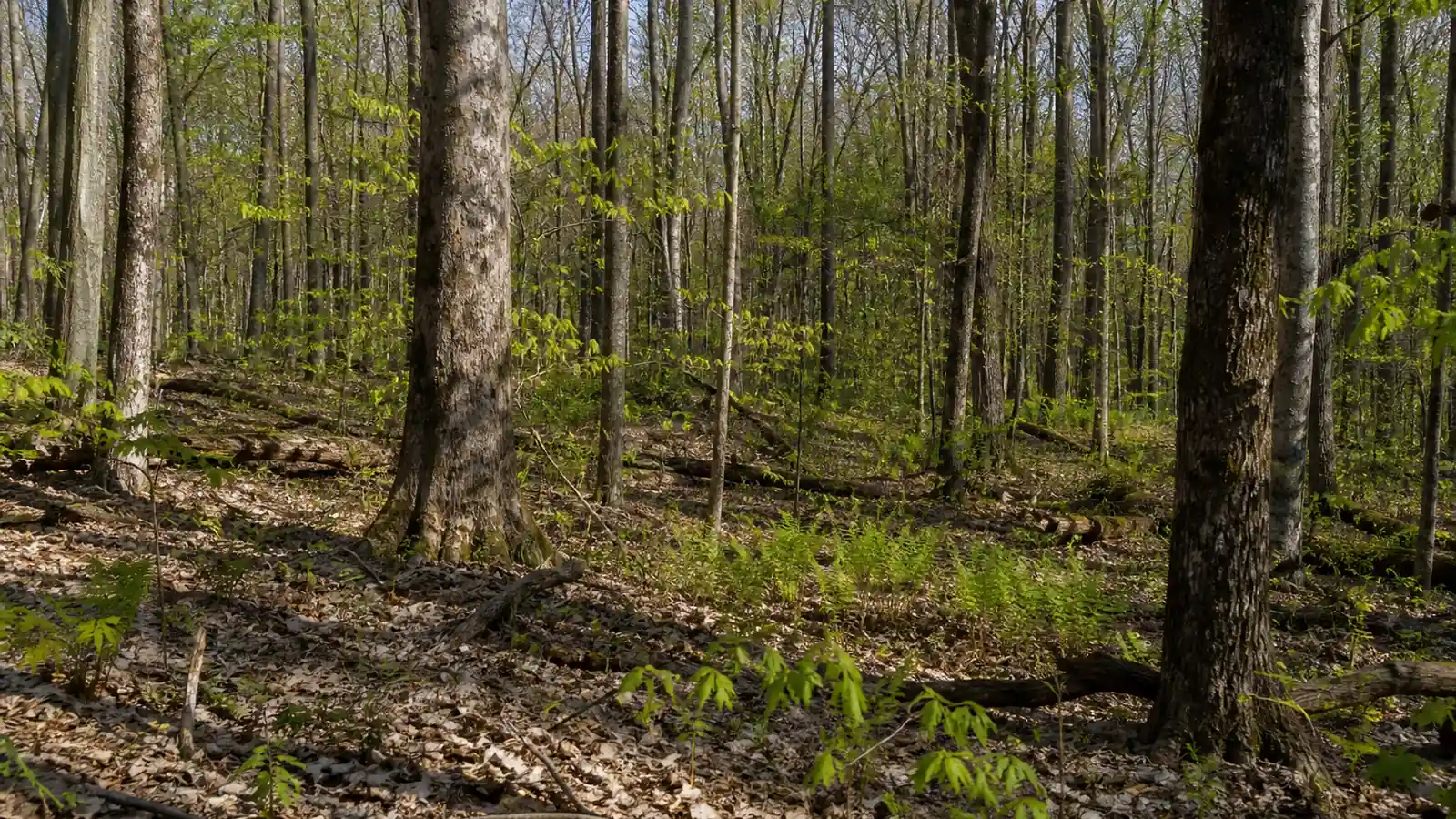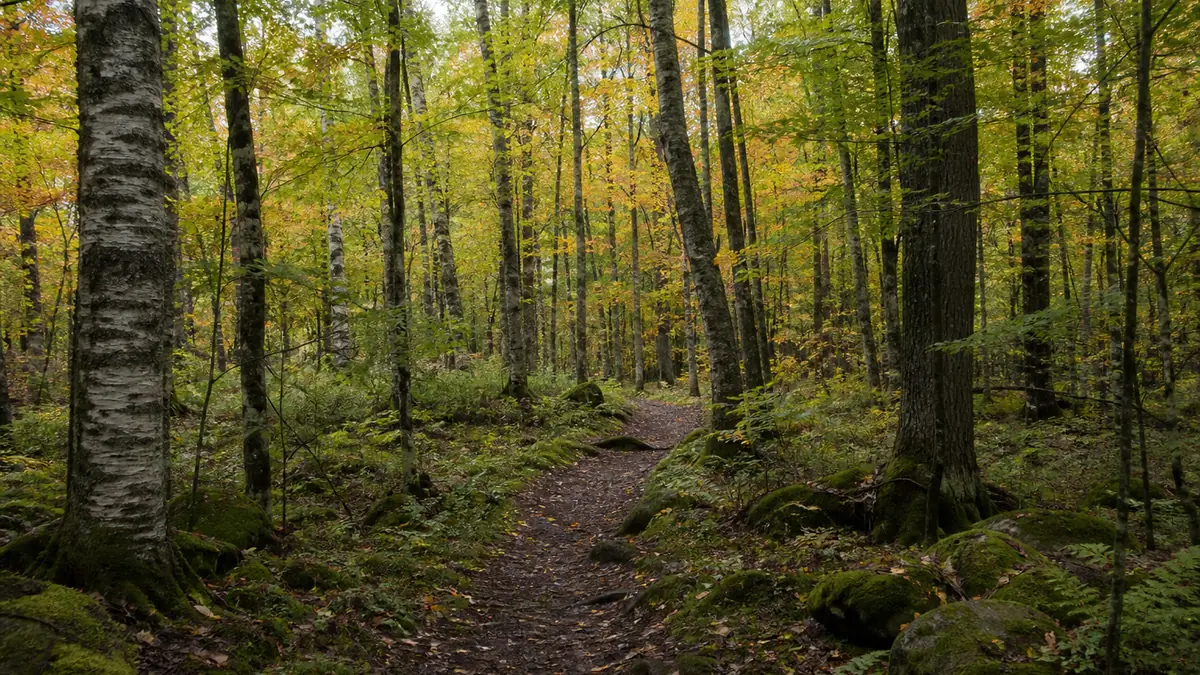
Tennessee morels run from late March to mid May, with April 1 as a workable anchor. The harder problem is that most Tennessee soil turns acid without lime while morels prefer neutral to slightly alkaline ground, so the state's morels concentrate where limestone sits close to the surface and the first thing to judge is the rock rather than the trees.
Tennessee morels come up between late March and mid May, and April 1 is close enough to an anchor that most hunters plan around it.
Knowing that does not help as much here as it does elsewhere, because Tennessee hides a problem the calendar cannot fix.
Most of the state's soil is working against you.
Why Tennessee is harder ground than it looks
Morels favor soil that runs neutral to slightly alkaline. University of Tennessee Extension puts most of the state's soils between pH 4.5 and 7.5 and notes that they turn acid unless lime is applied, which leaves a large share of Tennessee woodland below the range the mushroom prefers.
That single mismatch explains a frustration Tennessee hunters know well.
You can find a hillside with dying elm, good moisture, the right slope and a perfect April week, walk it carefully, and find nothing. Then you can do it again the next spring, and the spring after that.
The trees were never the problem. The rock underneath them was.
Hunters in Missouri or Iowa can more or less ignore soil chemistry.
Their ground is closer to what the mushroom wants to begin with, and in Tennessee soil chemistry is the first filter rather than the last.
ForagingMushroom foraging laws in France: what the five liter rule meansWhy limestone country carries the season
Limestone raises soil pH as it weathers. Where it sits close to the surface, the ground above it runs sweeter than the state average, and that is where Tennessee's morels concentrate.
The Central Basin around Nashville is the clearest limestone case.
It is a limestone floor with thin soil over it, and it behaves nothing like the acidic plateau country to its east.
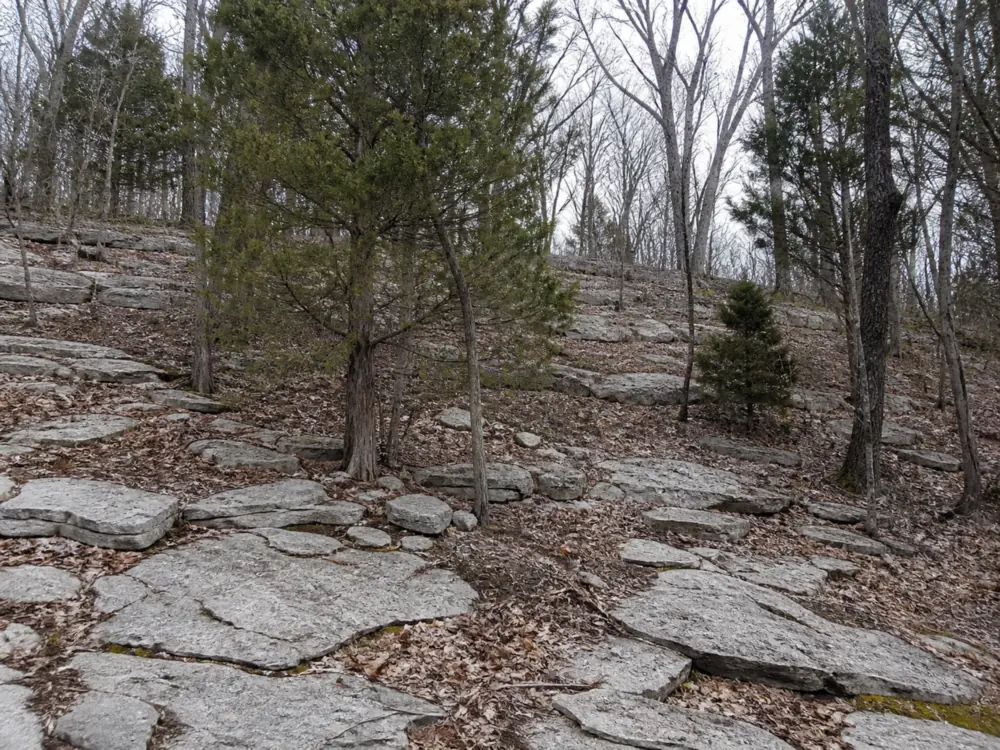
Limestone does something else that matters. It fractures and drains, so the soil above it stays moist without going waterlogged, which is the condition morels want and heavy acidic clay rarely gives them.
The practical version of the limestone rule is short.
Learn one limestone hillside properly and it will outproduce ten good-looking woodlots on the wrong rock.
The Highland Rim is the boundary that catches Nashville hunters out. It rings the Central Basin in chert and acidic soil, so a drive of thirty minutes outward from good limestone can put you on ground that will not produce.
That rim is also why local knowledge travels badly here.
Advice that works on the Basin floor can be useless to somebody an hour away on the Rim, even though both of them will tell you they hunt Middle Tennessee.
Bluffs along the rivers are the version of this that works outside the Basin. The Tennessee, Cumberland, Duck and Harpeth all cut through limestone in places, and the wooded benches under those bluffs carry the same advantage in counties that are otherwise acidic.
That is why Tennessee hunting tends to be narrow and vertical rather than broad. You are working a band of ground where the rock is right, not sweeping a whole property.
What sweeter ground looks like from the truck
You can read most of this before you get out, which saves a great deal of walking.
Eastern red cedar is the single most useful sign in Middle Tennessee. It tolerates thin dry limestone soil that other trees will not, so a hillside carrying cedar among the hardwoods is usually telling you the rock is close.

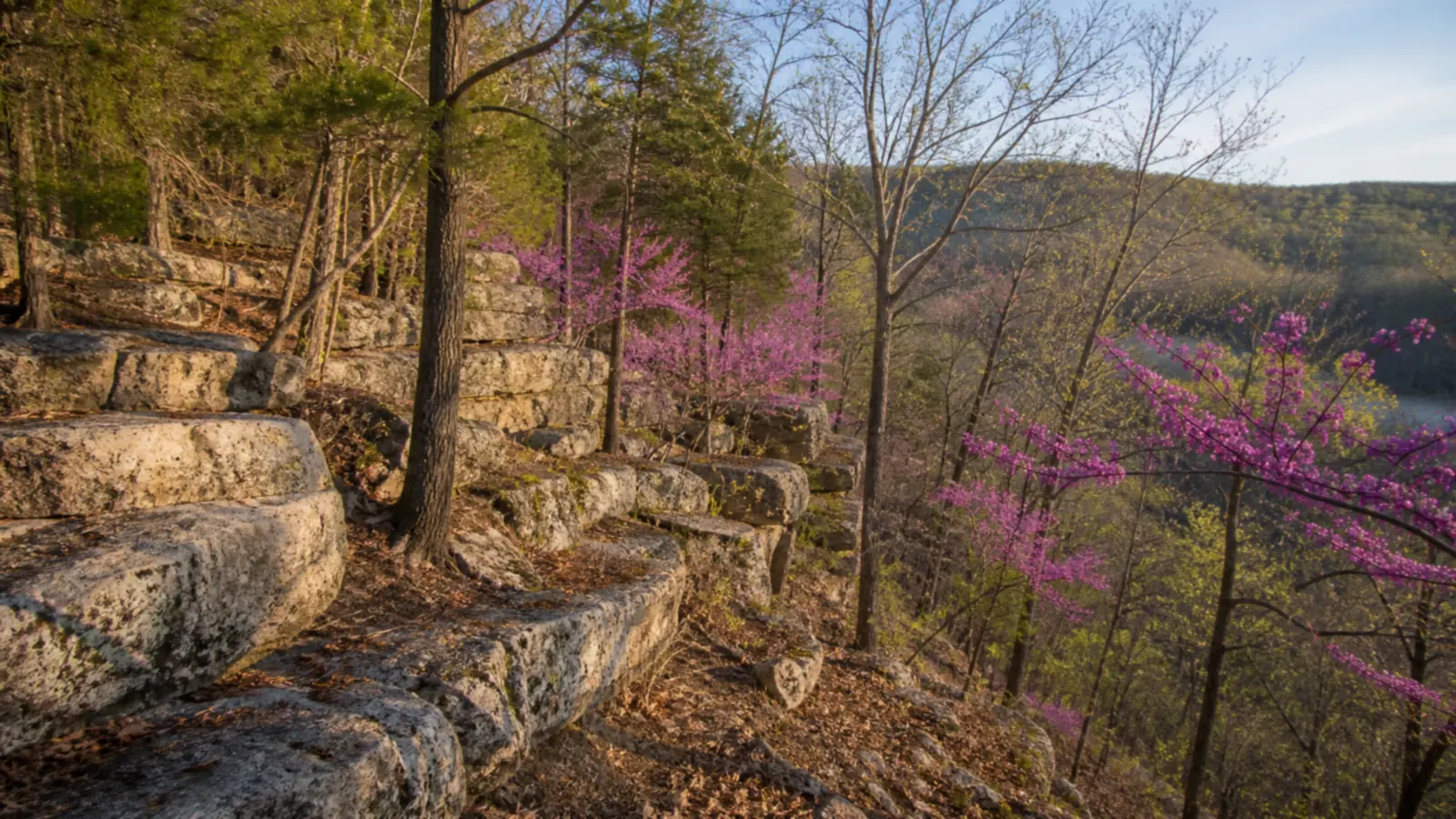
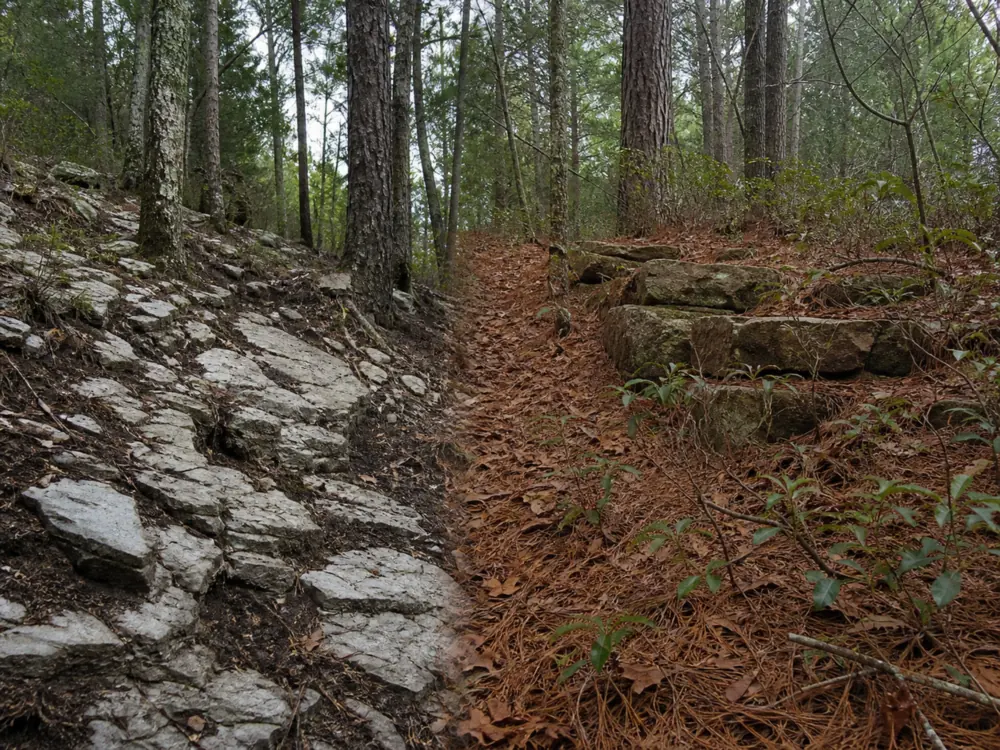
Exposed rock is the second sign, and the most direct one. Gray slabs and stepped ledges showing through the litter mean you are standing on the thing that fixes the pH.
Redbud is worth watching for a different reason than the rock.
It is common on limestone ground and it flowers at close to the right moment, so a slope lit up with magenta in early April is often pointing at both the right rock and the right week.
Old homesteads deserve a look for a third reason again. Lime was spread on fields and orchards for generations, and some of that ground still runs sweeter than the woods around it.
None of these is proof on its own. Together they are enough to decide whether a hillside is worth an hour.
ForagingMushroom foraging laws in Germany: protected species and small quantitiesWhich of the three divisions you are hunting
Tennessee is unusually long from west to east, and the three divisions are genuinely different ground rather than administrative lines.
| Division | What the ground is | What it means for morels |
|---|---|---|
| West Tennessee | Mississippi alluvial plain, deep loess and river bottom silt | River bottoms and old field edges produce, uplands mostly do not |
| Middle Tennessee | Central Basin limestone, ringed by the Highland Rim | The strongest and most consistent ground in the state |
| The Cumberland Plateau | Sandstone and shale, acidic and often thin | Difficult, and worth skipping unless you know a limestone seam |
| East Tennessee | Ridge and valley limestone alternating with acidic ridges | Good in the valleys, poor on the ridges, and the two sit side by side |
| The Smokies | Ancient metamorphic rock, acidic, high elevation | Late, difficult, and largely closed to collecting anyway |
Ridge and valley country in East Tennessee is the part that catches people out. Limestone valleys and acidic ridges alternate every few miles, so two hillsides twenty minutes apart can behave like different states.

Slope aspect still applies inside all of this, and it moves the week rather than the odds. South-facing slopes warm first and produce early, north-facing ones run later, which gives a single hillside two passes.
When each division turns on
Tennessee runs nearly 440 miles from the Mississippi to the mountains, and the season crosses it west to east rather than south to north.
Two of those bars come with a warning attached. The plateau only produces where the rock allows it at all, and the Smokies are largely closed to collecting whatever the calendar says.
The April 1 anchor works because it sits in the middle of that spread. Two weeks either side of it covers most of the state in most years.
Soil temperature is the honest trigger underneath the date.
Ground in the low fifties after a warm rain is what actually starts things, and a hunter who takes one reading on their own hillside learns more than a statewide forecast will ever tell them.
Elevation stretches the eastern end of the calendar. The valleys can be finished while ground a few thousand feet above them has not begun, which is why the mountains read as late rather than as a separate season.
ForagingMushroom foraging laws in the UK: what is actually legalWhich trees to walk once the rock is right
The host list is the ordinary one. Dying and recently dead elm first, ash behind it now that the borer has worked through the state, and old orchard apple where a homestead has gone back to woods.
What changes in Tennessee is which of those dying trees is worth your time.
A dying elm on acidic plateau soil is a far weaker prospect than the same tree on a limestone bench, so the rock decides whether the tree is worth walking rather than the other way round.
River bottoms in West Tennessee work on silt rather than on limestone. Deep alluvial ground there carries its own chemistry, which is why the western bottoms produce while the uplands around them do not.
West Tennessee deserves more than the table gives it. The bottoms along the Mississippi, Hatchie and Forked Deer carry deep silt that behaves well regardless of the limestone question, and the old field edges between bottom and upland are worth walking before the uplands themselves.
Where you may legally pick
This one is short and it matters, because Tennessee is stricter than most of its neighbors.
Warning
Foraging is not allowed in Tennessee state parks, which rules out a great deal of ground people assume is open. The boundaries are not always obvious on foot and the penalty falls on the person carrying the bag, so check the designation before the drive rather than after.
Other public land is more permissive, and Land Between the Lakes is the standout. It runs to more than 170,000 acres of forest and open land on the peninsula between Kentucky Lake and Lake Barkley, spanning the Tennessee and Kentucky line.
Cherokee National Forest is the main open ground in East Tennessee, running along the mountains on both sides of the Smokies. Personal-use collecting is generally allowed on national forest, which makes it the practical answer for hunters in that end of the state.
The Smokies themselves are the exception.
Great Smoky Mountains National Park does not permit mushroom collecting, so the highest and latest ground in Tennessee is closed to a hunter even in the weeks when it would be producing.
Check the individual property rather than the category. National forest, wildlife management areas and county ground each set their own terms, and private land needs the conversation regardless.
Before it goes in the pan
False morels come up in the same Tennessee weeks and the same woods, and the big red false morel gets large enough here to be genuinely tempting.

Cut every one lengthwise before it joins the others in the bag, because the cap alone is not enough.
- True morel
- One continuous hollow chamber from cap tip to stem base
- False morel
- Cottony fill or separate chambers inside
- Cap surface
- Honeycomb pits and ridges, never brain-like folds
- Cooking
- Thorough every time, and never a raw taste
- Doubt
- Leave it standing, because no meal is worth it
Tennessee holds the same handful of morels from the Mississippi bottoms to the mountains, and they do not all arrive in the same week.
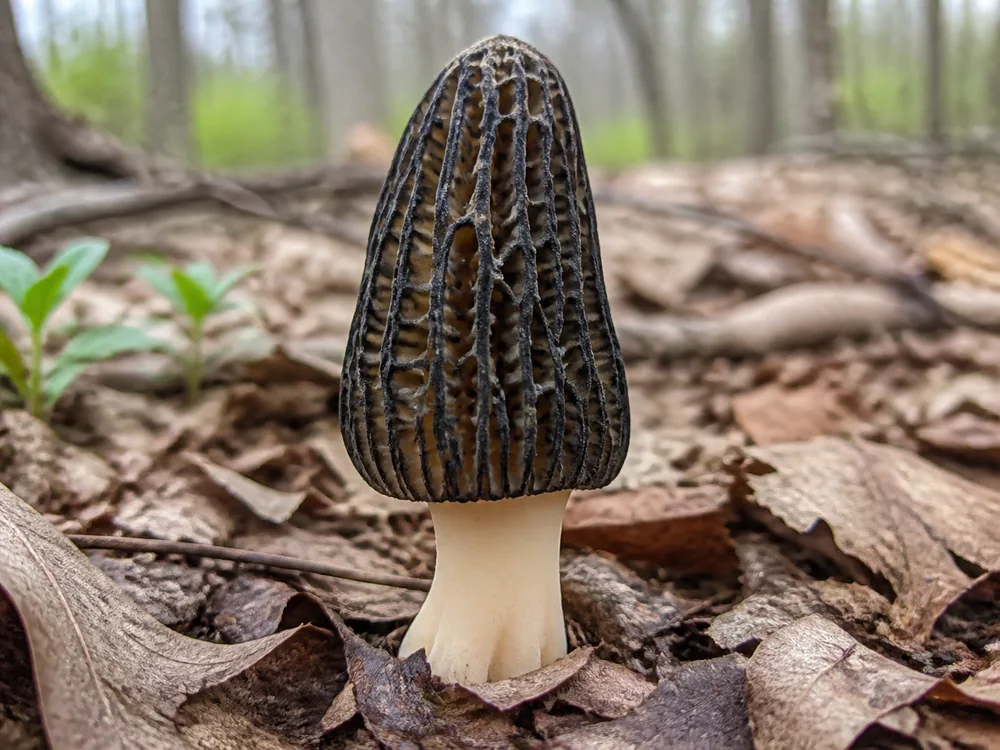 First upBlack morelEarliest of the run, and easy to walk over in dark litter
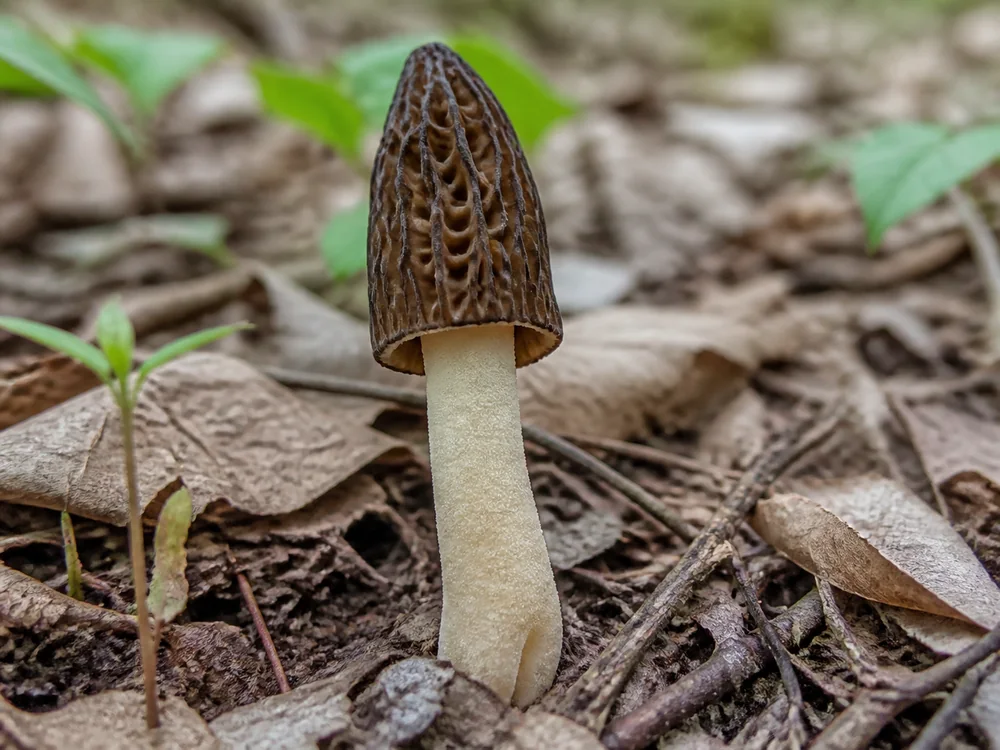 Middle of the runHalf-free morelCap hangs loose below where it joins the stem
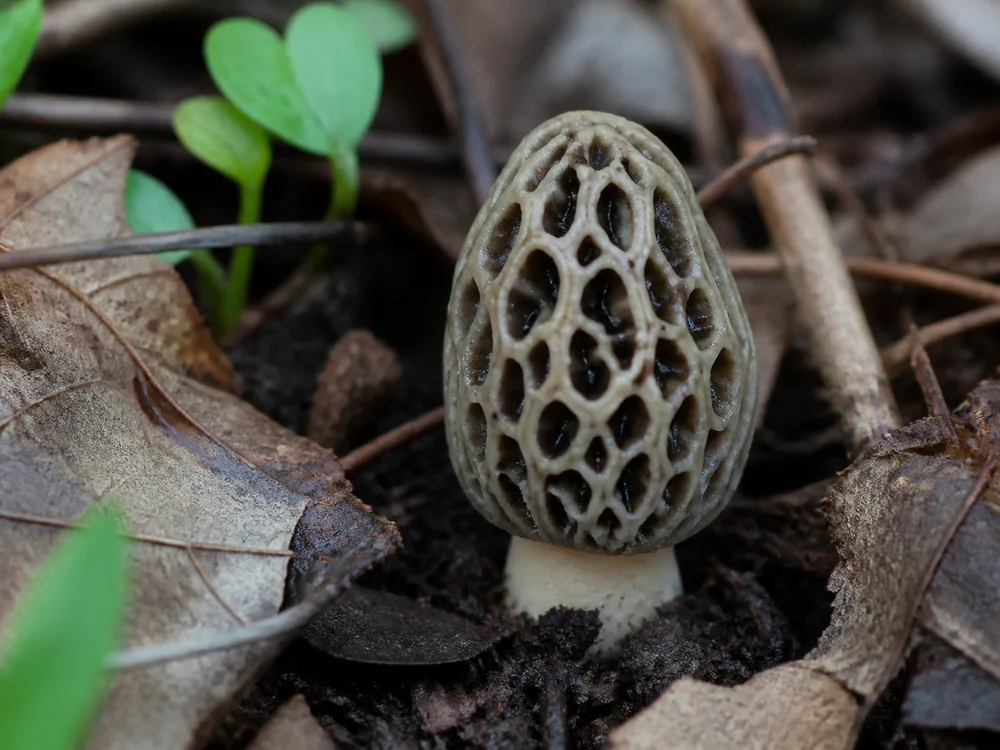 Early to middleGray morelThe young form most people find first
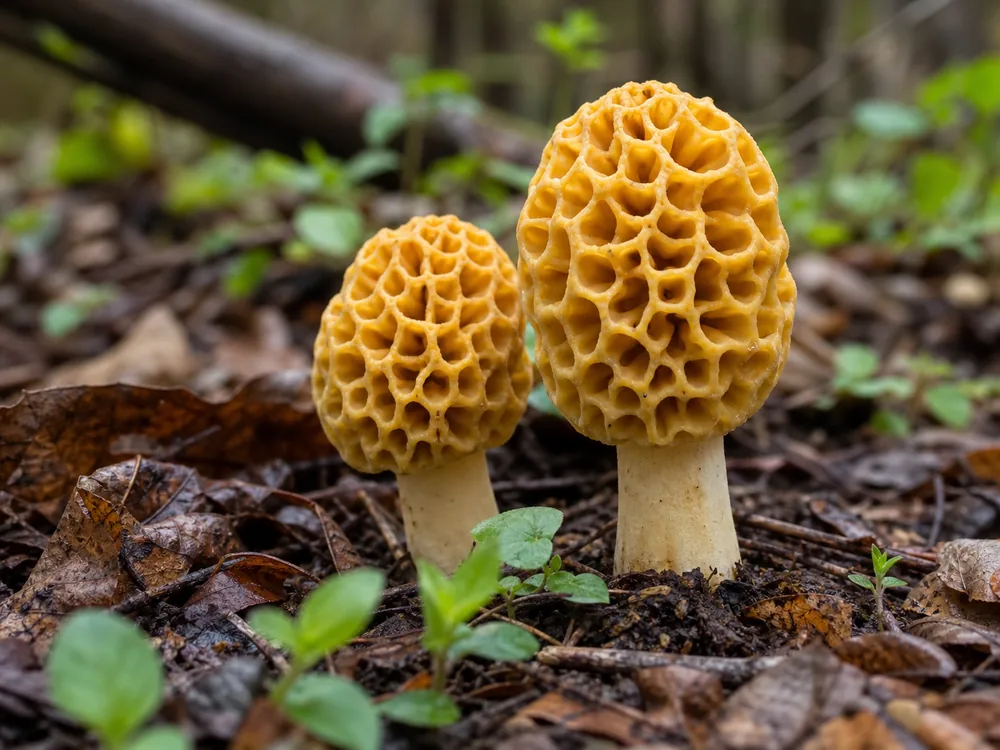 Last and largestYellow morelCarries the end of the season
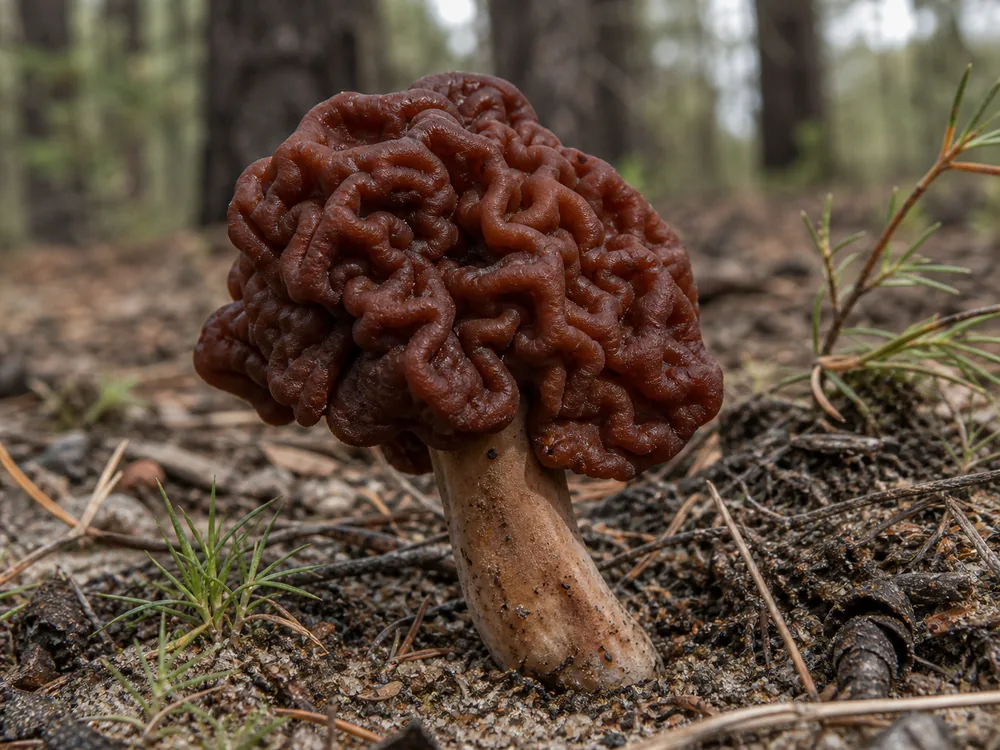 Same weeks, never edibleFalse morelWrinkled and lobed, with no honeycomb pits
Half-free morels cause a separate scare each April. Their cap hangs loose below the point where it joins the stem, which alarms anyone who has just learned that a free-hanging cap is a warning sign, but a half-free is hollow the whole way down but hollowness alone cannot confirm identity.
The toxin that makes false morels dangerous is gyromitrin, which the body turns into monomethylhydrazine. Cooking does not make it safe, so a chambered specimen is a discard rather than a cooking problem.
Raw morels sicken people who identified the mushroom correctly, so cook them through, take a small portion the first time from new ground, and skip alcohol with that meal.
If symptoms arrive hours after eating rather than minutes, treat the delay as the warning it is and call Poison Control at 1-800-222-1222.