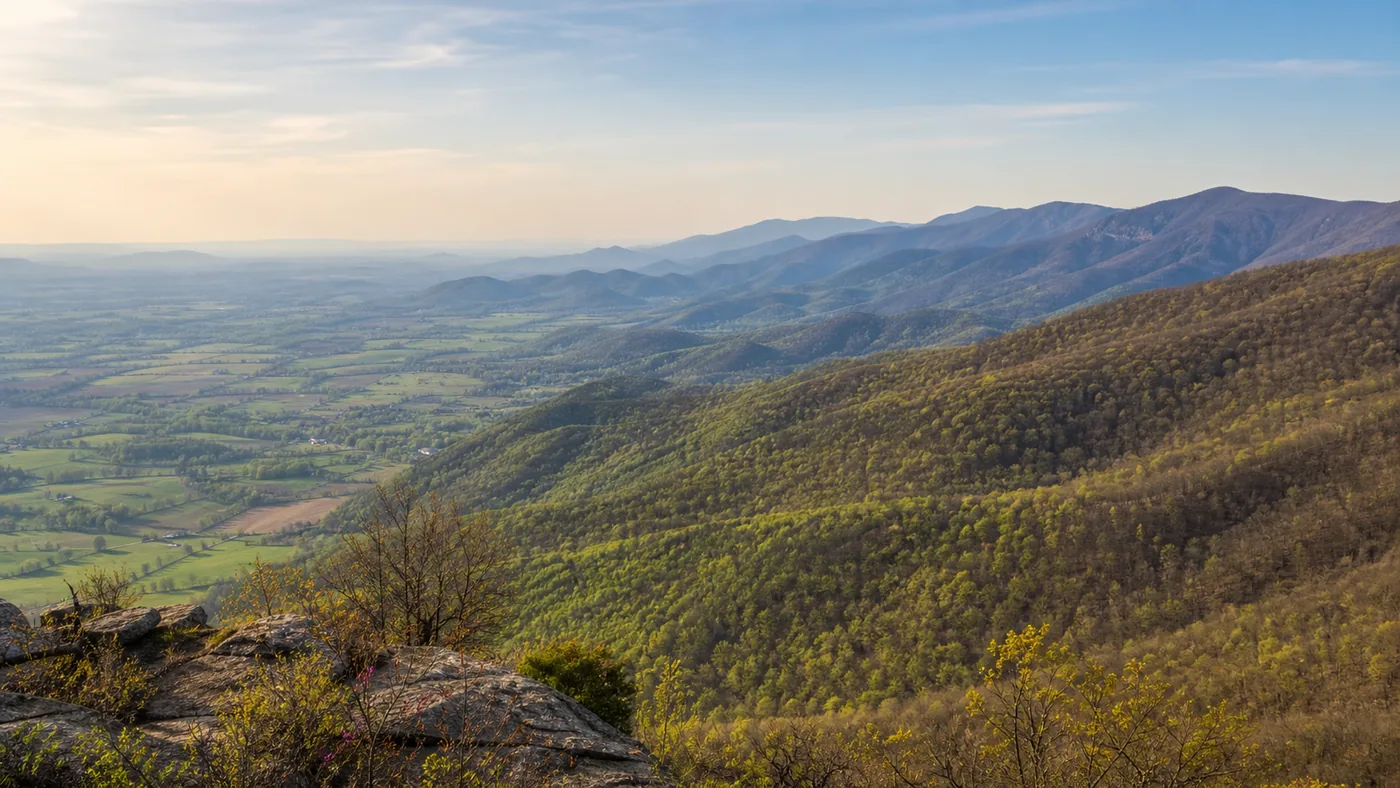
Virginia morels have been found from March 20 into mid May, though prime in the western part of the state is only about three weeks, from mid April into the first week of May. Because Tidewater runs roughly two weeks ahead of the mountains and the Piedmont about one week ahead, a hunter who starts on the coastal plain and follows the season west can turn three weeks of prime into five or six.
Virginia morels have turned up as early as March 20 and as late as mid May. Prime is a good deal shorter than that.
Western Virginia gets about three weeks of prime, from mid April into the first week of May.
The rest of the state runs ahead of that on a schedule you can count in weeks.
What three weeks actually buys you
Prime in western Virginia is short, and the state hands you a way to stretch it.
The Piedmont runs a week ahead of the mountains, and Tidewater runs two weeks ahead. That is not a vague gradient, it is a number you can put in a calendar.
Note
A hunter living in Richmond or Norfolk is closer to the start of the season than anyone in the mountains. Work the coastal plain and the Piedmont through late March and April, then follow the season west into the Blue Ridge as your home ground finishes.
Three weeks at home becomes five or six for anyone willing to drive, and the drive across Virginia is a short one by the standards of this cluster of states.

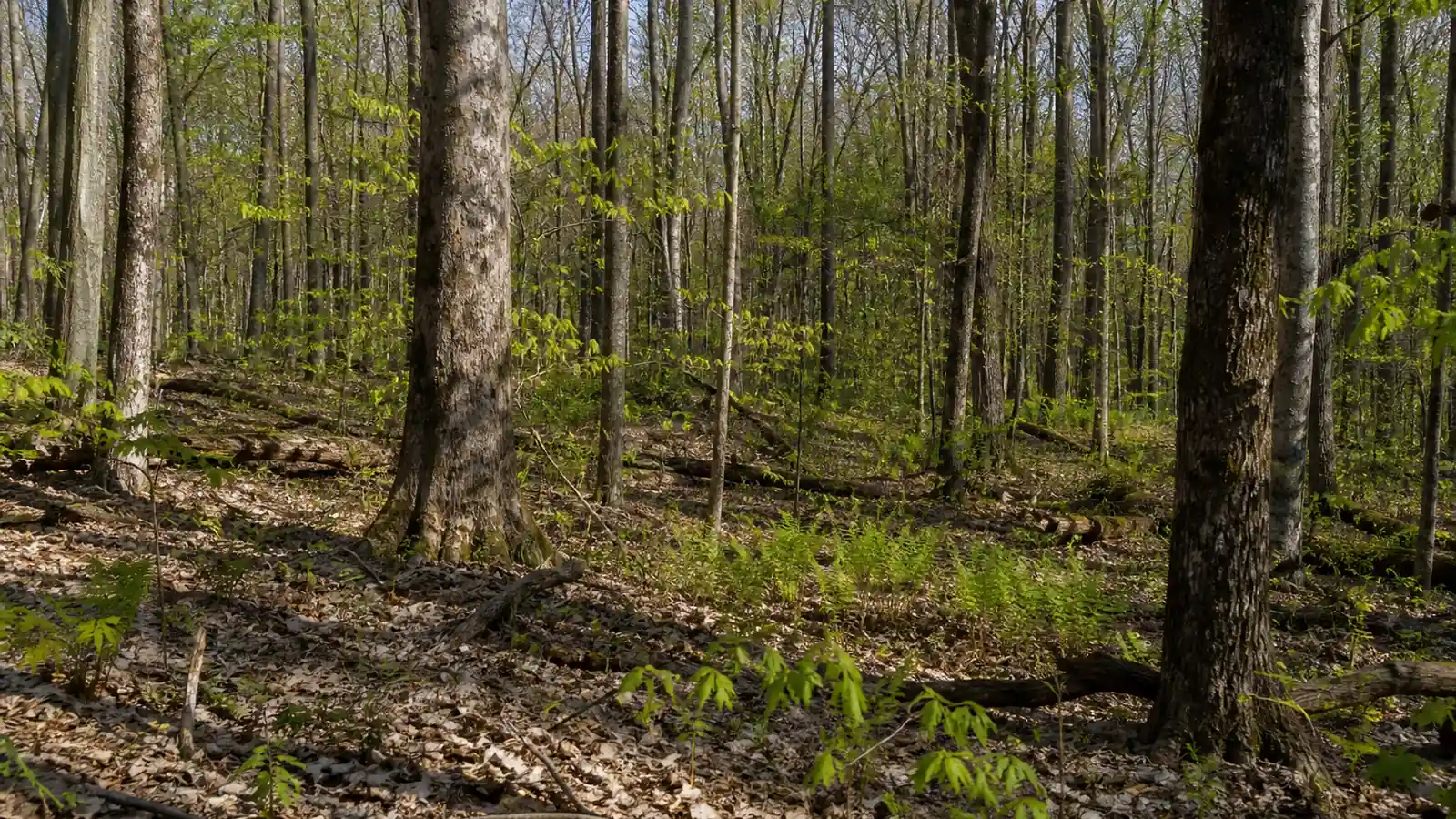
The eastern end needs its own ground, though, because it is not mountain country. Tidewater and the lower Piedmont are river bottoms, old farm edges and second growth rather than coves, so the trees carry the search there instead of the terrain.
Look for dying elm along field margins and creek bottoms, and for old orchard apple at farmsteads that went back to woods a generation ago.
Elevation does the same work inside the mountains that longitude does across the state. A cove at the bottom of a Blue Ridge hollow opens well before the ridge above it, so one property can be walked twice.
ForagingMushroom foraging laws in France: what the five liter rule meansThe number Virginia gives you
Most states tell you to wait for soil in the low fifties. Virginia is more precise than that.
Morels start coming up once the soil holds 54 degrees for about three days, provided moisture and air temperature have come along too.
Three days is the part people skip. A single warm afternoon that lifts the reading and then drops back overnight does not start anything, and the run of days is what matters.
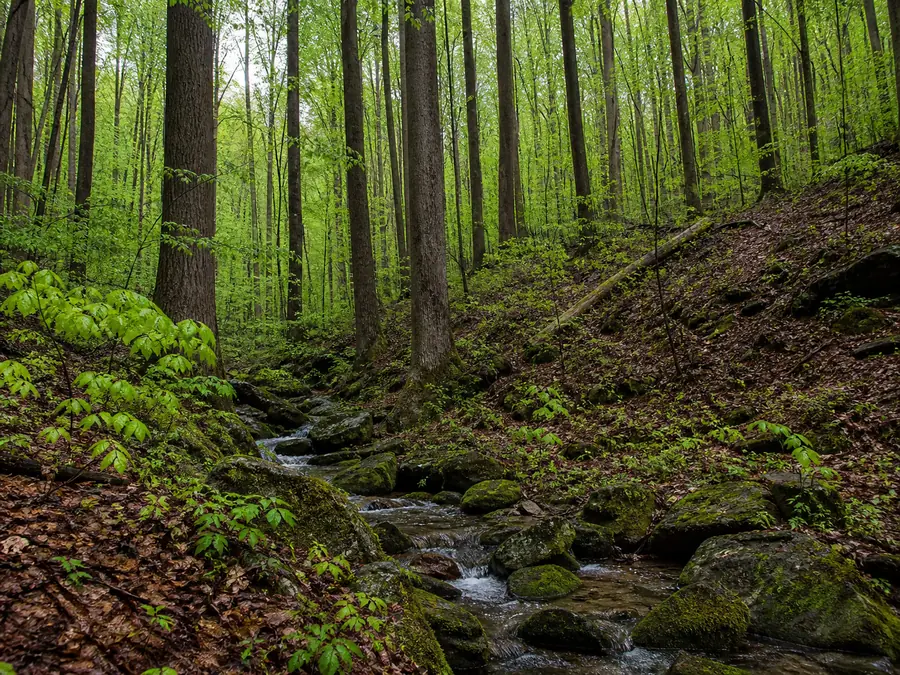
Take the reading where you mean to hunt rather than where you live. A sunny south-facing bank and a shaded cove bottom on the same mountain can sit several degrees apart on the same morning.
Rain sets the pace once the ground is there. A soaking rain on soil already holding 54 brings a flush within the week, and the response takes several days rather than arriving overnight.
Nobody carries a thermometer every morning, and the woods keep the same calendar anyway.
Redbud is the old Appalachian read, opening in a magenta haze along roadsides and woodland edges while the canopy above is still bare. Dogwood follows it, and the stretch between the two covers most of what Virginia calls morel season.
The advantage of a redbud cue is that you can check it at forty miles an hour. A drive to work tells you whether the ground you meant to walk on Saturday has caught up yet.
Canopy state is the coarser version of the same reading. Woods still fully bare are early, woods in light open leaf are usually in it, and woods closed into deep shade have generally finished.
ForagingMushroom foraging laws in Germany: protected species and small quantitiesHow to tell your ground is finished
A blank walk is worth reading rather than repeating.
Bare buds over cold litter mean the ground is early, and the answer is to come back rather than to move.
Dry crumbling litter under a canopy that has closed overhead means something else entirely. That ground is done for the year, and no number of return trips will change it.
Those late-season morels dry rather than rot, which makes the evidence easy to read. Shriveled caps, darkened ridges and papery split stems all say the flush has ended on that hillside.
Canopy closure is the cause underneath it, because once the leaves are out the floor stops getting the light and warmth it was running on, and it dries.
That is the moment to drive west. Leaves close over a Tidewater bottom weeks before they close over a Blue Ridge cove, so the ground that has quit at home is still two weeks short of quitting in the mountains.
Write down the date each spot finished. Two springs of those notes turn the drive west into a schedule rather than a guess.
Where you may pick, and the part that surprises people
Virginia's rules are not arranged the way most people assume.
The strictest-sounding land in the state is the most generous. Shenandoah National Park allows collecting edible mushrooms for personal use at one quart per person per day, and it singles morels out for one gallon per person per day.
That is four times the allowance every other edible mushroom gets in the same park.
Most national parks do not permit mushroom collecting at all, and Great Smoky Mountains a few hundred miles down the same mountain chain is one of them. A Virginia hunter can legally walk a national park that a Tennessee hunter cannot.
Warning
The Shenandoah allowance covers edible mushrooms only. Collecting inedible mushrooms, including medicinal and woody shelf species, is prohibited there, and the park is explicit that no mushroom should be eaten unless you can identify it correctly.
A gallon of morels is more than a Virginia day usually gives, so the limit rarely decides how much you carry out.
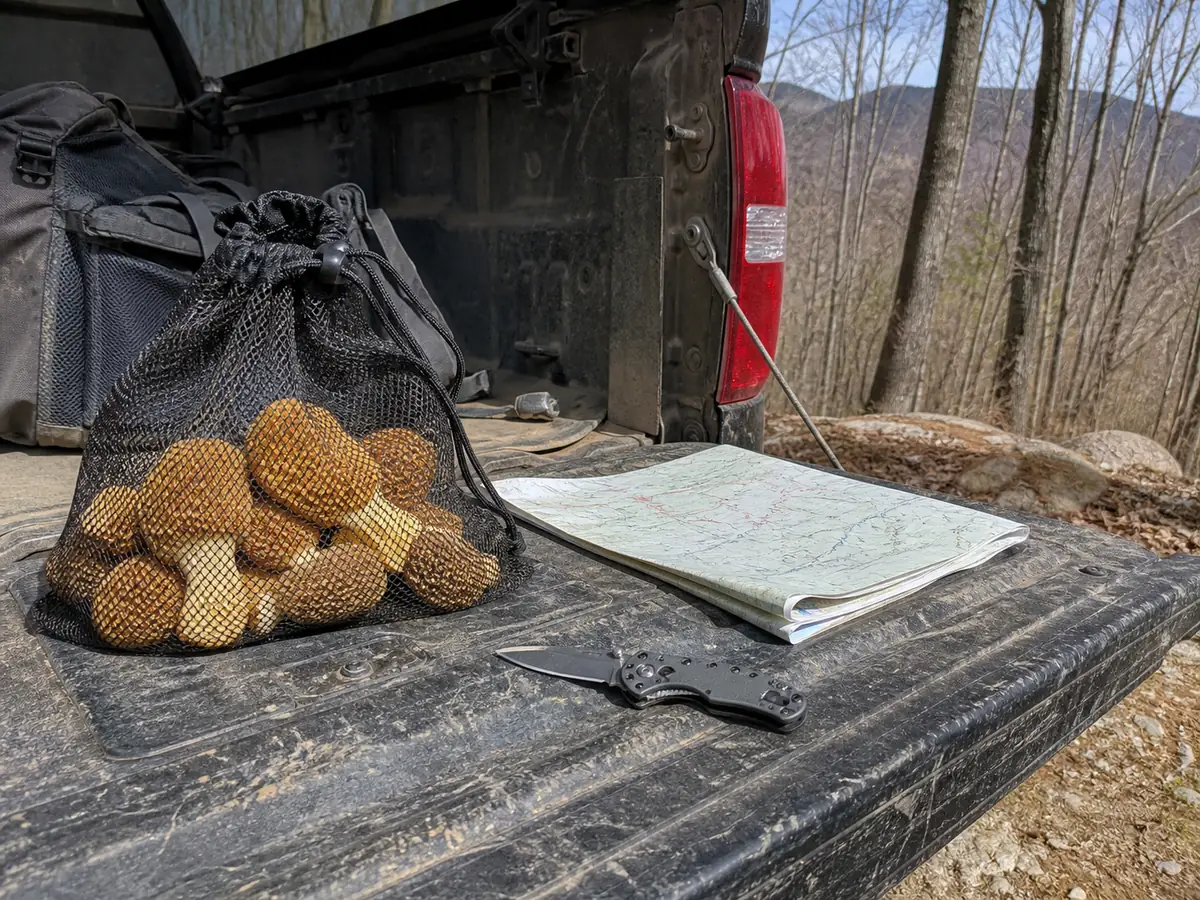
The national forests are the other large block, and George Washington and Jefferson cover a great deal of western Virginia where gathering mushrooms for personal use is allowed.
Wildlife management areas are where the paperwork appears. Picking mushrooms and other fruits on a WMA is allowed for personal use, but reaching the ground legally takes an access permit, a valid Virginia hunting, fishing or trapping license, a boat registration, or a Restore the Wild membership.
Sort that out in February rather than in April. A WMA access permit bought the week the season opens is a week of the season spent buying a permit.
ForagingMushroom foraging laws in the UK: what is actually legalWhat to walk once you are on the ground
Virginia's host list is short and it is the familiar eastern one.
- Tulip poplar, especially in sheltered coves and on lower slopes
- Dying and recently dead elm, wherever it still stands
- Ash, now dying widely across the state
- Old orchard apple at farmsteads that have gone back to woods
Tulip poplar is the tree to learn first here. It grows tall and straight with pale interlacing bark, it favors the damp cove ground morels want, and it is common through the Blue Ridge and the Piedmont alike.

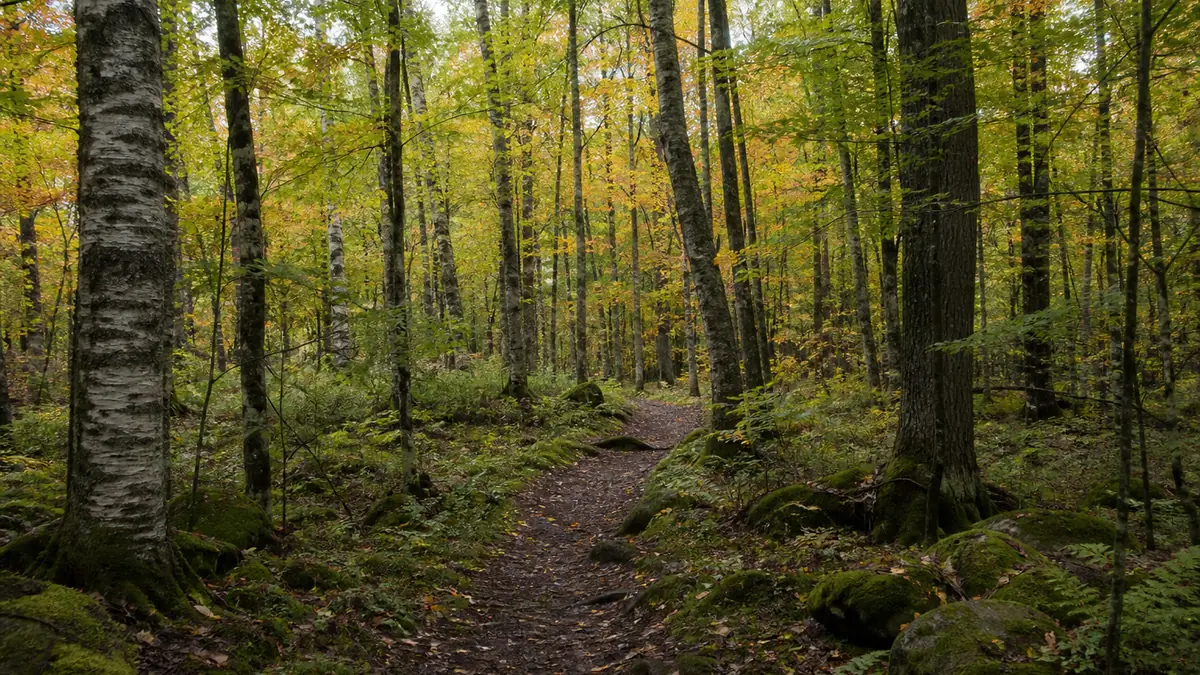
Coves are the Virginia shape worth learning. A sheltered hollow with a stream in the bottom holds damp ground and deep litter well after the open ridges have dried out, which is why the last good week of a Virginia season is usually spent low rather than high.
Pick in a way that lets the cove pay again next April. Cut or pinch the stem at ground level rather than pulling the mushroom up with a plug of soil, and carry the take in a mesh bag so spores fall as you walk.
Leave the litter as you found it, because raking through leaves to expose more ground disturbs the damp layer the fungus is living in.
Ash has become the second tree here as it has everywhere else. A trunk in the first year or two after death is the one worth circling, and one that has already dropped its bark has usually finished.
Which morel you are holding
Those are not all one mushroom, and the differences decide both your timing and your safety.
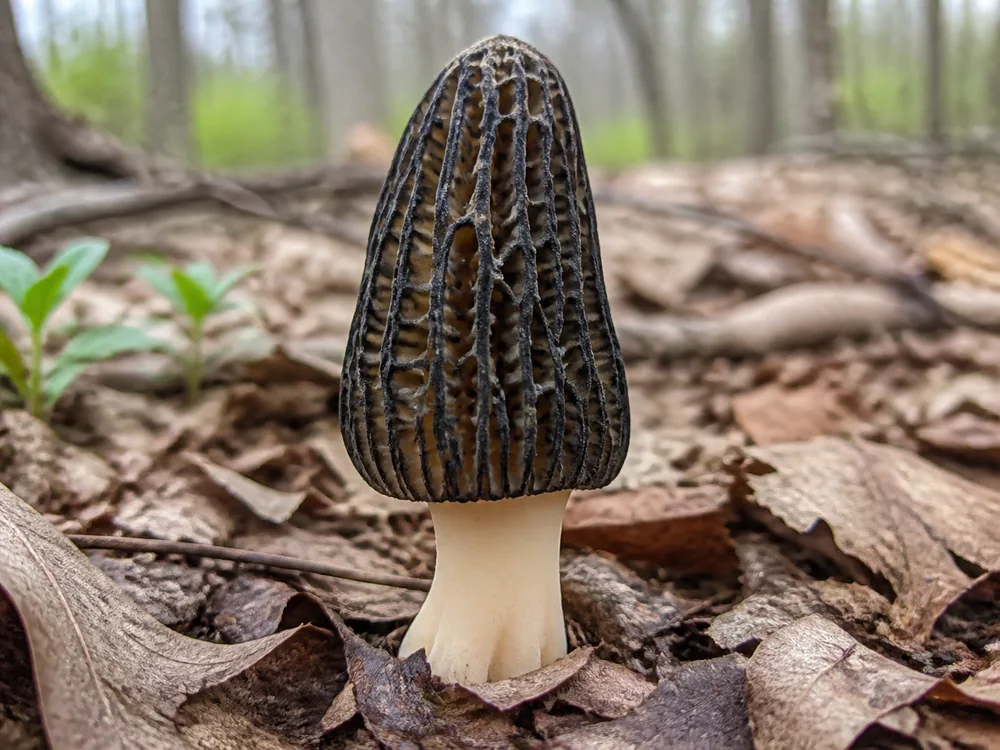 First upBlack morelEarliest of the run, and easy to walk over in dark litter
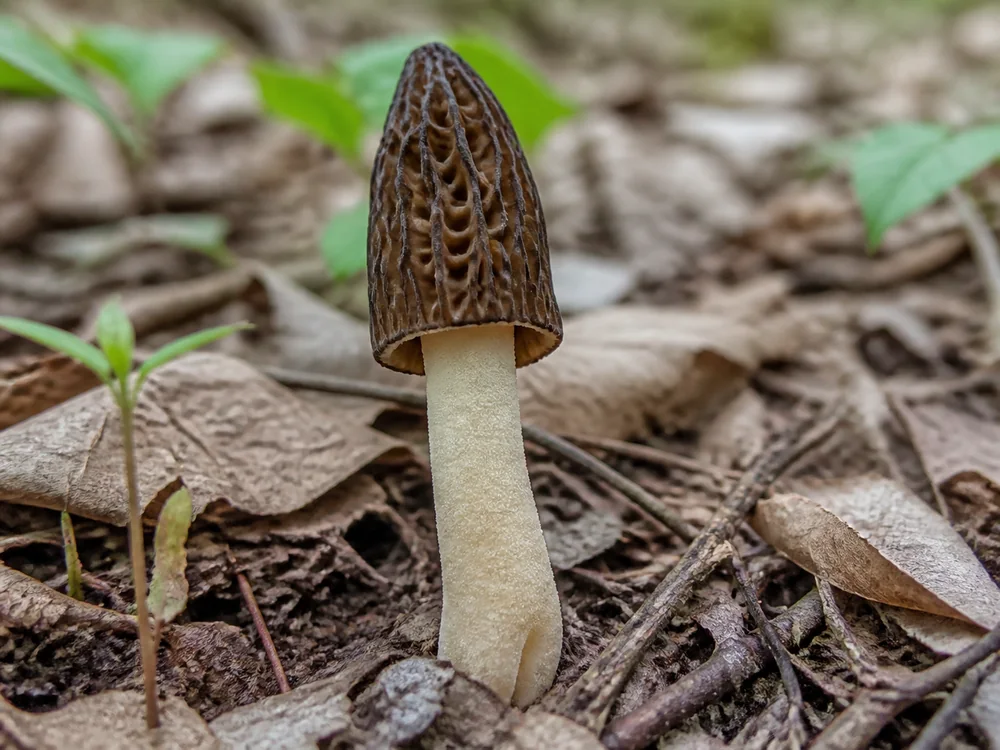 Middle of the runHalf-free morelCap hangs loose below where it joins the stem
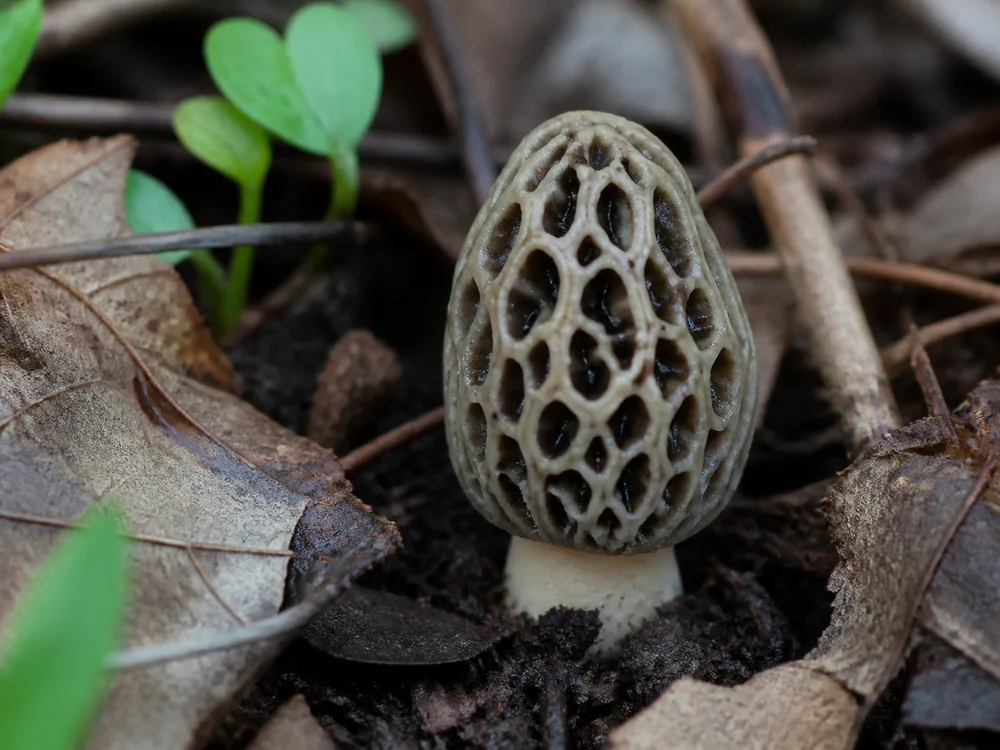 Early to middleGray morelThe young form most people find first
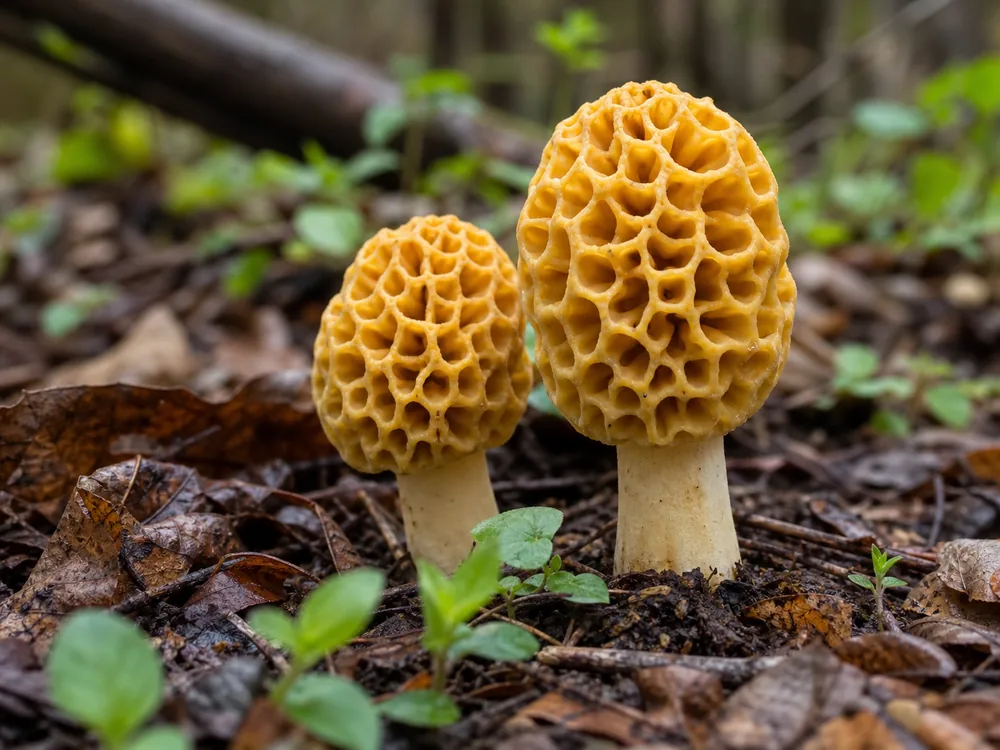 Last and largestYellow morelCarries the end of the season
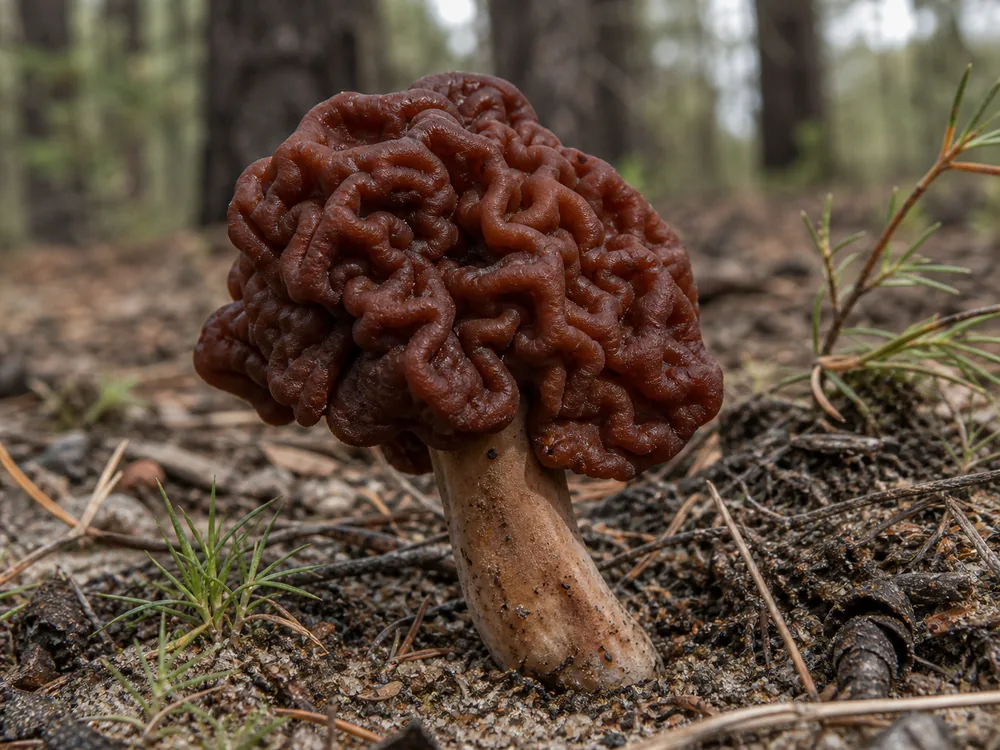 Same weeks, never edibleFalse morelWrinkled and lobed, with no honeycomb pits
Finding a half-free is the useful signal in that set, because it means the largest yellows on that ground are still ahead of you.

The cap is the first read. A true morel is pitted like a honeycomb with raised ridges between the pits, while a false morel is wrinkled, folded and brain-like with no real pits at all.
Pits alone are not proof, so cut every one lengthwise.
A true morel is one continuous hollow chamber from the tip of the cap to the base of the stem, and a false morel is packed with cottony tissue or divided into pockets.
The cut is one identification check, not proof that a mushroom is safe. Do not eat false morels, because the Finnish Food Authority found that boiling leaves residual gyromitrin.
Correctly identified morels still ask something of the cook. Raw morels sicken people who named the mushroom right, so cook them through, take a small portion the first time from new ground, and skip alcohol with that meal.
If someone becomes ill after eating foraged mushrooms, call Poison Control at 1-800-222-1222 immediately. Poison Control advises getting help without waiting for symptoms, because serious poisoning can develop after a delay.
- Prime, western Virginia
- About three weeks, mid April into early May
- Piedmont
- Roughly one week ahead of the mountains
- Tidewater
- Roughly two weeks ahead of the mountains
- Soil trigger
- 54 degrees held about three days
- Shenandoah allowance
- One gallon of morels per person per day
- The cut
- One continuous hollow chamber, every time
Sources & References
- Collecting Plants and Mushrooms, Shenandoah National Park, National Park Service
- Mushrooms and Other Fungi, Shenandoah National Park, National Park Service
- March Means Morels, Virginia Department of Wildlife Resources
- The Morel: Virginia's Favorite Mushroom, Virginia Department of Wildlife Resources
- The do's and don'ts of foraging for mushrooms in Virginia, WRIC