
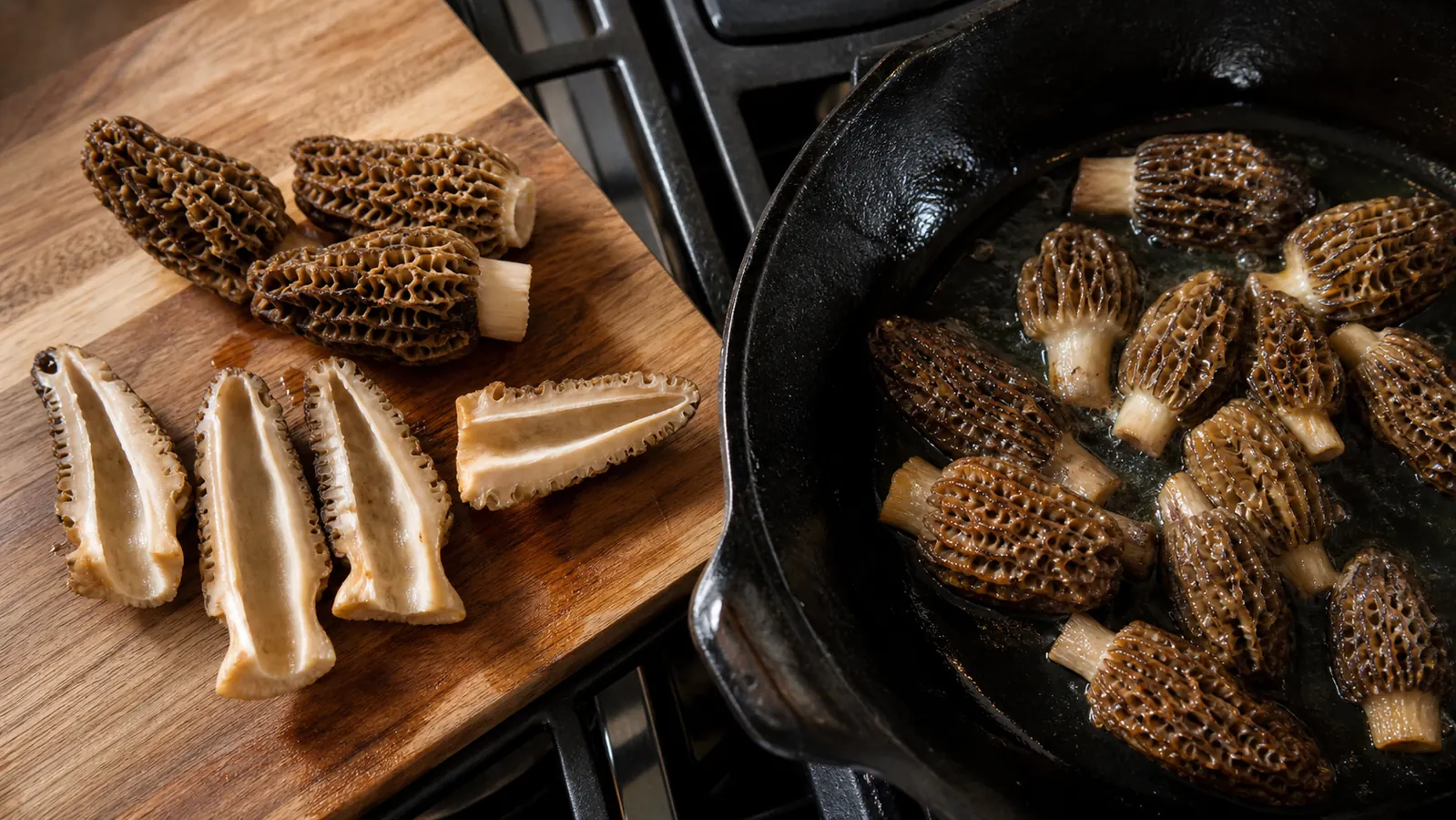
Morels are a spring favorite, but they are not a raw snack. Eating them raw or barely cooked can make you sick, so one rule matters before you ever put them on a plate.
Can you eat morels raw?
Never eat a morel raw because even a correctly identified true morel can cause illness when raw or undercooked. Thorough heating changes it into a food that the body can handle.
Raw morel safety is unchanged by high price or culinary reputation because the natural compounds still irritate the gut and may damage red blood cells until complete cooking breaks them down.
One person escaping symptoms after a raw taste does not establish safety because dose, mushroom batch, and individual sensitivity can change the outcome.
Cook every true morel completely and skip raw tastes during preparation. Freshness and cleanliness cannot remove compounds held in the raw flesh.
- Raw morel
- Never eat it.
- Safe preparation
- Slice and cook every piece through.
Why raw morels make people sick
Raw morels contain heat-sensitive substances that the body handles poorly, including compounds described as hemolytic because they can damage red blood cells. Cooking breaks down that hazard, making a fully cooked morel materially different from a raw one.
Stomach pain, nausea, vomiting, or diarrhea may begin within hours of eating raw morels, and some reactions become more severe. The amount eaten and the person's sensitivity both affect how hard the illness lands.
A morel that remains cold or rubbery in the center is undercooked, so cutting the mushroom open and allowing enough pan time both matter.
That same lengthwise cut exposes the hollow chamber, where soil, sand, and insects can hide before a careful rinse and full cooking address both cleanliness and toxin reduction.
Symptoms from raw or undercooked morels often begin within a few hours, and many cases resolve within a day. Avoidable vomiting is still a poor trade for saving a few minutes at the stove.
Warning
Never eat morels raw, and never serve them barely warmed. Even a small raw taste while cooking can upset your stomach, and larger amounts can harm red blood cells. Full heat all the way through is the only safe way to enjoy them.
What should you do after eating a raw morel?
Stop eating the dish and set the remaining mushrooms aside where nobody else can reach them.
Write down when the morels were eaten, how many were involved, and whether they were raw, briefly warmed, or cooked through. Keep an uncooked specimen, food scraps, packaging, and clear photographs because those details can help a poison specialist distinguish a true morel exposure from a mushroom poisoning emergency.
Do not force vomiting or take a home remedy unless a medical professional directs it. Call a local poison center or clinician for case-specific advice, even if the person feels normal, because the amount and identification may be uncertain.
Repeated vomiting, severe weakness, confusion, trouble breathing, fainting, or a seizure requires emergency care, so follow the first-aid steps for mushroom poisoning while arranging help and bring the saved specimen when possible.
SafetyFirst Aid for Mushroom Poisoning Starts With One CallHow to cook morels so they are safe
Good morel cooking is not fussy, but it does follow a clear order. The goal is to reach every surface with heat and to clear out the grit and bugs that hide inside the wrinkles.
- Slice each morel in half from top to bottom, along its length.
- Check the inside and rinse out any grit, dirt, or insects under cool water.
- Pat the pieces dry so they brown instead of steam.
- Saute them in a hot pan for 5 to 8 minutes until fully cooked and tender.
- Serve only after the centers are hot and no part is raw or rubbery.
A lengthwise cut exposes the continuous hollow chamber used to confirm a true morel and lets water and heat reach the interior. A whole closed morel can stay raw at the center after its exterior looks done.
SafetyDeadly Mushrooms: The Most Lethal SpeciesHow can you tell when the center is cooked?
Count pan time only after the morels are hot and sizzling, allowing extra time for a crowded or wet batch and turning every piece so the outer cap and exposed chamber contact the hot surface.
A cooked morel should be hot throughout, tender rather than rubbery, and lightly browned at its edges. Cut the thickest half again if the center still looks pale and raw, then return the whole batch to the pan until every piece reaches the same cooked state.
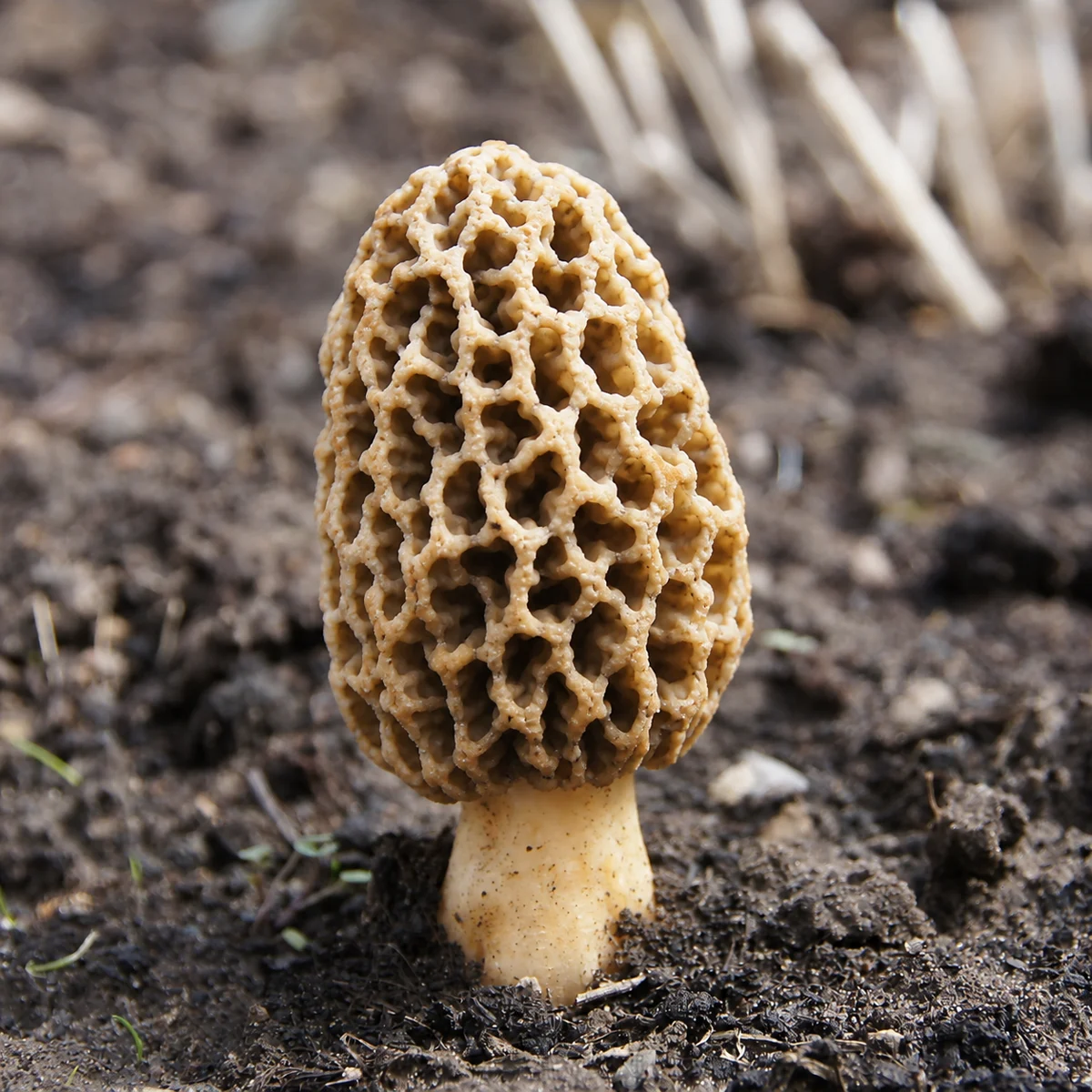
Morel cooking methods vary with pan size, fat, mushroom moisture, and the amount of trapped grit. A first-time eater should begin with a small cooked portion because even a correctly prepared wild food can disagree with an individual.
Drying and soaking cannot replace cooking, so rehydrated morels still need a full saute before the strained soaking liquid becomes part of the cooked sauce.
Fresh morels deteriorate quickly, so keep them cool in a paper bag and cook them within a couple of days rather than trapping moisture in sealed plastic. Slime or a sour, stale odor means the mushroom should be discarded.
Cooking cannot rescue spoiled morels because ordinary food spoilage creates a separate risk from the mushroom's raw compounds.
Should you drink alcohol with morels?
Some people feel sick when they eat morels and drink alcohol in the same meal. The reaction is not fully understood, and it does not hit everyone, but it is common enough to take seriously.
Skip beer or wine with a first morel meal and keep the other foods simple enough to trace a reaction. If flushing, nausea, or another symptom appears, stop eating and record everything served at the table before considering another trial.
Tell guests that morels are wild mushrooms, keep each first portion small, and leave alcohol out of the meal until everyone knows how they respond.
This caution sits next to a bigger habit. Learn your wild foods slowly, one at a time, and follow the foraging safety rules that keep new foragers out of trouble.
Never mistake a morel for a false morel
The highest-consequence mistake happens before cooking when a false morel enters the basket. A lengthwise cut through a true morel should reveal one clean, continuous hollow chamber from cap tip to stem base.
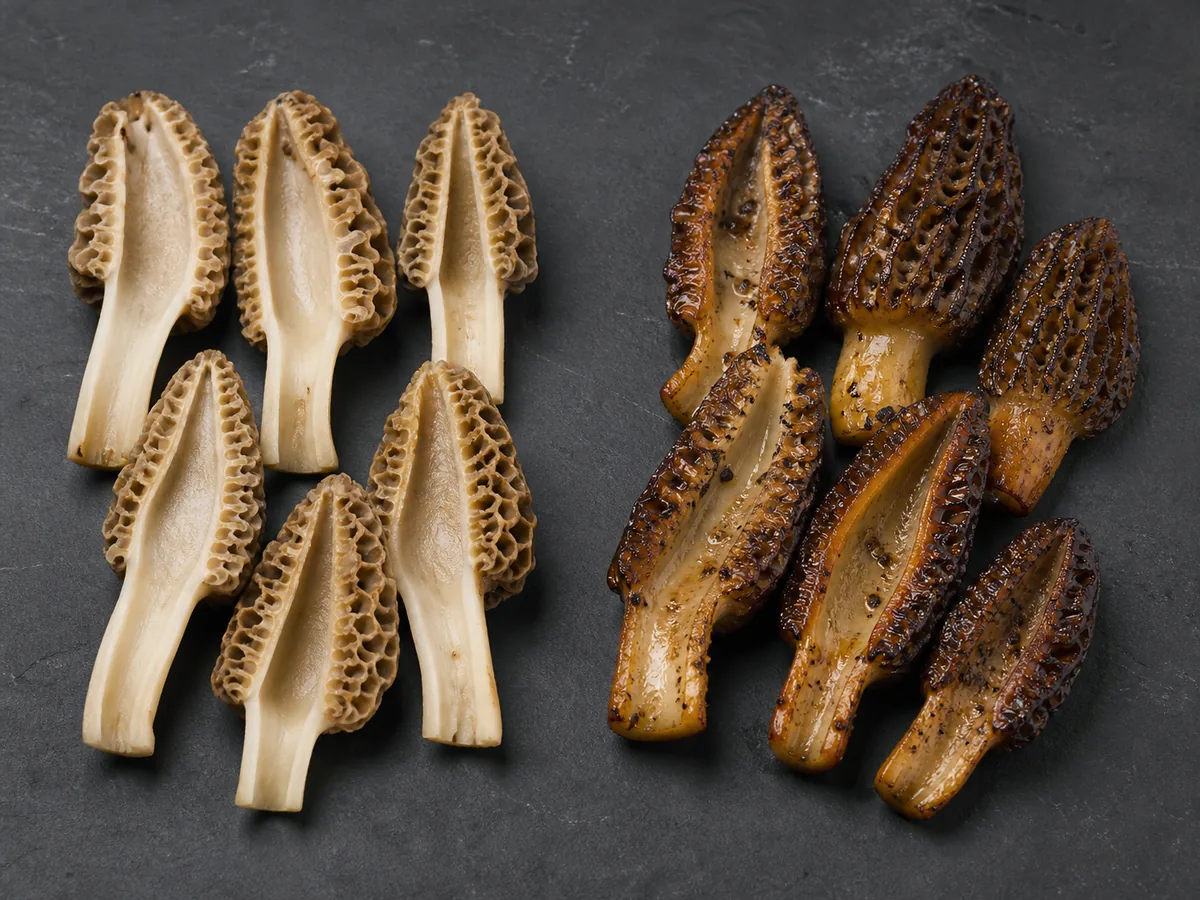
A poisonous false morel contains cottony tissue or multiple chambers instead of one hollow interior, and its cap often forms outward brain-like lobes rather than regular pits. False morels may contain gyromitrin, a toxin associated with severe poisoning and deaths.
The stuffed interior ends the edible identification regardless of how morel-like the outside appears.
True and false morels can share a season and woodland, so cut every specimen lengthwise before it reaches the pan. A stuffed or cottony interior makes it one of the dangerous lookalikes to discard.
Cooking does not make a false morel safe, so this is one case where the kitchen cannot fix a bad pick. The only defense is careful identification at the point where you cut it open.
Cap shape offers an initial clue because a true morel carries inward pits and ridges while false morel lobes bulge outward like a folded brain or saddle. The lengthwise cut settles the decision by showing whether the specimen is continuously hollow.
Exterior shape can prompt the cut, but it cannot replace the internal check.
Poisonous mushroom risks explain why toxin questions need a stricter answer than flavor questions. Raw chanterelles still require cooking, while raw morels pose the greater toxin risk in a mixed pan.
Warning
Cooking cannot make a false morel safe.