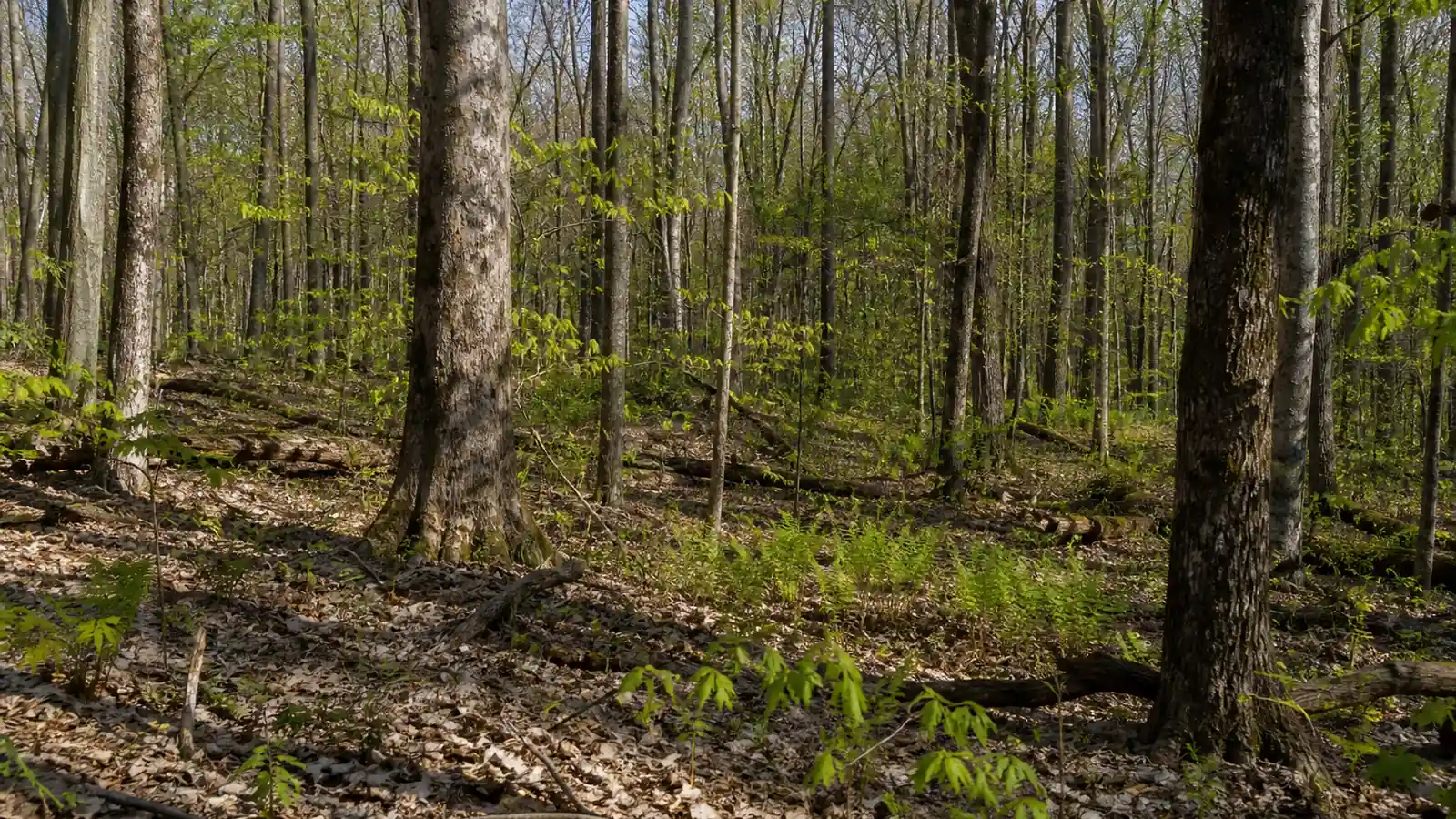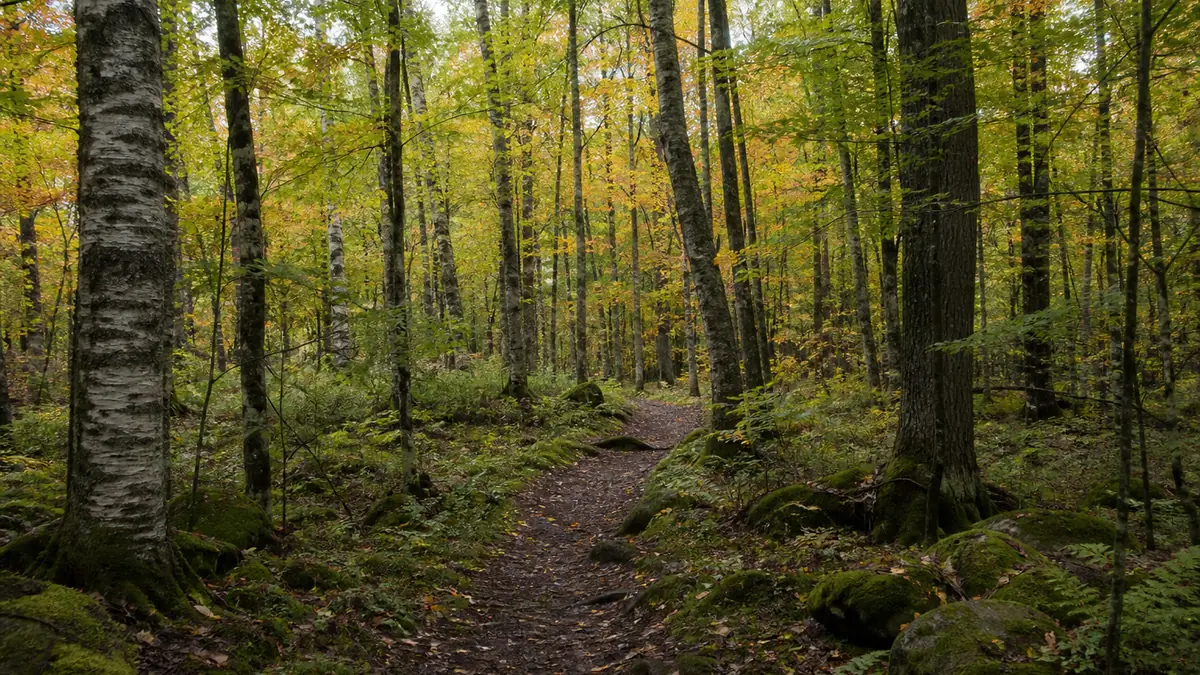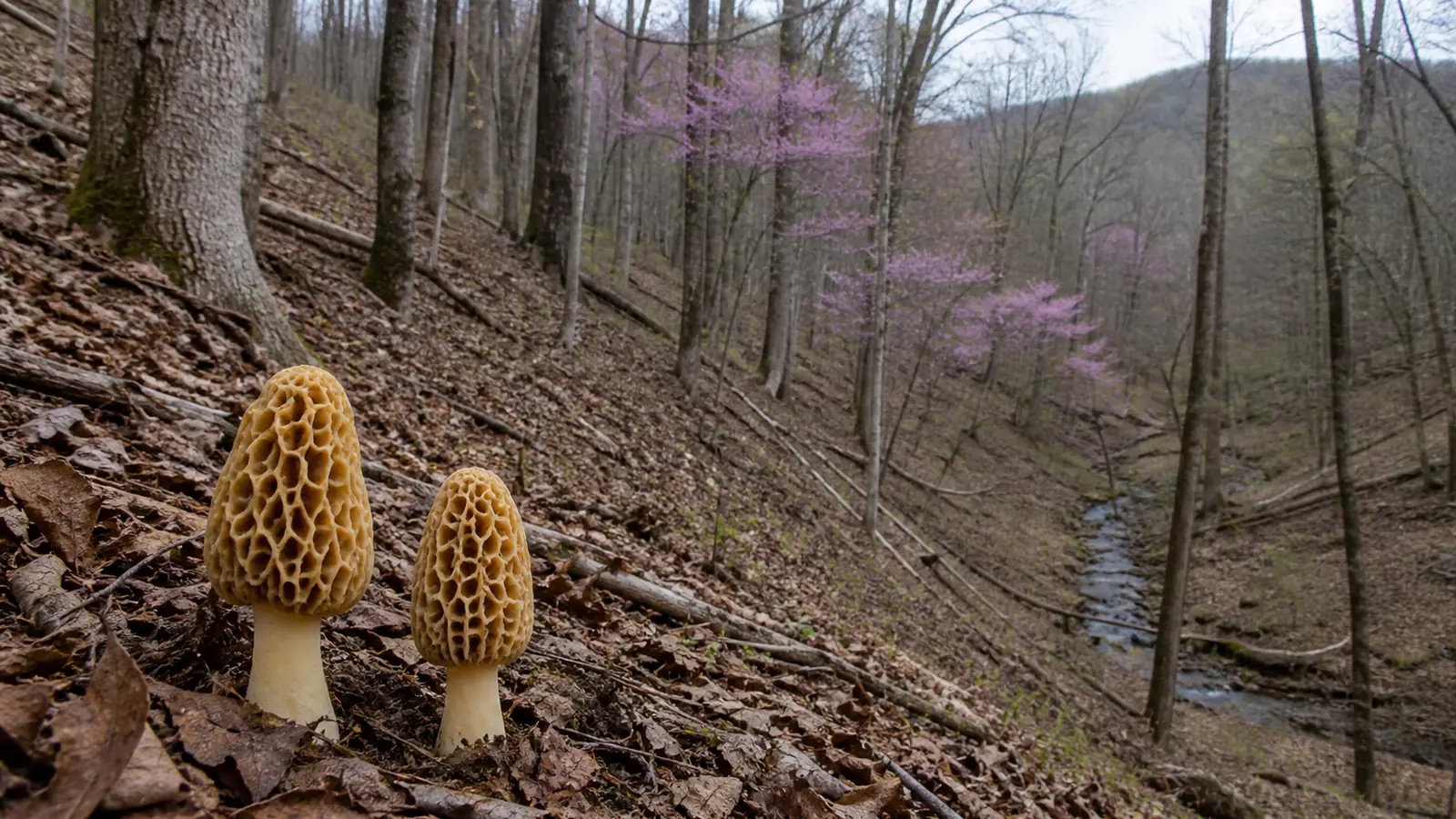
Ohio morels run from about the second week of April into mid May, and the whole state fits inside roughly three weeks. Because Ohio is only 250 miles tall, the useful variables are the glacial boundary that separates southeast hill country from the flat till plains, and the aspect of the slope you are standing on.
Ohio morels run from roughly the second week of April into the middle of May. The Ohio River counties start first and the Lake Erie shoreline finishes last, but the whole state fits inside about three weeks.
That short spread is the part most Ohio hunters get wrong.
Ohio measures only about 250 miles from its southern tip to its northern shore, so latitude buys you two and a half weeks at most. What decides whether you find anything on a given Saturday is the shape of the ground under your boots.
Which Ohio ground is running this week
Find your band below, then treat its week as the week to start checking rather than the week to expect a full bag.
The order is set by ground rather than by latitude. The river counties are the southernmost and sit in warm sheltered valleys, steep southeast hollows put every slope on its own schedule, level till plains warm slowly but evenly, drained-swamp clay in the northwest holds cold and standing water, and cold lake water keeps the Erie shoreline behind inland ground.
The bars sort Ohio by what actually moves soil temperature, which is why the northwest lake plain sits later than counties at nearly the same latitude. Clay that drains badly warms slowly whatever the calendar says.
Weather then rewrites those bars in any given year.
A warm, wet last week of March can pull the southern counties forward by ten days, and a cold April can stall the entire state at once. The Ohio DNR gives mid April through May as prime mushroom time, and that range is wide because Ohio springs are not consistent.
Spring rain also arrives in bands rather than evenly across the state. A county that took two inches in the last week of March will run ahead of a neighbor that took none, even though the chart puts them side by side.
Elevation inside a band counts as well. The Appalachian plateau counties climb well above a thousand feet, and the highest ridges there can sit a week behind valley floors in the same county.
Ohio's other spring mushrooms overlap these same weeks, so an early walk that turns up no morels is rarely a wasted one.
What the table cannot explain is why two hunters in the same county come home with different stories.
ForagingMushroom foraging laws in France: what the five liter rule meansHill country and flat country run different seasons
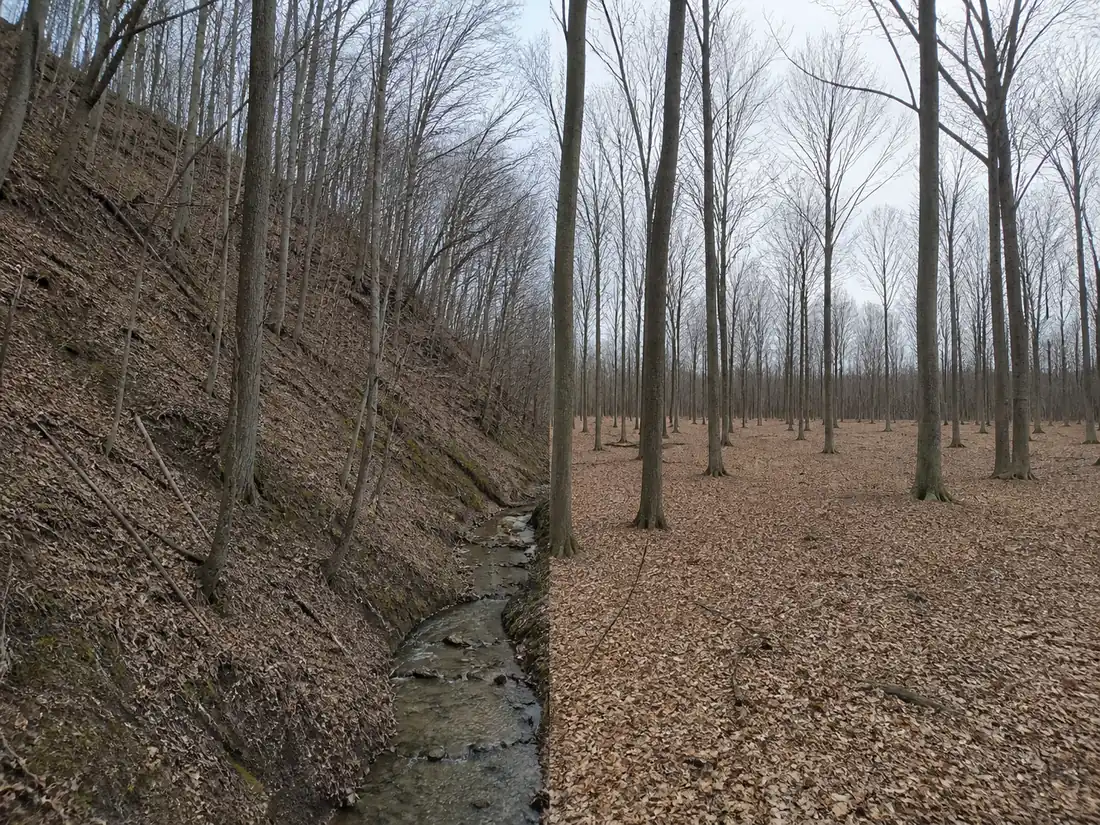
The glaciers that flattened most of Ohio stopped short of the southeast. Everything below that line kept its hills, and everything above it was scraped level and filled with till.
That boundary matters more to a morel hunter in Ohio than any county line does.
In the unglaciated hills around Hocking, Vinton, and Athens, a single hollow can hold three weeks of season inside a quarter mile. The sunny lip warms in the second week of April while the shaded creek bottom two hundred feet below is still cold, so the same property produces again and again as the season works downhill.
Working a hollow downhill is the whole southeast Ohio method. Start at the rim in your band's first week, drop a hundred feet the following weekend, and finish in the creek bottom two weeks after that.
Flat ground behaves in the opposite way from start to finish.
A till plain woodlot warms evenly across its whole surface, which means it turns on all at once and finishes together. Hunters on level ground get a shorter, sharper season and pay heavily for arriving a weekend late.
So flat-ground hunters need more properties rather than more weekends.
If one woodlot gives you a single good week, three woodlots give you three, and on a till plain that is the only way to stretch a season.
The northwest lake plain is the extreme version of level ground. Its heavy clay is what remains of the drained Great Black Swamp, and it holds cold and water long after lighter soils have moved on.
River county hunters get an early read that nobody else in the state has. Ground just across the water reports first, so morel season in Kentucky works as a forecast for Adams and Scioto counties before anything shows at home.
ForagingMushroom foraging laws in Germany: protected species and small quantitiesWhat a south-facing slope gives you that a north-facing one does not
Pick your slope by the date.
Early in your band, walk the south and west faces, because they take the most direct sun and reach working soil temperature first.
Those warm faces cost you something in return. They dry fastest once the sun gets strong, so their morels tend to come up small, stay small, and collapse early.
North and east faces are the patient half of any Ohio hill.
Those north and east faces run a week or more behind the sunny side, but they hold moisture through the middle of the season, and what comes up there is usually larger and stays in good condition longer. In a hot April that shaded ground may be the only thing still producing anywhere on the property.
Canopy changes the arithmetic on both faces. A south slope under dense hemlock holds shade like a north slope and runs on the later schedule, which is exactly what happens in the hemlock ravines of the Hocking hills.
The practical version comes down to which faces you walk when.
Walk warm faces in your band's first week, shaded faces in its last week, and the creek bottoms after everything above them has quit.
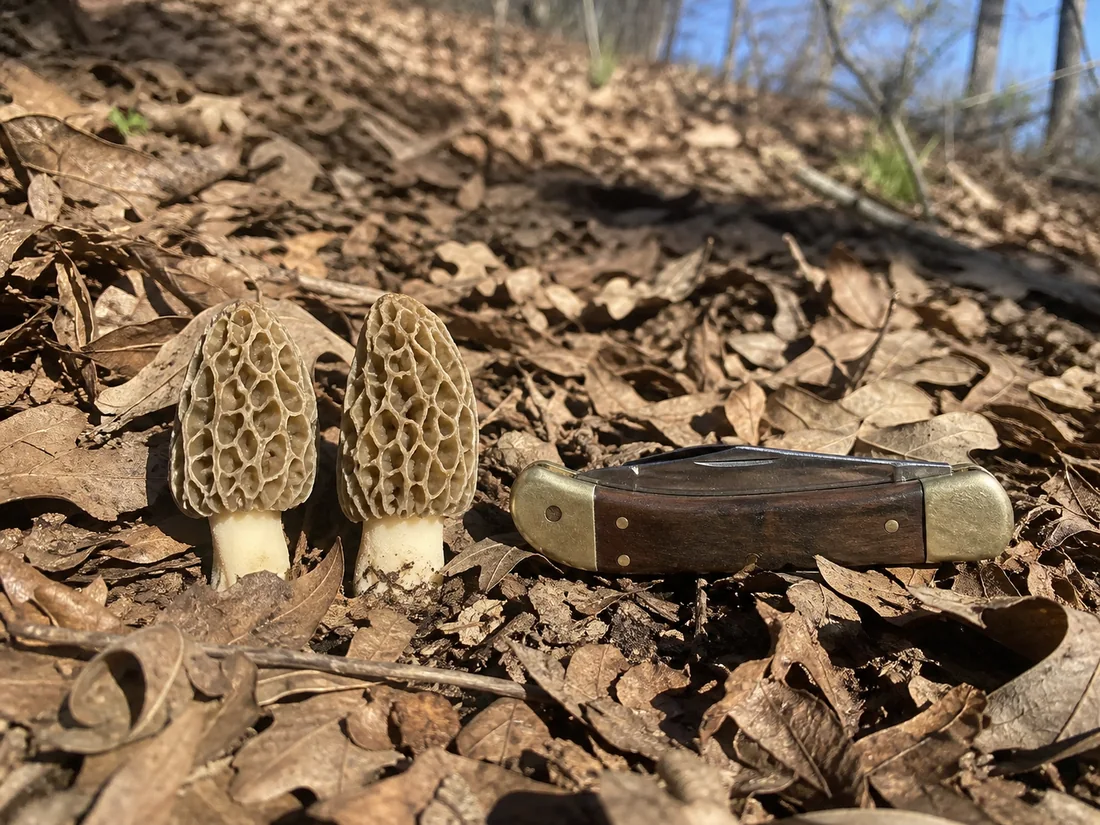
Small gray morels raise the question of whether to pick or wait. They are young, and on a shaded face with moisture still in the ground they will keep growing for days, so leaving a few and coming back is often the better trade.
Which trees are worth walking in Ohio
Walk trees, not acres.
A dying or freshly dead elm is still the single best thing to find in Ohio woods, and the year its bark starts slipping is the year to work the ground around it.
An elm gives you one or two productive springs and then goes quiet. A route built on five marked trees therefore gets worse every year, which is why the trees themselves have to be replaced as often as the boots.
Ash is the second tree to walk, and it redrew the Ohio map.
Emerald ash borer was confirmed in the state on February 28, 2003, and infested Ohio ash typically die within three to six years of being hit. That left standing dead ash spread through nearly every county, much of it now at exactly the stage worth checking.
The rest of the Ohio list is worth walking in roughly this order.
- Sycamore bottoms along the Scioto, Muskingum, Great Miami, and their feeder creeks
- Old farm orchards, especially apple trees left standing at an abandoned homestead
- Tulip poplar stands on the lower and middle slopes of southeast hollows
- Cottonwood and elm on river terraces where spring flooding drops fresh silt
Sycamore earns its own note in Ohio. Its mottled white and gray trunk is visible from a long way off in bare April woods, and the flat bottomland it grows on holds the damp, silty soil morels favor.
River terraces work for a second reason as well. Spring floods drop fresh silt and leave the soil loose and damp well after the uplands have drained, so a bottom that flooded in March is often still producing in early May.
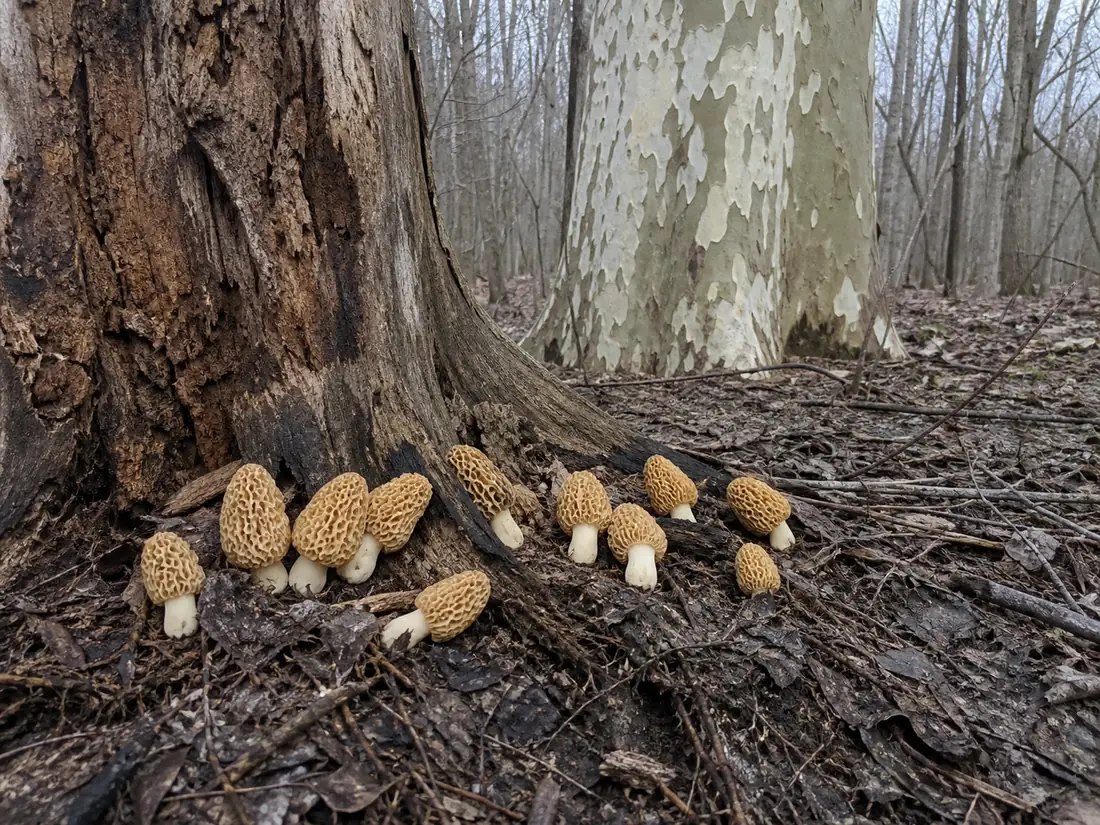
None of these trees help until you know exactly what you are hunting, and Ohio's true morels are the same handful of species from the river to the lake.
ForagingMushroom foraging laws in the UK: what is actually legalTurkey season and morel season share the same woods
Where you may legally pick in Ohio depends entirely on who owns the ground. The Ohio DNR permits mushroom collecting in many state parks but requires collectors to stay on the trail, which rules out most of the off-trail hillside work morel hunting involves.
On the trail means on the trail. A morel three steps into the leaf litter is out of reach on state park ground, which makes parks a poor choice for a serious hunt and a fine one for a walk with a chance attached.
State nature preserves are stricter again.
Warning
Foraging for wild edibles of any kind is prohibited outright in Ohio's state nature preserves and natural areas. That includes morels, it includes personal-use amounts, and a preserve boundary is easy to cross without noticing on a wooded hillside.
State forests are governed separately from parks, and their rules differ from one forest to the next, so the regulations posted for the tract you are standing on are the ones that count.
Permission on private ground is worth asking for months ahead of April. The week you actually want to walk is the week every other hunter in the county wants it too.
Ohio's peak morel weeks also sit on top of spring turkey season, which puts armed hunters in the same quiet woods you are walking slowly and staring at the ground in. The south zone covers 83 counties and opens in late April, with a separate northeast zone of five counties opening about a week behind it.

Turkey hunters work from concealment and call birds toward themselves, so a quiet person moving through cover is the last thing anyone wants in that scene.
Ohio's basic foraging safety rules cover the rest of it, and they matter more on public ground in April than at any other time of the year.
A first season is the wrong time to learn those by trial. New hunters should have the field discipline of mushroom foraging for beginners settled before walking unfamiliar public land in turkey season.
What has to be true before you cook one
False morels come up in Ohio in the same April weeks, in the same hollows, and that overlap is what makes them worth taking seriously. Ohio State University Extension puts the state's morel emergence between late March and early May and warns that the poisonous lookalikes appear in the same timeframe and habitat.
The cap surface is where a false morel gives itself away first.
A true morel is pitted with hollows that look like a honeycomb, while a false morel is wrinkled, lobed, or brain-like, without real pits. Color is not the test, because true Ohio morels run from cream through gray to nearly black.
The second read settles it, and you can do it standing in the woods with the morel in your hand.
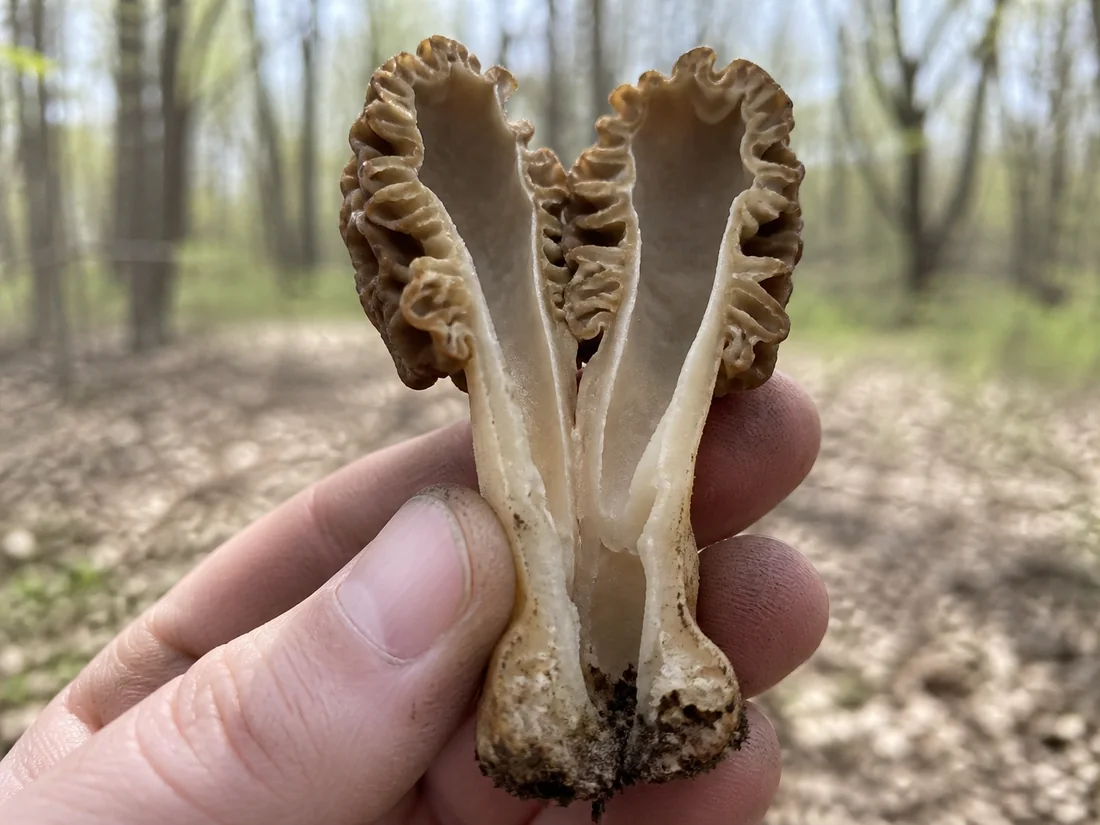
Tear one open from cap tip to stem base. A true morel is a single hollow chamber the whole way down, and a false morel is packed with cottony tissue or divided into folded pockets.
Running that morel test in the field rather than at home keeps a wrong mushroom out of a bag that already holds good ones.
Ohio's spring woods hold the same handful of morels from the river counties to the lake, and they do not all arrive together.
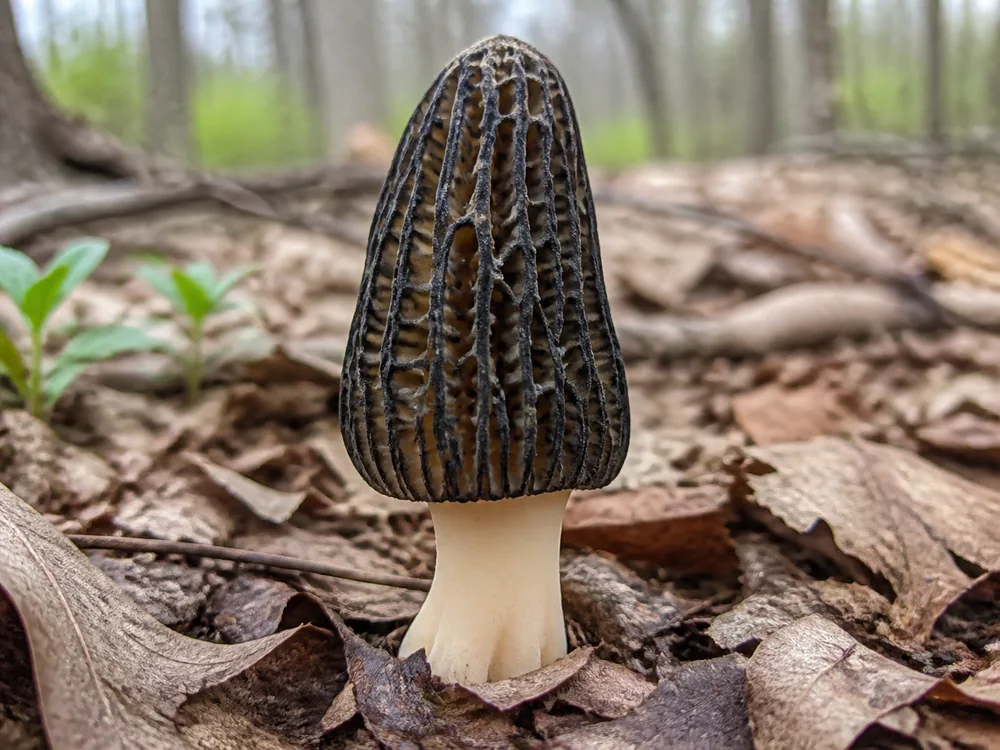 First upBlack morelEarliest of the run, and easy to walk over in dark litter
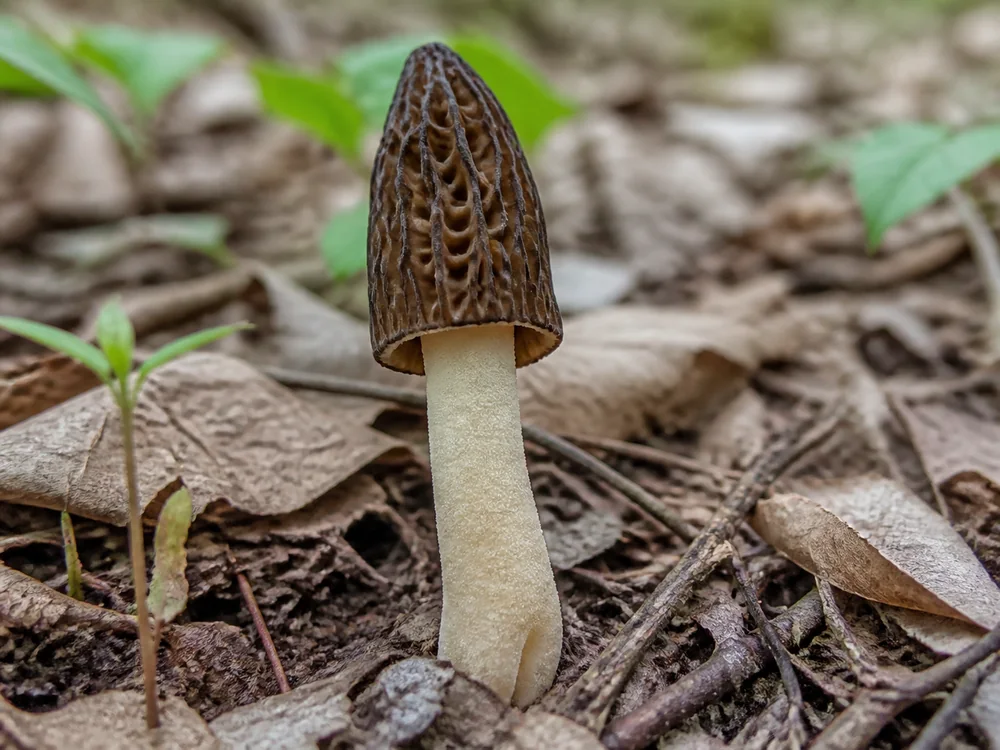 Middle of the runHalf-free morelCap hangs loose below where it joins the stem
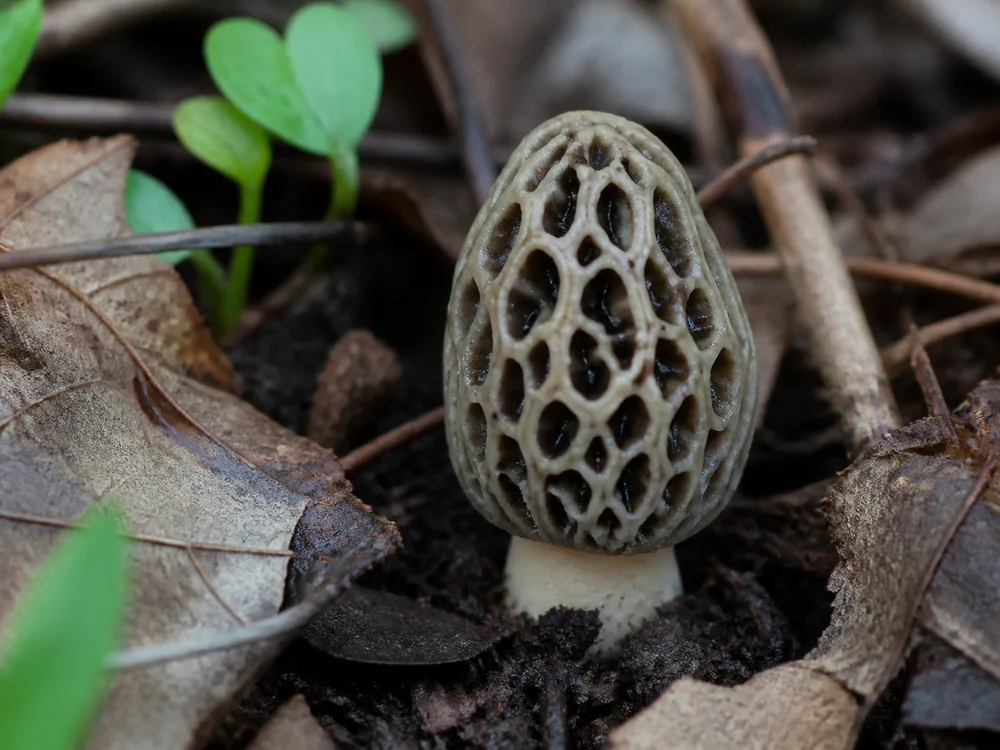 Early to middleGray morelThe young form most people find first
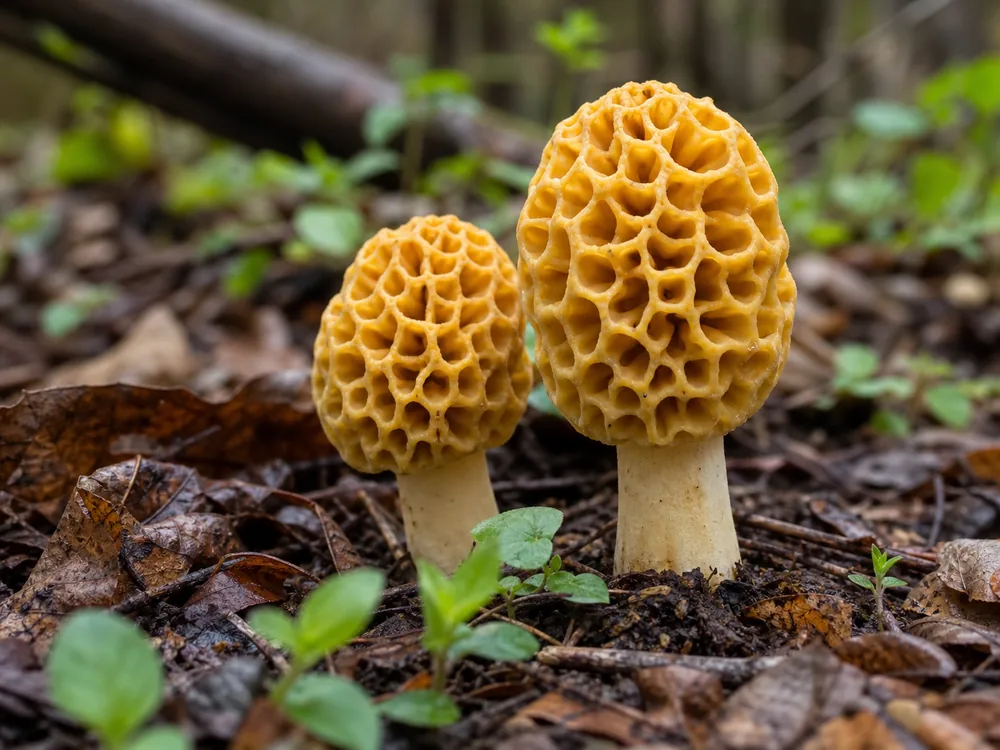 Last and largestYellow morelCarries the end of the season
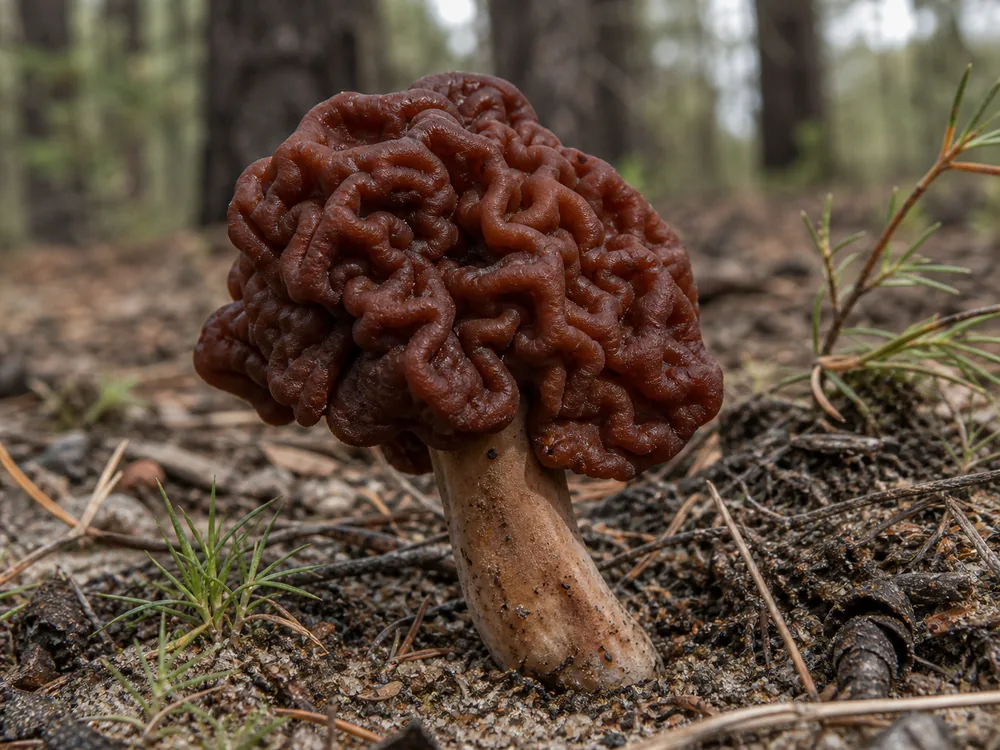 Same weeks, never edibleFalse morelWrinkled and lobed, with no honeycomb pits
Half-free morels confuse Ohio hunters every April. Their cap hangs loose below its attachment point, which looks alarming to anyone who has just learned that a false morel's cap hangs free, but a half-free is still one hollow chamber from top to bottom.
Getting the identification right still leaves one hazard behind it. Raw morels cause stomach upset even when the mushroom is correct, so cooking morels thoroughly belongs to the safety step rather than to taste.
Eat a small portion the first time you take morels from new ground, and skip alcohol with that meal.
A few people react badly to well-cooked morels that everyone else at the table handles without trouble, and that sensitivity gives no warning the first time it shows up.
- Cap surface
- True morels are pitted with hollows, false morels are wrinkled or lobed
- Interior
- One hollow chamber from cap tip to stem base
- Attachment
- The cap edge joins the stem near its base on a true morel
- Cooking
- Cook every morel through, and never taste one raw
- Onset
- False morel illness begins hours after the meal, not minutes
That delay is the reason to take an April stomach complaint seriously rather than wait it out. If mushroom poisoning symptoms start six or more hours after dinner, call Poison Control at 1-800-222-1222 and keep any uncooked mushrooms for identification.