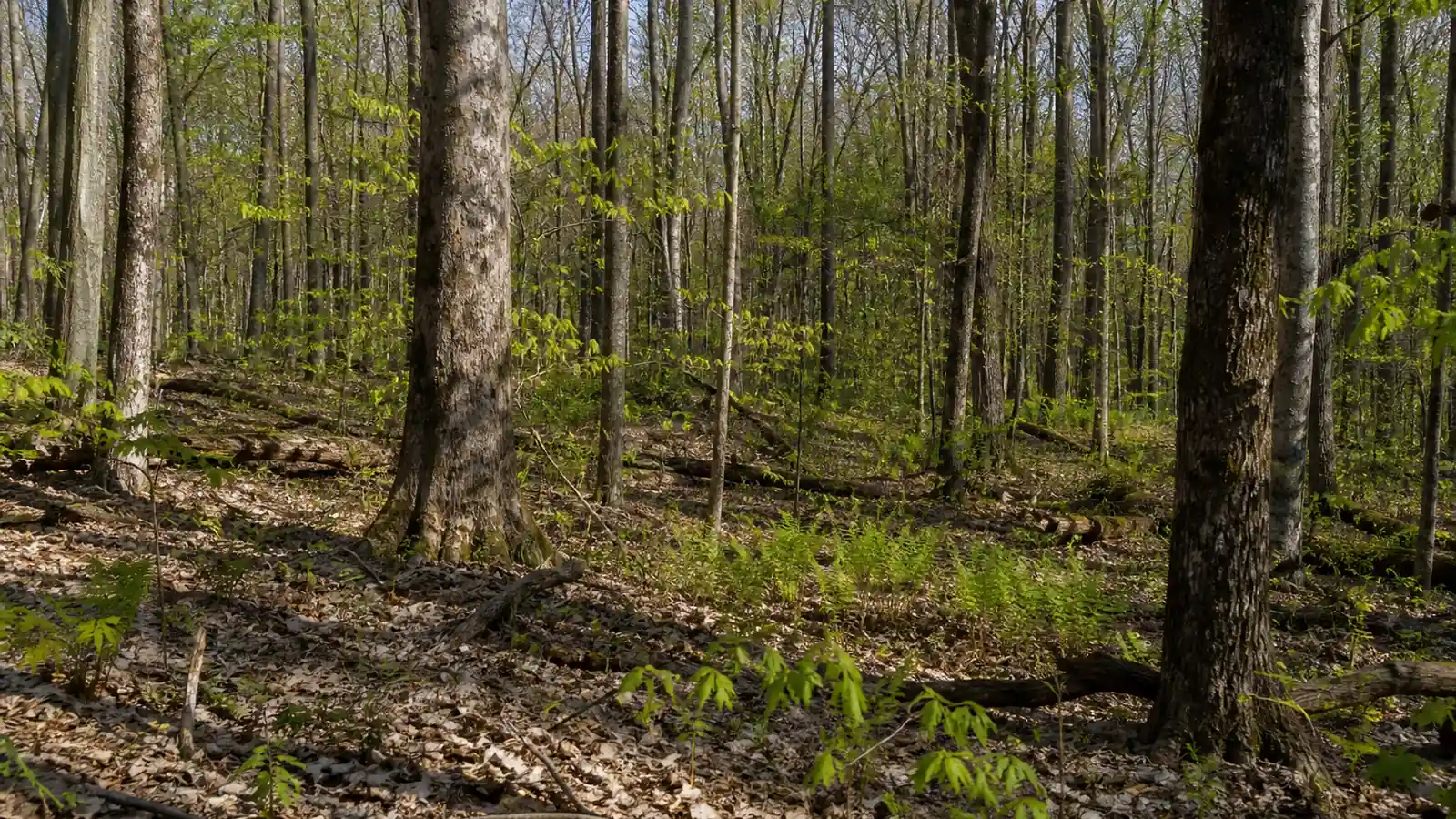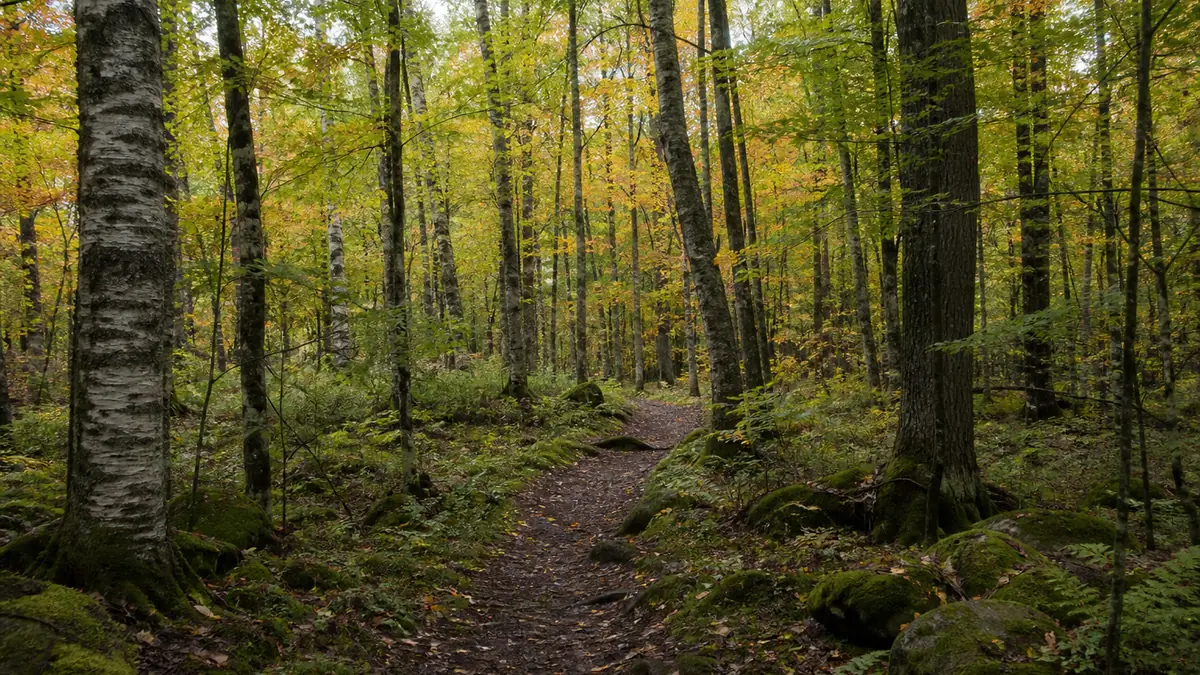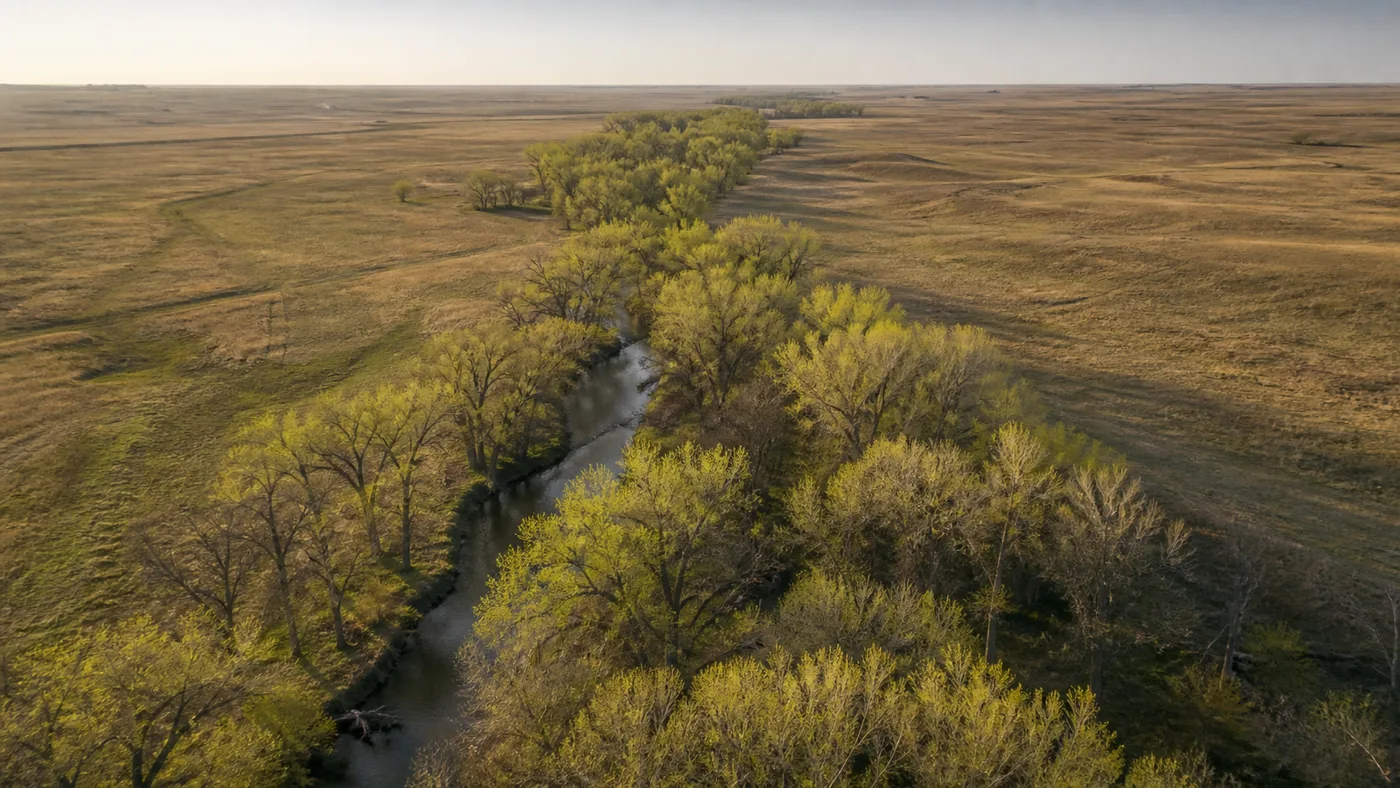
Kansas morels run from late March into early May, which is ordinary for the region, but the state is prairie with timber only along the water. That makes the useful question how wet the year has been rather than what the date is, because in a dry spring the uplands produce almost nothing and the whole season collapses into the creek banks and river bottoms.
Kansas morels run from late March into early May, which is a normal enough window for the region.
Note
What is not normal is how little of Kansas they run in. This is prairie with timber along the water, so the season lives on the rivers and creeks rather than across the state, and in a dry spring it retreats to them entirely.
Most morel advice is written for states with woods everywhere. Kansas is not one of them.
The useful question here is not when, it is how wet the year has been.
Why the water decides a Kansas season
Trees in Kansas follow the watercourses, and so do the morels.
- Statewide window
- Late March into early May
- Air pairing
- Daytime in the low seventies with nights in the fifties
- The ground that pays
- River bottoms, creek banks and hardwood timber along water
- The hosts
- Elm, ash and cottonwood
- In a dry year
- The season contracts to the bottoms and little else
Cottonwood is the tree that marks the water from a mile away. A line of tall pale trunks running across open country is a creek, and that creek is where the hunting is.
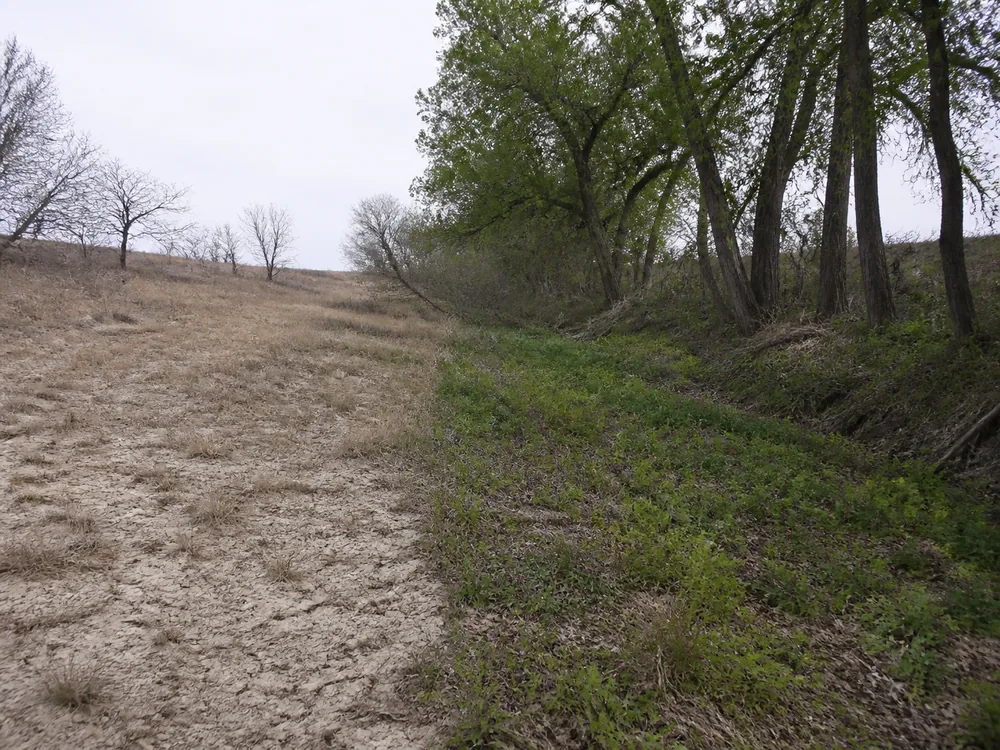
Elm and ash still do the work they do everywhere else. A dying elm with the bark still on is the best single tree in Kansas as it is in Missouri, but here it has to be standing somewhere that holds moisture.
That last condition is what makes Kansas different, because a perfect dying elm on a dry upland edge is a poorer bet than an ordinary one in a damp creek bottom.
Drought turns that preference into a rule. In a dry spring the uplands produce almost nothing, and the whole season collapses into the creek banks and river bottoms.
Kansas gets those springs often enough to plan for them. A hunter who knows three creek bottoms is better placed than one who knows thirty acres of upland timber.
The two halves of Kansas are not the same proposition either, since the eastern counties carry real hardwood timber along their rivers while the western High Plains have almost none outside the river corridors and the odd planted shelterbelt.
That is why nearly all Kansas morel hunting happens in the eastern third of the state. A hunter further west is not doing something wrong, there is simply far less ground that could ever produce.
Planted ground counts too, and Kansas has a great deal of it. Farm shelterbelts and the tree rows around old homesteads were put in for wind rather than for mushrooms, but they hold elm, and an abandoned farmstead with a dying tree in it is worth a look in a state this short of timber.
Almost all of that ground belongs to somebody who farms it, so the ask comes before the walk.
The Flint Hills are the exception worth knowing in the east. Tallgrass prairie covers the open ground there, but timber survives down in the draws and along the streams, which puts productive ground in a landscape that looks empty from the road.
Finding the timber is the first job, and it is done on a screen rather than in the truck. Satellite imagery shows creek timber as a dark winding thread across pale farmland, and following that thread upstream and downstream is how a Kansas route gets built.
A creek bottom is a route rather than a spot, which is the mental shift that makes Kansas work, so you walk it in both directions from wherever you parked and expect a series of short productive stretches rather than one clearing.
When a bottom comes up blank, work up the side draws before giving up on it. The small feeder gullies hold the same damp ground in miniature and they get walked far less than the main channel does.
Public access is the constraint on that thread rather than the trees. A creek may run for twenty miles and be walkable in three places, so the map that matters shows ownership as much as tree cover.
Which morel you are holding
Those are not all one mushroom, and the differences decide both your timing and your safety.
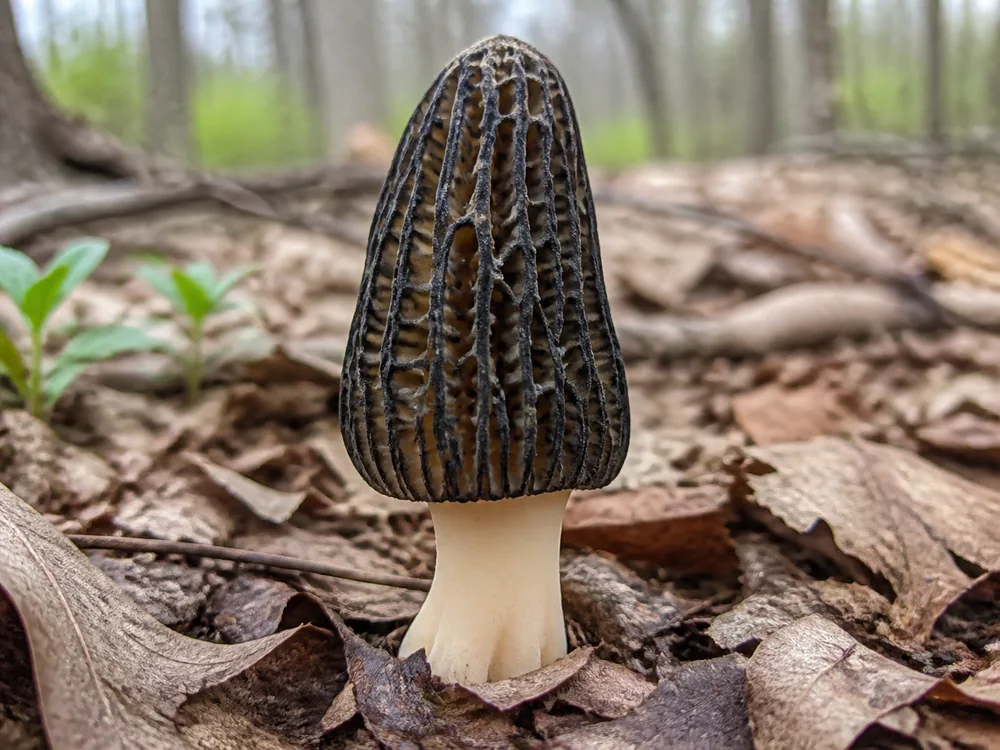 First upBlack morelEarliest of the run, and easy to walk over in dark litter
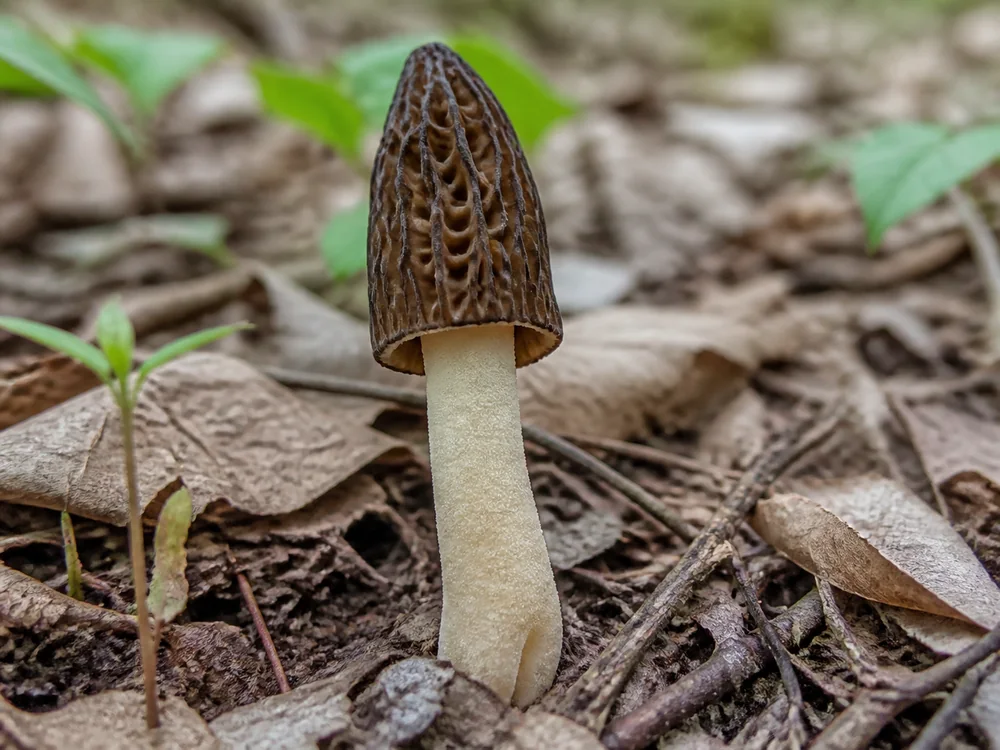 Middle of the runHalf-free morelCap hangs loose below where it joins the stem
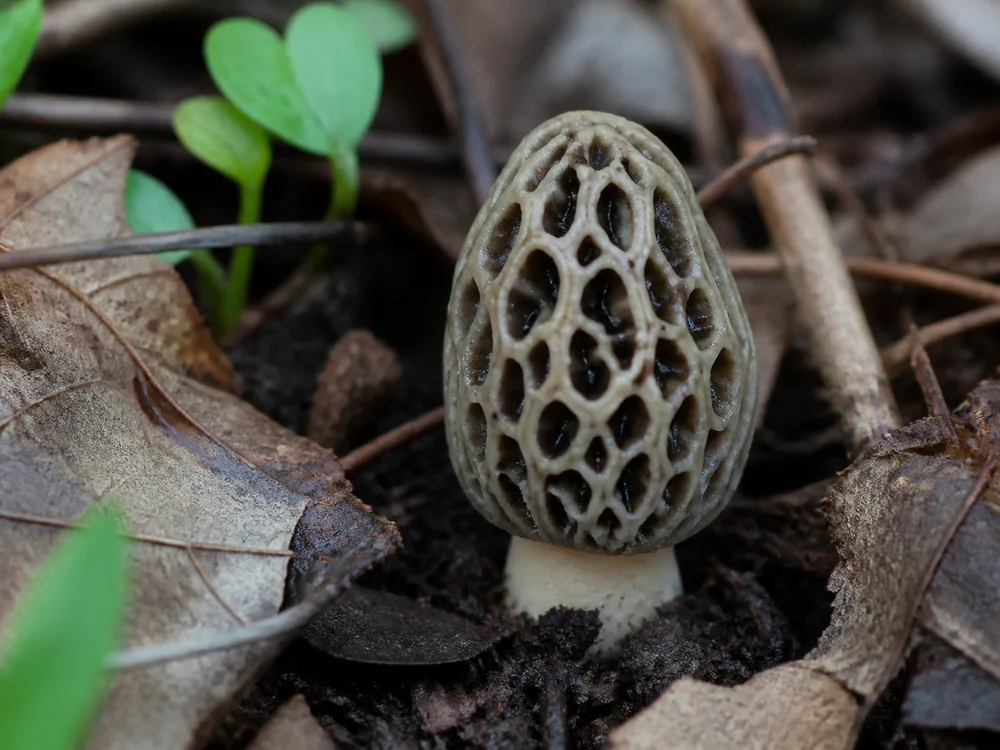 Early to middleGray morelThe young form most people find first
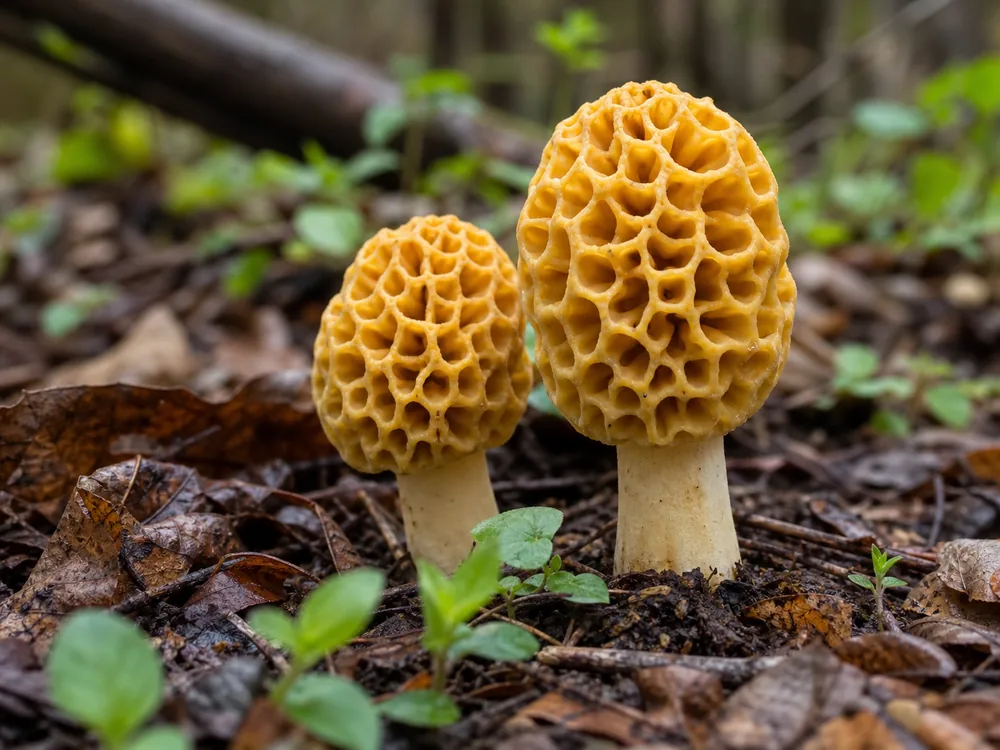 Last and largestYellow morelCarries the end of the season
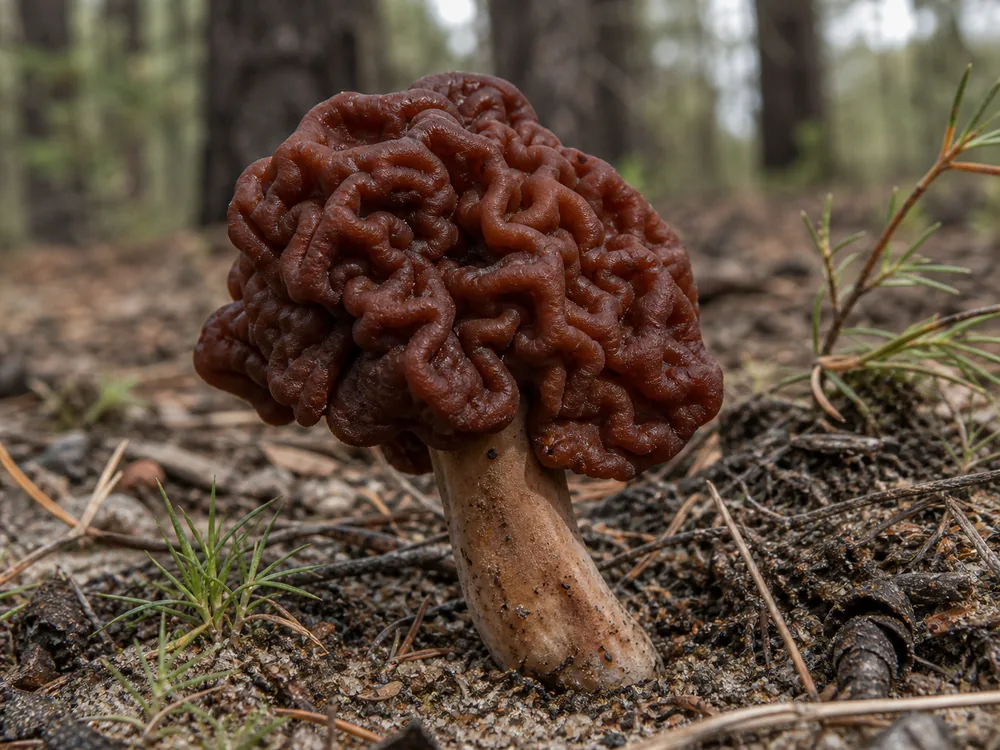 Same weeks, never edibleFalse morelWrinkled and lobed, with no honeycomb pits
Finding a half-free is the useful signal in that set, because it means the largest yellows on that ground are still ahead of you.
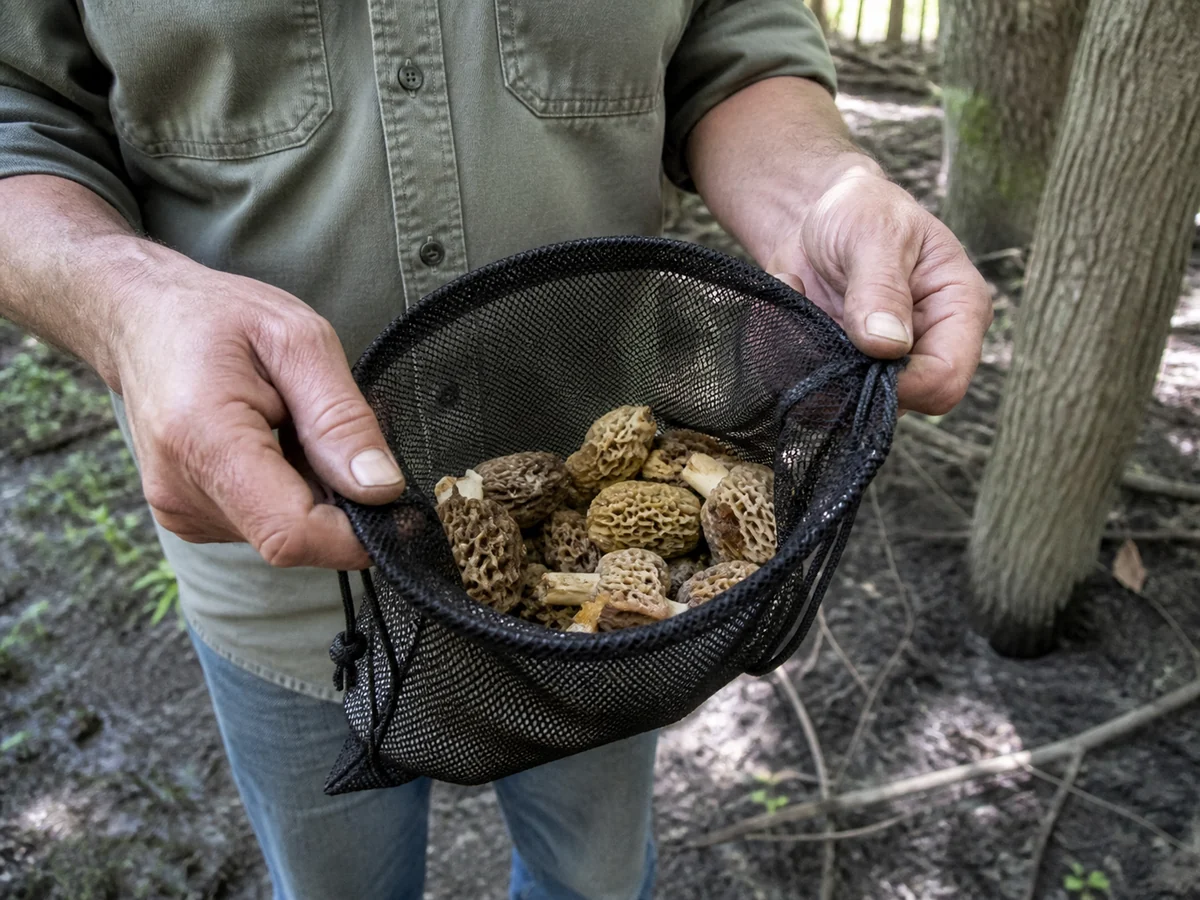
A modest bag is the normal outcome here rather than a bad day. Kansas gives less ground than the states east of it, so the measure of a good spring is more often three creek bottoms worked properly than one heavy morning.
ForagingMushroom foraging laws in Germany: protected species and small quantitiesHow to move as the year dries out
The season walks downhill in Kansas, from the warm open ground into the shade.
South-facing hillsides are where a Kansas season opens because they take the most direct sun and reach working temperature first. They are also the first ground to dry out, so they give a short, early run rather than a long one.
Creek beds and river bottoms are the reverse of that. They come in later, they hold damp soil after the open ground has gone hard, and they carry the last productive week of a Kansas spring.
That gives you a direction to walk rather than a date, so start high and open, finish low and shaded, and let the year decide how quickly you make the move.
A dry spring simply speeds the whole thing up. When the uplands never really produce, the honest plan is to spend the season in the bottoms and accept a shorter run.
Rain is worth more here than almost anywhere. A soaking rain on ground already sitting in the fifties brings a flush within the week, and in a state this dry a wet April is the difference between a season and a rumor.
Knowing how it ends matters as much as knowing how it starts. Kansas springs turn warm quickly, and once the days are running well into the eighties the open ground is finished and the bottoms are close behind it.
Canopy closure does the rest, because once the cottonwoods leaf out properly the creek bottom loses the light it was working on and the damp ground that carried the late run starts drying from the top down.
That is the point to stop driving to timber and start watching next spring's weather instead. A Kansas season rewards patience across years more than persistence inside one April.
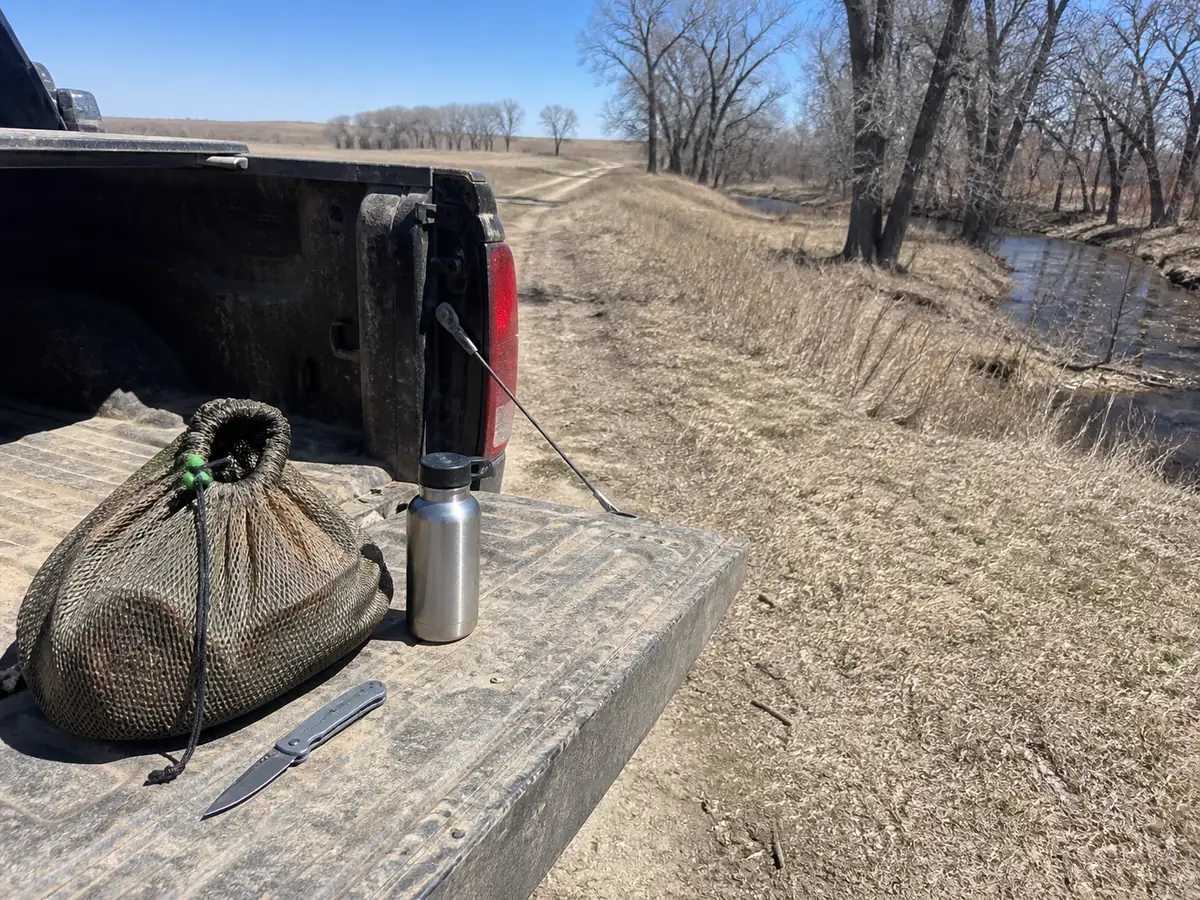
Kansas wildlife guidance asks for a mesh or breathable bag, which is sensible rather than a formality, because spores fall through the mesh as you walk and the take keeps better than it would in plastic.
Pick in a way that lets the bottom pay again. Cut or pinch the stem at ground level rather than pulling the mushroom up with a plug of soil, and leave the litter unraked, because a creek bottom you can return to is worth more than one good morning.
A blank walk is worth reading rather than repeating. Cold litter under bare branches means come back, while dry crumbling litter under a closed canopy means that bottom is finished for the year.
ForagingMushroom foraging laws in the UK: what is actually legalWhere you may pick, and what you may do with it
State parks and wildlife areas are the practical public option in Kansas.
Mushrooms taken from Kansas Department of Wildlife and Parks land are for personal consumption, and selling anything harvested from KDWP-managed ground is against state law.
Personal consumption is the boundary rather than a bag limit. It describes what the mushrooms are for rather than how many you may carry, which puts the judgement on the person holding the bag.
Wildlife areas are the underused half of that pair. They are scattered across the eastern counties, many of them sit on exactly the river ground that produces, and they see a fraction of the pressure a state park does on an April Saturday.
Most of the rest of the state is private and agricultural, so a Kansas season is usually built on permission. Ask in February rather than in April, and ask about the creek bottom rather than the whole farm, because a narrow request is easier to say yes to.
Before any of it reaches the pan
False morels come up in the same Kansas weeks and the same damp bottoms.

The cap is the first read. A true morel is pitted like a honeycomb with raised ridges between the pits, while a false morel is wrinkled, folded and brain-like with no real pits at all.
Pits alone are not proof, so cut every one lengthwise.
The cut is one identification check, not proof that a mushroom is safe. Do not eat false morels, because the Finnish Food Authority found that boiling leaves residual gyromitrin.
Correctly identified morels still ask something of the cook. Raw morels sicken people who named the mushroom right, so cook them through, take a small portion the first time from new ground, and skip alcohol with that meal.
If someone becomes ill after eating foraged mushrooms, call Poison Control at 1-800-222-1222 immediately. Poison Control advises getting help without waiting for symptoms, because serious poisoning can develop after a delay.
| Check | True morel | False morel |
|---|---|---|
| Cap surface | Honeycomb pits with raised ridges | Wrinkled, folded and lobed like a brain |
| Cut lengthwise | One continuous hollow chamber | Cottony fill or separate pockets |
| Cap attachment | Joined to the stem near its base | Often hanging loose or irregular |
| Cooking | Safe only when thoroughly cooked | Not made safe by cooking |