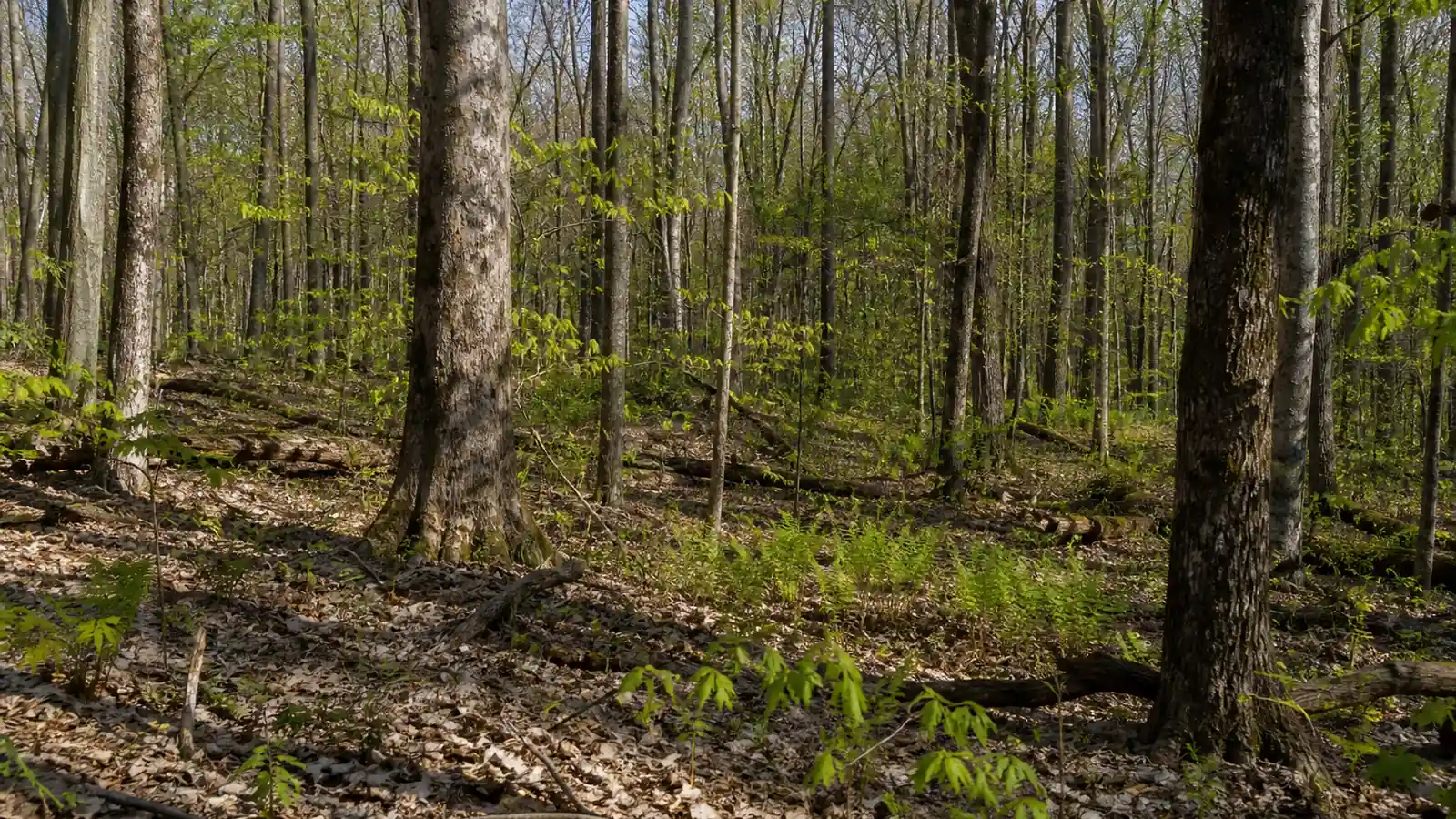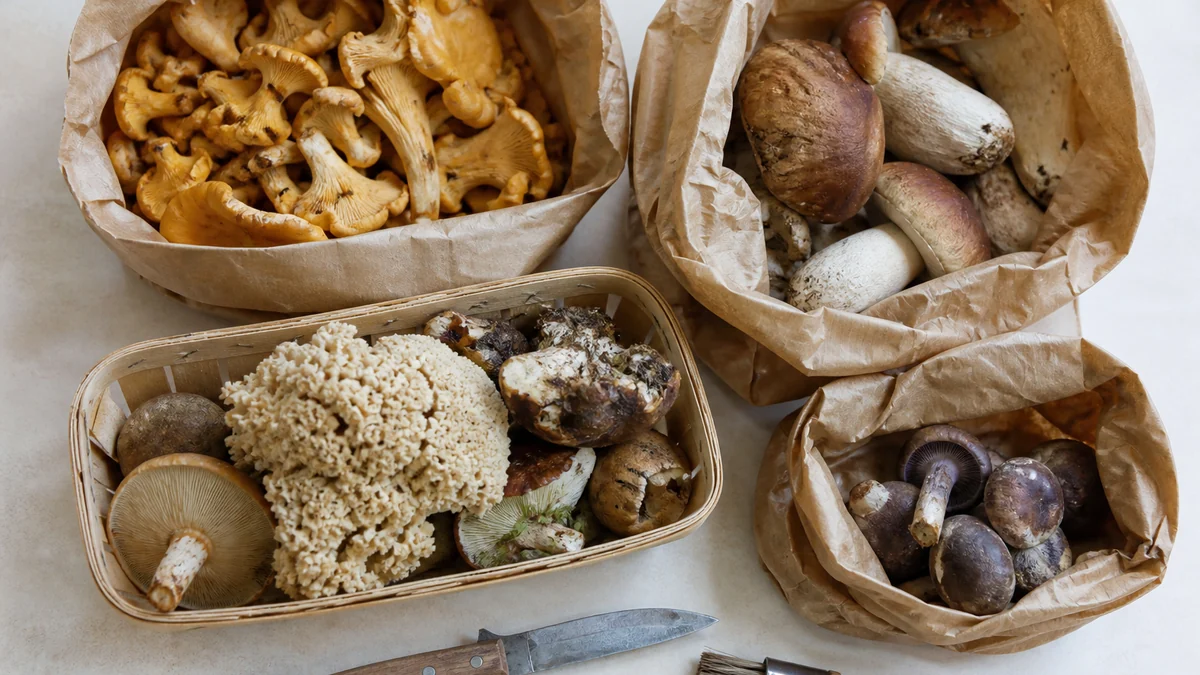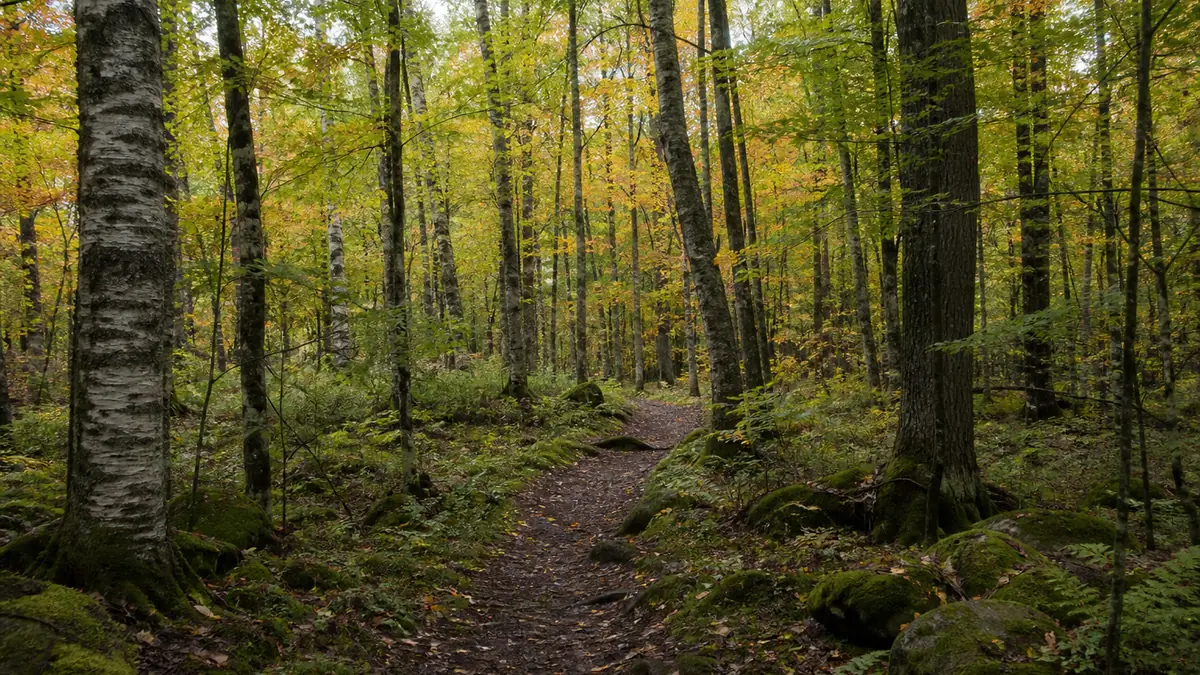
Wisconsin permits edible fruits, edible nuts, wild mushrooms, wild asparagus and watercress to be removed by hand without a permit for personal consumption on state park and forest land, and prohibits the collection of seeds, roots or other plant parts. That prohibition is what shapes the list, and it is why ramps are excluded: the bulb people want is a plant part. State natural areas carry the same rule. The Chequamegon-Nicolet national forest commonly allows five gallons a day for personal use instead.
Wisconsin permits five things to be gathered on its state park and forest land, and the list looks like somebody wrote it from memory.
Edible fruits, edible nuts, wild mushrooms, wild asparagus and watercress. It is not an arbitrary list, and once you see what those five have in common you can answer for a species nobody ever wrote down.
- The permitted list
- Edible fruits, edible nuts, wild mushrooms, wild asparagus and watercress.
- The method
- Removed by hand, with no permit required.
- The purpose
- Personal consumption by the person collecting.
- The prohibition
- Collecting seeds, roots or other plant parts is not allowed.
- The national forest
- A separate rule again, counted in gallons rather than in parts.
What can you legally collect in Wisconsin?
The five items above. Two conditions are attached to them, and those conditions do more work than the list itself.
Edible fruits, edible nuts, wild mushrooms, wild asparagus and watercress may be removed by hand without a permit for the purpose of personal consumption.
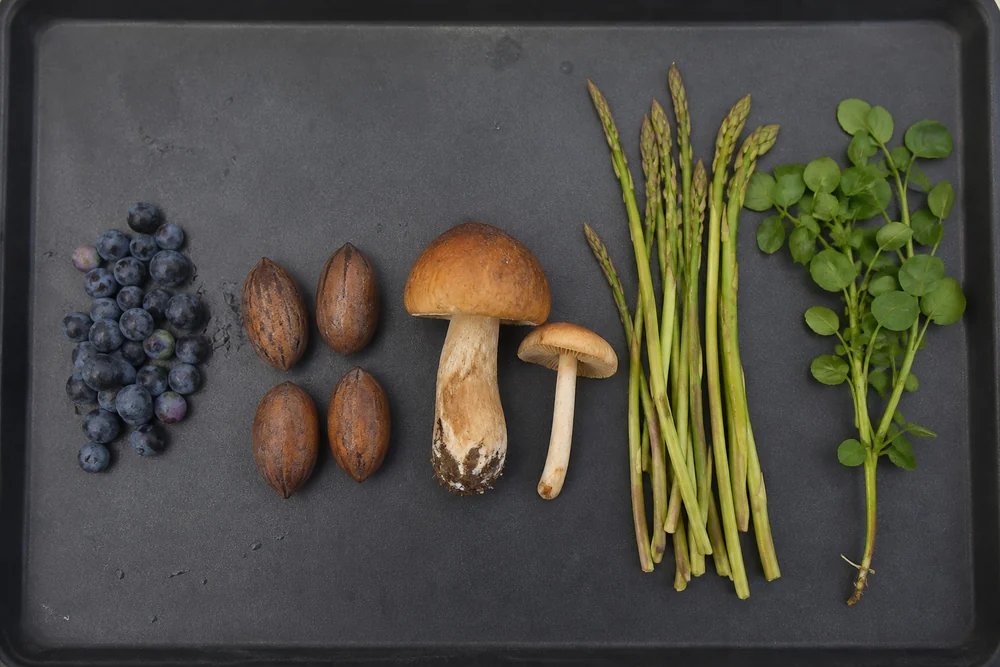
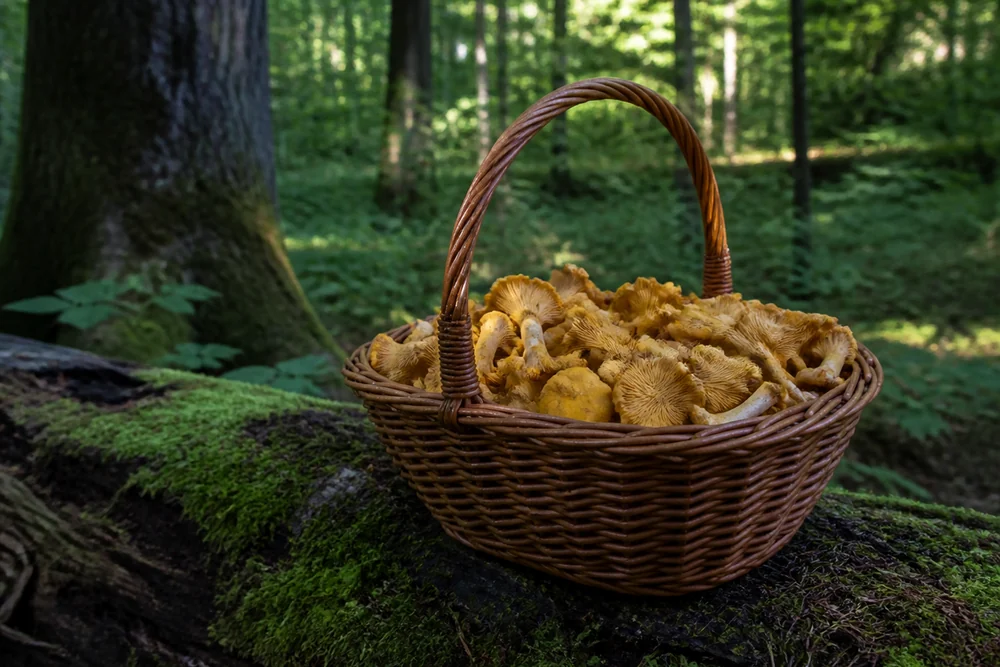
Golden chanterelles and the rest of the summer flush sit inside that permission without any paperwork, which is the answer most readers came for.
Two of the five words on the list are broader than they sound. The state defines both of them, and the definitions are wider than the everyday sense of the words.
- Edible fruits means the fleshy ones, and the agency names apples, plums, pears, blueberries, raspberries, blackberries, juneberries and strawberries.
- Edible nuts means walnuts, hickory nuts, acorns and their relatives, whether picked from the tree or gathered off the ground.
- Wild mushrooms are named without qualification, so no species list narrows the permission further.
- Wild asparagus and watercress are named as themselves rather than as members of a wider group.
Outside those four categories the list stops. Not the wildflower, not the fern, not the sapling, and not the bulb of the plant that half of Wisconsin goes looking for in April.
It is also shorter than the list a visitor carries in their head, because firewood, antlers, rocks and fossils are all handled under separate rules of their own.
By hand is not decoration. It rules out tools, rakes and anything mechanical, and it is one of the two things standing in for the permit that other states would issue.
Personal consumption is the other. It means the person carrying the basket is the person who will eat what is in it, and the moment money enters the arrangement this permission stops covering you.
ForagingMushroom foraging laws in France: what the five liter rule meansWhy does the list take that shape?
Because the rule that generates it is a prohibition on parts rather than on species.
The collection of seeds, roots or other plant parts is prohibited. Read the permitted list against that sentence and it stops being arbitrary, because every item on it is either a whole fungus or something a plant produces and sheds.
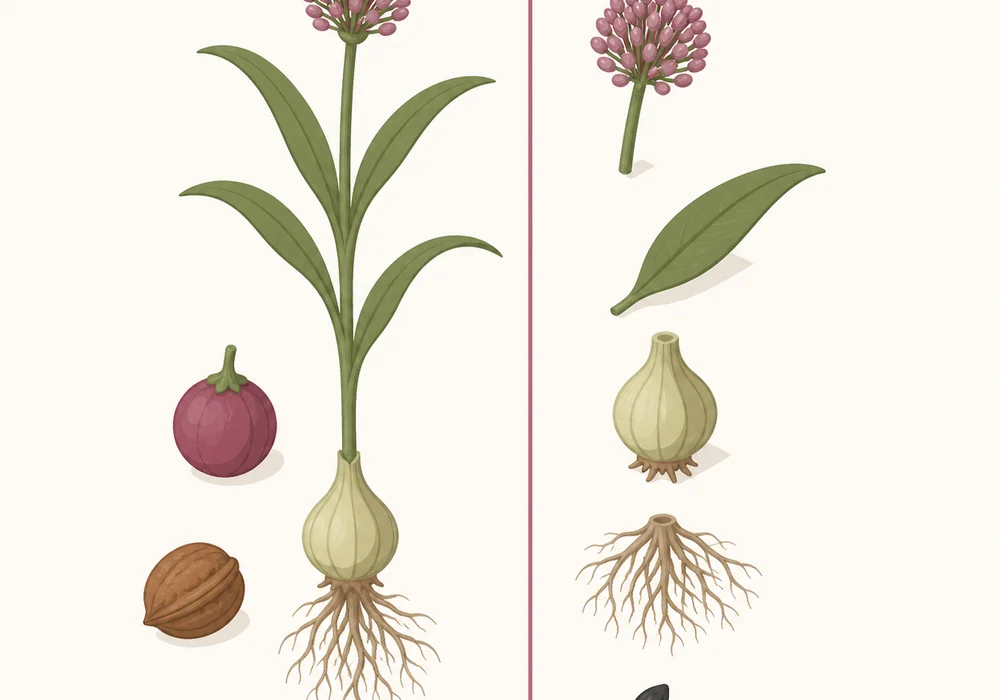
Look at the permitted five that way and each one explains itself. A berry is the plant's own offer and a nut is the same.
A mushroom is a whole fruiting body that the fungus itself will drop, and the parts of the fungus that matter stay in the ground either way.
Asparagus and watercress are the interesting cases, because both are stems and both are named explicitly. Naming them is how a rule built on parts admits its own two exceptions rather than pretending it has none.
Read the other way round, the prohibition is what most people trip over. These are the things it reaches:
- Roots and bulbs, which rules out anything harvested by digging.
- Seeds, including seed heads from grasses and wildflowers.
- Leaves, which is why greens gathered by the handful sit outside the permission.
- Bark, stems and cuttings from woody plants.
A picker who learns those four categories has learned more of the Wisconsin rulebook than a picker who memorises the permitted five, because the prohibition is the part that generalises.
Note
A rule written in parts is more useful than a rule written in species, because it answers for plants nobody thought of. Anything you can take without removing a root, a bulb, a seed or a leaf is worth a second look, and anything you cannot is almost certainly out.
Why are ramps not on the list?
Because the part of a ramp people want is exactly the part the rule protects.
A ramp harvest means lifting the bulb, and a bulb is a plant part in the plainest possible sense. Nothing in the permitted list reaches it.

People reach for the obvious workaround, which is to take only the leaves and leave the plant in the ground. That does not survive the wording either, because a leaf is a plant part in the same sentence that excludes a root.
The honest summary is that Wisconsin state land is not where you gather ramps, and the answer follows from the rule rather than from a species list somebody had to maintain.
The same reasoning settles a row of species the agency has never had to name. Fiddleheads are coiled leaves and wild leek seed is seed, so both are out.
Wild grapes and elderberries are fleshy fruit, so they are in, and a puffball is a whole fruiting body with nothing dug up to reach it.
What is actually worth picking in Wisconsin?
Mushrooms are the broadest item on the permitted list. The state names them without narrowing to a single species.
Spring belongs to morels, which come up in old apple orchards and dying elm across the southern half of the state. Summer brings golden chanterelles in oak, and the hedgehog mushroom turns up on the same ground a few weeks later.

Autumn is the part of the year the permitted list handles best.
Boletes, chicken of the woods and hen of the woods are all whole fruiting bodies taken by hand, which is exactly the shape the rule was written around.
Of those four the summer chanterelle is the one with a dangerous double. The orange jack-o-lantern grows in tight clusters on wood rather than singly out of soil, and the side-by-side comparison settles it faster than any description.
Notice that none of those four raise a legal question at all.
Every one is a whole fungus lifted by hand, which is why the Wisconsin rule never had to name a single mushroom species in order to cover them.
Do you need a permit?
Not for anything on the permitted list, which is unusual enough to be worth stating twice.
What replaces the permit is the pair of conditions. Removal must be by hand, and the purpose must be personal consumption by the person doing it.
Pick chanterelles or blackberries by hand for your own kitchen
Take hickory nuts or acorns from the ground the same way
Ask about written authorization for anything outside the list
Use a rake, a tool or anything mechanical
Take seeds from grasses or wildflowers without written authorization
Collect rocks, minerals or fossils, which are handled separately
Of those two conditions the second is the one people drift past. Personal consumption is a purpose test rather than a quantity test, and a basket filled for a farmers market fails it at any size.
Written authorization is the route for the things the list does not cover, and it is a request to the property manager rather than a form you fill in casually at a kiosk.
That route is worth knowing about because it covers work most visitors never attempt:
- Seed collection from grasses and wildflowers, often for restoration planting.
- Cuttings or plant material taken for research or for a nursery.
- Any collecting done for sale rather than for your own table.
- Anything gathered in a quantity that stops looking like one person's dinner.
The ordinary mushroom trip needs none of it. If you are wondering whether your trip does, the answer is usually in whether you can still describe it as personal consumption with a straight face.
ForagingMushroom foraging laws in the UK: what is actually legalWhat about state natural areas?
The same list, on ground that looks less official than a state park.
State natural areas carry the identical permission and the identical prohibition. Edible fruits, edible nuts, wild mushrooms, wild asparagus and watercress by hand for personal consumption, and no seeds, roots or other plant parts.
That consistency is genuinely helpful, because a state natural area does not announce itself the way a park entrance does. A walker can be inside one without noticing, and the rule they were already following is the right one.
Key takeaway
A state natural area is designated for a feature worth protecting rather than for recreation. The gathering rule matches the parks, and everything else about how the site is managed may not.
What does change is the reason to be careful. These sites are set aside for a rare community or a rare species, and the plants growing there are often the point of the designation.
The gathering rule already keeps you off them, which is a rare case of the rule and the reason behind it pointing the same way.
What does the national forest allow?
The federal ground answers in a different style entirely. It counts volume where the state names parts.
On the Chequamegon-Nicolet you can commonly collect up to five gallons a day for personal use without a permit, which is the shape most national forest rules take and the same one Colorado's forests use. The federal system counts volume where the state system names parts, and neither rule would recognize the other's question.
| Wisconsin state land | Chequamegon-Nicolet | |
|---|---|---|
| How the rule is written | A list of items and parts | A volume per day |
| Permit for personal use | None | None at the usual level |
| Mushrooms | Permitted, by hand | Permitted, up to the daily volume |
| Ramps and roots | Not permitted | A separate federal question |
The gap between those two rule styles is easiest to see as four numbers.
The two styles suit different trips. Somebody after a big mushroom day has more room on federal ground, and somebody working out whether a particular plant is allowed gets a cleaner answer from the state rule.
Tip
District offices on the same national forest can set their own conditions, and a wet autumn sometimes brings temporary ones. A phone call to the district office is a short conversation and settles the question for the day you are actually going.
Five gallons is a large volume for one person, and in practice it stops being the binding constraint long before your legs do. The state rule has no volume attached at all, which sounds more generous and is not, because personal consumption is doing the same job less visibly.
Warning
Do not carry a figure across the boundary. A gallon limit is not a Wisconsin state rule and the permitted list is not a national forest rule, and the two kinds of ground can adjoin each other without a change in the trees.
What should you settle before you go?
Check the land type, what you intend to collect, and whether it is for personal consumption. Ask for authorization if your plans fall outside the stated rules.
The part question is portable in a way a species list never is. It answers for a plant you have never looked up and for one the rule writers never considered.
Minnesota next door cuts the same problem differently, splitting fungi from plants rather than a plant from its parts. That is worth knowing before a weekend across the border, because the two rulebooks share no vocabulary underneath the word foraging.
A basket that clears the part question still has to survive the drive home, and sorting a foraged haul is where an autumn day is usually won or lost.
From there the questions stop being Wisconsin ones. Use the beginner's routine to decide what is worth picking and how to check its identity.
Sources & References
- Gathering in state parks and forests (Wisconsin DNR) State agency page used for the permitted list of edible fruits, edible nuts, wild mushrooms, wild asparagus and watercress removed by hand without a permit for personal consumption, and for the prohibition on collecting seeds from herbaceous plants without written authorization and on removing natural growth.
- Wild edibles, what can I collect (Wisconsin DNR State Natural Areas) Used for the identical permitted list on state natural areas, for the definitions of edible fruits as fleshy fruits and edible nuts as walnuts, hickory nuts and acorns, and for the statement that the collection of seeds, roots or other plant parts is prohibited.
- Foraging for football-sized fungi (Wisconsin DNR Natural Resources Magazine) State agency magazine used as the source for the Chequamegon-Nicolet national forest personal use allowance of five gallons a day without a permit, and for the contrast between the federal volume rule and the state list.