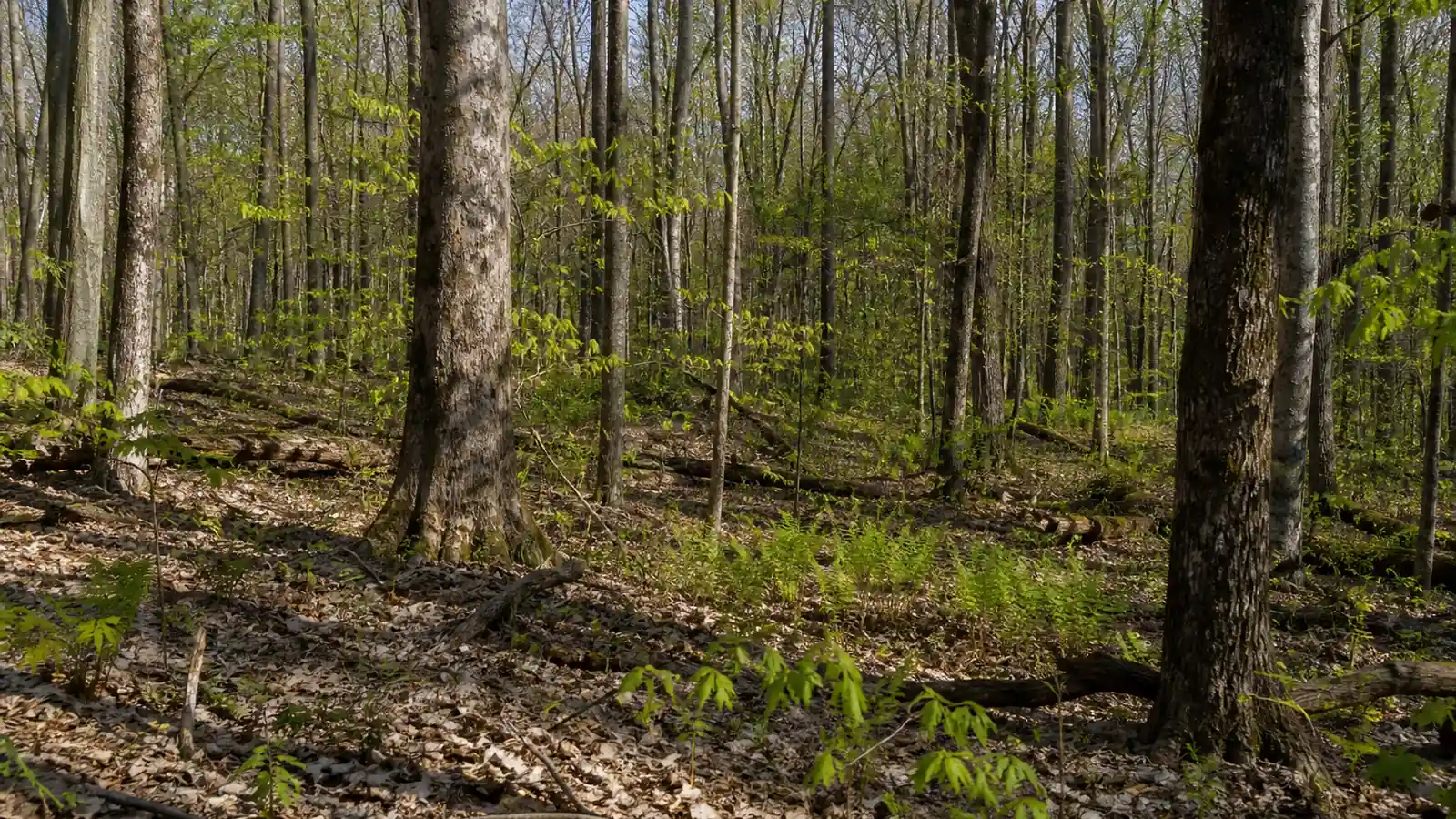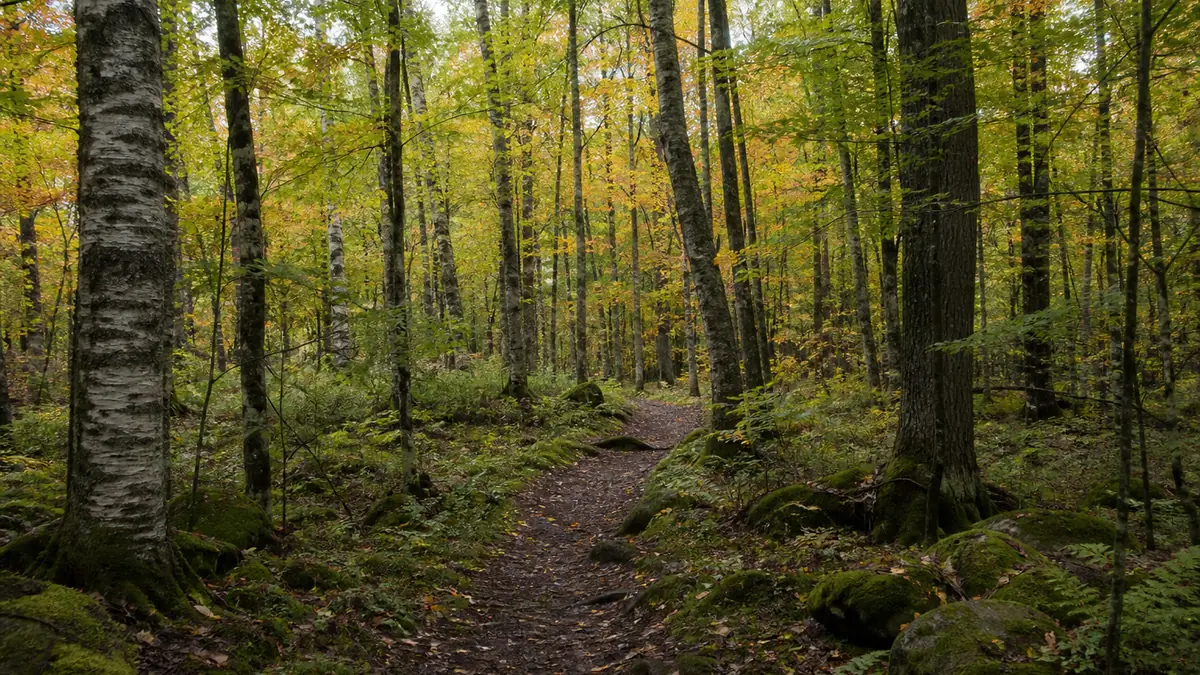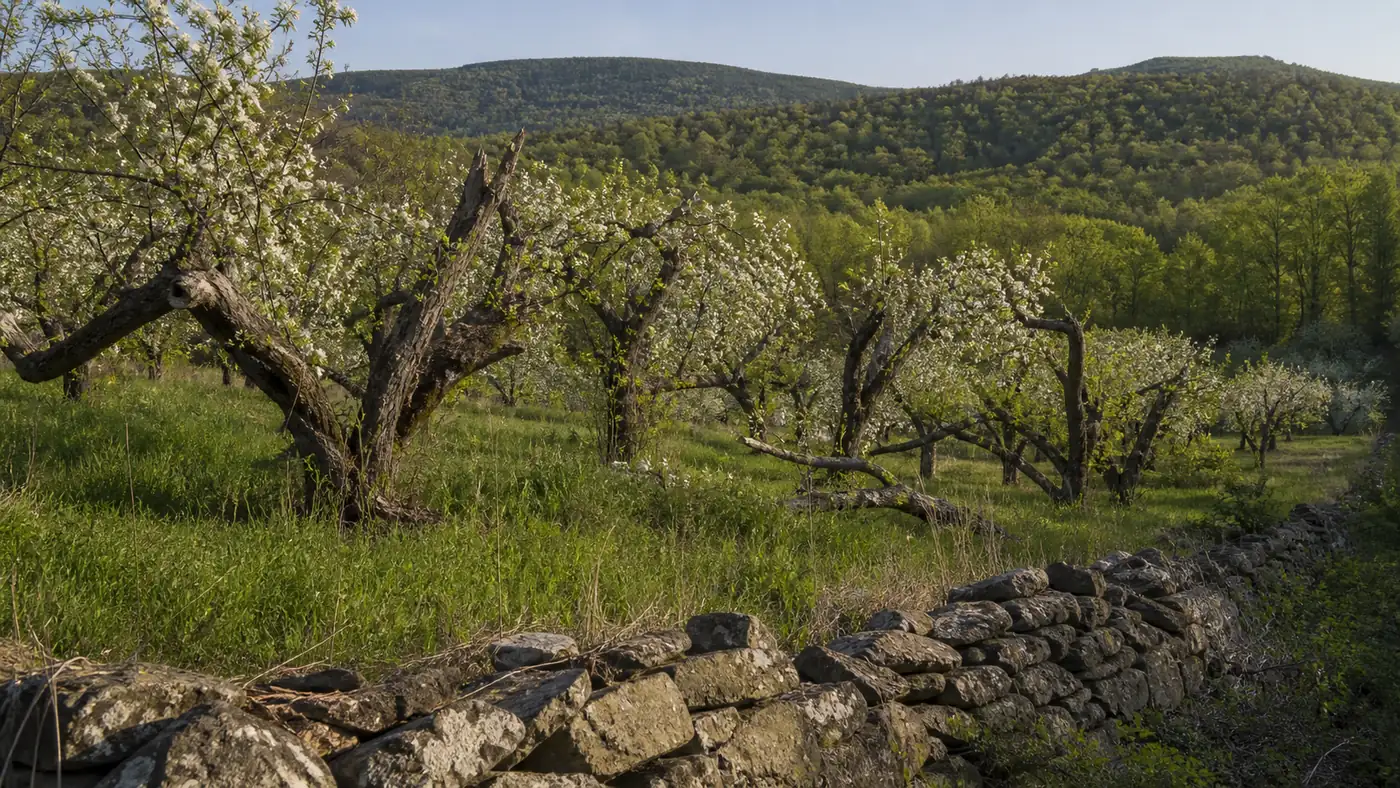
New York morels start in the lower Hudson Valley in April and finish in the Adirondacks in early June, so the state carries close to two months of season. The part most guides skip is that the forest changes along the way, because tulip poplar country sits downstate while the north is maple, beech and birch, and the old apple orchard is the one host that runs the whole length of the state.
New York morels start in the lower Hudson Valley in April and finish in the Adirondacks in June. That is a long season for one state.
Most advice written for New York quietly assumes you live somewhere near the bottom of that list. The trouble is that the tree changes as you go up it.
Which New York you are actually hunting
A hunter on Long Island and a hunter outside Saranac Lake are not doing the same thing.
Those two are separated by two months of season, several hundred miles, and a hardwood forest that swaps its species out along the way.
That last part is the one nobody mentions. Downstate woods and Adirondack woods do not hold the same trees, so the standard morel host list is only partly true in either place.
Note
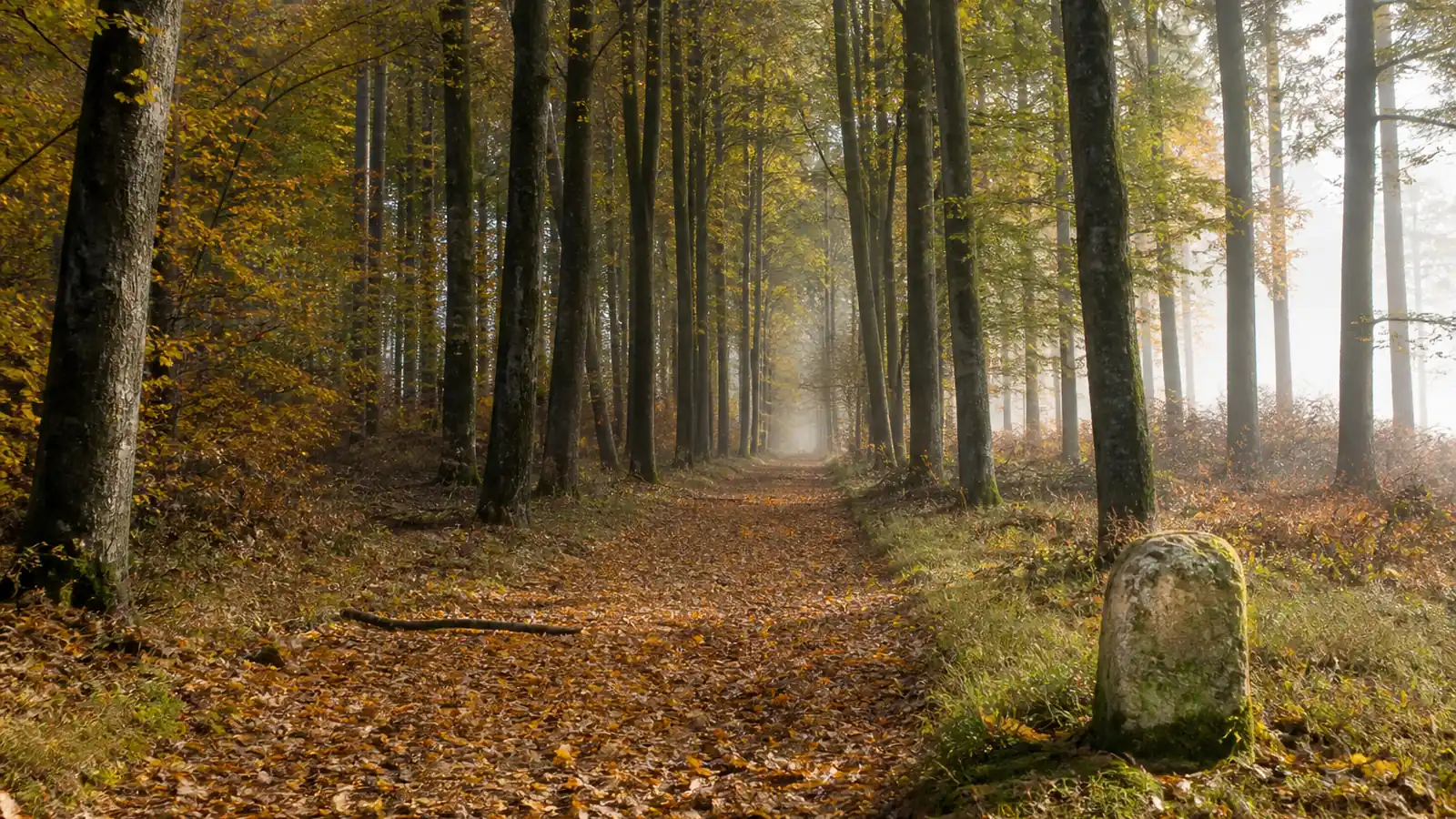
The list of trees to walk in New York is not one list. Downstate you are looking for tulip poplar and elm, upstate you are working maple, beech and birch country where tulip poplar barely occurs, and the old orchard is the only host that runs the whole length of the state.
A Catskill season shows the spread inside one region. Morels there can appear between early April and mid June, starting low in the valley and climbing as the soil warms.
That is one range with two months in it, which is why a single Catskill date helps nobody.
Elevation does the same work inside the mountains that latitude does across the state. Ground a thousand feet up runs behind the valley below it, and the two can sit twenty minutes apart by road.
The Finger Lakes usually peak while the Adirondacks are still cold. A hunter willing to move can follow that, and a hunter who is not should at least know which end of the state their advice came from.
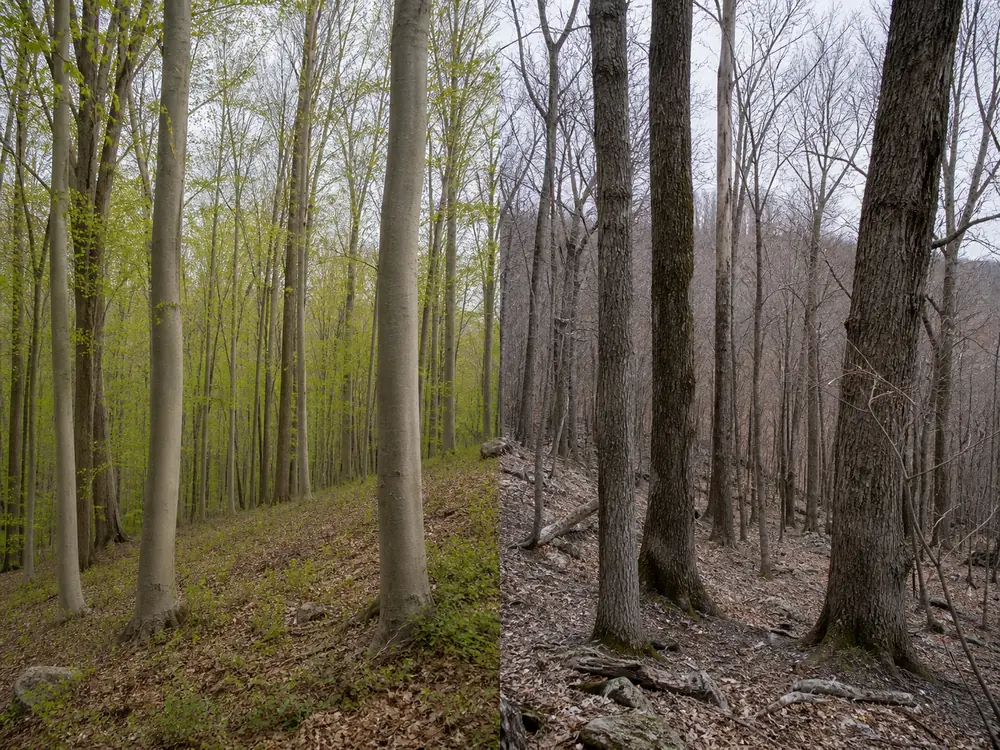
How the host list changes as you go north
Downstate New York has a forest type the north does not.
The oak and tulip tree forest is recognized as its own community in New York, and it is known from the lower Hudson Valley, the Hudson Highlands, the Hudson limestone valley and western Long Island.
That is the ground where tulip poplar is worth learning. It grows tall and straight with pale interlacing bark, it sits on rich moist slopes, and it is one of the better morel associations in the eastern states.
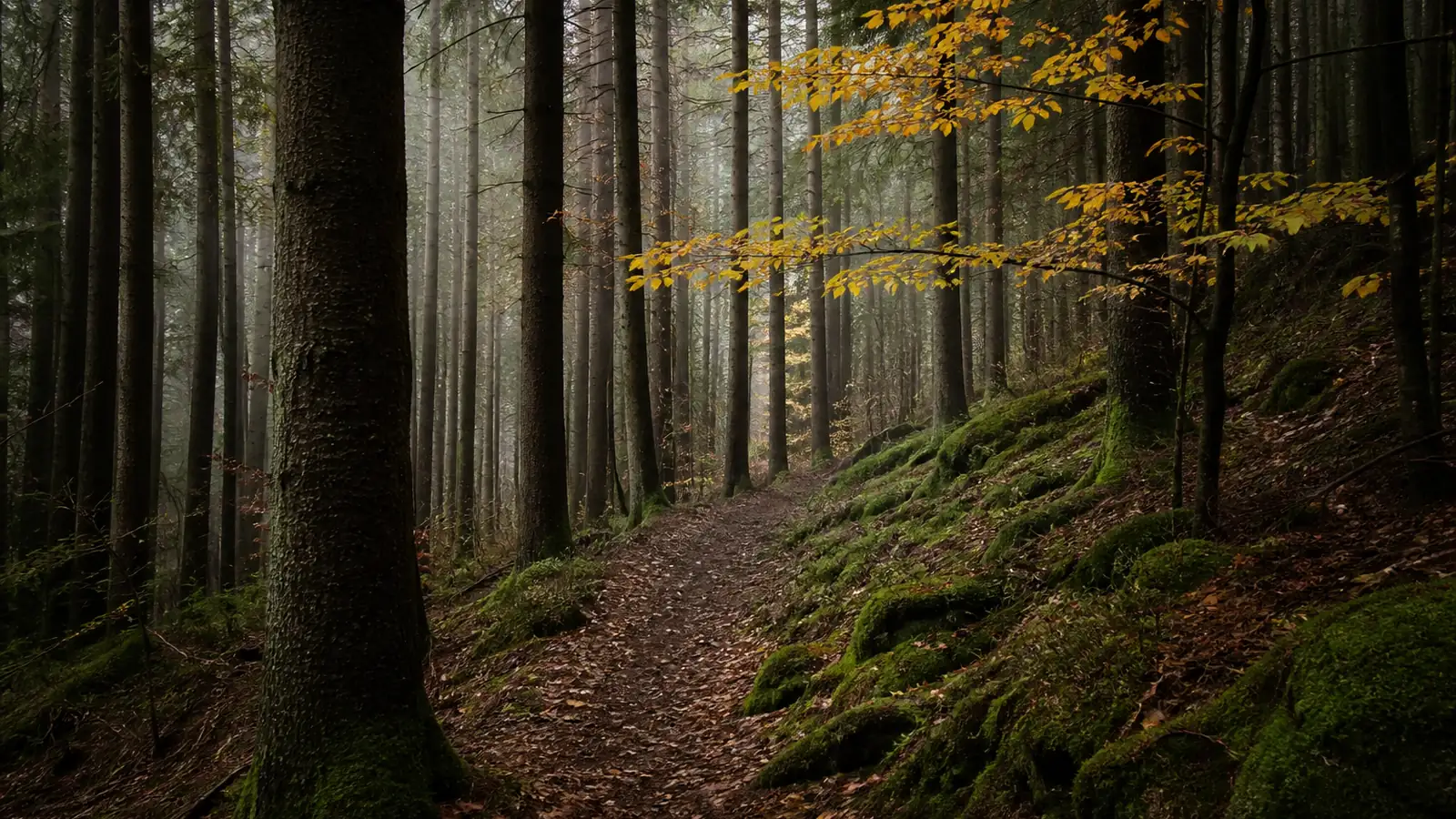
Carry that tree north and it thins out. The Adirondack forest is a northern hardwood system of sugar maple, beech and yellow birch, and a downstate hunter who arrives looking for poplar trunks will spend the day not finding them.
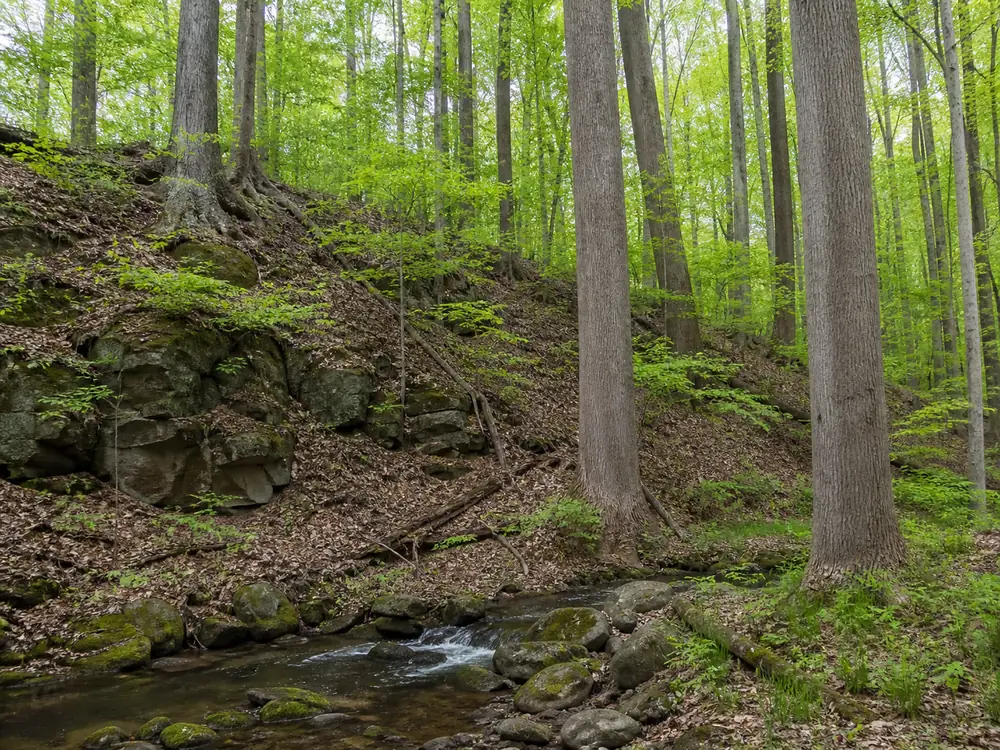
Elm is the exception that travels, and dying or recently dead elm produces across the whole state, worth the same slow circling in Ulster County as in Franklin County.
Ash now behaves the same way, because the borer has moved through New York as it has through everywhere else. A tree in the first year or two after death is the one to work, and a long-dead trunk with the bark gone has usually finished.
Read the tree rather than the map when the two disagree. A dying elm standing in maple country is still a dying elm, and it does not care which forest type the state has drawn around it.
ForagingMushroom foraging laws in Germany: protected species and small quantitiesHow to tell the week has arrived
Soil temperature is the trigger under every date on this page.
Ground temperature between 50 and 55 degrees is the range worth walking, and a reading taken on your own hillside beats any forecast written for the state.
Air temperature is the number people quote and the one that misleads them. A warm afternoon does almost nothing to ground that spent the night near freezing, so the overnight low is worth more attention than the daytime high.
Rain sets the pace once the ground is warm enough. A soaking rain on soil already sitting in the low fifties brings a flush within the week, and the response takes several days rather than arriving overnight.
The plants are doing the same arithmetic and they are easier to check. Apple blossom lands close to the right week across most of New York, which is convenient in a state with this many apple trees in it.
Canopy state is the coarse version of the same read.
Bare woods are early, woods in light open leaf are usually in it, and woods closed over into deep shade have generally finished on that ground.
A blank walk still tells you something, provided you notice which kind it was. Cold litter under bare branches means come back, while dry crumbling litter under a closed canopy means go higher or go north.
What an old orchard gives you that a woodlot does not
New York grows a great deal of fruit, and it has been doing so for a long time.
That leaves old apple trees everywhere. Farm yards, hedgerows, hillsides that stopped being farmed two generations ago, and whole orchards that were simply walked away from.
- Why it works
- Apple is a named morel host, and old trees decline slowly
- Why it lasts
- An orchard can produce for years rather than for a season or two
- Where to look
- The grass at the trunk, and the row edges rather than the middle
- The timing cue
- Apple blossom, which lands close to the right week
- The catch
- Almost all of it is private, so the ask comes first
An orchard beats a woodlot on staying power. A dying elm gives a hunter a season or two before it quits, while an old apple tree can keep producing far longer, which makes an orchard the steadiest thing on a New York route.
The blossom is a useful accident of timing, because apple flowering sits near the week the ground reaches the low fifties, so the tree tells you when to walk the ground beneath it.
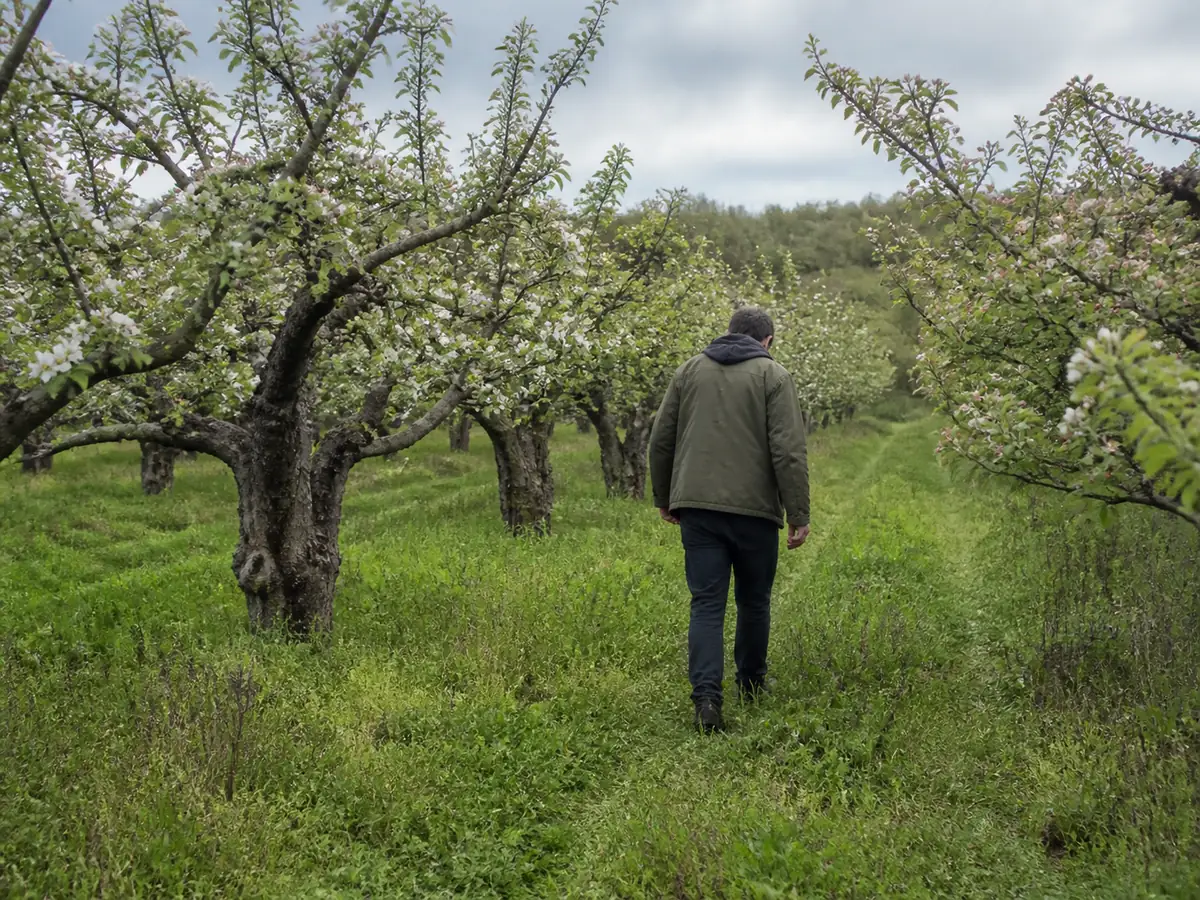
Work the grass rather than the branches. Morels come up in the sod around the trunk and along the row edges, and the middle of a mown orchard is usually the least interesting part of it.
An abandoned orchard beats a working one for a simple reason. Nobody sprays it, nobody mows it, and the trees are allowed to decline on their own schedule.
Finding them is a winter job, because bare rows of gnarled apple show clearly from a road in February, and the permission is far easier to ask for then than on the first warm Saturday in May.
ForagingMushroom foraging laws in the UK: what is actually legalWhere you may pick, and the word that decides it
New York hands out two very different answers depending on which agency owns the ground.
State land under the Department of Environmental Conservation is open. Personal-consumption collecting of edible mushrooms is allowed under 6 NYCRR 190.8(g), and that covers State Forests, the Forest Preserve, wildlife management areas and multiple use areas.
State parks are a different agency and a different answer. They generally prohibit foraging or require a permit, so a page that says New York allows it and a sign that says you may not are often both correct.
That single word is the whole trap, because state forest and state park sound like the same category, are run by different agencies under different rules, and sit a few letters apart on a brown sign at a trailhead.
Read the sign at the gate rather than the phrase in your memory. The Catskill Forest Preserve is open ground, and a state park inside the same county is not.
Personal consumption is the boundary on all of it. Reasonable amounts for your own table are the standard, and selling what you pick is outside every one of these rules.

Carrying the regulation is genuinely worth doing, because it is a short passage, it fits in a pocket, and not every officer in the field has it committed to memory.
The Finger Lakes National Forest is worth knowing for the same reason. Federal ground runs under its own rules again, and personal-use collecting is generally allowed there.
Downstate hunters have the hardest version of this problem. The nearest legal ground is often an hour or more out of the city, and the parks closest to home are usually the ones where collecting is not allowed.
Before any of it reaches the pan
False morels come up in the same New York weeks and the same woods.

The cap is the first read. A true morel is pitted like a honeycomb with raised ridges between the pits, and a false morel is wrinkled, folded and brain-like with no real pits at all.
Pits alone are not proof, so cut every one lengthwise.
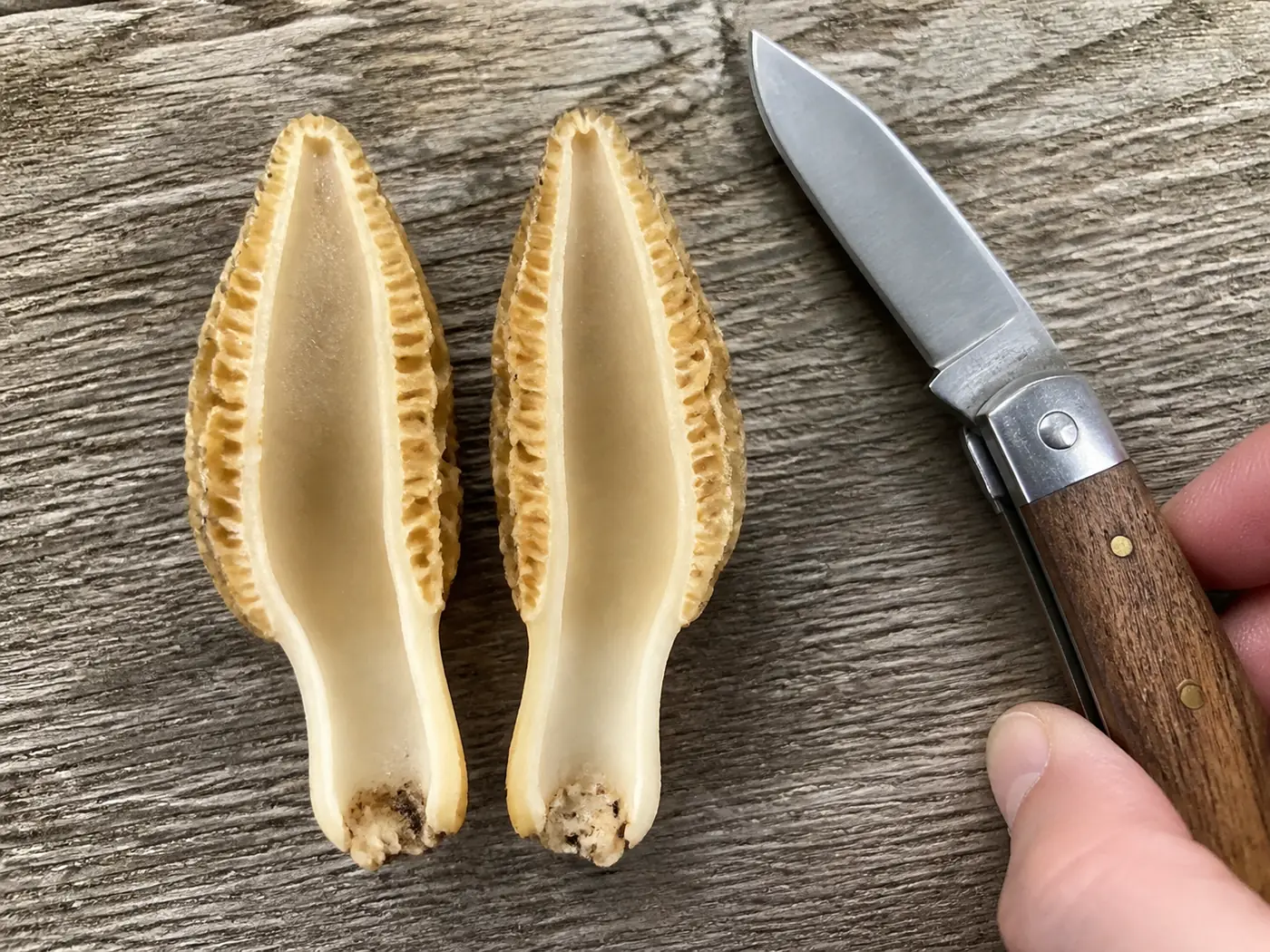
That cut is the test because of what fills a false morel instead. Gyromitrin is the toxin involved, the body converts it to monomethylhydrazine, and cooking does not drive it off.
New York holds the same handful of morels from Long Island to the Adirondacks, and they arrive in an order.
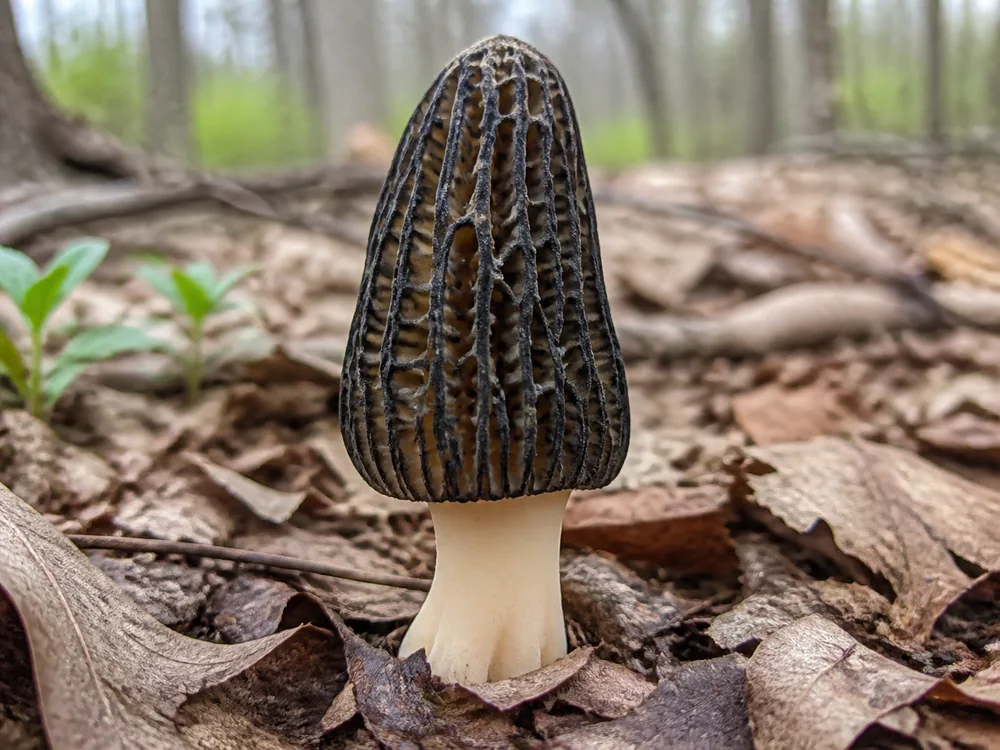 First upBlack morelEarliest of the run, and easy to walk over in dark litter
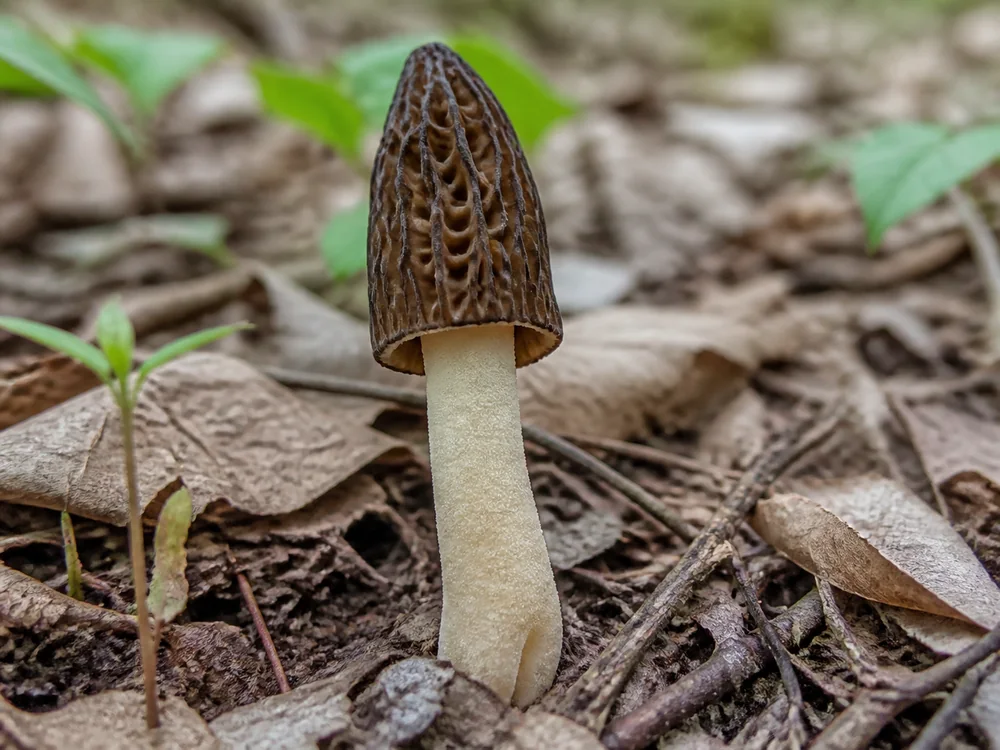 Middle of the runHalf-free morelCap hangs loose below where it joins the stem
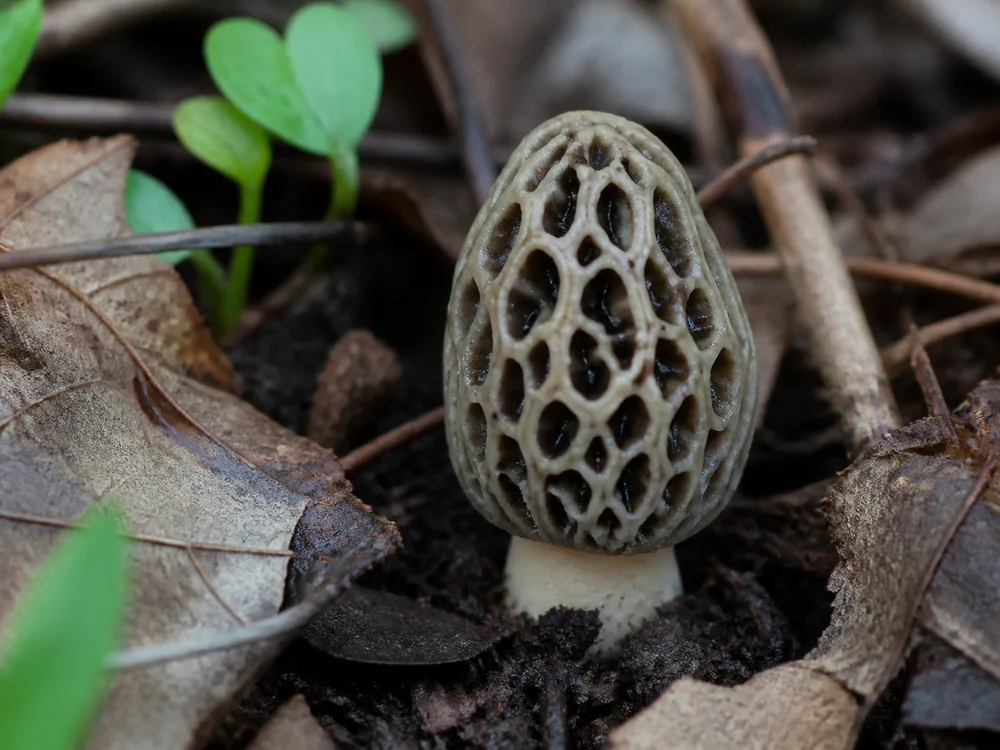 Early to middleGray morelThe young form most people find first
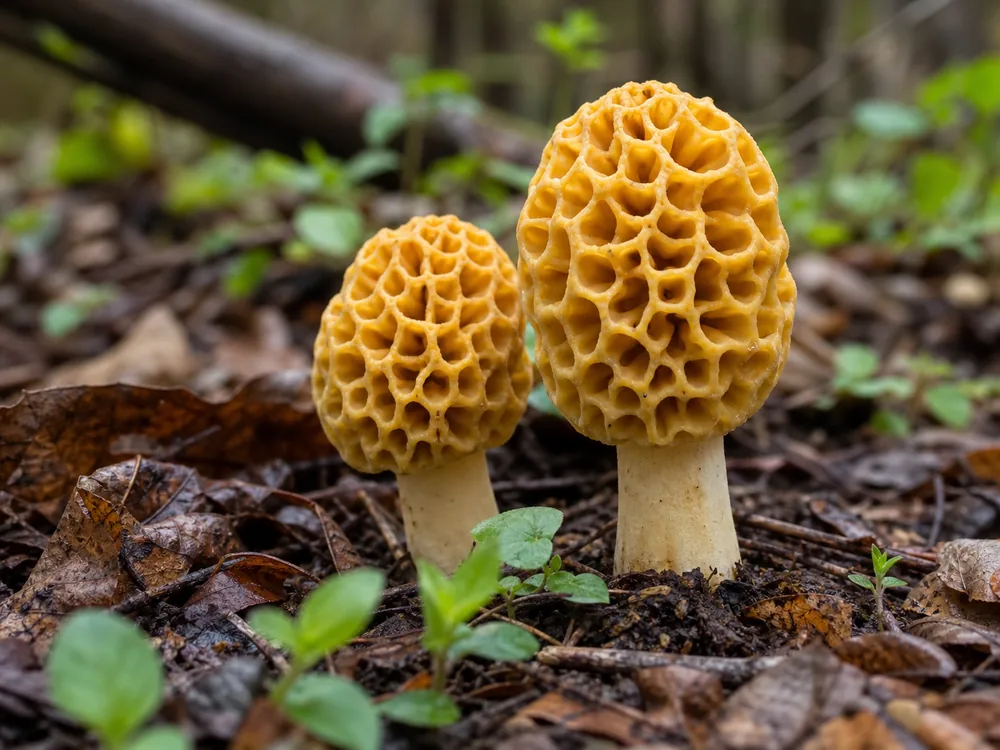 Last and largestYellow morelCarries the end of the season
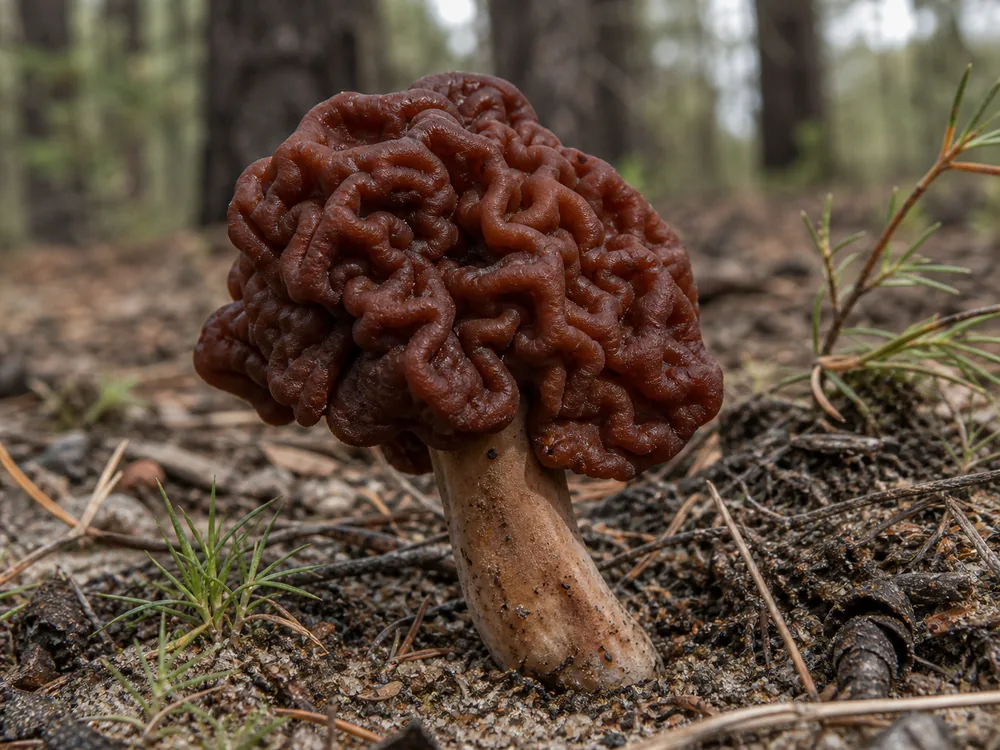 Same weeks, never edibleFalse morelWrinkled and lobed, with no honeycomb pits
Half-free morels cause a scare in New York every spring. Their cap hangs loose below the point where it joins the stem, which looks alarming to anyone who has just learned that a free-hanging cap is a warning sign.
A half-free morel has a hollow interior, but hollowness alone cannot confirm identity. Cap attachment and the complete specimen still need assessment.
Correctly identified morels still ask something of the cook. Raw morels sicken people who named the mushroom right, so cook them through, take a small portion the first time from new ground, and skip alcohol with that meal.
If it does go wrong, the timing is the thing to notice. Symptoms arriving hours after eating rather than minutes are the ones to take seriously, and Poison Control is at 1-800-222-1222.
| Check | True morel | False morel |
|---|---|---|
| Cap surface | Honeycomb pits with raised ridges | Wrinkled, folded and lobed like a brain |
| Cut lengthwise | One continuous hollow chamber | Cottony fill or separate pockets |
| Cap attachment | Joined to the stem near its base | Often hanging loose or irregular |
| Cooking | Safe only when thoroughly cooked | Not made safe by cooking |
Sources & References
- Rules for Using State Forests and Forest Preserve, New York State Department of Environmental Conservation
- Oak-Tulip Tree Forest, New York Natural Heritage Program
- Liriodendron tulipifera, New York Flora Atlas
- Morel Mushroom Foraging in the Catskills, Catskill Crew
- Hunting Morels in the Hudson Valley, Valley Table