
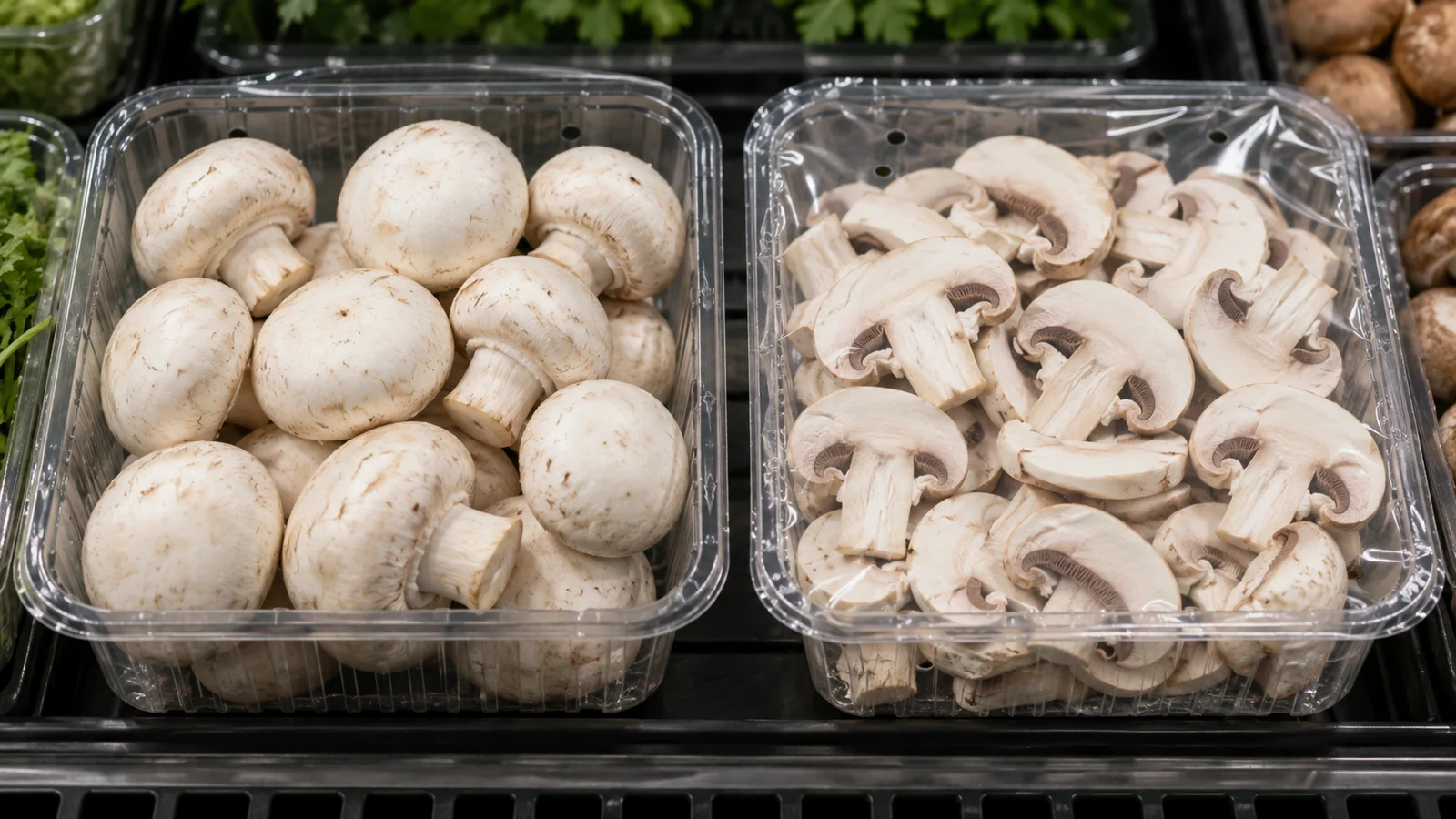
Pre-sliced mushrooms are worth buying when their cut fits the meal and you would rather skip the knife work or cleanup. Whole mushrooms give you more cutting choices and usually more room to put off preparation, so a sliced pack you do not use can wipe out a small convenience gain.
Pre-sliced mushrooms can remove the one task that would otherwise keep mushrooms out of your meal. That benefit is real when cutting or cleaning a board is hard for you, or when ready slices fit the time and energy you have. The premium gets harder to justify when the recipe needs thick pieces, whole caps or several meals from one fresh pack. Paying for a cut you later have to change, or for slices you cannot use while they are still good, buys less convenience than the label suggests.
Are Pre-Sliced Mushrooms Worth It?
What you really save is the work you actually avoid. Fast cooks with a clean board ready may value a sliced pack differently from someone who wants to avoid a knife or another prep job. You need no universal estimate of slicing time to see that difference. The effort that counts includes getting tools out, making the cut your recipe needs and cleaning up afterward.
A Cut Pack May Still Need Prep
Pre-sliced describes the shape of the food, and it is not a full prep promise. As FDA's produce guidance explains, you can treat produce as pre-washed or ready to eat only when the package says so. If the slices still need cleaning, the pack saved the cutting and left the rest of the job. If your recipe needs finely chopped mushrooms, ordinary slices may need a second cut too.
This counts most when convenience is your reason for buying. The same logic favors a pack that already gives you the form you need, such as slices for a quick cooked sauce or a pan of sliced mushrooms. It favors whole mushrooms when the meal needs quarters, or a different thickness you would end up cutting anyway.
Compare Equal Weights Before Judging the Premium
Suppose an 8-ounce whole pack costs $2.50 and an 8-ounce sliced pack costs $3.00. Both prices are hypothetical, and the extra 50 cents is a 20% premium over the whole pack. If cutting and board cleanup would really take you four minutes, the example costs 12.5 cents per minute saved. Four minutes is an assumption for the sum, and nobody timed how fast shoppers should prepare mushrooms.
The sum gives the premium a concrete meaning without setting one value on everyone's time. Skipping knife work may be worth it even when the minutes are few. Different pack sizes change the comparison before personal effort even enters it. You cannot judge a 10-ounce sliced pack against an 8-ounce whole pack by shelf price alone, because the larger one holds a quarter more food.
Unused Slices Can Cost More Than the Convenience
In the equal-weight example, using all eight ounces of the $3.00 sliced pack costs 37.5 cents per ounce. If two ounces end up in the bin and you use only six, the cost rises to 50 cents per used ounce. The pack price stays the same while less of the purchase becomes food in your meal. Buying a smaller suitable pack can be better value than taking a larger pack's lower unit price.
Planning to cook the slices soon makes it more likely you will use the convenience you paid for. Buying them on the chance of a meal at the end of a busy week spends the premium before you know whether the cut or the remaining freshness will fit.
Quality and PriceBuying Mushrooms at a Farmers Market: Source, Weight, ValueDo Sliced Mushrooms Spoil Faster or Lose Flavor?
Slicing fresh white button mushrooms, Agaricus bisporus, exposes more of their flesh. Browning of fresh-cut buttons involves polyphenol oxidase, usually shortened to PPO. This enzyme drives the oxidation of phenolic compounds into brown products. So a cut surface can change color even though you have cooked nothing.
Research on delaying browning therefore studies enzyme activity and storage conditions, and it does not treat every brown edge as the same event. Color is one observation, not a full assessment.
Cutting Takes Away the Option to Wait
Whole mushrooms keep their cut surfaces hidden until you prepare them, so the browning that starts at a fresh cut has not begun yet. That gives a whole pack some slack when your meal timing is uncertain. It does not prove every whole pack will outlast every sliced pack, because age, starting condition, packaging and temperature history still differ.
White buttons and cremini are forms of the same cultivated species, but their normal cap colors differ. Cremini caps are naturally brown, which is a different thing from a darkened cut edge on a white button slice. Knowing the species and the part you are looking at keeps you from using the wrong color expectation. It still cannot show the full handling history of the package.
A Lab Storage Result Is Not a Date on Your Pack
One fresh-cut button mushroom study tested ways to suppress PPO with ultrasound and electrolytic water. Its authors name the seven-day observation period as a limitation and call for work under other storage conditions. That evidence explains a browning process, and it does not promise you seven usable days. Nor does it give any reason to copy an industrial or lab treatment at home to keep a doubtful pack longer. You cannot reset a purchased pack's remaining life to a study's first day.
Slicing Does Not Prove a Fixed Flavor Loss
Claiming that all pre-sliced mushrooms taste weaker would need a matched comparison of the same mushrooms, stored and cooked under similar conditions. Browning research and retail temperature advice do not supply that universal flavor measure. Slices may have changed color, dried at the edges or spoiled, and each of those can affect whether they work for dinner. None of them gives a numerical flavor penalty for every pre-sliced product.
What counts is whether sound slices in the cut you need suit the dish. Paying for whole mushrooms makes more sense when you need flexibility or cannot plan when you will cook, and the sliced label alone does not prove poor taste.
Quality and PriceWhat Do Mushroom Grades Mean? USDA Quality, Size and PacksMatching the Slice Thickness to the Meal
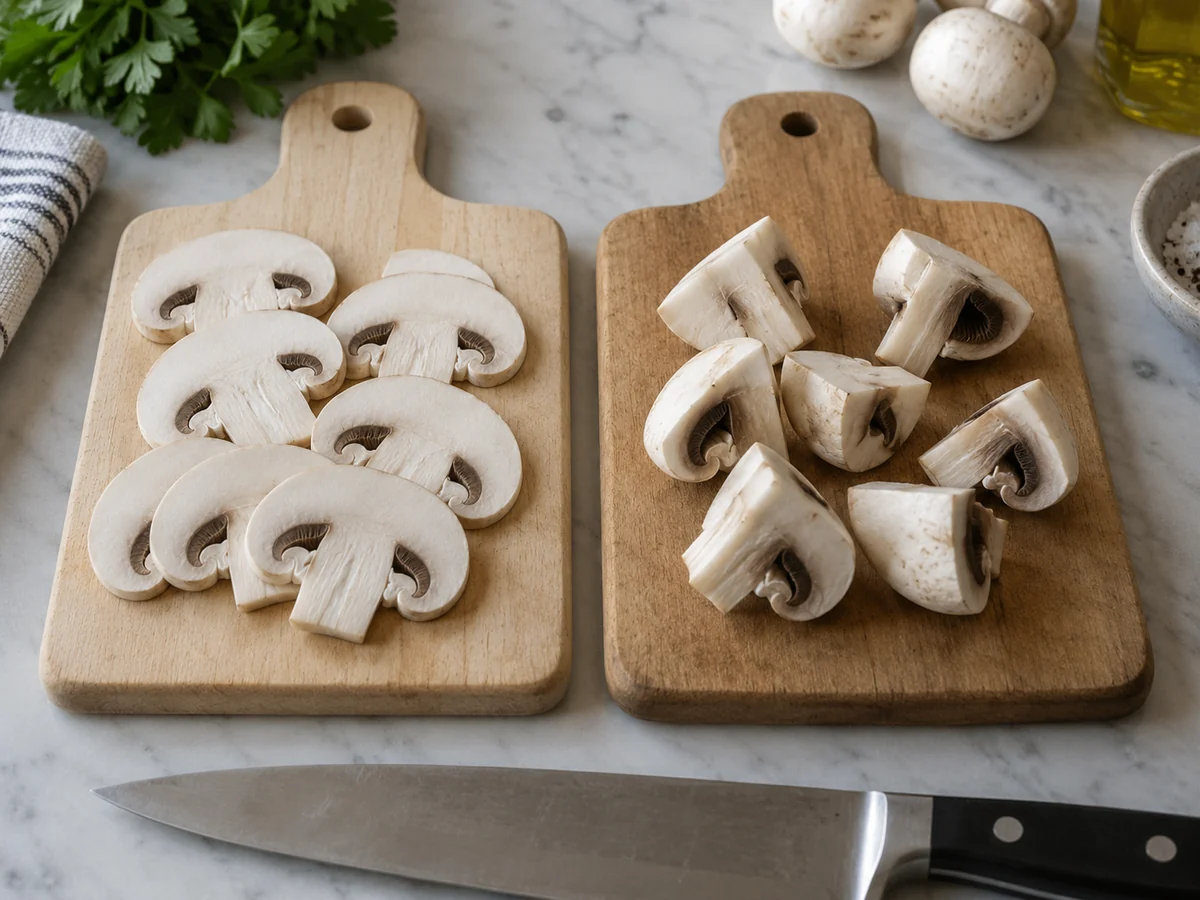
Whole mushrooms let you decide what pieces the meal needs. Pre-sliced packs make that choice for you earlier, and a photo of even slices should not hide whether they are thinner or smaller than you want. Cut flexibility is part of what you give up for the convenience.
| What the meal needs | How a pre-sliced pack fits | What whole mushrooms let you choose |
|---|---|---|
| Similar slices in a cooked sauce or quick pan dish | Useful when the actual thickness matches the recipe | Thinner or thicker slices to suit the same method |
| Large pieces that remain visible | Thin slices may be a poor fit | Quarters, halves or other substantial pieces |
| Intact caps for stuffing | Slices cannot supply the missing cap shape | Caps of a suitable size, with stems handled separately |
| Finely chopped filling | Slices may still need chopping | The final chop, without paying for an intermediate cut |
Even Thickness Only Pays When the Thickness Works
Slices of similar thickness start a batch off more evenly. That suits sauteing mushrooms, but it does not make one thickness right for every recipe. Thin pieces give less of a solid bite than thick ones and leave less room to change the cut later. You can cut a slice smaller, yet you cannot put slices back together into a quarter or a whole cap.
Packs with many fragments may work well in a chopped filling and still disappoint in a dish built on visible, matching slices. The choice follows the meal, and small broken pieces are not automatically wasted food.
Usable Stems Depend on the Ingredient and the Cut
Mushroom stems can add to a chopped dish, so a mix of cap and stem pieces is not automatically a defect. Their texture and the species still govern how they fit the dish, and the sliced-pack label does not answer that. Whole mushrooms let you handle cap and stem separately. That choice is worth having when the recipe calls for caps or when some pieces need a different cut before cooking.
If the store's other options are different species, the comparison also includes that change of ingredient. Sliced button packs and unsliced specialty mushrooms make no controlled test of what slicing alone does.
Choosing and Storing a Sliced Pack
The purchase needs a real meal and acceptable condition, as well as a fair premium. FDA advises buying refrigerated pre-cut produce and keeping mushrooms in a clean refrigerator at 40°F (4°C) or below. The look of a pack can give you a reason to reject it. It cannot prove that every part is sound or that the food stayed at the right temperature through transport and display.
Visible Condition Tells You When to Say No
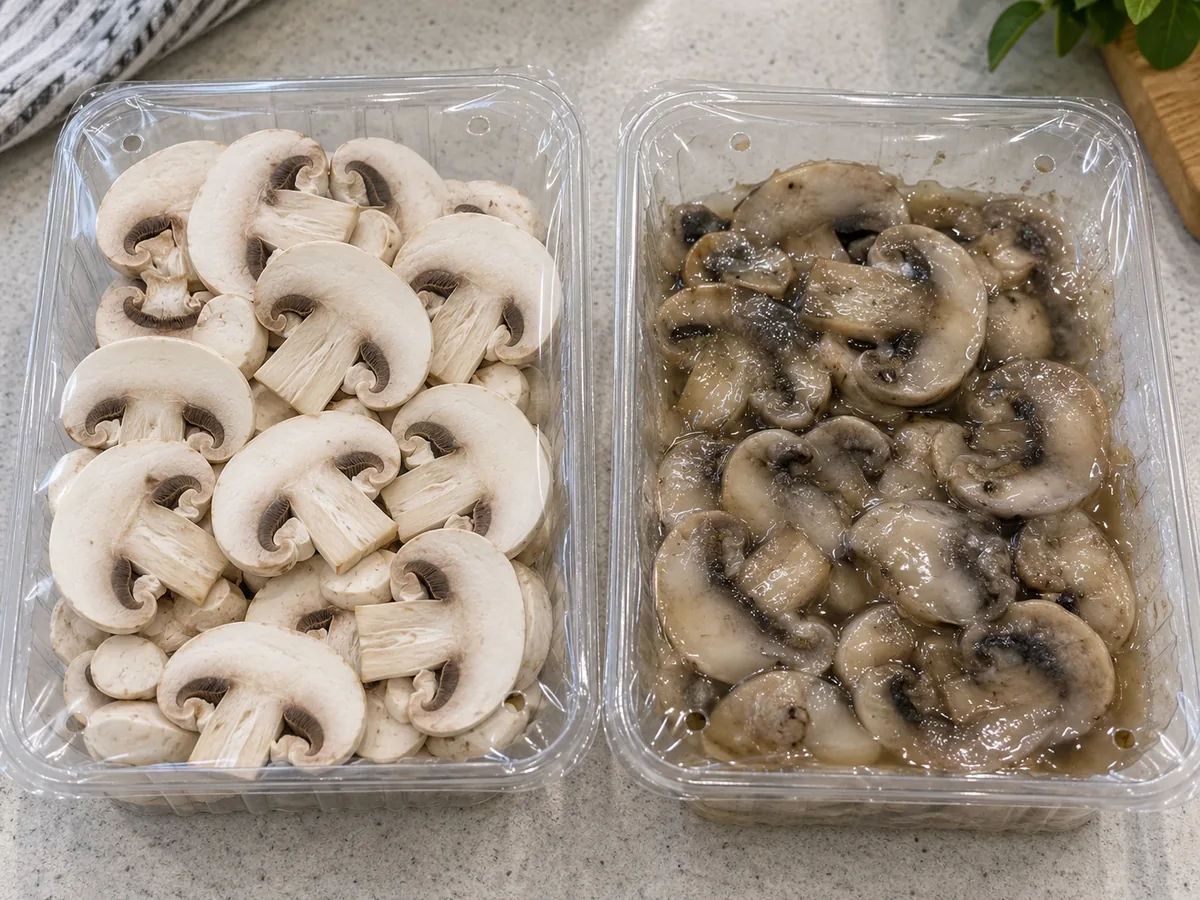
Firm, plump slices with no visible spoilage make a better starting ingredient than collapsed, wet pieces. Sealed packs limit what you can inspect, especially when the top layer hides what lies underneath. Pooled liquid, damaged packaging or badly spoiled pieces remove your confidence in the purchase, even when the top few slices look fine. The package only holds the food, and it is no proof that someone cut the mushrooms recently or handled them properly. Do not open a retail pack to inspect it before buying.
Warning
Reject visible spoilage
Do not buy or use mushrooms with slime, mold, decay or an off odor. Rinsing does not make spoiled mushrooms suitable to eat.
A Household Storage Window Is Not a Freshness Guarantee
Health Canada gives general guidance of up to five days for refrigerated prepackaged mushrooms in their original packaging or a paper bag. That is a household guideline, and it does not promise that a sliced pack has five days left from the moment you buy it. Original ventilated packaging or a paper bag avoids treating fresh mushrooms like a sealed pantry food. The same guidance says to leave washing until you are ready to use them, for quality reasons.
Storing fresh mushrooms properly keeps the ingredient you bought, but it cannot restore lost condition. Planning a near-term meal and choosing a pack size you can finish protect your money better than buying the largest amount a general guideline allows.
Sliced and Washed Are Separate Label Claims
When the pack does not say it is pre-washed, cleaning mushrooms is still part of prep. You can rinse the slices under cool running water and pat them dry, and Health Canada says water alone is enough, with no soap. FDA notes that washing can reduce bacteria without removing all of them. So clean-looking surfaces do not prove a pack is free of harmful contamination.
The sliced pack is worth buying when it is sound, refrigerated and already cut in a way that removes work from a meal you will really make. Whole mushrooms earn their place when you need to put off the cutting decision or want a shape slices cannot give.


