
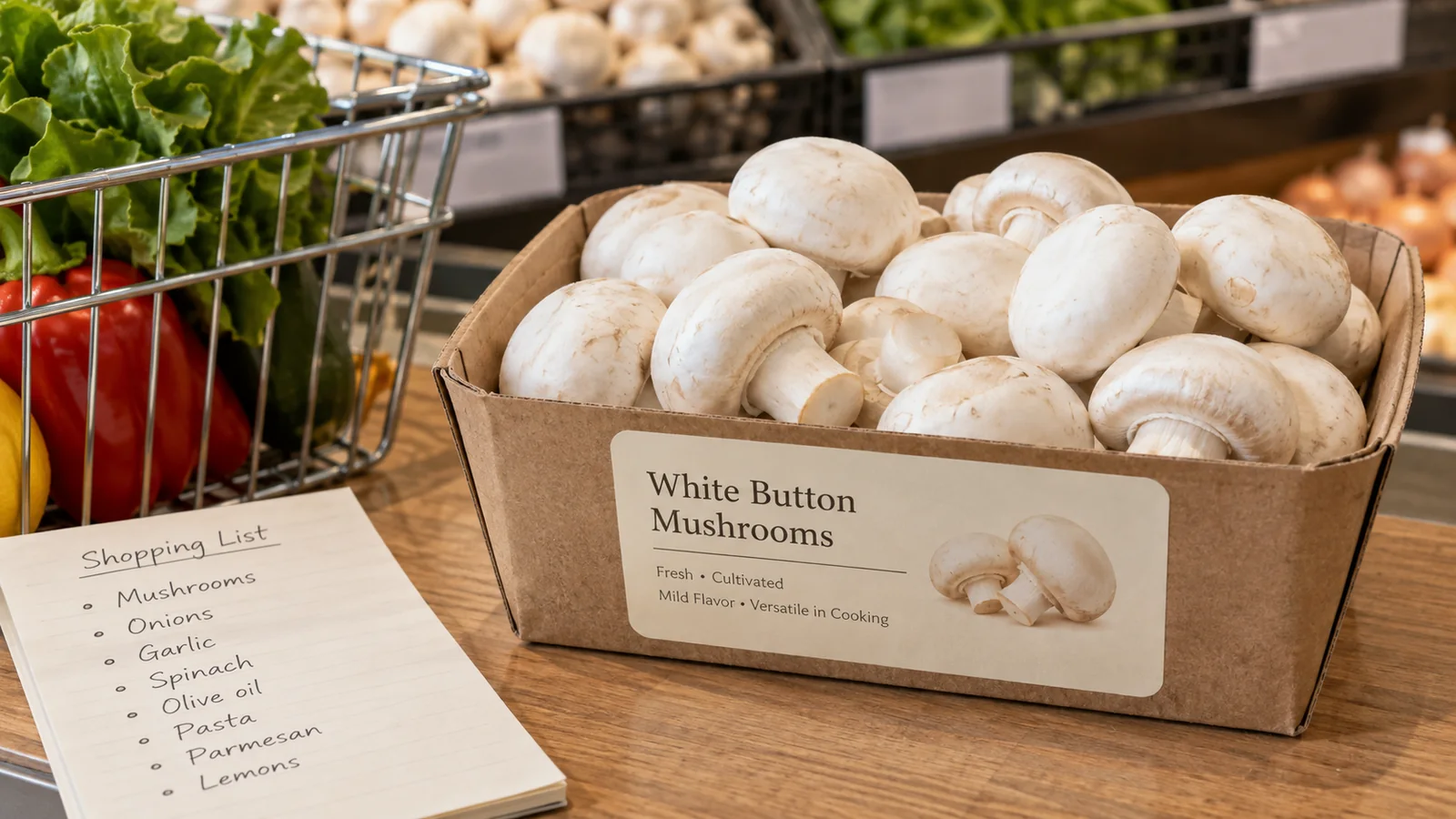
Organic mushrooms can be worth the premium when you value checked production practices and can afford the real extra cost. Certification does not guarantee zero residues, better nutrition or freshness, so the weight of the pack, its condition and your meal still count.
Two packs of mushrooms can look almost the same while promising different things about how someone grew them. Start with the promise you want to pay for, then keep it apart from weight, preparation and condition. Certified mushrooms can be a fair preference even when the label shows no nutrition advantage. What you are deciding is whether that checked claim is worth the extra cost of organic production for your own shopping.
What Does Organic Mean for a Mushroom?
In the U.S. market, organic certification means a farm or business has shown that its practices meet the organic rules that apply to it. Certifiers accredited by USDA inspect certified farms and businesses, which makes the claim more than a grower calling the mushrooms natural. The mushroom itself does not show that history, and organic white buttons can look so much like other white buttons that their looks cannot answer the question.
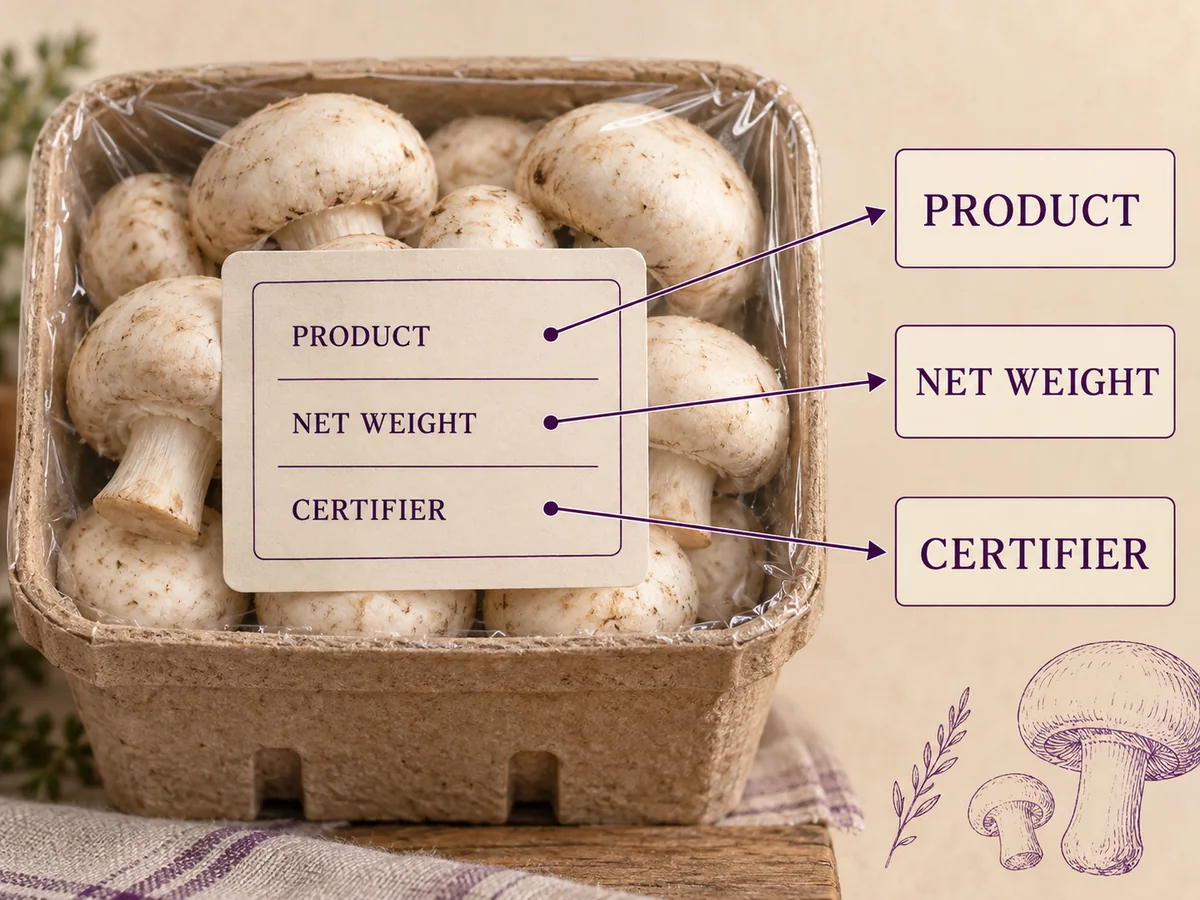
The USDA organic seal is optional on products that qualify for it. Its absence does not, by itself, prove that nobody certified the product. On packaged retail products, the information panel names the certifier with a line such as "certified organic by" and the certifier's name. That line ties the claim to someone responsible for checking it, and you get more than a pleasant word on the front.
Made-up package drawings can show where those details belong, but they cannot vouch for a real pack on the shelf. The actual package and the seller's own details stay your evidence for that purchase.
"Local" describes a link to a place, and "farm-grown" describes where the food came from. Neither word replaces an organic certification claim, even when the grower follows practices you like. At a farmers market, the seller may be the producer or a reseller. Asking who grew the mushrooms and which operation holds the certification tells you more than assuming everything at an organic-looking stall has the same status.
Warning
Organic does not establish identity
Wild mushrooms raise a separate question about what they are and whether they come from an approved source. No organic label can name an unfamiliar specimen or make a seller's word on its identity enough. That safety call comes before any extra price for the seal.
Substrate and Spawn Rules, With Their Exceptions
Mushrooms grow by drawing nutrients from a material called the substrate. Spawn brings the growing fungus into that material. The food source and the fungus source are therefore two linked but separate inputs.
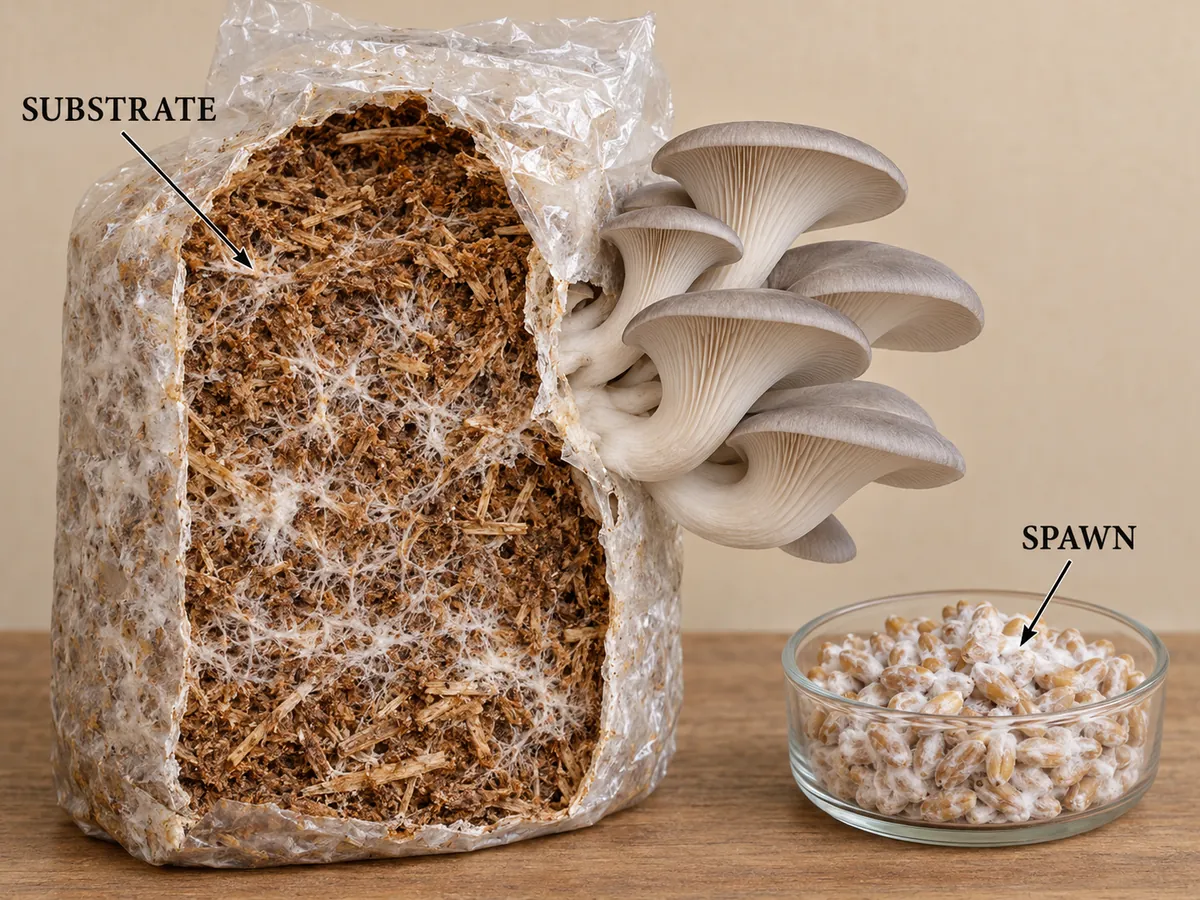
USDA's mushroom production standard covers both. It also covers how growers manage those materials and their spent leftovers, so they do not add to contamination by pathogens, heavy metals or prohibited substances. Timing needs care here. The mushroom-specific rule took effect on March 21, 2025, and USDA set March 22, 2027 as the compliance date.
As of October 3, 2026, the market is still within that transition. So do not use the new details to accuse an operation of breaking the rules without checking which requirements apply yet.
The detailed standard sorts materials by what they do and where they come from. Compost, uncomposted plant matter and wood do not all face the same rule. Compost in mushroom substrate has to appear in the farm's organic system plan and meet the standard's composting rules. Uncomposted plant materials must generally be organic too, unless no organic material that does the same job is commercially available.
That exception asks for more than picking the cheapest nonorganic ingredient. Growers keep records of their search for organic materials, how they judged what was available, and the nonorganic materials they bought. Wood chips, sawdust, logs and other wood have their own rule about treatment with banned substances after harvest. Wood-based substrate is not ruled out just because nobody calls the wood organic.
Spawn must generally be organic too. Growers may use nonorganic spawn when no matching organic spawn is commercially available. The standard also sets rules for the spawn's growing medium and for organic care after the fungus goes in. So the idea that "every ingredient must always be organic" misreads the rules, though these routes come with conditions and do not make the seal meaningless.
Allowed substances need care too. The National List allows some synthetic substances in organic crop growing and bans some non-synthetic ones. The words "natural" and "synthetic" therefore cannot tell you on their own whether a farm may use an input.
For you as a shopper, the real value lies in checked practices and someone you can hold to account. You do not need to rebuild a farm's whole substrate recipe, and a list of substrate ingredients cannot replace the certifier's review. Penn State's guide to pest management on organic mushroom farms stresses preventing and managing the conditions that let pests thrive. That describes one way of growing, and it does not show that all conventional mushroom farms spray, or that most never do.
Do Organic Mushrooms Have Fewer Residues?
Farm rules and a lab result answer different questions. The rules cover how a farm grows a crop. The lab result covers what one test found in one sample. Organic does not mean a guaranteed zero-residue result, and the rules themselves include residue testing, exclusions from organic sale and probes into banned substances.
Under 7 CFR 205.671, certain test findings above the organic-sale limit mean nobody can sell or present the product as organic. That limit concerns the organic claim. It is not a toxicity limit for your household, and it is not a share of the mushrooms in the pack.
Saying one pack carries fewer residues than another would take evidence that can make that comparison. One package with a seal and one without do not give you paired lab tests. Nor does the organic framework show an average drop in residues on the mushrooms at your store. Broad claims about produce, a ranking for some other crop or a seller's soothing words cannot fill that gap.
The supported conclusion is narrower. Certification checks a regulated production claim, and you may value that claim. It does not call for inventing a further promise about what an untested pack contains.
Nutrition is another separate question. The organic seal promises no set amount of protein, vitamins or any other nutrient in a serving of mushrooms. Species, food form, serving size and the product's own nutrient data still count. Fresh mushrooms and dried powders can differ a lot by weight, and that gap says nothing about organic growing.
To compare nutrients, you need equal portions and real product data. Two spoonfuls of powder need not hold the same amount of mushroom if one powder also contains grain, seasonings or other ingredients. Taste claims need the same caution. Paying more for organic does not prove better taste, and a taste gap between two buys could come from species, age, storage or prep.
The label can back your liking for the farming standard without carrying all those extra claims. Keep that limit in mind when a seller mixes organic status with claims about flavor, freshness or health, since each would need its own evidence. For everyday food shopping, aim first for a product you can identify, in sound shape, that suits the meal and budget. Organic status can then be an extra preference, and it is no reason to turn down cheap conventional mushrooms by default.
Is the Organic Premium Worth Paying?
The price on a package covers the whole package, whatever weight it holds. Larger organic packs can look far more expensive even when their price per ounce is only a little higher. Take this made-up pair of offers, both for whole white button mushrooms in similar condition. The figures show the calculation, and nobody collected them from a retailer.
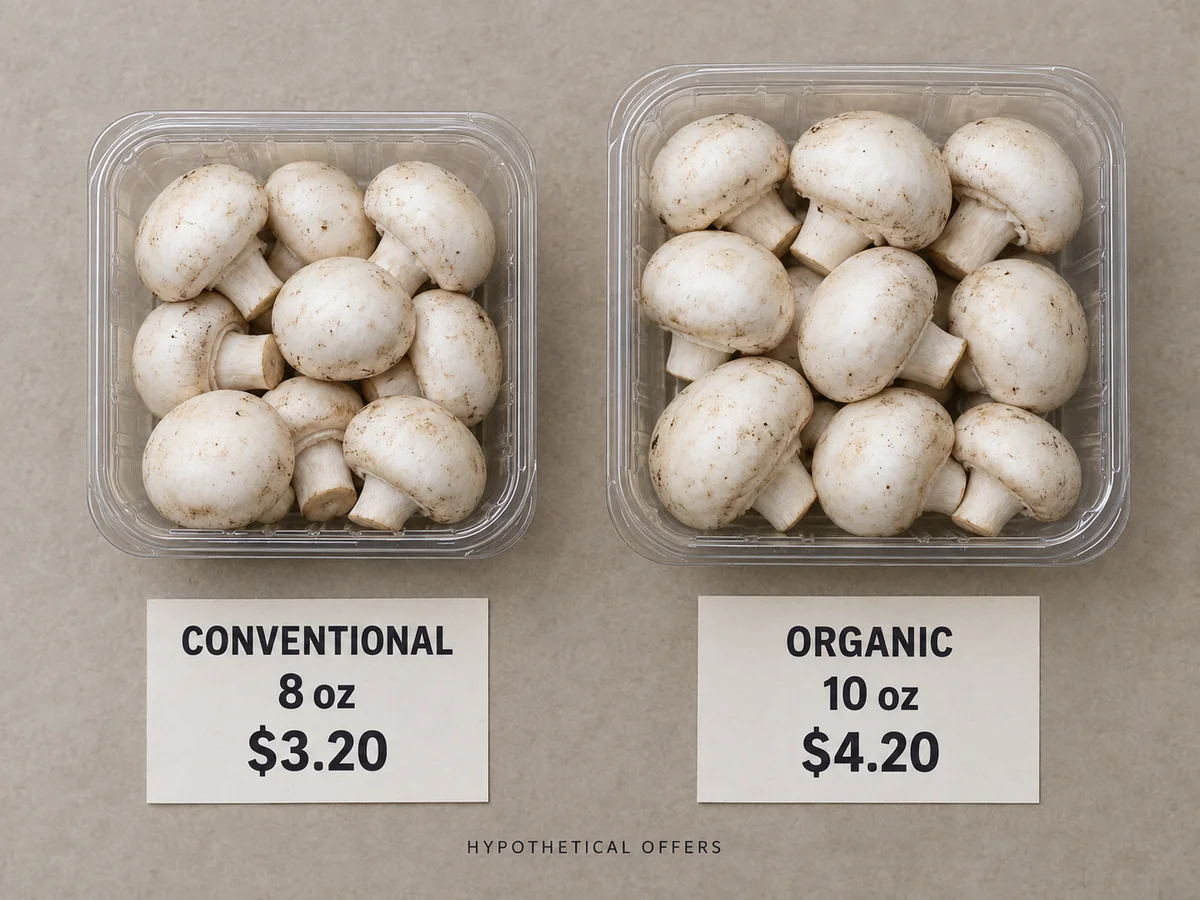
| Hypothetical offer | Net weight | Package price | Price per ounce | Price per pound |
|---|---|---|---|---|
| Conventional whole buttons | 8 oz | $3.20 | $0.40 | $6.40 |
| Organic whole buttons | 10 oz | $4.20 | $0.42 | $6.72 |
The organic package costs $1 more, a 31.25% increase over the $3.20 package price. Once you adjust for weight, the premium is $0.02 per ounce, or 5% for an equal quantity. If you use 8 ounces, you pay an extra $0.16 at those unit prices. But if you must buy the whole 10-ounce package, you still spend the full $4.20 at checkout, so a good unit price does not remove the difference in today's budget.
If your household normally uses 16 ounces each week, the equal-quantity premium comes to $0.32 a week in this example. That figure makes the preference concrete, while the pack sizes still set when you have to spend more cash.
The sum gets messier if the conventional pack is whole and the organic one is pre-sliced. Part of the gap may pay for the slicing, so you cannot fairly call all of it an organic premium. Species add another mismatch. Organic shiitake and plain buttons are different mushrooms, so their prices cannot show the cost of the seal alone, even if both would work in the same dinner.
Mushroom grades and size specifications also describe traits other than organic production. Uniform stuffing caps, mixed sizes and sliced pieces do different jobs, and the cheaper offer may need more prep for your dish. The matched comparison therefore uses the same species, equal form, known weight and similar condition. Shipping charges and minimum orders belong in the sum when you buy for delivery and do not pick up locally.
Take a made-up $2 premium plus a separate $6 delivery charge. That means $8 of extra spending if buying that product is what triggers the delivery order. When delivery was already part of a larger planned shop, splitting the charge needs the real order details, and the mushrooms should not carry all of it automatically.
Organic status is one buying trait among several. Certified mushrooms can still be wrong for tonight's meal, or cheap per pound yet too big for your household to finish.
Organic Labels on Dried, Canned and Mixed Products
Fresh mushrooms sold as a single ingredient are fairly easy to compare. Once someone dries, cans or blends mushrooms, or mixes them with other foods, both the organic claim and the useful amount need a closer read.
USDA labeling rules set three groups: "100 percent organic," "organic" and "made with organic." Products in the organic group need at least 95% organic ingredients. The made-with group needs at least 70% and has different label rules. Those numbers describe what goes into the product, and they say nothing about how many mushrooms carry pesticide residues, how much exposure drops, or any grade.
USDA lets qualifying 100-percent-organic and organic products carry its seal, and made-with products cannot carry it. So a processed food that names an organic mushroom ingredient makes a narrower claim than a product that earns the seal as a whole.
Dried mushrooms have lost much of their water. Equal ounces of dried and fresh stock hold different amounts and forms of mushroom, even before organic status enters the sum. For a soup that uses a modest amount of dried mushrooms for flavor, the cost that counts is the amount that soup needs. Assuming a dried ounce replaces a fresh ounce in every recipe, or has the same texture after soaking, would mislead you.
Canned mushrooms bring packing liquid into the question. Net weight, drained weight where the label gives it, added ingredients and what you plan to do with the liquid all change what you get for the price. Organic cans can still contain added salt. The certification term does not replace the nutrition label when you want to compare sodium between otherwise similar products.
Frozen mushrooms raise a different cooking choice. They may suit a planned cooked dish, but an organic label cannot erase the prep and texture differences between the products. Mushroom sauces are mixtures, unlike packs of plain mushrooms. Their price may include oil, cream, seasonings or convenience, and their organic category follows the rules for the actual finished product.
Powders make the comparison especially hard, because the front label may stress one named mushroom. The ingredient list shows whether the powder is plain mushroom, a blend or a product with other ingredients. The organic claim shows no particular mushroom concentration beyond what the composition and product details support. Do not assume that a small scoop of a mixed product equals the same scoop of plain dried mushroom powder.
Supplements need one more limit. Organic claims do not show that a supplement works, what dose suits you, or any medicine-like benefit. For that answer you need evidence about the specific product and its claimed use, and the food seal cannot stretch that far.
These distinctions often count for more than the premium printed beside the badge. Clearly described conventional products can be easier to use and compare than an organic mixture whose food amount and purpose are unclear.
Condition and Storage Come First
The best reason to choose organic mushrooms is that you value the checked farming practices and the real premium fits your budget. The mushrooms also need to be ones you can identify, in good condition and useful for the meals you plan. The seal gives a pack no built-in edge on freshness or shelf life. Organic packs that have gone downhill are no better a buy just because a sound conventional pack lacks the badge.
For familiar cultivated mushrooms, firm, plump condition and a surface that feels dry but not dried out are useful buying cues. Shriveled caps point to a different condition from loose surface debris, which normal prep can remove. Visible cues have limits. They let you judge quality but do not reveal all contamination or establish the identity of a wild mushroom, and different species do not share the same cap, stem or gill look.
Cleaning mushrooms is a prep job for organic and conventional mushrooms alike. Washing does not promise zero pesticide residues, and it cannot make a doubtful mushroom safe. FDA specifically lists mushrooms among perishable produce to refrigerate at 40°F (4°C) or below. Organic packs need that care just as other packs do.
Storing fresh mushrooms in their original packaging or a porous paper bag fits Mushroom Council guidance. The goal is to protect the food you bought, and storage does not have to stretch until a promised number of days has passed.
Certified preference
Choose a verified organic product when the premium is affordableYour premium pays for the regulated production claim.
Limited budget
Buy a sound conventional quantity that suits the mealThe organic label is not a requirement for a useful mushroom purchase.
Extra quantity
Prepare a suitable portion for freezing or buy a smaller packThe lower unit price saves you money only when you actually use the extra food.
Throw out rotten produce. Neither cooking nor freezing gives you a reason to keep a deteriorated pack because it cost more. Larger organic packs can fit well when several meals are already planned. When only one meal needs mushrooms, the smaller suitable purchase protects your budget better than paying for a quantity with no clear use.
Freezing mushrooms needs a prep method that suits the food and the later dish. It is an option for sound surplus, and it does not make every bulk offer worthwhile. Sauteing mushrooms for a meal soon after you buy them is another way to use the product within a real plan. The choice between that meal, preserving and a smaller pack comes from your household's time and needs, and the certification category plays no part in it.


