
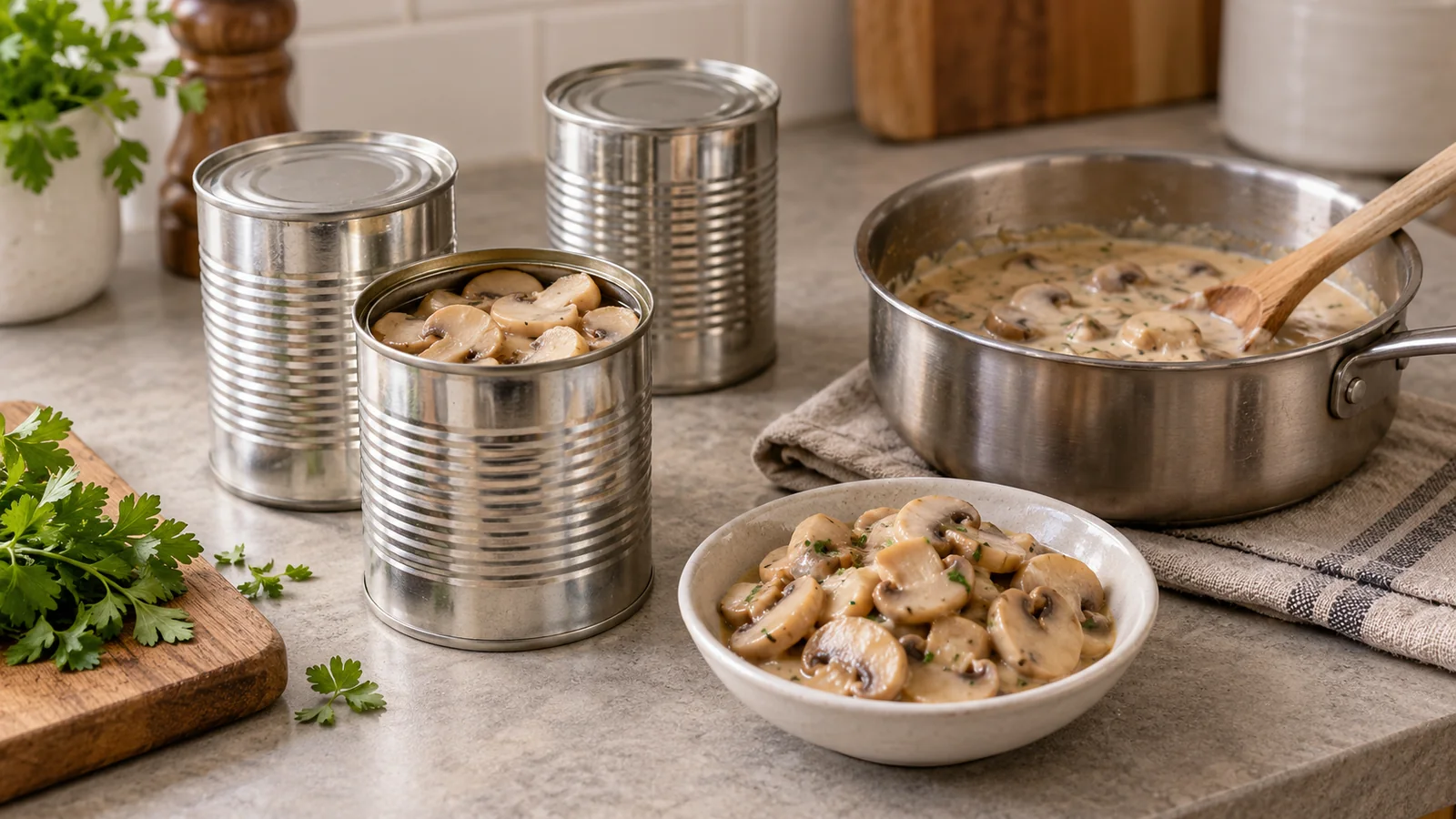
Canned mushrooms suit soups, sauces and other dishes where a softer, already-cooked bite fits. Drained weight, the sodium in the serving you eat and the condition of the sealed package tell you more than the size of the can.
Are Canned Mushrooms Good, and Which Dishes Suit Them?
Canned mushrooms are good when your dish wants a soft, already-cooked mushroom, and weak when it needs firm, browned pieces. The packer heats them in a sealed container, so the can holds cooked mushrooms from the start. The USDA standard for canned mushrooms describes a pack with water, and it allows salt or monosodium glutamate as seasoning. Each slice has sat in that liquid after heating, so it brings moisture and a cooked bite to your pan before the pan does any work.
Most plain cans hold button mushrooms, Agaricus bisporus, whole, sliced, or as stems and pieces. The ingredient list tells you when a jar holds another species, added seasoning, oil, or an acidic marinade. Marinated jars and plain cans can sit side by side on the shelf, so that list is where you find out which one you picked up.
Soft Pieces Belong in Wet Dishes
Soups, gravies and pasta sauces suit canned mushrooms best, because the wet dish shares its texture with the pieces. Small pieces spread mushroom flavor and visible flecks through a sauce, and nobody needs a large, firm cap on every forkful. Chopped fillings give irregular stems and pieces a sensible job too. Paying extra for neat whole buttons makes little sense when you will chop them finely for a filling.
Dishes built around thick, browned mushroom pieces ask more of the can. Fresh cremini or portobello caps give you a firmer starting structure. Frying a canned slice for longer cannot turn it back into a fresh one.
| Intended result | Where canned mushrooms fit | What changes from fresh |
|---|---|---|
| Mushroom soup or gravy | Already-cooked pieces can be incorporated into the liquid | The broth, seasoning and mushroom amount control the result together |
| Chopped pasta sauce or filling | Stems and pieces distribute through a mixed dish | Whole-button appearance has little value after chopping |
| Visible mushrooms on pizza | Drained slices provide a convenient topping | Excess packing liquid can wet the surface, and the bite remains cooked |
| Thick, browned mushroom side | A can can provide mushroom pieces when convenience matters | Fresh caps are a better starting point when firm structure is the main attraction |
Why Wet Slices Steam in the Skillet
Draining pours off the packing liquid around the mushrooms, and blotting lifts some of the liquid that clings to each surface. Neither step dries the mushroom flesh itself. Any water left in the pan has to boil off before the surface gets hot enough for browning. Crowd wet slices into one pan and they can spend most of the cooking time steaming.
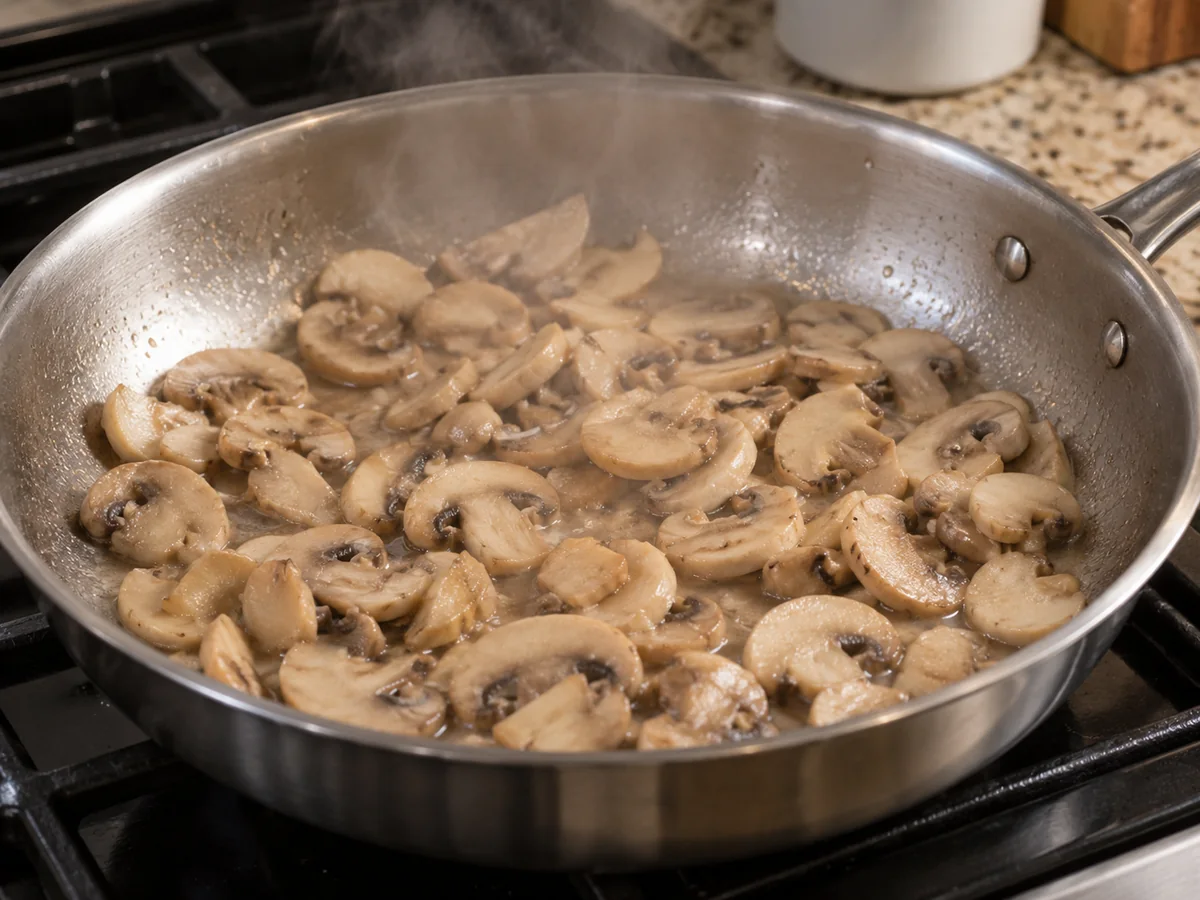
In a sauce, the leftover liquid can become part of the thickness you planned. For a pizza topping or a skillet side, pour off the loose liquid first, so the rest of the dish does not have to cook it away.
Sealed commercial cans may come ready to eat, but the package directions still own any heating step. Refrigerated jars, marinated products and shelf-stable plain cans do not automatically share the same handling rules. The label on the exact product in your hand gives the rule for that product.
Fresh, dried and canned mushrooms each solve a different cooking problem. Dried mushrooms need preparation and give you a different ingredient altogether. Canned mushrooms give up some control over the starting texture, and in return you get a cooked mushroom that waits in the pantry.
Drained Weight and the Real Amount in the Can
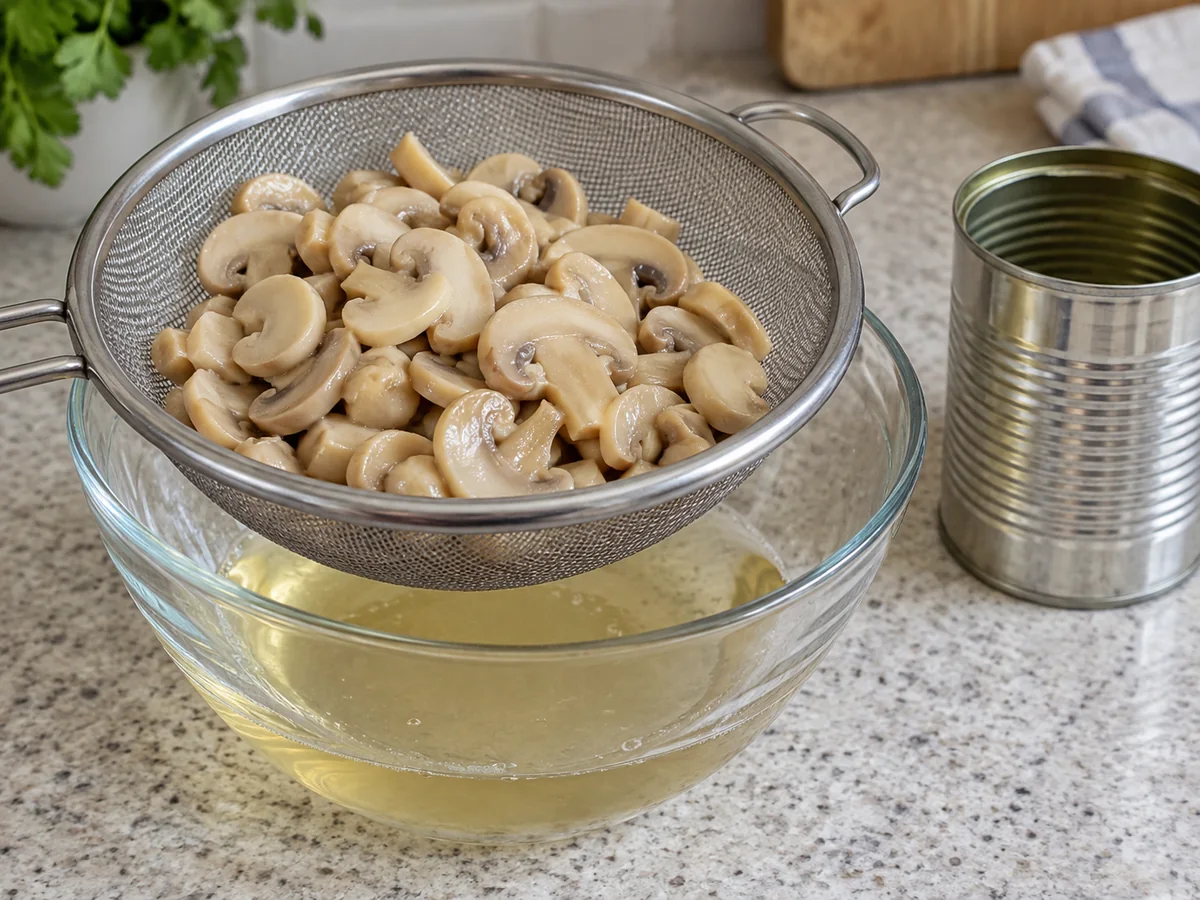
Net weight includes the packing liquid when that liquid is part of the packaged contents. Drained weight counts only the mushroom solids left after a set draining procedure, so the two numbers answer different questions. The USDA standard measures drained weight separately from the filled container. Its inspection method drains the contents on a sieve for a fixed time, and it never counts the whole can as mushroom.
When your recipe pours the liquid away, drained weight is the better number to compare. Large cans with plenty of water can hold less usable mushroom than their size on the shelf suggests.
Compare Cans by the Price of Drained Mushroom
Take two made-up cans, with invented prices and weights that are not current shop prices. Can A costs $1.50 and gives 120 g of drained mushrooms. Can B costs $2.00 and gives 180 g.
Can A works out to $1.25 per 100 g of drained mushrooms, which is $1.50 divided by 120, then multiplied by 100. Can B comes to about $1.11 per 100 g. Its higher shelf price buys you the cheaper mushroom by weight.
That answer flips if the bigger can leaves food your household will not eat. The lower cost per 100 g only pays off when the extra mushrooms become another meal within their storage window. Some products show no drained weight, or their nutrition panel uses a different basis from your recipe. In that case net weights alone leave the mushroom yield unknown, and they do not prove the two cans are equal.
Whole, Sliced, or Stems and Pieces
Whole buttons, regular slices, and stems and pieces can carry similar ingredient names and still do different jobs. Neat slices make a visible topping, while small fragments disappear into a chopped filling or gravy. Stems are mushroom material too, and they are not automatically waste. How useful they are depends on the texture of that product and on whether the finished dish shows large pieces or chops everything together.
If you make a substitution by total can weight, you can end up swapping mushrooms for packing water. Matching by drained weight tells you far more. Even then, the softer cooked texture keeps canned mushrooms from being a perfect one-for-one match for every fresh-mushroom recipe.
Fresh, Dried, Canned or FrozenShould You Buy Organic Mushrooms? What Certification CoversIs the Sodium in Canned Mushrooms a Concern?
The sodium figure worth reading is the one for the portion you will actually eat. Labels print the number for a single serving, and that number misleads when your meal uses two or three of those servings per person. On a US Nutrition Facts panel, the Daily Value for sodium is 2,300 mg. FDA label guidance calls 5% DV or less per serving low and 20% DV or more high, though your own dietary needs can differ from that label reference.
Those percentages make products easier to compare, yet they do not make a can good or bad on their own. Broth, cheese, cured meat and added salt all bring sodium to the same meal. Lower-sodium cans earn their place when broth or another ingredient already supplies enough seasoning. You can then salt for the whole dish, without adding the amount you would use with unsalted fresh mushrooms.
Put Two Labels on the Same Serving
The two labels below use made-up figures to practice the arithmetic, and neither comes from a product for sale. Both use a declared 65 g serving, so you can compare their figures directly.
| Hypothetical label | Sodium per 65 g serving | Sodium in two servings | Share of the 2,300 mg label DV |
|---|---|---|---|
| Product A | 250 mg | 500 mg | About 22% for the two-serving portion |
| Product B | 100 mg | 200 mg | About 9% for the two-serving portion |
If one real label uses 65 g and another uses 100 g, convert both to the same mass first. Multiplying a per-serving number is simpler than assuming the lowest printed number belongs to the lowest-sodium product. The panel also states what its serving covers. Drained-solids figures and figures for a serving with all its packing liquid describe different food, so one cannot stand in for the other.
Draining and rinsing change which liquid reaches your dish, but they do not give you a new tested nutrition panel. Any fixed percentage cut would need evidence for that product and that method, so the label stays your starting estimate. Nutrition claims call for the same caution. Canned mushrooms add food to the meal, but the name on the can does not show that one product has more vitamin D, fewer additives or a better overall nutrient profile than another mushroom product.
Quality and PriceWhat Do Mushroom Grades Mean? USDA Quality, Size and PacksDents, Bulges and Broken Seals
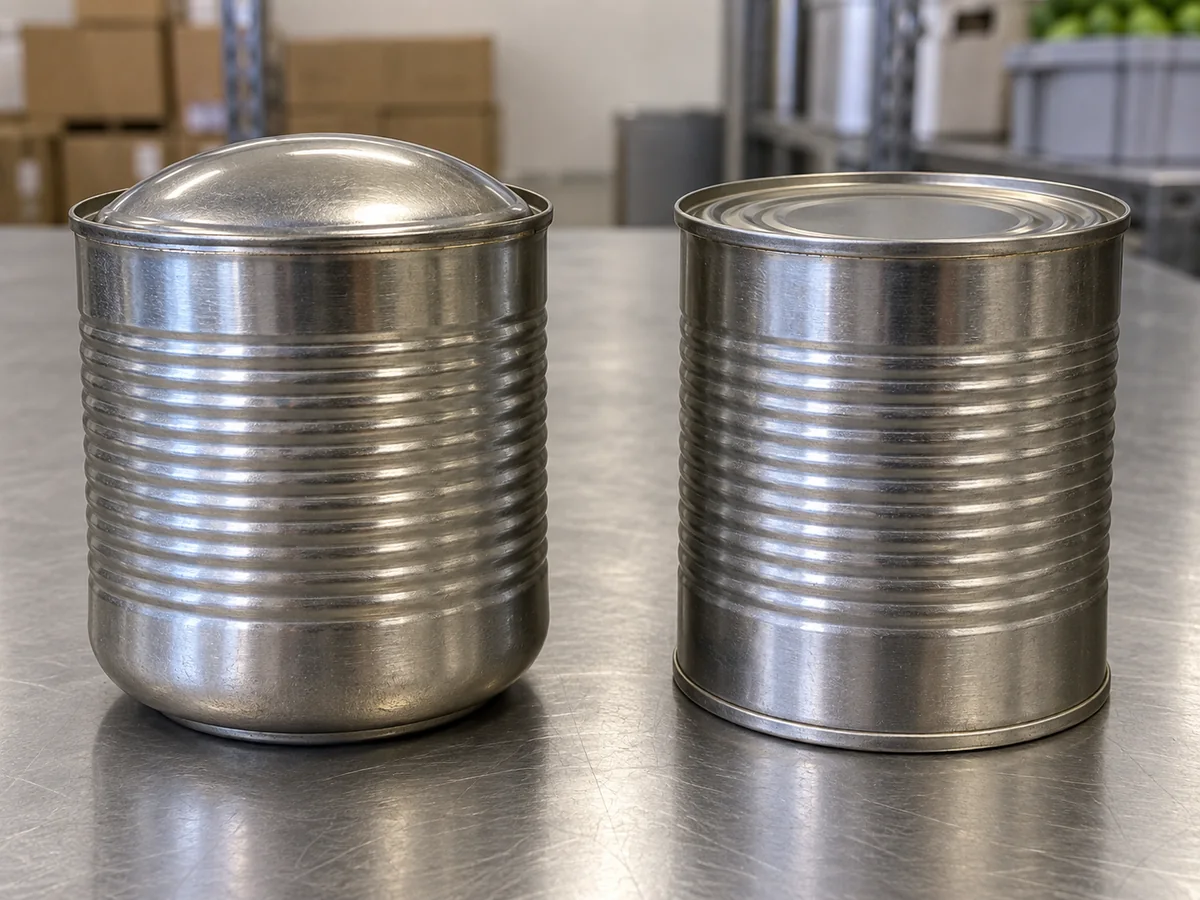
Canned mushrooms keep on the pantry shelf only while the seal around the processed food stays intact. So the condition of the package is a safety question first, before price, texture or seasoning come into it. Cans that leak or bulge, and cans with bad dents, are not safe to buy or use. Jars with a damaged seal, or a loose or bulging lid, also fall outside the normal buy-and-cook decision.
Warning
Do not taste a suspect can
Never open a leaking, bulging or badly damaged container for a taste test. Reheating does not turn a suspect package into an acceptable purchase.
Even a pleasant smell after opening cannot prove the original seal was sound, because the toxin that causes botulism has no smell, taste or look you can detect. And a can with no obvious defect can still be the one a recall notice names by product or lot. For online orders, the photo of the contents and a long shelf-life claim say nothing about the can that reaches your door. Damage in transit changes the decision, even when the listing described a sound product.
Package codes, the supplier name and your purchase record make it easier to match a recall or report a problem. No photo of the mushrooms inside the can does that tracing work. Acidic marinades may change a product's recipe, but they never excuse a damaged lid. Shelf-stable, refrigerate-after-opening and keep-refrigerated labels describe different storage states, and each one means exactly what it says.
How Long Do Opened Canned Mushrooms Last?
Opening the can ends the sealed storage that made it handy in the pantry. Opened low-acid canned foods keep for three to four days in the refrigerator. That short window is a good reason to match the can size to the meals you will really cook. One large can that covers one meal and then sits unused costs you more than a smaller can you finish.
For leftovers, the day you open the can counts for more than the date printed on it. The best-before date does not lend opened mushrooms the months of sealed shelf life the can had left. Moving them into a clean, covered glass or plastic container makes the portion easier to store and identify.
Prompt chilling and the product's directions stay part of the storage plan. If an open container sat warm for an unknown time, putting it in the fridge later does not restart a fresh three-to-four-day allowance. Freezing can be a separate option when the package or a suitable preservation method supports it, and texture after thawing is part of that tradeoff. It cannot undo earlier poor handling, and an open can should not wait in the fridge indefinitely for a meal that may never come.


