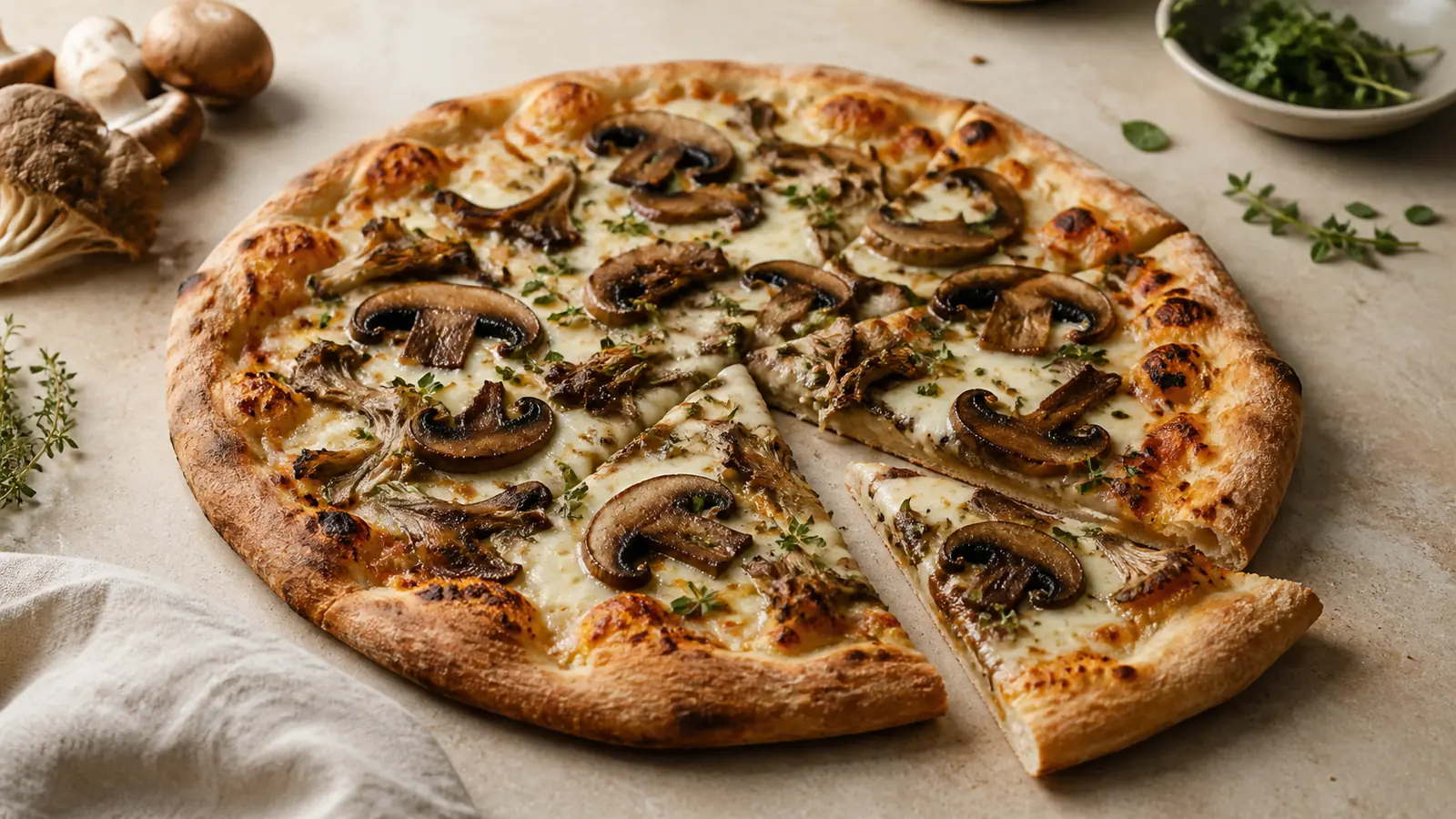
Cremini are the best all-purpose pizza mushroom. White buttons suit classic pies, shiitake add deep savor, oyster mushrooms stay tender, maitake crisp at the edges, and portobello provide meaty strips.
Cremini are the best mushrooms for pizza overall. They have more flavor than white buttons, remain firm enough to slice cleanly, and suit red sauce, white sauce, meat, or vegetables.
The best specialty choice depends on the result you want. Shiitake bring deeper savory flavor, oyster mushrooms give tender torn pieces, maitake develop crisp frilled edges, and portobello make the topping feel substantial.
Moisture control matters as much as variety.
A good mushroom can still leave a home-oven pizza wet or emerge from a very hot oven as a dry, thin chip when the cut and preparation do not suit the bake.
Key takeaway
Start with cremini for a dependable first mushroom pizza. Move to shiitake, oyster, maitake, or portobello only when their specific flavor or texture improves the pizza you are making.
Choose by Pizza Style Before You Shop
A classic red-sauce pizza needs a mushroom that remains recognizable beside tomato, mozzarella, oregano, and perhaps pepperoni. Cremini lead here, while white button mushrooms give the milder flavor associated with many pizza shops.
White pizzas leave mushroom flavor more exposed. Shiitake work with garlic, scallion, chile, or sausage, while oyster mushrooms suit softer cheese, herbs, and a lighter hand with salt.
Maitake make the strongest texture statement on a cheese-light pizza because exposed tips can crisp while the thicker cluster stays tender. Portobello does the opposite job by supplying broad, juicy pieces that can replace some of the weight you would otherwise get from meat.
You do not need a rare mushroom to improve pizza.
Freshness, a deliberate cut, and the right water treatment usually matter more than paying for a variety whose advantage will disappear under too much sauce and cheese.
- Best overall
- Cremini for the widest range of sauces and topping loads
- Best classic flavor
- White button mushrooms with tomato, mozzarella, and pepperoni
- Best crisp texture
- Maitake on a cheese-light pizza with exposed frilled edges
- Working amount
- About 115 to 225 g fresh mushrooms for one 12-inch pizza, depending on density and other toppings
Use cultivated mushrooms from a reliable food seller unless a wild mushroom has been identified with certainty by a qualified local expert. Heat can cook an edible mushroom, but it cannot be trusted to neutralize toxins in a poisonous species.
Warning
Never use a pizza topping as a test of an uncertain wild mushroom. Sauce, cheese, chopping, and browning hide the field marks, and cooking does not make a poisonous mushroom safe.
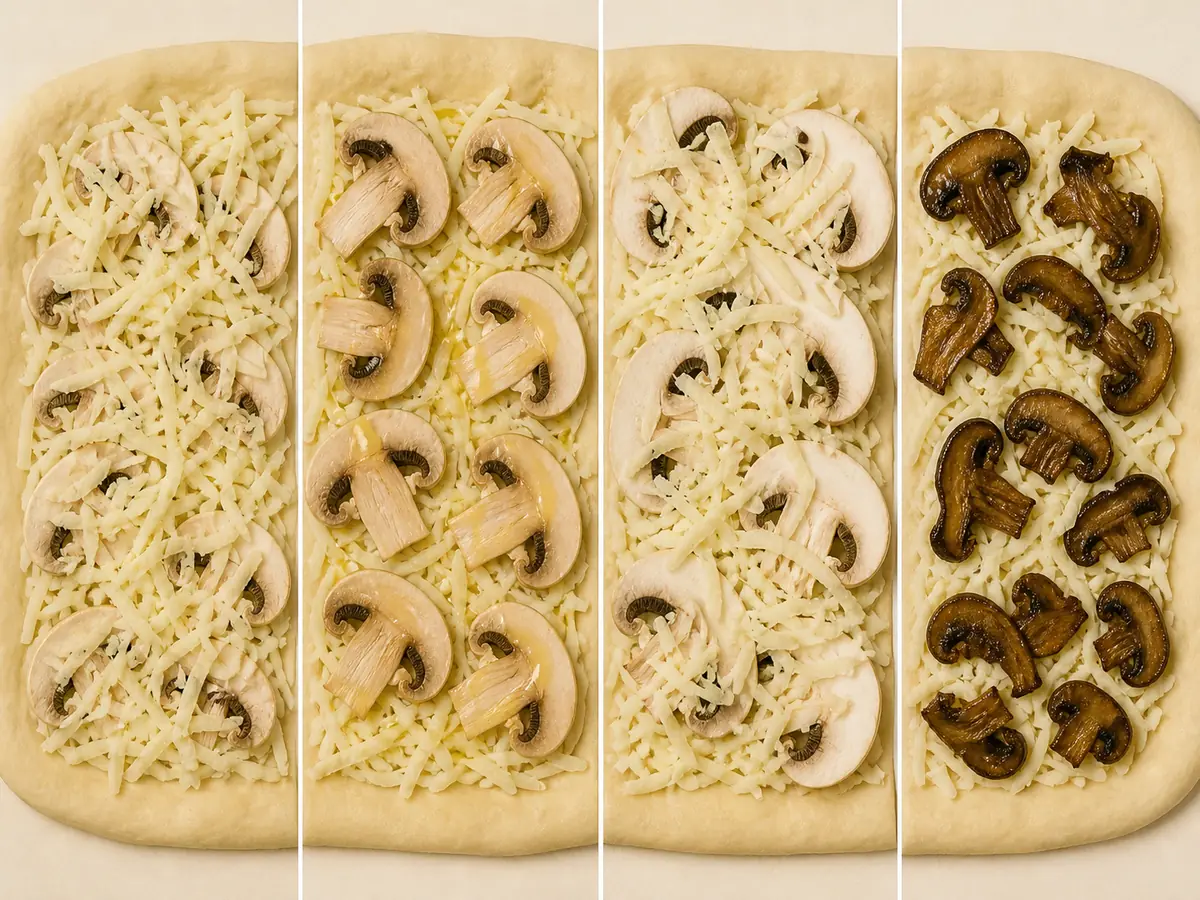
The three finished styles below show why one ranking cannot replace the pizza decision. Sauce, cheese cover, and exposed surface all change which mushroom keeps its character.
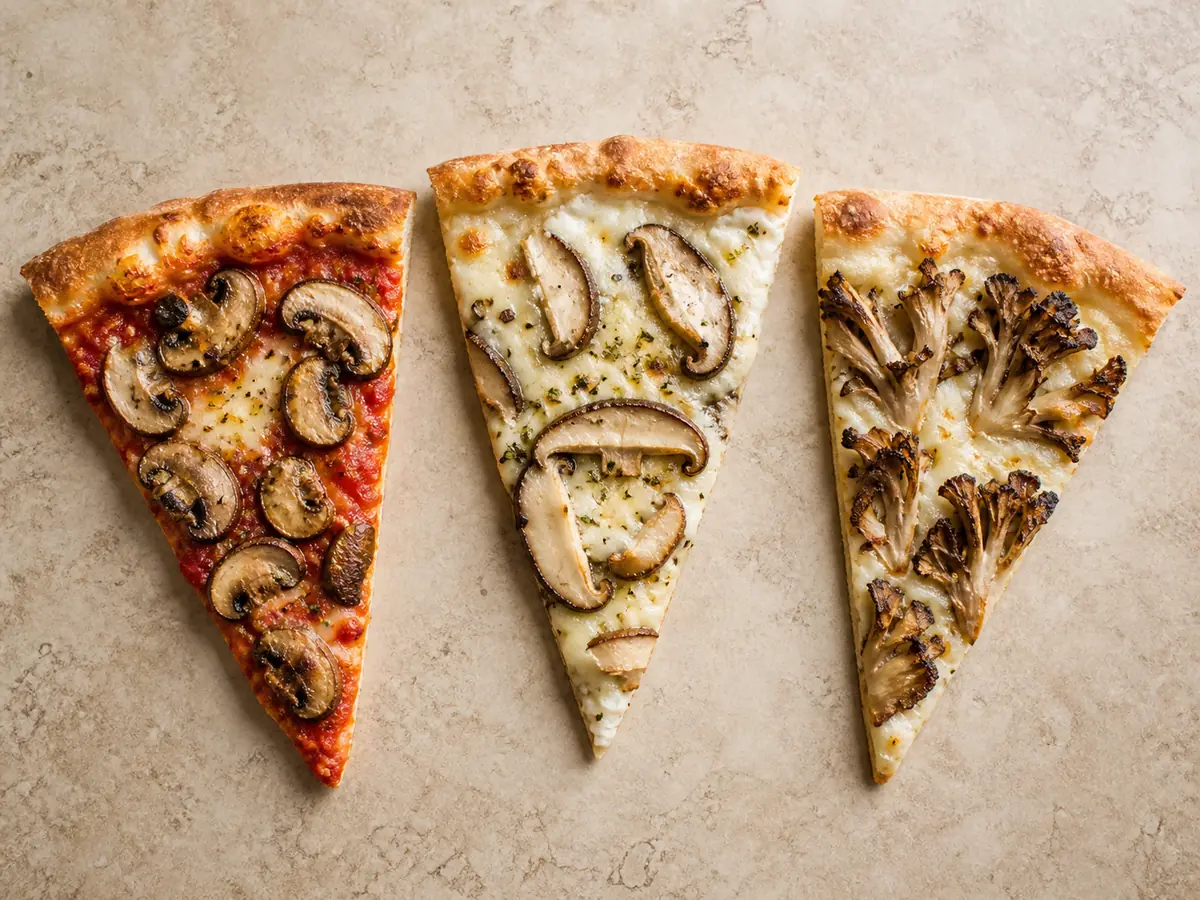
6 Best Mushrooms for Pizza, Ranked by Topping Job
These six mushrooms earn separate places because each solves a different pizza problem. The amounts below are starting ranges for one 12-inch pizza, not targets to pile on regardless of sauce, cheese, or other toppings.
| Mushroom | Best pizza job | Amount for one 12-inch pizza | Preparation |
|---|---|---|---|
| Cremini | Reliable flavor and structure across most pizza styles | 170 to 225 g fresh | Slice about 6 mm thick; precook for a wet or heavily topped pie |
| White button | Mild, familiar flavor on cheese, pepperoni, or supreme pizza | 170 to 225 g fresh | Slice 6 to 10 mm; partly cover with cheese or oil exposed slices |
| Shiitake | Deep savory flavor on white or strongly seasoned pizza | 115 to 170 g fresh caps | Remove stems, slice caps 5 to 6 mm, and saute before a short bake |
| Oyster mushroom | Tender torn pieces with herbs and lighter cheese | 140 to 170 g fresh | Tear broad caps, separate dense bases, and give them a hot-pan start |
| Maitake | Crisp frilled edges on a cheese-light pizza | 115 to 150 g fresh | Tear into clusters, oil lightly, and keep some tips exposed |
| Portobello | Broad meaty pieces for a substantial vegetarian pizza | 1 large cap, about 140 to 170 g | Cut into 6 mm strips and cook off moisture before topping |
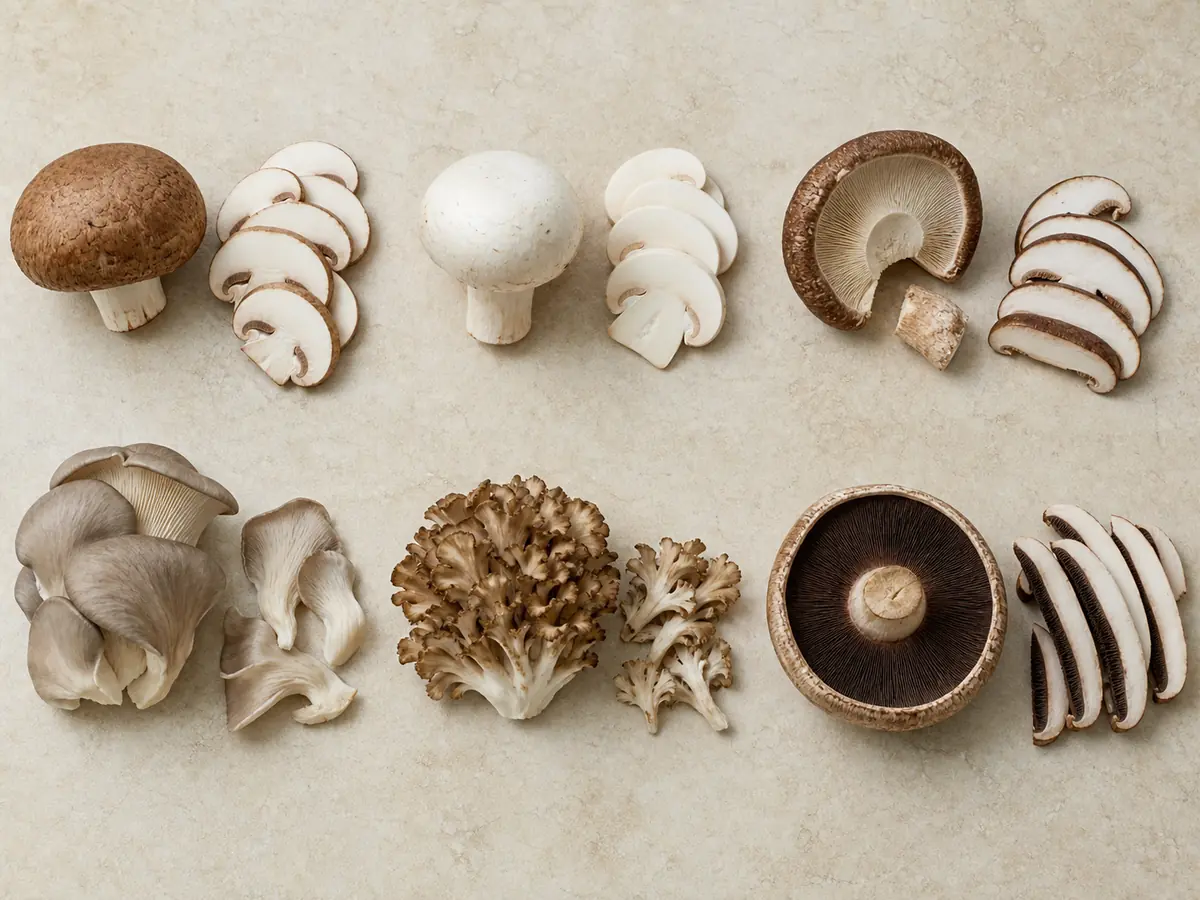
The lineup makes the preparation differences visible.
A uniform slicer works for cremini, white button, and shiitake caps, while oyster and maitake need tearing and portobello needs broad strips.
1. Cremini: Best Overall
Cremini have a deeper, earthier flavor than white button mushrooms but remain mild enough to work with nearly any familiar pizza topping. Their firm caps take an even slice, brown reliably, and keep enough body after a home-oven bake.
Use the upper end of the 170 to 225 g range when mushrooms are the main topping. Drop toward 170 g when the pizza also carries sausage, peppers, onion, or another ingredient that releases water and occupies crust space.
On a simple cheese pizza, 6 mm slices can go on raw if they are spread in one layer and receive some protection from cheese. For a loaded pie, saute the slices until released water has evaporated so the crust does not have to absorb it.
Cremini are less aromatic than shiitake and less crisp-edged than maitake.
Their advantage is reliable balance rather than one dramatic trait, which is exactly what most mixed-topping pizzas need.
2. White Button: Best for a Classic Pizza-Shop Flavor
White button and cremini are forms of the same species, but the younger white mushroom tastes milder and looks more familiar on a traditional red pie. It lets tomato, mozzarella, pepperoni, olives, or peppers lead while still adding a soft savory note.
Very thin exposed slices can dry into flat, flavorless pieces. Cut them 6 to 10 mm thick, tuck some edges beneath the cheese, or toss the slices lightly with oil before placing them above it.
3. Shiitake: Best for Deep Savory Flavor
Shiitake taste richer and woodier than the first two choices, so a smaller amount changes the pizza more clearly. They stand up to garlic, chile, scallion, sausage, miso, or a modest layer of strong cheese without fading into the background.
Remove the fibrous stems before weighing the usable caps.
Slices around 5 to 6 mm thick soften during the bake without becoming limp sheets.
Choosing between oyster mushrooms and shiitake comes down to intensity. Shiitake can overwhelm fresh ricotta, young herbs, or a quiet butter-and-garlic base, while oyster mushrooms offer a gentler flavor and softer physical presence.
4. Oyster Mushroom: Best for Tender Torn Pieces
Oyster mushrooms produce irregular, tender pieces that look and eat differently from a field of round slices. Their broad caps suit garlic, parsley, chives, goat cheese, light cream, or a white sauce that does not bury their delicate flavor.
Cooking oyster mushrooms for pizza starts by tearing the caps along their natural grain and separating thick cluster bases from thin edges. Start the dense pieces in a hot pan, then add the caps later so both reach the pizza with similar tenderness.
The cap edges scorch sooner than thick sliced mushrooms.
Keep broad oyster pieces away from the fiercest exposed heat, especially when the oven runs hot and the bake lasts only a few minutes.
5. Maitake: Best for Crisp Frilled Edges
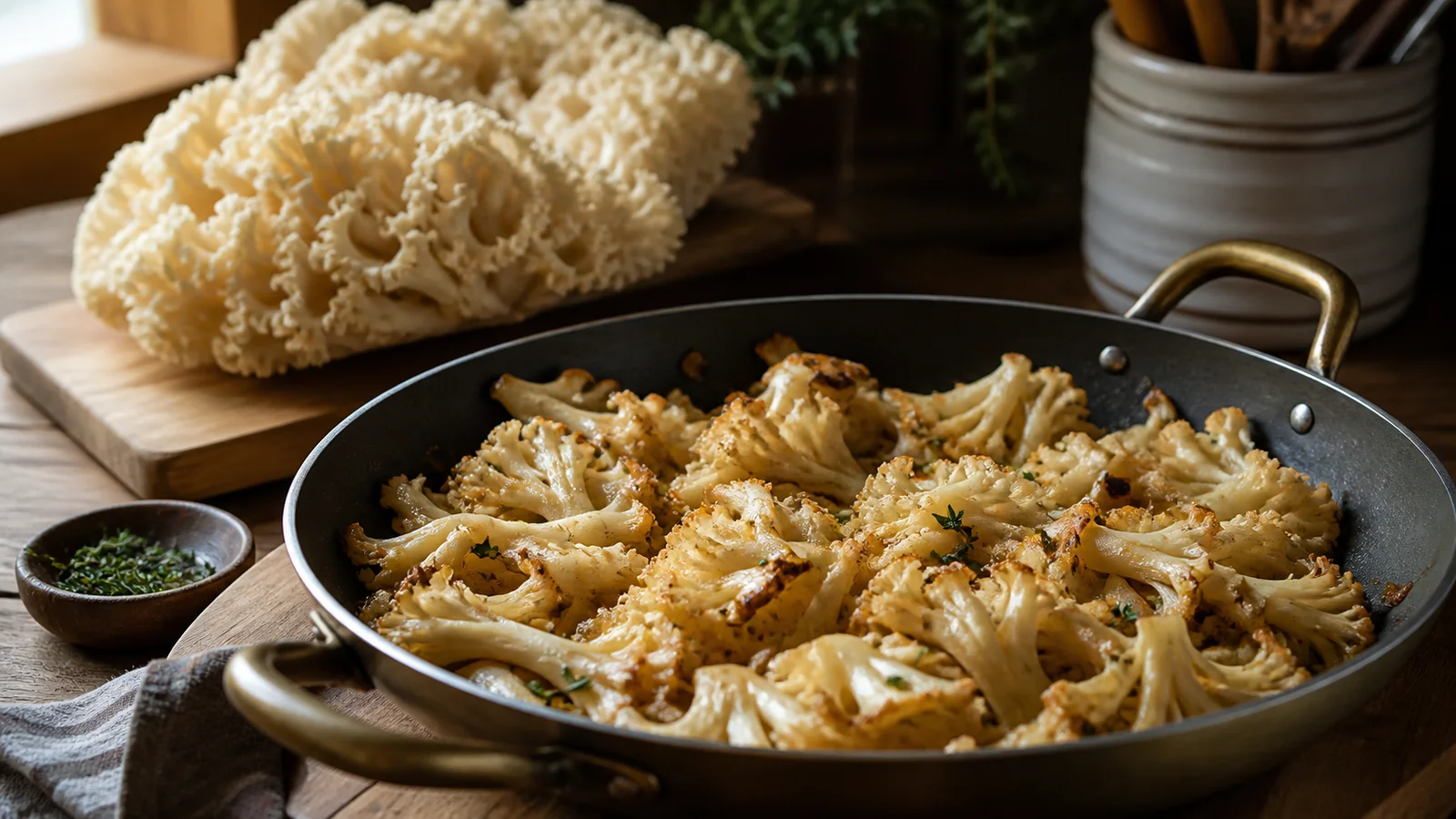
Maitake clusters contain dense junctions and thin fronds in the same piece. When torn into bite-size clusters and placed with the base against heat, the underside browns while the exposed tips become crisp.
That contrast is most useful on a cheese-light white pizza or a restrained red pie. A wet sauce or heavy blanket of mozzarella softens the fronds, removing the texture that justifies choosing maitake over cremini.
Oil the clusters lightly and keep some tips above the cheese. Watch small loose fragments because they can burn before the thicker pieces are hot through.
6. Portobello: Best for Meaty Slices
Portobello provide broad pieces and a deeper, meat-like texture that suits caramelized onion, robust tomato, blue cheese, smoked cheese, or a vegetarian pizza built around substantial toppings.
One large cap is usually enough for a 12-inch pie.
The dark gills are edible, but they can release dark liquid that dulls a pale sauce. Scrape them out when a clean white base matters, then brown the strips before arranging them in a single layer.
Portobello are the wrong choice when you want crisp edges or a delicate mushroom note. Pick them when the mushroom should behave like a main topping, not a background accent.
Note
Rank cannot rescue tired mushrooms. Buy specimens that feel firm and dry rather than slimy, then choose the best variety among the fresh options actually available.
Control Moisture Before the Crust Pays for It
Fresh mushrooms contain enough water to create two opposite failures. Crowded pieces can steam and dampen a home-oven pizza, while paper-thin slices exposed to fierce heat can lose moisture so quickly that they become dry before their flavor develops.
Precook when the pizza has a thin crust, a wet sauce, fresh mozzarella, several vegetable toppings, or a long home-oven bake.
The pan removes water before the topping reaches the dough and creates browned flavor that the oven may not have time to develop evenly.
Raw mushrooms work when slices are moderately thick, the topping layer is light, and the bake gives them enough time to soften without leaving a puddle. Partial cheese cover protects thin edges, while a light coating of oil helps exposed pieces resist rapid drying.
The oven changes the answer.
A pizza baking at 500°F for 10 to 13 minutes gives sliced cremini more time than a very hot pizza oven that finishes the crust in roughly 90 seconds to 3 minutes, so specialty mushrooms often need a pan start before a short bake.
Do not cook mushrooms until they are dry and shrunken before they go on the pizza. Stop when released liquid has evaporated and the first edges brown, because the oven still needs enough retained moisture to keep each piece tender.
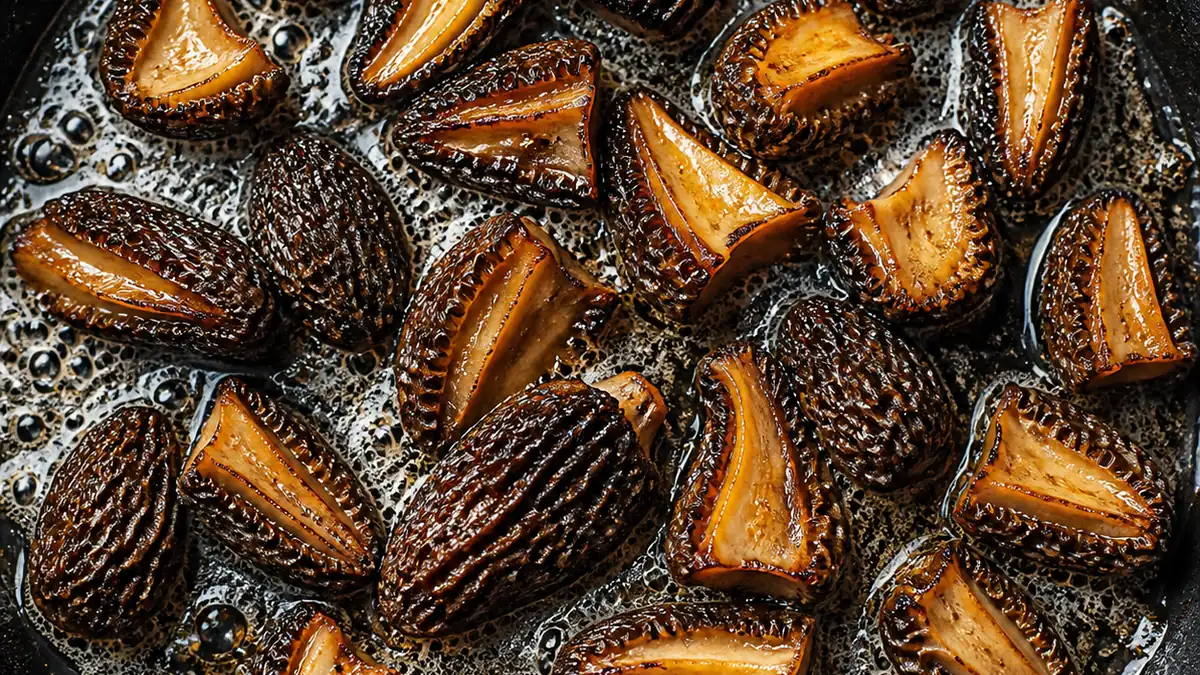
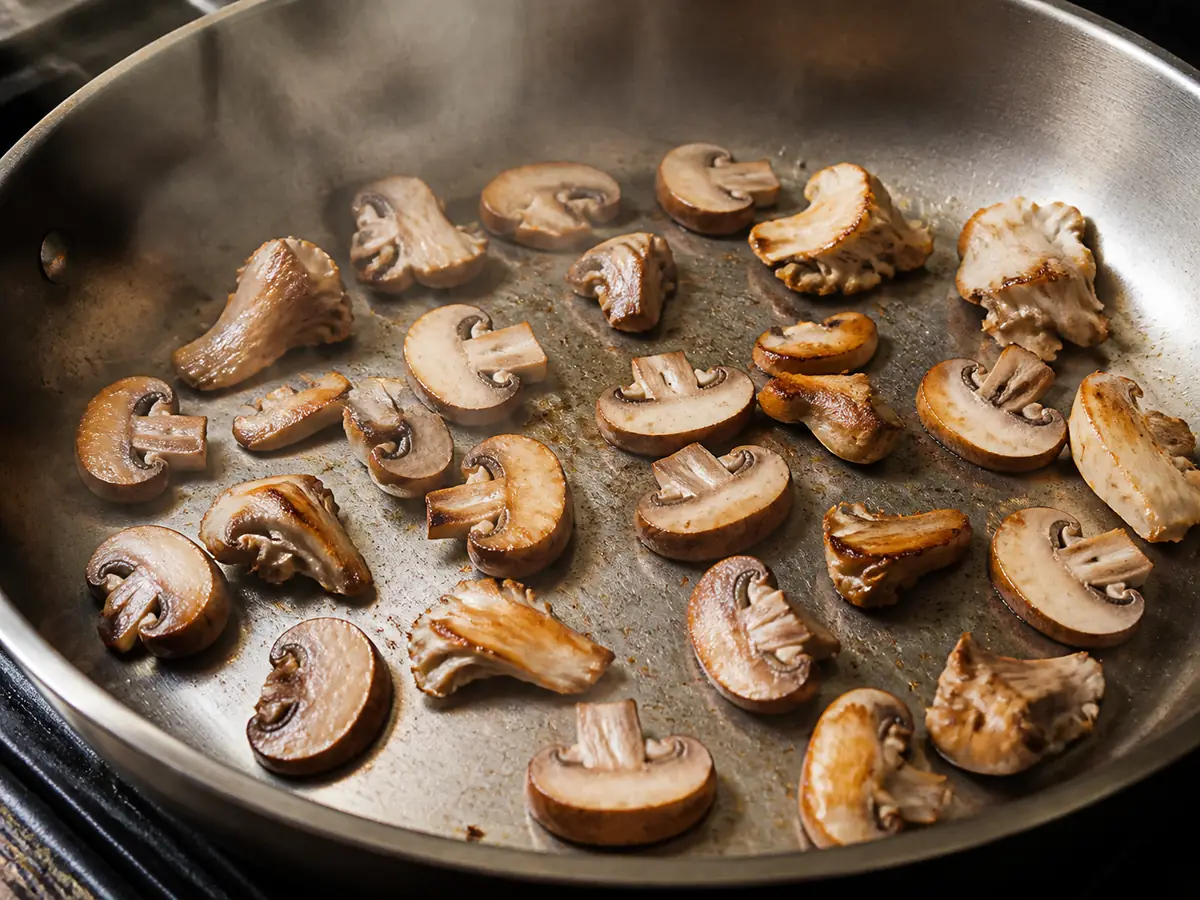
The pan image below shows the useful transition. Open metal appears between the pieces, no liquid pools at the edge, and brown contact surfaces begin to form.
Use the crust and bake as the deciding evidence, then choose one of four treatments.
Wet or heavily topped pizza
Precook the mushrooms until the pan dries and edges begin to brownRemoving water early protects a thin crust and prevents vegetables from steaming together.
Moderate home-oven bake
Use 6 to 10 mm raw slices in one loose layerThe longer bake can soften the pieces when sauce and cheese are restrained.
Thin exposed slices
Tuck part of each slice beneath cheese or coat it lightly with oilPartial protection slows surface drying under direct heat.
Very short, very hot bake
Give dense or specialty mushrooms a brief pan startThe crust may finish before a thick raw piece releases water and browns.
The topping diagram turns those options into visible arrangements. It is less about a perfect pattern than about giving steam somewhere to escape.
Use Dried Porcini as a Flavor Layer
Dried porcini are valuable on pizza because a small amount can perfume sauce, cheese, and fresh mushrooms. They are poor bulk topping when large rehydrated pieces stay leathery or when gritty soaking liquid reaches the pie.
Start with about 10 to 15 g dried porcini for one 12-inch pizza.
Soak them until pliable, lift the pieces from the bowl, and pass the liquid through a very fine filter because sediment settles beneath the mushrooms.
Chop the softened porcini finely and mix them into a cooked fresh-mushroom topping, a reduced white sauce, or a thin layer beneath the cheese. Add filtered soaking liquid by the spoonful and reduce it fully rather than pouring a wet cup onto the dough.
Treat dried porcini like concentrated seasoning. Fresh cremini, oyster mushrooms, maitake, or portobello should still provide most of the visible topping and bite.

Build a Better Two-Mushroom Pizza
A mixture works when one mushroom supplies dependable coverage and the second adds a trait the first lacks. Cremini plus maitake divide the work cleanly because the slices provide browned body while the smaller clusters provide crisp edges.
White button plus shiitake is another useful pair.
The white mushrooms keep the pizza familiar and mild, while a smaller amount of shiitake adds depth without turning every bite intensely woodsy.
Keep the total mushroom load within the same practical range you would use for one variety. The table below gives starting splits that leave space for sauce and cheese.
Cook the mushrooms separately when their shapes demand different timing, then distribute the lead variety across the whole pizza and use the accent in smaller, distinct clusters. The unbaked example below leaves open space so cheese can melt and mushroom steam can escape.

Avoid three equal varieties on a first attempt. Different cuts release water at different rates, and the finished pizza often tastes generally mushroomy instead of showing why any one variety was worth buying.
| Desired result | Lead mushroom | Accent mushroom | Starting split for one 12-inch pizza |
|---|---|---|---|
| Familiar flavor with more depth | White button | Shiitake | 140 g plus 45 to 60 g |
| Reliable coverage with crisp edges | Cremini | Maitake | 140 g plus 60 g |
| Tender pieces with a firmer bite | Oyster mushroom | Cremini | 115 g plus 70 g |
| Meaty strips with aromatic lift | Portobello | Shiitake | 120 g plus 40 g |
The best mushrooms for pasta follow a different rule because the cuts must travel with noodles and pan liquid can be adjusted after browning.
On pizza, one mushroom should cover the crust and the other should solve one missing job without increasing the total topping load.
Tip
For your first mixed-mushroom pizza, use cremini and maitake. Their shapes remain visually distinct, their jobs are easy to taste, and neither needs a heavy sauce or excessive cheese to make sense.