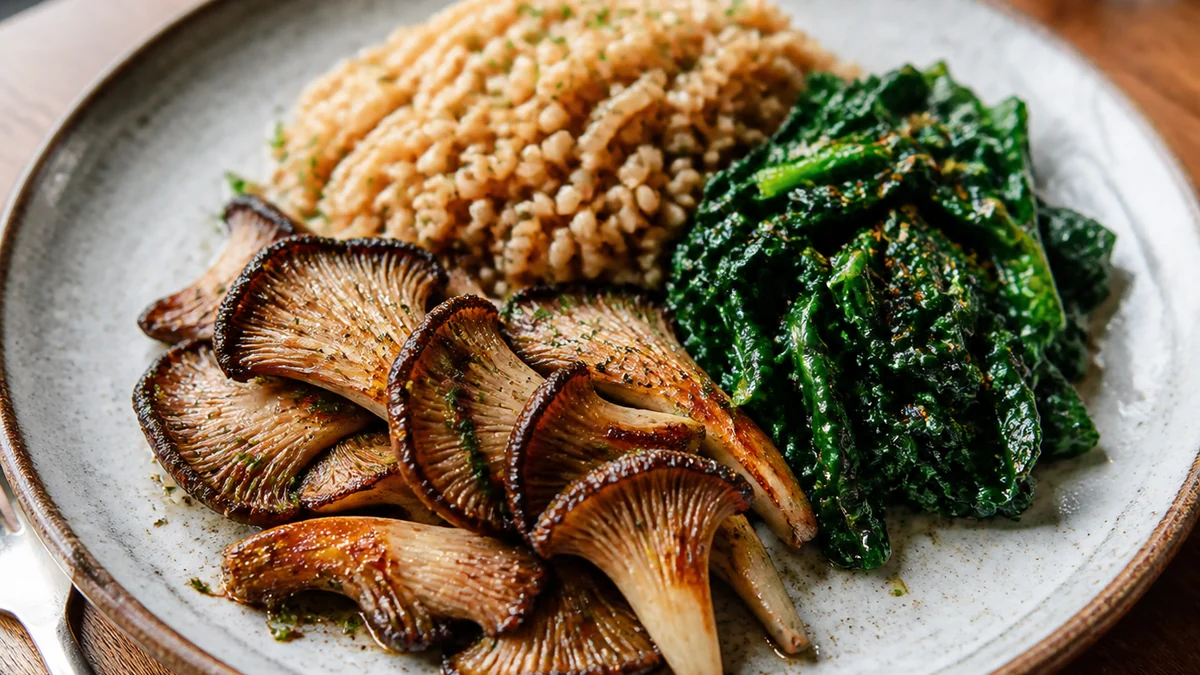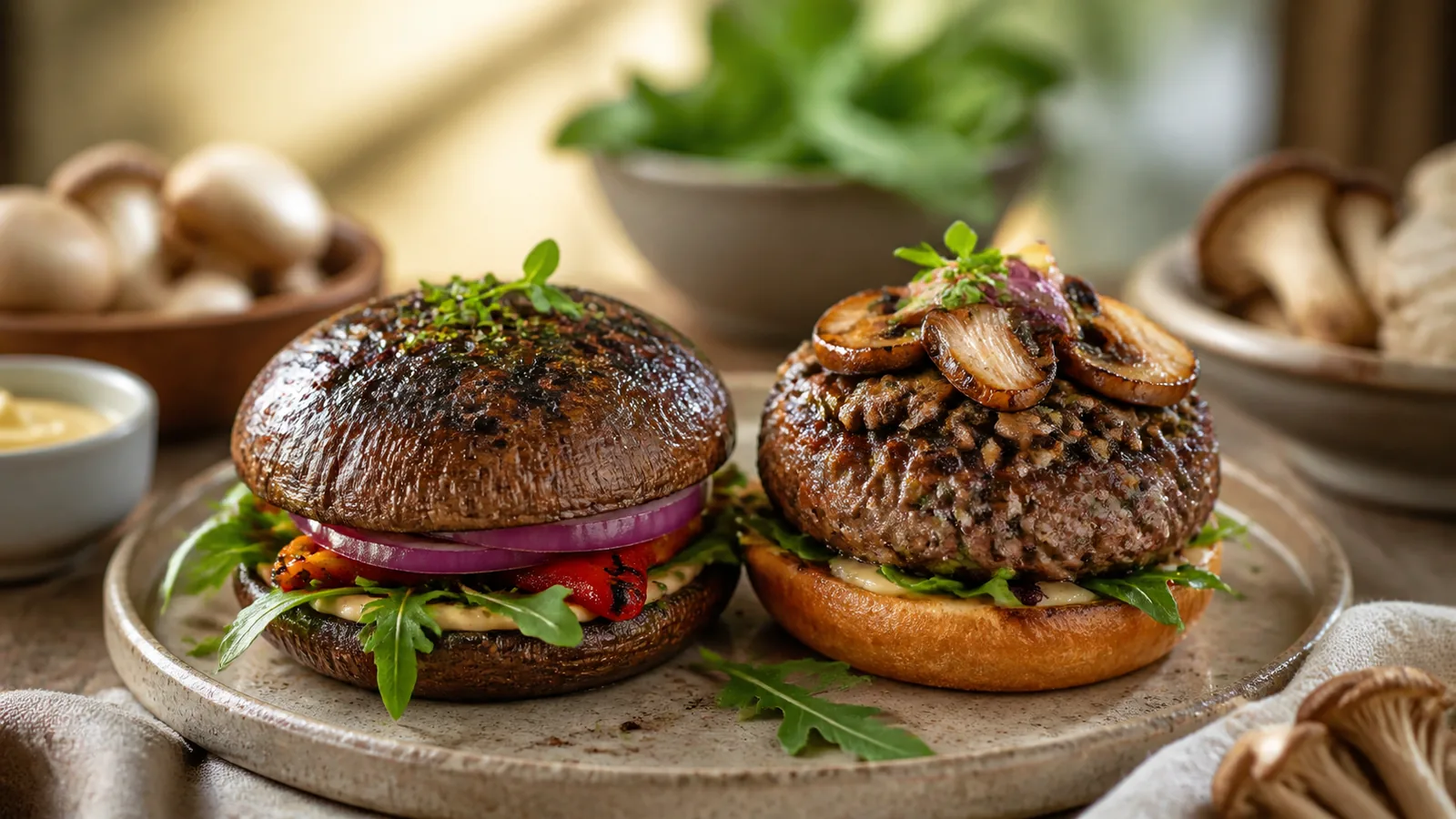
Portobello is the best mushroom for a whole-cap burger, while cremini is the easiest choice for a blended beef patty. King oyster, maitake, and shiitake suit firm slabs, crisp toppings, and concentrated mince.
Portobello is the best mushroom when one cap replaces a burger patty. Cremini is the better answer when mushroom belongs inside ground beef, so the first decision is the burger format rather than a universal species ranking.
A mushroom burger has three workable architectures.
The mushroom can span the bun, disappear into a formed patty, or remain as a distinct topping, and each position creates a different moisture and structure problem.
Choose the Burger Format First
A whole-cap burger needs one broad intact piece that can brown on both faces and remain large enough after water loss. A 10 to 12 cm portobello cap fits a standard bun more predictably than several loose slices.
A blended patty asks the mushroom to behave like part of the mince. The cooked particles should be close to ground-beef granules, dry enough to scatter rather than smear, and cool before they touch beef fat.
A topping can be looser because the patty supplies structure. Maitake fronds, shiitake mince, or browned cremini slices earn that position through crispness or concentration, not through their ability to bind.

The table makes the structural failure of each format visible before a mushroom is purchased.
| Burger format | Mushroom must do | Main failure | Best starting choice |
|---|---|---|---|
| Whole cap | Span most of the bun and drain after cooking | Cap water soaks the crumb | Portobello |
| Blended patty | Integrate with meat without loosening it | Raw mince releases water inside | Cremini |
| Firm slabs | Overlap into one biteable layer | Thick centers stay rubbery | King oyster |
| Crisp topping | Keep browned edges above sauce | Fronds soften before serving | Maitake |
Choose one primary structure. A portobello cap packed with mushroom mince and crowned with a large frilled cluster usually becomes too wet and too tall to bite cleanly.
Cooking MushroomsHow to Cook Cauliflower Mushroom Without Trapping Grit5 Best Mushrooms for Burgers
The ranking follows structural usefulness across the bun, not flavor intensity alone. Each amount below is a starting quantity for one burger or one four-patty mixture, with the final choice determined by format.
1. Portobello: Best Whole-Cap Burger
A mature portobello cap already has the diameter and shallow dome of a patty. Use one 10 to 12 cm cap per burger, trim the stem flush, and keep the cap intact so the browned surface supports the toppings.
Season shortly before cooking because salt draws moisture toward the surface.
Sear in a broad pan or roast on a rack until the cap flexes without collapsing and no free liquid remains in its cup.
Portobello ranks first because it makes the clearest mushroom-forward burger with the least assembly work. Its weakness is water, so the cap must rest gill-side down before it reaches bread.
2. Cremini: Best for a Blended Beef Patty
Cremini chops into uniform particles and brings savory depth without long fibers. Start with about 115 g raw mushroom for 340 g ground beef, which gives a controllable one-part-mushroom to three-parts-beef ratio by starting weight.
Cook the mince until it is brown and dry, then spread it on a plate or tray to cool.
Warm mushrooms soften beef fat during mixing, while trapped steam makes the center of the patty less cohesive.
This format is useful when you want a beef burger with more mushroom character rather than a vegetarian imitation. The cremini should integrate visibly as small brown flecks, not turn the mixture into paste.
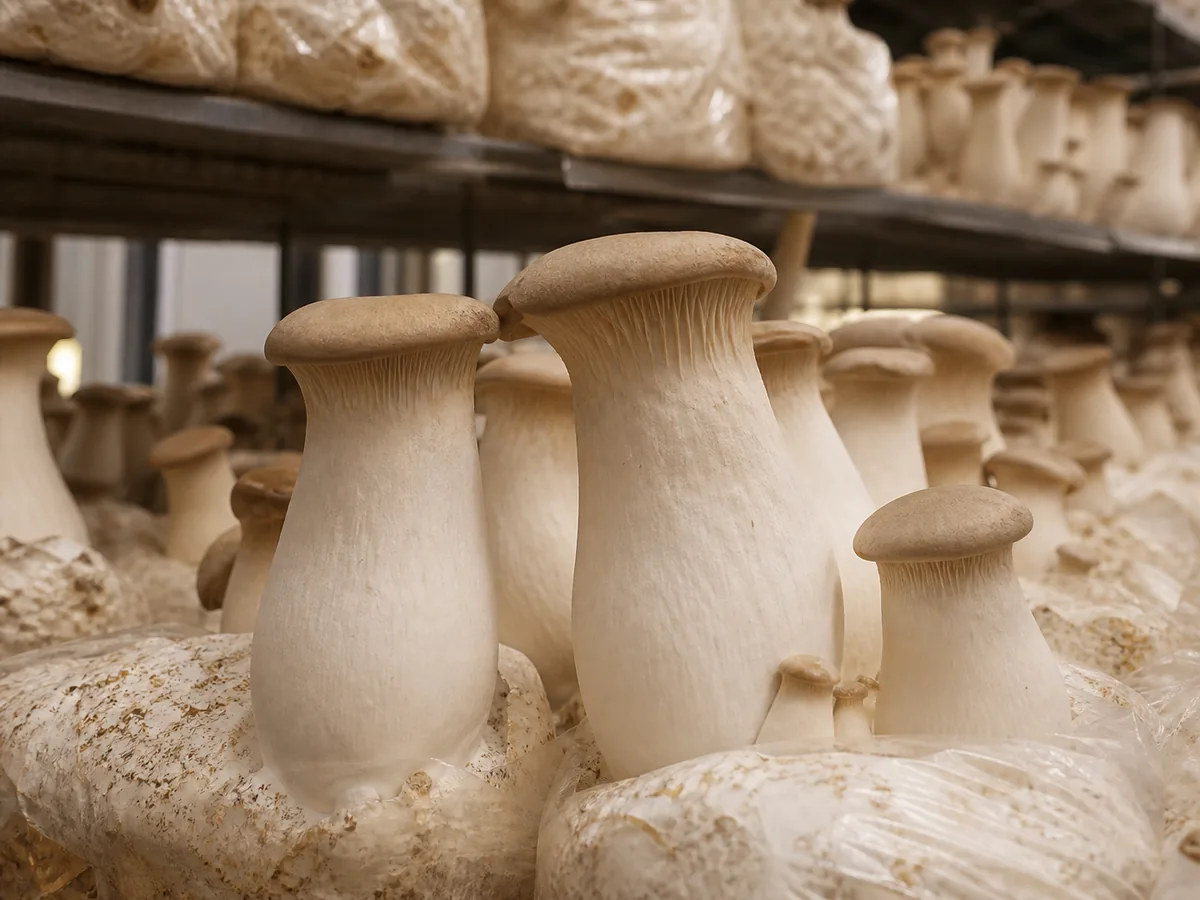
3. King Oyster: Best for Firm Burger Slabs
King oyster stems form dense planks that keep a clean bite after searing. Slice two medium stems lengthwise 6 to 8 mm thick, score the broad faces shallowly, and overlap the cooked slabs to cover the bun.
Pieces thicker than about 8 mm can brown outside while remaining springy in the center.
A thin score increases contact and gives glaze somewhere to cling without cutting the slab apart.
King oyster sits below portobello because several pieces require more deliberate assembly. It wins when a cook wants firm slices, visible sear, and less cap water.
4. Maitake: Best Crisp Burger Topping
Maitake turns its layered fronds into crisp edges while the dense base stays chewy. Tear 85 to 115 g into two or three broad clusters, place the base against the hot pan first, and turn only after that face has browned.
The mushroom belongs above a beef, bean, or portobello patty rather than inside a tightly formed mixture.
Chopped fronds interrupt patty cohesion, and a long rest under sauce erases the crisp texture that justified the choice.
Use one restrained sauce below the patty and add maitake last. The upper position exposes its edges and prevents the bun from compressing it into a damp layer.
5. Shiitake: Best for Concentrated Mushroom Mince
Shiitake caps bring more aroma than the same weight of cremini, so a smaller share is enough. Remove the tough stems and mince about 85 g raw caps for 340 g beef, bean, or grain base.
Brown the caps thoroughly before mixing because their stronger flavor can read as raw or dusty when the pieces only steam.
The resulting mince suits burgers with soy, scallion, black pepper, or dark roasted flavors.
Shiitake ranks fifth because the stem waste and assertive aroma reduce its range. It is the right specialist when the patty needs a clear mushroom note in a compact dose.
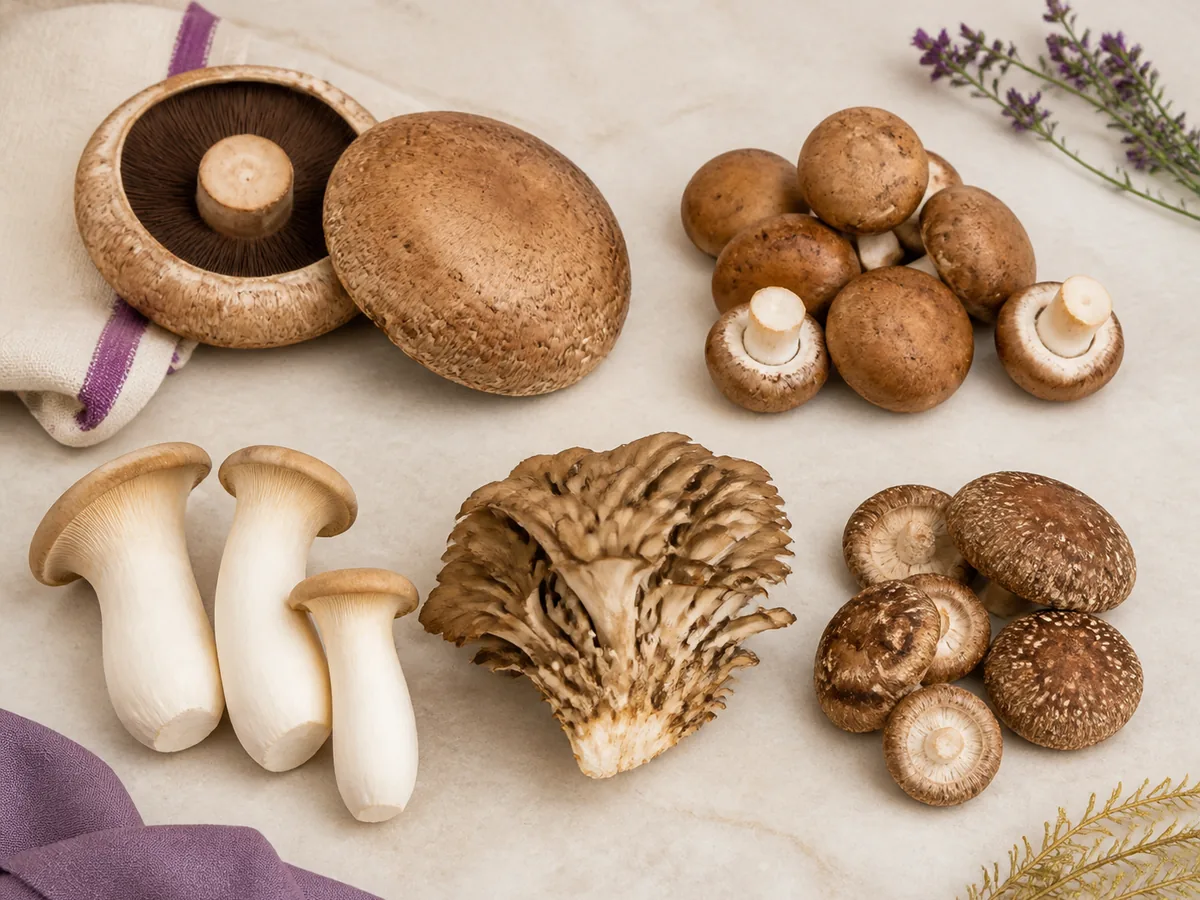
The matrix translates each raw structure into its working burger amount.
| Rank and mushroom | Starting amount | Best burger role | Preparation | Main limit |
|---|---|---|---|---|
| 1. Portobello | One 10 to 12 cm cap per burger | Whole-cap patty | Sear or roast, then drain | Can flood the bun |
| 2. Cremini | About 115 g raw mushroom per 340 g beef | Blended patty | Mince, cook dry, and cool | Raw mince loosens mixture |
| 3. King oyster | Two medium stems per burger | Overlapping firm slabs | Slice 6 to 8 mm and score | Thick centers stay rubbery |
| 4. Maitake | 85 to 115 g per burger | Crisp topping | Tear broad and sear base first | Sauce softens fronds |
| 5. Shiitake | 85 g raw caps per 340 g patty base | Concentrated mince | Remove stems and brown | Strong flavor narrows pairings |
Build a Blended Patty That Holds Together
The goal is not to hide wet vegetables in ground meat. Cooked mushroom mince should act like a seasoned particle, which matters whenever mushrooms serve as a meat substitute.
Pulse cremini in short bursts or chop by hand until most pieces resemble coarse ground beef. Pureed mushroom has too much damaged surface and can turn the mixture slick, while large dice create weak seams that split during turning.

The visual match matters because large mushroom pieces create weak seams inside the patty.
Cook the mince
Use a wide pan until steam falls away and brown residue appears.
Cool the mushroom
Spread the cooked mushroom in a thin layer until it reaches room temperature.
Fold the mixture
Combine one part mushroom with three parts beef and distributed seasoning.
Test one patty
Press its edge gently to check for cracks or wet smearing.
Chill if needed
Cool the formed patties when the mixture softens during handling.
The cooled mixture should feel cohesive before the second patty is formed.
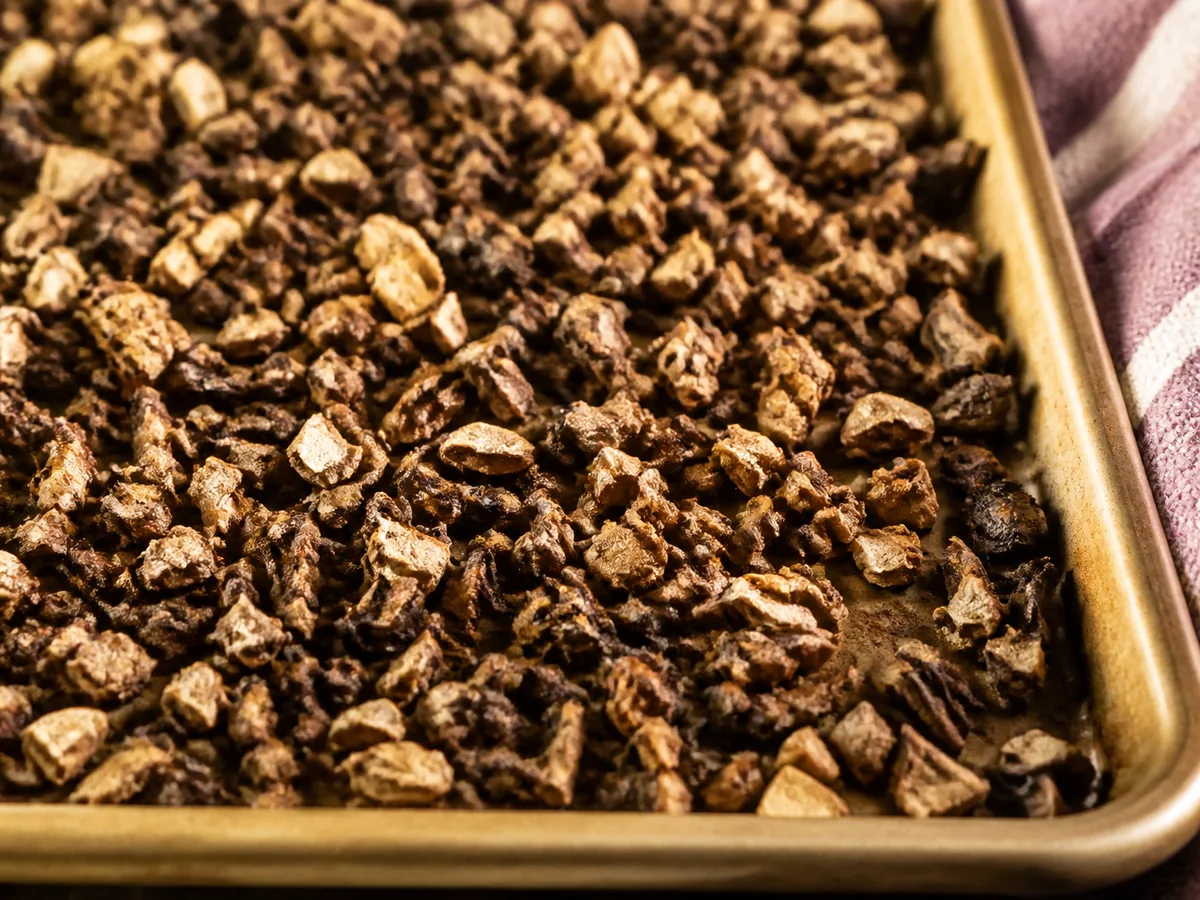
If the edge crumbles, the particles may be too large or the mixture may need a little more gentle compression. If the surface smears and leaves liquid on your hand, return only the mushroom portion to the pan before combining a fresh batch.
Do not knead repeatedly to force cohesion. Excess mixing develops a tight beef texture and cannot remove water that should have left during cooking.
Keep a Whole Cap From Soaking the Bun
Portobello caps hold water in their flesh and can cup released liquid around the gills. Removing loose debris is useful, but scraping every gill is optional and does not replace proper evaporation.
Use direct heat on both faces and leave space around the cap.
When the surface remains wet and pale, flipping more often only moves liquid around the pan instead of building a browned face.
Note
Rest the cooked cap gill-side down on a rack or folded towel for one to two minutes. This brief drain protects the bun more effectively than adding extra cheese or crumbs to absorb liquid later.
That resting orientation lets gravity empty the cap instead of trapping liquid against bread.
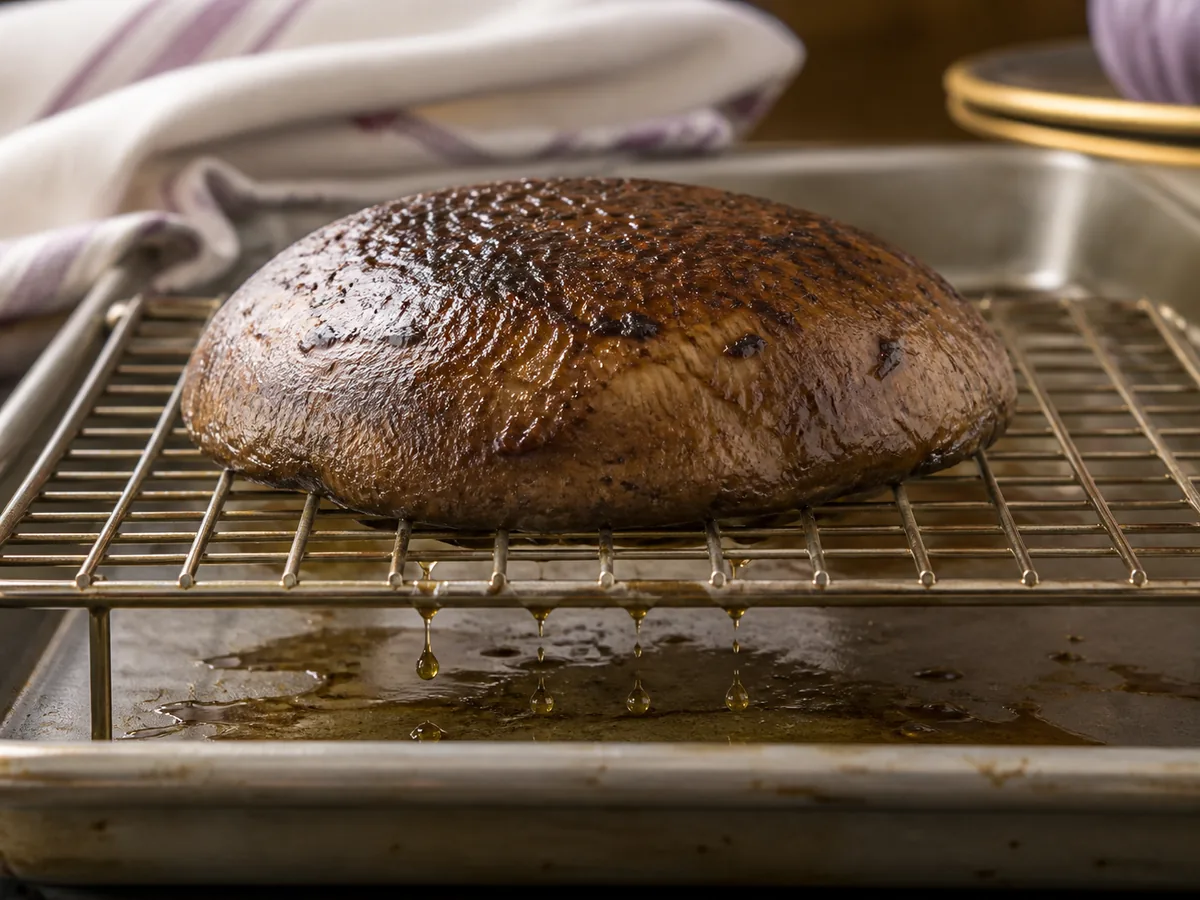
Pressing hard with a spatula forces flavorful liquid out but does not guarantee a better crust. Apply only enough contact to keep the cap against the hot surface, then let heat and time evaporate the water.
Cooking MushroomsHow to Cook Black Truffle Without Losing Its AromaMatch Heat to Cap, Mince, or Fronds
A broad cap needs sustained surface contact, while mince needs maximum evaporation area. Frilled maitake needs a hard initial sear at its base followed by a shorter finish so its tips do not scorch.
King oyster slabs respond to two browned faces and a short covered finish only when the centers remain too firm.
Shiitake mince behaves more like cremini but needs careful stem removal before it reaches the pan.
| Mushroom format | Pan arrangement | Ready cue | What to avoid |
|---|---|---|---|
| Broad cap | One layer with open space | Flexible cap, dry cup, browned faces | Crowded pan and early sauce |
| Fine mince | Thin layer across wide pan | Particles separate and steam subsides | Deep pile that steams |
| Dense slabs | Flat scored faces | Brown lines and yielding center | Pieces thicker than 8 mm |
| Frilled clusters | Dense base down first | Brown base and crisp dry tips | Long simmer under sauce |
Taste the mushroom in the role it will occupy. A highly seasoned topping may work above plain beef, while the same salt level can overwhelm a blended patty where every bite contains mushroom.
Protect the Bun and Keep the Topping Crisp
Toast the bun's cut faces and keep the wettest sauce away from the lower mushroom surface. A leaf of sturdy lettuce or a thin cheese layer can slow moisture movement, but it cannot rescue a dripping cap.
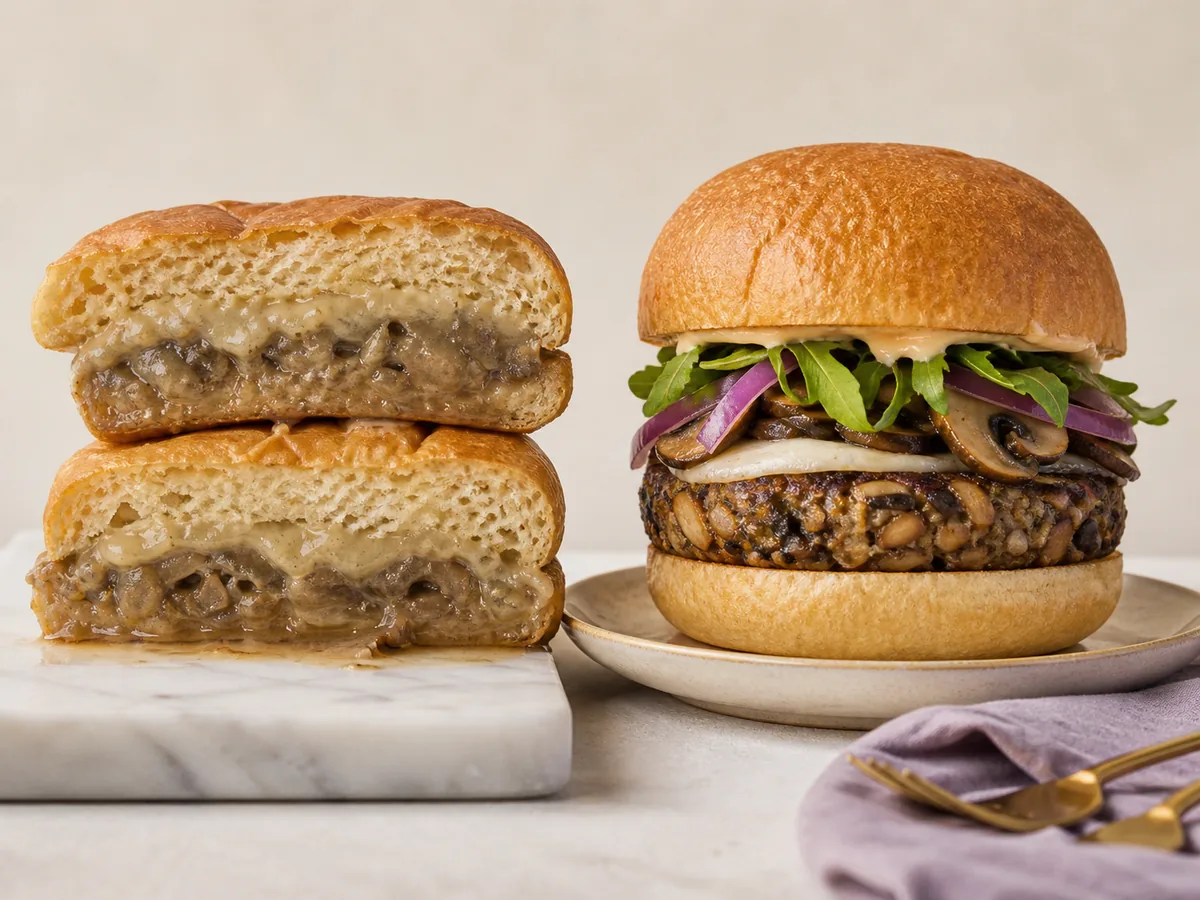
Use the final layer check only after the mushroom itself has passed its moisture test.
- Lower bun
- Toasted, with a thin moisture barrier if needed
- Main mushroom
- Drained cap or cohesive patty, centered over the bun
- Wet condiment
- Measured, not spread on both bun faces
- Crisp mushroom
- Added above the patty immediately before serving
The assembled burger should compress enough for one clean bite without pushing the filling sideways. If it slides before you lift it, reduce sauce or topping height instead of adding another skewer and calling the structure solved.
Portobello is the clearest whole-mushroom burger, but cremini is the more useful blending mushroom. Let the format choose between them, then treat king oyster, maitake, or shiitake as specialists rather than interchangeable substitutes.