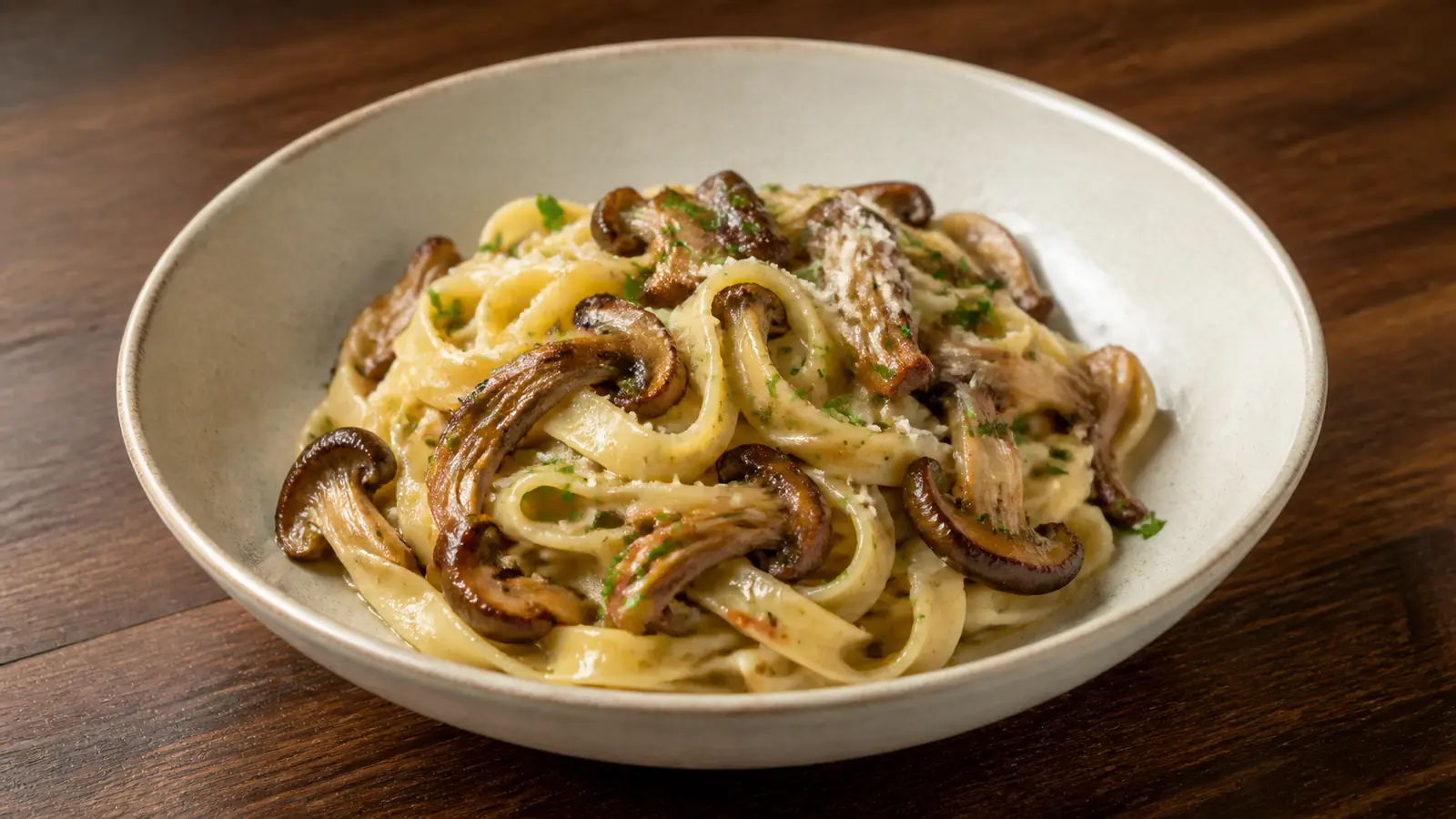
Porcini give pasta the deepest woodsy aroma, cremini are the dependable everyday choice, and shiitake, oyster, chanterelle, or maitake work best when their texture matches the sauce.
Porcini are the best mushrooms for pasta when deep woodland aroma matters most.
Cremini are the more dependable everyday choice because they brown well, suit almost any sauce, and cost less.
The right answer changes with the sauce. Oyster mushrooms suit lemon and herbs, chanterelles deserve a restrained butter sauce, shiitake stand up to assertive seasoning, and maitake bring crisp edges that contrast with soft noodles.
- Best aromatic choice
- Porcini with broad ribbons and a light butter or cream sauce
- Best everyday choice
- Cremini for cream, tomato, sausage, or a simple pan sauce
- Best delicate choice
- Oyster mushrooms with lemon, herbs, white wine, or light cream
- Working amount
- About 85 to 115 g fresh mushrooms per person when they are the main feature
Choose the Mushroom by the Sauce
Start with the sauce because it determines how much mushroom character the finished dish can carry. A light emulsion of butter, olive oil, pasta water, and cheese leaves delicate aromas exposed, while cream, tomato, sausage, chile, or miso can support a stronger mushroom.
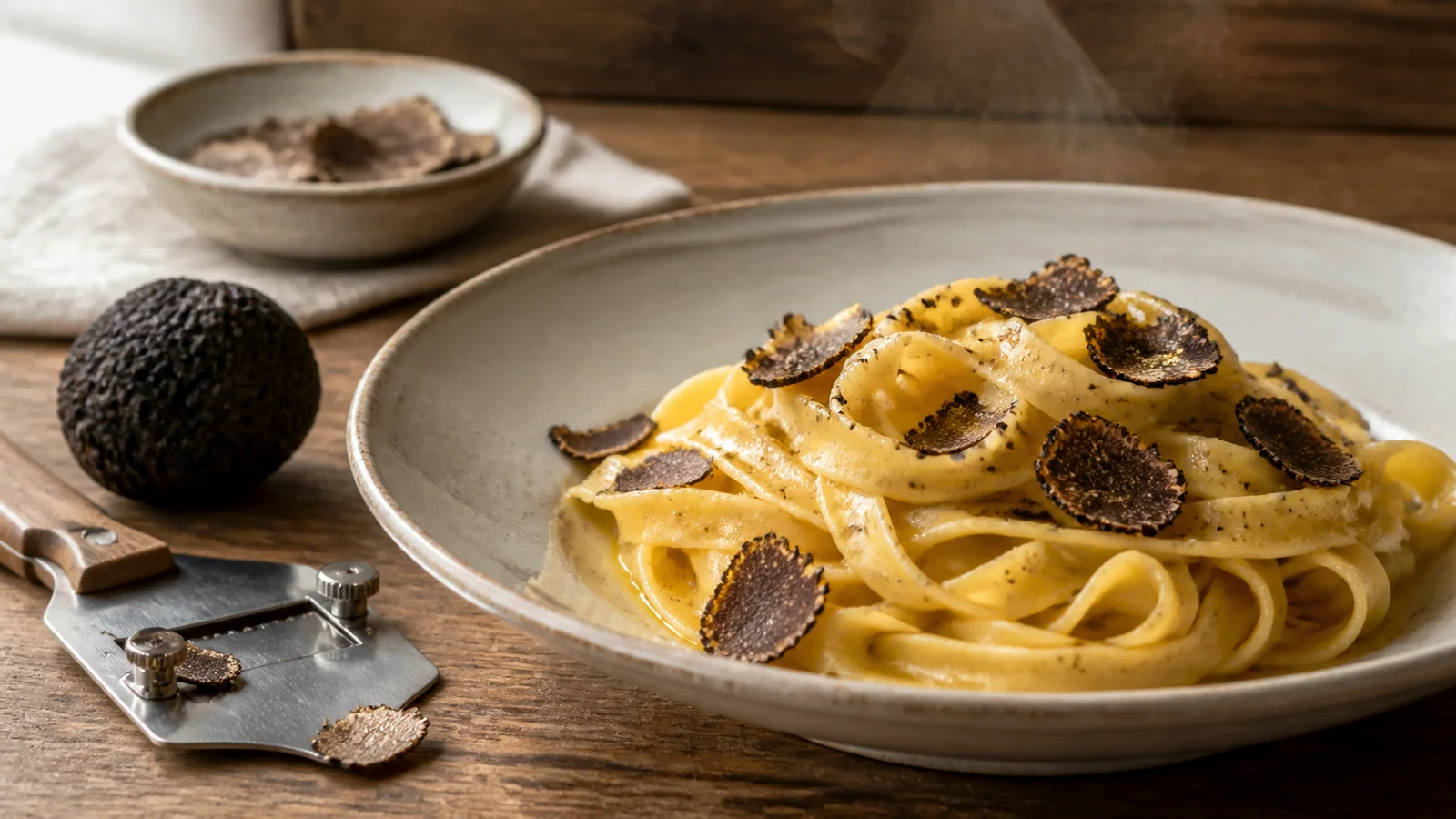
Porcini and chanterelles belong with sauces that leave room for aroma. Porcini have a deeper, darker character that suits tagliatelle or pappardelle, while chanterelles taste more precise with butter, shallot, herbs, and only enough dairy to bind the noodles.
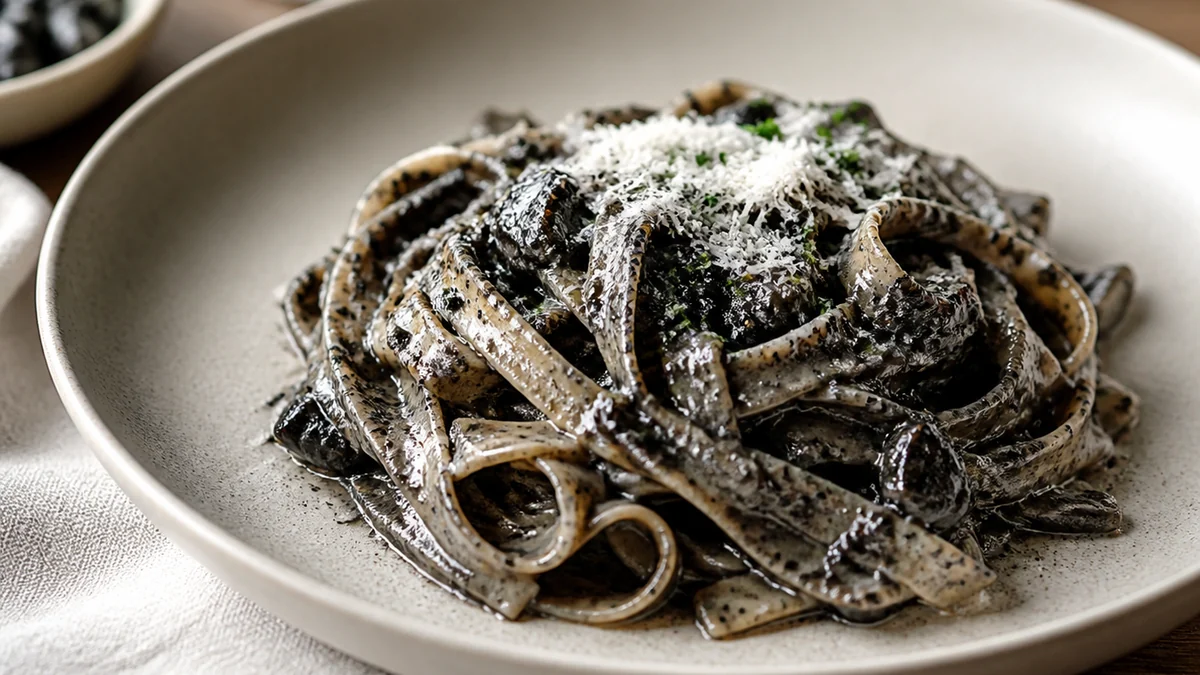
Cremini are harder to overwhelm, which makes them useful in tomato sauce and rich cream even though their flavor is less distinctive than porcini, because a browned slice still reads clearly after garlic, Parmesan, sausage, or wine enters the pan.
Shiitake work when the sauce contains equally assertive ingredients such as soy, miso, chile, smoked meat, or concentrated tomato.
Remove the tough stems because extra simmering will not make them pleasant in the time a pasta sauce needs.
Oyster mushrooms need the opposite treatment. Their thin caps and gentle flavor are most convincing with lemon, parsley, chives, white wine, or a light cream sauce, and they should not spend long simmering under a heavy red sauce.
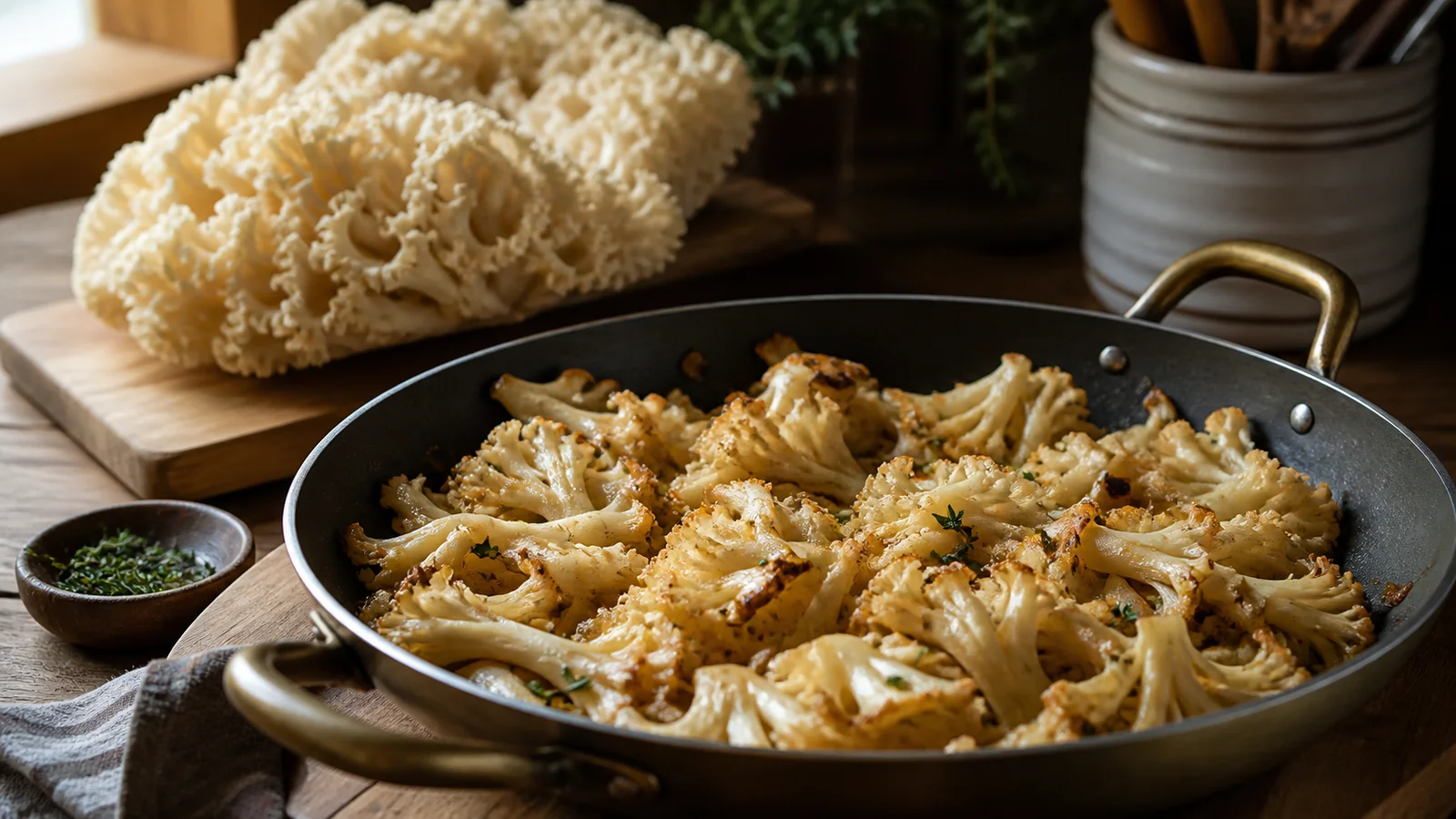
Maitake solve a texture problem more than an aroma problem. Their frilled edges can become crisp enough to stand apart from creamy noodles, but that advantage disappears if every piece is submerged in sauce for several minutes.
Choose the sauce family first, then buy the mushroom with enough flavor and structure to remain recognizable in it.
| Sauce style | Best first choice | Why it works |
|---|---|---|
| Butter, olive oil, or light cream | Porcini or chanterelle | Aroma remains exposed instead of buried |
| Rich cream or cheese | Cremini or shiitake | Browning and savory flavor survive the sauce |
| Tomato, sausage, or chile | Cremini or shiitake | Firm slices and stronger flavor hold their place |
| Lemon, herbs, or white wine | Oyster mushroom | Tender caps suit a light, bright finish |
| Brown butter and sage | Maitake | Crisp fronds contrast with soft pasta |
Only use a wild mushroom in pasta after its identity is settled independently of the dish. Slicing, browning, and coating pieces in sauce remove the evidence needed to reconsider a doubtful find.
Warning
Use cultivated mushrooms or mushrooms identified with certainty by a qualified local expert. Pasta sauce hides field marks, and cooking does not make a poisonous mushroom safe.
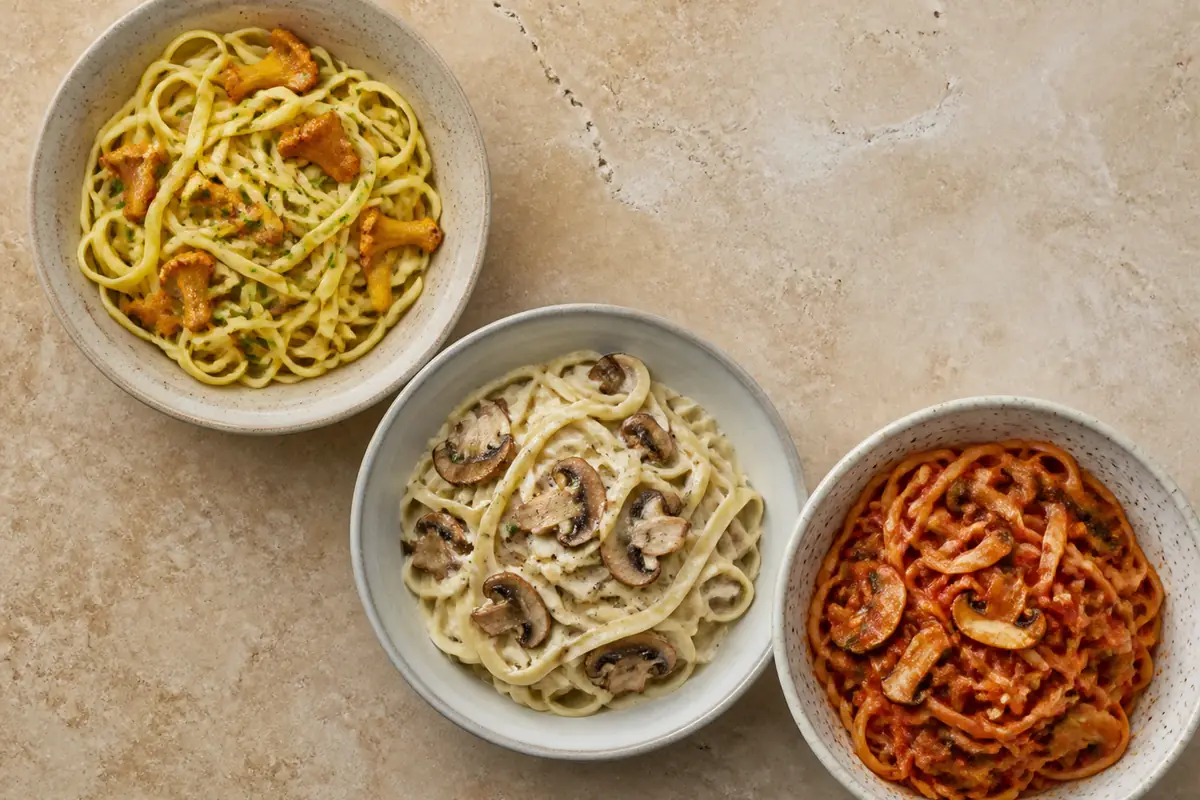
Once identity is settled, compare the sauce families by how much mushroom aroma and structure remain recognizable after coating.
6 Best Mushrooms for Pasta, Ranked by Sauce Job
These six choices are ranked by how clearly they improve a pasta dish, not by rarity or price. Each one has a sauce where it leads and a preparation mistake that can erase its advantage.
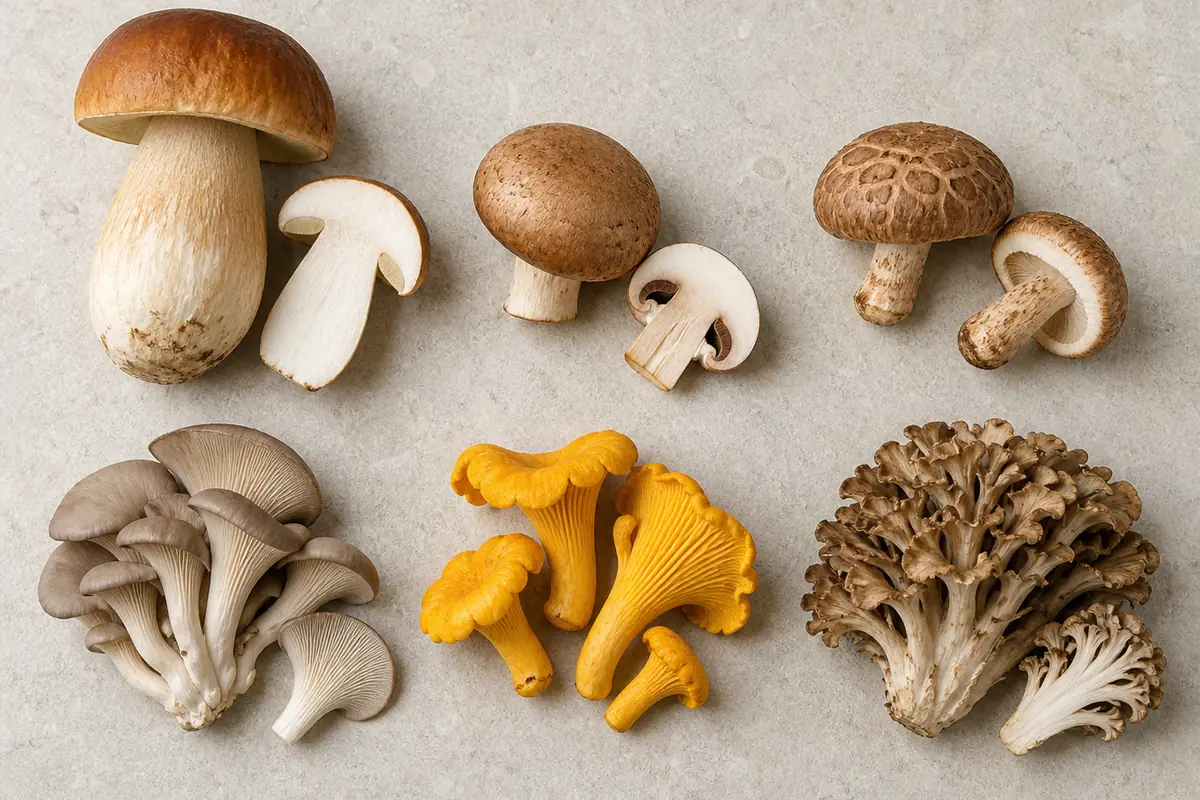
1. Porcini: Best for Deep Aroma
Porcini give pasta the most concentrated woodland aroma of the six choices. They are especially good with broad egg noodles because butter, olive oil, and a modest amount of cream carry their aroma across a large noodle surface.
Fresh porcini provide both aroma and tender pieces, but availability is seasonal and quality varies. Dried porcini are easier to buy and more consistent, although they behave like seasoning rather than the main mushroom bulk.
Chop the rehydrated porcini so one leathery piece does not dominate a forkful.
Porcini lose their advantage under excessive garlic, smoked meat, or sharp tomato. Keep the surrounding flavors focused when aroma is the reason you bought them.
2. Cremini: Best Everyday Choice
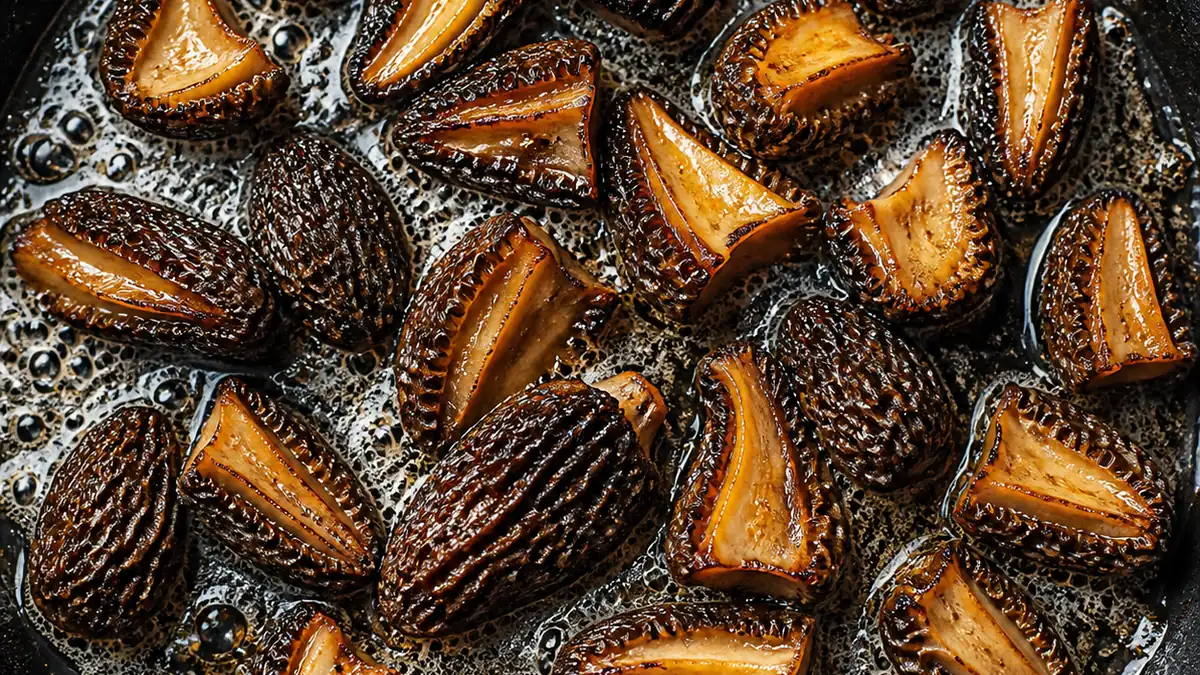
Cremini are the practical winner for weeknight pasta because they are inexpensive, widely available, and sturdy enough to brown before the sauce is built. Their moderate savory flavor fits cream, tomato, sausage, wine, garlic, and most hard cheeses without forcing the entire dish in one direction.
Very thin slices collapse into the sauce, while thick wedges can feel separate from fine spaghetti unless you are using rigatoni, paccheri, or another substantial shape.
Cremini release enough water to punish a crowded skillet, so divide a large batch rather than stacking it. Let one side develop brown color before stirring repeatedly, then season and build the sauce in the concentrated pan residue.
Because cremini have less character than the other ranked choices, they can taste flat when they remain pale, so thorough browning matters more than an expensive garnish.
3. Shiitake: Best for Savory Intensity
Shiitake contain a stronger savory note than cremini and hold their identity beside garlic, chile, miso, soy, tomato, or cured meat. That makes them useful when pasta moves away from a delicate Italian butter sauce and toward a more assertive pantry.
Save sound shiitake stems for stock because they stay tough during the brief cooking time of a pasta sauce.
Do not treat shiitake as a direct chanterelle replacement in a quiet sauce. Its dark savor can flatten parsley, lemon, young peas, or a small amount of fresh cheese that would otherwise remain distinct.
4. Oyster Mushroom: Best for Delicate Texture
Oyster mushrooms give pasta tender, irregular pieces rather than uniform slices. Torn caps drape around ribbons and catch a light sauce, while the denser cluster base provides a firmer bite if it enters the pan first.
Start the dense cluster base first, then add thin cap sections only after the pan is hot enough to evaporate their water.
Lemon, chives, parsley, white wine, and light cream preserve their mild flavor. Heavy tomato or a long simmer makes them soft and anonymous, so choose cremini or shiitake for those sauces.
5. Chanterelle: Best for Butter and Herbs
Chanterelles bring an aromatic, sometimes lightly fruity character that works best when the sauce stays restrained. Butter, shallot, parsley, tarragon, egg pasta, and a small amount of cream support them without covering the quality that justifies their price.
Let released chanterelle water evaporate before adding butter that would otherwise dilute and sputter.
Chanterelles are poor value in a sauce dominated by tomato, smoked bacon, blue cheese, or too much Parmesan. If the sauce cannot become quieter, choose a less delicate mushroom and save the chanterelles for another meal.
6. Maitake: Best for Crisp Edges
Maitake form clusters of thin fronds attached to denser bases, giving one mushroom two useful textures. The broad torn clusters can brown underneath while exposed tips become crisp, which adds contrast to soft noodles and glossy sauce.
Watch the thin maitake tips because they can burn before a very thick cluster center softens.
Brown butter, sage, garlic, Parmesan, and smooth cream sauces all suit maitake. Return most of it briefly for coating, but keep a portion out of the sauce until plating if crispness is the point.
Note
The ranking names a lead use, not a universal winner. Freshness and correct pan treatment matter more than moving one rank upward with tired or poorly handled mushrooms.
The lineup below shows why each candidate needs a different cut and pan treatment even when its rank is close to another choice.
Use Dried Porcini as Seasoning, Not Bulk
Dried porcini solve the aroma problem but cannot provide the juicy browned pieces expected in a mushroom pasta, so treat them as a concentrated layer beneath fresh cremini, oyster mushrooms, or maitake.
- Cover the dried pieces with warm water and leave them until pliable.
- Lift the mushrooms from the bowl because sand and fine debris settle at the bottom.
- Pass the liquid through a coffee filter, very fine sieve, or cloth.
Chop the softened pieces before adding them to the sauce. Large rehydrated strips can remain leathery, while small pieces spread the porcini flavor without interrupting the noodles.
Add the filtered liquid gradually and let it reduce before judging the sauce. Pouring in the whole bowl at once can make the pan watery and may add more bitterness or sediment than the dish needs.
Use fresh mushrooms for physical volume, with cremini providing neutral body, oyster mushrooms making the result softer, and maitake adding edges that rehydrated porcini cannot supply.
Stop adding soaking liquid when the aroma is clear but the sauce still tastes balanced. More concentration is useful only while the pasta, dairy, herbs, and fresh mushrooms remain recognizable.
The clean liquid should look amber rather than visibly gritty, and the softened pieces should bend before they are chopped.

Brown Mushrooms Before You Build the Sauce
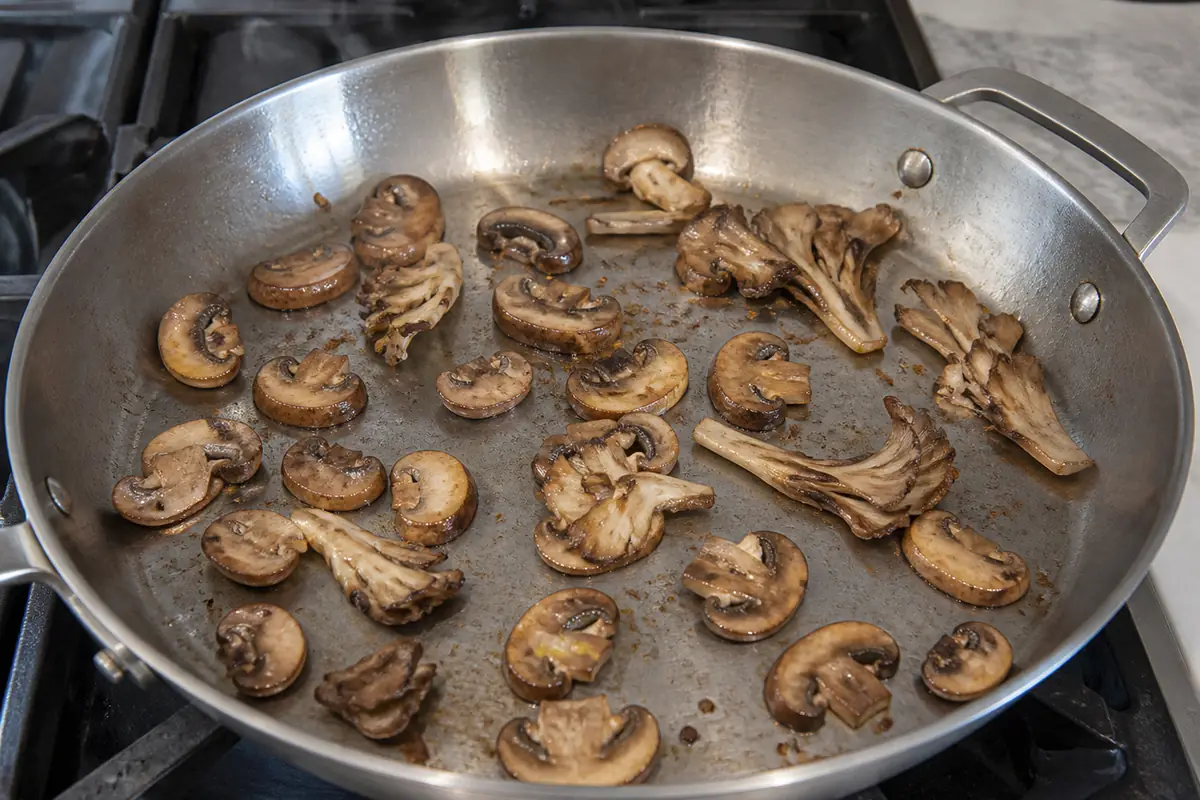
Mushrooms release substantial water as they heat. If the pan is crowded, that water surrounds every piece, the temperature stays near steaming conditions, and the surface remains pale while the sauce base becomes diluted.
Use the broadest heavy skillet you have and add only enough mushrooms to keep most pieces touching metal. A second batch takes less time than reducing a crowded pan full of gray liquid while the mushrooms soften.
At first the pan may sound quiet as water emerges.
The sharper sizzle returns when free water has evaporated, and that is when exposed surfaces can take on brown color.
Add enough fat to coat the pan, but do not keep pouring in oil because pale mushrooms look dry. Space and evaporation fix that problem more effectively than extra fat.
Although salt timing matters less than pan load, salting after the first strong color suits crisp edges, while earlier seasoning suits softer mushrooms that will merge into a ragù.
Once the mushrooms are brown, remove delicate pieces or push sturdy ones aside. Cook shallot or garlic in the open pan, deglaze with wine or measured porcini liquid, and scrape the browned residue into the sauce.
Pasta water comes after this concentration step. Its starch helps fat and water form a glossy coating, but adding it before mushroom liquid has reduced can leave you chasing the correct consistency while the noodles overcook.
The finished sauce should cling to a noodle dragged through the pan rather than pool beneath it, so brown first and dilute deliberately later because water is easy to add and slow to remove once pasta is present.
| Pan symptom | Likely cause | Best correction |
|---|---|---|
| Mushrooms are pale in deep liquid | Pan is crowded | Divide the batch and raise the exposed surface area |
| Thin edges burn before centers soften | Pieces vary too much in thickness | Split dense bases and group similar cuts |
| Sauce turns watery after pasta enters | Mushroom liquid was not reduced | Reduce before adding measured pasta water |
| Sauce looks greasy rather than glossy | Fat and water have not emulsified | Toss with small additions of hot pasta water |
The working pan should still show open metal between pieces, with browned surfaces visible before any sauce liquid is added.
Match the Cut to the Pasta Shape
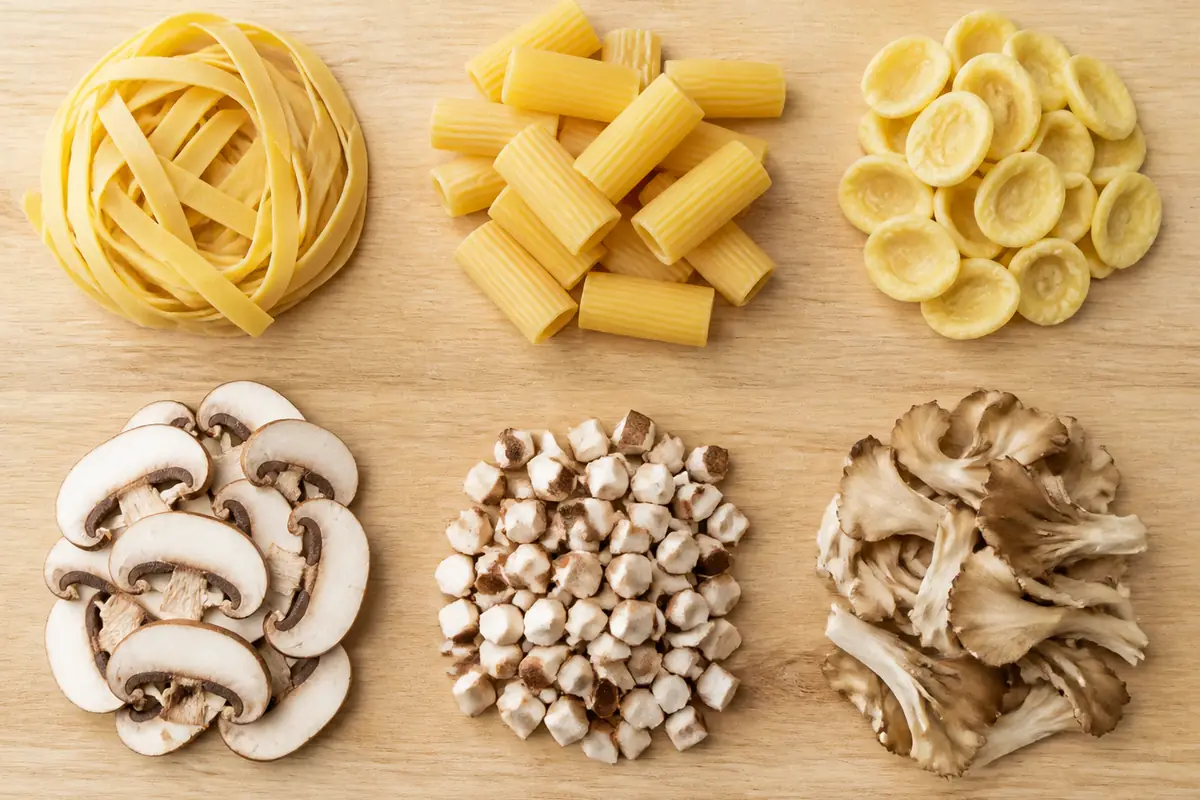
The best cut is the one that travels with the pasta. A mushroom piece that always drops to the bottom may taste good, but the diner receives noodles first and a pile of mushrooms after them.
- Pair broad tagliatelle or pappardelle with wide porcini or cremini slices that remain thick enough to survive tossing.
- Pair spaghetti or linguine with thin shiitake slices or short torn oyster strips that mingle with the strands.
- Pair rigatoni or penne with small dice, short slices, or compact torn clusters that can enter tubes or lodge against ridges.
Orecchiette, shells, and folded short shapes catch tiny maitake fronds and small chanterelles. Avoid reducing every mushroom to mince because recognizable pieces provide contrast with the pasta's softer surface.
Dense parts need their own cut even when the caps stay broad. Dice an oyster cluster base, remove shiitake stems, and split thick maitake junctions so all parts finish at nearly the same time.
Match the mushroom's narrowest useful dimension to the pasta, then preserve enough thickness for browning and bite.
When a Mushroom Mix Is Better Than One Variety
Mix mushrooms when one supplies aroma and another supplies bulk or texture. A blend has a purpose when the two roles can be named before the pan heats.
- Pair 15 g dried porcini with about 300 g fresh cremini when aroma needs browned bulk.
- Pair roughly 225 g cremini with 115 g maitake when cream sauce needs crisp contrast.
- Let oyster mushrooms lead a shiitake blend when lemon or herbs need a gentler flavor.
Avoid combining three or four varieties in equal amounts merely because a mixed pack is available. Different cuts release water and brown at different speeds, and several subtle flavors often merge into one general mushroom note.
Cook dense pieces first and fragile caps later when the mixture shares one pan, or brown each variety in a separate batch when crisp surfaces matter and return them together only long enough to coat.
The same mushrooms behave differently in another starch dish, so the choices for mushrooms for risotto follow stock and stirring needs rather than pasta geometry. Here, one mushroom should own the sauce and the second should solve one missing job.
| Desired result | Lead mushroom | Supporting mushroom | Starting amount for four |
|---|---|---|---|
| Deep aroma with familiar bite | Cremini | Dried porcini | 300 g fresh plus 15 g dried |
| Creamy body with crisp accents | Cremini | Maitake | 225 g plus 115 g |
| Gentle texture with stronger savor | Oyster mushroom | Shiitake | 225 g plus 85 g |
| Delicate seasonal aroma with more bulk | Chanterelle | Cremini | 225 g plus 115 g |
In the finished bowl, the lead mushroom should appear throughout the sauce while the supporting mushroom remains a distinct accent.
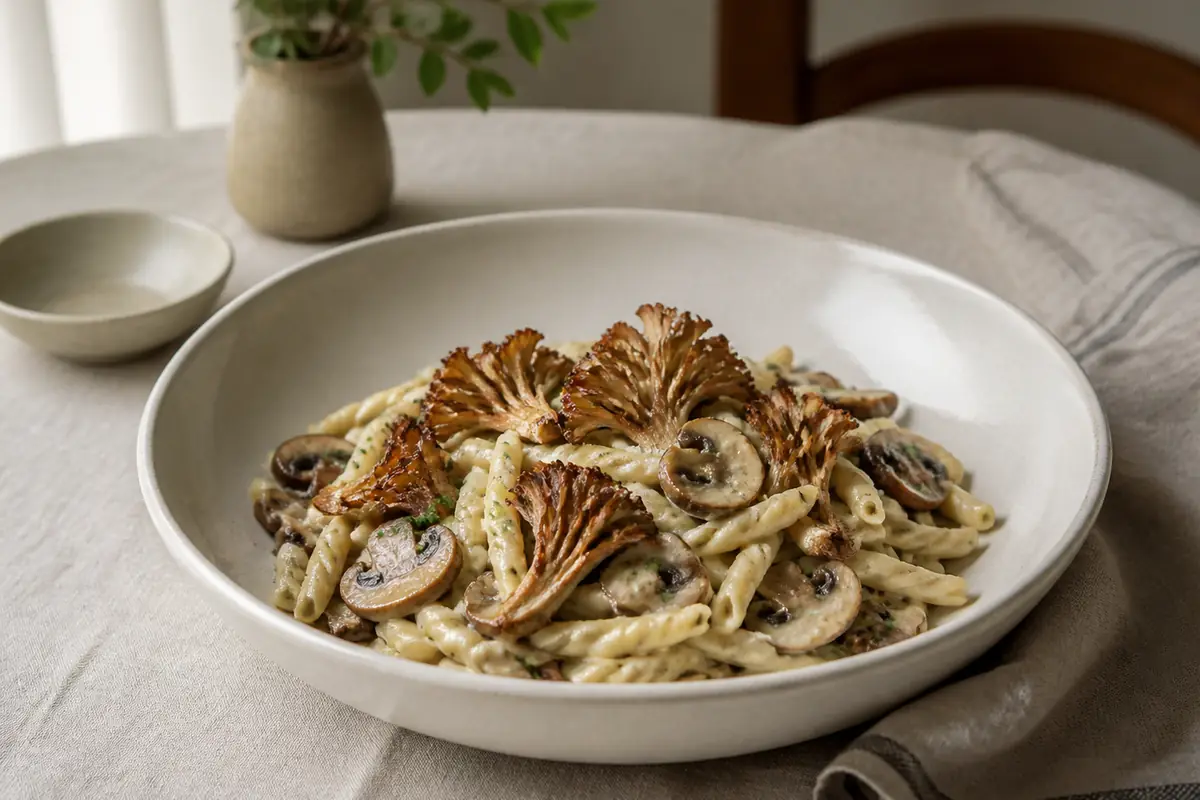
Use the pair as a division of labor rather than as two equal ingredients competing for attention.
Tip
For a first mushroom pasta, use cremini alone or pair cremini with a small amount of dried porcini. Both choices make pan moisture and sauce balance easier to judge before you work with delicate or expensive mushrooms.