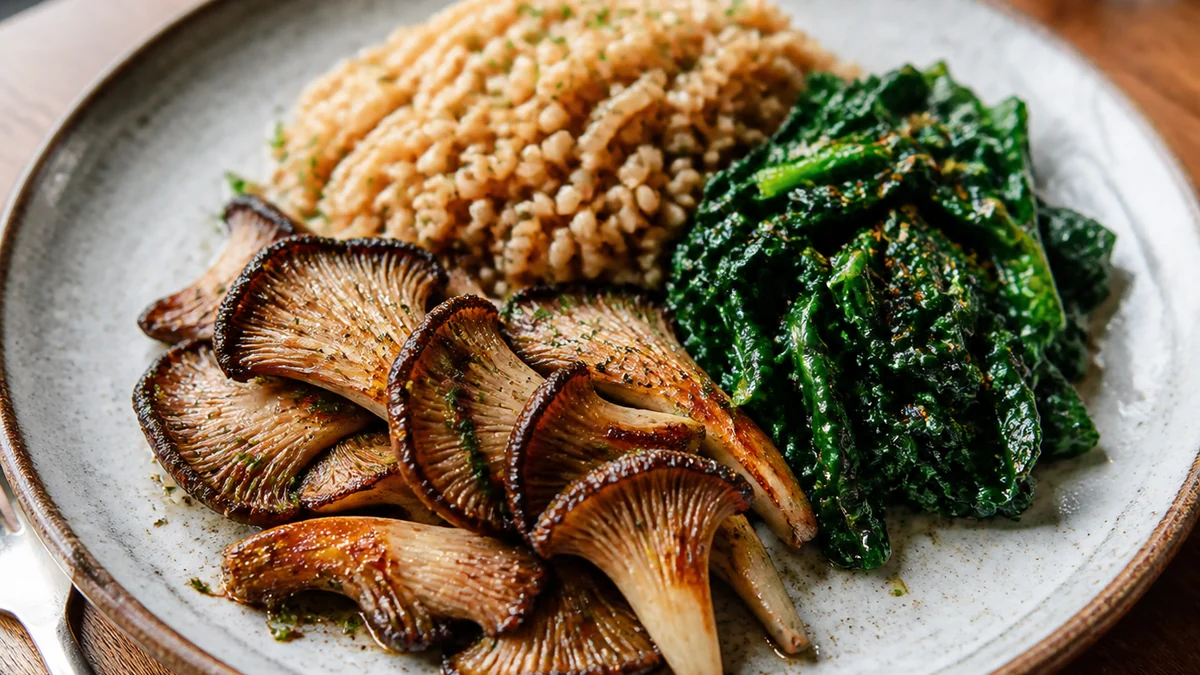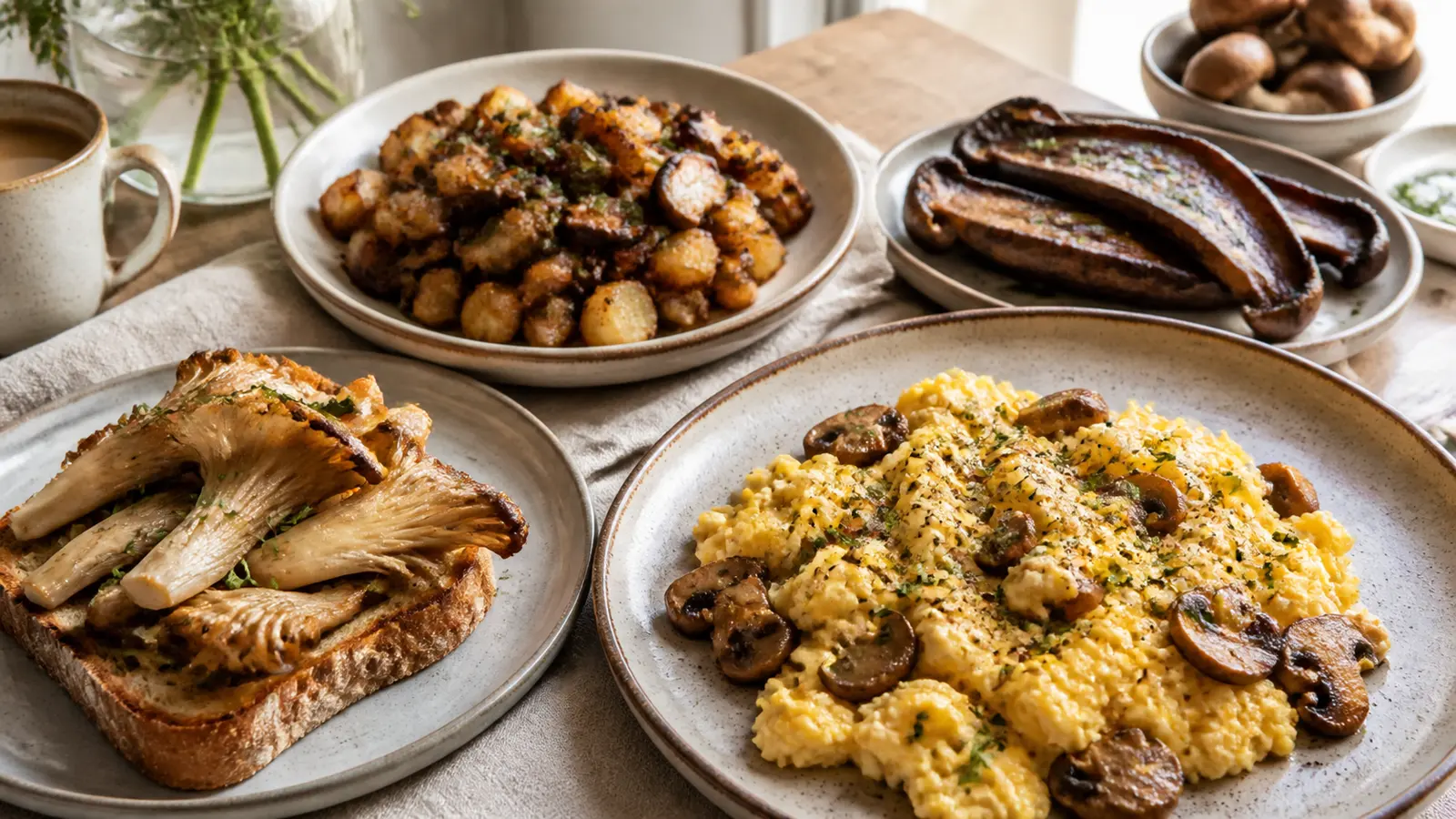
Cremini are the best all-purpose breakfast mushroom. White button are fastest with eggs, oyster mushrooms suit toast, shiitake deepen hash, and portobello makes a substantial brunch portion.
Cremini are the best mushrooms for breakfast because they cover eggs, hash, toast, and make-ahead prep while keeping a recognizable bite after a short reheat.
White button are faster and milder, oyster mushrooms make better toast, shiitake deepen hash, and portobello creates a substantial brunch portion. The decision starts with which breakfast component has the shortest clock.
Choose by the Breakfast Clock
Eggs can move from raw to overcooked in less time than mushrooms can release water and brown.
Toast stays crisp only when its topping has stopped carrying pan liquid, while potato hash can wait for a mushroom batch to finish before everything returns to the skillet.
For an eight-minute scramble, choose thin white button or cremini slices and cook them before the eggs. For toast with a few more minutes, oyster folds give a crisper edge and more visual texture.
Shiitake reward a fifteen-to-twenty-minute hash while portobello belongs to a weekend or advance-prep window with enough pan room for broad slices.
- Fastest egg partner
- Thin white button slices
- Most flexible weekday choice
- Cremini
- Best crisp toast topping
- Oyster mushroom
- Best deep hash flavor
- Shiitake caps
- Most substantial brunch portion
- Portobello
The same mushroom can fit more than one lane when the cut changes with the clock, such as thick cremini quarters for hash and 5 to 7 mm slices for faster eggs.
Do not put every breakfast ingredient into a cold pan and expect simultaneous doneness. Onion, potato, mushroom, spinach, and egg each release water or set at a different rate.
Only cook cultivated mushrooms or wild mushrooms identified with certainty by a qualified local expert.
The four plates below turn time into visible breakfast outcomes.

5 Best Mushrooms for Breakfast, Ranked by Morning Job
The ranking favors fit with common morning dishes rather than the strongest mushroom flavor. Each amount serves four, and each ratio is a practical starting relationship for the companion ingredient.
1. Cremini: Best Overall
Cremini balance supermarket availability, browning speed, savory flavor, and enough density to remain distinct in eggs or potatoes.
Use 225 to 280 g for four servings. Slice 5 to 7 mm thick for scrambled eggs or an omelette, then quarter small caps when hash needs a larger bite.
With 6 large eggs weighing roughly 300 g without shells, start near one part mushroom to 1.3 parts beaten egg by weight so 225 g mushrooms remain prominent without overwhelming the curds.
For potato hash, move toward the upper amount and brown the mushrooms separately. Returning them after the potatoes crisp preserves both surfaces.
The main tradeoff is crowding because cremini release enough water to turn a small breakfast pan into a simmer. Use two batches when slices overlap in several layers.
Cremini are the strongest choice for advance cooking because browned pieces hold a useful bite after a short reheat.
2. White Button: Best for the Fastest Scramble
White button mushrooms have a mild flavor and thin, even caps that suit a weekday scramble without competing with butter, cheese, salsa, or herbs.
Use 225 g sliced mushrooms with 6 eggs for four servings. A published Mushroom Council formula browns that amount for about five to six minutes before the eggs enter.
That relationship is both quantity and timing because mushrooms receive nearly the entire pan session while eggs need only a brief dry-pan finish.
Slice the caps evenly so no thick center remains pale when its neighbors are ready. Keep the stems when they are firm and tender, but narrow any dense ends.
White button lose distinction under strong sausage or roasted vegetables, so choose shiitake for concentrated flavor or portobello for a larger visible piece.
3. Oyster Mushroom: Best for Toast
Oyster mushroom folds create crisp rims and tender centers that catch avocado, ricotta, hummus, or a soft egg without forming a flat wet layer.
Use 280 to 340 g for four substantial toasts, which gives each serving about 70 to 85 g raw mushroom. Tear broad caps and cut dense cluster bases narrower.
Start with one part cooked oyster mushroom to two parts total topping by volume, leaving room for avocado, beans, cheese, greens, or egg without burying the folds.
Cook in one open layer and remove thin caps as their rims color. Covering the pan or stacking hot mushrooms in a bowl softens the exact edges that make oyster mushrooms valuable here.
The tradeoff is holding. Oyster toast is best assembled near serving, so use cremini when breakfast must sit in a container before it is eaten.
4. Shiitake: Best for Savory Hash
Shiitake caps bring concentrated flavor to potatoes, rice, grains, and breakfast sausage without requiring a large mushroom volume.
Use 225 to 280 g caps for four portions, removing the tough stems and slicing the caps about 5 mm thick. Begin near one part shiitake to two parts cooked potato by weight.
That ratio keeps potato as the crisp structural base while preventing shiitake from dominating delicate eggs placed over the hash.
Brown the caps before cooked potatoes return to the pan, then add garlic or herbs after the mushroom surfaces dry. Early aromatics can scorch during the moisture-release stage.
Shiitake are less forgiving than cremini in mild eggs and work best when breakfast already contains potatoes, grains, spicy sauce, or robust cheese.
5. Portobello: Best for a Substantial Brunch
Portobello provides broad strips or one visible cap that can sit beside eggs, fill a sandwich, or anchor a weekend hash.
Use 2 large caps for four mixed breakfast portions. Cut them into 8 to 12 mm strips and cook separately before eggs, or keep smaller caps whole for individual sandwiches.
Start with equal cooked volumes of portobello and potato or egg mixture to keep the mushroom substantial without turning every bite into cap flesh.
Broad slices need more pan room than cremini, and their gills can hold liquid. Tip or drain collected moisture before the pieces meet toast or eggs.
Portobello reward advance cooking but make a poor last-minute addition to nearly finished eggs. Their longer clock is the reason they rank fifth for everyday speed despite delivering the largest brunch portion.
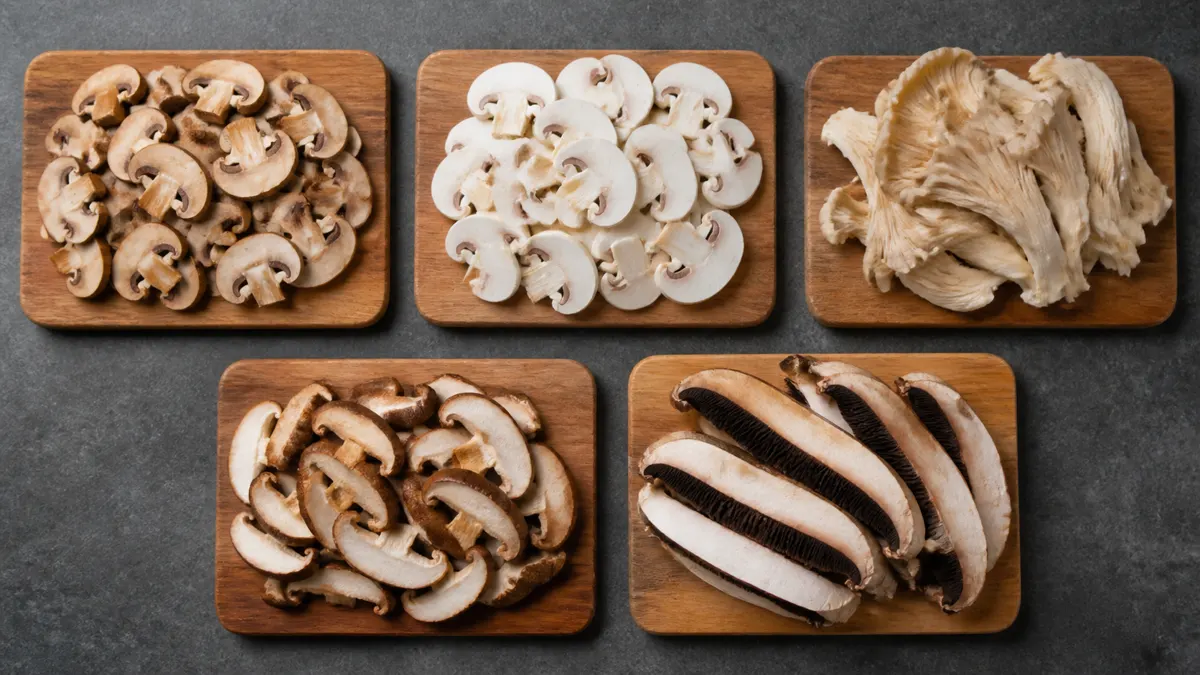
The breakfast-ready cuts below show how each candidate meets its assigned clock.
Cook Mushrooms Before Eggs Enter the Pan
Mushrooms and eggs should not start together because their useful transformations run on different clocks.
Mushrooms need time for water release, evaporation, renewed sizzling, and browning. Eggs begin setting almost as soon as they touch the hot surface.
Cook the mushroom portion first over medium-high heat with enough open pan for visible liquid to disappear and cut faces to color.
Move browned mushrooms to one side or briefly to a plate, then lower the heat before adding beaten eggs. Return reserved pieces near the end if you want some surfaces to remain exposed.
Tip
If the pan still hisses softly instead of sizzling sharply, give the mushrooms another minute before adding eggs.
In the cited four-serving scramble, mushrooms cook about five to six minutes and the eggs finish in roughly 30 seconds. Pan material and burner strength vary, so use the visible stage rather than copying the seconds blindly.
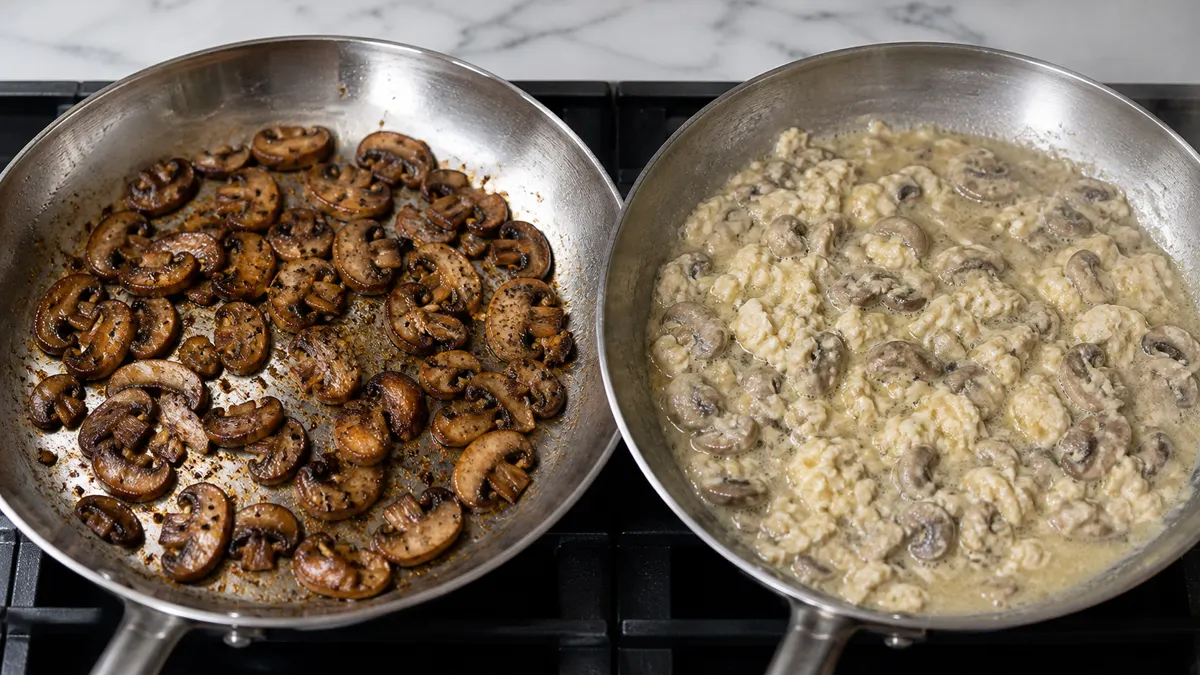
Adding eggs during the wet hiss surrounds the curds with mushroom liquid. The result looks gray, takes longer to set, and encourages overcooking while you wait for the pan to dry.
The decisive rule is to add eggs only after free mushroom water has gone, a sequencing choice that matters more than changing from butter to oil or choosing a stronger cheese.
For omelettes, cool a very hot mushroom filling briefly before it touches partially set eggs. A steaming mound can tear the egg layer and continue cooking it from the center.
Cook egg dishes to the food-safety standard appropriate to the eater and local guidance. Utah State guidance specifies 160 F for egg dishes and advises against runny scrambled eggs.
The paired skillets make the order failure visible.
Keep Toast Crisp and Hash Brown
Toast and potatoes expose mushroom moisture in different ways. Bread absorbs it immediately, while potato surfaces stop crisping when loose liquid spreads through the skillet.
For toast, brown oyster, cremini, or shiitake until dry, rest the topping uncovered for a minute, and assemble only when the bread and spreads are ready.
Do not spoon the final pan liquid onto toast merely because it tastes savory. Use it in beans, sauce, or another moist component rather than sacrificing the crisp base.
For hash, brown mushrooms first and remove them before potatoes enter. Return them once the potatoes have crisp faces and peppers or greens are nearly done.
Salt can enter during mushroom cooking, but the resulting water still needs to evaporate. A crowded pan cannot be rescued by adding more potato or bread.
Keep wet toppings such as tomato, salsa, or soft cheese separate until assembly so they do not disguise an under-browned mushroom batch.
The close comparison below shows the dry assembly state on both bread and potatoes.

Cook Ahead Without Reheating the Eggs
The mushroom stage is the best part of breakfast to batch because it takes longer than eggs, toast, or final assembly.
Cook cremini, shiitake, or portobello until browned, then spread the batch in a shallow container so it cools promptly. Refrigerate once cooled according to safe food-handling practice.
Oyster mushrooms can be cooked ahead when convenience matters more than preserving their thin just-cooked rims through storage.
Reheat only the portion needed for that breakfast. A small hot skillet restores some surface texture faster than repeatedly warming the full container.
Add eggs after the reheated mushrooms are hot and the pan is dry. Toast bread separately, and add fresh herbs, greens, or soft cheese at assembly.
Cook and store the mushrooms separately, then finish the eggs or toast fresh when serving breakfast.

Use the table to match each stored mushroom to one fresh finishing path.
| Cooked mushroom | Best next-day use | Reheat method | Add fresh at the end |
|---|---|---|---|
| Cremini | Scramble, burrito, or hash | Small dry skillet | Eggs, herbs, salsa |
| Shiitake | Potato or grain hash | Skillet with a little fat | Fried egg, scallion |
| Portobello | Sandwich or brunch plate | Skillet or covered low oven | Toast, greens, sauce |
| Oyster mushroom | Toast or bowl when softness is acceptable | Very brief hot skillet | Crisp bread, avocado, herbs |
The best breakfast result gives the mushroom enough time without forcing its companion to wait in the pan. Brown the mushrooms on their own clock, then let eggs, toast, or potatoes finish the meal on theirs.