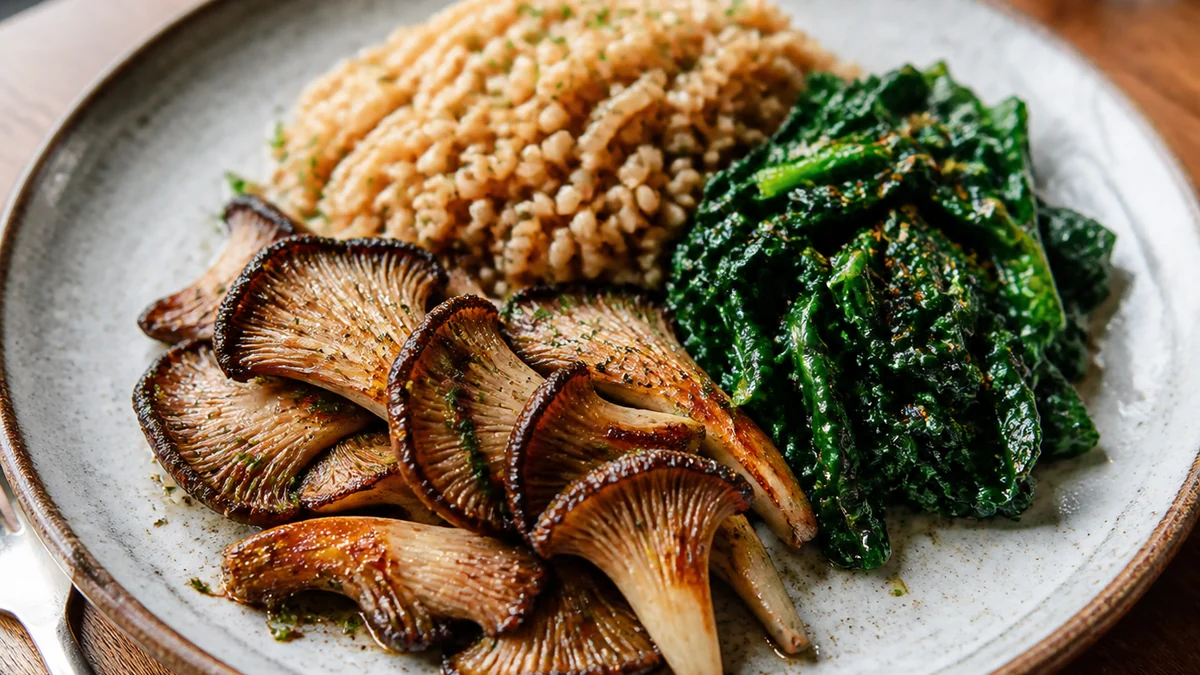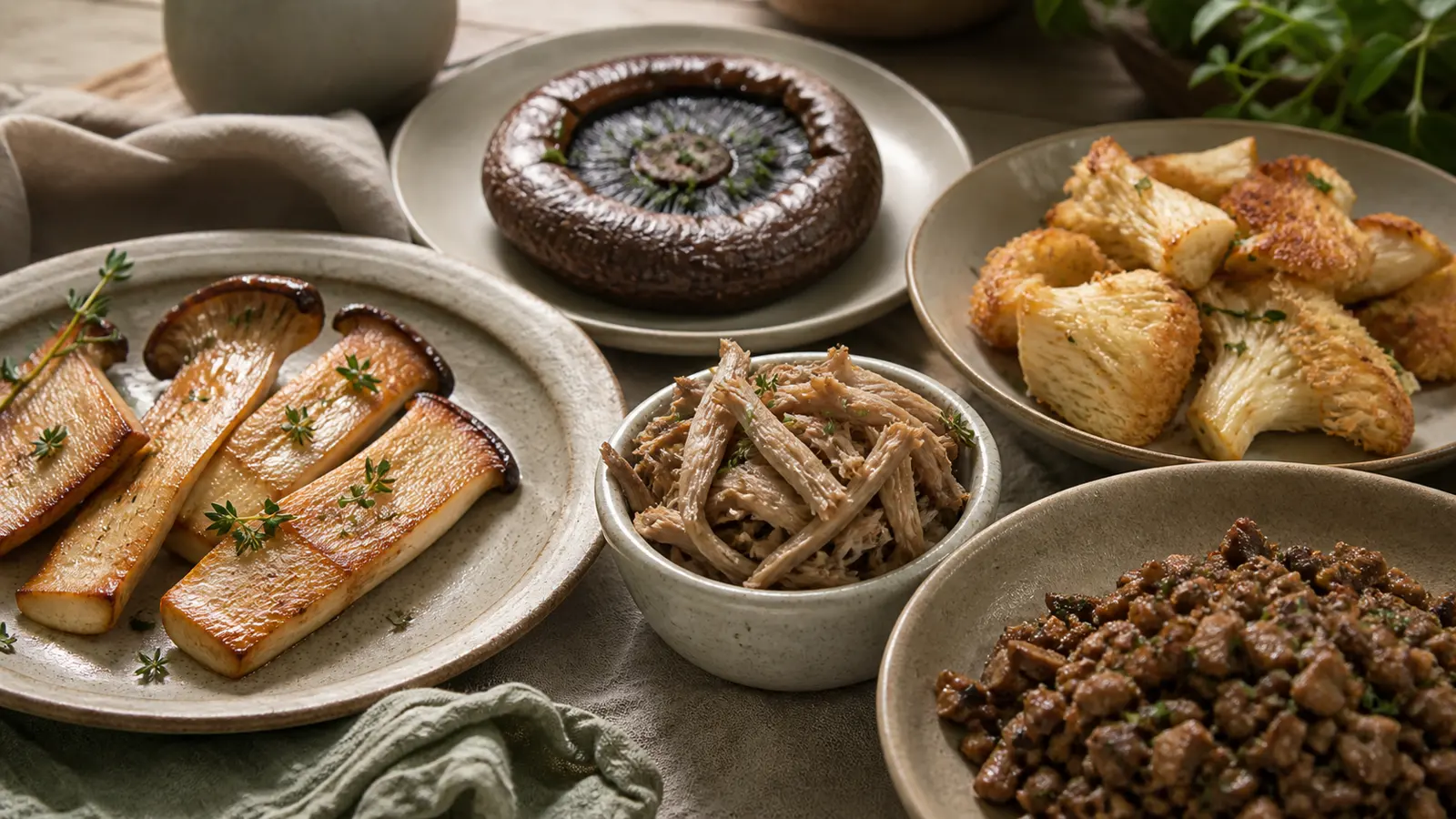
King oyster is the best all-purpose mushroom for dense meat-like slices. Portobello replaces a burger portion, oyster shreds, lion's mane flakes, and cremini supplies mince or a partial blend.
King oyster is the best mushroom meat substitute for dense slices because its thick stem becomes slabs, rounds, or cubes without collapsing into an indistinct filling.
Portobello replaces one whole portion, oyster mushrooms shred, lion's mane flakes, and cremini becomes mince, so choose the meat format the dish depends on before choosing the mushroom.
Choose the Meat Format Before the Mushroom
Meat can give a dish a whole portion, a dense bite, long fibers, flaky pieces, or small browned granules. One mushroom cannot reproduce all five physical jobs.
Portobello carries a bun and toppings as one whole cap, while king oyster supplies clean dense slices that can be seared and cut with a knife.
Oyster mushrooms tear into long folds for sauced fillings, while lion's mane breaks into flakes and cremini can be chopped to ground-meat scale.
Note
Mushroom substitution describes a cooking role here. It does not mean that a mushroom portion automatically supplies the protein, iron, vitamin B12, fat, or energy found in the meat it replaces.
The cooking method must fit the shape because whole caps tolerate turning, slabs need center heat, shreds need a wide pan, flakes need gentle pressing, and mince must lose water before binding.
- Whole portion
- Portobello cap for burgers, sandwiches, or a plated main
- Dense slice
- King oyster stem for slabs, rounds, cubes, or kebabs
- Pulled fiber
- Oyster mushroom folds for tacos and barbecue fillings
- Flaky piece
- Lion's mane for seafood-style or shredded applications
- Mince
- Cremini for patties, meatballs, chili, tacos, and sauces
Ask what would fail if the meat disappeared. The answer may be bulk, chew, fibers, flakes, browned granules, binding, fat, or protein, and the mushroom only solves part of that list.
Only use cultivated mushrooms or wild mushrooms identified with certainty by a qualified local expert because a meat-style sauce or dark sear cannot make an uncertain specimen safe.
The finished portions below show five different jobs rather than five versions of the same brown pile.
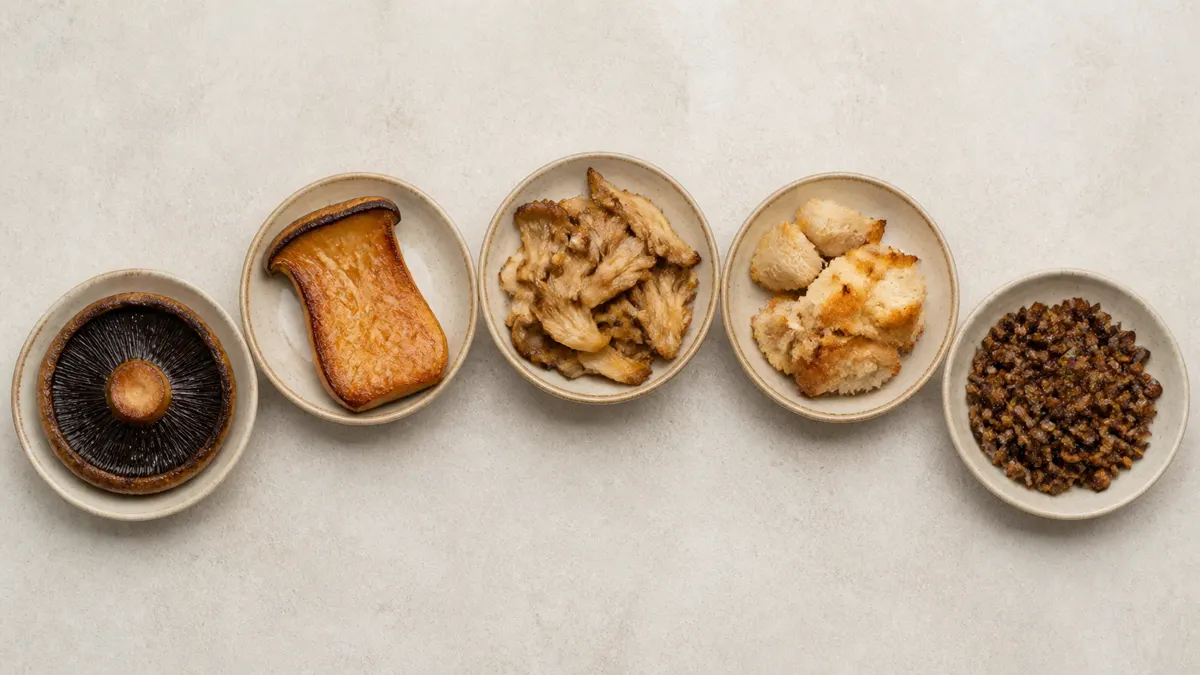
5 Best Mushroom Meat Substitutes, Ranked by Cut
The matrix gives a fast format match before the cooking details. Amounts assume four servings, while ratios describe the form after the mushroom has released water whenever cooked volume matters.
| Meat-style job | Best mushroom | Starting amount | Preparation |
|---|---|---|---|
| Dense slices or rounds | King oyster | 450 to 550 g | Cut stems into 12 to 18 mm slabs or 25 mm rounds |
| One whole burger-size portion | Portobello | 4 large caps | Remove stems and cook caps whole |
| Pulled sauced filling | Oyster mushroom | 450 to 550 g | Tear lengthwise and narrow dense bases |
| Flaky seafood-style filling | Lion's mane | 400 to 500 g | Tear into flakes and press gently |
| Ground texture or partial blend | Cremini | 225 to 450 g | Chop to mince size, brown, and cool before mixing |
1. King Oyster: Best Overall for Dense Slices
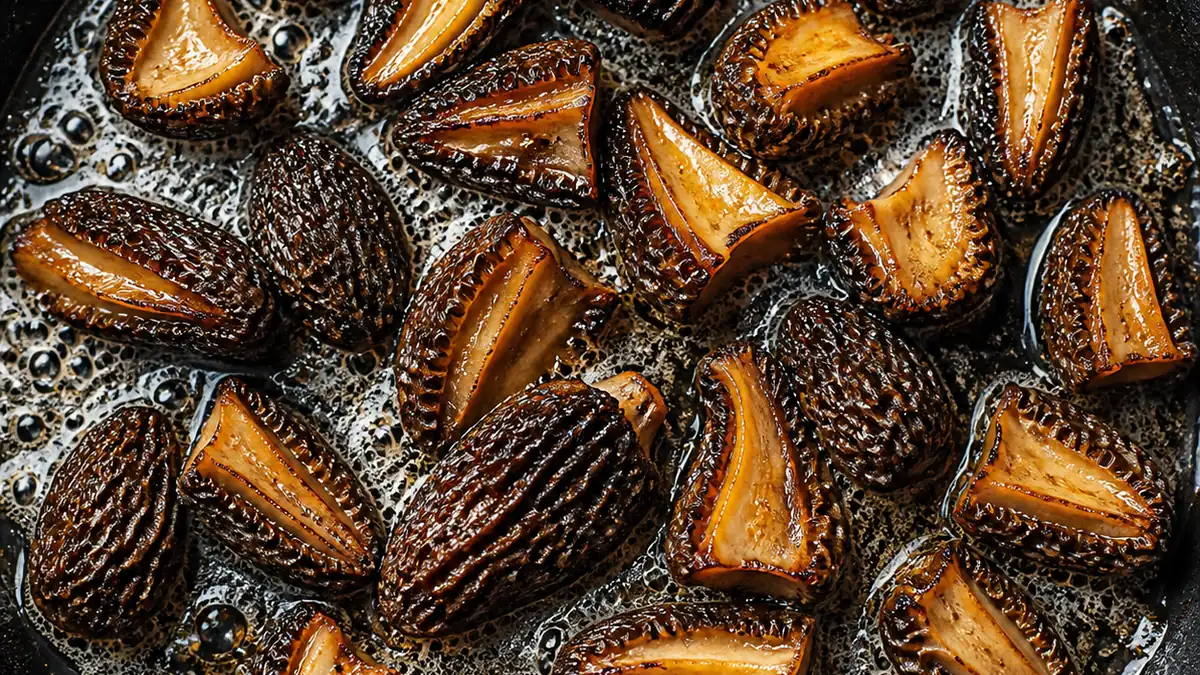
King oyster wins the broadest range of substantial meat-style cuts because most of its edible mass sits in a firm stem. The grain is fine enough to sear cleanly without the fragile gills of a broad cap.
Use 450 to 550 g for four servings, cutting stems lengthwise into 12 to 18 mm slabs or across into 25 mm rounds.
Replace one part cooked meat volume with one part cooked king oyster volume when the original ingredient was a visible slice or cube. Compare after browning because raw mushroom weight includes water that will not remain on the plate.
Shallow scoring exposes more surface without creating the dry corners that deep crosshatches produce before the center becomes tender.
The main tradeoff is thickness. A thin slab browns quickly but loses its juicy center, while a very thick round needs lower heat after searing so the middle does not remain stiff.
King oyster works poorly as ground texture unless chopped because its strength is the clean, resilient piece that remains visible after cooking.
2. Portobello: Best for One Whole Portion
Portobello replaces the space occupied by one patty or cutlet, carrying sauce, cheese, vegetables, and a bun without imitating ground fibers or requiring a binder.
Use 4 large caps for four portions at a piece-for-piece ratio of 1 cap for each patty or plated serving. Weight is less useful here because cap diameter determines whether the sandwich feels complete.
Remove the stem and keep the rim intact because a whole cap protects its center while thin strips lose the one-piece advantage.
Drain liquid that collects in the gills before assembly. That moisture is flavorful, but a pool inside a bun softens bread and dilutes thick condiments.
A whole cap provides bulk and savory flavor rather than springy bind, so choose king oyster for slices or cremini for mince when those mechanics matter.
3. Oyster Mushroom: Best for Pulled Fillings
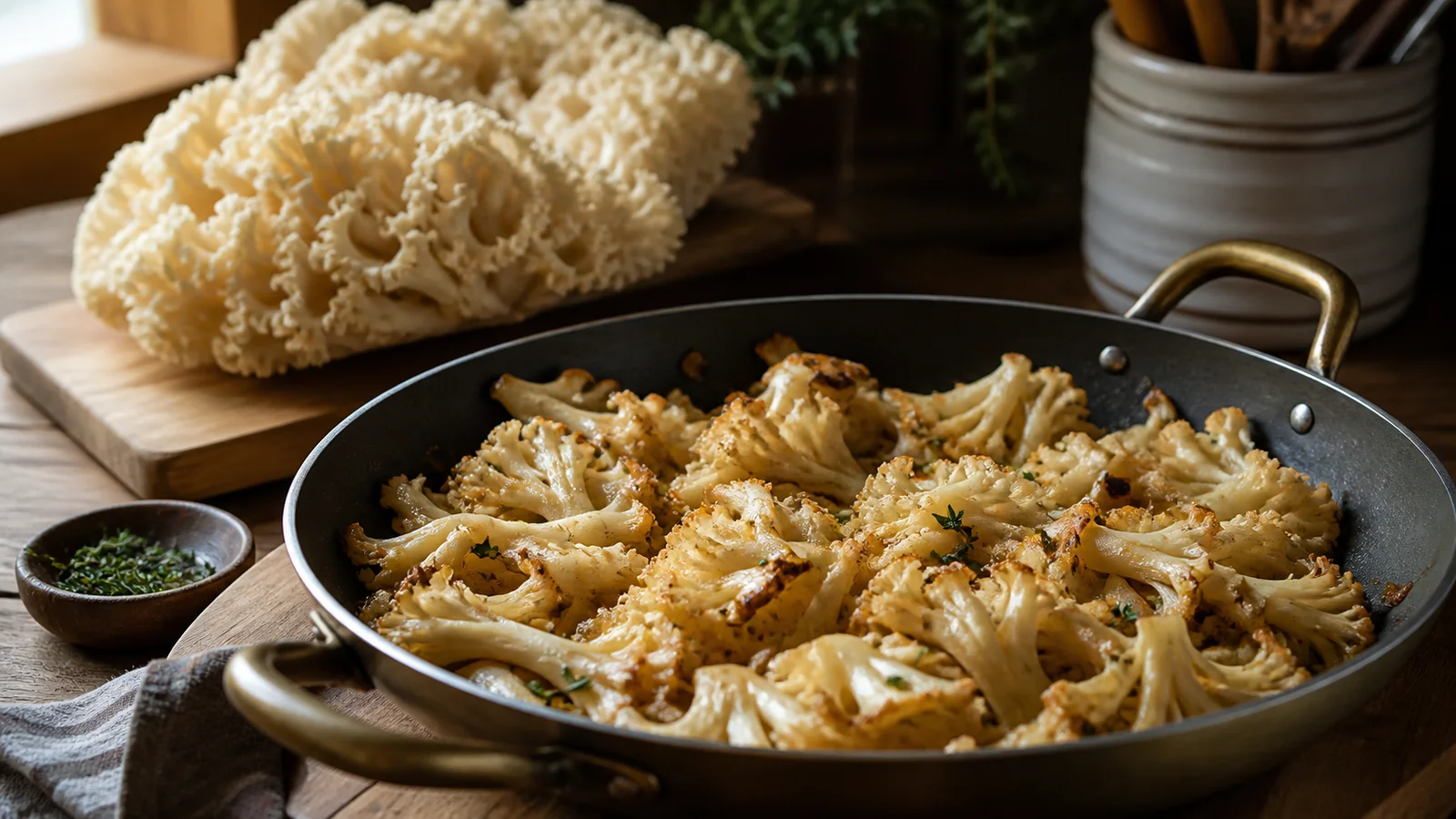
Oyster mushroom folds tear naturally into pulled filling when their dense bases are cut narrower to finish with the thin cap edges.
Use 450 to 550 g raw mushrooms for four filled sandwiches or taco portions. Begin with about 1.5 parts raw oyster mushroom volume for every 1 part cooked pulled filling you need.
That extra raw volume accounts for water loss because a generously filled starting pan produces a much smaller dry batch.
Cook the torn pieces before adding barbecue sauce, adobo, or another thick glaze. Early sauce traps released water and turns the folds soft before their edges can brown.
Oyster mushrooms suit several small tortillas better than portobello, but they are less useful when the plate needs one clean slice.
4. Lion's Mane: Best for Flaky Seafood-Style Pieces
Lion's mane separates into irregular flakes for seafood-style seasoning or shredded fillings, but its sponge-like structure leaves large wet chunks soft inside.
Use 400 to 500 g for four modest entree portions. Replace one part cooked flaky filling with one part browned lion's mane by volume after pressing and water loss.
Tear by hand to create rough varied edges that preserve the difference between lion's mane flakes and cremini mince.
Press gently between towels or during cooking, but do not crush the pieces into paste. Work in batches so steam can escape and each flake reaches the pan.
Availability and density vary, so compact specimens need smaller tears and longer browning than airy ones rather than one fixed timer.
5. Cremini: Best for Mince and Partial Blends
Cremini are inexpensive and easy to chop to ground-meat size, with value coming from even distribution rather than one dramatic piece.
Use 225 to 450 g for four servings, depending on whether the mushrooms are a partial burger blend or half of a loose taco filling. Brown the mince and cool it before combining with raw ground meat.
Start with 25 parts cooked mushroom to 75 parts meat for burgers, meatballs, or meatloaf because formed foods need enough meat protein and fat to hold shape.
Move toward 50:50 for tacos, sloppy fillings, or burritos where the pan and tortilla support the mixture. Chili and sauce can carry about 75 parts mushroom to 25 parts meat because liquid and the vessel replace the patty's binding job.
Raw chopped cremini release water inside a formed mixture, which weakens browning and texture. The cooling step also keeps warm mushrooms from starting to cook raw meat unevenly during mixing.
The five raw preparations below make the structural differences visible before seasoning hides them.

Replace the Culinary Job, Then Replace the Missing Nutrition
Mushrooms can provide savoriness, moisture, volume, and a substantial bite. They do not contain the same concentration of protein and energy as meat, and most ordinary mushroom portions do not supply equivalent iron or vitamin B12.
That distinction matters most when a whole cap becomes the center of the plate. A portobello burger may look as large as a meat burger while contributing a different nutrient profile.
Build the rest of a meatless meal with a deliberate protein source such as beans, lentils, tofu, tempeh, eggs, dairy, or a suitable combination of grains and legumes. The exact choice should fit the eater's needs and dietary restrictions.
Complete the missing meal function deliberately with beans beside pulled oyster tacos, lentil salad beside king oyster slabs, or a protein-rich spread inside a portobello sandwich.
Fat also changes the eating experience. Mushrooms are naturally low in fat, so measured oil, nuts, seeds, avocado, cheese, or a rich sauce may provide the roundness that the original meat supplied.
Key takeaway
Texture replacement | The mushroom cut survives the cooking method KEY: Flavor replacement | Browning, seasoning, and sauce supply depth KEY: Protein replacement | Another ingredient completes the meal when needed KEY: Energy replacement | The full plate must remain satisfying for the eater
Do not treat the need for another protein as a failure of mushrooms. It is simply the consequence of asking one ingredient to replace a culinary job without claiming identical nutrition.
The paired plates show how the same mushroom main changes when the missing meal roles are supplied around it.

Drive Off Water Before You Add the Meat-Style Sauce
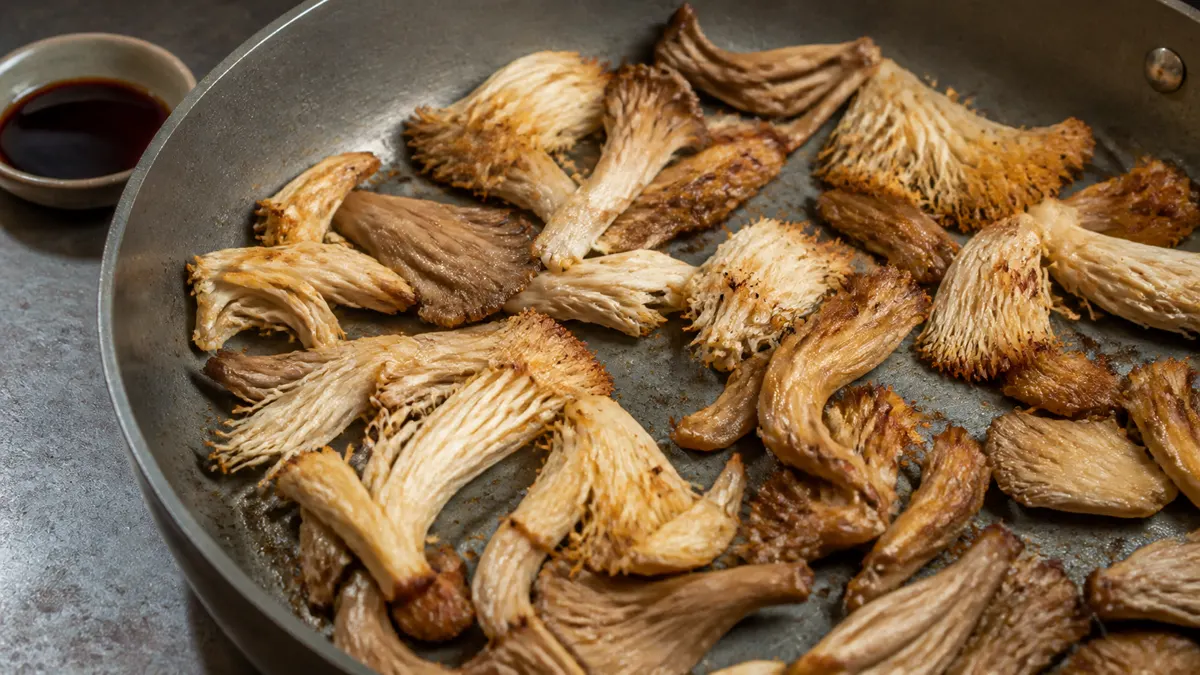
The fastest way to make a mushroom substitute taste weak is to season a wet pan as though it already contains browned meat. Mushrooms must release water before concentrated sauce can cling to their surfaces.
Use a wide pan and a batch small enough to expose metal because a deep mound cools the surface and makes every format simmer.
Let oyster shreds and lion's mane flakes release water before adding more fat. King oyster slabs and portobello can begin with a thin oil film because their broad contact faces need protection.
Listen for the pan to move from a wet hiss toward a sharper sizzle. Watch for liquid pools to disappear and for cut edges to take color.
SCORE Wet stage | Steam rises, liquid pools, and pieces remain pale SCORE Ready for seasoning | Open metal appears and edges begin to brown SCORE Ready for thick sauce | Free water is gone and the pan sounds dry SCORE Finished | Sauce coats the mushroom without collecting below it
Add dry spices when enough fat remains to bloom them without burning. Add sugary sauces late because their solids can scorch before a dense mushroom center softens.
Salt can enter before or during cooking, but any released liquid still has to leave. Do not solve a crowded wet pan by adding more seasoning.
Rest pulled or flaky fillings uncovered for a minute before piling them into bread. Trapped steam softens the browned edges that created the meat-style contrast.
The pan image shows the stage that accepts sauce without dilution.
Use Whole Mushrooms or Blend Them With Meat
A meat substitute can remove meat entirely or reduce the amount used. State that choice clearly because a mushroom-meat blend is not a meatless dish.
Use whole portobello, king oyster, oyster, or lion's mane for a fully mushroom-based texture, then complete the plate according to the nutrition boundary above.
Use cooked minced cremini when the goal is to stretch ground meat while keeping some of its binding, fat, and flavor. Match the mushroom granules to the ground meat so the mixture cooks evenly.
Begin formed burgers at 25% cooked mushroom and 75% meat, move tacos to 50:50, and use 75% mushroom with 25% meat for chili or sauce.
The ratio must describe cooked drained mushroom, not raw wet mince. Otherwise the actual solid share shrinks during cooking and water enters the mixture unexpectedly.
Follow the safe internal temperature required for the meat in any partial blend. Browning on the outside does not prove that raw ground meat in the center is fully cooked.
The three bowls below show why the ratios behave differently before a patty or sauce is assembled.

Choose the ratio only after deciding whether the dish must hold a shape or can remain loose in a vessel.
The best substitution keeps the dish recognizable without pretending every mushroom does the same job. Use king oyster for a slice, portobello for a whole portion, oyster for a shred, lion's mane for a flake, and cremini for mince.