A method guide derived from the density of the fruiting body. It covers why almost all the edible weight is a solid stem, why thickness rather than thinness is the correct cut, what scoring actually does, the one mushroom method on this site where fat goes into the pan early, why the rubbery result is a cutting error rather than a cooking one, the shredded preparation that uses the same grain, and what a measured four-method comparison including this species found.
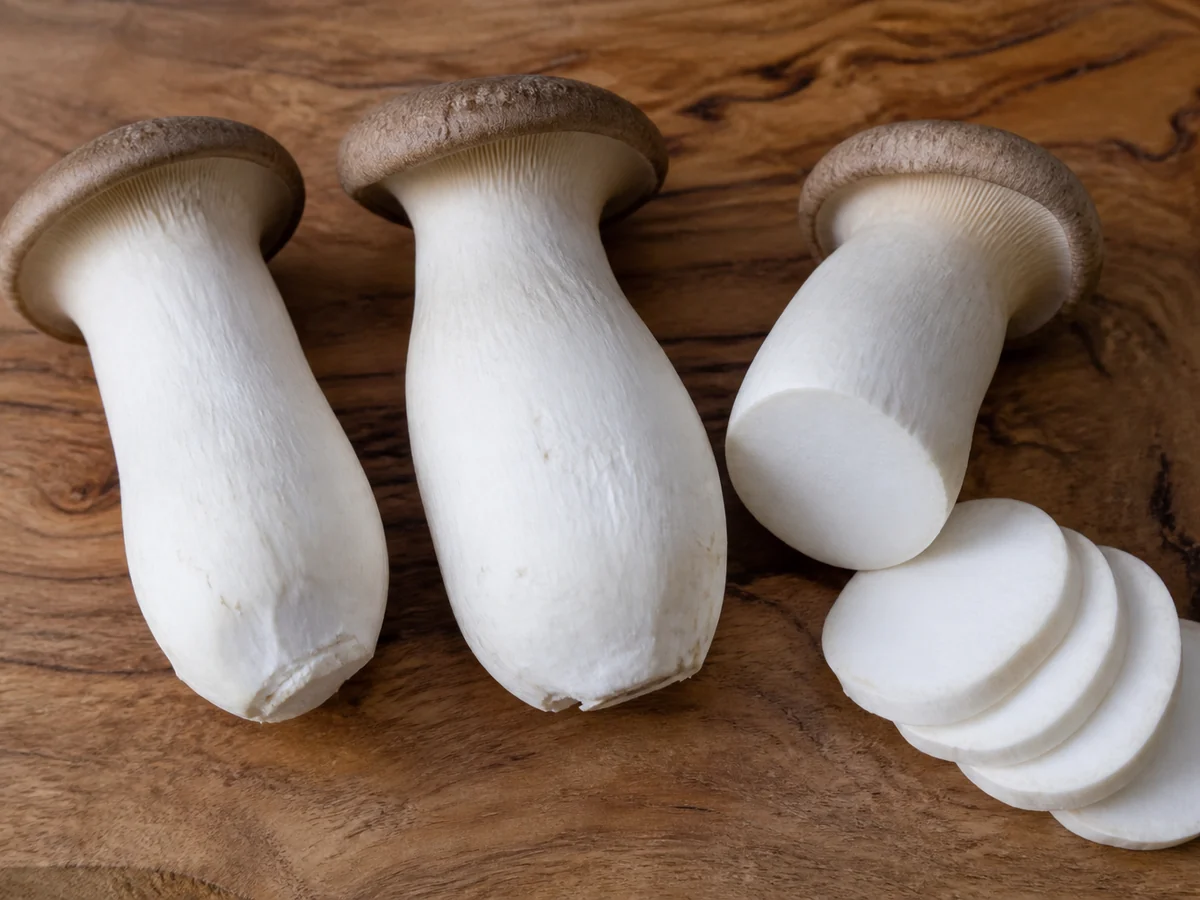
The part of a king oyster you eat is a solid stem, which is why it behaves more like a root vegetable than like any other mushroom in the shop.
Almost every instinct you have carried over from cooking other mushrooms will work against you here, and one of them will actively ruin dinner.
What you are actually holding
Look at the proportions before you pick up a knife, because they are unlike anything else on the shelf.
| King oyster | Almost every other mushroom | |
|---|---|---|
| Where the weight is | The thick solid stem | The cap |
| What the cap does | Small, secondary, cooks faster than the stem | Carries the flavor and the bulk |
| Flesh | Dense and even all the way through | Softer, with water held in the middle |
| Free water | Low, which is why it browns instead of flooding | High, which is why pans flood |
Every row in that table points the same way. The mushroom is a stem with a small hat on it.
That last row is the one that changes everything downstream.
Most mushroom advice exists to manage water. Crowded pans flood, mushrooms steam instead of browning, and half of every cooking guide is about staying ahead of the liquid.
This mushroom does not do that. The flesh is dense and holds comparatively little free water, so it browns readily and it will not turn your pan into a puddle.
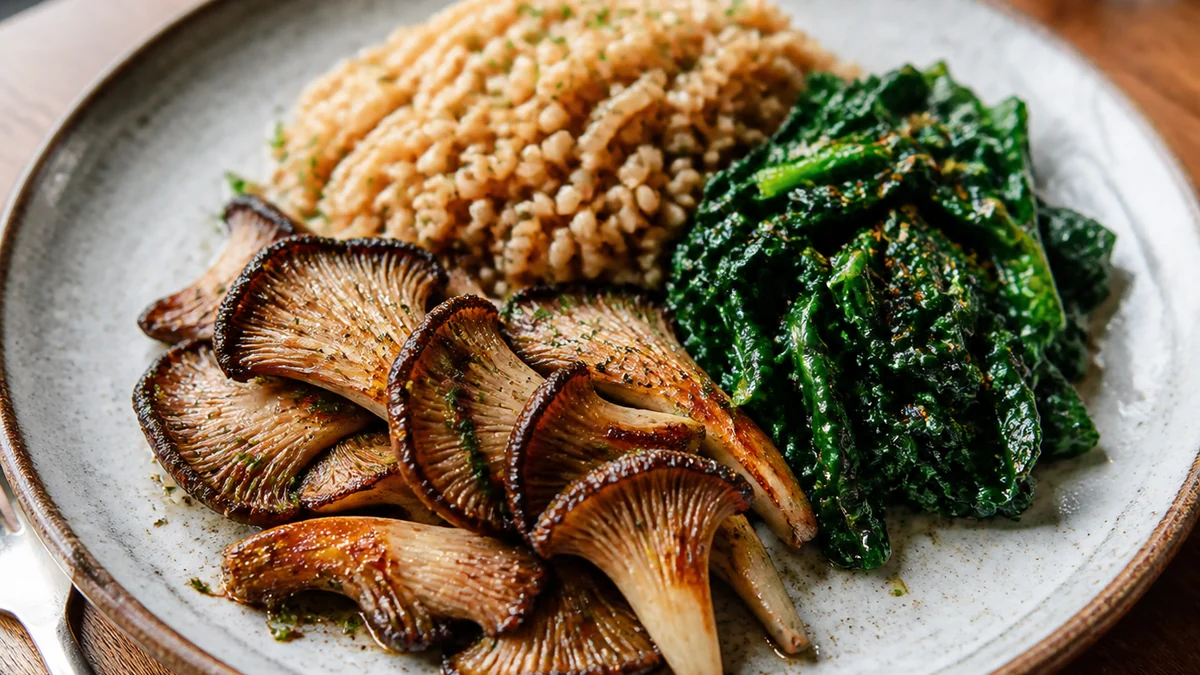
The thin-fanned common oyster needs a faster cooking method than the dense king oyster.
Cooking MushroomsHow to Cook Cauliflower Mushroom Without Trapping GritWhy thickness is the whole decision
Here is where the instinct from other mushrooms does the damage.
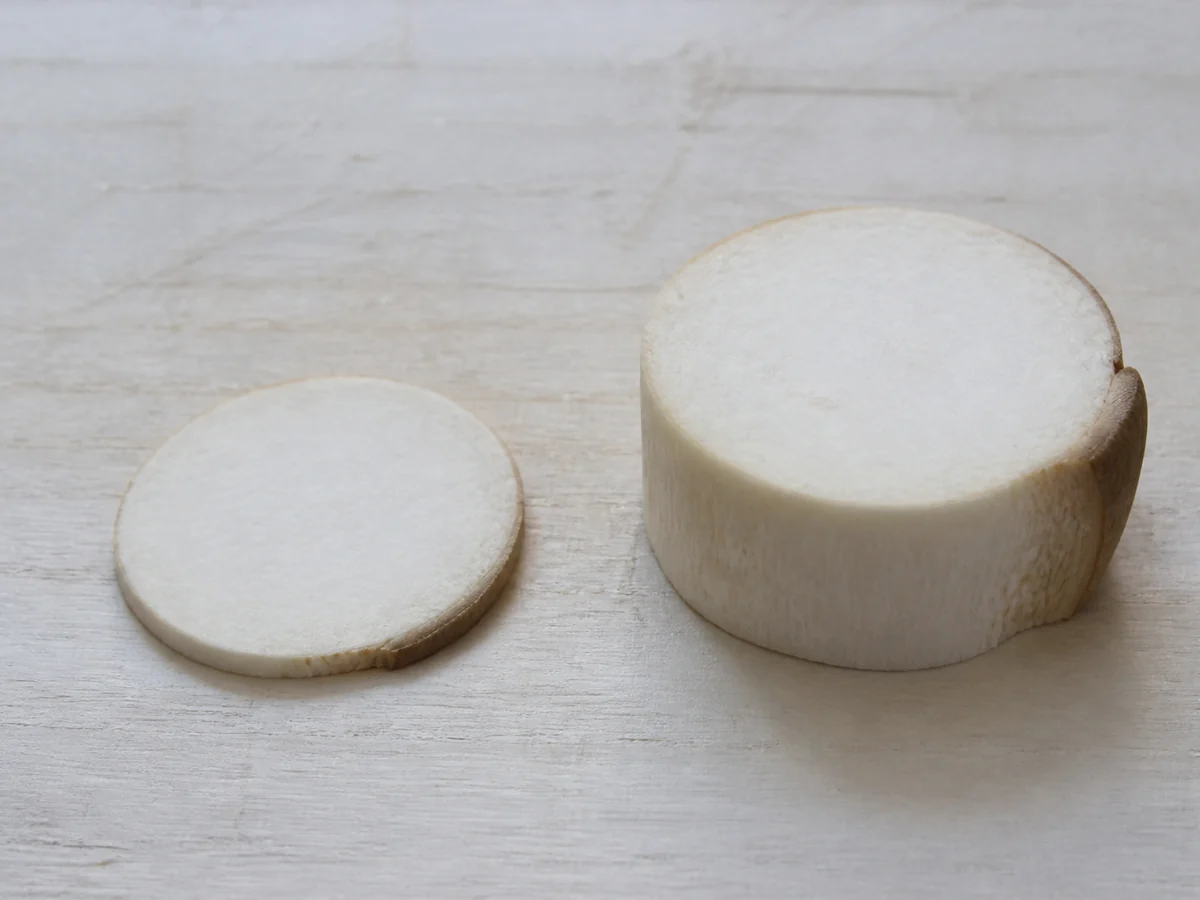
That instinct is about thin slices, and thin slices are exactly what this mushroom punishes.
Every other mushroom rewards thin slices. Thin slices lose water fast and brown quickly, which is the whole game with a cap.
A dense stem is a different problem. The browning happens on the surface and the moisture that keeps the piece pleasant lives in the middle, so you need enough middle for the surface to be worth having.
Cut it across into discs rather than lengthways into planks.
- Discs give you two broad flat faces, and the flat face is where the crust comes from
- Planks give you one long face and a lot of edge that browns unevenly
- Discs also sit flat in the pan without propping each other up
- Very short stems are worth halving lengthways instead, because a disc would be too shallow
The thin-slice habit comes from cap mushrooms, and the cremini method is where that habit is genuinely correct.
Scoring, and why it is not decoration
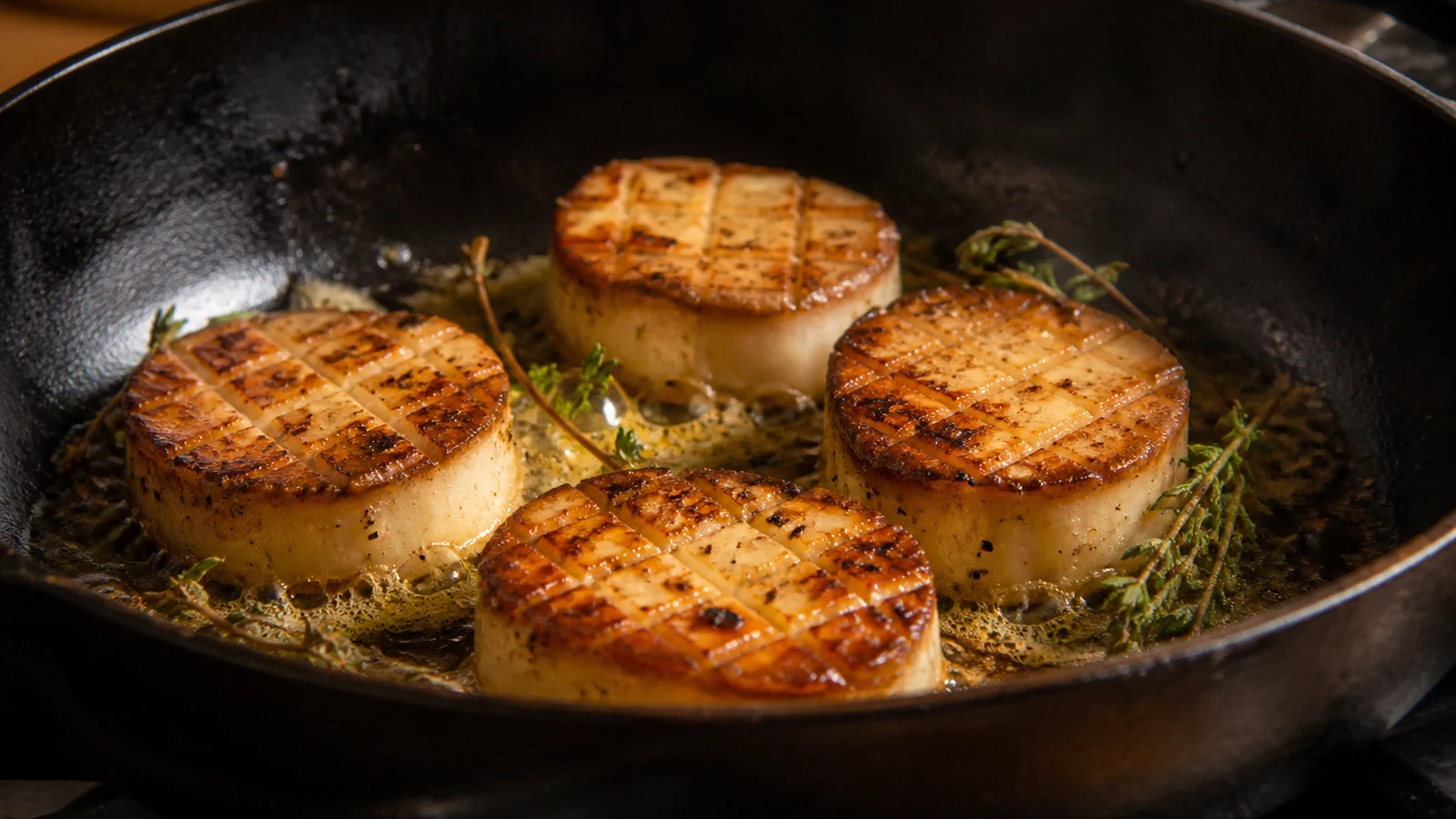
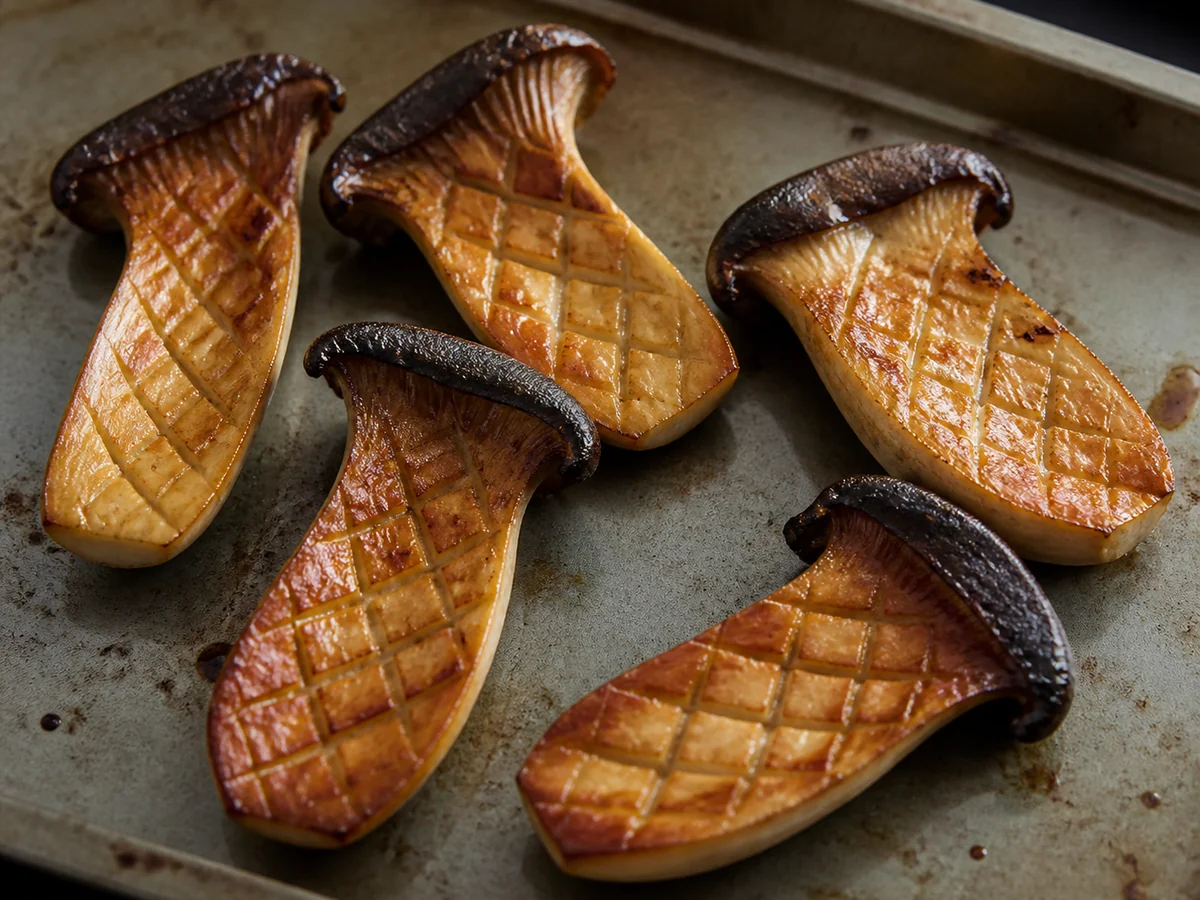
Everybody has seen the crosshatch pattern, and almost nobody has been told what it is for.
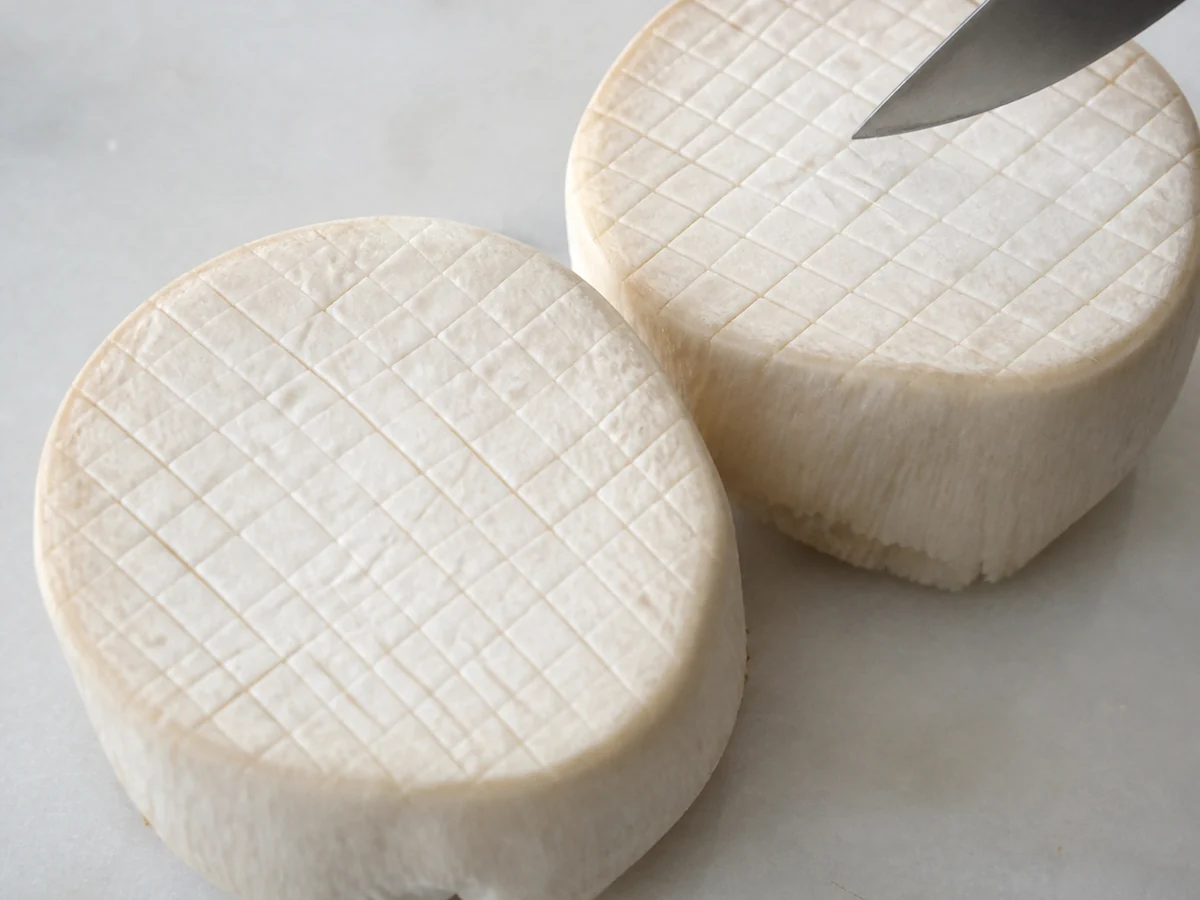
The answer is more interesting than presentation. It is a small piece of physics, and it is specific to a dense mushroom.
That first line is the whole trick, and it is a genuinely clever one.
Thickness and surface area normally trade against each other. Cut thinner and you get more surface per gram and less moisture, cut thicker and you get the reverse.
Scoring breaks that trade. You keep the height that holds the moisture and you add surface anyway, which is not something you can do with a soft mushroom that would simply tear.
Use the tip of a sharp knife and go across the face in two directions at a slight angle.
- Shallow is fine, and about a third of the way through is plenty
- Cutting too deep makes the disc fall apart in the pan
- A slight angle between the two directions catches more light and more butter
- Score only the side that goes up, because the pan side needs a flat face
The sear
The method departs from every other mushroom guide on this site at exactly one step.

One instruction here contradicts every other cooking guide on this site, and it is worth flagging clearly.
Warning
Fat can go into the pan early here, which is the opposite of the instruction for every other mushroom. With a cap mushroom, oil added at the start ends up suspended in released water and browns nothing. A dense stem releases very little, so the fat stays fat and does its job from the first minute. This is the one page on this site that tells you to oil the pan first.
Get the pan properly hot and put the discs down scored side up. Then leave them alone.
Two to three minutes before the first look is about right. Lifting them early to check is the most common way people interrupt a crust that was forming perfectly well without them.
Flip once. The second side takes a little less time than the first because the pan is fully up to temperature by then.
Butter, garlic and a sprig of thyme go in at the end, as a basting step rather than a flavoring afterthought.
Tilt the pan and spoon the foaming butter over the scored faces for about thirty seconds. The cuts you made will hold it, which is the second reason to make them.
Cooking MushroomsHow to Cook Black Truffle Without Losing Its AromaThe failure that brings people here
The rubbery king oyster is a real and specific failure, and it is not the failure people assume.
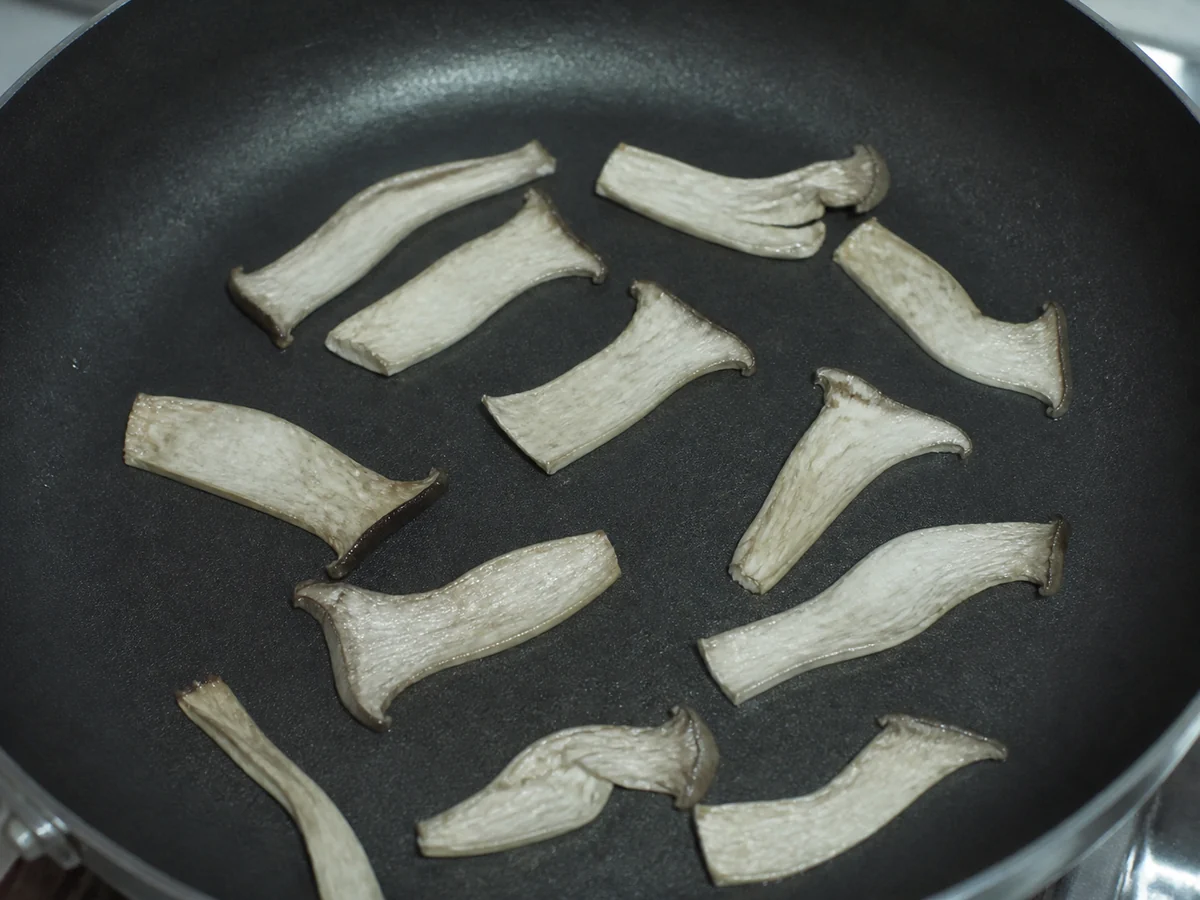
The diagnosis is unusual, so it is worth setting out line by line.
- What rubbery means here
- Dried through, not undercooked
- The usual cause
- A slice too thin to hold moisture while the surface browns
- What people do next
- Cook it longer, which makes it worse
- Whether it can be saved
- No, a leathery slice does not come back
- Where the fix lives
- At the chopping board, not at the stove
This is what separates this mushroom from the rest of the guides on this site.
A rubbery cremini or a limp oyster mushroom is a water problem, caused by a cool or crowded pan. A rubbery king oyster is a geometry problem, caused before the mushroom ever met heat.
That is worth knowing because the instinctive response is wrong. Turning the heat down and cooking longer is exactly the treatment that finishes off a slice that was already too thin.
If your last attempt came out leathery, do not change your pan or your timing. Cut them twice as thick and change nothing else.
The shredded alternative
The same stem does a completely different job if you attack it along its length instead of across it.
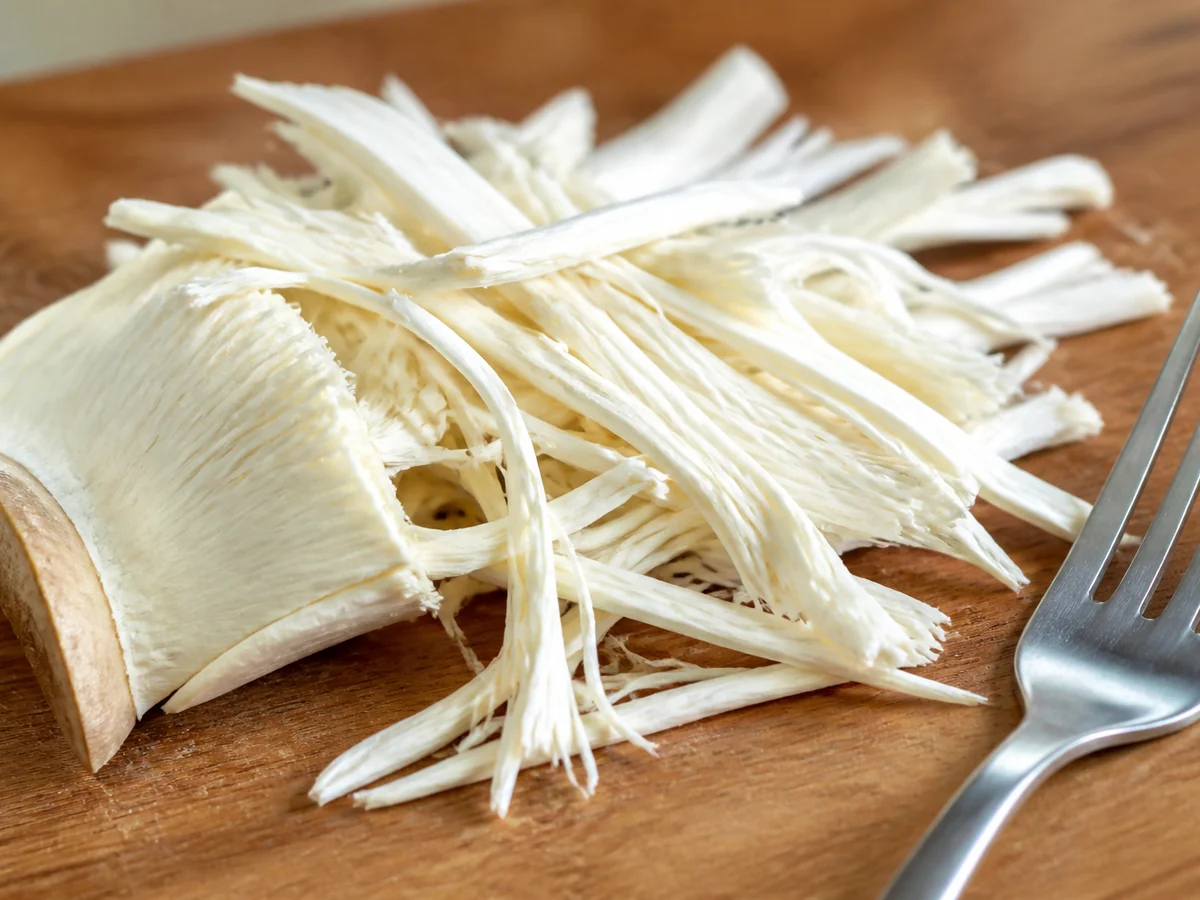
Cut across the stem or dragged along it, the same stem gives two preparations that share nothing but the ingredient.
| Cut across into discs | Shredded lengthways | |
|---|---|---|
| What you get | A flat crust on two broad faces | Many thin strands with crisp edges |
| The texture | Firm and yielding, like a scallop | Pulled and stringy |
| How | A knife, cut across the stem | A fork dragged down the length |
| Suits | Anything served as a piece | Anything served as a filling or a topping |
The grain runs the length of the stem, which is why a fork works and a knife does not.
Drag the tines firmly from the cap end downwards and the stem separates into thick strands. It takes about a minute per mushroom and it needs no skill at all.
Shredded strands cook faster than discs and crisp at every edge rather than forming one flat crust. They are the version people reach for when they want a pulled texture, and it is the same property that makes this species a partial answer in the oyster mushroom substitute question.
The caps, the oven and what the comparison found
Two loose ends close this out, and one of them is food most people throw away.
The caps are edible, they are good, and they cook considerably faster than the stem.
Separate them and add them to the pan a couple of minutes after the discs.
- Cooking them attached to the stem means one of the two is always wrong
- Caps brown fast because they are thin, which is the ordinary mushroom problem
- They also soak up the butter at the basting stage better than the discs do
- If they are very small, add them at the flip rather than counting minutes
For a crowd, halve the mushrooms lengthways, score the cut faces and roast them. It is the same principle applied with less attention, and the flat cut face does the same job the disc face does.
- Caps
- Edible and worth separating, roughly two minutes behind the stem
- In the oven
- Halved lengthways, scored, roasted cut face up
- Measured comparison
- This species was one of four in a study of cooking methods
- Best two for the nutritional profile
- Grilling and microwaving
- Worst
- Deep frying, on protein, ash and carbohydrate
That last pair of lines comes from a study that compared boiling, microwaving, grilling and deep frying across four cultivated species, this one among them.
Boiling made an interesting trade, raising total glucans by enhancing the beta-glucan fraction while significantly reducing antioxidant activity. Grilling suits this mushroom anyway, because a flat scored face sits properly on a ridged surface where a domed cap wobbles.
None of that is a reason to abandon the pan. It is a reason to notice that the oven and the grill are not compromises here, which is unusual for a mushroom whose whole appeal is a seared crust.
Sources & References
- Effect of different cooking methods on nutritional value and antioxidant activity of cultivated mushrooms, International Journal of Food Science and Nutrition 2017 The four-method comparison across four cultivated species including Pleurotus eryngii, the losses from frying, the glucan gain and antioxidant loss from boiling, and the conclusion naming microwaving and grilling as best.