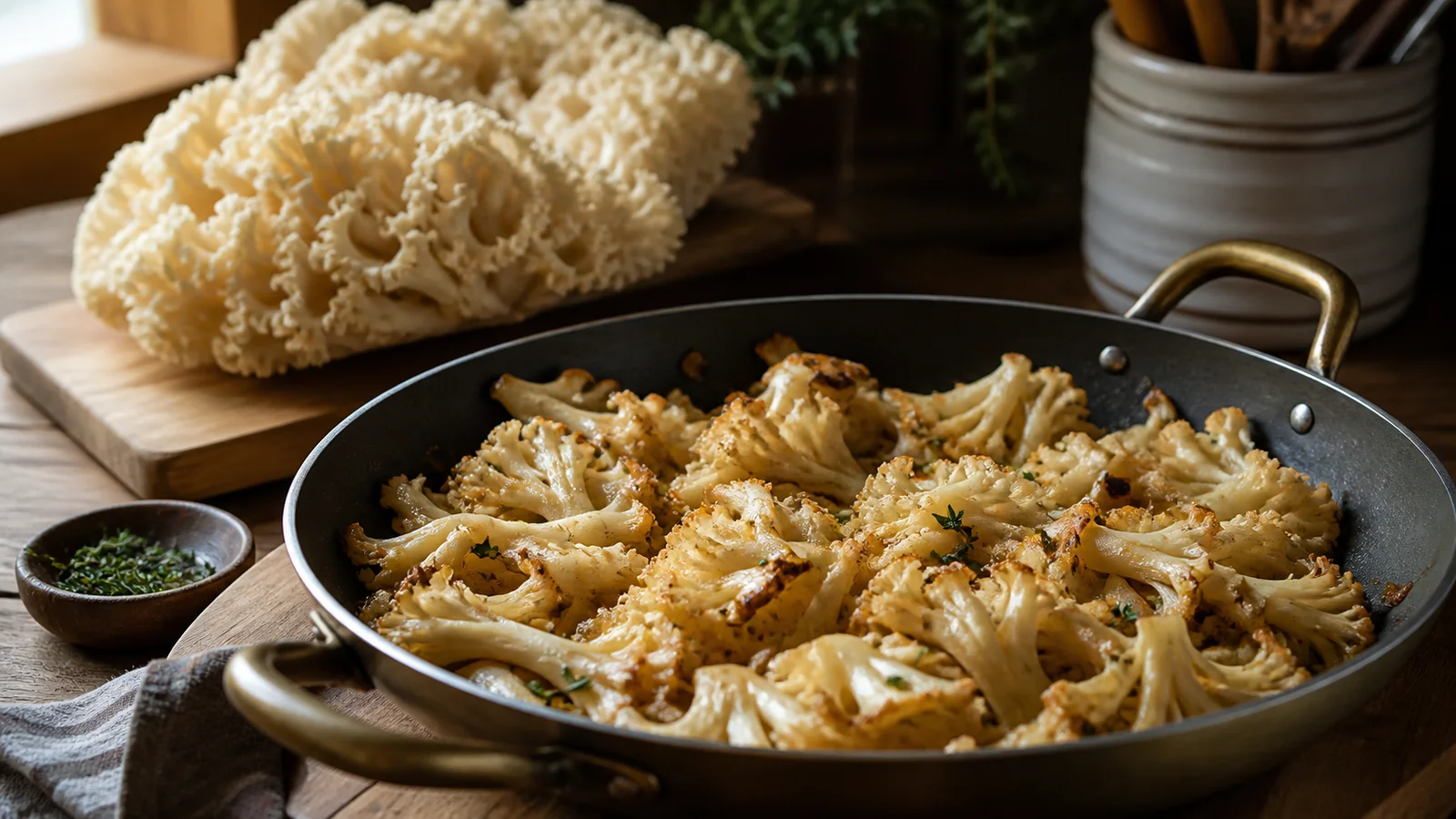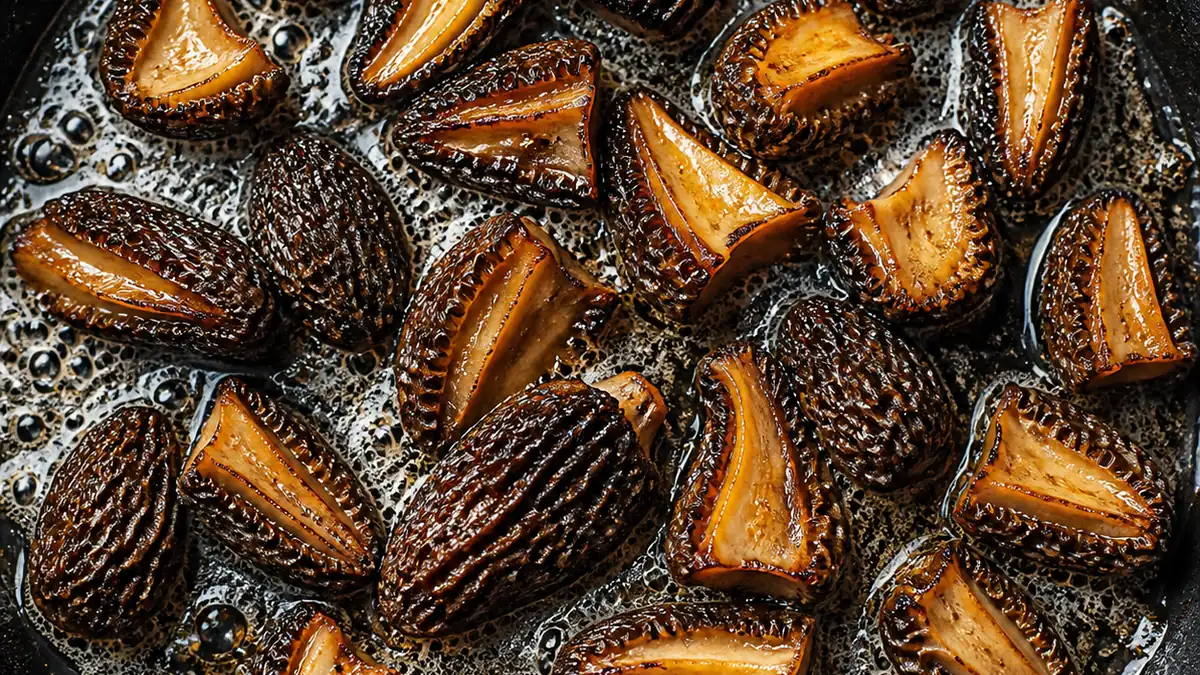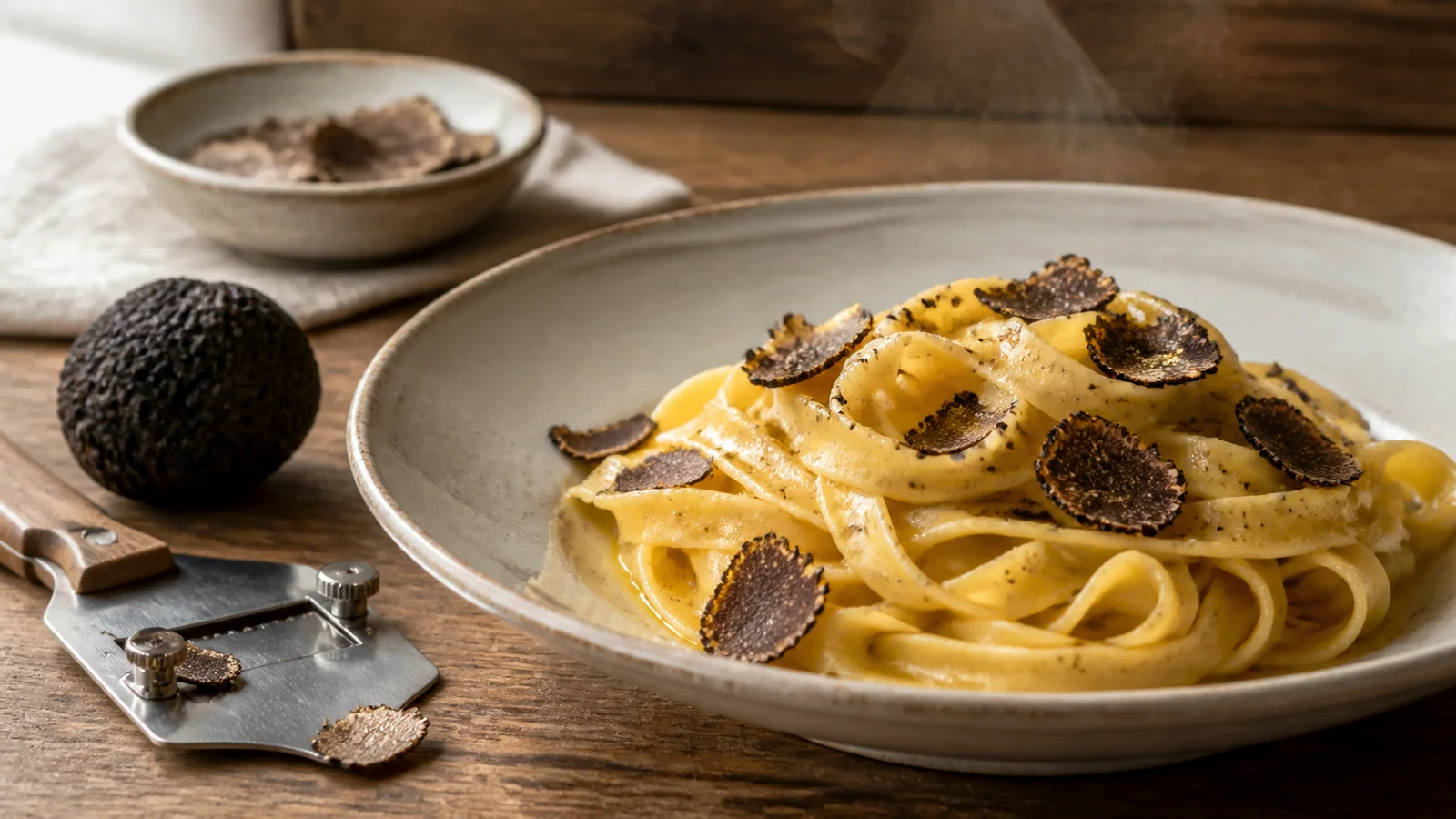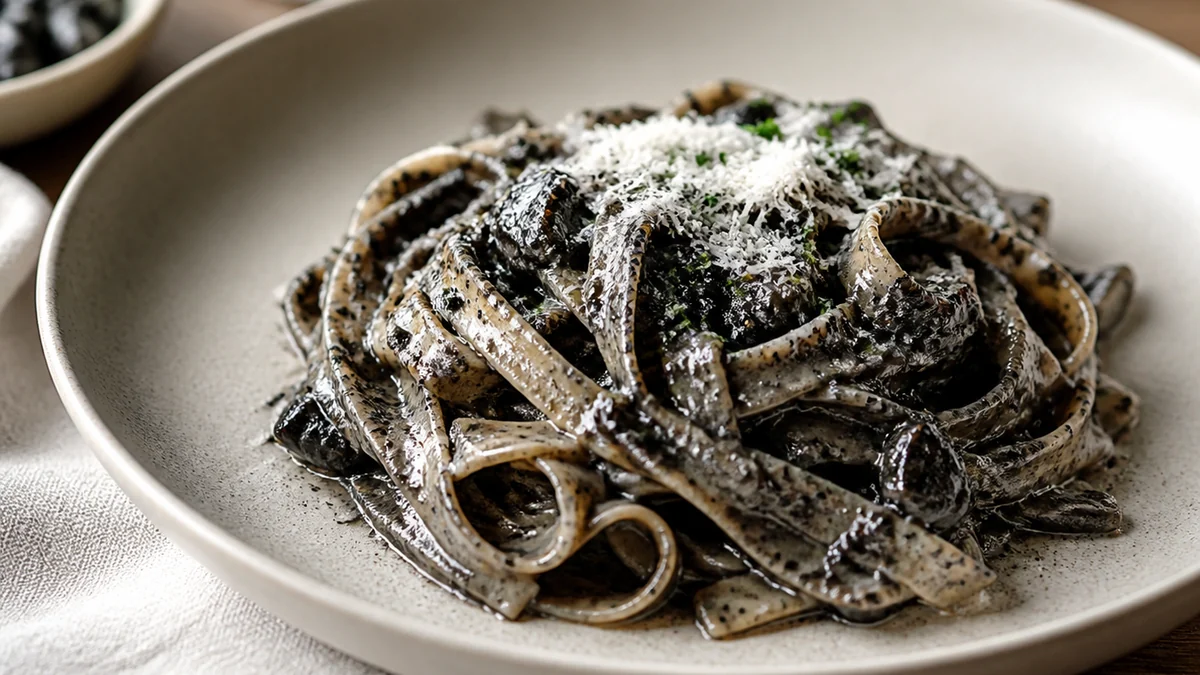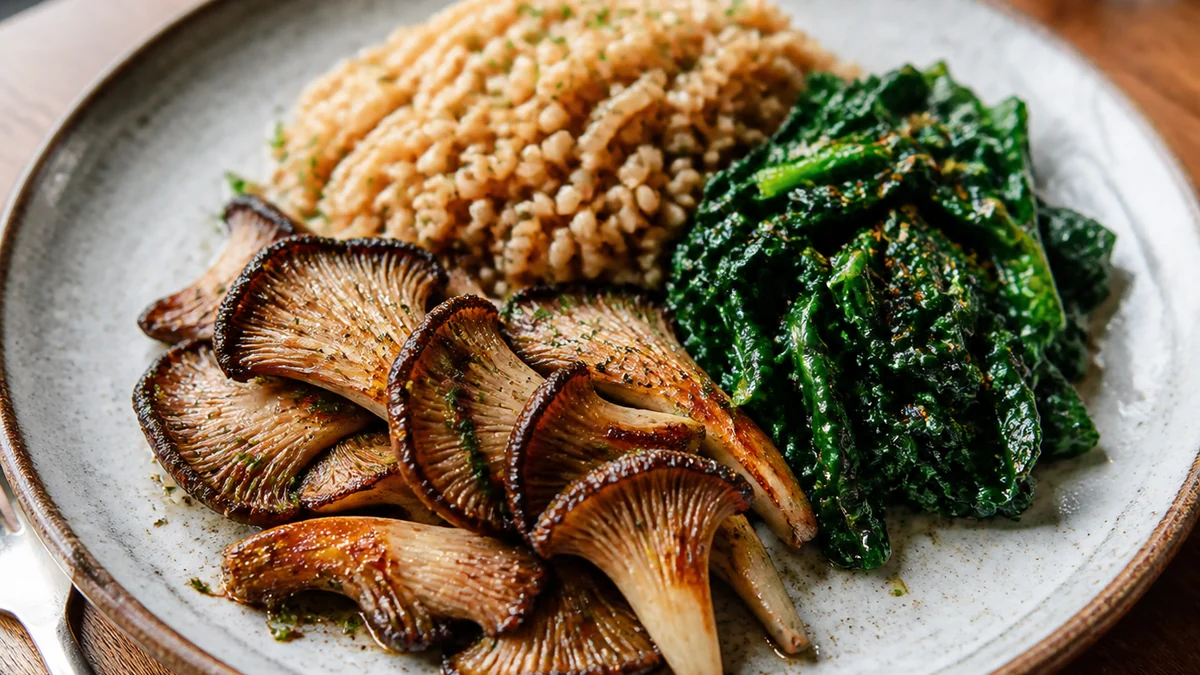
A method guide derived from the shape of the fruiting body. It covers why a thin fan behaves nothing like a domed cap, why the gills running down the stem mean there is nothing to trim, why size matters more than whether you tore or sliced, the hotter and shorter cooking the shape demands, why the within-piece unevenness is permanent and useful, the collapse failure this species reaches faster than most, and a measured four-method comparison that included this species directly.
An oyster mushroom is mostly edge, and almost every mistake people make with it comes from cooking it as if it were a cap.
Once you can see the shape properly, the heat, the timing and the cutting all stop being separate questions.
A mushroom that is mostly edge
Start with what you are actually holding, because it is built nothing like the mushrooms most cooking advice was written for.
Every line in that block is a departure from the mushroom most recipes assume. Three of them have direct consequences at the stove.
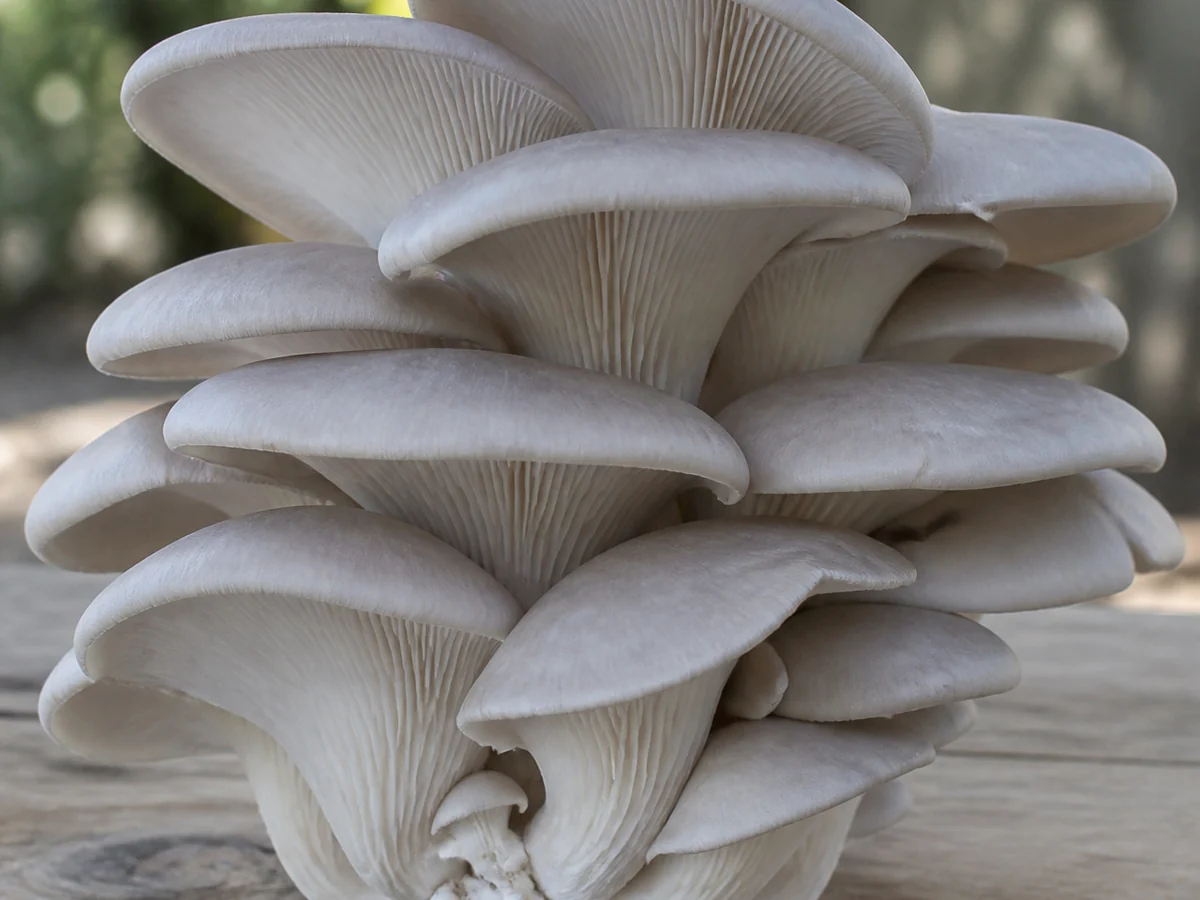
A button mushroom is a compact dome with most of its mass in the middle. An oyster mushroom is a sheet that happens to be attached at one corner.
That difference is not decorative. Surface is where water leaves and where browning happens, so a shape with a lot of surface does both faster.
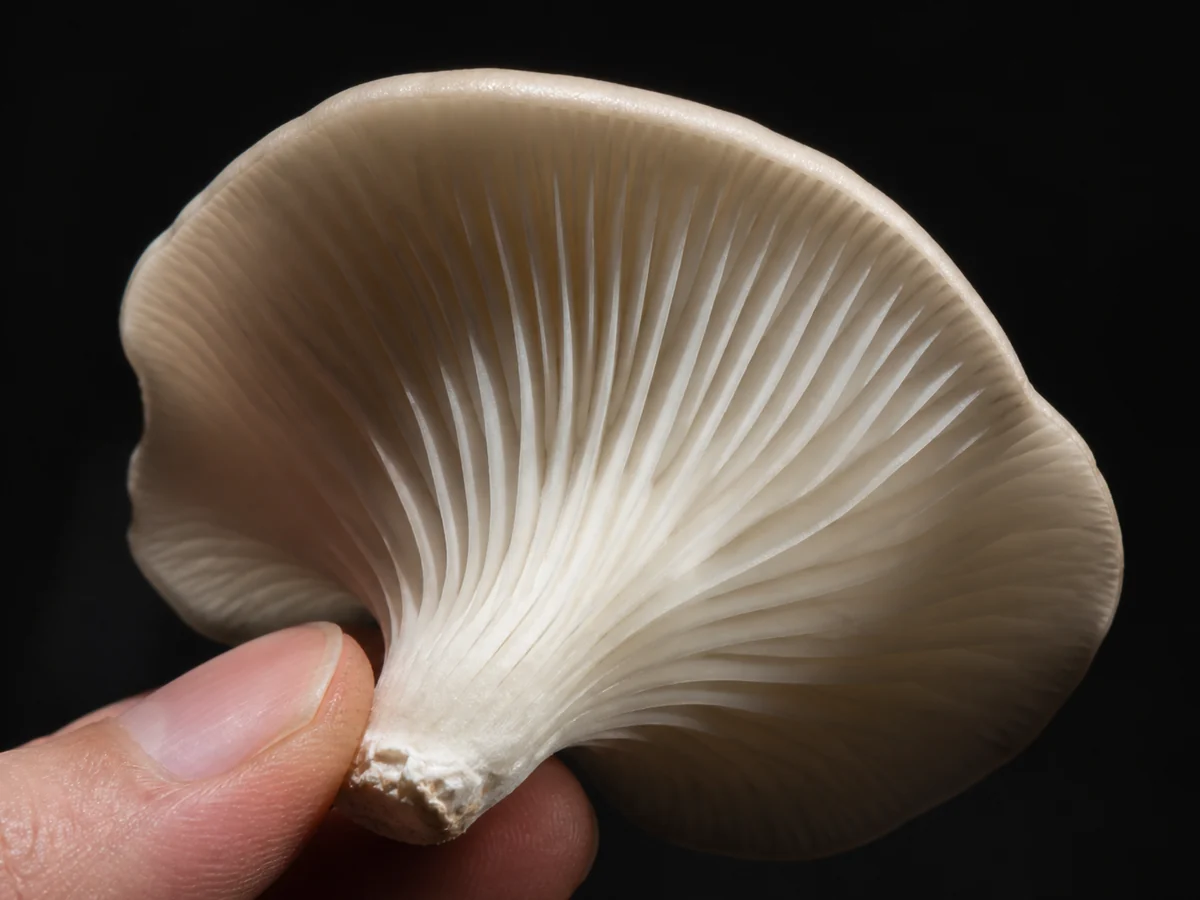
The gill detail settles a question people ask constantly, because gills that run down the stem rather than stopping where the cap ends leave no woody stub to trim and no separate stem to deal with.
You eat all of it, and the only thing that ever comes off is the tough knot at the very base where the cluster was attached to whatever it grew on.
Cooking MushroomsHow to Cook Cauliflower Mushroom Without Trapping GritBreaking the cluster up
The tear-or-slice argument is the wrong argument, and dropping it makes this much simpler.

A cluster comes apart at the base with almost no effort. The individual caps separate along lines that are already there, which is why no knife is required.
| What actually matters | What does not | |
|---|---|---|
| Cooking evenly | All the pieces being a similar thickness | Whether a knife or your hands did it |
| Browning | Pieces flat enough to sit against the pan | The shape of the piece |
| Timing | The thickest piece in the pan | Neatness |
| Very large caps | Worth halving so they match the rest | Slicing them into strips |
Size is the variable that matters, and the cutting method is not. Two pieces of the same thickness cook identically whether they were torn or cut, and two pieces of different thickness will not, however carefully you sliced them.
So pull the cluster apart and keep the small ones whole. Halve anything much bigger than the rest, and stop there.
The one thing worth avoiding is slicing them into thin strips.
- Strips lose the fan shape that gives this mushroom its texture
- They wilt instead of holding together, because there is nothing left to hold
- They also cook through before anything has browned
- Whole small caps and halved large ones cover every situation
Preserve the natural strands when separating the mushroom.
The heat that this shape demands
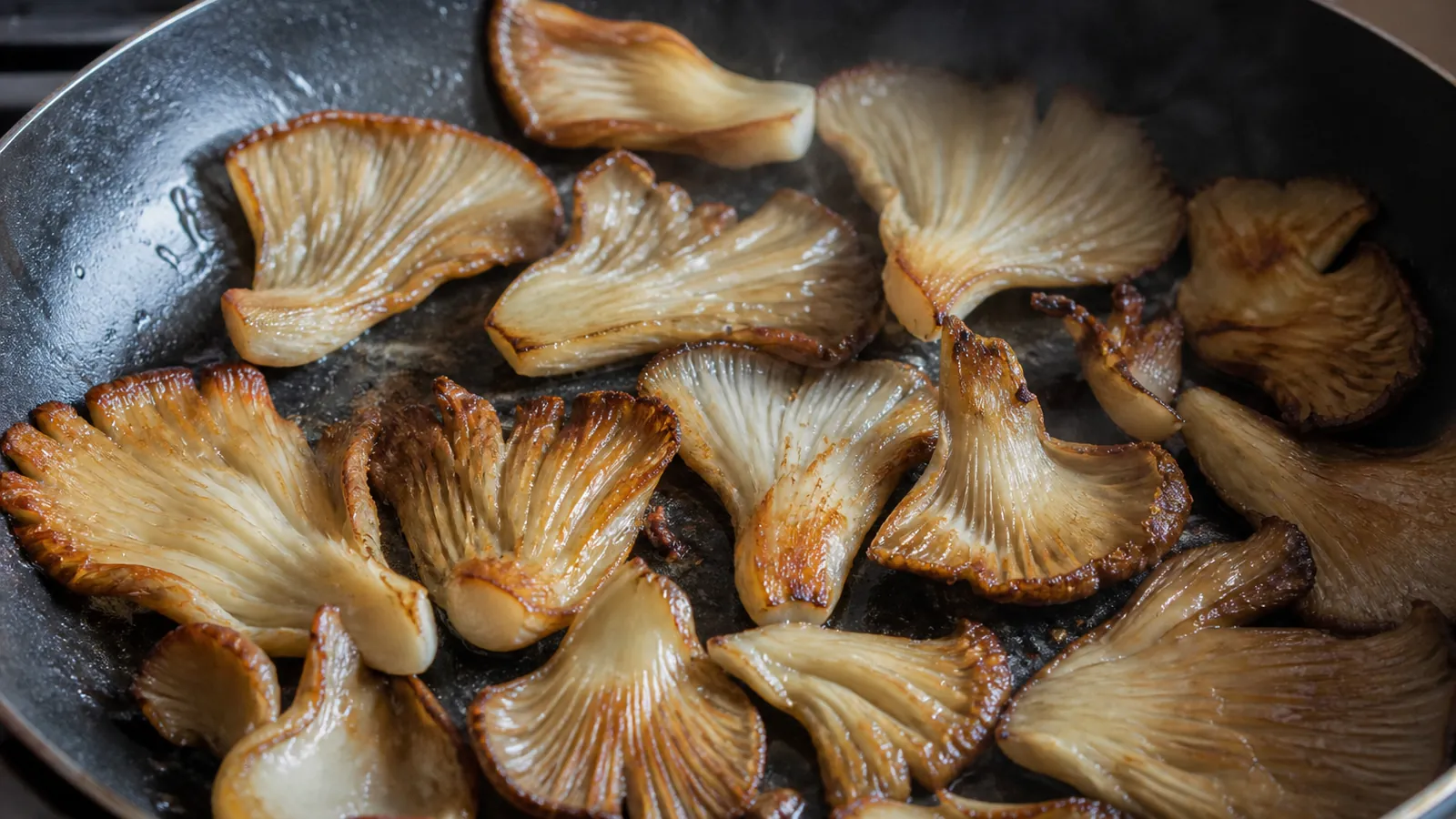
The instruction most people have absorbed is to cook mushrooms gently, and for this species it is exactly backwards.
All that surface releases water quickly. It also dries quickly and browns quickly, so the question is only whether your pan can stay ahead of the water.
That third line is the one that surprises people used to denser mushrooms.
A thick slice of portobello takes a long time because heat has to travel into it. An oyster fan is thin almost everywhere, so there is nowhere for heat to travel to, and it is finished while you are still expecting it to need longer.
Leave them alone once they are down. Moving them constantly keeps lifting the surface off the hot metal, which is the one thing guaranteed to prevent browning.
The domed-cap species work differently enough that the cremini method is worth reading separately rather than assumed to transfer.
Cooking MushroomsHow to Cook Black Morels: Halve Them, Never Slice ThemThe uneven cooking is the point
Crowding the pan can turn a quick sear into steaming.
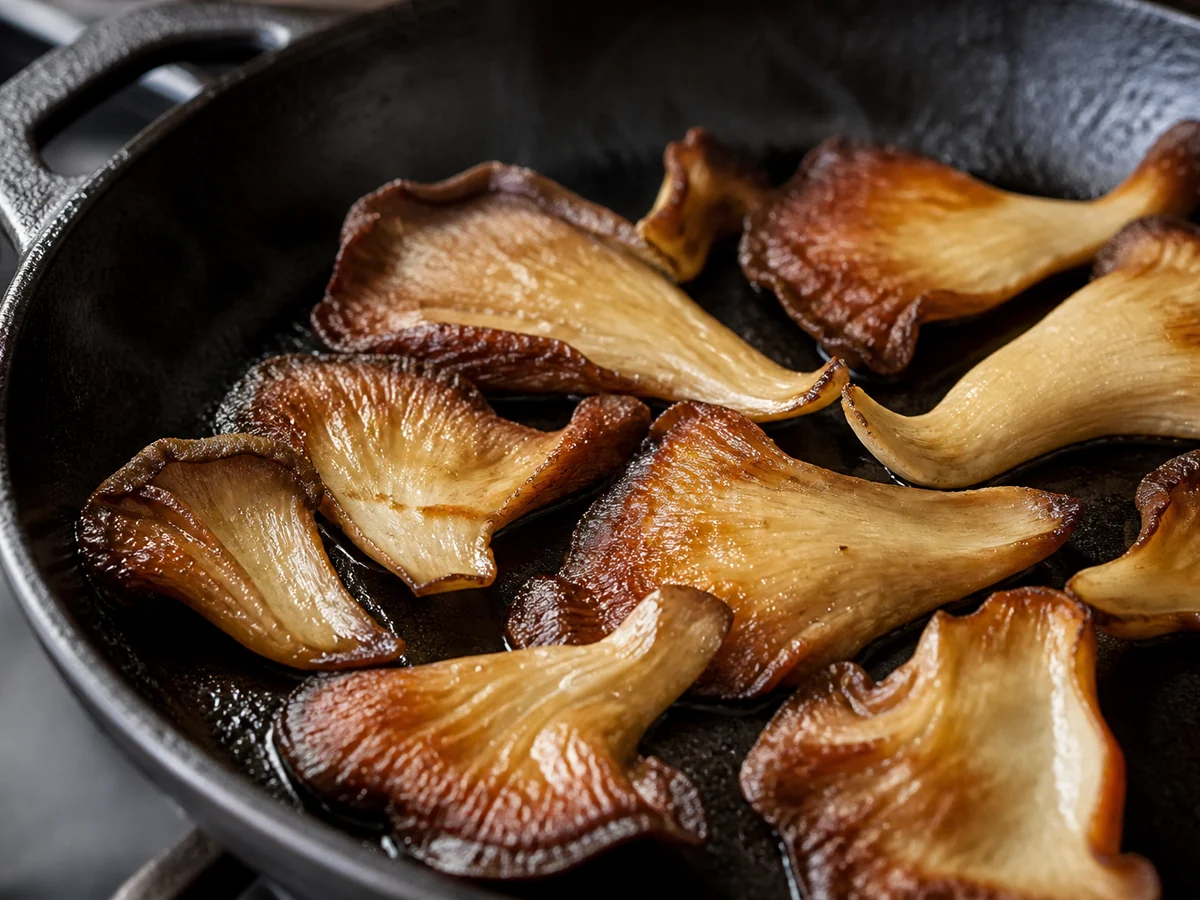
A single oyster mushroom is several times thicker at the base than it is at the frilled outer edge. That is one piece, with a real thickness gradient across it.
Warning
No amount of stirring, flipping or lowering the heat will make a single piece cook evenly, because the two ends of it are different thicknesses. The thin frill will always crisp before the thick base softens. This is a property of the mushroom rather than a mistake in the cooking, and trying to eliminate it just means overcooking the base to rescue the edge.
Once you stop treating that as a fault, it becomes the reason to buy this mushroom instead of another one.
You get crisp and soft in the same mouthful, from one ingredient, without doing anything clever. Very few foods hand you that for free.
The practical adjustment is small, and it runs in both directions.
- For more crisp, press the pieces flat against the pan for the first minute
- For more soft, halve the biggest ones so that more of each piece is thick
- For both at once, leave a mix of sizes in the pan on purpose
- For neither, this is the wrong mushroom and a denser cap is the right one
The failure state and what caused it
The limp gray pile is the other thing people arrive here about, and this species reaches it faster than most.
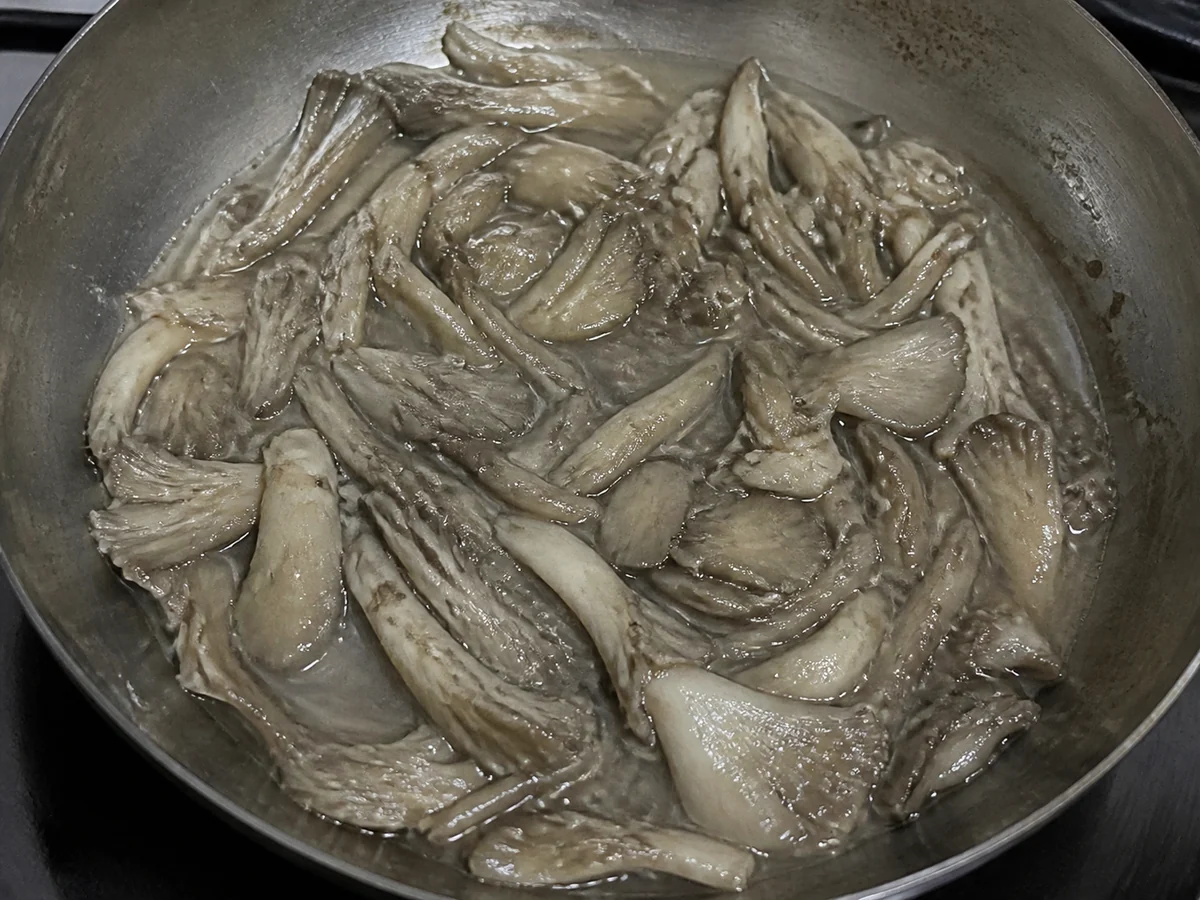
The same surface area that browns quickly also releases water quickly, and in a pan that is not hot enough it all arrives at once.
- What you see
- Pale, floppy, shrunken pieces sitting in gray liquid
- What happened
- The pan flooded before it could evaporate anything
- Why this species is worse
- More surface means the water arrives faster than with denser mushrooms
- Can it be rescued
- No, collapsed pieces will not crisp no matter how long you continue
- The two fixes
- A hotter pan first, and fewer pieces in it second
Collapse is what makes this different from a denser mushroom failing the same way. It is also why the fix has to come before the cooking rather than during it.
A crowded pan of cremini gives you gray, watery mushrooms that are still recognizably mushrooms. A crowded pan of oyster gives you something closer to wet paper, because there was never much structure in a thin fan to begin with.
That is worth knowing before you tip the whole bag in.
- Two batches take less total time here than one crowded pan does
- A wider pan beats a deeper one, because what you need is floor space
- Nothing goes in until the pan is properly hot, not merely warm
- If liquid appears anyway, raise the heat rather than lowering it
What the measured comparison found
The pan is not the only option, and this species was measured directly in a comparison of four methods.

Researchers compared boiling, microwaving, grilling and deep frying across four cultivated species, with the oyster mushroom among them.
| What it did | What it cost | |
|---|---|---|
| Deep frying | Added fat and energy | The most severe losses in protein, ash and carbohydrate |
| Boiling | Raised total glucans by enhancing the beta-glucan fraction | A significant drop in antioxidant activity |
| Grilling | Kept antioxidant activity high | Nothing measured |
| Microwaving | Kept antioxidant activity high | No browning at all |
The authors named grilling and microwaving as the best two for maintaining the nutritional profile. Frying, the method this species meets most often, came last.
Grilling suits this species particularly well, for a reason that has nothing to do with nutrients. A flat fan sits properly on a ridged surface, where a domed cap wobbles and only touches in one place.
The frying result is the one worth taking seriously, given how often these are deep fried into a snack. That method came out worst on every compositional measure they took, which does not make it wrong and does make it a choice rather than a default.
What this mushroom is genuinely good at
The shape that dictates the method also dictates what the mushroom suits, and it is not a general-purpose species.
- Pulled and shredded dishes
- The flesh is fibrous along the grain and pulls into strands
- Anything crisp
- Easier to crisp than any other common cultivated species
- Raw
- No, these are unpleasant raw and hard to digest, and cooking is not optional
- Long braises
- Poor, because a thin fan has nothing to hold together over an hour
- A surplus
- Dries quickly and evenly because the flesh is thin throughout
The pulled texture is the one people discover and then use constantly.
Because the fibers run along the fan, a cooked piece separates into strands rather than crumbling. That natural structure is what makes oyster mushrooms suitable for shredding.
The raw line is not a stylistic preference. These are not a salad mushroom, they taste unpleasant uncooked, and heat is doing more than adding flavor here.
If you end up with more than you can cook, drying them works better than it does for thicker species. Thin flesh dries fast and evenly, without the leathery outside and damp middle that catches people out with dense caps.
Sources & References
- Effect of different cooking methods on nutritional value and antioxidant activity of cultivated mushrooms, International Journal of Food Science and Nutrition 2017 The four-method comparison across four cultivated species including Pleurotus ostreatus, the losses from frying, the glucan gain and antioxidant loss from boiling, and the conclusion naming microwaving and grilling as best.