
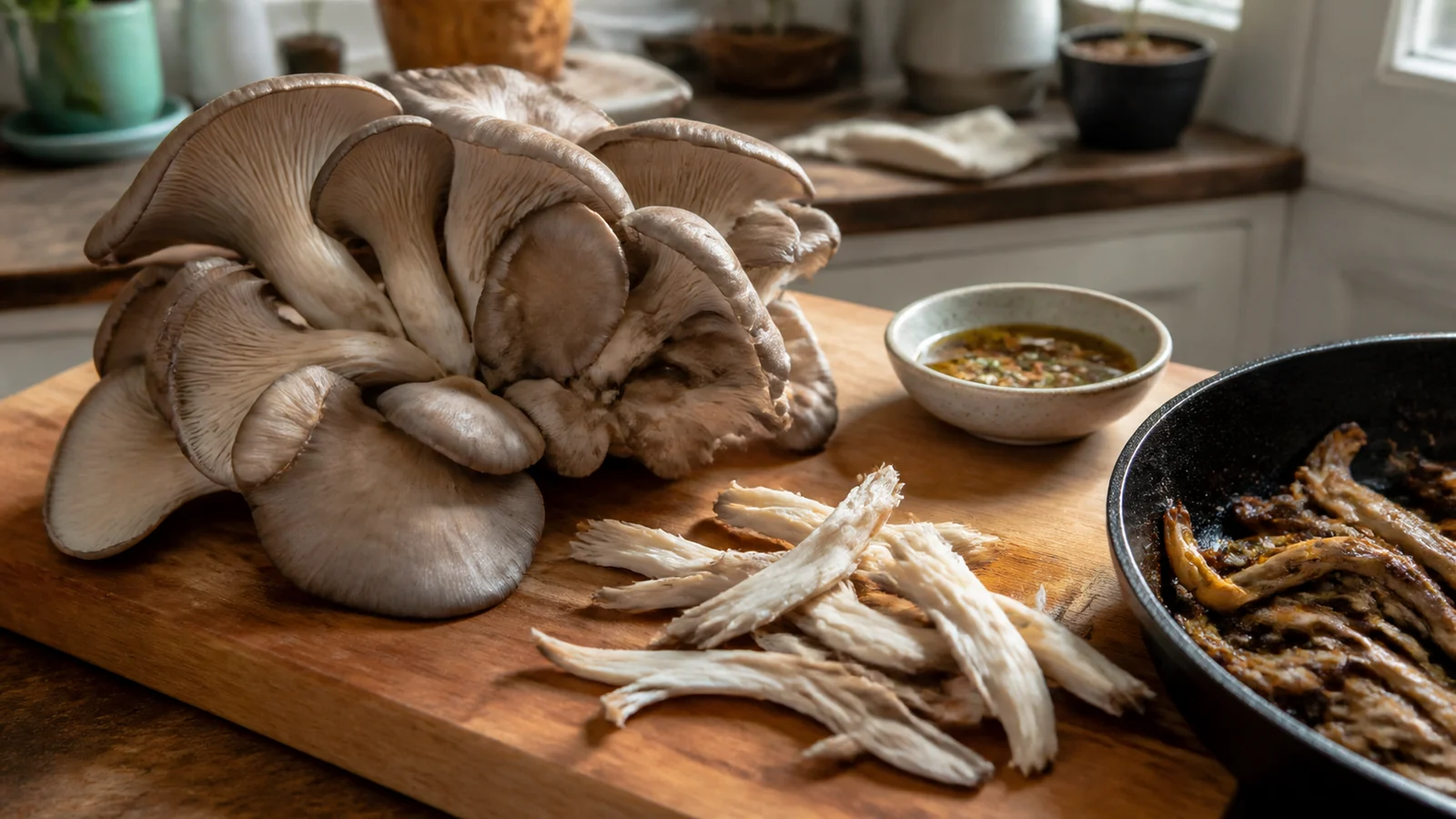
Every other page in this series answers this question with a no and then explains what a pan changes. This one does not, and that is worth saying before anything else.
Oyster mushrooms carry no heat-labile toxin, and no source consulted for this series records a poisoning attributed to the species. The argument for cooking them is real, and it is an argument about what you get rather than about what it does to you.
Can you eat oyster mushroom raw?
Yes, with one honest qualification.
The qualification is about you rather than about the mushroom. Raw fungal tissue is hard work for human digestion whatever it came from, and a person who has felt off after a raw mushroom salad has no reason to expect this species to behave differently.
There is one more reason worth naming honestly, because it gets overstated.
Raw Pleurotus contains lectins that heat inactivates, and those are sometimes offered as a reason raw is risky. The sources that mention them describe mild irritation in some individuals rather than a hazard, and they sit alongside no documented poisoning cases across several continents of daily eating.
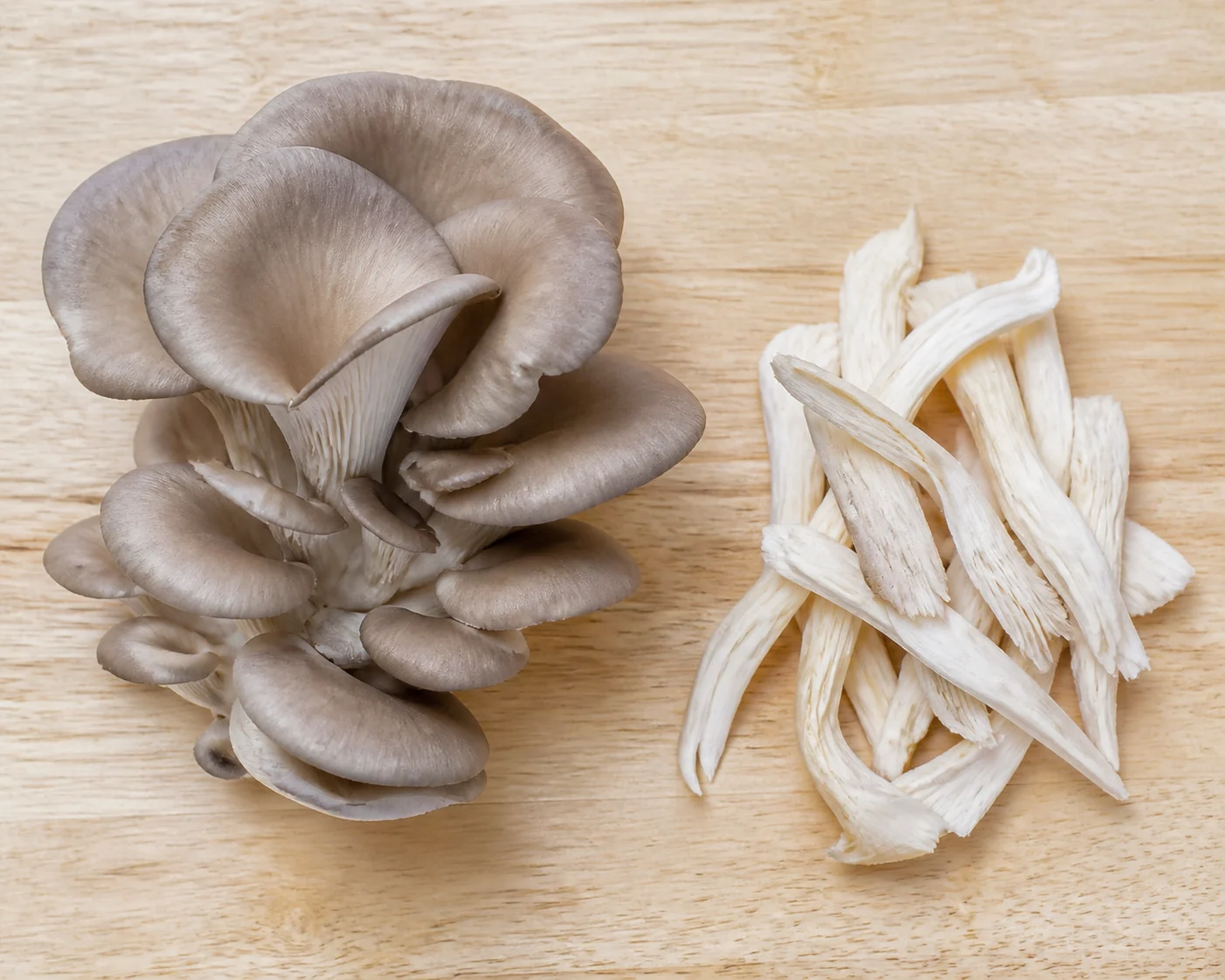
What raw actually costs you
Here is the part that gets skipped when someone says raw is fine.
Fungal cell walls are built from chitin, which human digestion cannot break down. The compounds people eat mushrooms for sit inside those walls, and if the walls stay intact the compounds go straight through you.
Key takeaway
Heating oyster mushrooms at one hundred degrees for fifteen minutes raised polysaccharide extractability by 340 percent against raw samples. That is the actual case for cooking a species that was never dangerous, and it is a much better argument than a vague warning.
A raw oyster mushroom is not harming you. It is mostly passing through, which is a different complaint and a fair one if you are eating them for any reason beyond texture.

Beta-glucans are the usual example, and they are also the reason the number matters.
They are the compounds most of the health claims around this species rest on, and a raw preparation delivers a fraction of what a cooked one does. If those claims are the reason the mushrooms are in your basket, raw is close to self-defeating.
None of that makes raw pointless, and it is worth being clear about which reason applies to you.
Someone eating raw oyster strips for the texture in a salad is getting exactly what they came for. Someone eating them because they read about immune support is paying for a bag of mushrooms and absorbing a small fraction of the reason they bought it.
SafetyCan You Eat Beech Mushrooms Raw? Not Poisonous, Just BitterWhere it sits against the wild species
Reading this series in order makes the scale visible, and this species sits at the permissive end of it.
| Species | What raw does | Kind of risk |
|---|---|---|
| Morel | Hydrazine compounds in the raw flesh, broken down by thorough cooking | Documented, species-specific |
| Porcini | Proteins that resist digestion until heat unfolds them | Documented, species-specific |
| Birch bolete | Reported digestive illness, with undercooking a likely confounder | Contested |
| Chanterelle | Digestive upset with no named compound behind it | General to raw fungal tissue |
| Oyster mushroom | Nothing attributed to the species itself | General to raw fungal tissue |
The bottom row is the only one in the series that reads like that.
That is not a technicality either, because it changes what the advice is for.
True Pleurotus species are safe to eat raw or cooked, and contain no heat-labile toxins.
The position the sources actually take on this genus
Everywhere above that bottom row, cooking removes something. Here it adds something, and an instruction that adds is one a reader is allowed to weigh rather than obey.
The texture is the practical objection
Ask anyone who has tried raw oyster mushroom and the answer will be about texture rather than about safety.
Thin slicing does not fix it, which surprises people who expect it to work like a raw mushroom salad of button mushrooms.
A button mushroom is dense and holds a snap. An oyster fan has no dense tissue anywhere in it, so a thin slice is simply a thinner piece of the same soft material.
The cooking that reaches the measured difference is longer than a quick toss.
Fifteen minutes at boiling temperature is what the figure was measured against, and a two-minute sear in a crowded pan is not the same event. That does not make a quick sear wrong, but it does mean the nutritional argument and the flavor argument want different amounts of heat.

Cultivated and wild are different questions
Almost everyone asking this is holding a cultivated punnet, and for that punnet the question really is settled.
A tray or a growing block removes the identification problem entirely. You know the species, you know it has not been sharing a basket with something else, and you know roughly how old it is.
That last point does more work than people expect.
Most of what goes wrong with a raw mushroom dish is age rather than species, and a cultivated punnet carries a date while a wild cluster carries only whatever you noticed about it on the log.

King oyster sits under the same answer, for the same reasons.
Pleurotus eryngii is the thick-stemmed oyster sold as a steak substitute, and nothing about its raw standing differs from its thinner relatives. What does differ is the texture, because a dense stem sliced raw is closer to a water chestnut than to the limp fans described above.
A wild oyster is a different conversation.
- Confirm it is growing on wood rather than from soil
- Check the gills run down the stem rather than stopping at it
- Look at what else is fruiting on the same log
- Take the whole cluster rather than a single fan
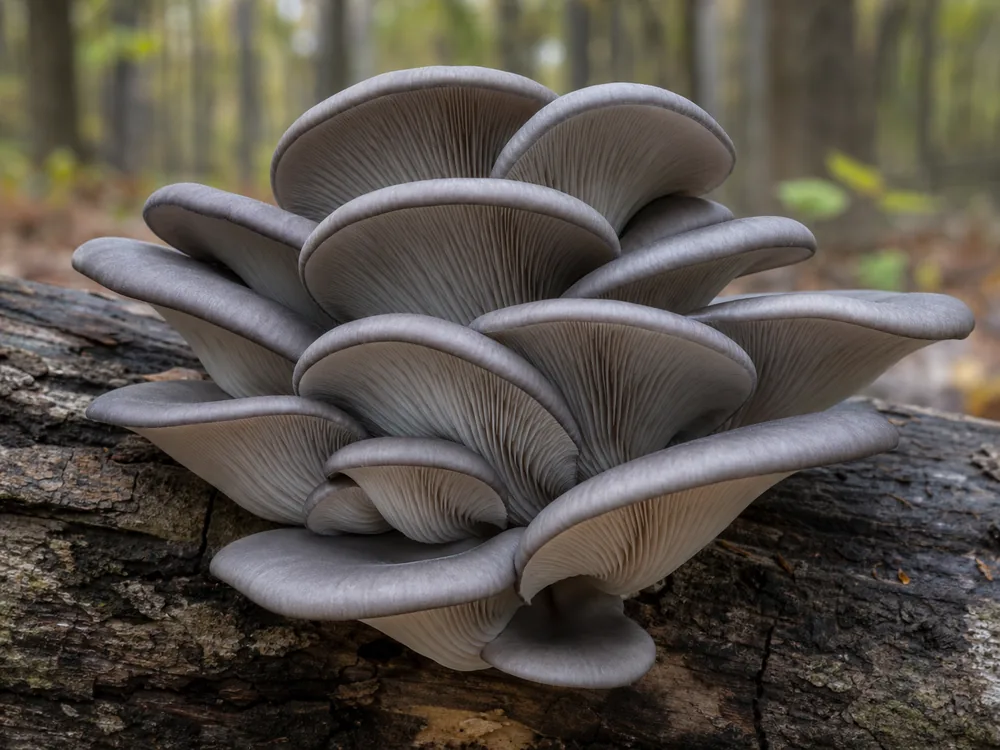 Autumn to winterOyster mushroomGrows on wood, gills running down the stem
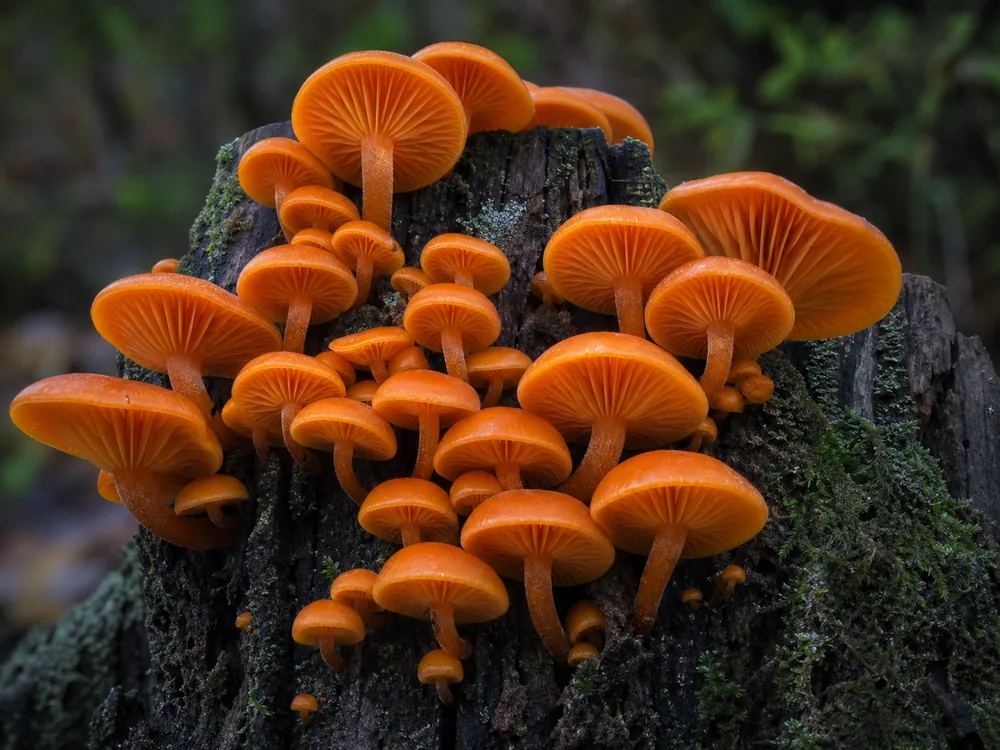 AutumnJack o'lanternOrange throughout, true gills, grows in clumps at tree bases
The second card is the one worth a second look on a wild pick. Nothing on this page about raw plates applies until the name is settled, and a wild cluster deserves that settling before any of it is relevant.
What to check before a raw plate
If you are making the salad, these are the checks that a raw preparation makes load-bearing.
- Freshness
- Oyster mushrooms turn slimy and sour before they look obviously bad
- The smell test
- A faint sweet smell is right, and anything sharp or fishy is not
- Age
- Curling dried edges mean days rather than hours, and those go in a pan
- Handling
- Raw removes the step that would have dealt with anything on the surface
- Who should skip it
- Anyone who reacts to raw mushrooms generally, and anyone unwell
Freshness carries more weight here than it does for a cooked dish. Heat covers a multitude of small faults in a mushroom that is a day past its best, and a raw plate has nothing standing between that mushroom and the person eating it.
Buy or pick them the same day you plan to serve them raw
Tear rather than slice, which follows the grain and keeps the strips intact
Use a punnet that has been open in the fridge for several days
Rinse them and then dress them, since wet fans go slippery rather than crisp
Tearing instead of slicing is a small thing that makes a visible difference.
An oyster fan separates cleanly along its own structure, and a torn strip holds a dressing where a knife-cut one sheds it.

Storage is the other half of it, and it is simpler than most mushroom advice.
Keep them in paper rather than sealed plastic, because a closed bag traps the moisture they are already full of and turns a two-day mushroom into a one-day one. A cold dry shelf buys you the freshness a raw plate depends on, and it costs nothing beyond remembering to unwrap them.
Wet fans are the one thing worth avoiding outright on a raw plate.
A mushroom that has been rinsed and left sitting will not dry out again in any useful way, and it will dress badly and taste of water. Brush them if they need it, and do it just before they go on the plate rather than the night before, because a cultivated cluster rarely needs more than that anyway.
Note
Everything above assumes a species you can name. For a cultivated punnet that is free, and for a wild cluster it is the whole job, and no amount of care about freshness substitutes for it.
Sources & References
- Oyster Mushroom, Pleurotus ostreatus Records the species as nontoxic and safe for general consumption, notes that cooking improves texture and bioavailability, and states that it contains no heat-labile toxins.
- Can You Eat Raw Mushrooms? Safety and Nutrition Explained Explains that human digestive enzymes cannot break down chitin, that beta-glucans and other compounds remain locked inside intact cell walls, and records that heating at one hundred degrees for fifteen minutes raised polysaccharide extractability by 340 percent against raw samples.