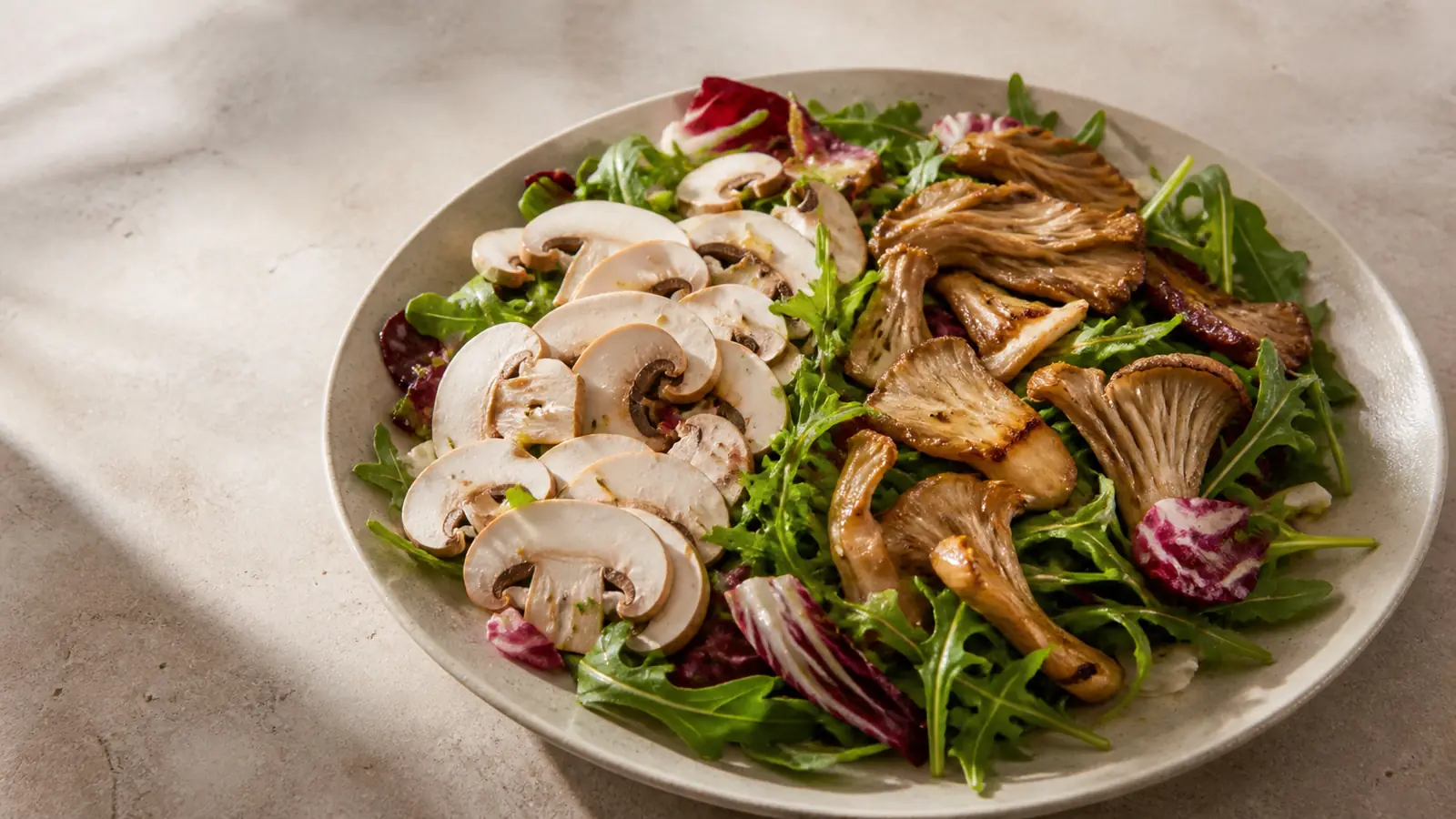
Cremini is the best all-round salad mushroom because it works as a thin raw slice or a browned cooked piece. Oyster and maitake add crisp edges, shiitake handles strong dressings, king oyster gives a meal salad substance, and white button is the mildest raw choice.
Cremini is the best all-round mushroom for salads because it works in thin raw slices and in browned cooked pieces.
Decide whether the mushroom should be raw and cool, warm and crisp, or cooked and chilled, then match its structure to the greens and dressing.
A salad mushroom has to fit the leaves around it. A thick king oyster plank can anchor farro or kale, but it will flatten butter lettuce, while a shaved button mushroom can disappear in a grain bowl that needs a substantial bite.
Raw, Warm, or Chilled Changes the Best Choice
Raw mushrooms bring a clean snap and absorb vinaigrette at the cut surface. Use that treatment for fresh cultivated cremini or white button caps, sliced 2 to 3 mm thick so each piece bends with the greens instead of resisting the fork.
Residual heat from warm mushrooms softens kale, cabbage, radicchio, or arugula pleasantly, but it can collapse tender lettuce and basil before the bowl reaches the table.
Shiitake caps and firm cremini quarters can be browned, chilled, and lightly dressed ahead because their structure survives longer contact with acid than a paper-thin raw slice.
Raw and crisp
Choose cremini or white button and slice 2 to 3 mmThin cultivated caps bend with delicate leaves and take on a small amount of vinaigrette
Warm and browned
Choose oyster or maitake and cool only until steaming stopsFrilled edges stay distinct while residual warmth softens sturdy greens
Cooked and chilled
Choose shiitake, cremini, or king oyster and dress the mushroom separatelyFirm cooked pieces keep their bite in grain, noodle, and cabbage salads
Raw slices are best close to serving, warm mushrooms need a short cooling pause, and chilled mushrooms can carry seasoning while the greens remain dry.
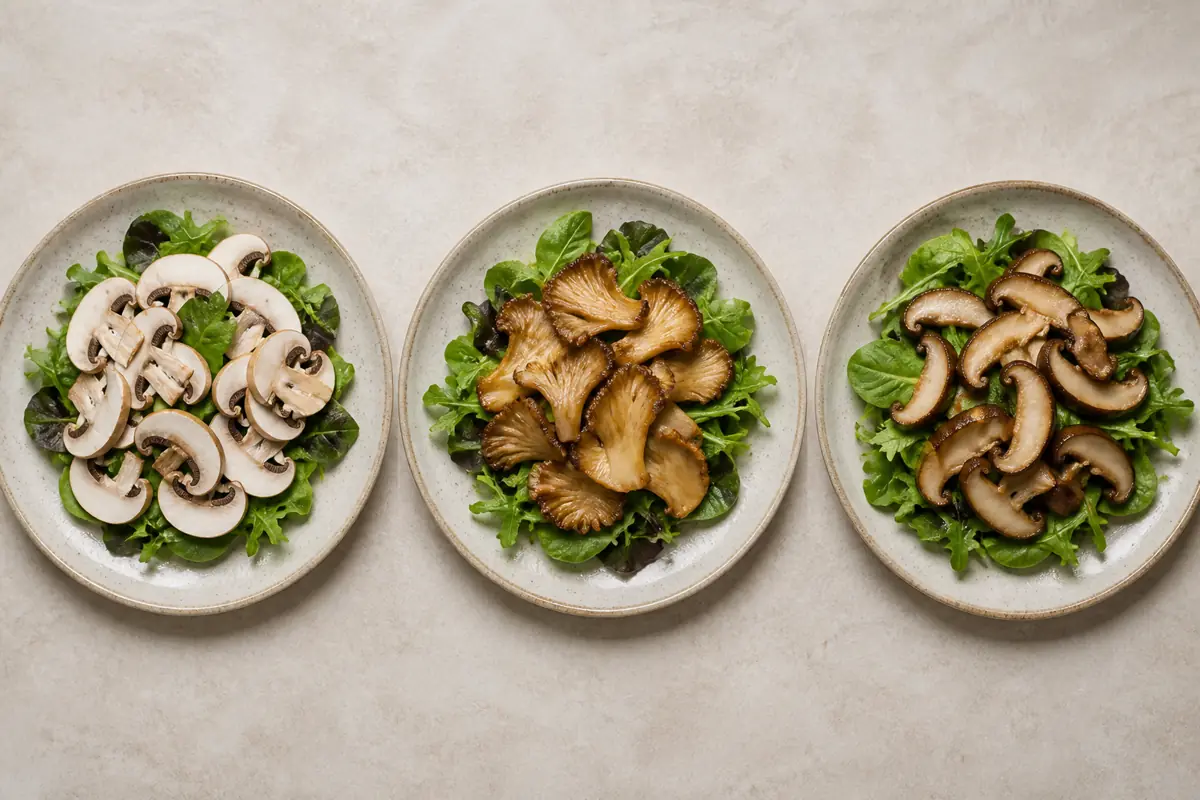
Choose the state first and the ranking becomes practical. You are no longer comparing six flavors in the abstract, you are choosing a cut and cooked texture that performs a specific job.
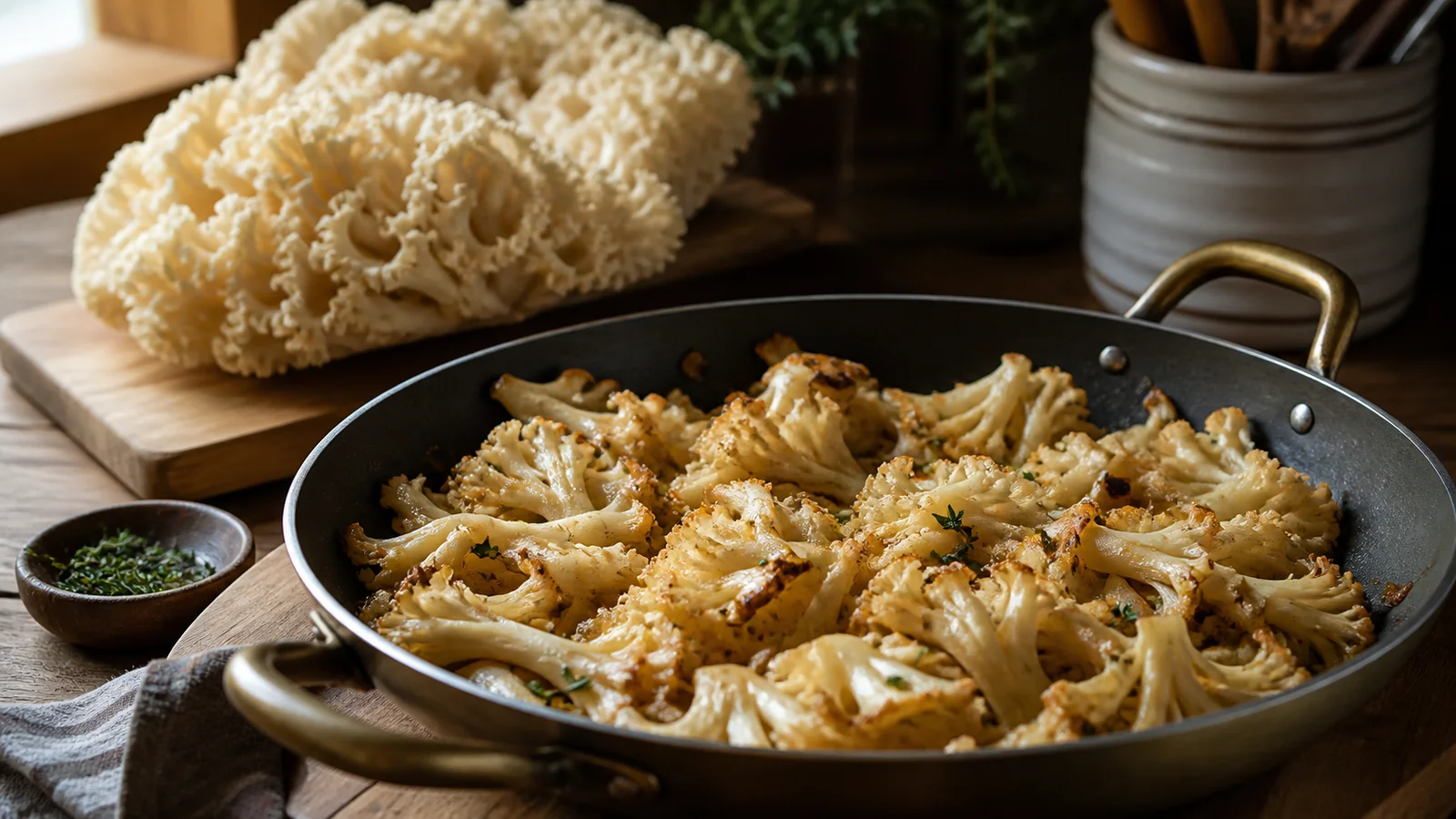
Cooking MushroomsHow to Cook Cauliflower Mushroom Without Trapping GritThe 6 Best Mushrooms for Salads
These six mushrooms cover the useful range from mild raw crunch to a substantial seared centerpiece.

Start with the whole form before comparing flavor. Compact caps, broad fans, layered fronds, and dense stems signal which cuts will stay useful in a salad.
1. Cremini: Best All-Round Salad Mushroom
One package of cremini can serve two different salad styles, which is why it takes first place. Slice dry, closed caps about 3 mm thick for raw use, or quarter them when browned surfaces and a tender center matter more than snap.
Use about 225 g for four side-salad servings. That works out to roughly 55 g per person, enough to keep mushroom present in each forkful without replacing most of the greens.
Thick raw pieces feel chalky, while slices left in acidic dressing for too long soften at the rim and remain firm in the center.
For a warm salad, give the quarters open pan space until their released water has evaporated. Cremini loses its advantage when a crowded batch turns gray and wet, because that liquid dilutes the vinaigrette you add later.
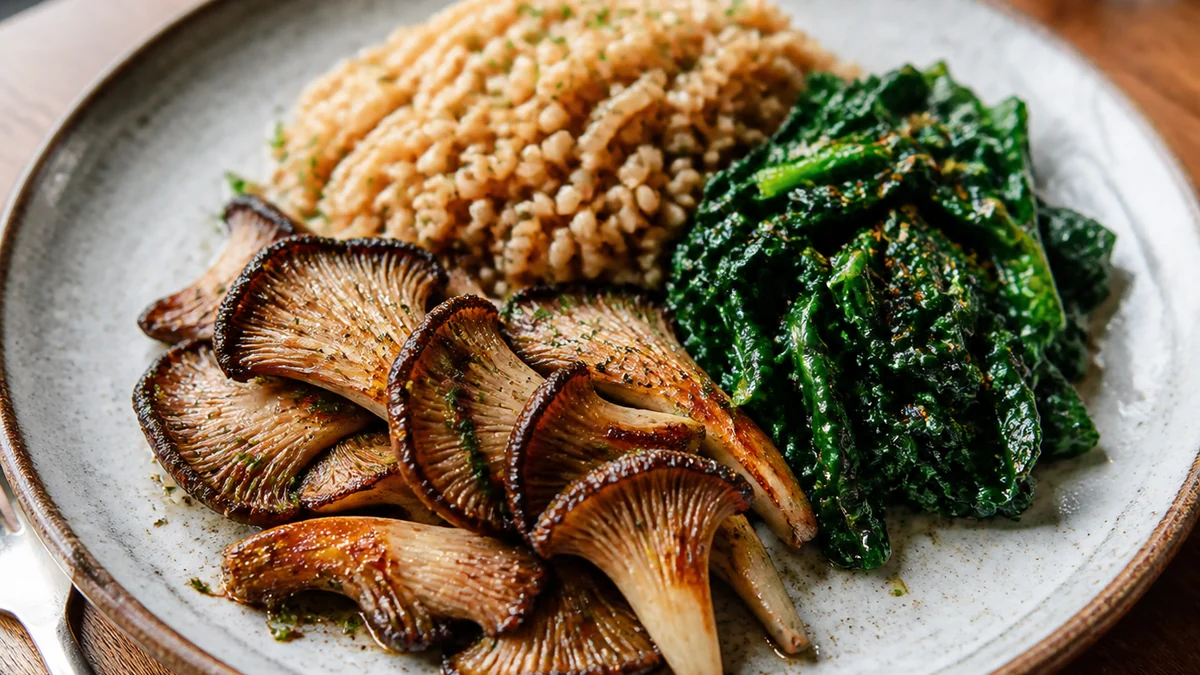
2. Oyster: Best for Crisp, Delicate Edges
Tear oyster clusters into broad fans and the thin margins will brown before the thicker base. About 170 g is enough for four side salads because the frilled pieces retain more visual volume than the same weight of sliced button mushrooms.
Keep the fans broad because small shreds shrink into hard fragments and vanish among nuts or croutons, then place the dense end against the hot pan first.
Oyster works especially well over arugula, watercress, or soft herbs where its crisp edge adds contrast without the weight of a thick stem. Add it warm rather than piping hot, and keep a heavy creamy dressing away from the fragile browned margins.
3. Maitake: Best for Roasted Fronds
For a salad that needs crisp tips and a chewy center in the same forkful, maitake offers more contrast than oyster. A broad cluster works over kale, lentils, farro, or bitter leaves because its fine edges and connected base finish differently.
Start with 170 to 225 g for four servings and keep part of the base attached so four palm-width portions reach the plate as clusters rather than loose crumbs.
Roasting gives the irregular fronds more room than a small skillet. Turn the pieces only after the first face has browned, since constant movement breaks off the delicate tips and prevents a stable crust.
Fine outer edges can scorch before a dense center softens, so divide a thick cluster through the base rather than pulling it apart from the top.

The cut comparison shows why equal pieces would be a mistake. A fan, a frond, a dense stem, and a compact cap each need a shape that preserves their useful structure.
4. Shiitake: Best With Sesame or Soy Dressings
Sesame, soy, rice vinegar, ginger, and scallion can support a mushroom with a concentrated aroma, which makes shiitake a strong match. Use 140 to 170 g of trimmed caps for four servings, remove the woody stems, then slice the caps about 6 mm thick.
Shiitake fits cabbage, noodle, and sturdy green salads dressed with sesame, soy, rice vinegar, ginger, or scallion.
Shiitake is less convincing with delicate lettuce and a quiet lemon dressing, where its chew and aroma become the main event. Cool cooked slices completely for a chilled salad, or add them warm to cabbage that benefits from slight softening.
5. King Oyster: Best for a Substantial Meal Salad
A substantial grain or bean salad can support a mushroom piece that behaves more like a seared vegetable than a garnish. King oyster supplies that weight through its dense stem, cut into 6 mm planks or 15 mm cubes.
Use 225 to 280 g for four meal-salad servings, about one small stem per person, because a light side salad built around tender leaves cannot support that weight.
Score the broad faces of planks shallowly to increase pan contact and give dressing somewhere to cling. The cuts should mark the surface without dividing the piece, because the clean slab is the reason to choose this mushroom.
Thick unscored centers can stay springy after the exterior browns. If the salad should be eaten with a fork rather than a knife, keep every piece below bite size before it enters the pan.

The two finished bowls make scale visible. Broad oyster fans remain a topping, while king oyster planks and shiitake slices can share the weight of grains, beans, or roasted vegetables.
6. White Button: Best Mild Raw Choice
Choose white button caps that are dry and closed, then slice 2 to 3 mm thick just before tossing so the pale surfaces remain crisp.
Use about 225 g for four side salads. White button and cremini are both forms of Agaricus bisporus, so the same starting amount works, but white button contributes less color and a milder taste.
That mildness suits lemon, parsley, celery, Parmesan, or restrained mustard vinaigrette, but it disappears under sweet glaze or a thick creamy dressing.
Compare structure before flavor. The matrix keeps the buying amount, useful cut, and main failure together so a raw salad choice does not accidentally receive a roasting treatment.
| Rank and mushroom | Starting amount for four | Best salad role | Preparation | Main limit |
|---|---|---|---|---|
| 1. Cremini | 225 g for four side-salad servings | Raw slices or browned quarters | Slice 3 mm or quarter | Thick raw slices feel chalky |
| 2. Oyster | 170 g for four side-salad servings | Warm crisp topping | Tear broad and sear base first | Small shreds disappear |
| 3. Maitake | 170 to 225 g for four servings | Roasted fronds | Keep palm-width clusters attached | Fine tips can scorch |
| 4. Shiitake | 140 to 170 g trimmed caps for four servings | Sesame, soy, noodle, or cabbage salad | Remove stems and slice 6 mm | Strong aroma can dominate |
| 5. King oyster | 225 to 280 g for four meal-salad servings | Substantial meal salad | Cut 6 mm planks or 15 mm cubes | Thick centers stay rubbery |
| 6. White button | 225 g for four side-salad servings | Mild raw chopped salad | Slice 2 to 3 mm near serving | Quiet flavor gets buried |
The ranking favors range, which puts cremini first, but a specialist can be the better purchase. Choose maitake when crisp fronds are the point, or king oyster when the mushroom must carry the weight of lunch.
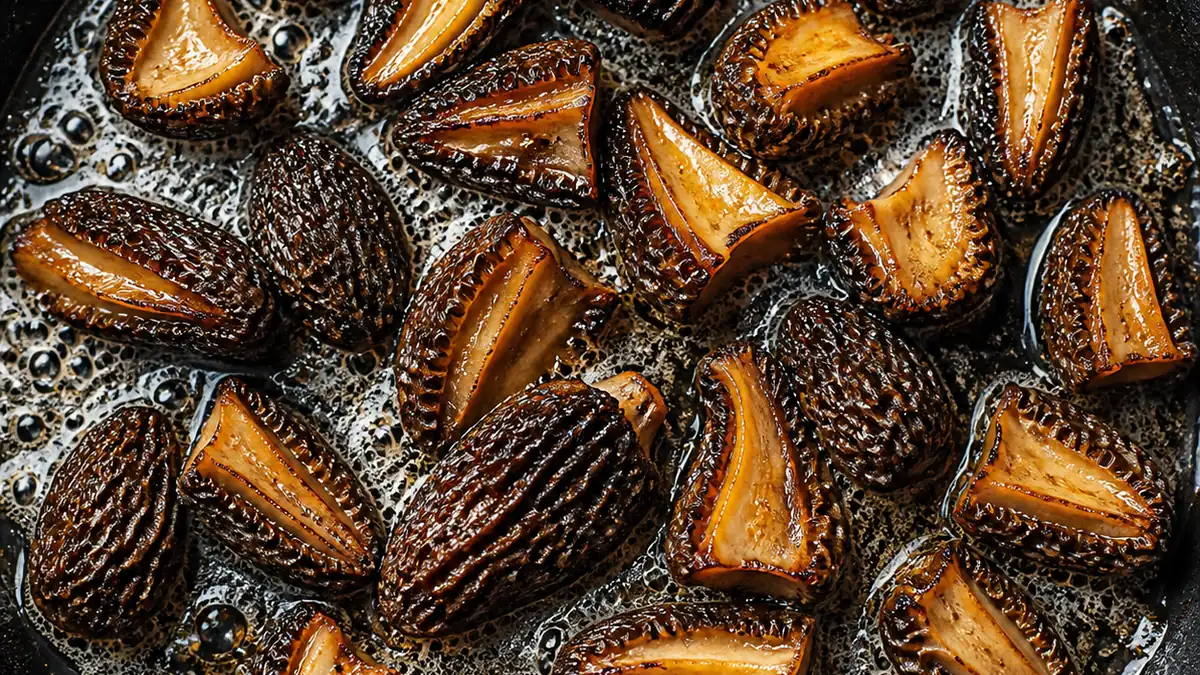
Cooking MushroomsHow to Cook Black Morels: Halve Them, Never Slice ThemHow to Brown Mushrooms Without Watering Down Greens
A wet pan prevents browning and leaves enough liquid to thin the dressing until oil and acid collect at the bottom of the salad bowl.
Clean mushrooms with a dry brush or a barely damp towel, then cut away packed debris at the base. A quick rinse is workable only when the pieces are dried immediately, since surface water must evaporate before browning can begin.
Start with dry surfaces and a pan wide enough to expose most pieces to heat. Mushrooms release water as they cook, so a single layer gives that vapor somewhere to escape rather than trapping it beneath a deep pile.
The first hiss comes largely from water, while true surface color begins after visible pooling subsides and the pan leaves brown residue between the pieces.

The useful cue is the pan, not a fixed minute count. Oyster fans can finish before cremini quarters, and a dense king oyster cube needs more time after the liquid disappears.
A bowl traps steam that a tray releases. Spreading the batch preserves dry edges and prevents carryover heat from softening the mushrooms while you finish the greens.
Salt can go in once the pieces begin to soften, but avoid pouring vinaigrette into a pan that still contains mushroom water. Acid can lift browned residue after the surface is dry, while early liquid simply extends the steaming stage.
Dress Hot Mushrooms, Cool Mushrooms, or the Greens?
A spoonful of vinegar added to a dry hot pan dissolves browned residue and seasons the mushrooms, but that hot mixture can soften tender lettuce quickly.
For kale, cabbage, radicchio, or cooked grains, warm dressing can be useful. The leaves relax slightly, and the mushroom carries the pan flavor into the rest of the bowl.
Deglaze the mushrooms if desired, then spread them until barely warm or fully cool before dressing delicate leaves independently and combining everything at the last moment.

Chilled shiitake or cremini can sit in a small amount of vinaigrette before assembly, but the contact time changes the surface. Thin raw slices soften quickly, while cooked pieces with intact browned faces tolerate a longer rest.
Match dressing weight to dryness. A creamy dressing clings well to a dry browned cap but turns loose around a wet batch, while a sharp vinaigrette can be used sparingly because mushroom surfaces absorb it readily.
Keep the dressing amount modest until the mushroom and greens meet. You can add another spoonful at the table, but you cannot recover crisp leaves from a bowl flooded during assembly.
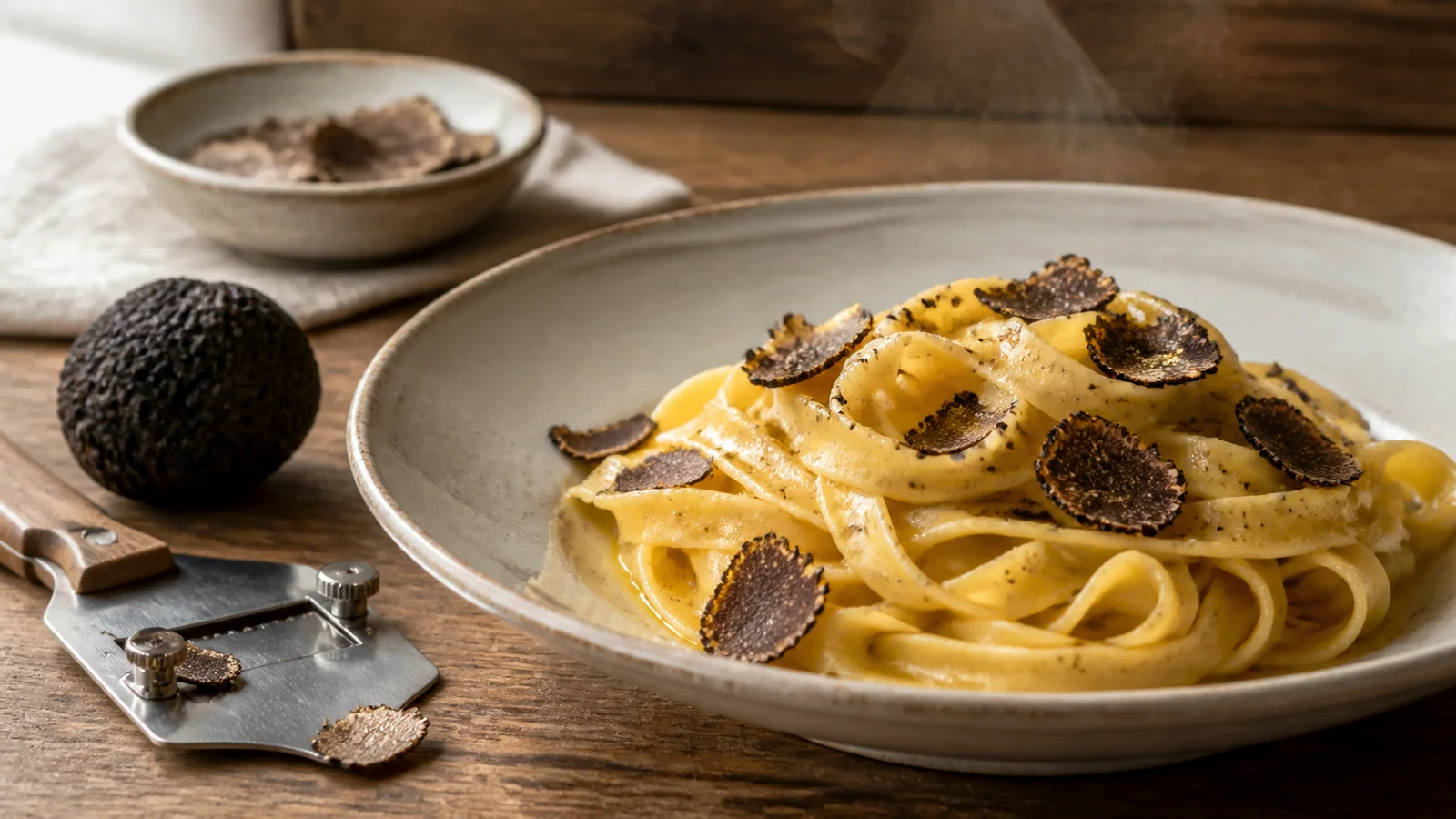
Cooking MushroomsHow to Cook Black Truffle Without Losing Its AromaWhen a Mushroom Is a Poor Salad Choice
Use known cultivated mushrooms from a reliable seller for raw salad, and leave unidentified wild finds out of the bowl even when they resemble a supermarket species.
Reject packages with slime, sour odor, or liquid collecting around the caps. Browning from age is not automatically dangerous, but a slick surface and collapsed tissue will not produce the clean raw bite or dry sear this article depends on.
FDA has linked imported enoki to Listeria outbreaks and advises people to avoid eating it raw, with thorough cooking especially important for pregnant people, adults 65 and older, and people with weakened immune systems.
Warning
Do not use raw enoki as a salad garnish. Cook it thoroughly, keep it separate from ready-to-eat greens while raw, and wash hands, utensils, and surfaces that touched the uncooked package.
A familiar name does not make every part useful. Shiitake stems are usually too woody for salad pieces, while oversized king oyster chunks and dense maitake bases need cutting even though the species itself is edible.
When condition or structure is wrong, substitute a sound cultivated cap instead of forcing the purchase into the bowl. White button or cremini covers the mild raw role, and cooked oyster covers the warm delicate role without requiring a risky shortcut.
Two-Mushroom Combinations That Earn Their Place
A second mushroom is useful when it supplies a texture the first one lacks. Combining two similar sliced caps adds cost and visual variety, but it rarely changes how the salad eats.
Three pairings create a clear contrast:
- Cremini plus oyster gives a steady cap slice and a crisp frilled edge for leafy salads.
- Maitake plus shiitake pairs brittle roasted tips with a chewy cap for kale, farro, or cabbage.
- White button plus shiitake keeps a chilled salad mild overall while adding a smaller amount of concentrated chew.
Keep the combined weight in range. For four side salads, split 170 to 225 g between the two varieties rather than buying a full four-serving amount of each.
Cook each structure to its own cue when the timing differs. Shiitake can enter the pan before fine maitake tips, while raw cremini should stay outside the pan until its warm oyster partner has browned and cooled.
The best combination is therefore one deliberate contrast, not the longest ingredient list. Once the bowl has raw snap, browned edge, or substantial chew in the proportion it needs, another mushroom adds repetition rather than depth.