
Best Shiitake Substitutes for Broth, Stir-Fries, and Sauces
A good shiitake substitute has to replace either the firm cap, the savory depth, or the dried-mushroom broth. The right choice changes with the dish, because fresh shiitake in a stir-fry is doing different work than dried shiitake in soup.
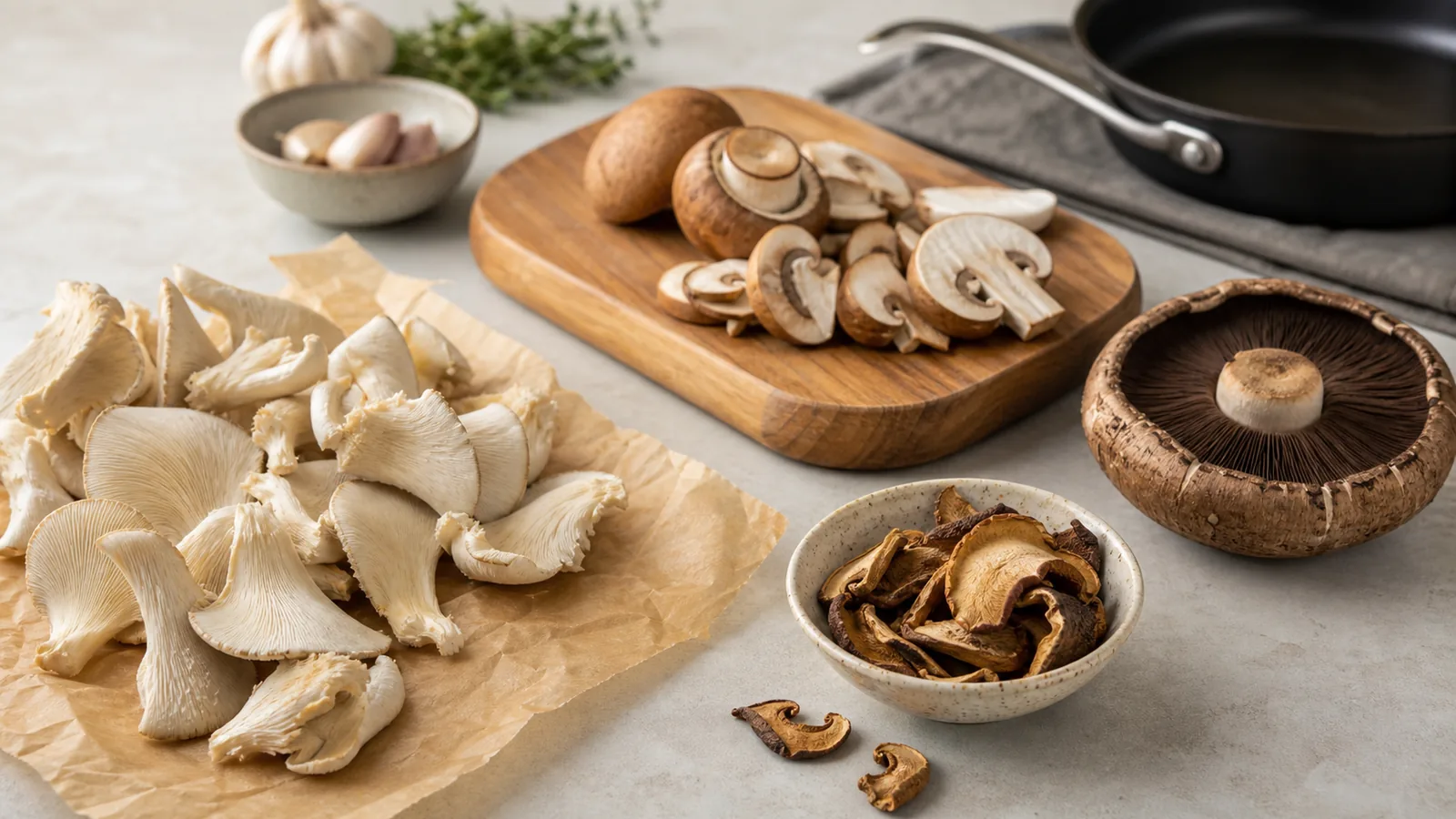
Best fresh texture swap. Tear into pieces and sear hot so the edges brown before the center softens.
Best grocery-store backup. They are earthier and less savory, so brown them longer and season more directly.
Best broth substitute. Use a small amount because porcini is stronger and darker than dried shiitake.
Best for thick slices or vegan scallop-style pieces. It replaces shiitake chew better than shiitake aroma.
Match the substitute to the job
Shiitake combines a firm cap, a savory aroma, and a dried flavor that can season an entire pot, so one substitute cannot cover every dish.
Use oyster mushroom for fresh texture and dried porcini for broth depth. Cremini or portobello works when same-day availability matters more than a close match.
The cooking method decides the pick because stir-fries need pieces that brown quickly, while soup and ramen need flavor that dissolves into broth. Cream sauce needs a mushroom cooked dry before the dairy goes in.
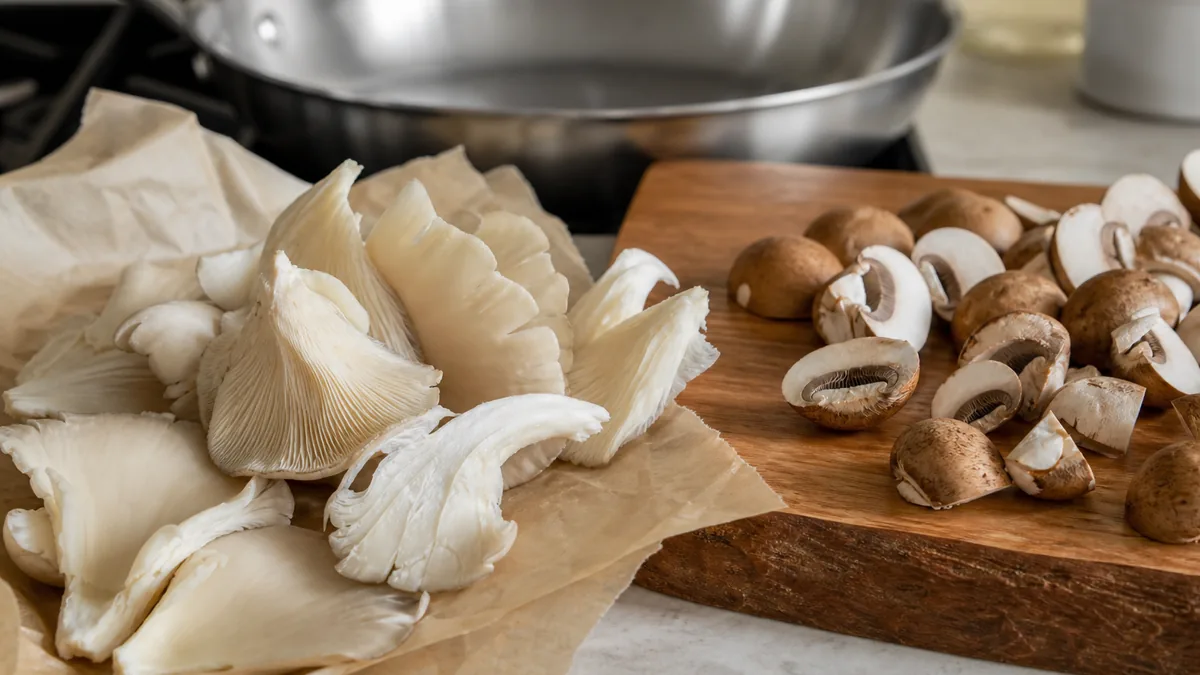
Fresh substitutes for stir-fries, rice, and noodles
Oyster mushroom is the closest fresh cultivated stand-in for shiitake texture because it tears into irregular pieces, browns fast, and stays tender in noodles, rice bowls, omelets, and quick vegetable dishes.
Cremini and portobello are easier to find, though their familiar mushroom flavor lacks the cleaner savory edge of shiitake. Slice them thicker than shiitake and cook until the released water leaves the pan before adding sauce.
| Dish | Best fresh substitute | How to adjust |
|---|---|---|
| Stir-fry | Oyster mushroom | Sear first, then add sauce late |
| Fried rice | Cremini | Dice small and brown until dry |
| Noodle soup topping | Oyster mushroom | Cook separately so broth stays clear |
| Skewers or thick slices | King oyster | Cut thick and score the surface |
| Cream sauce | Cremini or oyster | Brown before cream goes in |
King oyster mushroom is useful when the recipe needs thick slices because its dense, mild stem can stand in for shiitake chew. Cut the stem crosswise for rounds or lengthwise for slabs.
Store-bought cultivated mushrooms avoid the identification risk of wild lookalikes, so do not use a foraged mushroom as a casual shiitake substitute unless it has been independently identified.
Dried substitutes for broth and deep umami
Dried shiitake has more power than fresh shiitake. If a recipe calls for dried shiitake and you do not have it, dried porcini is the best substitute for broth, sauce, and risotto.
Use less porcini than shiitake at first because it makes broth darker, woodier, and more intense. That strength suits mushroom stock, barley soup, and brown sauce but can overwhelm delicate miso soup or clear broth.
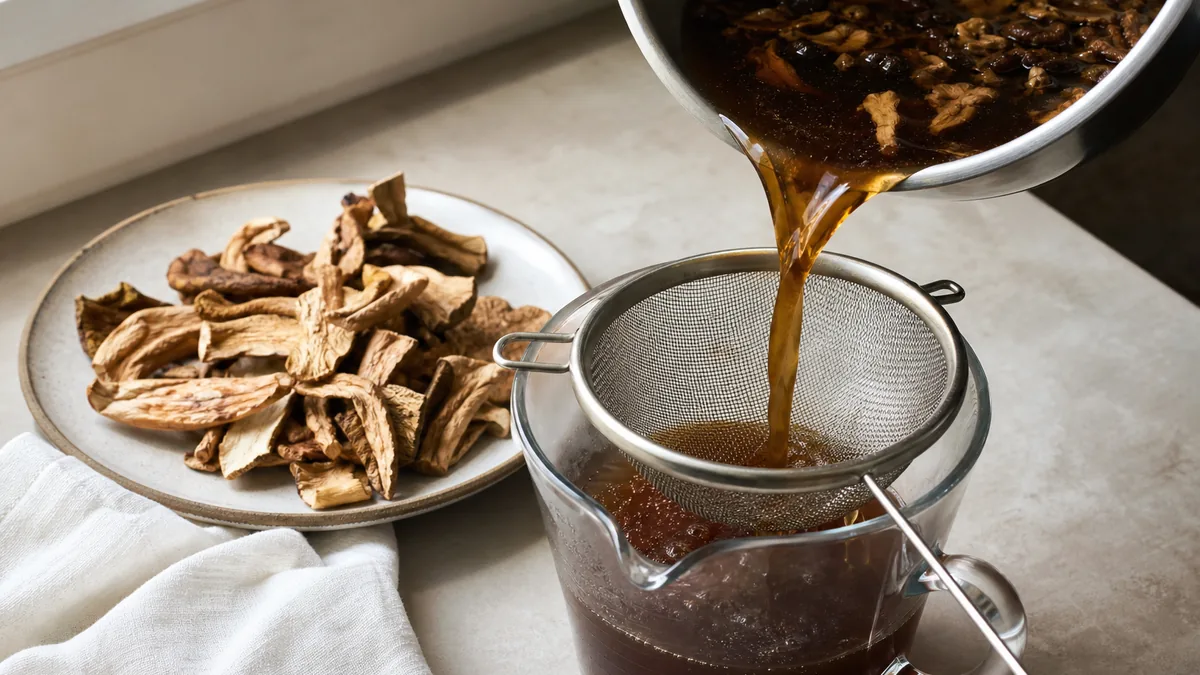
Dried cremini or mixed dried mushrooms can work in a pinch, but avoid seasoned blends when the recipe needs a clean mushroom flavor.
How to adjust amounts and cooking time
Fresh oyster, cremini, and portobello can usually replace fresh shiitake by volume after trimming. A cup of sliced shiitake can become a cup of torn oyster or sliced cremini.
When that measured cup crowds the skillet, brown the substitute in batches because matching volume does not remove the need for direct contact with the hot pan.
Dried mushrooms need a smaller starting amount because rehydration increases their volume and transfers much of their flavor into the soaking liquid. Build the sauce or broth gradually with the strained liquid instead of pouring in the whole bowl.
Lift rehydrated pieces from the bowl so sediment stays behind, then compare their volume with the fresh mushrooms the recipe requested. Hold back part of the batch until the sauce has reduced because soaked pieces add water even after draining.
Brown fresh substitutes before adding liquid
Remove tough stems from shiitake-style recipes when the substitute has them
Use dried porcini liquid in small additions
Replace dried shiitake with raw button mushrooms in broth and expect the same depth
Add wet mushrooms to a crowded pan
Use mushroom powder without checking salt or seasoning on the label
Trim each substitute before making stock because portobello stems can be woody and oyster stems tough near the base, and reserve only clean pieces with a pleasant aroma.
When the substitute changes the dish
Some substitutions change the dish honestly. Oyster mushrooms make it lighter, cremini makes it more familiar and earthy, and porcini makes it darker and more intense.
Cremini in ramen usually needs help from soy sauce, miso, kombu, or a small amount of dried mushroom liquid, and the same stock adjustment applies to creamy mushroom risotto. Oyster mushrooms need the opposite change in a stir-fry because they cook faster than shiitake and should meet the sauce later.
Tip
If you need both shiitake texture and shiitake depth, combine two substitutes. Use oyster mushrooms for the pieces and a little strained porcini liquid for the sauce.
When shiitake is the headline, rename the finished dish around the substitute rather than promising an exact match. Oyster mushroom stir-fry works on its own terms, while cremini broth disappoints only when it is expected to taste like dried shiitake.
When no mushroom substitute is right
Stuffed caps, grilled caps, and thick skewers use shiitake as structure, so they need a substitute with enough body to stay intact.
In those dishes, portobello or king oyster is safer than a small mushroom that will shrink into the background. Cut larger pieces, salt after browning, and keep the sauce simple so the substitute does not taste like a compromise.
When an allergy or intolerance is the reason shiitake is missing, another mushroom may repeat the same problem and should not be treated as the default swap.
For broth, kombu adds glutamate and roasted onion adds sweetness and color without copying mushroom texture. Miso or soy sauce can deepen the liquid too, but both add salt, so taste the broth before seasoning it normally.
Choose plain kombu, miso, or soy sauce rather than a seasoned soup base when you need control over salt, sweetness, and allergens listed on the package.
Extra-firm tofu can take the place of mushroom pieces in a stir-fry when the sauce and vegetables carry the flavor. Press it, brown it separately, and add it late so the cubes retain crisp edges instead of breaking into the pan.
Eggplant offers a softer option for braises and noodle dishes, although it absorbs much more oil and sauce than shiitake. Cut it larger than the missing mushroom and brown it well before liquid enters the pan.
Because non-mushroom swaps solve either structure or savory depth, combine only what the recipe lacks, such as kombu for a clear soup or tofu plus a measured spoon of miso for a stir-fry.
Safety changes the substitute decision
A shiitake substitute should come from a known cultivated source unless the recipe is built for foraged mushrooms. Shiitake cap texture is the reference point, while oyster mushrooms bring a fresher, softer bite.
When the dish could use either one, oyster versus shiitake is a texture decision. Oyster is softer and faster, while shiitake is firmer and deeper.
Do not borrow a wild mushroom because it looks meaty, since wild identification belongs to a separate foraging safety decision.
A human substitution rule should never decide what a dog eats because pet safety is a separate question.
Back to the Edible Shiitake profile