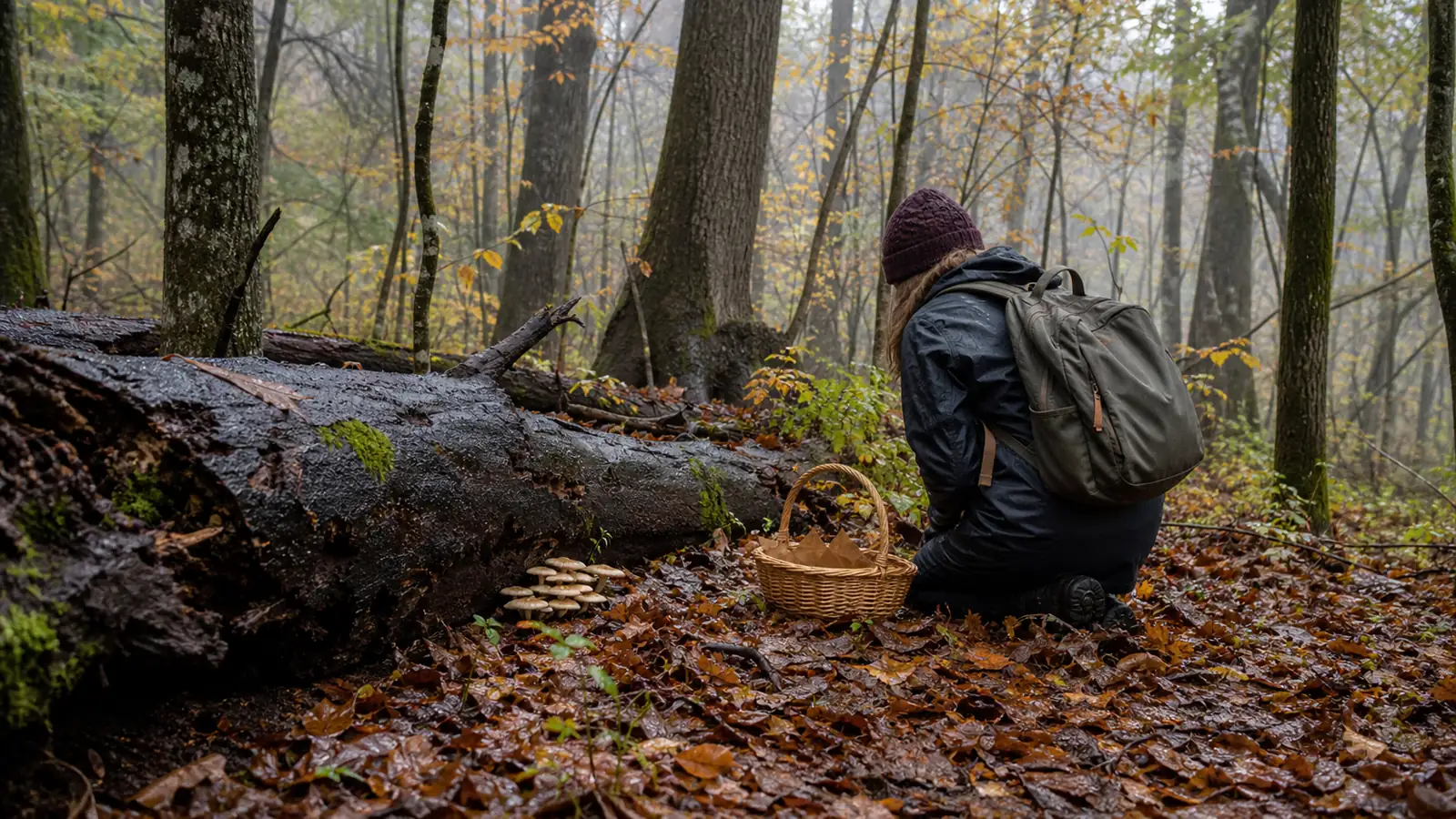
Recent rain, cooling weather, and habitat matter more than a calendar date. Search living-root ground, dead hardwood, and damaged trees separately. Keep every specimen tied to its base and growth pattern until a local expert confirms the identification.
Fall mushroom foraging is usually most productive after sustained rain has moistened soil and wood, followed by mild days and cooler nights. The exact week changes with latitude, elevation, drought, tree cover, and the species you hope to find.
Start with weather and habitat, then consider a name. A fall date alone never proves that a mushroom is edible.
Autumn brings prized edibles and dangerous species into the same woods, sometimes within a few steps of each other.
Rain starts the fall clock
The onset of fall rain is one of the strongest signs that a seasonal flush may begin. Water reaches the hidden mycelium in soil or wood, while cooler air slows the drying that can ruin small fruiting bodies before they mature.
One hard shower may still be too little after drought because dry soil can shed water, leaf litter can intercept it, and sound wood may remain dry beneath wet bark, while several moderate rains give moisture time to enter the substrate.
The mushroom life cycle keeps the fungus active below the surface even when a patch looks empty between rains. Fruiting is a temporary reproductive event, so an unproductive walk does not mean the fungus has disappeared.
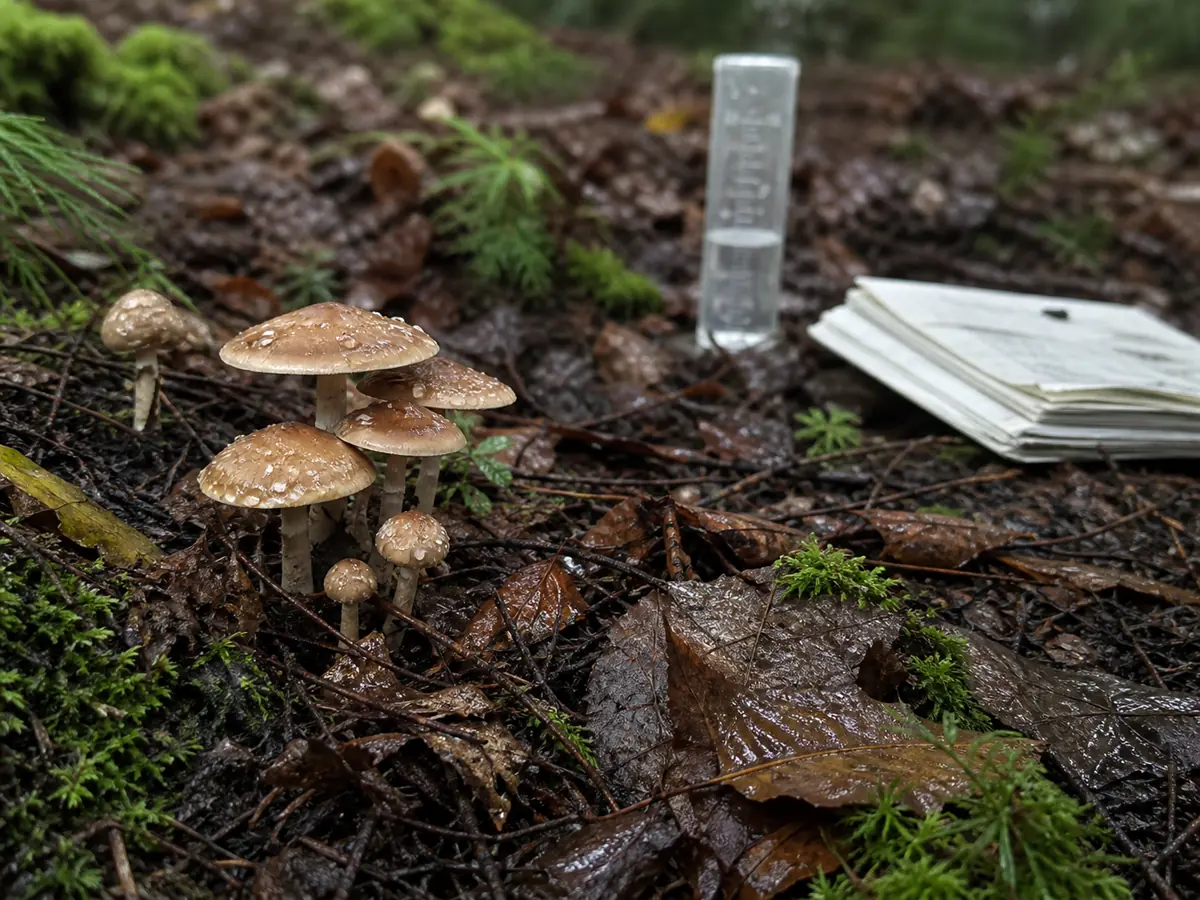
Temperature changes which wet places pay off first because a north-facing hollow, mossy log, or shaded stream bench can stay damp after an exposed ridge dries. Later in fall, light frost can end tender species while some cool-weather wood decomposers continue to fruit.
Check these moisture and temperature signs before spending a full day outside.
- Look at rainfall over the previous week and note whether the ground was already dry
- Compare overnight lows with the recent pattern instead of chasing one cold night
- Test leaf litter and the upper soil for moisture without digging through the patch
- Check shaded logs and low ground after sunny slopes have dried
- Treat the first hard freeze as a change in the species mix, not a universal end date
Wait when only the surface is wet. If leaves are damp but soil crumbles to dust and fallen wood feels dry beneath loose bark, the main flush may still need more moisture.
ForagingHow Should Beginners Start Mushroom Foraging in the Field?Which habitats pay off after the weather turns
Autumn brings the widest variety of visible mushrooms in many temperate forests, but they do not all use the same food. Sorting the woods by substrate is faster and safer than scanning for a favorite cap color.
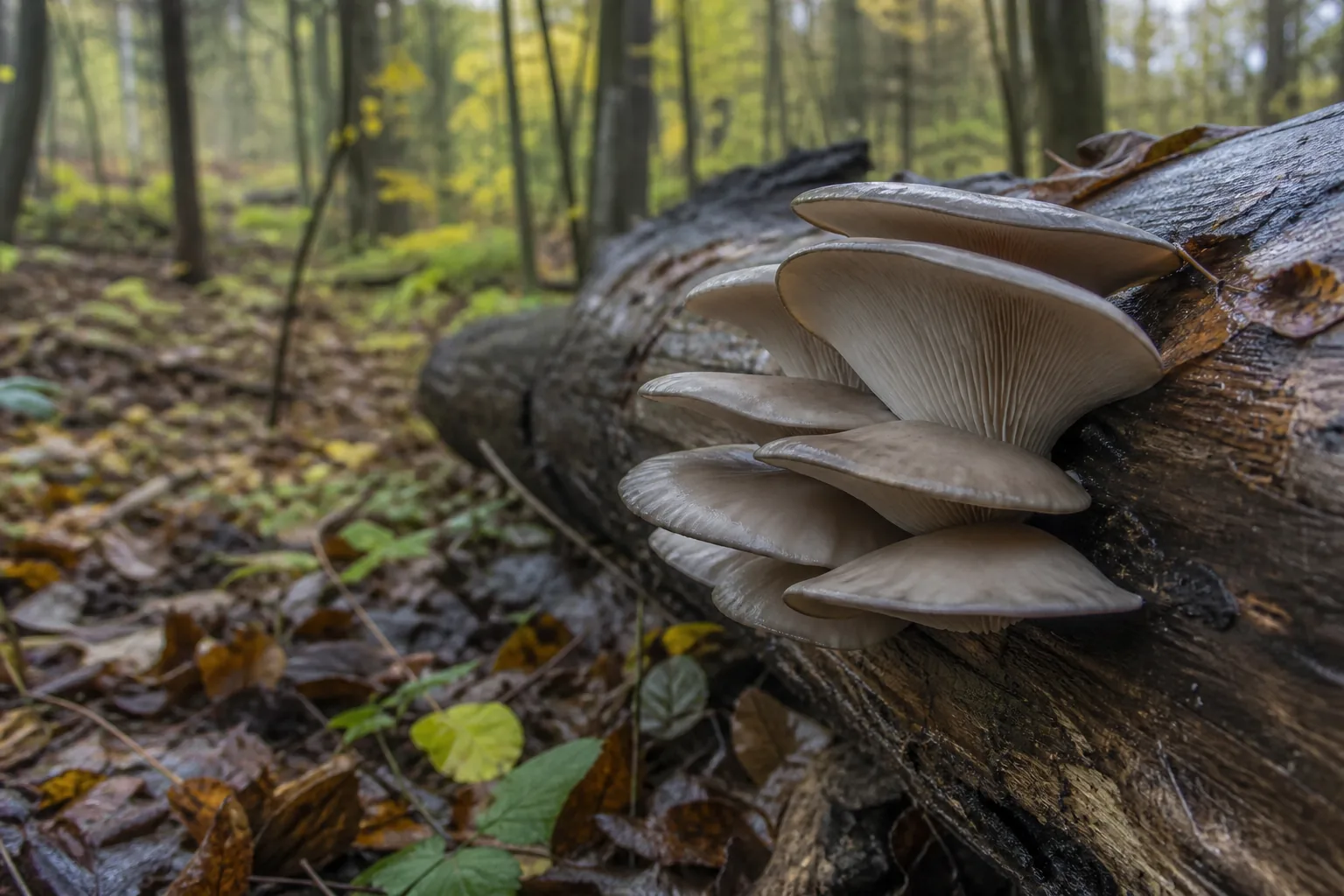
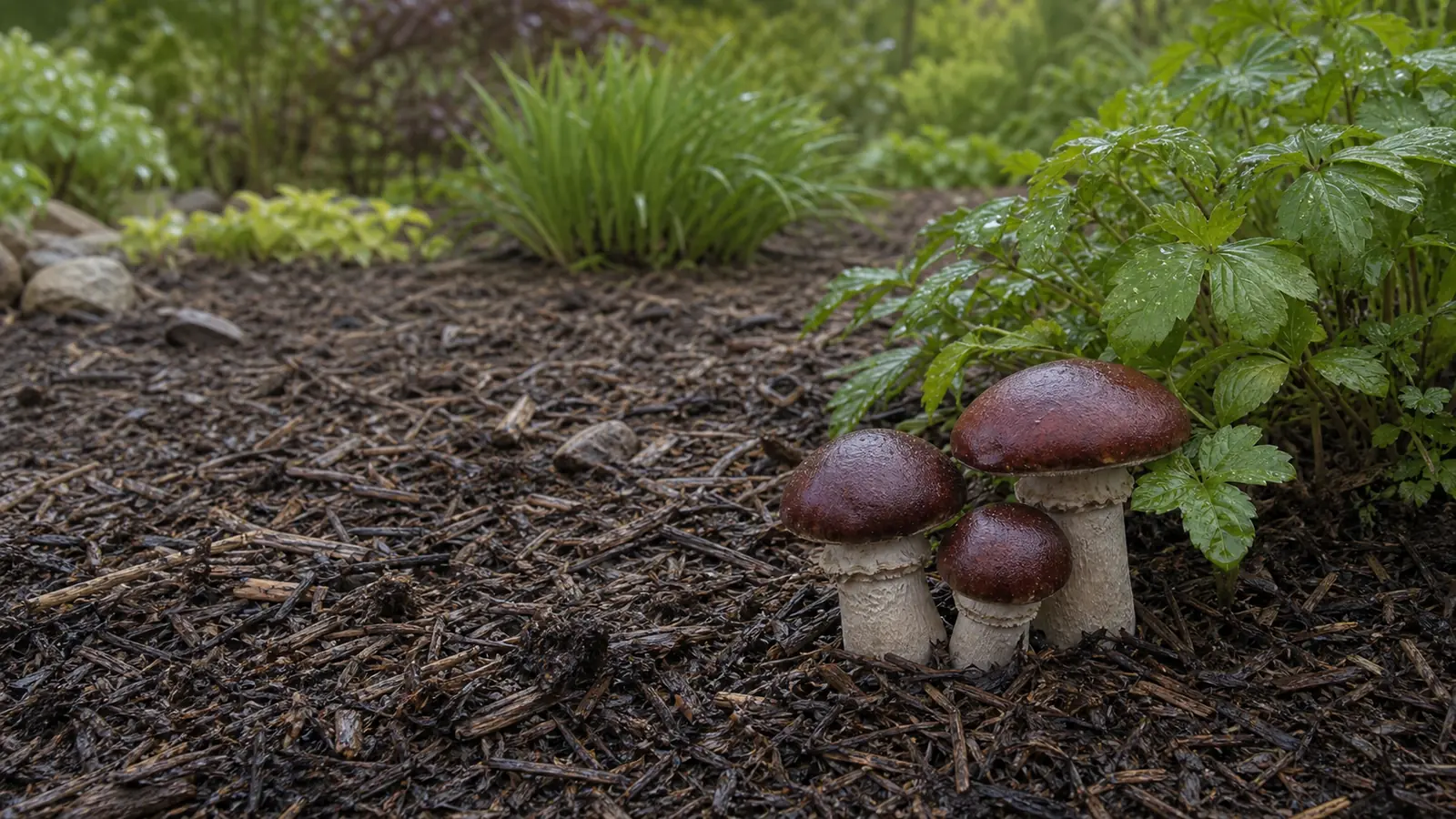
Mycorrhizal mushrooms rise from soil near living tree roots, often scattered or in loose groups. Wood decomposers feed on dead tissue, so they fruit from logs, stumps, buried roots, or damaged parts of standing trees.
| Habitat | Visible clue | Growth pattern to expect | Evidence to record |
|---|---|---|---|
| Living tree roots | Intact oak, beech, birch, pine, hemlock, or another local host | Single or scattered mushrooms rising from soil | Tree species, slope, soil, and distance from trunk |
| Fallen hardwood | Bark loss, white rot, cracks, and moss on a log | Shelves, clusters, teeth, or stems attached to wood | Wood type, decay stage, and exact attachment point |
| Standing damaged tree | Old wound, broken limb, dead section, or hollow | Fruiting from a wound or dead heartwood | Tree condition, height, and wound shape |
| Open ground | Grass, meadow edge, compacted path, or rich soil | Puffballs, rings, scattered caps, and many unrelated species | Ground cover, nearby trees, and whether wood is buried |
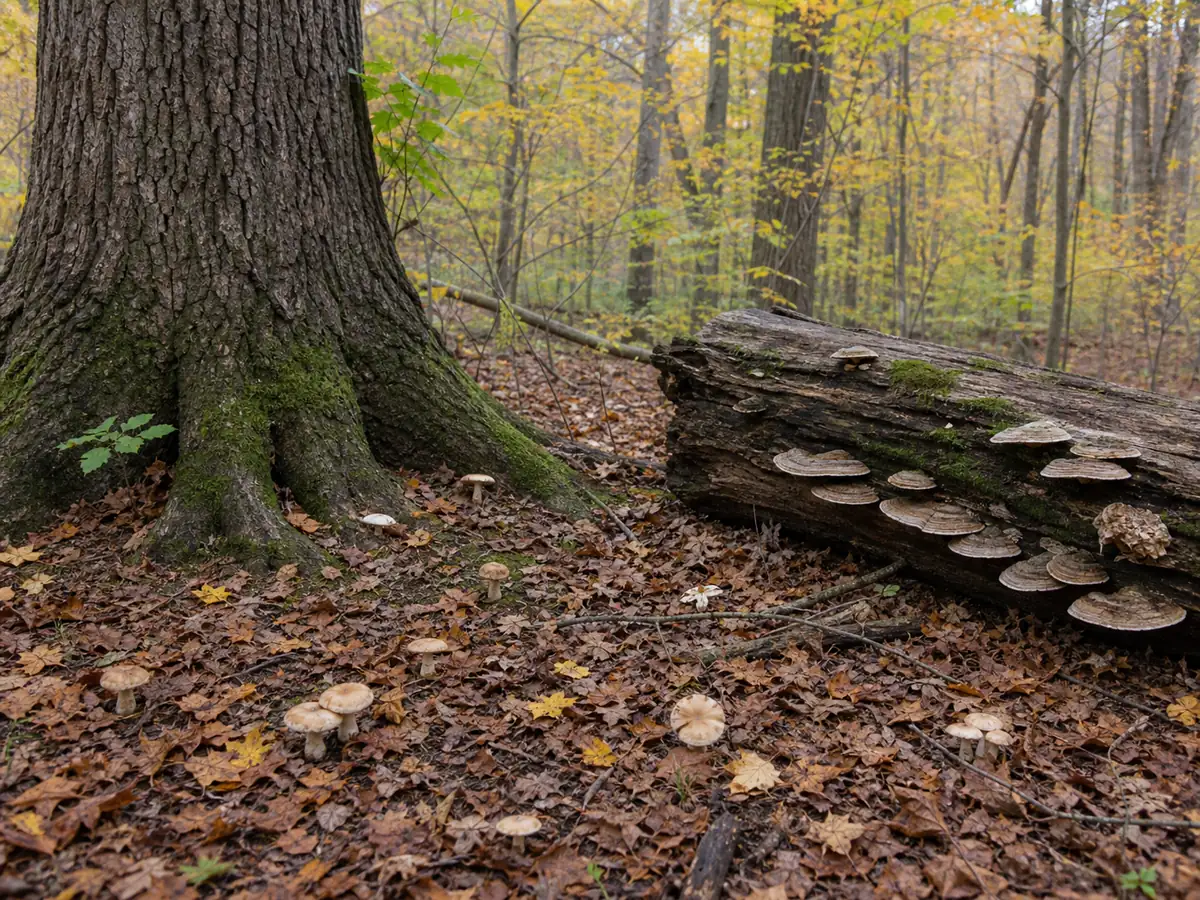
Buried wood is a common trap because a tight cluster can look soil-borne until gently moved leaves reveal an old root or stump, which can reverse an identification based on cap color and apparent ground growth.
Habitat narrows the possibilities, but it does not clear a mushroom for food. Use habitat to reject an impossible match, then require the cap, underside, stem, base, flesh, odor, spore color, and growth pattern to agree.
What commonly fruits from early to late fall
Fall is a moving handoff rather than one fixed season. Warm-soil species may continue from late summer, classic autumn fruiters appear as nights cool, and hardy wood fungi can remain after the first frosts.
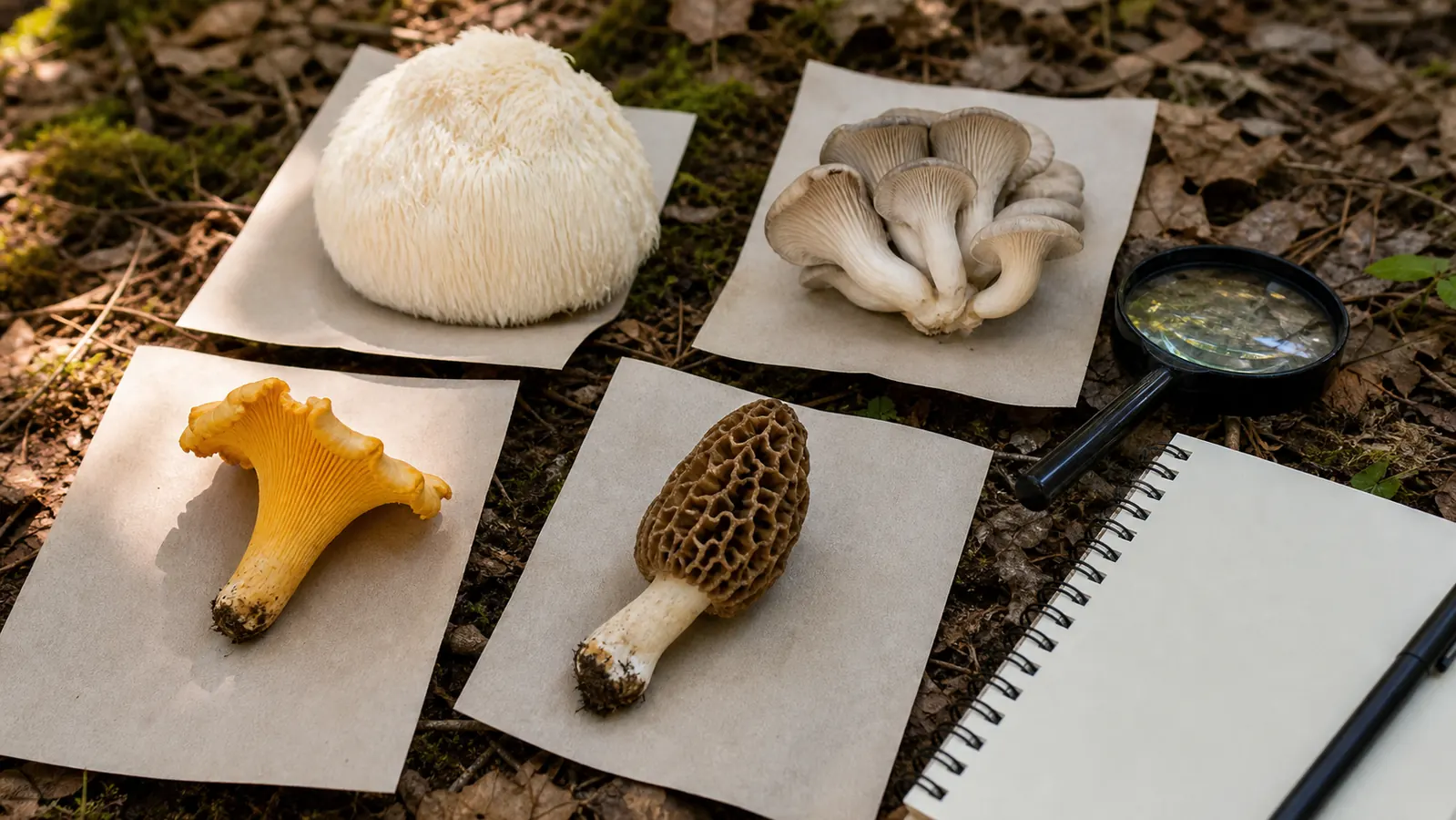
Chanterelle fruiting can run from summer into fall in warm, damp soil near living trees, and the blunt ridges differ from the sharp true gills of poisonous orange lookalikes.
On hardwood, oyster mushroom features become useful as cooler weather arrives. Oyster mushrooms attach directly to dead or dying wood, often in overlapping shelves, but pale gilled mushrooms on wood still need a complete local identification.
Lion's mane identification belongs in the damaged-hardwood search. Its white hanging spines can appear from wounds, hollows, or fallen trunks, so looking above eye level can matter as much as checking logs on the ground.
Use this loose fall species sequence to plan study, not to approve a meal.
- Early fall can extend summer chanterelle and bolete activity after enough rain
- Mid-fall often brings a broader mix across soil, stumps, logs, and standing hardwood
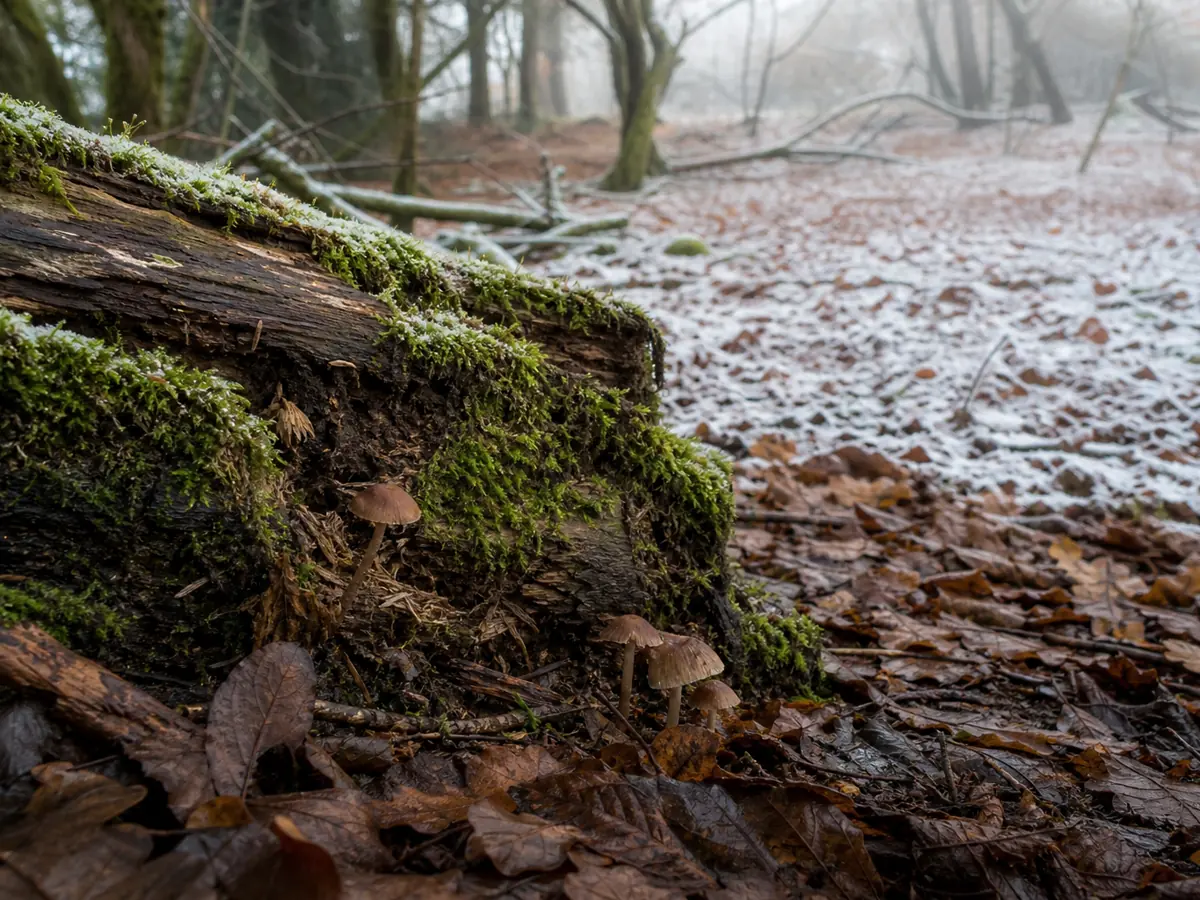
- Late fall favors some oyster species and other cold-tolerant wood fungi
- Mild coastal or southern winters may shift the wet season much later than northern calendars suggest
- Elevation can move a fruiting window by weeks within the same region
Poisonous species share the same moisture. Jack O'Lantern clusters on buried hardwood are not chanterelles, even during a good chanterelle week.
Death cap records matter wherever local maps place Amanita phalloides or related deadly Amanitas. Their season and host trees vary by region, so a local club or herbarium record carries more weight than a national month list.
Build a local list of three or four species, with regional host trees, current observations, and one dangerous alternative recorded for each before the trip.
A productive patch can still be unsafe
Heavy fall fruiting creates a practical identification problem. Several species can emerge through the same leaves, and the excitement of a full patch makes it easy to combine mushrooms before each growth pattern has been recorded.
Fresh leaf fall hides stem bases, buried wood, and cup-like structures at ground level. Lift leaves gently around one specimen and photograph its base in place without raking the patch or breaking every mushroom.
Old specimens make poor food evidence because waterlogging changes color and texture, insects remove gills or pores, and decay erases odor, though a damaged mushroom can still serve as a location record.
Warning
Fall abundance does not reduce identification risk. Keep each unknown species in its own paper container, and keep any suspect specimen away from mushrooms intended for food. Cooking, boiling, drying, or freezing does not make every poisonous mushroom safe.
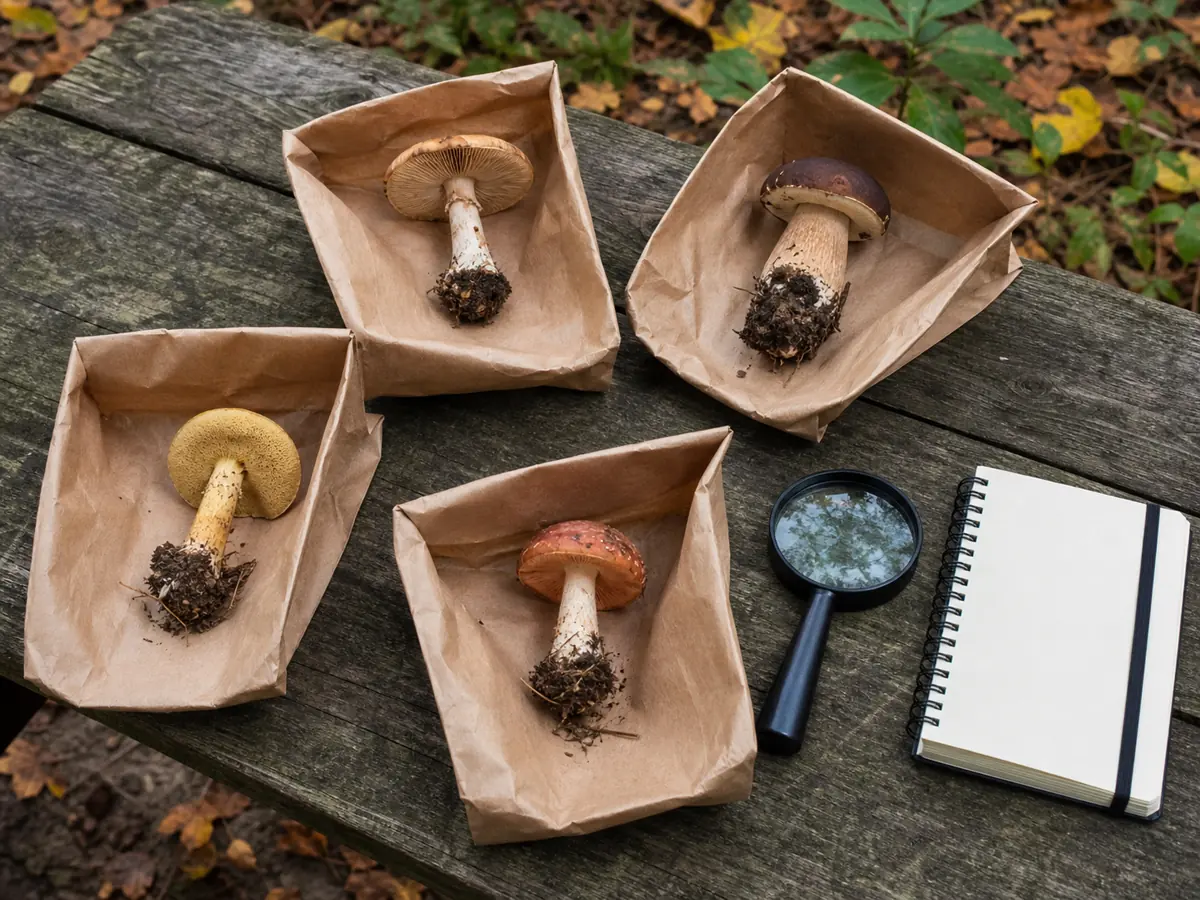
Cap color alone cannot rule out dangerous lookalikes, so preserve the base, underside, and growth pattern. A specimen that loses its base, substrate, or group context has lost evidence needed for review.
A full basket can contain zero confirmed food mushrooms. Treat collection and consumption as separate decisions, with local expert review between them whenever the species is new to you.
ForagingWhich Wild Mushrooms Should Beginner Foragers Learn First?Plan the trip around evidence, access, and daylight
Check the land manager before the forecast because neighboring forests, parks, preserves, and private parcels can prohibit collection, require permits, limit volume, or set special rules for commercial species.
National Forest rules are not uniform. One forest may allow a small personal amount without a permit while another requires a free permit, so copy the current rule and boundary map to your phone before service disappears.
Choose a site that matches the habitat of the few species you are studying, since a hardwood ravine, conifer slope, meadow edge, and city lawn hold different possibilities, then use beginner foraging basics for first-season specimen handling.
Leave enough daylight to inspect, photograph, and separate finds. A late start can turn the last hour into rushed picking, exactly when leaf cover and low light make base features harder to see.
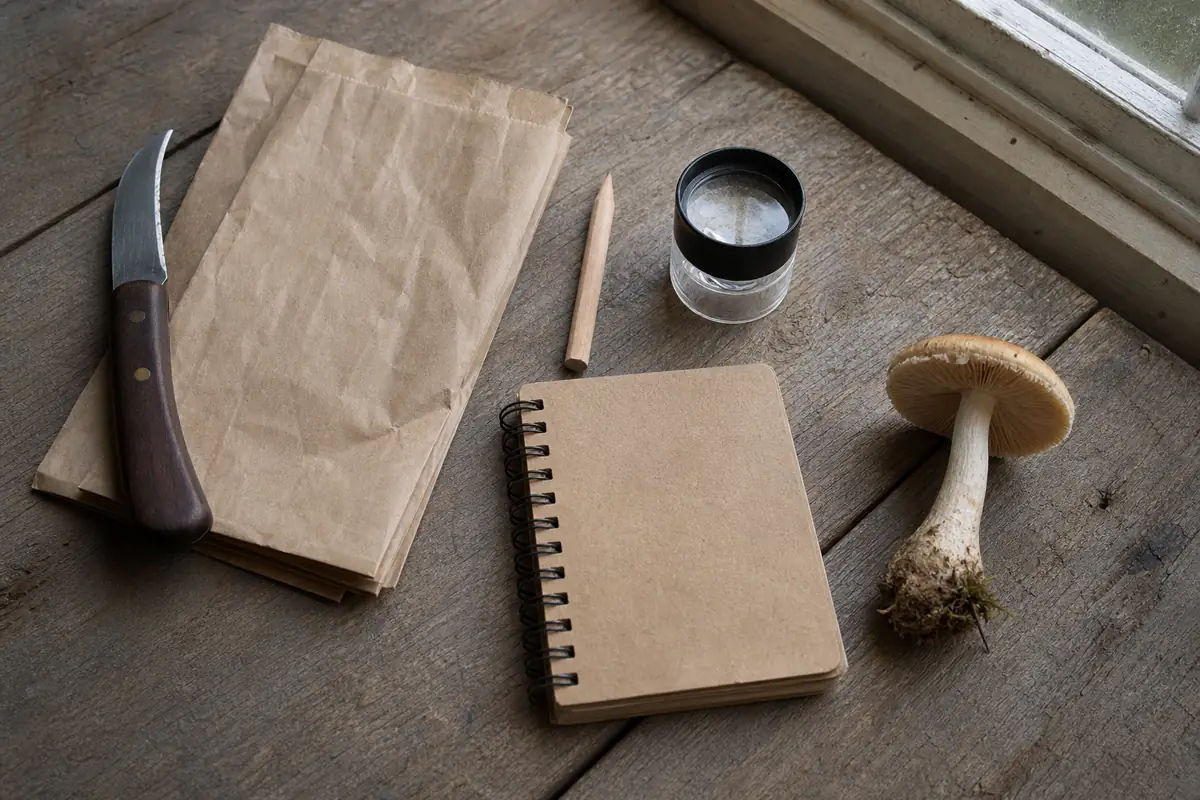
Carry what preserves evidence.
- A current local field guide or regional key
- Paper bags or waxed paper for separate specimens
- A phone or camera with spare power
- A small notebook and pencil that still work when damp
- A hand lens and a ruler for close features and size
- Water, weather layers, navigation, and the land manager's current rules
The best trip plan names the habitat and stop time without promising a harvest.
A dry site, closed area, or collection of damaged mushrooms is a valid reason to go home with photographs only.
Record the mushroom before you move it
The first photograph should show the untouched mushroom and everything immediately around it. Include the tree, log, soil, leaves, or grass that explains where it grew, then move closer for structure.
Photograph several stages if they occur together. Young and mature caps may look different, while a tight cluster or scattered pattern can carry more identification weight than one perfect cap.
Photograph the same unknown specimen in this sequence every time.
- Show the whole group before touching it
- Show the cap surface in natural light
- Show the underside without tearing it away
- Show the complete stem and base after one specimen is lifted carefully
- Show the attachment to wood or the soil cavity it left
- Note nearby trees, odor, bruising, recent rain, and approximate size
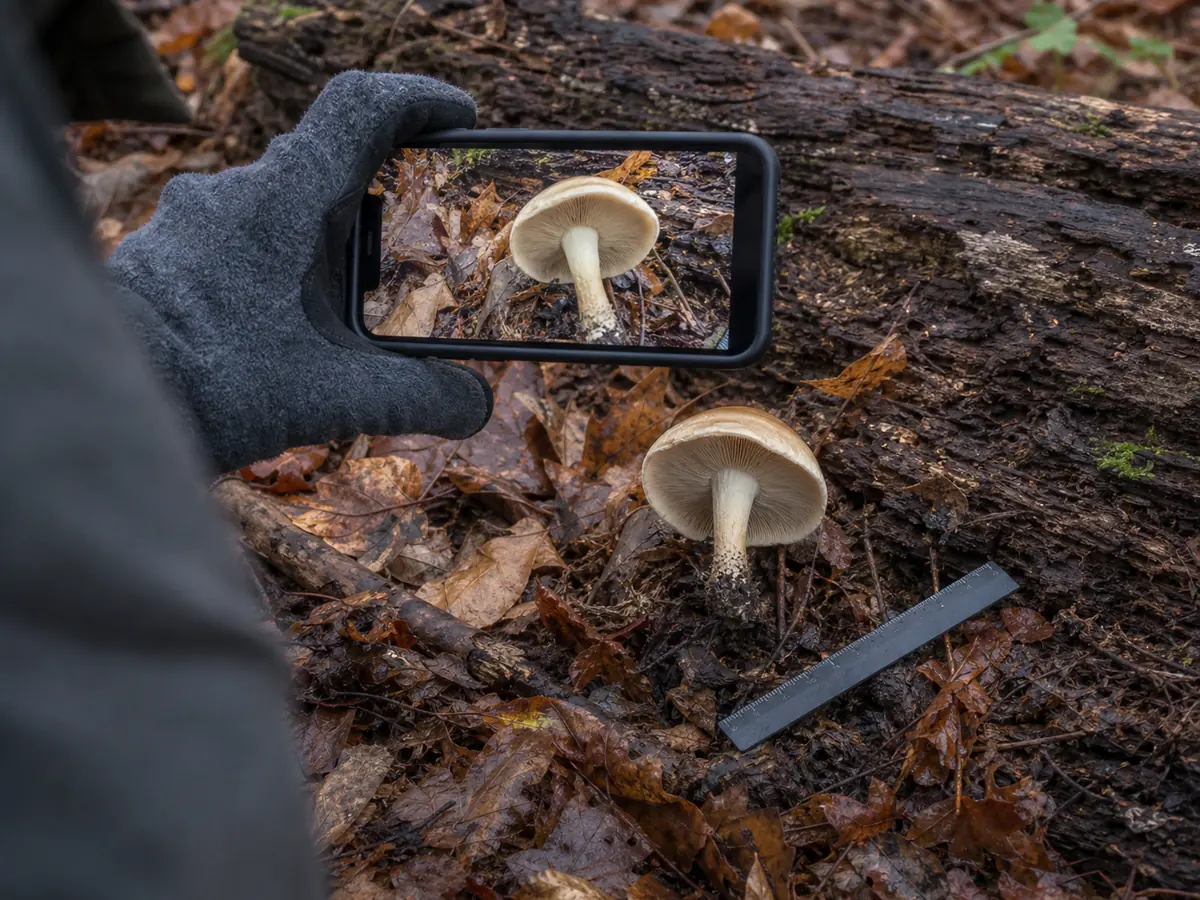
Write down what would prove the name wrong before you write down the name.
A safer field habit
Keep one complete specimen rather than a bag of loose caps. When local rules allow collection, place it in paper with notes from that location and keep the teaching specimen apart from identified food.
That saved specimen can produce an accurate spore print after the field work, but the print cannot declare the mushroom edible on its own. Several dangerous and edible species share similar print colors.
Photo apps can suggest names for later study, but only a reviewer with the base, underside, habitat, and specimen condition can challenge a tempting match.
ForagingWhen Is Oyster Mushroom Season?Decide what stays out of the basket
Season and habitat can tell you where to look, but they cannot finish an identification. A mushroom moves toward food only when every required feature matches and dangerous regional alternatives have been ruled out.
Leave old, waterlogged, moldy, insect-filled, or partly missing mushrooms for observation. Even a correctly named edible can cause trouble when it is badly decayed, and damaged material makes a reliable identification harder.
Skip mushrooms beside busy roads, treated lawns, industrial ground, and other places with uncertain contamination. The species name does not remove chemicals, heavy metals, pet waste, or road residue from the collection site.
These field safety rules apply before any specimen enters the basket.
Photograph an unknown mushroom and keep one study specimen separate when collection is legal
Ask a local expert to review the whole specimen and habitat record
Cook a confirmed edible species according to species-specific guidance
Eat a mushroom because the season, color, or photo app looks right
Keep a specimen after its base and original group can no longer be matched
Serve a new wild species to several people at once
If someone may have eaten an unknown wild mushroom, do not wait for symptoms. Mushroom first-aid steps are time-sensitive because photos, leftovers, and location details are easiest to save right away.
Some mushroom poisoning symptoms begin only after a person has felt well for hours, so an early lack of pain does not clear the meal.
Keep leftover mushrooms, cooked food, photographs, and the collection location available for the poison specialist. Immediate expert help matters more than an online name.
In the United States, Poison Control is available at 1-800-222-1222.
Leave the patch ready for another flush
The mushroom is the visible fruiting body. Most of the organism remains as mycelium in soil, roots, or wood, where it decomposes material, exchanges nutrients with plants, or lives as a parasite.
Low-impact collecting protects both habitat and evidence. Cut or lift only the specimen needed for study, replace disturbed leaves, avoid crushing nearby fruiting bodies, and never rake the forest floor for hidden caps.
Follow the land unit's quantity and species rules even in a large patch because personal-use limits differ by forest and some parks allow photography but prohibit collection.
- Stay on durable ground when you can reach the specimen without trampling a cluster
- Leave very young, old, and damaged mushrooms in place
- Take one clear sample instead of every fruiting body
- Pack out bags, flagging, food, and other litter
- Record the patch privately so you can compare rain and timing in another year
Return visits are useful because fruiting changes from year to year. A simple record of rain, temperature, habitat, and species gives you a local seasonal pattern that a national calendar cannot provide.
Note
Take the smallest legal sample that answers the identification question. The best fall record is a complete set of observations, not the heaviest basket.
Sources
- The Forest Service monitoring report ties fall rain and year-to-year variation to mushroom survey results.
- The Forest Service field guide describes the ecological roles of mycorrhizal fungi, decomposers, and other forest macrofungi.
- The Poison Control warning covers expert identification, delayed symptoms, and immediate help after a suspected ingestion.
- The NAMA toxicology guidance explains how to preserve a suspect specimen for identification after a poisoning concern.
- The Siuslaw permit example shows collection limits and permit rules tied to one land unit.
Sources & References
- iNaturalist Seasonal observation data for fall-fruiting species.
- North American Mycological Association Regional foraging seasons and foray schedules.
- Lincoff, G. (1981). National Audubon Society Field Guide to Mushrooms Seasonal fruiting patterns for North American species.