What is a wood blewit?
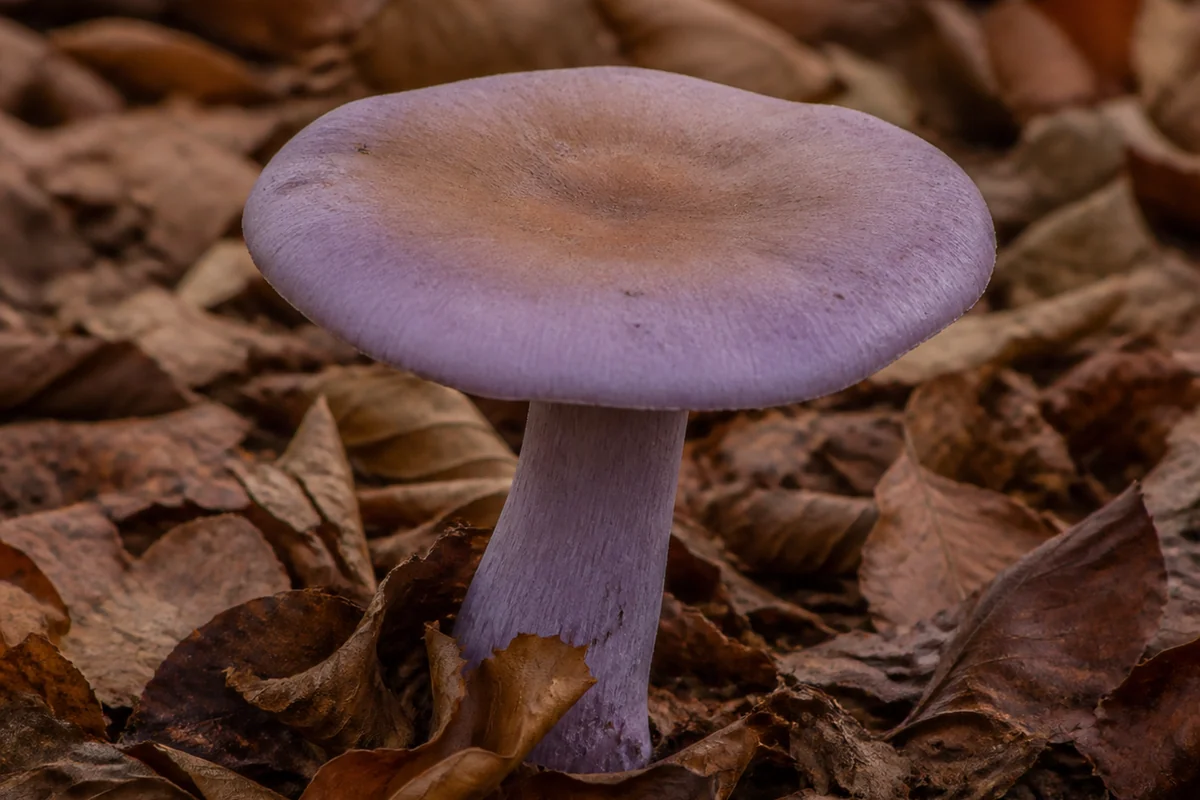
A wood blewit is a solid lilac gilled mushroom that comes up in leaf litter late in the year, with a thick violet stem and gills the same color when young.
The color fades from the middle outward as it ages, so an older cap is tan or buff on top with the lilac surviving longest at the margin and on the stem.
That fading is worth expecting, because a photograph of a young one and a photograph of an old one look like two different mushrooms. The name blue leg points at the part that keeps its color, and the stem is usually the most strongly lilac thing about a mature specimen.
Blewit itself is a worn-down version of blue hat, which is a fair description of a young one and a poor description of most of the ones people find.
The cap margin is worth noticing early. It stays rolled under for much longer than most gilled mushrooms of this size, so a blewit often looks slightly tucked in at the edge even when the cap has flattened.
How do you identify a wood blewit?
Lilac to violet when young, fading through tan and buff from the center outward, 6 to 15 cm across, domed then flattening with a margin that stays rolled under for a long time.
Crowded and lilac when young, notched sharply where they meet the stem, and fading to buff and then brown with age.
Solid and thick, lilac and often more strongly colored than the cap, 5 to 10 cm tall and 15 to 25 mm across, fibrous, and completely bare of any veil.
Thick, pale lilac to buff, with a faint sweet smell that most people describe as aniseed or floral.
Six characters are available and two of them do the work. The other four are supporting evidence, and treating them as the decision is how people get this mushroom wrong.
The smell is the clearest example of a supporting character. It is genuinely distinctive, most people recognize it after one or two specimens, and it still cannot name a mushroom on its own.
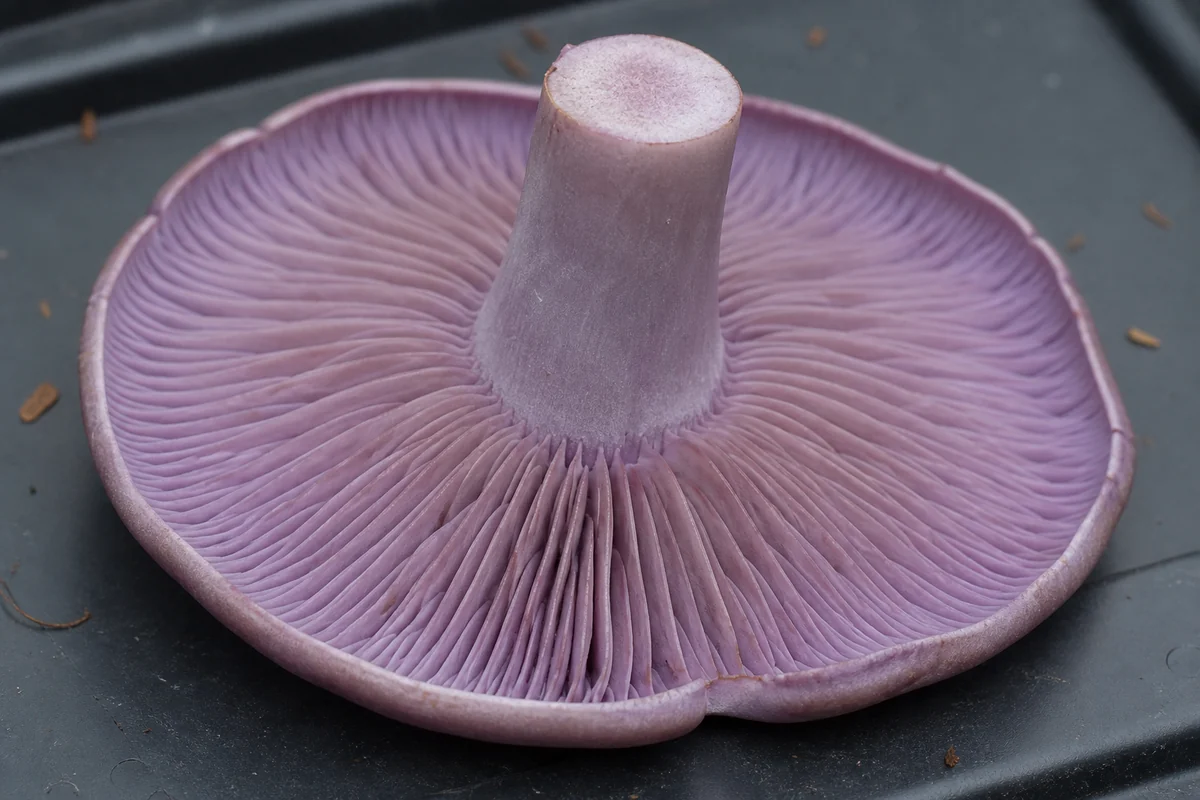
The measurements place it as a substantial mushroom rather than a small one.
| Character | Wood blewit | Note |
|---|---|---|
| Cap | 6 to 15 cm across | Margin stays rolled under a long time |
| Stem | 5 to 10 cm tall, 15 to 25 mm thick | Solid, never hollow |
| Gills | Crowded, notched at the stem | Lilac young, buff to brown later |
| Smell | Faint aniseed or floral | Distinctive once known |
| Spore print | Pale pinkish buff | The character that decides it |
The spore print is not a formality here and it takes hours, so it has to be planned rather than squeezed in.
Cut the stem off flush, lay the cap gills down on white paper, cover it with a bowl and leave it overnight.
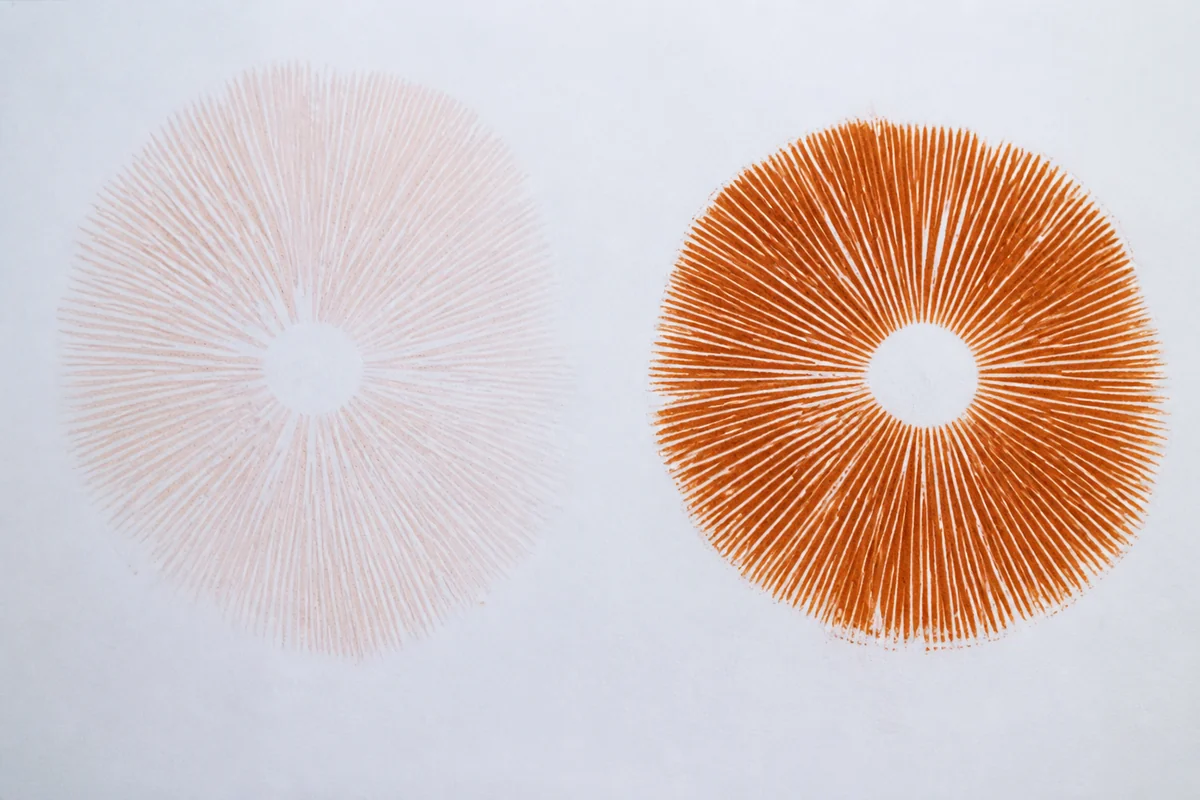
A pale print on white paper is faint, which is why the cap is worth laying across the join between a white sheet and a dark one. Read it in daylight rather than under a kitchen bulb, and tilt the paper so the light rakes across it.
A pale print reads more as a texture than as a color at first, and warm indoor light pushes everything toward buff, which is the exact shade the test turns on.
There is a full method for taking prints if this is the first one you have done, and the only part specific to this mushroom is the paper.
The rusty brown of the mushroom this test is protecting against is strong enough to read on either color.
What purple mushrooms can be mistaken for a wood blewit?
The lookalike is not a species, it is a genus, and that is what makes this mushroom worth a careful page. Cortinarius is a very large genus of woodland mushrooms, a good number of them are purple or violet, and several contain orellanine, which damages kidneys slowly enough that people do not connect the illness to the meal.
The deadly webcap is the member of that genus this site covers in detail, and it is where the poisoning itself is described.
Warning
Never eat a purple mushroom on color and shape. A young webcap carries a fine cobweb veil from the cap edge to the stem, and once that veil breaks it leaves rusty threads and a rusty dusting on the stem. A wood blewit stem is bare at every age.

An older webcap has lost its veil, which is exactly why the spore print exists as a second test. Most of the purple mushrooms anybody actually picks are past the stage where the veil is still there to reject them.
Print every purple mushroom before eating it
Reject anything with threads or rusty dust on the stem
Treat a faded tan cap with a lilac stem as unidentified until printed
Rely on the lilac color, however striking it is
Assume a bare stem means a blewit when the mushroom is old
Eat any purple mushroom picked by somebody else without printing it yourself
There are also several other lilac-tinted edibles in the same broad group, including the field blewit, which is a paler mushroom of open grassland with a lilac stem and a buff cap. Mixing those two up costs nothing, because both are edible after cooking and both are handled the same way in a kitchen.
The dangerous confusion runs in one direction and one direction only, which is a purple webcap taken for a blewit.
That asymmetry is worth stating because it tells you where to spend your attention. Nobody is harmed by being unsure which blewit they have, and somebody can be harmed badly by being confident about a purple mushroom they never printed.
Warning
A bare stem and a pale print together are what make a wood blewit safe to eat. Either one on its own is not enough, and the lilac color is not evidence of anything at all.
Do you have to cook wood blewits?
Wood blewits must be cooked and must never be eaten raw. Raw material causes stomach upset, and this is not a texture preference or a general caution about wild food.
Cook them properly rather than briefly. A hot pan long enough to drive the water off and brown the pieces is the standard, and this is not a mushroom for a quick sear or a salad.
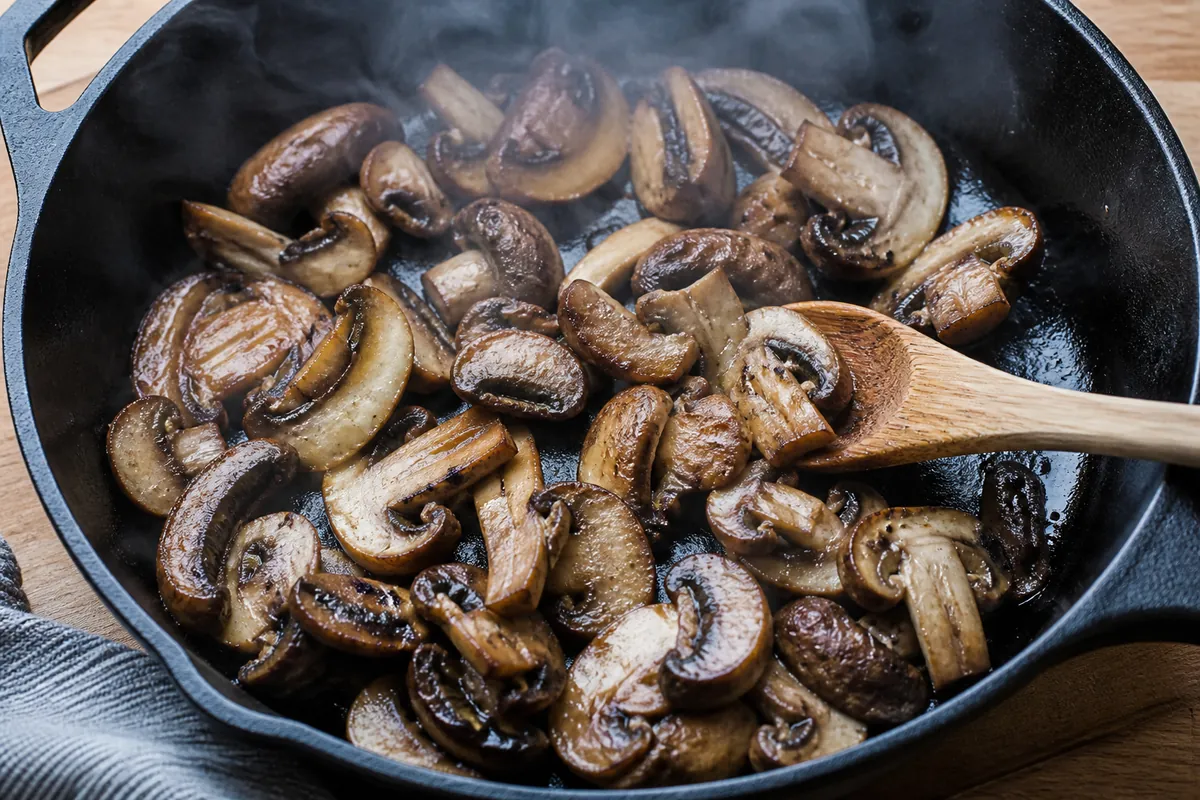
Even well cooked, some people find them indigestible.
Note
That is reported often enough to be worth planning for, so eat a small portion the first time and leave a day before eating more. It is the same approach any mushroom with an individual-reaction record deserves.
Cleaning is straightforward and worth doing dry. Brush the leaf litter off rather than rinsing, since the flesh is thick and takes on water readily, and trim the base where soil has gripped the fibres.
The flavor is distinctive and not to everybody's taste. The aniseed note in the raw flesh carries through into the pan as something floral and slightly perfumed, which some people love and others find soapy.
They hold their texture well, staying firm where many autumn mushrooms collapse, and they suit stews, cream sauces and anything cooked slowly.
Older specimens with brown gills are worth leaving. The color has gone, the texture has softened, and the identification is harder on exactly the character that matters most.
When and where do wood blewits grow?
The wood blewit is saprotrophic, breaking down fallen leaves rather than partnering with living trees.
That makes it far less fussy about location than most woodland mushrooms. It fruits in mixed woodland leaf litter, along hedge bottoms, under garden shrubs and straight out of compost heaps.
- Ground
- Leaf litter, hedge bottoms, gardens and compost
- Habit
- In groups, often in rings or arcs
- Main season
- August into December, and later in mild spells
- Trigger
- Autumn rain, and it keeps going through the first frosts

Arcs and rings are common where it has been established a while. The fungus spreads outward through the leaf litter and fruits at its advancing edge, so the curve marks the growing front rather than anything buried underneath.
The timing is the second reason this mushroom matters. It is one of the last things fruiting in the autumn season, carrying on well past the point when most species have finished.
Frost changes its appearance rather than ending it.
A blewit that has been through a hard night can look washed out and watery compared with the same species in October.
That late season puts it in front of the wrong audience. The people out walking in November are usually not foragers, and a bright lilac mushroom in a bare hedge is exactly the kind of find that gets picked by somebody who has never taken a spore print.
Can you grow wood blewits at home?
The wood blewit is one of the few good wild woodland edibles that can genuinely be grown at home, and the reason is that it eats dead leaves rather than living roots. An outdoor bed of leaf mold, straw and compost in a shaded corner can be sown with spawn and will fruit in autumn, sometimes for several years running.
It is slow to establish and it fruits on its own schedule, so it belongs in the same category as a fruit tree rather than a windowsill kit.
Commercial cultivation exists on a small scale and has never grown large. The mushroom bruises easily, the color fades in transport, and a faded blewit is a hard thing to sell to somebody expecting lilac.
Is there any medicinal use?
There is no medicinal use of the wood blewit and no clinical literature behind it.
It is a seasonal food with a caution attached, and that is the whole of its claim.
Is it worth eating for nutrition?
Cooked wood blewits give the ordinary profile of a substantial wild gilled mushroom, which is mostly water with some protein, B vitamins, potassium and a useful amount of fiber.
The flesh is denser than most autumn species of the same size, so a given weight shrinks less in the pan.
It sits among the edibles that carry a caution rather than among the straightforward ones, and the caution covers both the cooking and the print.
None of that is why anybody picks one. This mushroom is picked because it is beautiful, because it arrives when nothing else does, and because it holds together in a slow dish.
Why is the wood blewit called Clitocybe in older books?
Older books file this mushroom under Clitocybe nuda, and some still do, which is why the same species turns up under two names in a single bookshelf.
The move to Lepista followed spore characters rather than appearance. Blewit spores are roughened and pale pinkish, and that separated them from the funnel-shaped white-spored group they had been sitting in.
Note
An older name is not a wrong name so much as an earlier answer. A field guide using Clitocybe nuda is describing the same mushroom, and the practical characters in it are still good.
Grouping these mushrooms by color alone can lead to the wrong identification.
Purple mushrooms were once grouped together on the assumption that a striking shared color meant a shared ancestry, and spore work took that apart.
So the reason a wood blewit and a purple webcap look alike is not that they are related. It is that violet pigments turn up repeatedly in unrelated fungi, which is precisely why a color cannot carry an identification.
Frequently Asked Questions
Is wood blewit edible?
How do you tell a wood blewit from a purple webcap?
What happens if you eat wood blewit raw?
What does a wood blewit smell like?
When is wood blewit season?
Why did my wood blewits turn brown?
Sources & References
- Lepista nuda, Wood Blewit mushroom Field description used for the cap and stem dimensions, the sinuate crowded gills, the lilac fading sequence, the pale pinkish buff spore print, the faint aniseed smell, the leaf litter and compost habitat, the August to December season, the note on appearance after the first frost, and the statement that wood blewits must be cooked and are indigestible for some people even then.
- Lepista nuda and a poisonous look-alike, Cortinarius archeri Account of the purple Cortinarius confusion used for the separation by cortina and by spore color, and for the point that the resemblance is a genus-level problem rather than a single species.
- #223: Lepista nuda, The Blewit Species account used as a second check on the bare stem, the absence of a cortina at every age, and the taxonomic move from Clitocybe to Lepista on spore characters.