Northeast mushroom season shifts with latitude, elevation, and recent moisture. Check the exact land rule first, search by host and substrate, and keep every uncertain specimen separate for expert review.
Mushroom foraging in the Northeast works best from spring through fall, but no single calendar fits the whole region. Latitude, elevation, and recent moisture set three different clocks, so the useful season begins when those signals agree in the forest you can legally enter.
This guide covers the nine states in the U.S. Census Northeast.
They are Maine, New Hampshire, Vermont, Massachusetts, Connecticut, Rhode Island, New York, New Jersey, and Pennsylvania.
Why does the Northeast season vary so much?
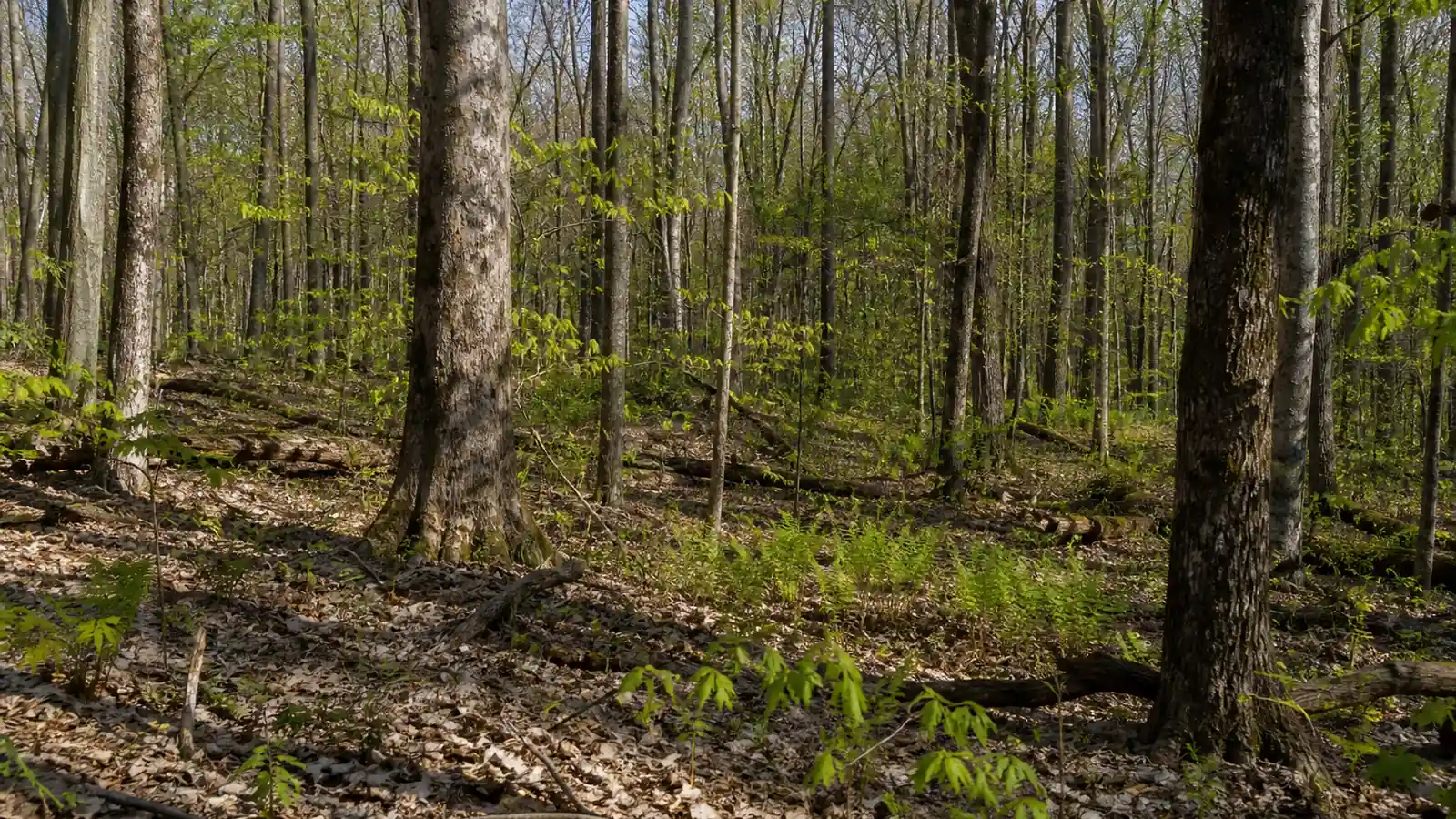
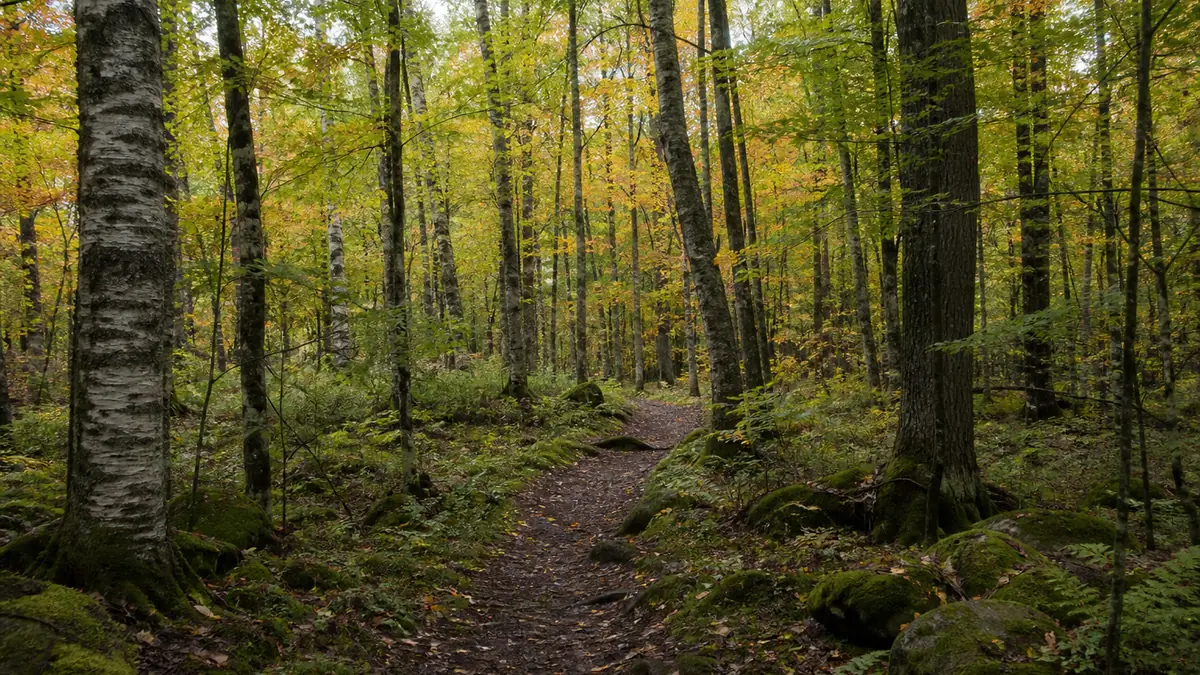
The same Saturday can bring full leaf-out to coastal New Jersey, cool spring soil to central New York, and lingering cold on a mountain in Maine. A regional month tells you where to begin looking at conditions, but it cannot tell you that a particular fruiting has started.
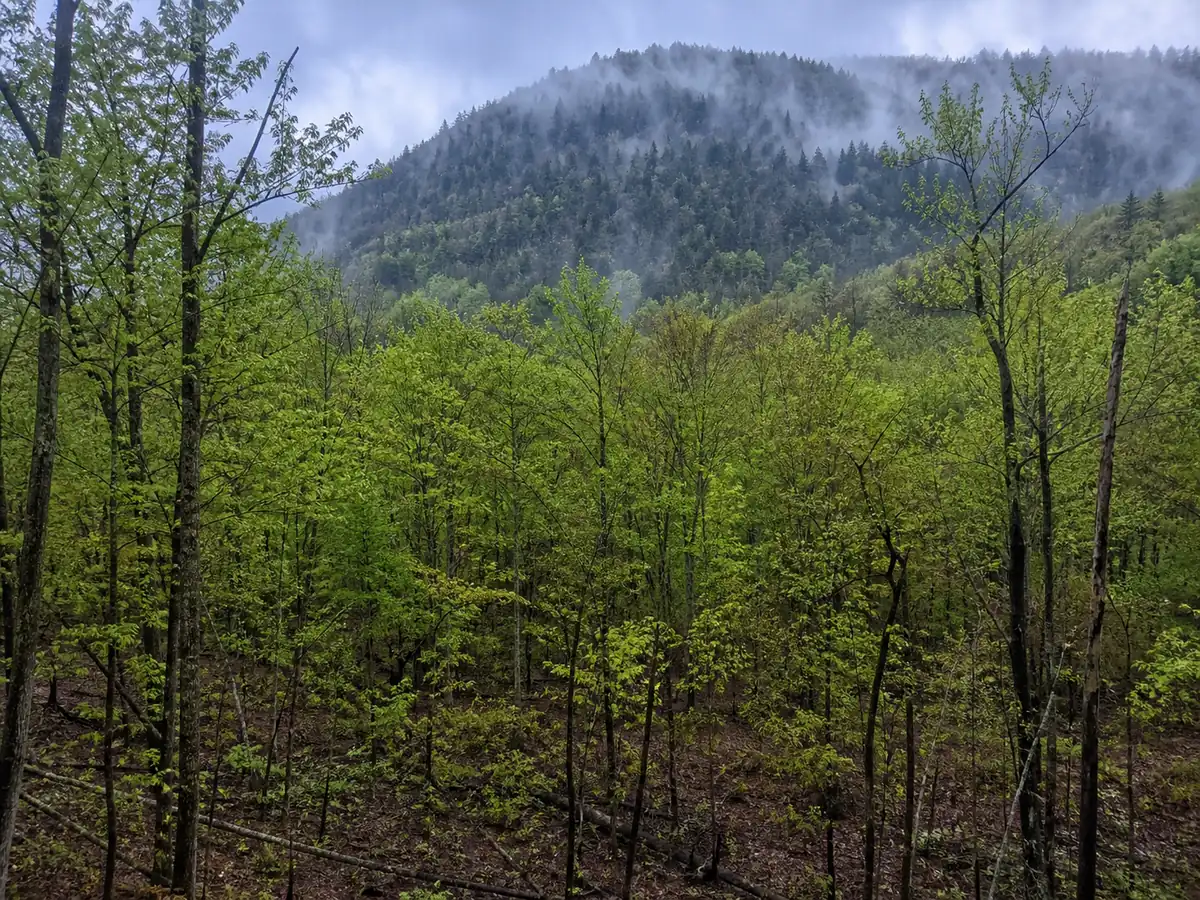
Latitude is the first clock because seasonal warming generally advances northward in spring and retreats southward in fall. Elevation is the second because a high ridge can remain cooler than a nearby valley and can reach frost sooner later in the year.
Recent moisture is the third clock, and it can interrupt the other two.
USDA Forest Service field guidance notes that temperature and precipitation strongly influence visible mushroom production, which explains why a normally productive week can stay quiet during drought.
Use these clocks as a sequence rather than three points on a scorecard.
- Start with the seasonal stage at your latitude, including leaf-out, frost, and soil thaw.
- Move the search uphill or downhill when elevation has advanced or delayed that stage.
- Confirm that recent rain reached the forest floor and that wind has not already dried exposed ground.
A useful trip forecast is local and conditional. If the low hardwood valley has warmed and received soaking rain while the ridge remains cold, redirect to the valley instead of declaring the entire Northeast early.
The clocks predict opportunity, not identity. A mushroom found in the expected place at the expected time still needs a complete set of physical characters before anyone can name it, and a name still needs an independent edibility decision.
ForagingMushroom foraging laws in France: what the five liter rule meansWhen does spring foraging start in the Northeast?
Spring searches usually begin in the warmer, lower parts of the region and move north or uphill as the season develops. In Centre County, Pennsylvania, Penn State mycologists describe morels appearing during roughly the last two weeks of April, but that observation is a local reference rather than a nine-state appointment.
Mid-Atlantic field research reports repeated morel associations with apple, ash, elm, and tulip poplar.
Tree condition also matters because many observations cluster around declining or recently dead trees, while old orchards and moist hardwood bottoms provide additional search contexts.

Search habitat in an order that preserves context.
- Check warm hardwood edges and lower slopes before shaded north-facing ground.
- Scan around elm, ash, tulip poplar, and old apple trees without assuming an association proves the mushroom.
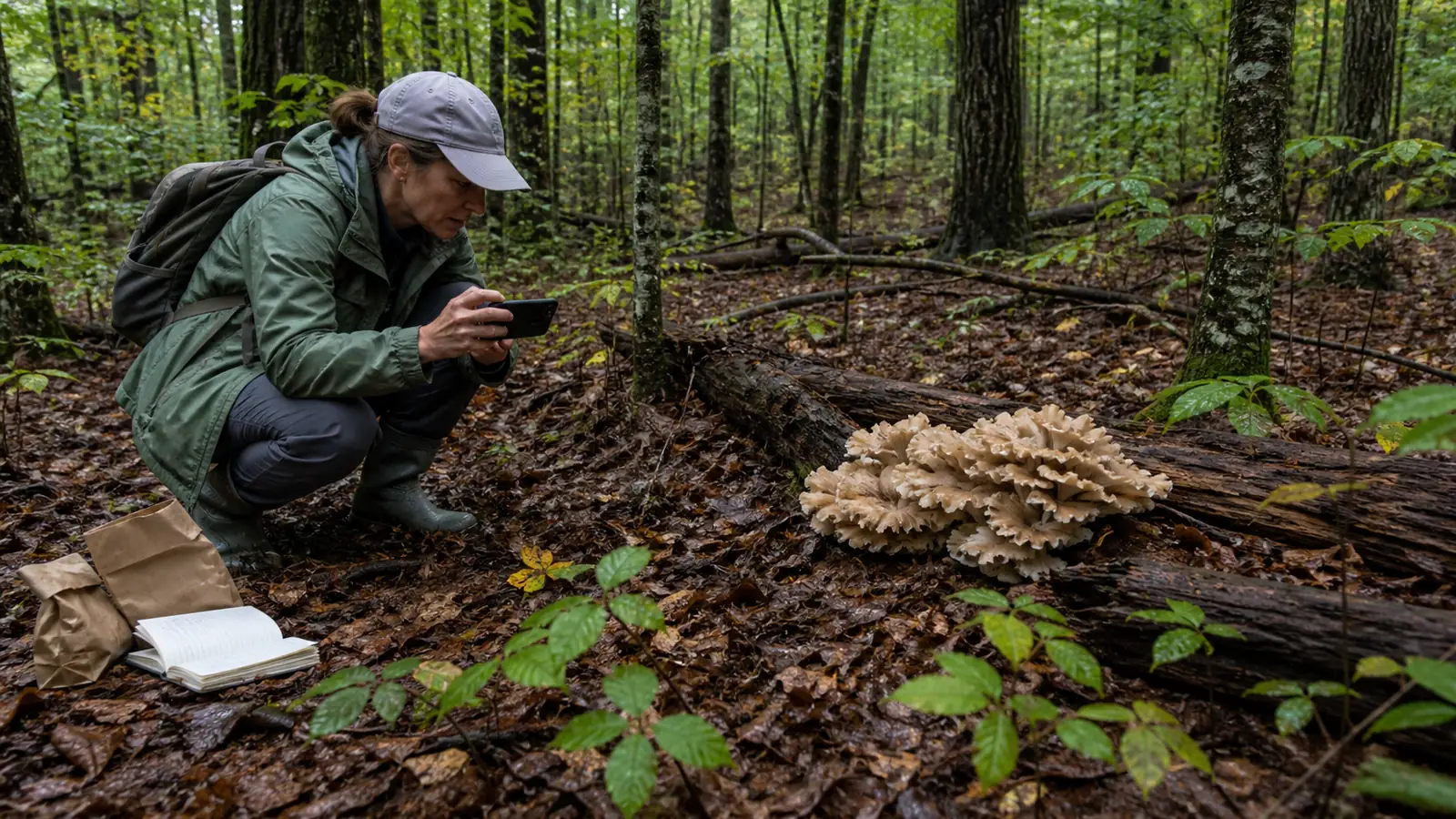
- Photograph the intact fruit body, surrounding leaf litter, and nearby tree before collection.
| Spring signal | What it supports | What it cannot prove |
|---|---|---|
| Thawed, warming soil | The local spring window may be opening | A particular species has emerged |
| Declining elm or old apple | A reported eastern morel association is present | The nearby mushroom is a true morel |
| Several mild wet days | Conditions may support fruiting | The patch will produce on this visit |
| A pitted cap in leaf litter | The specimen deserves a closer examination | The specimen is edible |
Timing and tree association narrow a search, not an identification. False morels can appear during the same broad season, and some have caused severe illness or death.
A complete spring specimen matters more than a full bag. Lift one carefully enough to retain the entire stem base, keep it separate, and record the tree, substrate, slope, moisture, and growth pattern while those details remain visible.
The broader spring mushroom succession also includes fungi that fruit from wood, soil, buried roots, and landscaped mulch. Treat every unfamiliar form as a new identification problem instead of stretching the morel search image to fit it.
Where do you look in summer?
Summer replaces the spring warming question with a moisture-retention question.
Chanterelles and black trumpets can make hardwood forests worth checking, but a thunderstorm over a dry canopy may wet the leaves without recharging the litter and soil below.
The best evidence comes from the site itself. Press beneath the loose surface litter, compare a sheltered hollow with an exposed ridge, and note whether recent wind has removed moisture faster than the canopy could protect it.
Note
Rain raises the chance of fruiting only when the water reaches suitable habitat and temperatures remain useful. It never confirms that mushrooms will appear on a fixed number of hours after the storm.
Three observations help separate a promising summer forest from a merely wet trailhead.
- Leaf litter feels cool and damp below the surface rather than wet only on top.
- Hardwood shade and a protected slope have slowed evaporation since the rain.
- Known host trees and suitable soil or wood occur in the same search zone.
Follow retained moisture, not the radar color from two days ago. A sheltered hardwood hollow may remain productive after a sunny edge has dried, so shift the route inside the same property before abandoning the trip.
Chanterelle-type mushrooms demand attention to the underside, flesh, growth form, and habitat because orange color alone captures unrelated species. Black trumpets need the same discipline even though their dark, hollow form can look distinctive once a searcher knows the group.
Regional familiarity does not remove that obligation because Poison Control warns that identification knowledge learned in one area may not transfer safely to another when local species and lookalikes change.
When a site remains dry below the top leaves, use the trip for habitat mapping rather than collection. Record mature hardwood stands, drainage lines, mossy benches, fallen timber, and legal access points, then return after conditions materially change.
ForagingMushroom foraging laws in Germany: protected species and small quantitiesWhat grows in the Northeast in fall?
Fall often offers the widest mix of search jobs because cooling air slows drying while seasonal rain can recharge forest litter and dead wood. Northern high ground may close early after hard freezes, while lower Middle Atlantic forests can remain active later.
Penn State phenology notes place chicken-of-the-woods on stumps and dying trees in late summer and describe hen-of-the-woods emerging at oak bases or stumps into October.
Those patterns divide the walk into distinct zones instead of one general scan for color.
Build a fall route around substrate.
- Circle selected mature oaks and inspect the root flare without kicking aside every leaf.
- Scan standing snags, wounds, and stumps for attached shelves.
- Examine fallen hardwood from several angles, including the shaded side close to the ground.
Fall abundance creates more identification work, not less. A route may produce several unrelated mushrooms within a few meters, and combining them in one container can erase which cap belonged to which stem, substrate, and field photograph.
Hen-of-the-woods, also called maitake, develops as a branching cluster near the base of oak or from buried wood. Chicken-of-the-woods forms shelves on wood, while oyster mushrooms also occupy wood but require their own complete identification.
Return visits outperform a single long walk when the site has moisture and suitable substrate. Young fruit bodies can change quickly, but a drought-stressed forest or repeated freeze can halt the useful window despite the month looking ideal.
The first hard frost does not make every woodland mushroom vanish because some wood-decaying groups tolerate cool weather.
It does change the plan because damaged, frozen, waterlogged, or decaying specimens provide poorer evidence and poorer material for any later expert assessment.
Why does the substrate matter more than the cap?
Fungi do different work in a forest. Some form close relationships with living trees, while decomposers digest dead wood and litter, so substrate can shrink a large forest into a series of specific search zones.
The visible cap is only a reproductive structure from a much larger hidden organism. That fact explains why random cap scanning wastes time and why the material beneath a specimen belongs in every field record.
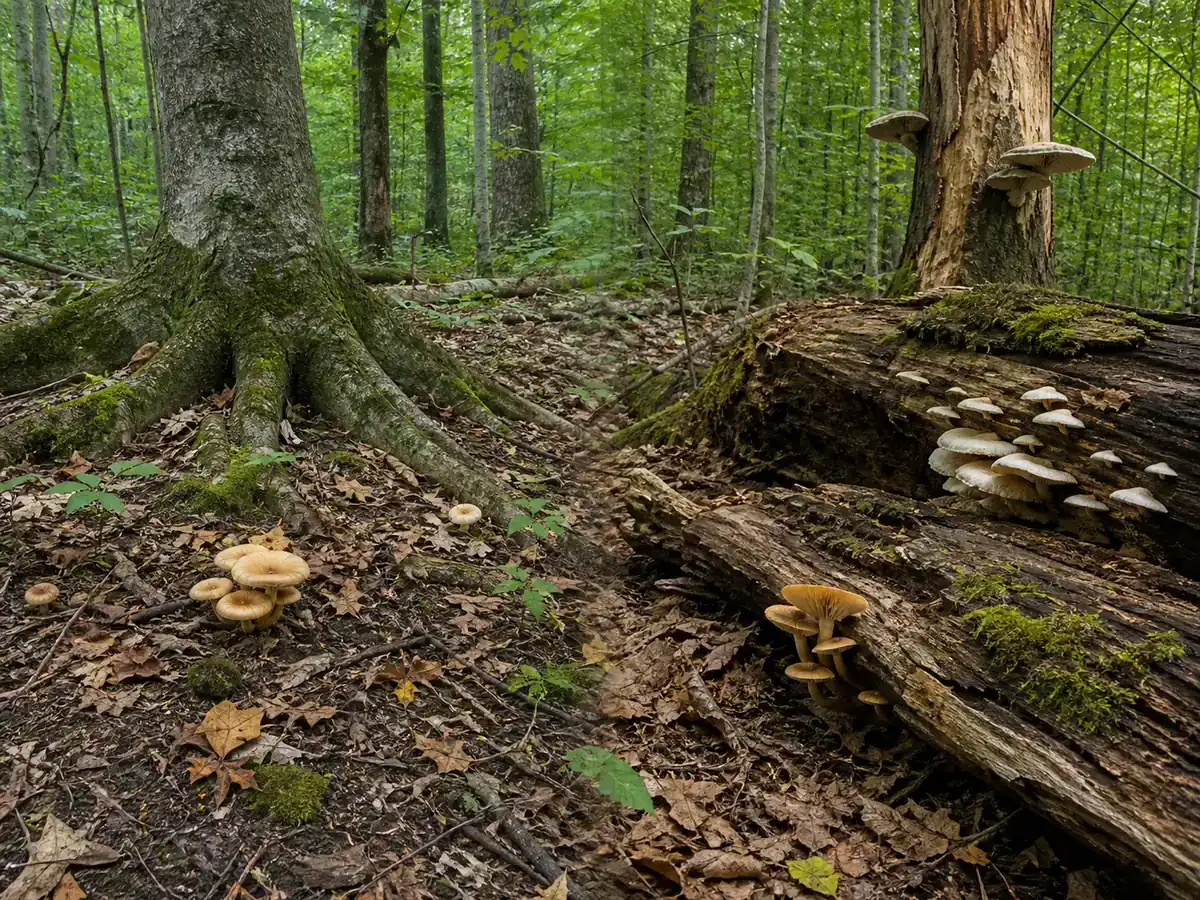
That attachment can overturn the first impression because a cluster that appears terrestrial may connect to a buried root, changing both the ecological question and the list of plausible identities.
| Growth context | First observation | Evidence to preserve | Common mistake |
|---|---|---|---|
| Soil near a living tree | Tree species and distance from trunk | Soil contact, root zone, group pattern | Naming the mushroom from the tree alone |
| Base of a trunk | Whether wood is living, dead, or wounded | Exact attachment and full cluster | Cutting away the attachment before a photo |
| Fallen log or stump | Hardwood or conifer and decay stage | Bark, wood texture, upper and lower surfaces | Recording only a generic forest location |
| Apparently bare ground | Buried roots, chips, or wood below | A careful view of the true attachment | Assuming every ground mushroom grows from soil |
Do not excavate an entire patch to prove that connection. Remove one representative specimen carefully when collection is legal, retain the stem base and attached material, then replace disturbed litter.
This approach also protects the boundary between habitat guidance and species guidance.
Habitat tells you where to spend attention, while a dedicated profile or identification key must resolve cap surface, underside, stem, flesh, odor, bruising, spores, age, and local lookalikes.
ForagingMushroom foraging laws in the UK: what is actually legalCan you forage on public land in the Northeast?
Public access does not automatically include a right to remove fungi. The controlling rule can change between a state forest, state park, ecological reserve, national forest unit, municipal watershed, land-trust parcel, and private property.
Pennsylvania illustrates the variation. State-forest rules permit gathering certain edible wild plants for personal or family consumption, but a DCNR notice for the Wildflower Reserve at Raccoon Creek State Park explicitly prohibits picking fungi and other natural material there.
That variation is why New York DEC gives the durable answer rather than a statewide shortcut.
Regulations vary with the type of state land, so visitors should check with the relevant regional office or forest ranger for the exact area.
Warning
Read the current rule for the named property before collecting. A general state page, an old forum post, or permission to hike does not prove permission to remove mushrooms today.
Use a property-level check before packing collection gear.
- Identify the landowner and the managing unit shown on the current official map.
- Find the rule for fungi, natural materials, personal use, quantity, and protected zones.
- Contact the office when the written rule is silent or the boundary is unclear.
- Obtain written private-land permission and keep it with the trip record.
- Leave every specimen in place when permission remains unresolved.
Commercial intent changes the question. New Hampshire requires a license for people who harvest, identify, or distribute wild mushrooms for sale to food establishments, and federal or state lands may impose separate commercial permits or bans.
The safest practical rule is simple. No clear permission means no collection, though observation and photography may still be allowed if you remain on an authorized route and follow property rules.
This legal filter should happen before weather analysis because an ideal fruiting forecast cannot make a closed reserve eligible.
It also prevents a productive field day from ending with confiscated specimens or resource damage.
How far ahead should you plan a trip?
A useful Northeast plan combines several imperfect signals without pretending they create certainty. Start two days before the walk so there is time to verify access, redirect elevation, and clean the equipment that will preserve evidence.
For example, suppose central Pennsylvania has received steady rain after a dry week, the valley forecast is mild, and a higher ridge will stay cool and windy.
The defensible plan is to confirm a legal valley property, choose two substrate zones there, and treat the ridge as a later option rather than covering both poorly.
Verify the property
Read the current official rule for that exact unit and resolve collection limits before checking weather
Read the moisture trend
Compare rainfall, drying wind, temperature, and the previous week's dryness instead of using one forecast icon
Adjust for elevation
Choose a lower warmer route in early spring or a cooler protected route during summer heat when the seasonal stage supports it
Choose two habitat jobs
Name the host trees, soil zones, stumps, or fallen wood that answer the trip's specific search question
Prepare clean separation
Carry cleanable containers or separate paper bags, labels, a ruler, a knife, a brush, and a notebook
Set the stop rule
Photograph and retain evidence, but collect no uncertain specimen for food and leave everything when permission is unclear
The sequence produces three honest outcomes.
- Go when the property is legal, the weather trend supports the habitat, and the route matches the seasonal stage.
- Redirect when a nearby elevation, aspect, or substrate retains better conditions within the same legal area.
- Wait when the property rule is unresolved, deep litter remains dry, damaging weather has passed, or safe travel conditions fail.
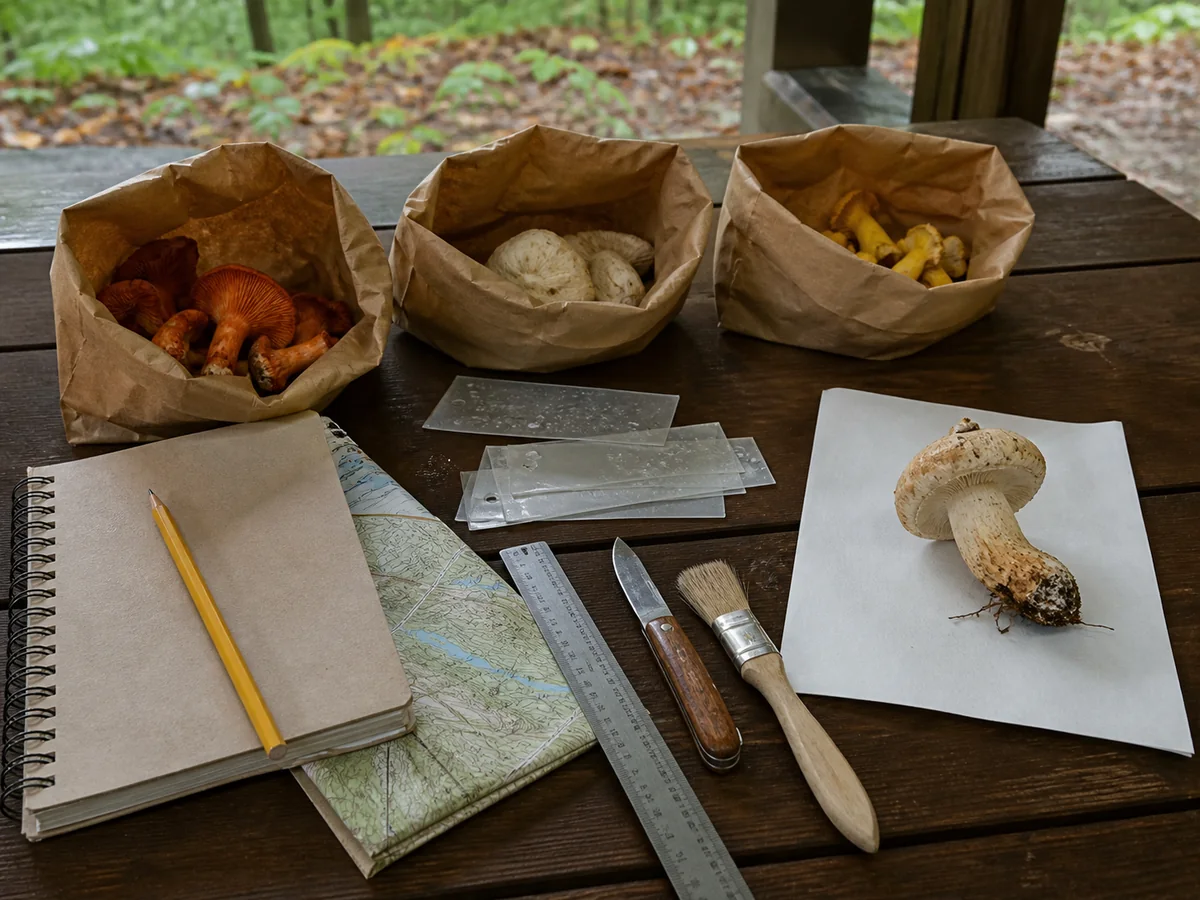
Decide the stop conditions before the first find. Excitement at a productive log is a poor time to invent rules for quantity, separation, uncertainty, or food use.
Clean hands, tools, and containers reduce contamination and spoilage. UNH Extension recommends learning from trained mycologists, which also turns a field record into something a local expert can assess rather than a bag of detached caps.
After the trip, log the date, recent weather, elevation, forest type, host or substrate, growth pattern, and the result of expert review.
Repeated records reveal the local calendar that a broad Northeast guide cannot supply.
When is a wild mushroom safe to eat?
Finding, identifying, and deciding whether to eat are three separate decisions. A season, host tree, app result, common name, or confident friend cannot safely collapse them into one.
Poison Control describes the evidence experts examine, including cap shape and texture, gills or pores, spores, the complete stalk and buried base, bruising, growth pattern, and substrate.
Some dangerous poisonings produce no immediate effects, and cooking does not make every toxic mushroom safe.
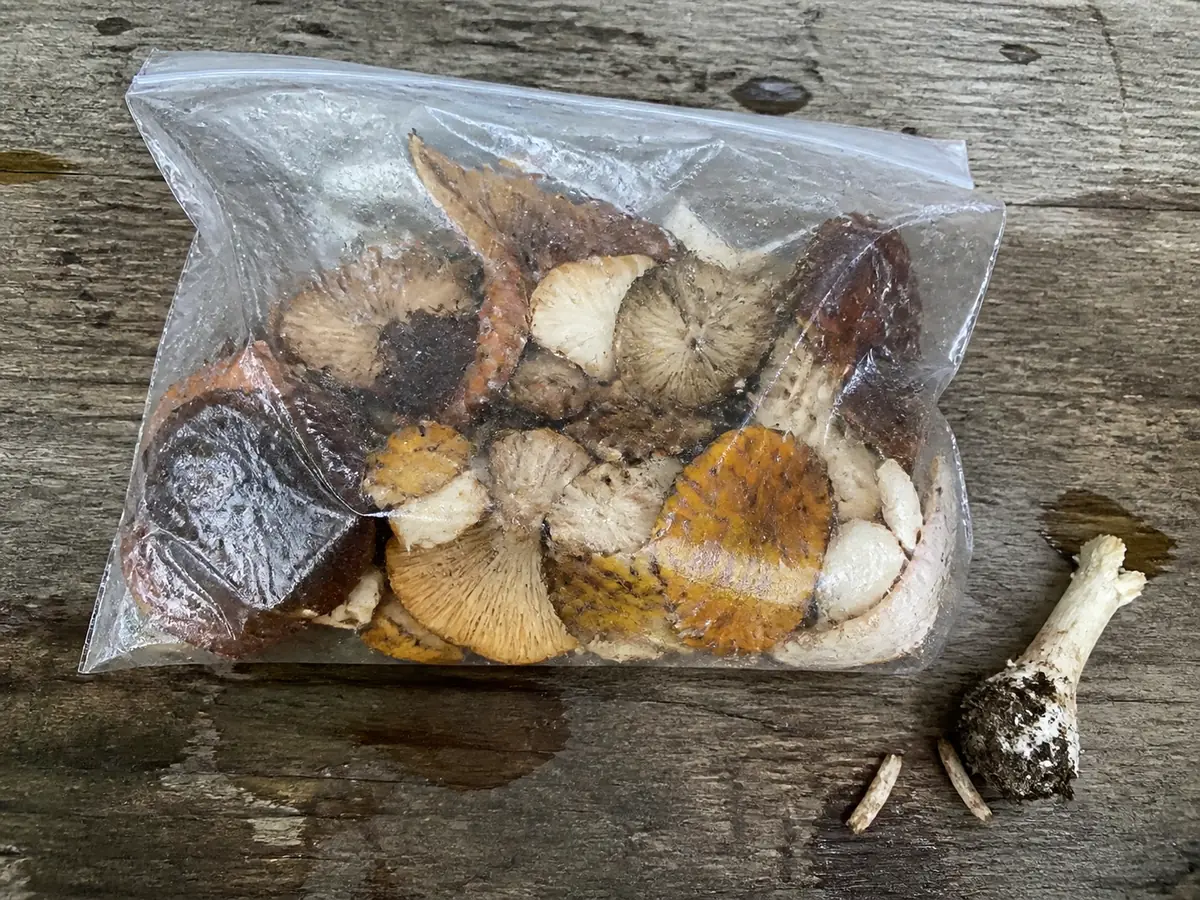
Preserve one complete evidence set for every unknown.
- Photograph the mushroom in place from above, below, and at habitat scale.
- Collect the entire fruit body only where permitted, including the buried stem base.
- Record nearby trees, exact substrate, growth pattern, odor, bruising, and changes over time.
- Keep each collection separate with a date, place, and specimen number.
- Make a spore print when an expert or identification key calls for it, but never use spore color alone.
- Seek confirmation from a qualified local mycologist before any food decision.
An uncertain wild mushroom is not food. The majority of wild species have not been tested for toxicity, and close lookalikes can defeat a photo-only judgment.
If someone may have eaten an unknown wild mushroom in the United States, call Poison Control immediately at 1-800-222-1222. Do not wait for symptoms, and preserve remaining material, photographs, location notes, cooking details, amount eaten, and the time of exposure for the specialists.
- Regional rule
- Search by local conditions because the Northeast spans nine states and several seasonal stages
- Field rule
- Preserve the whole specimen, substrate, photographs, and collection record
- Food rule
- Use qualified local confirmation and keep every uncertainty off the plate
- Emergency rule
- Call U.S. Poison Control at 1-800-222-1222 immediately after suspected ingestion
Sources & References
- U.S. Census Bureau, Geographic Levels Nine-state Northeast boundary.
- USDA Forest Service, Field Guide to Common Macrofungi in Eastern Forests Eastern forest ecology and weather influence on fruiting.
- Penn State Extension, Forest Mycology 101 Pennsylvania morel timing, tree associations, and safety boundary.
- USDA Forest Service, Mid-Atlantic Morel Local Ecological Knowledge Reported Mid-Atlantic morel tree associations.
- Penn State Extension, Summer Phenology Notes Late-summer and autumn wood-associated fungi.
- University of Maine Cooperative Extension, October Garden News Moist fall fruiting conditions.
- Pennsylvania DCNR, State Forest Rules and Regulations Personal-use gathering and resource restrictions.
- New York State DEC, Places To Hunt Property-specific state-land rules and contact guidance.
- UNH Extension, Foraged Mushrooms Safety and Quality Expert identification, clean handling, and New Hampshire sale licensing.
- Poison Control, Wild Mushroom Warning Identification evidence, delayed symptoms, cooking limits, and emergency contact.