
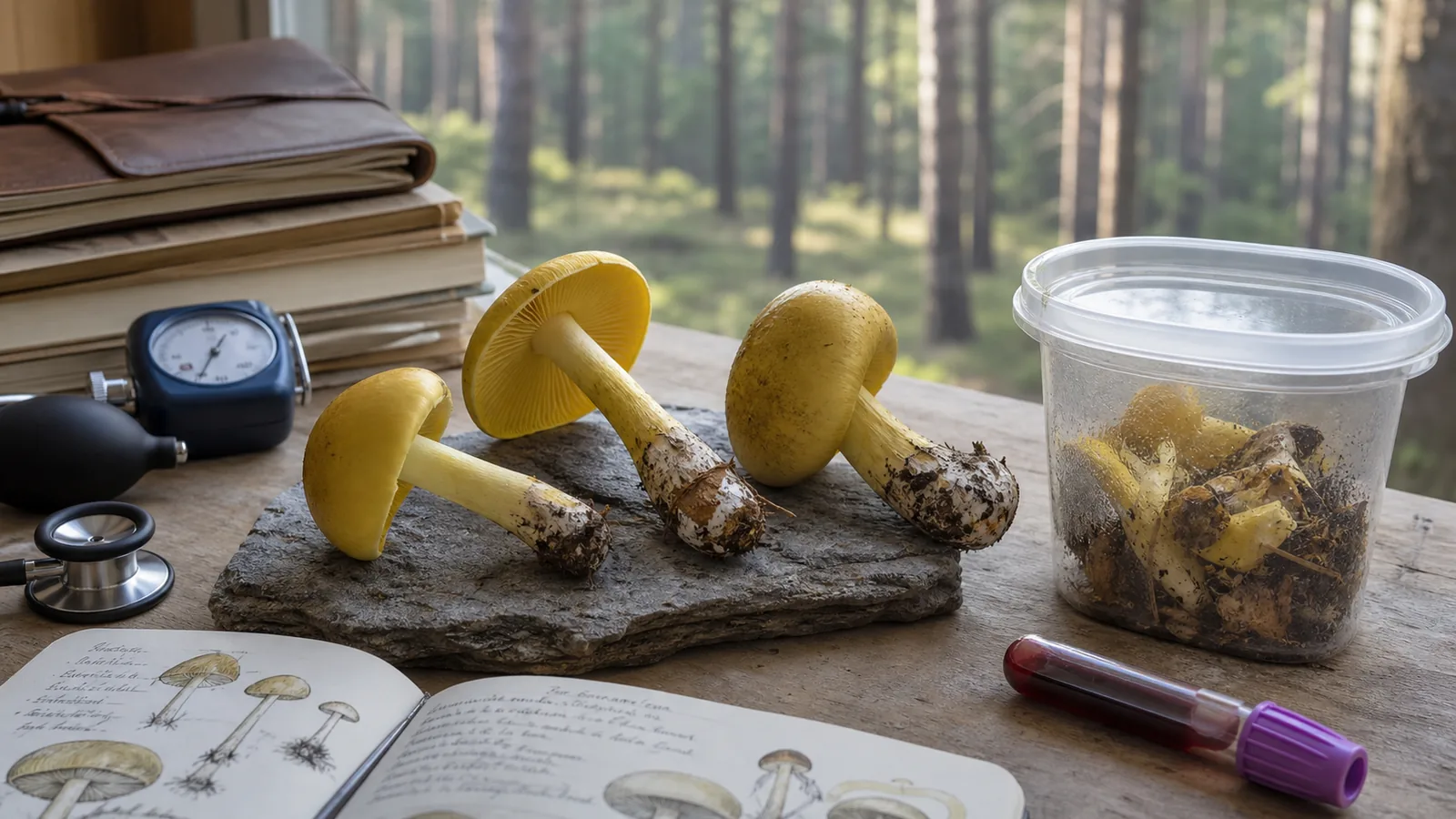
Tricholoma equestre, commonly called yellow knight or man on horseback, has a disputed safety record. Published clusters connect repeated large meals with delayed rhabdomyolysis, yet the number of cases is small, the responsible compound is unknown, and later research has challenged a simple toxic-species verdict.
The uncertainty does not make a fresh exposure safe to test at home. Muscle pain, profound weakness, sweating without fever, dark urine, breathing difficulty, fainting, or confusion after several yellow knight meals requires prompt poison-center and medical assessment.
| Question | What the evidence supports | What remains unknown |
|---|---|---|
| Repeated meals | Severe reports usually followed large portions over several days | A dose that predicts illness in one person |
| Symptom timing | Weakness and muscle symptoms can begin days after eating | A symptom-free interval that guarantees safety |
| Mechanism | Clinical findings fit destruction of skeletal muscle | The mushroom compound and biological pathway |
| Food decision | Avoiding further meals removes the repeat-exposure risk | The incidence among all people who eat the species |
What the yellow knight cases actually show
The strongest signal comes from several clinical clusters rather than a controlled human trial. In France, investigators described 12 people who developed delayed rhabdomyolysis after meals containing large quantities of yellow knight between 1992 and 2001, and three died.
The shared yellow knight exposure involved repeated eating, not a single accidental taste.
The French yellow knight patients had eaten the mushrooms in three or more consecutive meals before muscle pain and weakness appeared. Experimental work reported with those repeated-meal cases also found muscle injury in mice given mushroom extracts, which added biological plausibility without identifying a human toxin.
Polish and Lithuanian yellow knight reports extended the repeated-meal pattern across other countries.
Polish clinicians documented marked creatine kinase elevations in a mother and son after repeated consumption, with peak values reported above 18,000 and 48,000 units per liter. A Lithuanian series described four cases from 2004 through 2013, including one fatal outcome, after people ate yellow knight repeatedly over days or weeks.
The Lithuanian exposures varied enough to resist a simple portion rule. One patient reportedly ate about a liter of boiled mushrooms three times daily for six days, while another ate a standard portion once or twice daily for a month.
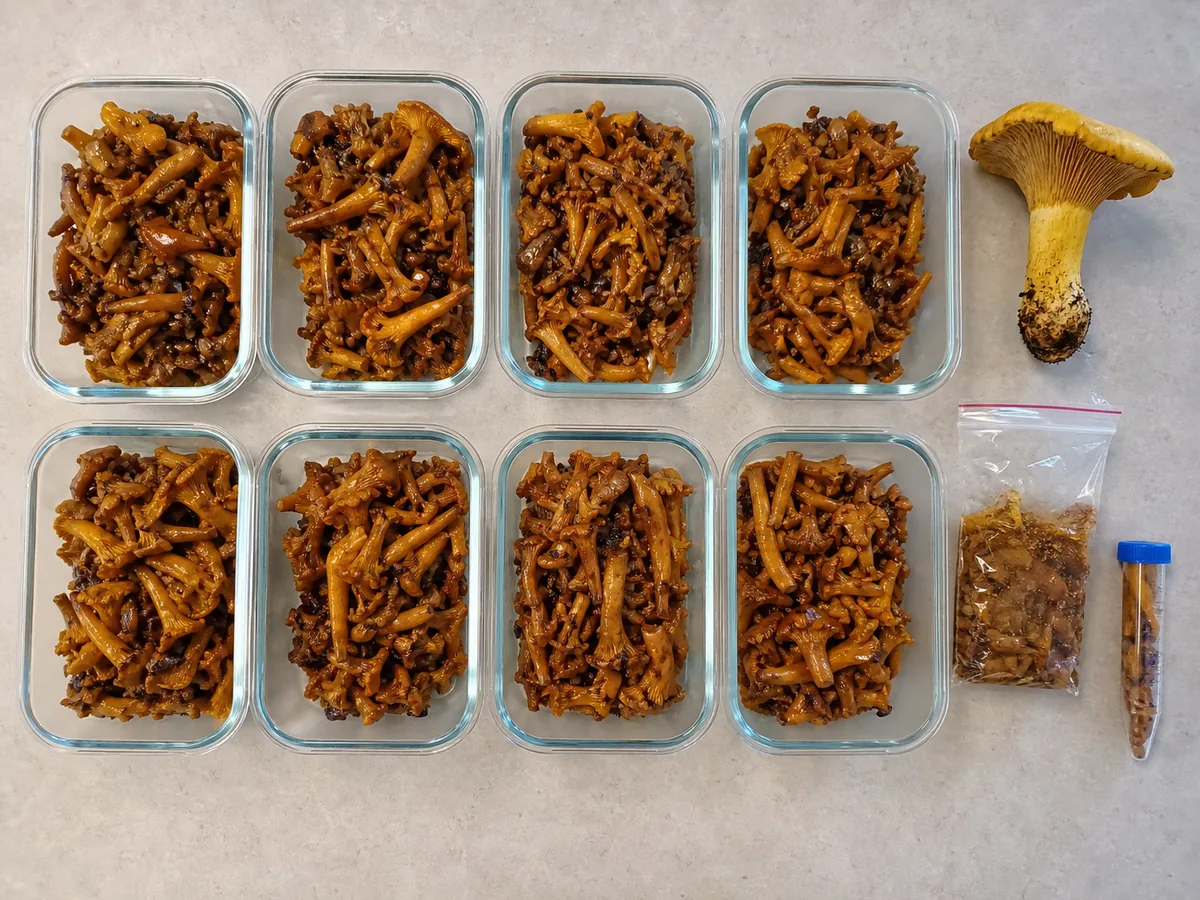
Unaffected diners in the Lithuanian yellow knight exposures do not cancel an affected person's evidence.
Those unaffected diners may eat different portions, receive different specimens, carry different health risks, or report symptoms at different times. Their outcome does not erase the fatal outcomes, while the case reports still cannot calculate how often the syndrome occurs among everyone who eats the mushroom.
Fatal outcomes in the yellow knight case series require careful wording.
Severe cases involved hyperthermia, respiratory failure, cardiac abnormalities, extreme enzyme elevations, or progressive weakness, but small case series cannot isolate every contributing factor. The responsible mushroom compound has not been established, and retrospective identification may carry uncertainty.
Warning
Repeated meals matter | Do not use an earlier symptom-free serving, an unaffected companion, or a traditional recipe as proof that another serving is safe.
The case pattern is serious enough for prevention and emergency recognition even though it is too limited for a precise personal risk estimate.
SafetyAmatoxin Poisoning: Why Symptoms Can Fade Before Liver FailureWhen delayed muscle symptoms begin
Yellow knight rhabdomyolysis is reported as a delayed syndrome. Fatigue, weakness, sweating, nausea, loss of appetite, or muscle pain may begin roughly one to three days after the last of several meals, and severe deterioration can continue afterward.
That timing differs from an immediate food reaction.
A person can finish the meal, sleep normally, and remain active the following morning before thigh weakness or unusual fatigue becomes clear. The quiet interval does not prove that muscle cells and electrolytes will remain stable.
Early delayed muscle complaints can sound ordinary.
Nausea without vomiting, chest discomfort, poor appetite, or sweating without fever may not initially point toward skeletal muscle injury. The exposure history becomes decisive when those symptoms follow repeated yellow knight meals and progress into muscle tenderness or difficulty walking.
Proximal muscles often make the loss of strength obvious.
Trouble rising from a chair, climbing stairs, lifting the arms, or walking at a normal pace can reflect weakness in the thighs and shoulder girdle. Severe injury can affect breathing muscles, so shortness of breath, shallow breathing, or inability to speak normally belongs in the emergency report.
- Record every yellow knight meal, including date, portion, and preparation.
- Mark when fatigue, sweating, pain, weakness, or urine changes first appeared.
- Note exercise, falls, fever, seizures, medicines, alcohol, and other possible causes of muscle injury.
- List every diner separately because exposure and symptoms differ by person.
The timeline should travel with the person rather than stay at home with the mushroom notes.
Call Poison Control at 1-800-222-1222 in the United States when a suspected wild-mushroom meal is involved. Call 911 for collapse, breathing difficulty, seizure, severe confusion, inability to wake the person, rapidly worsening weakness, chest pain, or signs of shock.
Waiting for dark urine is unsafe because rhabdomyolysis can occur without that visible sign.
Why muscle breakdown threatens more than muscle
Rhabdomyolysis means injured skeletal muscle fibers release their contents into the circulation. Creatine kinase marks muscle-cell injury, while myoglobin, potassium, phosphate, and other intracellular material can affect organs far from the original muscle pain.
The kidneys must process the sudden muscle-pigment load released during rhabdomyolysis.
Filtered myoglobin can contribute to tubular obstruction, direct oxidative injury, and constriction of kidney blood flow, especially when dehydration or poor circulation is also present. Acute kidney injury can reduce urine output and make acid, fluid, and electrolyte control more difficult.

Potassium creates a separate immediate danger.
Muscle cells contain high concentrations of potassium, so extensive injury can raise the blood level and disturb the heart's electrical rhythm. Calcium and phosphate can also shift, and the direction of those changes can vary during injury and recovery.
Circulation and temperature can deteriorate together.
Profuse sweating, fever or extreme hyperthermia, reduced intake, vomiting, and systemic illness can lower effective circulating volume. One fatal Lithuanian case reached a reported temperature of 42 degrees Celsius before loss of consciousness and respiratory failure.
Respiratory muscle weakness changes the rhabdomyolysis emergency from painful to immediately life-threatening.
The diaphragm and other respiratory muscles are skeletal muscle, so profound generalized injury can interfere with ventilation. Oxygen measurement, blood gases, respiratory effort, alertness, and the ability to protect the airway matter more than whether the person describes the pain as severe.
- Muscle injury releases CK, myoglobin, potassium, and phosphate.
- Pigment, dehydration, and low circulation can converge on the kidneys.
- Potassium and acid-base disturbances can affect cardiac rhythm.
- Respiratory muscle weakness can require airway and ventilatory support.
No single pathway proves that yellow knight caused the injury. Clinicians still test for trauma, seizures, strenuous exercise, infection, heat illness, medicines, metabolic disease, and other toxins because the same organ pattern has many causes.
SafetyCan Inkcap Mushrooms Make Alcohol Dangerous?Which findings point toward muscle breakdown
New muscle weakness after repeated mushroom meals deserves more weight than ordinary post-exercise soreness. Pain or tenderness in the thighs, shoulders, back, or chest becomes more concerning when it progresses with sweating, difficulty walking, reduced urine, dark urine, or systemic illness.
Urine color can help the history but cannot establish the diagnosis.
Tea-colored, cola-colored, red, or brown urine may reflect myoglobin, intact red blood cells, hemoglobin, bilirubin, dehydration, medicine, or food pigment. A urine dipstick can react to heme while microscopy helps show whether intact red cells are present.
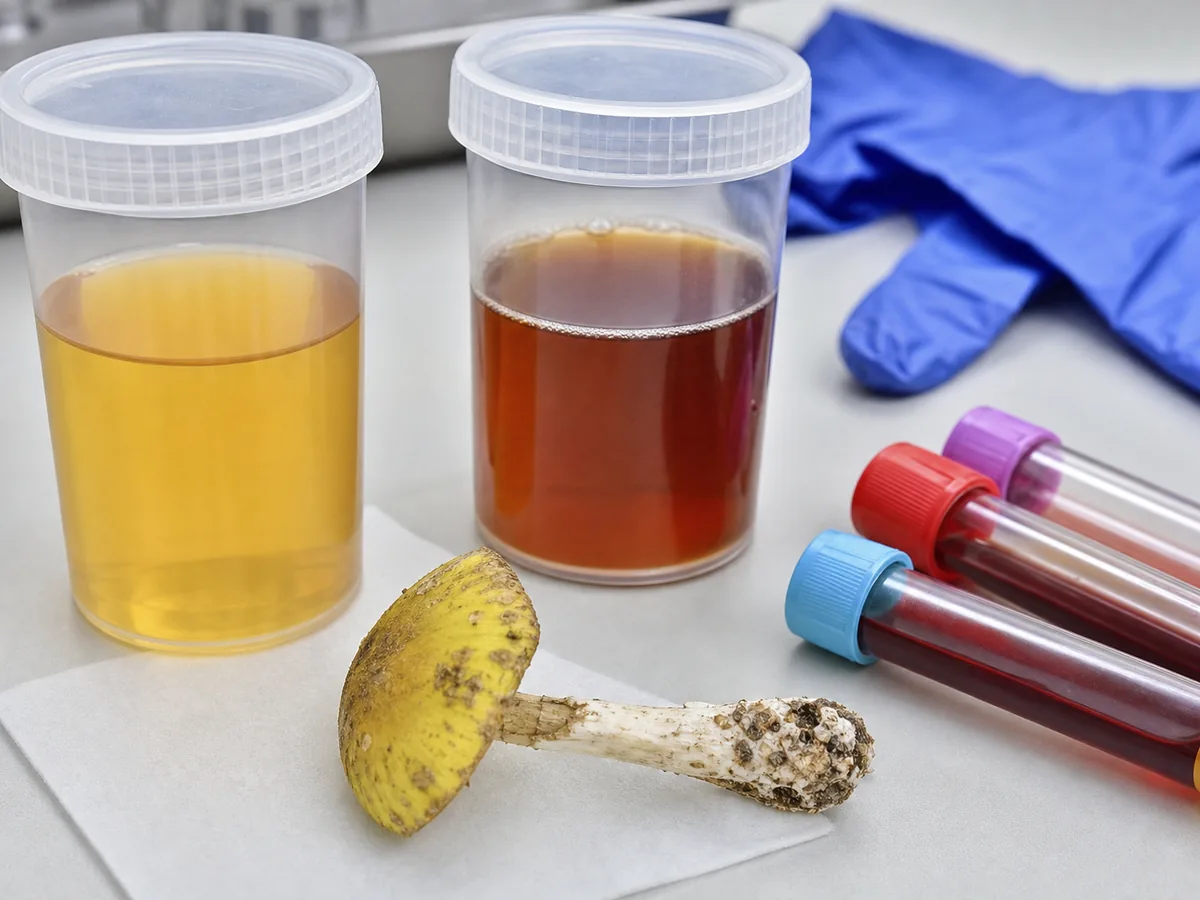
Alongside urine testing, creatine kinase measurements are the central laboratory marker of skeletal muscle injury.
Clinicians interpret CK beside symptoms, urine findings, kidney function, and repeat measurements because the value can continue rising after the first blood draw. The reported yellow knight cases included five-digit peaks, while AST and ALT also require muscle context rather than automatic attribution to the liver.
AST and ALT measurements require the same muscle-injury context.
Both enzymes can rise after muscle injury, so an abnormal result does not automatically mean the liver is the primary source. Bilirubin, alkaline phosphatase, coagulation tests, CK trends, examination, and the exposure history help clinicians separate muscle injury from liver-dominant mushroom syndromes.
Kidney function and electrolyte measurements complete the rhabdomyolysis assessment.
Repeated creatinine, urea, potassium, calcium, phosphate, bicarbonate, urine output, and fluid-balance measurements show whether muscle destruction is affecting filtration and internal chemistry. An electrocardiogram can reveal rhythm or conduction problems when potassium, temperature, or cardiac stress is a concern.
The direction across repeated measurements matters more than one isolated panel.
How hospitals protect muscle, kidneys, and circulation
There is no established yellow knight antidote. Treatment centers on stabilizing breathing and circulation, limiting complications of rhabdomyolysis, and monitoring the person while the exposure and alternative causes are investigated.
Fluid treatment is individualized rather than copied from a household formula.
Intravenous fluids can support circulation and kidney perfusion, but the amount and rate depend on blood pressure, urine output, heart function, kidney function, electrolyte results, and ongoing losses. A person with respiratory compromise or reduced filtration can be harmed by indiscriminate fluid loading.
KEY Airway | Support oxygenation and ventilation when weakness or reduced consciousness threatens breathing KEY Circulation | Restore perfusion while watching for fluid overload KEY Chemistry | Repeat potassium, calcium, phosphate, bicarbonate, and kidney tests KEY Muscle | Follow CK, symptoms, strength, temperature, and urine findings over time
Electrolyte abnormalities receive direct treatment when their severity requires it.
Dangerous hyperkalemia, acid-base disturbance, arrhythmia, shock, hyperthermia, or seizures may need immediate interventions that cannot be performed safely at home. Kidney specialists may be involved when urine output falls, creatinine rises, or fluid and electrolyte control becomes difficult.
Dialysis treats kidney and electrolyte complications rather than removing a proven yellow knight toxin.
It may be required for refractory hyperkalemia, severe acidosis, fluid overload, or kidney failure, depending on the whole clinical picture. A normal first creatinine does not end observation when CK is rising or the exposure and symptoms remain concerning.

Recovery can take days or weeks.
CK, AST, ALT, strength, temperature, and fatigue may improve on different schedules, and some published patients remained hospitalized for about two weeks or longer. Discharge planning can include repeat laboratory testing, activity guidance, medicine review, and return precautions.
No household drink, supplement, charcoal product, or forced exercise replaces that monitoring.
SafetyGyromitrin Poisoning: Why False Morels Can Trigger SeizuresIdentification uncertainty changes the evidence
The name yellow knight has not always identified one cleanly bounded organism. Tricholoma equestre, Tricholoma flavovirens, and Tricholoma auratum have appeared in the literature around a yellow-gilled species complex whose members can be difficult to separate by field appearance alone.
Whole yellow knight specimens therefore matter to both patient care and scientific interpretation.
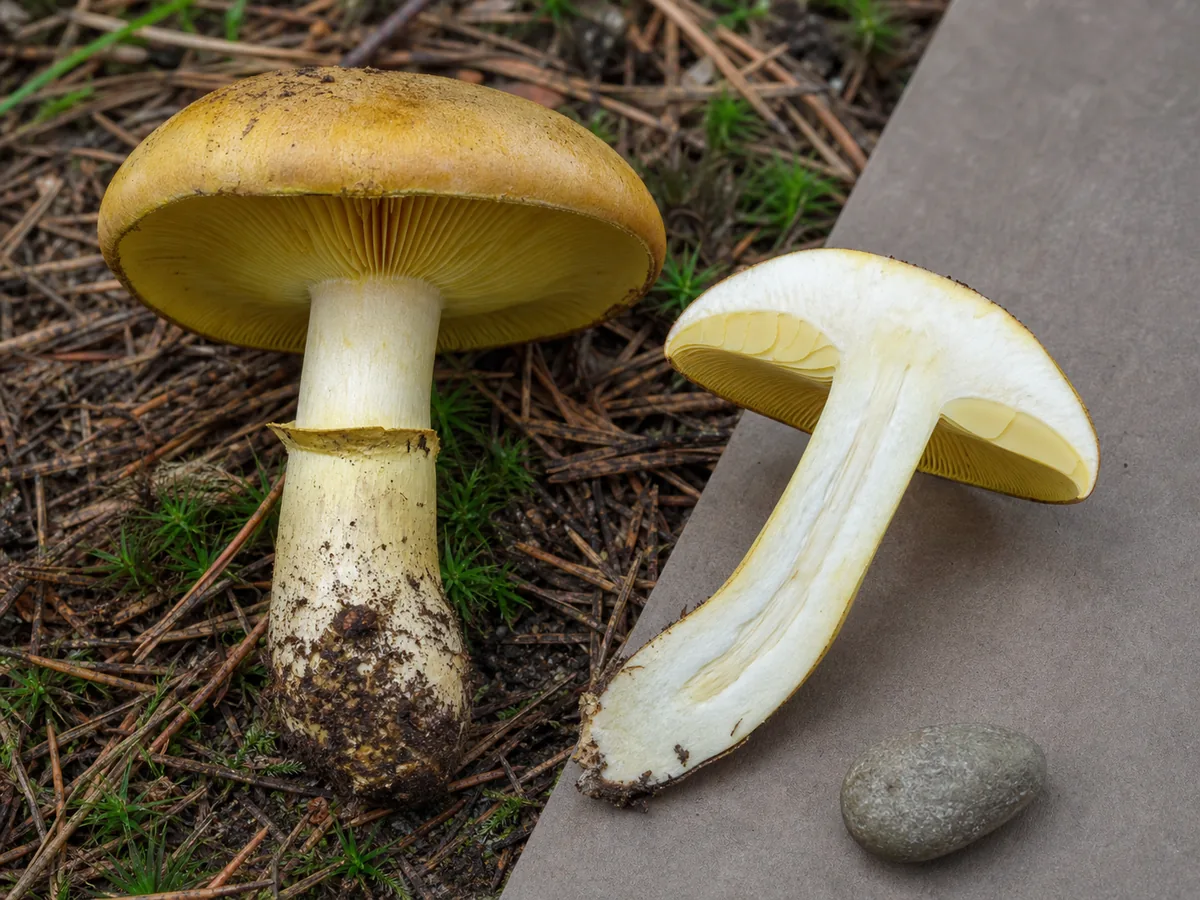
Yellow knight reports describe yellow to yellow-brown caps, yellow gills, a pale yellow stem, and growth with conifers in sandy soil. Those traits support a hypothesis, but none proves identity without examining the complete collection and considering local lookalikes.
Cooked mushrooms lose evidence quickly.
Heat, cutting, peeling, frying, boiling, and mixing can alter cap color, gill structure, odor, texture, and the relationship between stem and base. Save raw specimens separately from cooked leftovers whenever doing so is safe.
- Photograph the cap, gills, stem, base, bruising, and habitat in neutral light.
- Keep one complete uncooked specimen in a paper container, separate from food.
- Record nearby trees, soil, collection date, weather, and geographic location.
- Retain cooked leftovers, cleaning scraps, packaging, and photographs of the meal.
Regional common names can widen the uncertainty.
A diner may remember man on horseback, yellow knight, chevalier, or a local-language name rather than Tricholoma equestre. Report every name used and who supplied the identification instead of converting the memory into a scientific certainty.
The specimen record should support treatment, not delay it.
Poison specialists can coordinate with trained identifiers, while emergency clinicians manage the organ pattern that is already visible. Do not return to the collection site or spend hours searching photographs when the person has progressive weakness or breathing trouble.
Why historical edibility does not settle the risk
Yellow knight was widely collected and treated as edible in parts of Europe before the French cluster changed official advice. Its long food history is real evidence of exposure, but tradition does not record portions, repeat frequency, silent laboratory injury, species identity, or the denominator needed to calculate risk.
Scientific disagreement over the poisonous classification also remains real.
A later systematic review argued that the evidence does not establish greater danger than mushrooms currently considered edible, while Polish survey and toxicology work questioned a broad poisonous classification. Small volunteer observations after a single meal did not reproduce the repeated heavy consumption pattern reported in severe cases.
- Supported
- Several case series associate repeated large yellow knight meals with delayed rhabdomyolysis
- Disputed
- Causality, incidence, dose response, and species boundaries remain unsettled
- Unknown
- No specific toxin or validated safe preparation has been established
- Practical decision
- Avoiding consumption prevents exposure while the uncertainty remains unresolved
Both the yellow knight case reports and the counterevidence have important limits.
Case reports are valuable for finding rare hazards, but selection bias, uncertain identification, incomplete portion estimates, and missing alternative causes can distort the apparent association. Surveys and uneventful meals can show that illness is not inevitable, but they cannot rule out a rare event concentrated after repeated high intake.
Controlled yellow knight research has not answered the repeated-meal exposure question that matters most.
It would be unethical to ask people to reproduce repeated large meals until muscle injury appears, so the evidence will likely remain observational. Animal experiments can explore plausibility, but dose conversion and species differences prevent a direct human safe-serving calculation.
Cooking history cannot close that gap.
Boiling, discarding water, frying, pickling, drying, or freezing has not been shown to eliminate a named causative compound because no such compound has been established. A previous cooked meal without symptoms remains an observation, not a safety certificate.
The precautionary food decision is narrower than a claim of certainty. Do not eat yellow knight, and do not conduct a small-portion challenge to settle the disagreement personally.
What to do after a suspected yellow knight meal
Stop serving the mushrooms and call Poison Control for case-specific advice in the United States. Do not wait for symptoms when the portion was large, several meals occurred, a child or medically vulnerable person ate them, or the identification is uncertain.
Do not induce vomiting unless a poison specialist or clinician directs it.
Forced vomiting can cause aspiration, and delayed muscle injury will not be made safe by emptying a stomach long after the meal. Do not force fluids into a vomiting, confused, very weak, or breathless person.
Bring a compact yellow knight meal and specimen evidence bundle.
Record each meal time, estimated portion, preparation, first symptom, urine change, medicine, exercise, fever, fall, seizure, and every diner separately. Take the complete specimen, cooked leftovers, photographs, collection details, and supplier information when they can travel without delaying care.
The lifetime food history can change the interpretation.
Tell clinicians about earlier yellow knight meals even when they caused no symptoms, because published severe exposures often involved repeated consumption. Include supplements, alcohol, prescribed medicines, recent exercise, heat exposure, infection, trauma, and metabolic disease so competing causes of rhabdomyolysis can be assessed.
One normal muscle or kidney test does not overrule worsening weakness after the meal.
Return for urgent reassessment if muscle pain, walking difficulty, sweating, reduced urine, dark urine, vomiting, fever, breathlessness, fainting, or confusion develops after the initial contact. The safest future yellow knight exposure is none while the causal debate remains unresolved.