

Mushroom poisoning symptoms can begin in less than 30 minutes, after 6 to 24 symptom-free hours, or several days after the meal. No symptom-free cutoff proves that an unidentified wild mushroom was safe, so call Poison Control at 1-800-222-1222 in the United States instead of waiting for illness to choose the next step.
The timing still matters because different toxins tend to affect the gut, nervous system, liver, kidneys, or muscles on different schedules. A useful timeline records the meal and the first symptom separately, then follows how the symptoms change.
The clock cannot clear an unknown mushroom
- Earliest patterns
- Minutes to several hours for some gastrointestinal, cholinergic, and neurologic syndromes
- Delayed liver pattern
- Often 6 to 24 hours before the first gastrointestinal illness in amatoxin poisoning
- Long kidney delay
- Several days may pass before orellanine-related kidney symptoms become obvious
- Safety rule
- Call about the exposure before using the clock as reassurance
There is no single mushroom-poisoning countdown because the word poisoning covers several unrelated toxin syndromes. The species, amount, preparation, repeated meals, alcohol use, age, health, and medicines can all change what appears and when.
Start the mushroom history with two clocks.
The exposure clock begins with the first bite and includes the last bite of every mushroom serving. The symptom clock begins with the first new physical or behavioral change, even when that change seems minor or unrelated.
Those clocks can be uncertain after a shared dish. One person may eat a whole cap, another may taste only sauce, and a mixed collection can place different species pieces on different plates.
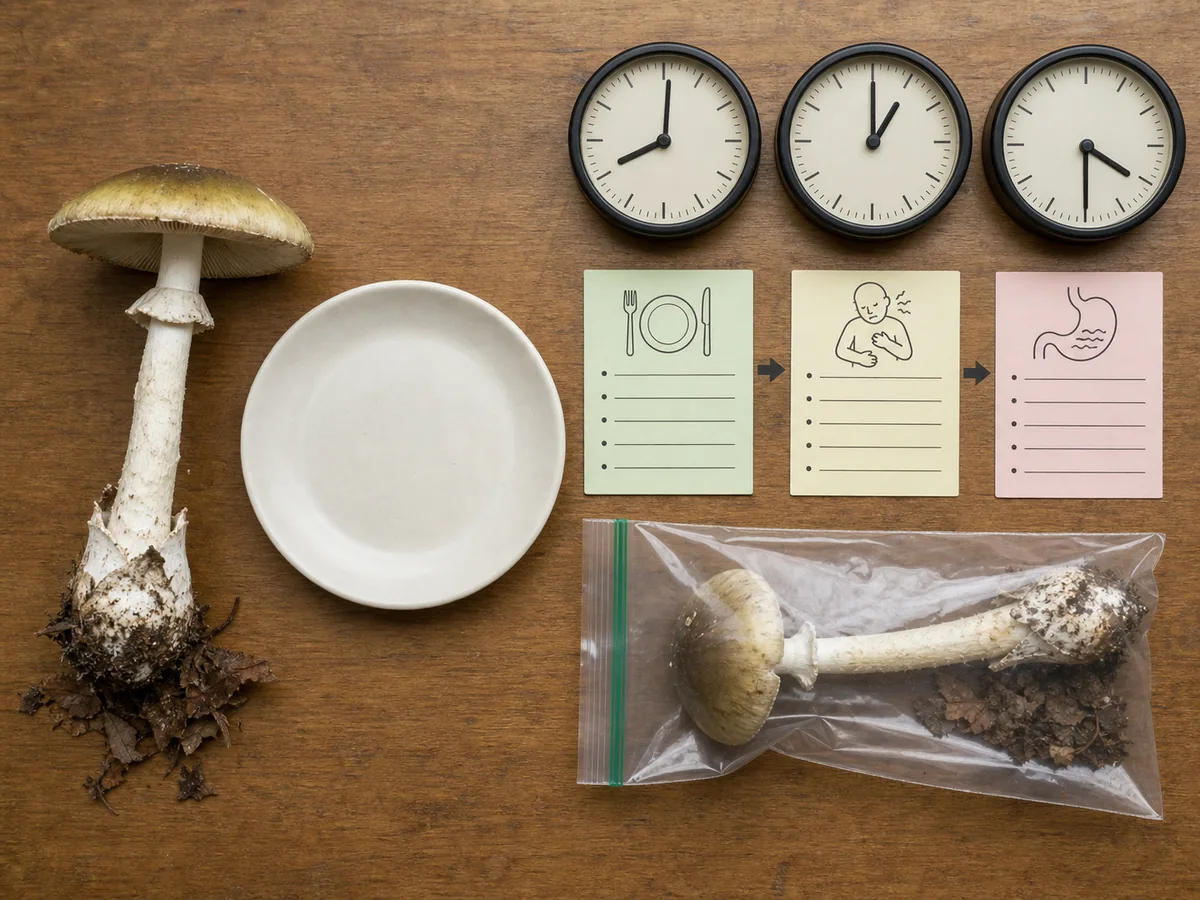
Mushroom timing narrows the possible syndrome without naming the mushroom.
Sweating within an hour may support a different syndrome from jaundice the next day, but neither finding replaces specimen review, clinical assessment, or the whole course. A person can also have an unrelated stomach infection, medication reaction, allergy, alcohol effect, or another illness after the same meal.
Mushroom preparation does not create a dependable correction factor for the timing.
Cooking can reduce some mushroom irritants and leave other toxins active, while drying or pickling changes the specimen without proving it safe. A sauce can spread soluble material across several portions even when only one plate contains a recognizable cap, so neither visible piece count nor cooking time gives a reliable home dose estimate.
The timing uncertainty changes the immediate mushroom response.
Report the possible ingestion while the person feels well, retain complete specimens and leftovers when available, and let a poison specialist decide whether observation at home is appropriate. Do not eat another specimen to test the timing or assume that cooking converted an unknown mushroom into safe food.
SafetyDeadly Mushrooms: The Most Lethal SpeciesWhich symptoms often start within six hours
Symptoms that begin within minutes to a few hours often involve the stomach, autonomic nerves, or brain. The interval is useful, but severity depends on the person and the syndrome rather than the clock alone.
| Early pattern | Common observations | Main immediate concern |
|---|---|---|
| Gastrointestinal irritation | Nausea, abdominal cramps, vomiting, diarrhea | Fluid loss and an uncertain species |
| Cholinergic pattern | Sweating, salivation, tearing, small pupils, slow pulse, chest secretions | Breathing secretions and circulation |
| Excitatory neurologic pattern | Agitation, confusion, hallucinations, poor coordination | Falls, unsafe behavior, seizure |
| Depressant neurologic pattern | Sleepiness, reduced response, weak airway protection | Aspiration and breathing failure |
Gastrointestinal symptoms may begin quickly after several mushroom groups, including species that cause primarily digestive irritation. Repeated vomiting and watery diarrhea can still produce dangerous dehydration, especially in a child, an older adult, or someone with kidney or heart disease.
Early stomach illness is not a reliable harmlessness label.
A mixed meal can contain both an irritant species and a second mushroom with a delayed toxin, and early vomiting does not prove that the entire dose left the stomach. Poison specialists therefore interpret the onset together with specimen evidence, meal composition, and later changes.
Muscarine shifts an early mushroom illness toward a recognizable cluster of cholinergic secretions.
Sweating, salivation, tearing, abdominal cramping, vomiting, diarrhea, wheezing, slow heart rate, and copious chest secretions can develop on a shorter schedule. Wet skin and secretions matter because they distinguish this pattern from a person who is simply anxious and nauseated.
Unlike the wet muscarine pattern, muscimol and ibotenic acid can shift behavior and coordination. Confusion, agitation, unusual movements, poor balance, hallucinations, profound sleepiness, or alternating excitement and drowsiness can make stairs, traffic, water, and driving immediately unsafe.
A caller's first complaint can hide the early system pattern.
A caller who reports only "feels sick" leaves out whether the skin is drenched, the mouth is wet or dry, the pupils changed, the person can walk straight, the heart feels unusually slow or fast, or breathing sounds congested. Those observations do not diagnose a toxin at home, but they help a poison specialist distinguish dehydration, secretion, agitation, sedation, and airway risk.
For every reported change, watch direction as well as presence.
One episode of nausea that remains stable is different from vomiting every few minutes, progressive drowsiness, increasing secretions, or worsening confusion. Record what changed, when it changed, and whether the person can still speak, stand, swallow, and stay awake normally.
Early illness can involve the gut, the secretions, or the nervous system, and the combination is what a specialist reads.

Gyromitrin-containing mushrooms can also produce gastrointestinal and neurologic illness within hours, sometimes followed by liver injury. A familiar common name such as false morel does not establish the toxin or the dose, so the specimen and geographic context still matter.
The false-morel example shows how an early gastrointestinal or neurologic onset tells the poison specialist where to look first.
That early onset does not authorize a person to sleep alone, drive, take a household antidote, or stop watching a changing course. Follow the monitoring window and return-call instructions given for that exposure.
Why liver-toxic mushrooms can stay quiet for 6 to 24 hours
Amatoxin poisoning is dangerous partly because the first stage can feel uneventful. A person may finish a meal, sleep normally, and begin severe vomiting, watery diarrhea, and abdominal pain 6 to 24 hours later.
That quiet interval can reward the wrong decision.
People may discard leftovers, forget the collection site, reassure other diners, or travel away from care before illness begins. By the time symptoms appear, the toxin may already have moved far beyond the stomach.
The gastrointestinal phase can cause extraordinary fluid loss. Dehydration, low blood pressure, kidney stress, electrolyte changes, and acid-base disturbance can develop while clinicians are also evaluating toxin-related liver risk.
- A symptom-free interval follows the mushroom meal.
- Vomiting, diarrhea, and abdominal pain begin after the delay.
- Gastrointestinal symptoms may ease with time and supportive care.
- Liver tests and coagulation can worsen despite that apparent recovery.
- Severe cases can progress to bleeding, low blood sugar, confusion, organ failure, or death.
Apparent gastrointestinal recovery is the dangerous third phase.
Feeling better after vomiting settles can reflect rehydration and a quieter gut, not removal of the toxin or recovery of the liver. The patient may enter a period in which bedside symptoms look better after supportive care while laboratory evidence becomes more concerning.
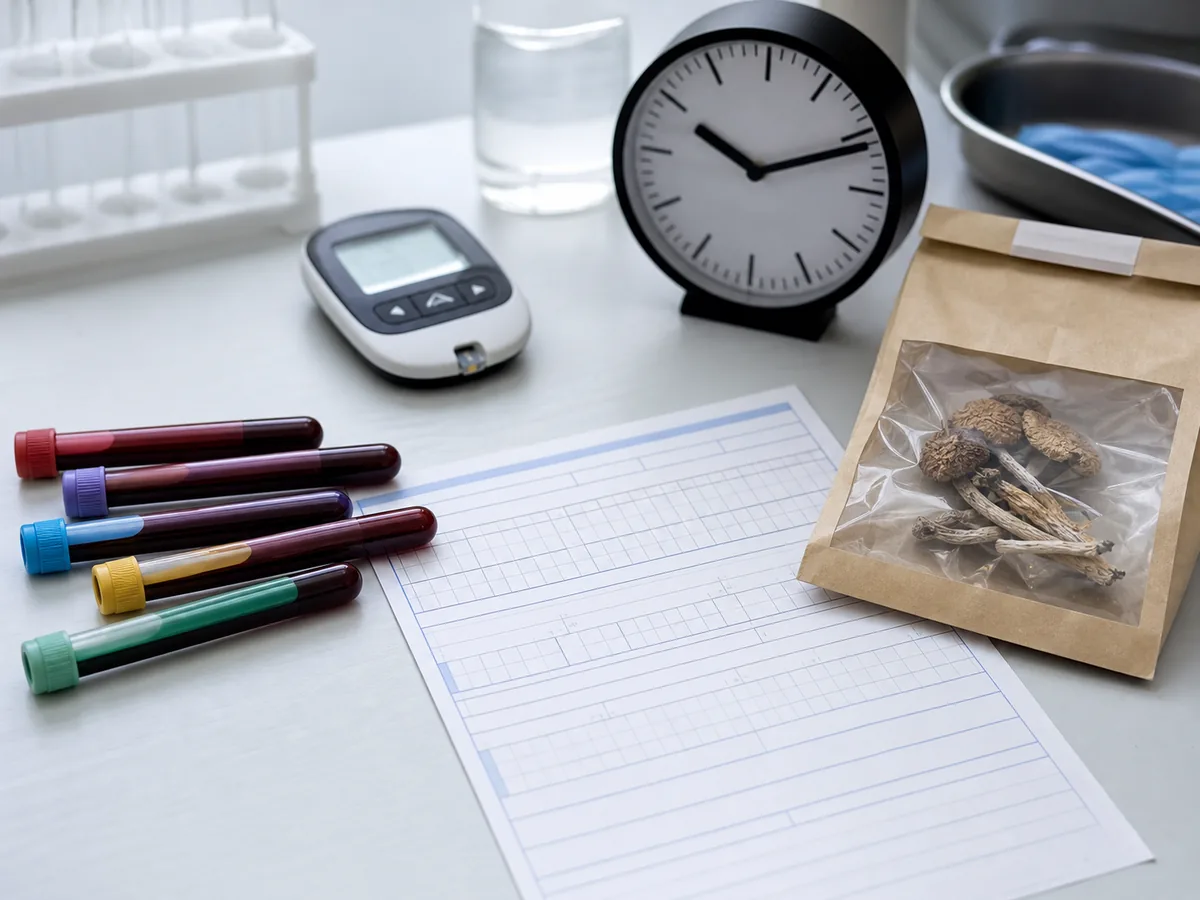
Death cap and related amatoxin-containing Amanita species are important liver-toxic examples, but timing cannot confirm a death cap by itself. Other amatoxin-containing genera exist, and several non-mushroom illnesses can imitate the gastrointestinal phase.
Serial clinical results show whether the delayed liver course is changing direction.
Clinicians may repeat liver enzymes, bilirubin, glucose, coagulation studies, kidney function, electrolytes, and other measurements according to the case. One early normal panel can be a baseline rather than a final answer when the exposure and onset pattern remain concerning.
The call should happen before that sequence unfolds.
If a person may have eaten an unidentified wild mushroom, contact Poison Control promptly even if the meal was recent and everyone feels normal. Call emergency services for collapse, seizure, breathing trouble, severe confusion, inability to wake, shock, or rapid deterioration.
SafetyHow Is Mushroom Poisoning Treated in the Hospital?Kidney symptoms may wait for days
Some orellanine-containing Cortinarius mushrooms produce one of the longest important delays in mushroom toxicology. Several symptom-free days can separate the meal from thirst, headache, nausea, flank or back discomfort, reduced urine, and evidence of kidney injury.
Warning
A normal first day does not clear a suspected kidney-toxic exposure | Mention a wild-mushroom meal from the preceding days when new thirst, flank discomfort, reduced urine, swelling, unusual fatigue, or nausea appears, and seek clinical advice rather than testing the delay at home.
The long kidney-symptom interval makes the mushroom history fragile.
The mushroom may have been discarded, a weekend trip may seem unrelated, and different diners may remember portions or times differently. Photographs, messages, calendar entries, card receipts, and location data can recover details that memory loses.
Kidney injury cannot be judged from thirst alone.
Weather, exercise, vomiting, diabetes, medicines, urinary obstruction, infection, and many other conditions can change thirst or urine output. Blood tests, urine assessment, fluid status, blood pressure, and the exposure history belong together when clinicians evaluate the cause.

Reduced urine deserves particular attention with nausea, weakness, swelling, flank discomfort, or a known mushroom exposure because kidney function may decline before pain becomes severe.
Do not use a home urine color chart or a large forced-water challenge to decide whether the kidneys are safe. Fluid advice depends on the person's circulation, vomiting, heart function, kidney function, and clinical findings.
Repeated meals create a different clock
One ingestion time is not enough when the same mushroom was served on several consecutive days. The history needs every meal because repeated exposure can change total dose and can separate the first exposure from the symptom that finally attracts attention.
Published case reports associate repeated large meals of yellow knight with severe rhabdomyolysis, making every serving relevant even though the evidence does not establish a universal toxic dose.
Muscle injury can begin with profound weakness, muscle pain, or difficulty using large muscle groups. Dark brown or tea-colored urine can appear when muscle pigment enters the urine, although urine color alone cannot establish rhabdomyolysis.
The last meal is still important, but it is not the whole clock.
A clinician may need the first meal, the last meal, cumulative portions, physical activity, medicines, alcohol, heat exposure, infection, and other causes of muscle injury. Creatine kinase, kidney function, electrolytes, urine findings, heart rhythm, and clinical status help define severity.

Do not serve the mushroom again because earlier meals caused no symptoms. A previous tolerated portion cannot guarantee the identity of a later collection, the dose on another plate, or the response after repeated meals.
SafetyMushroom Poisoning in Cats: Symptoms and First ActionsWhat a temporary recovery can hide
Improvement is meaningful, but it has to be interpreted against the suspected syndrome. A person who stops vomiting after fluids may be more comfortable while delayed liver, kidney, muscle, or coagulation injury still needs monitoring.
Improving stomach symptoms and organ function can move on different schedules.
Nausea can fade within hours, while liver enzymes or clotting abnormalities rise later. Urine output can appear adequate before kidney results trend in the wrong direction, and muscle weakness can progress after an earlier stomach complaint has passed.
- Symptoms
- Vomiting, diarrhea, pain, sweating, confusion, weakness, urine change, and their direction over time
- Hydration
- Intake, ongoing losses, urine output, dizziness, pulse, and blood pressure when measured clinically
- Laboratory trend
- Whether repeat liver, kidney, clotting, electrolyte, or muscle results improve or worsen
- Follow-up
- The exact observation window, return-call signs, and location for reassessment
A temporary recovery from nausea can also change the patient's behavior.
The patient may want to go home, eat normally, stop answering calls, or assume that another diner is cleared. Keep the poison-center case number and discharge instructions available because the correct next step depends on the original exposure and the complete trend.
One improved number cannot carry the whole decision either.
Clinicians interpret laboratory results with timing, hydration, examination, medicines, and earlier values. A result inside the reference range may still be moving rapidly from the patient's baseline, while an isolated abnormal result can have another cause.
New jaundice, dark urine, reduced urine, unusual bleeding, recurrent vomiting, severe weakness, confusion, fainting, chest symptoms, or breathing difficulty after apparent improvement requires prompt reassessment. Call emergency services for life-threatening changes rather than waiting to see whether the earlier recovery returns.
Build a two-clock exposure record
Write what is known before memory compresses the event. Start with the first bite, last bite, every earlier mushroom meal, first symptom, and each important change in the person's condition.
Use separate entries for every diner.
Portions differ, mixed dishes distribute mushroom pieces unevenly, and age, body size, health, medicines, and alcohol can change the course. One person's symptom-free evening does not predict another person's morning.
The record should distinguish exact times from estimates.
Write "about seven in the evening" when the meal time is approximate rather than inventing an exact minute. A phone photograph, message, restaurant receipt, navigation history, or call log may support the estimate and show when the collection or meal occurred.
- First bite, last bite, and every repeated serving
- First new symptom, even if mild, and the time it changed
- Portion estimate and which dish contained the mushrooms
- Preparation method, alcohol, medicines, and relevant health conditions
- Complete raw specimens, cooked remnants, packaging, and collection photographs
- Poison-center case number, instructions, clinical visits, and test times
Keep timeline uncertainty visible in the exposure record.
If no one knows whether the person swallowed a piece, record the possible amount and the last time the mushroom was seen intact. If a child or pet was alone near a patch, note the observation window rather than converting absence of evidence into a zero dose.
The exposure timeline should support the poison-center call, not delay it.
One person can contact Poison Control while another gathers specimens, photographs leftovers, and builds the exposure timeline. Do not return to a remote collection site, make a spore print, or search image databases while a person is deteriorating or transport is waiting.
A worked exposure timeline can reveal meal details that one onset number hides.
Suppose four people ate a mixed mushroom dish at 6:30 p.m., one person tasted it again at 8 p.m., and vomiting began near 1 a.m. The record should preserve both meals, identify who ate the second portion, note that the first symptom began roughly six and a half hours after the shared meal, and keep every other diner's status separate.
The same meal-timeline method works when the time is less certain.
If dinner lasted from six to seven in the evening and nausea was first noticed between midnight and one in the morning, write those ranges. A range lets the specialist test more than one plausible interval, while false precision can push the history toward the wrong syndrome.
When the timeline becomes an emergency
The clock stops being an observation tool when the person's airway, breathing, circulation, consciousness, hydration, or organ function may be failing. A worsening patient outweighs the original estimate of when symptoms were supposed to appear.
Call emergency services for collapse, seizure, severe confusion, inability to wake, blue or gray color, serious breathing trouble, signs of shock, or rapidly worsening weakness. Keep the person away from driving, stairs, water, heat, and sharp objects while help is arranged.
Persistent vomiting and diarrhea can cross the emergency threshold through fluid loss.
After persistent vomiting, faintness, very little urine, extreme weakness, cold or clammy skin, worsening alertness, or inability to keep fluids down can indicate that home observation is no longer safe. Children, older adults, and people with heart, kidney, or liver disease can have less organ reserve.
Delayed organ signs can follow the same stomach illness after vomiting settles.
Yellow skin or eyes, dark urine, reduced urine, unusual bleeding, severe muscle pain, profound weakness, swelling, chest symptoms, or illness that returns after improvement needs urgent reassessment. Report the original meal and the entire quiet interval because both may change the clinical workup.
- Call now
- Any suspected unidentified wild-mushroom ingestion, even before symptoms
- Call again
- A new symptom, a worsening trend, or a change from the monitoring plan
- Emergency response
- Collapse, seizure, breathing trouble, inability to wake, shock, or rapid decline
- Carry forward
- Meal times, symptom times, specimens, photographs, case number, and prior results
The mushroom timeline is evidence for the poison call, not permission to wait.
Contact Poison Control for case-specific guidance after a possible wild-mushroom ingestion, follow the monitoring window they give, and use emergency services when the person's condition crosses the urgent signs above.