What makes the brawny bolete distinctive?
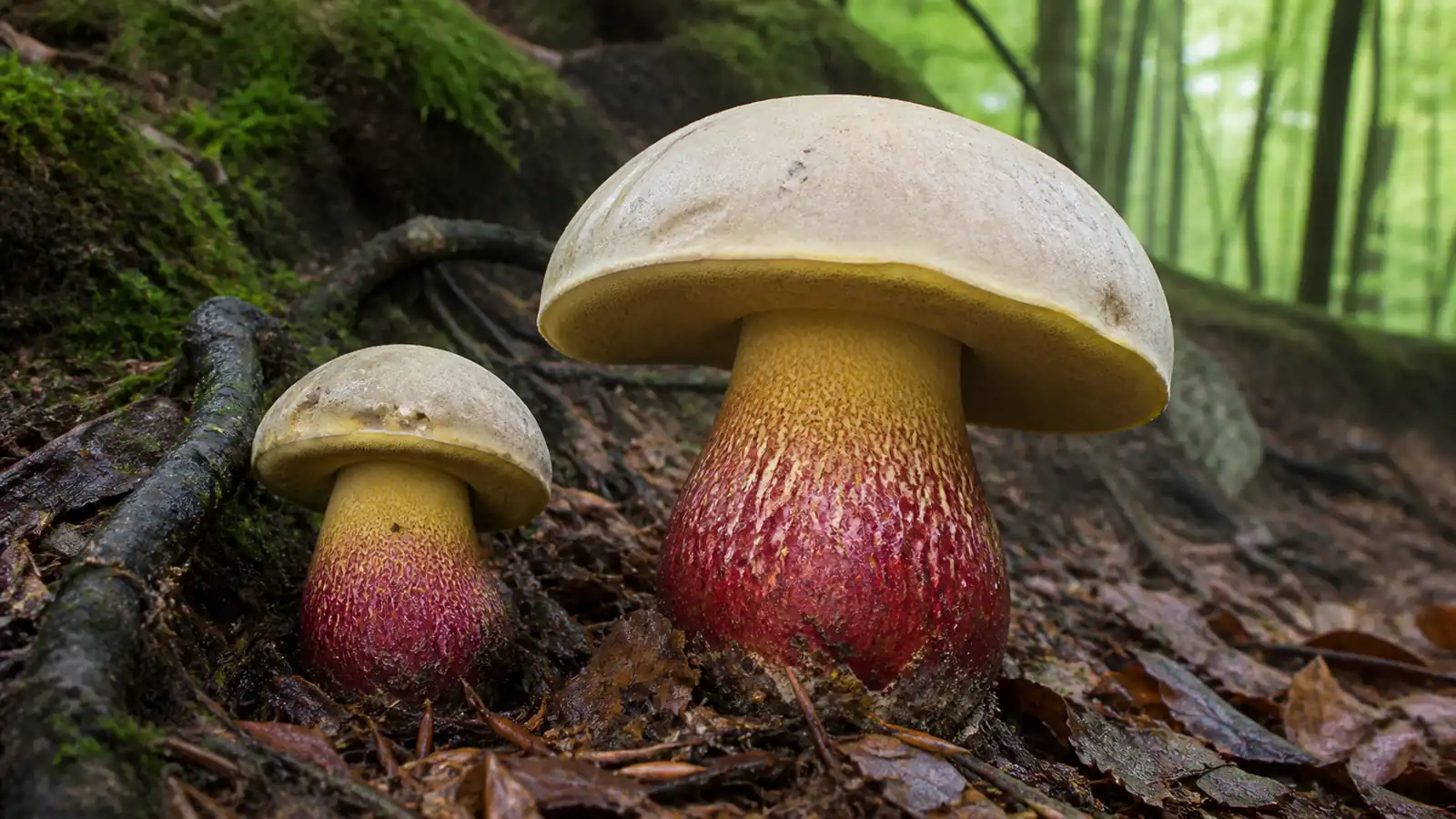
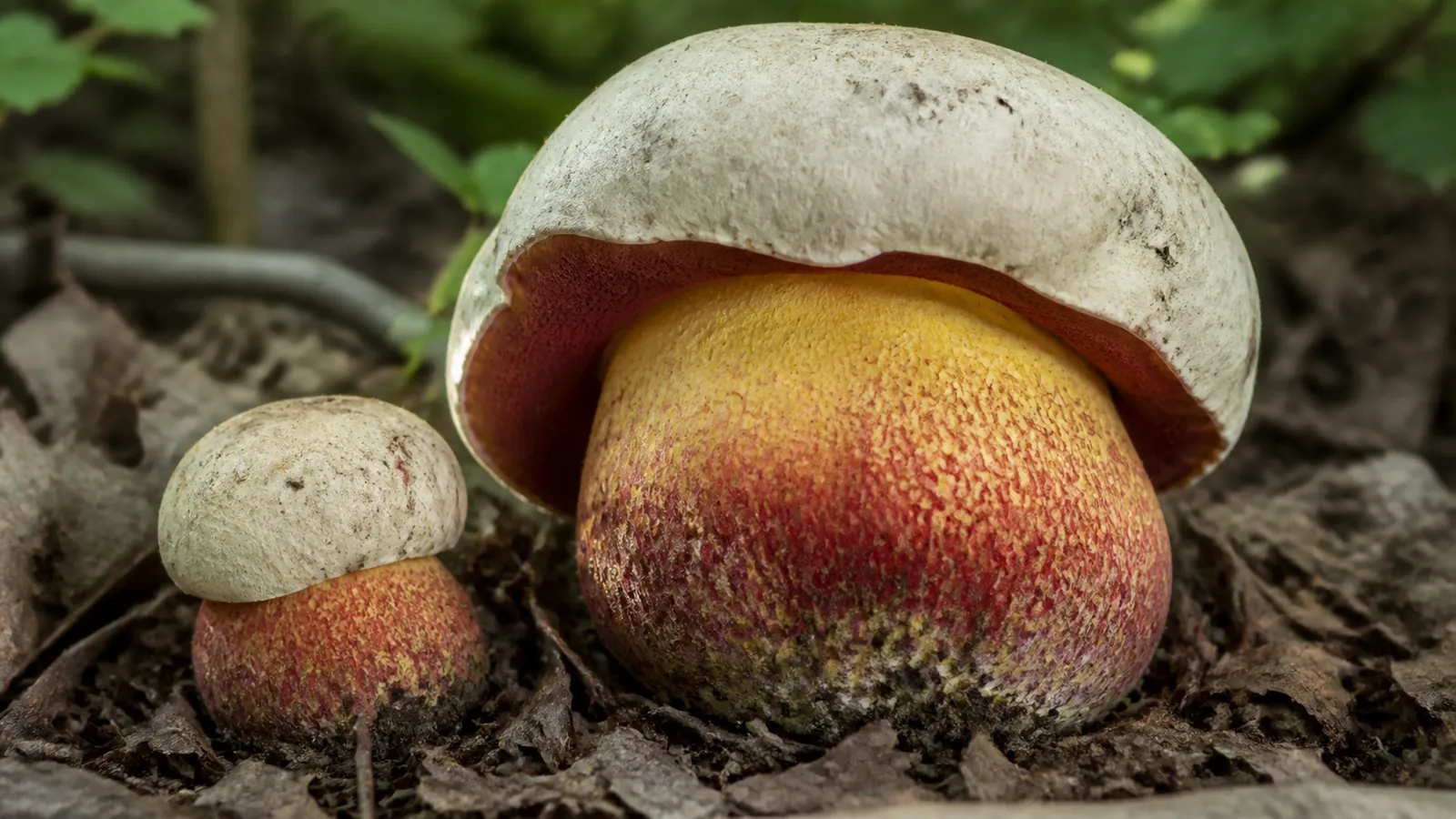
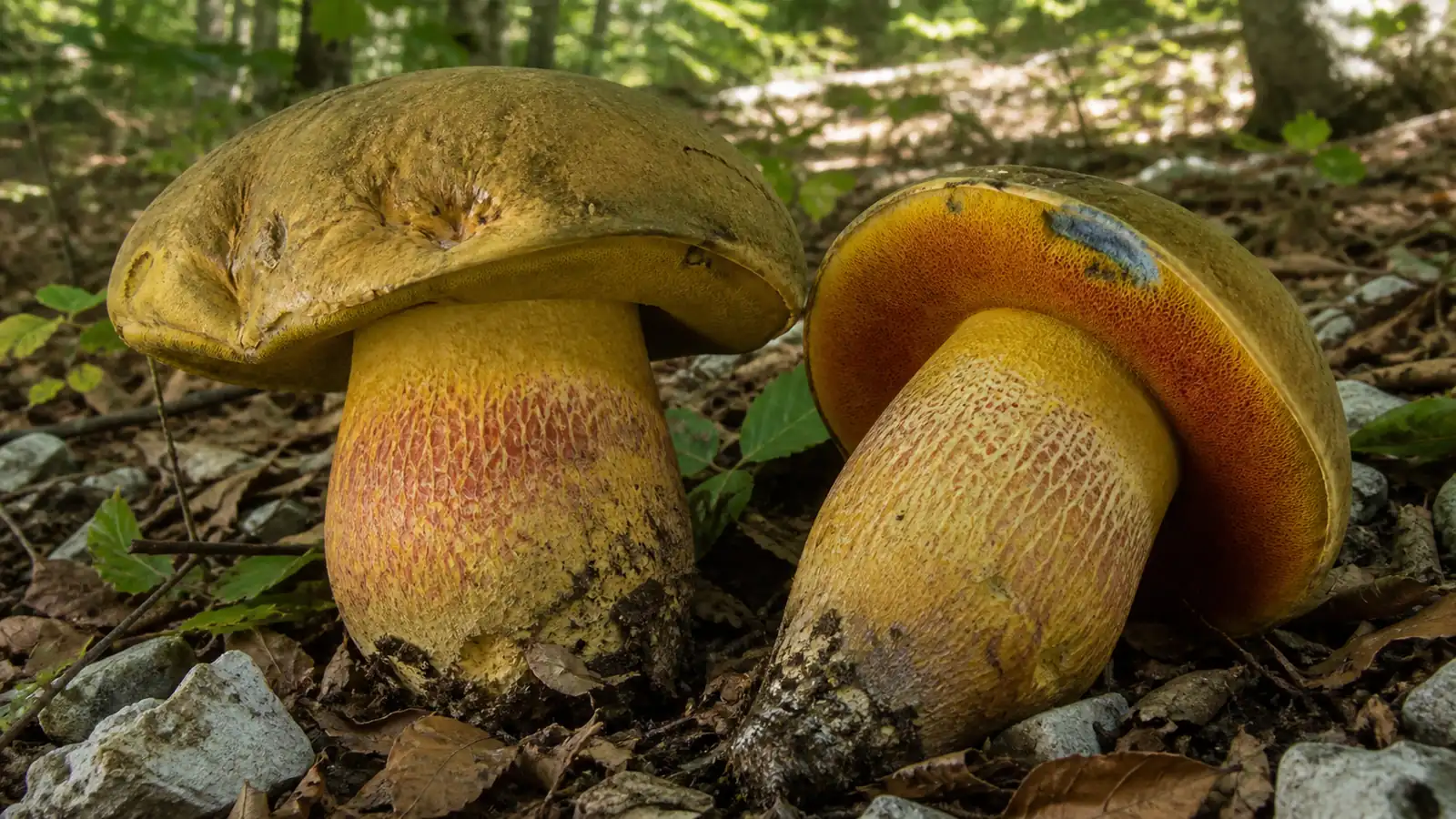
Brawny bolete is built on a heavy scale. Its cap can span the width of a hand, and the swollen stem may look too thick for the fruiting body until the cap fully expands.
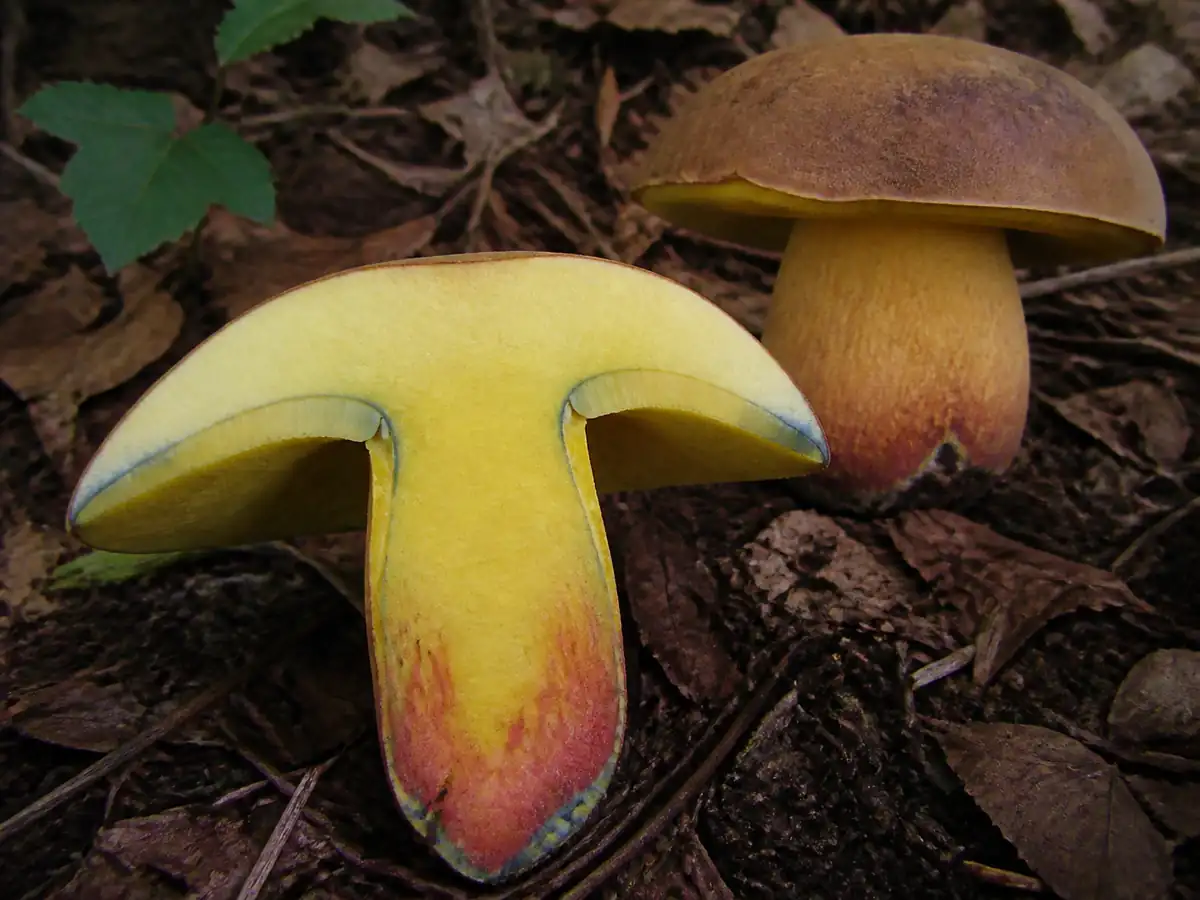
Fresh colors are unusually dynamic. Yellow-ochre cap tissue may mark red or purple with handling, while cut yellow flesh and damaged pores rapidly develop deep blue to blue-black tones.
Photograph the original yellow, red, and brown zones before testing a small area. Once the whole bolete has darkened, the sequence that separates comparisons is gone.
Pores begin yellow and mature toward orange or red.
The tube layer and surrounding flesh can react differently, so the underside should be recorded before and after a controlled bruise.
A raised network usually covers the yellow upper stem and may extend into red or purple lower zones.
The mesh should be distinguished from cracks, longitudinal fibers, and separate red dots. The species favors warm calcareous woodland and is rare across much of its range.
A record outside southern or central Europe needs especially strong taxonomic evidence.
Historical reports linked some red-pored boletes with alcohol reactions, but absence of alcohol does not make I. torosus safe. Gastrointestinal poisoning and identification uncertainty are sufficient reasons to reject it as food.
The cap can shift with maturity from pale yellow or ochre toward olive-brown, red-brown, or purple-brown. A field guide image of one stage therefore cannot function as a color template for the species.
The name brawny describes mass rather than a measurable threshold. Rubroboletus satanas and other poisonous boletes can be equally stout, which is why stem build must remain inside a complete comparison.
For readers, the essential outcome is conservative recognition.
Treat a massive red-pored blue-staining bolete as a no-food specimen, document it carefully, and assign a narrow name only with regional evidence.
Young pore mouths may still be yellow before red pigment develops. Developmental stage explains this apparent conflict, so a mixed-age group is more informative than selecting only the reddest mature cap.
The fruiting body is dense but not automatically sound. Insects can tunnel through the stem while the exterior remains firm, which is another reason a vertical section belongs in both identification and condition records.
Camera auto-exposure often brightens a dark bruise and cools yellow flesh toward green. Include a neutral reference and retain original files so a reviewer can judge the sequence without a dramatic color filter.
How should you record its color-change sequence?
Large and thick, commonly 8 to 20 cm, yellow-ochre when young then brown, olive, reddish, or purple-brown, often developing red-purple bruises before dark blue-black staining.
No gills. The tube surface begins yellow, develops orange to red pore mouths, and stains dark blue when handled.
Very stout and often bulbous, yellow near the top with red to purple tones below, usually covered by a fine raised net at least in the upper portion.
Dense yellow flesh that rapidly stains blue to blue-black after cutting, with a mild odor; do not taste a poisonous red-pored bolete.
Photograph the undamaged cap, pore surface, entire stem, and surrounding trees before applying pressure. Include a scale because size impressions become unreliable in close-up images.

Choose one mature specimen and make a vertical section. Start a timer and photograph at the cut, after 30 seconds, after two minutes, and after the reaction stabilizes.
Map fresh colors
Map original cap, pore, and stem colors under neutral light.
Light the stem net
Photograph the raised stem net in close detail before bruising.
Time the section
Cut through cap, tubes, stem, and base, then time the color sequence.
Apply a regional key
Check host trees, limestone evidence, geography, spores, and pileipellis with a regional key.

The upper stem mesh consists of raised intersecting ridges.
Photograph it with side lighting, since direct flash can flatten the relief and make a true net look like pigment.
A spore print develops olive-brown beneath a mature cap. It confirms the expected bolete deposit but cannot separate Imperator from several close red-pored groups.
Microscopy evaluates spore dimensions, basidia, cystidia, and cap-surface tissues. Chemical reactions and DNA help when morphology overlaps or when a rare record would extend the known range.
The tube layer should be measured and photographed in section.
Note pore density, tube color, any red line above the tubes, and whether blueing begins in the tubes, cap flesh, or both.
Cap bruising can show more than one phase. A young yellow surface may redden first and become blue or dark later, while an older brown cap can jump directly toward purple-black.
Record age rather than treating those specimens as different species automatically.
Stem base color matters even when soil stains it.
Brush gently and retain surrounding soil for habitat notes, but do not wash a scientific voucher before its net and basal pigments have been recorded. A formal record of a rare I. torosus should include multiple developmental stages where collection law permits.
One overmature fruiting with red pores and dark bruises is insufficient for a confident range claim.
For a food decision, the standard is simpler.
Red or orange pores, a heavy colored stem, and blue-black staining place the specimen in a difficult hazardous group that should remain out of the basket.
Record the interval between injury and the first blue mark with a visible timer when possible. Immediate dark staining and a slow faint reaction are different characters even if both photographs end blue.
Use a fresh knife for the vertical section. Pigment carried from the red pore surface can smear into pale flesh and create a false internal red line.
The cap cuticle should be sectioned from an unbruised margin for microscopy. Old blackened tissue obscures hyphal arrangement and pigments that may help separate Imperator species.
Reticulation must be demonstrated as relief. Side lighting or focus stacking can show raised intersecting ridges where a flat frontal image records only red and yellow color.

Document negative characters too. No red line above the tubes, no rooting base, no dotted stem, or no sour odor can be meaningful only when the observer specifically checked for each feature.
If someone may have eaten this mushroom, act now. Call Poison Control at 1-800-222-1222 (US) or emergency services before symptoms appear, and save a piece of the mushroom for identification.
Which red-pored boletes resemble it?
Imperator and Rubroboletus species share massive stems, red or orange pores, yellow flesh, and rapid blue staining. A reliable name requires the complete color sequence, stem net, host, limestone setting, mature pores, and regional key.
Warning
Do not eat a red-pored, blue-staining bolete. Several species in this visual group cause gastrointestinal illness, and old colors or one bruise photograph cannot establish a safe species.
| Candidate | Cap and pores | Stem and flesh reaction |
|---|---|---|
| Imperator torosus | Yellow-ochre cap becoming brown or red-purple, yellow pores turning orange-red | Massive netted stem, yellow flesh staining very dark blue-black |
| Imperator rhodopurpureus | Pink-red to purple cap, red pores | Strong blue staining, red-yellow netted stem |
| Imperator luteocupreus | Yellow to copper-red cap, red pores | Stout patterned stem and blue staining |
| Rubroboletus satanas | Pale whitish cap, orange-red pores | Very bulbous red-yellow stem, blue reaction often less uniformly intense |
| Suillellus luridus | Olive-brown cap, orange-red pores | Netted stem and a dark line between tubes and cap flesh in section |
| Neoboletus luridiformis | Brown cap and red pores | Dotted rather than netted stem |
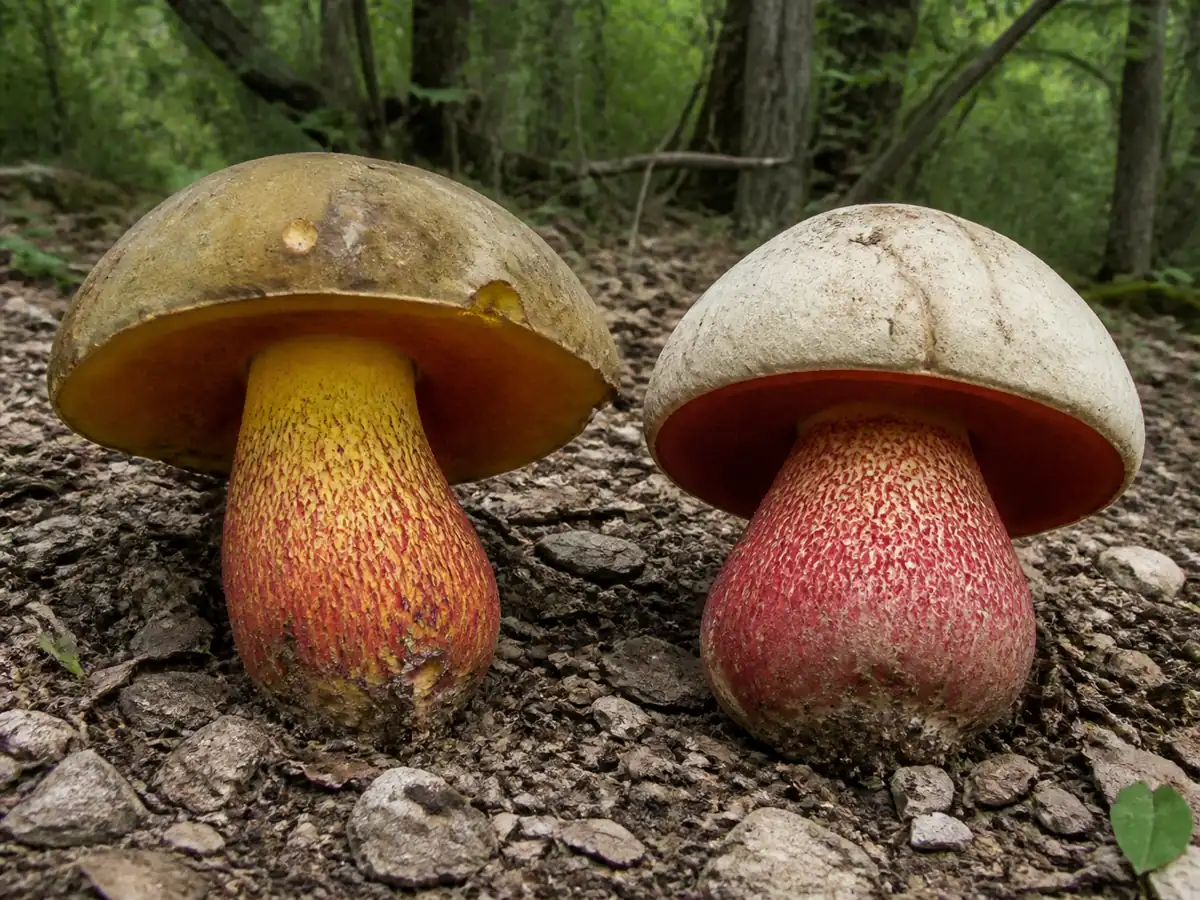
Record the cap before touching it because young yellow tissue can change red-purple after pressure and then darken. The bruise sequence, not just the final blue-black patch, helps describe I. torosus.
Stem ornament is a major fork. A raised net supports Imperator or Suillellus comparisons, while dense red dots without a mesh redirect the specimen toward Neoboletus.
Cut from cap through the tube layer and stem base. Suillellus luridus may show a dark red line where the tubes meet the cap flesh, a feature that cannot be evaluated from the intact exterior.
- Reject blue staining alone because edible, inedible, and poisonous boletes can all turn blue.
- Reject red pores alone because several genera share them and young pores may begin yellow.
- Time a full section and record the original flesh plus the location, speed, and intensity of color change.
- Require the regional limestone habitat because the rare European species belongs to warm calcareous woodland, not every continent.
A North American red-pored bolete should not receive this European name from visual similarity.
Use a North American key and stop at a regional group when microscopy or DNA is missing.
Rubroboletus satanas often has a much paler cap, but mature or soiled examples can narrow that contrast. Odor, stem net, pore development, bruise intensity, and habitat must remain in the comparison.
Imperator rhodopurpureus can overlap in purple-red cap color and violent blueing. Fresh cap texture, exact pigment distribution, microscopy, and sequence data are appropriate for a rare scientific record.
The dark line above the tubes associated with Suillellus luridus should be sought in a clean section. Its absence is useful only when the tube-cap boundary remains intact and unsmeared.
A rare name needs more evidence, not less. If the collection lacks a complete base, fresh colors, host data, or a voucher, report a red-pored bolete group rather than extending I. torosus by guesswork.
Why do limestone woods matter?
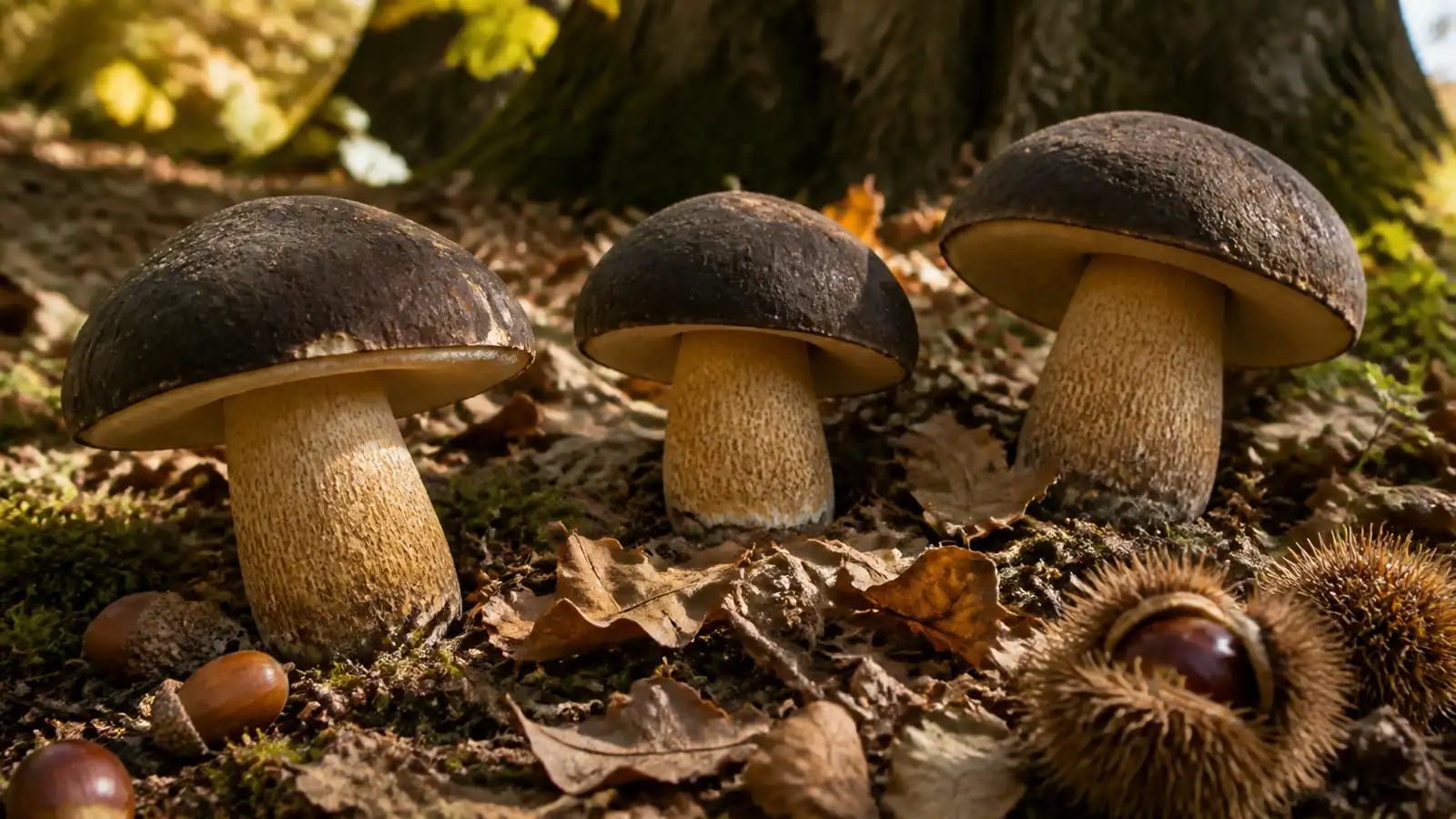
Imperator torosus is ectomycorrhizal with living deciduous trees. Oaks, beech, and hornbeam are important hosts in warm European woodland.
Calcareous soil is a central part of the species concept. Limestone-derived ground, warm slopes, and open deciduous stands help distinguish its habitat from superficially similar boletes of acidic conifer forest.

The mycelium exchanges mineral nutrients and water with fine tree roots in return for carbon. Summer warmth followed by suitable soil moisture can trigger large fruiting bodies without revealing the extent of the underground fungus.
The nearest tree may not be the host because roots overlap.
Record all mature trees within the plausible root zone and note whether the soil reacts or maps as calcareous.
Rare fruiting sites should not be raked or repeatedly collected. One documented voucher can support identification, while leaving the rest maintains spore production and the woodland record.
Removing the mushroom does not remove a tree disease because the relationship is mycorrhizal rather than a simple parasitic rot. Digging around the base can damage the fine roots participating in the association.
Drought can prevent fruiting even when the mycelium persists. Repeat surveys should include negative years, rainfall, heat, and host condition rather than interpreting absence as local extinction.
Because climate and soil combine strongly, range claims need precise habitat data.
A warm-looking woodland photograph without geology or host information cannot establish that a red-pored bolete belongs to this southern European species.
Warmth does not mean drought tolerance at every stage. The host and mycelium may persist through dry periods, but fruiting requires enough soil water to build a large, dense bolete.
Calcareous indicators such as exposed limestone, alkaline-soil plants, and geological maps strengthen the site record. One handheld pH reading from surface litter is too local to define the root zone.
Scarcity changes collection practice. Photograph multiple stages in place, take one lawful voucher when needed, and leave the remaining fruiting bodies to mature rather than building a food basket from a poisonous species.
Habitat is part of the identification, not scenery. Warm deciduous hosts on calcareous ground support I. torosus, while an acidic conifer site should redirect the name.
Submit exceptional records to a regional mycological society or herbarium. A rare-range claim benefits from independent review before it spreads through image databases.
Why did Boletus torosus move to Imperator?
The brawny bolete was long known as Boletus torosus. Molecular analyses showed that it sits far from the porcini-centered core of Boletus, leading to the genus Imperator in 2015.
Imperator torosus is the type species of that genus. Its close relatives share massive fruiting bodies, bright pore and stem colors, strong blue staining, and difficult food-safety decisions.
Historic names and neotype decisions complicate literature searches. A chemistry or poisoning report should be checked for specimen origin and voucher identity rather than attached automatically to every modern Imperator record.
The genus name, meaning ruler or emperor, does not imply superior edibility. Taxonomic names describe relationships and history, while food status requires its own evidence.
Can brawny bolete be eaten?
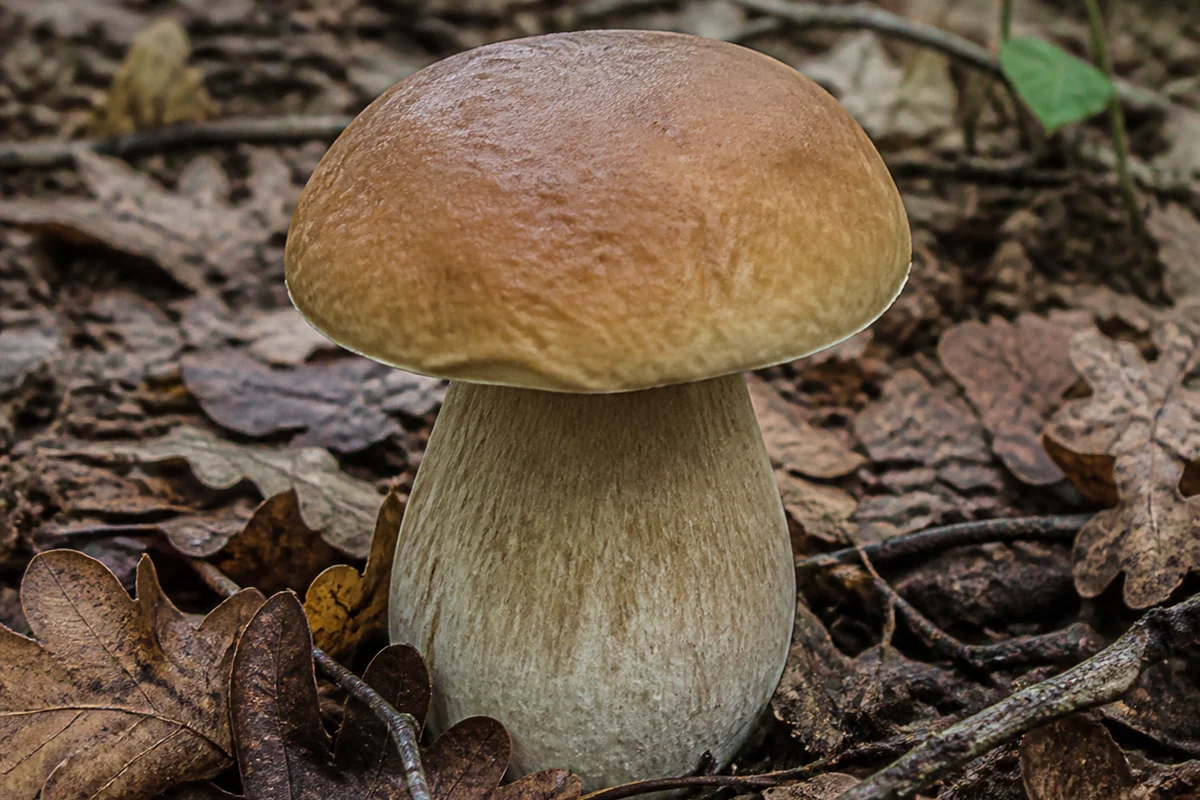
Do not cook brawny bolete. Thorough cooking, parboiling, or avoiding alcohol does not create a validated safe preparation for a mushroom classified as poisonous.
Bitterness or a mild taste cannot be used as a safety screen. Deliberate tasting also creates an unnecessary exposure among red-pored boletes with overlapping morphology.
Keep every red-pored bolete separate from edible porcini. Once stems and pores are trimmed, the features needed to reconstruct the species and exposure disappear.
Brawny bolete identification questions
Is brawny bolete edible?
Does it bruise blue?
What color is its spore print?
Where does it grow?
Does avoiding alcohol make it safe?
How is it separated from dotted-stem boletes?
Sources & References
- Assyov et al., genus Imperator Phylogenetic and nomenclatural basis for Imperator and I. torosus.
- GBIF Backbone Taxonomy Accepted name and occurrence context.
- European Council for Conservation of Fungi European rarity and fungal conservation context.
- Kiwitt and Laatsch study context Historical investigation of coprine claims in boletes, used without claiming safety.