What makes a bronze bolete different from other porcini?
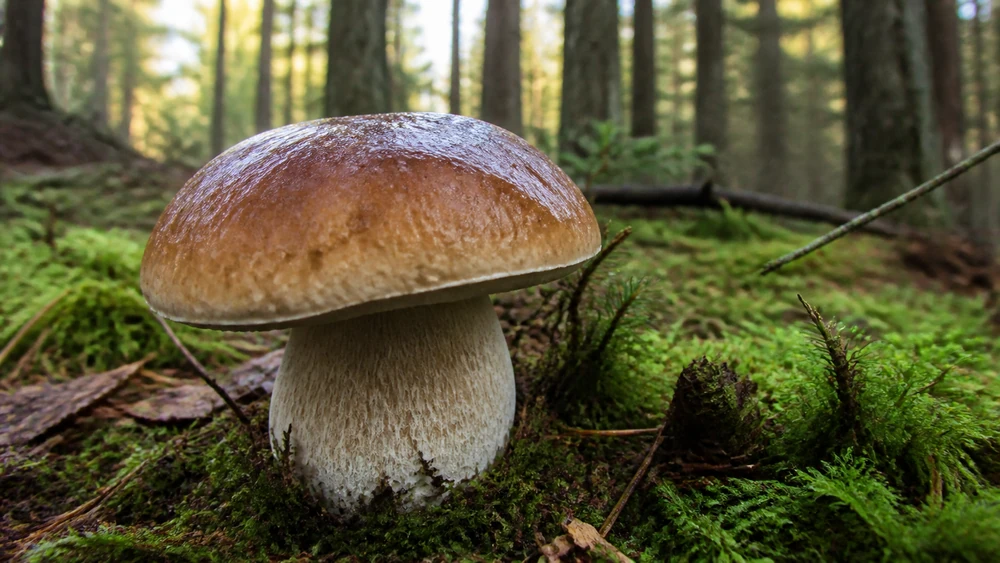
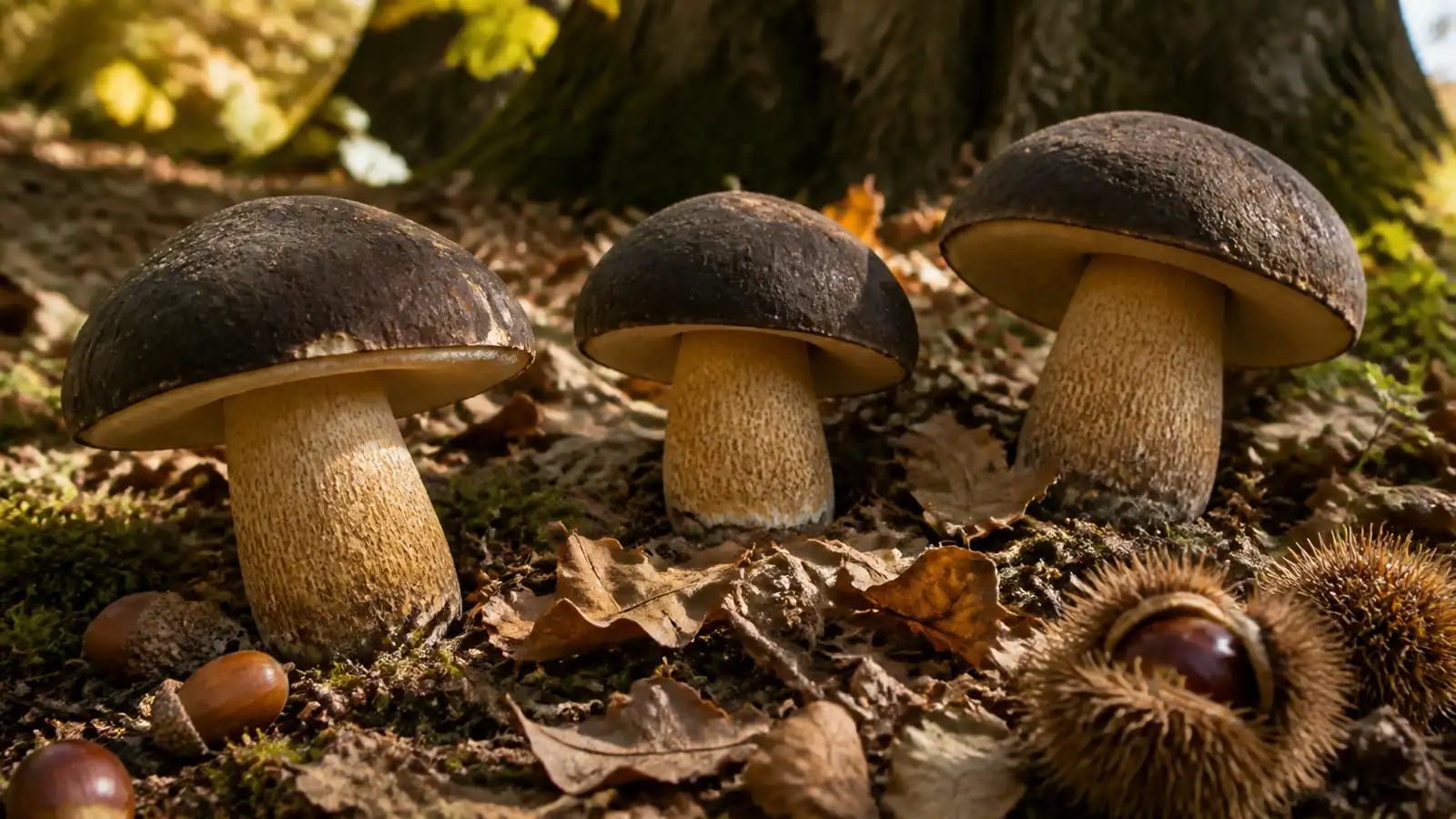
Bronze bolete is one of the darkest members of the porcini group. A young cap can look charcoal-brown or nearly black above a pale stout stem, creating the bronze contrast behind the common name.
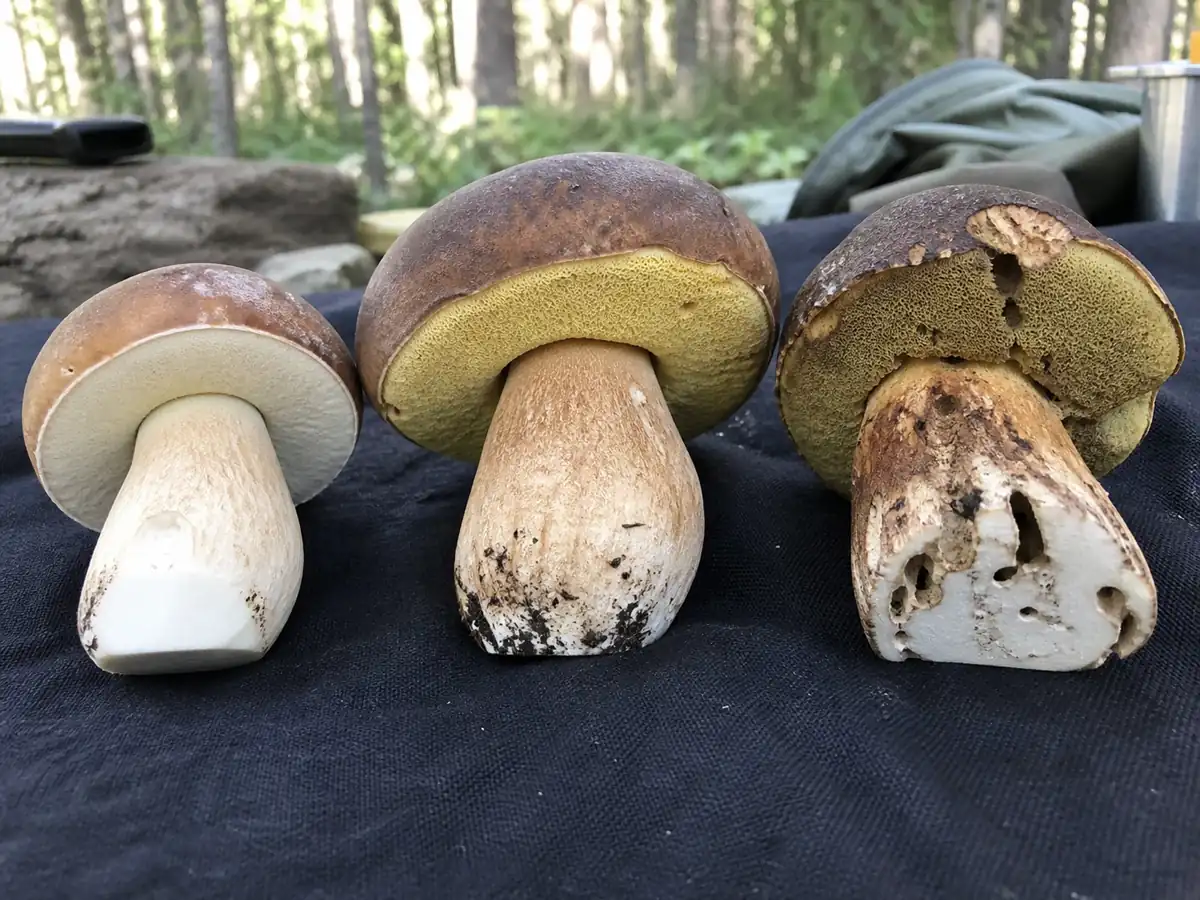
The pore surface begins white, passes through cream and yellow, and becomes olive as spores mature. It should not develop the rapid blue bruise associated with many red-pored or yellow-pored boletes.
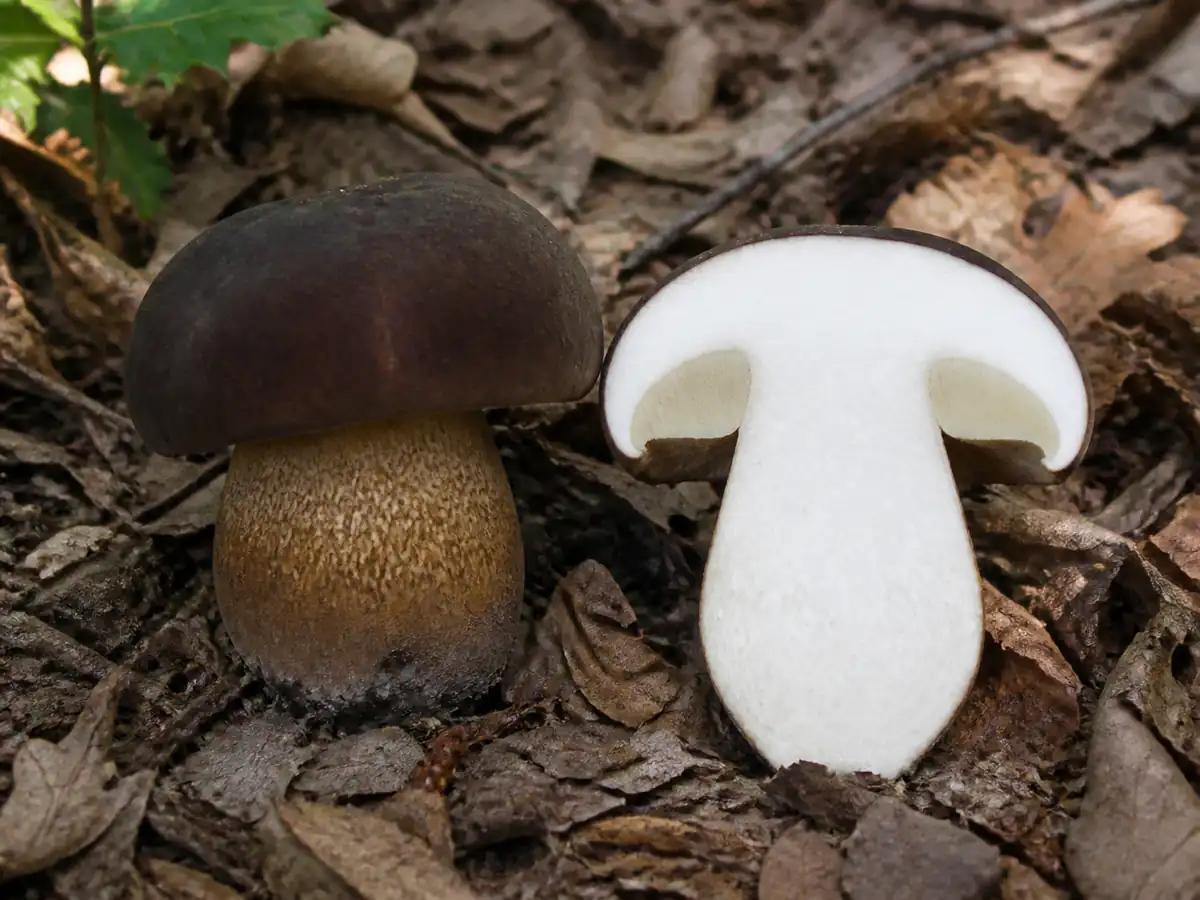
Cut one complete specimen. Thick white flesh that remains white, pale maturing pores, and a raised stem net establish the porcini pattern more securely than cap color.
The cap is dry and often finely velvety when young. Heat can crack the surface and reveal paler flesh between dark islands, while rain can smooth the texture and reduce the contrast.
A pale reticulum forms raised intersecting lines on the stem, often strongest near the apex.
It must be distinguished from the dark granular scabers of Leccinum and the coarse dark mesh of bitter bolete.
Boletus aereus favors warmth and deciduous hosts, especially oak and chestnut.
That ecology helps separate it from red-brown B. pinophilus under conifers, although mixed woodland requires a complete host inventory. Good specimens feel dense and dry, with tight white to yellow pores and a clean mushroom aroma.
An old cap may still be identifiable but have a spongy tube layer, larvae, and souring flesh that make it poor food.
The culinary reputation comes from firm texture and concentrated porcini aroma.
It can be sautéed fresh, dried for storage, or used in rice, pasta, soups, and sauces where the flavor of the rehydration liquid is retained.
A choice-edible label is conditional. Regional identity, site cleanliness, individual tolerance, sound condition, and thorough cooking remain part of the meal decision.
The reader should leave with two separate judgments. First confirm a regionally valid porcini identification, then grade each fruiting body for freshness before it enters the kitchen.
Cap color should be judged across several ages. Buttons often show the deepest charcoal surface, while expanded caps may warm toward chestnut and expose pale cracks during hot weather.
The stem net can fade lower down but usually remains visible near the pores.
A cap that fits perfectly without a demonstrated reticulum remains an incomplete porcini identification.
Bronze describes appearance, not a universal market grade. Sellers may use dark cep for several porcini, so origin and the Latin name matter when a specific species is promised.
How do you verify its white non-staining flesh?
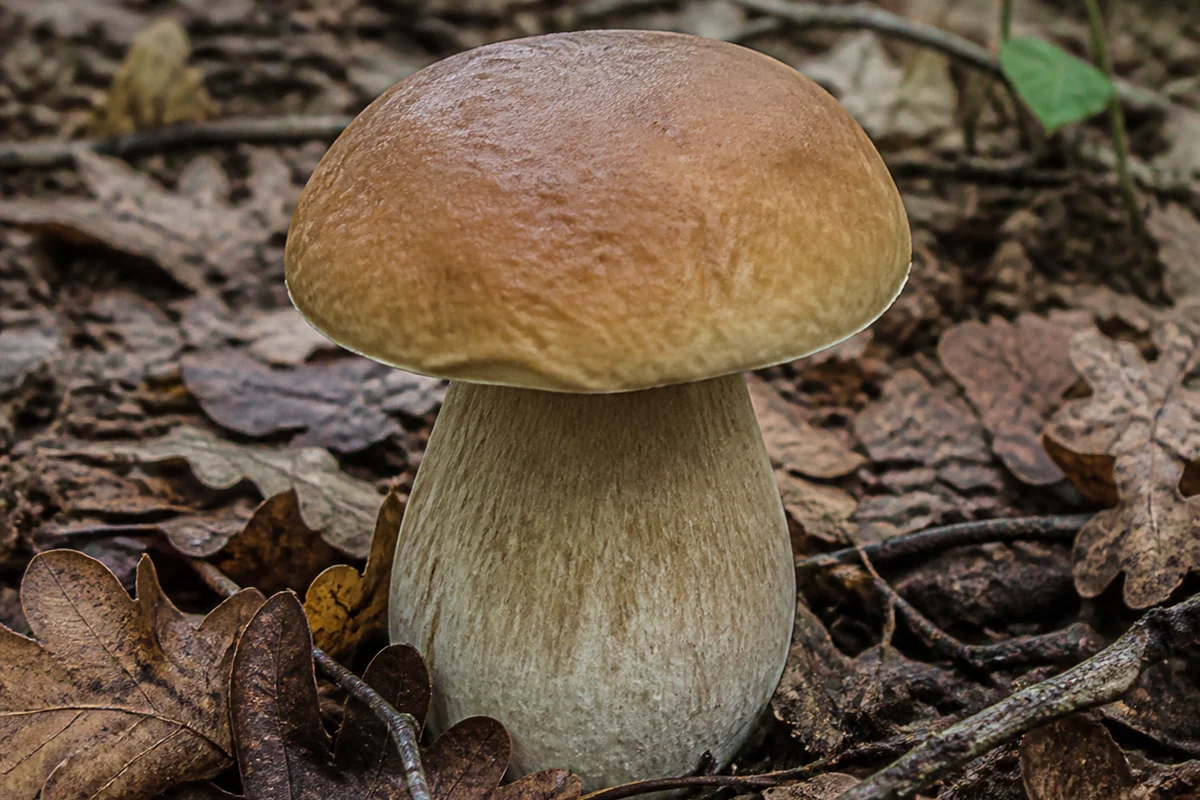
Broad and firm, commonly 7 to 25 cm, dark bronze-brown to nearly black, dry and finely velvety when young, sometimes cracking into paler patches in heat.
No gills. Fine white pores become cream, yellow, then olive with age and do not normally stain blue when pressed.
Stout and club-shaped to cylindrical, pale brown to ocher, with a fine pale raised net that is often clearest near the top.
Thick white flesh that remains white when cut, with a pleasant mild porcini aroma and nutty flavor after cooking.
Photograph the intact fruiting body, underside, complete stem, nearby trees, and soil before trimming. Large boletes are often cut at ground level, which removes basal shape and mixes several species in one basket.
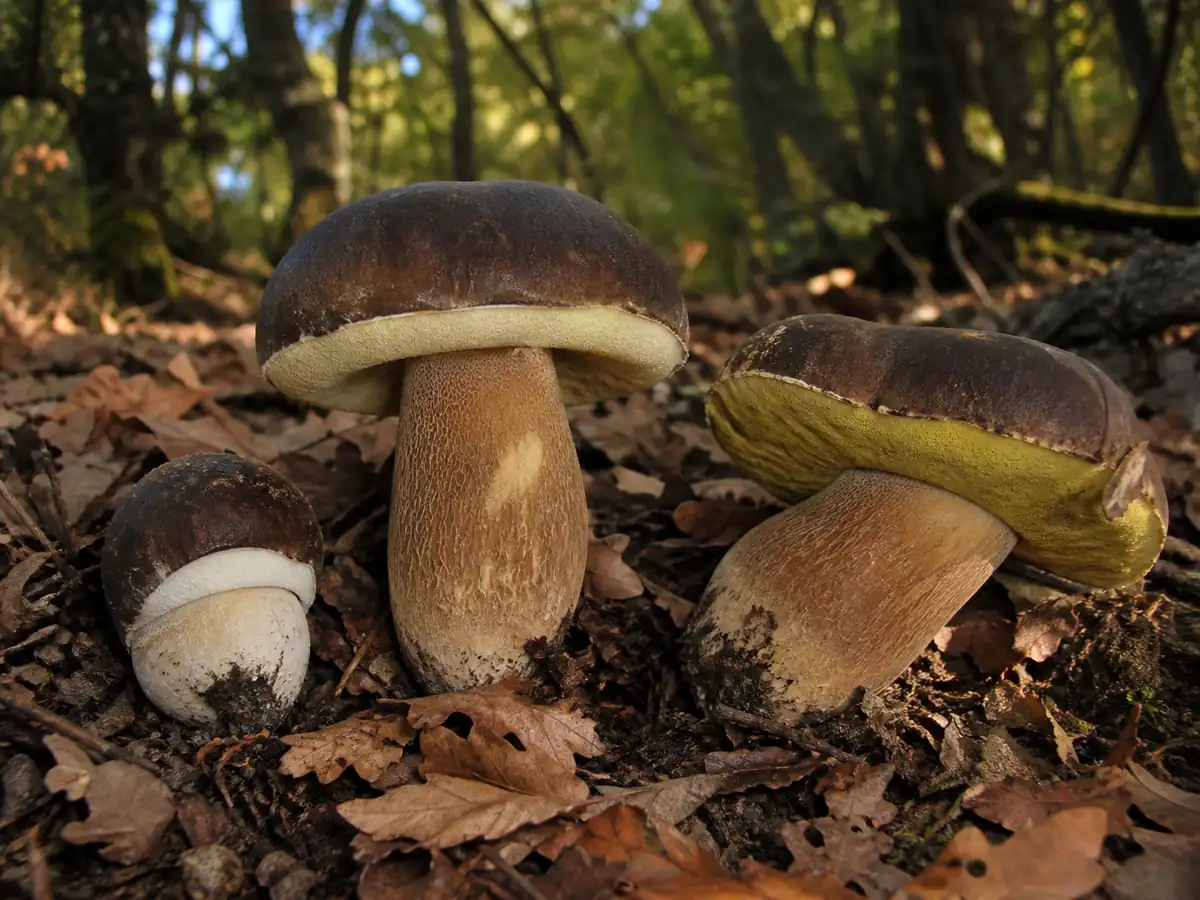
Record cap and pores
Record original cap texture and pore color before handling.
Light the reticulation
Photograph the raised net with side lighting and keep the complete base.
Watch the cut flesh
Cut vertically and watch cap, tubes, and stem flesh for at least several minutes.
Resolve host and region
Match host, season, geography, spores, and cap tissues to a regional porcini key.
A mature cap can produce an olive-brown deposit on light paper.
The print supports a bolete identification but cannot distinguish B. aereus from B. edulis, B. reticulatus, and other porcini by itself.
The pore mouths should remain small and round in good young material. Oversized ragged olive pores often indicate age, insect feeding, or both, which affects kitchen quality without necessarily changing the species.
Cut flesh should stay white.
A faint tan from age or handling differs from an immediate blue reaction, so photograph the fresh section and wait before cleaning the knife.
Inspect the reticulum as three-dimensional ridges. A macro photograph under raking light shows whether lines cross into a mesh or merely run lengthwise as fibers.
Cap texture is best recorded dry and wet when weather permits.
The species can look more polished after rain, while a young dry cap shows the fine velvety surface that supports the name.
Microscopy evaluates smooth spindle-shaped spores, cystidia, and pileipellis structure. DNA can resolve commercial or range questions where members of the porcini complex overlap in morphology.
Host evidence needs more than the closest leaf. Oak and chestnut roots extend beyond the crown, and mixed stands can place a pine close to a deciduous partner, so list every plausible tree.
For food, slice the cap and stem lengthwise at the collection site or during cleaning.
Reject internal mold, extensive larval tunnels, yellow-brown soft flesh, foul odor, or water-soaked decay.
A specimen can pass taxonomy and fail condition. That distinction prevents the common mistake of saving decomposed mushrooms merely because the species is valuable.
Keep different porcini-like mushrooms separated until every one has been cut and checked. One pink-pored bitter bolete can contaminate a prepared batch, while a red-pored specimen requires a completely different safety assessment.
Which dark-capped boletes resemble it?
Bronze bolete belongs to the porcini group, whose members share white non-staining flesh, olive-brown spores, fine pores, and a netted stem. Cap texture, host, season, pore age, and region separate B. aereus from the summer cep, penny bun, and pine bolete.
A dark cap does not make every bolete a bronze bolete. Confirm pale pores that mature olive, white non-blueing flesh, a raised stem net, mild odor, sound condition, and a region where B. aereus is supported.
| Candidate | Cap and season | Host or structural contrast |
|---|---|---|
| Boletus aereus | Very dark bronze to black-brown, warm-season fruiting | Deciduous hosts, dry velvety cap, white non-staining flesh |
| Boletus reticulatus | Paler tan to brown, often cracking in summer | Deciduous hosts and a strongly netted pale stem |
| Boletus edulis | Brown cap often with a paler margin | Broad host range and cooler-season or wetter habitats |
| Boletus pinophilus | Red-brown to mahogany cap | Commonly associated with pine and other conifers |
| Tylopilus felleus | Brown cap and netted stem | Pores become pink, print is pink-brown, flesh intensely bitter |
| Dark Leccinum species | Brown to blackish cap | Stem carries scabers rather than a raised net |
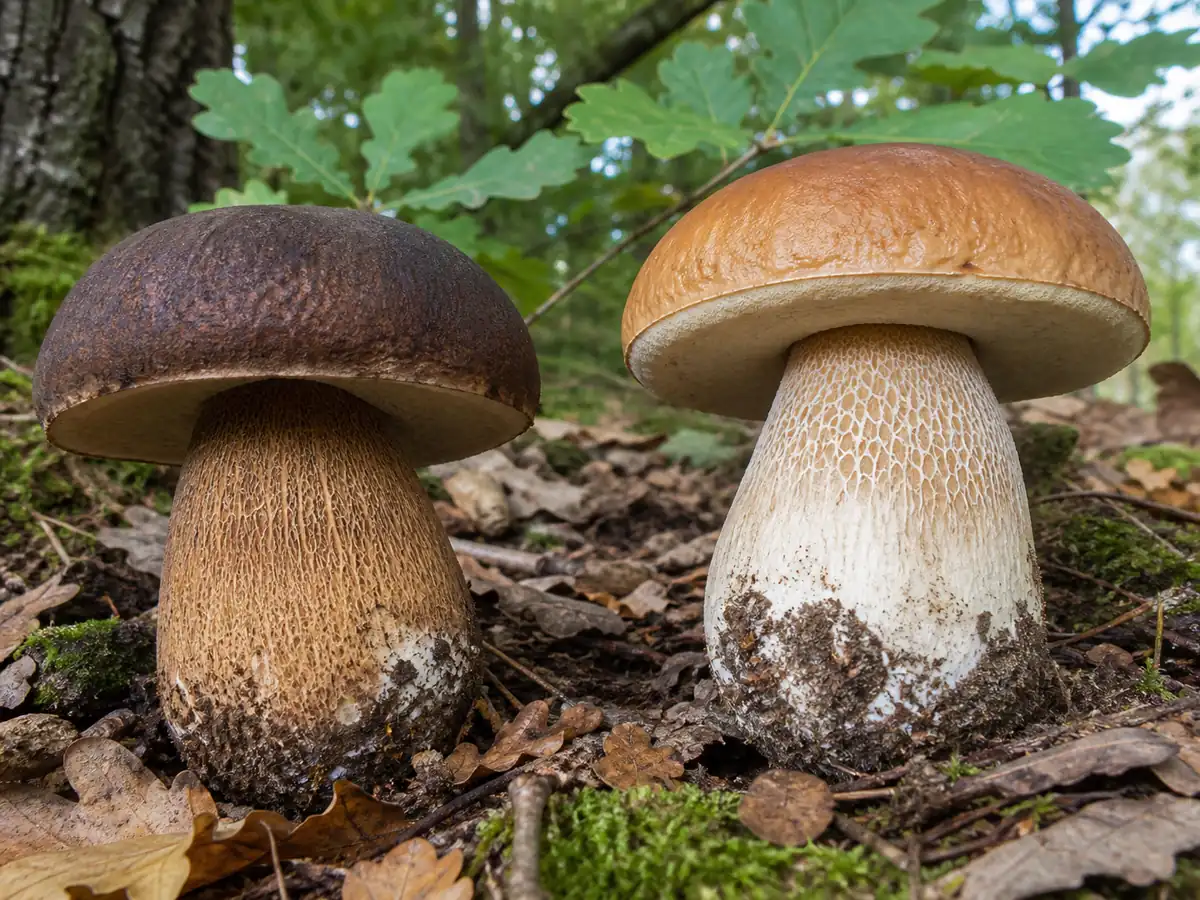
Tylopilus felleus can spoil a whole dish with one specimen. Pink mature pores and a dark coarse net conflict with porcini, but do not taste an uncertain bolete when the structural evidence is incomplete.
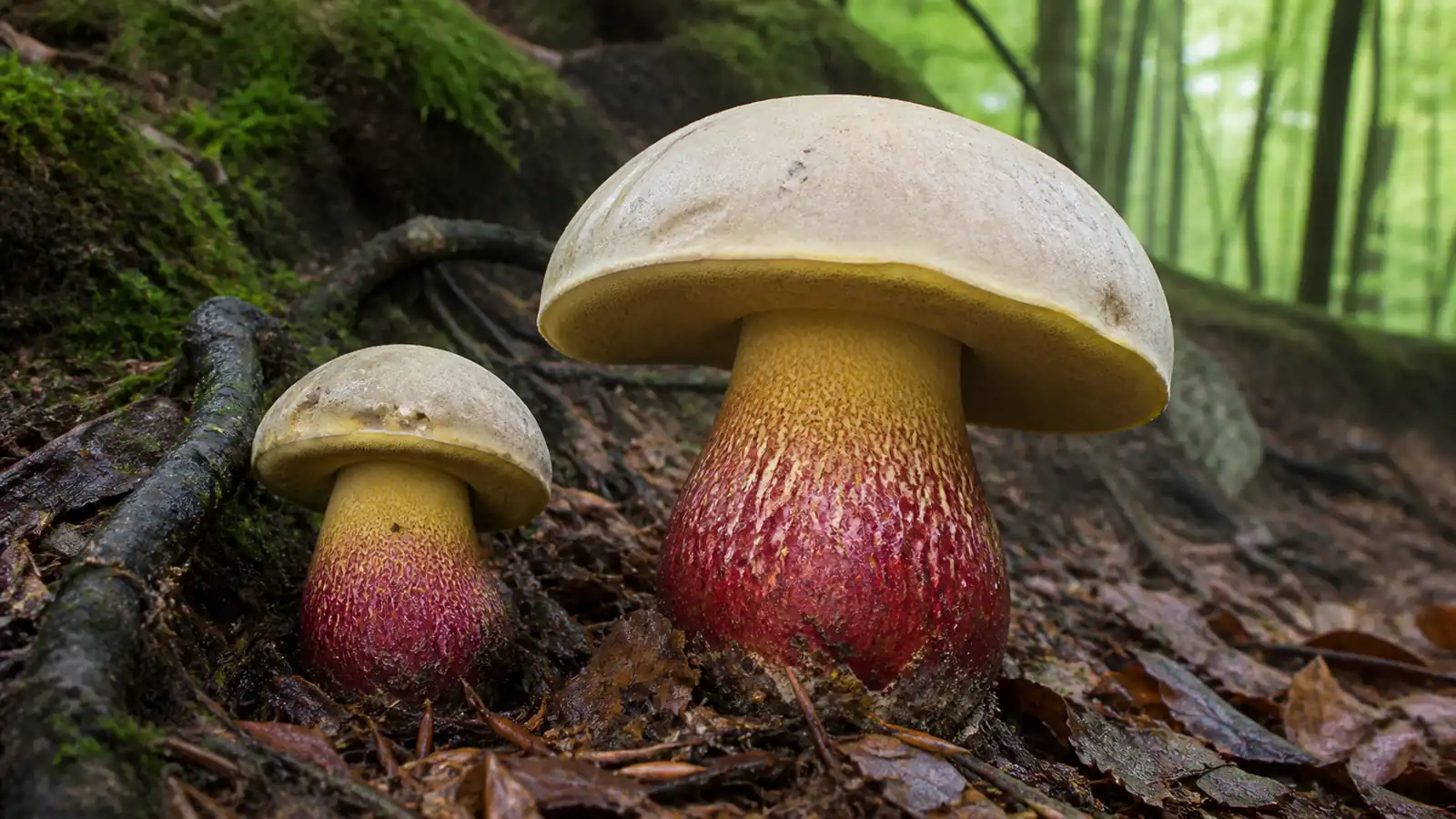
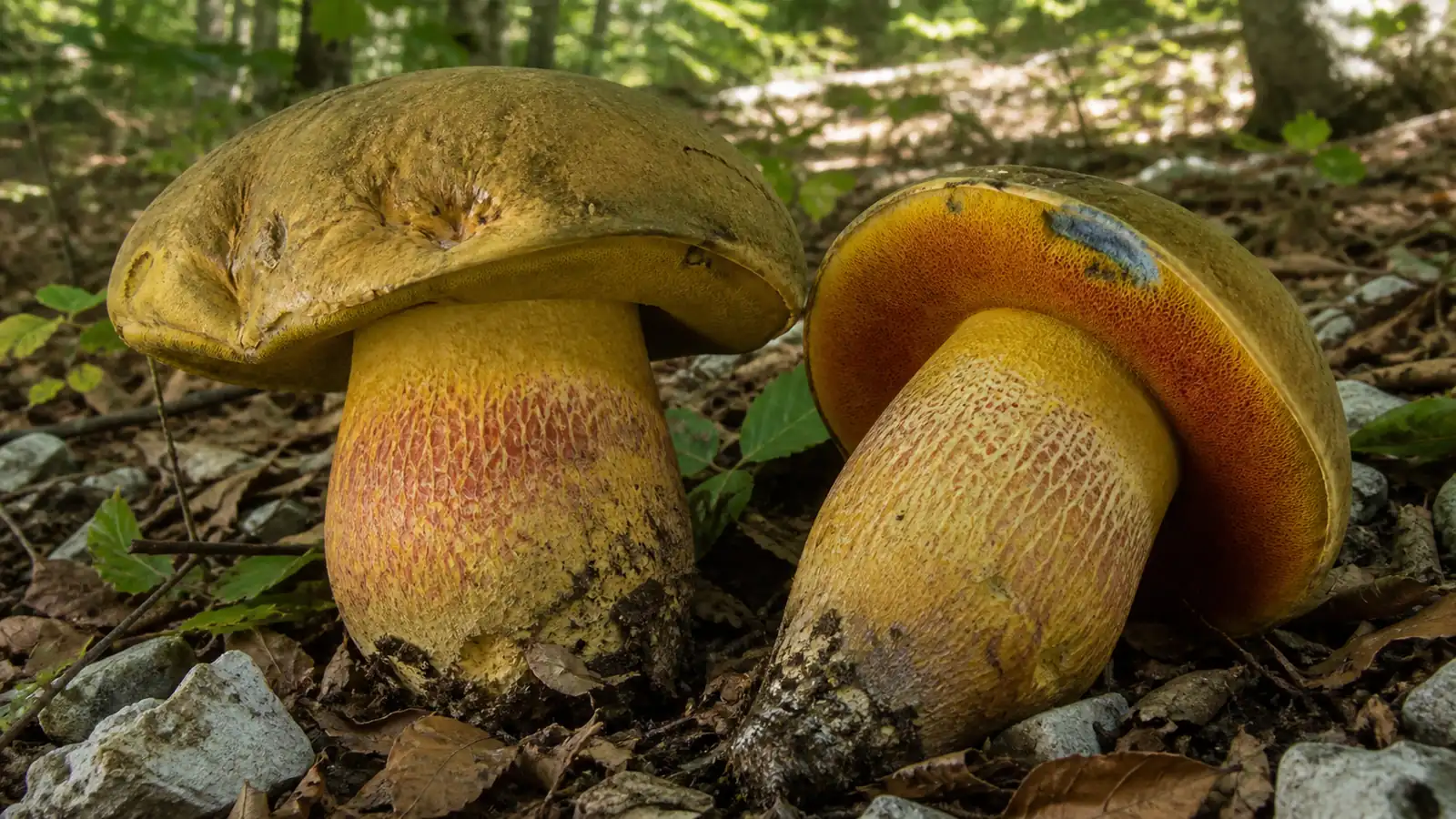
Red or orange pores, blue staining, a dotted red stem, or red flesh reactions are not features of B. aereus. Those signs move the specimen into other bolete groups, some of which are poisonous.
Young pores are white and firm. Olive pores on an older specimen support maturity but often arrive with larvae and soft tubes, so correct identity does not guarantee good eating condition.
Outside the native range, use a local porcini treatment. Imported trees can carry European fungi, but a visual match by itself cannot demonstrate an introduced B. aereus population.
Why does it favor warm deciduous woodland?
Boletus aereus forms ectomycorrhizae with living broadleaf trees. Oaks and sweet chestnut are prominent hosts, with beech and other deciduous partners reported in parts of its range.
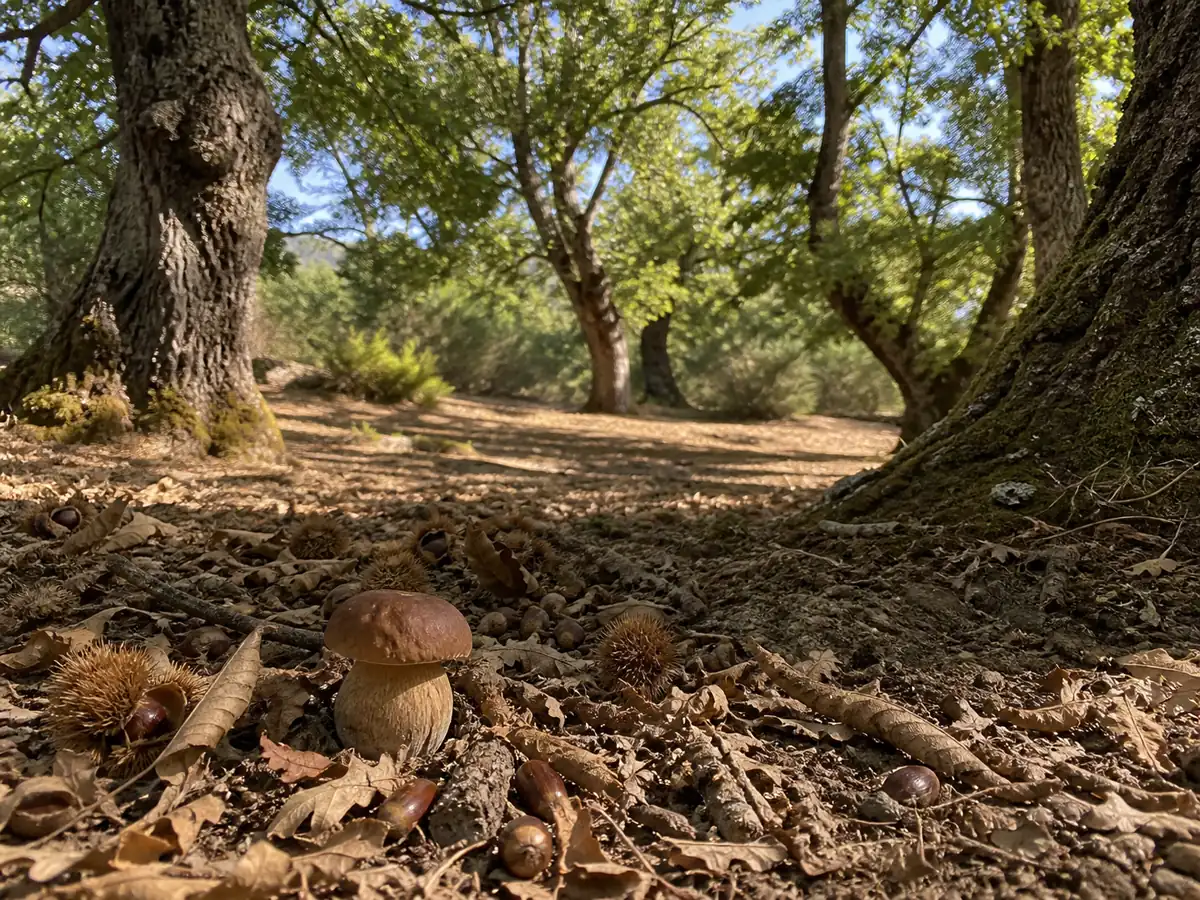
The fungus extends the fine-root system into soil and exchanges water and mineral nutrients for plant carbon. The large bolete is a seasonal reproductive structure rather than the whole organism.
Warm open woodland and Mediterranean-influenced climates suit the species. Fruiting can begin after late-spring or summer rain when soil remains warm, then recur into autumn where moisture continues.
Soil and host interact. The mushroom occurs on well-drained sites across different soil chemistries, so one pH claim should not replace local habitat evidence.
Repeated heavy harvesting can remove mature spore-producing caps from a scarce site. Follow land rules, take sound amounts for personal use, and leave overmature and undersized fruiting bodies in place.
Cutting or careful lifting does not kill the underground mycelium, but raking litter and digging through roots damages habitat. Search visually and return the surface cover after removing a voucher.
Range data need taxonomic care because dark-capped porcini occur outside Europe.
A photographed cap under an oak is weaker evidence than a voucher tied to host, spores, tissue, and sequence data.
How should bronze boletes be cleaned and cooked?
Clean bronze boletes with a brush and a damp cloth, trimming the soil-covered base last. Rinse briefly only when grit is embedded, then dry the surface so the pan browns rather than steams.
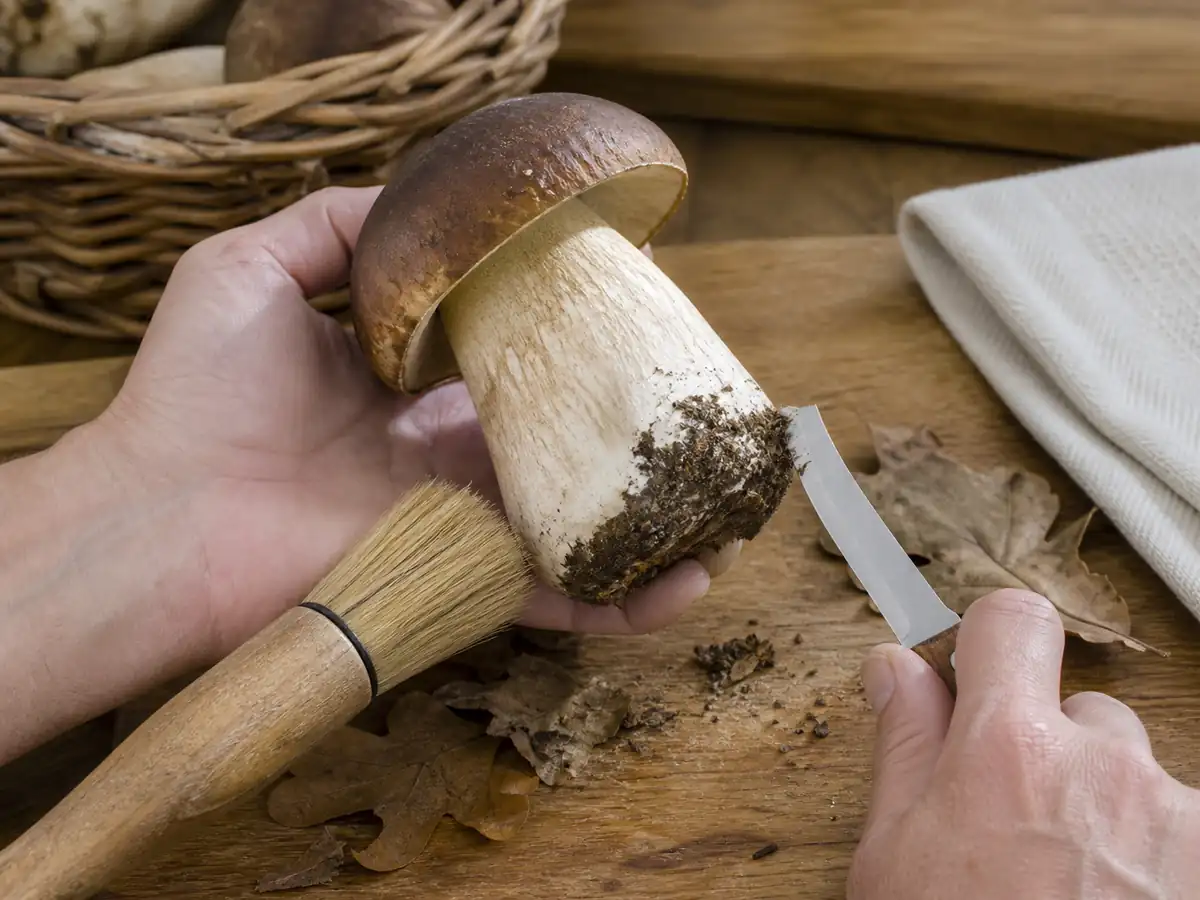
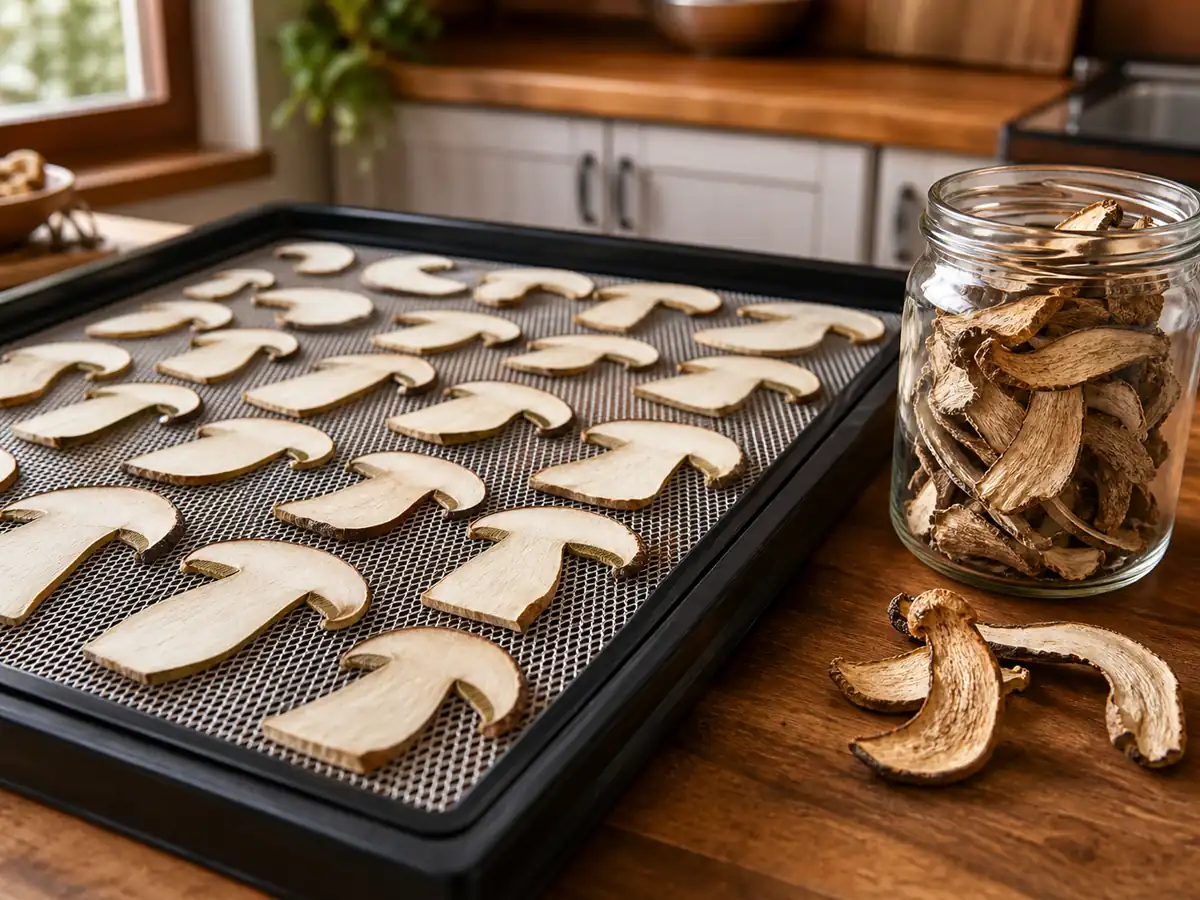
Remove a soft mature tube layer if it has become spongy or insect-filled. Tight white to yellow pores on a young cap can remain because they cook with a pleasant texture.
| Method | Best specimen | Practical control |
|---|---|---|
| Sauté | Young firm caps and stems | Use a broad hot pan and cook released water away |
| Roast | Thick clean slices | Leave space between pieces and turn for even browning |
| Dry | Sound thin slices | Dry until brittle, cool completely, and seal airtight |
| Rehydrate | Clean dried slices | Filter soaking liquid before adding it to the dish |
Cook a modest first portionIndividual reactions can occur even with edible mushrooms.
Label dried materialRecord species, place, and date before fresh characters disappear.
Eat raw slicesWild mushrooms should be thoroughly cooked.
Preserve damaged specimensDrying does not reverse mold, decay, or contamination.
Sautéed bronze bolete pairs well with butter or olive oil, garlic, parsley, eggs, rice, pasta, and mild meats.
Use restrained seasoning so the nutty porcini aroma remains identifiable.
For drying, slice evenly through cap and stem and inspect every surface for larvae. Dry with moving warm air until pieces snap, not bend, then cool before sealing to avoid condensation.
Rehydration liquid captures soluble flavor and any remaining fine grit. Strain it through a coffee filter or fine cloth and leave the final sediment behind.
Powder is useful in sauces and stocks but hides identity and condition. Grind only fully dry, documented single-species material and discard any jar that clumps, smells musty, or shows moisture.
Do not serve a mixed wild-mushroom dish to someone who cannot identify its contents after a reaction. Keep a cooked sample and an uncooked reference in the refrigerator for the meal period.
Freeze only cooked or briefly blanched clean portions when drying is impractical. Label the package with species, date, and location, and avoid repeated thawing that damages texture and obscures spoilage.
Condition controls the final meal. A valuable species name does not rescue a sour odor, soft brown flesh, internal mold, or extensive larval galleries.
When serving guests, disclose that the dish contains a wild mushroom and keep the species separate. This makes any reaction easier to interpret than a mixture of several foraged fungi.
What does a normal serving provide?
Fresh bronze boletes are mostly water and provide protein, fiber, minerals, and a relatively low energy density before cooking fat is added. Actual composition changes with soil, maturity, weather, and preparation.
Dried values are concentrated because water has been removed. A 100-gram dried comparison is not a normal serving and should not be presented as the amount on one plate.
Wild boletes can accumulate elements from soil. Avoid polluted roadsides, mine waste, industrial ground, and sites with uncertain chemical history even when the species is edible.
Laboratory antioxidant or polysaccharide results do not turn a meal into treatment. The responsible nutrition claim remains that this is a flavorful cooked food in ordinary portions after correct identification.
How does it fit within the porcini group?
Boletus aereus remains in the porcini-centered genus Boletus. Molecular study of European Boletus section Boletus placed it near B. reticulatus while supporting the familiar porcini species as distinct lineages.
Aereus refers to bronze or copper, matching the dark metallic impression of the cap. Older regional names such as queen bolete and dark cep describe culinary reputation rather than separate taxa.
- Stable genus: Unlike many red-pored boletes moved to new genera, B. aereus remains close to the type species B. edulis.
- Regional caution: Dark porcini in North America or Asia should not automatically receive the European name.
- Culinary label: Market names can group several porcini, so the Latin name and origin matter for a species claim.
Bronze bolete foraging and cooking questions
Is bronze bolete edible?
Does its flesh turn blue?
What color is its spore print?
How is it different from bitter bolete?
Can bronze bolete be dried?
Where does it grow?
Sources & References
- Natural History Museum UK Species Dictionary Accepted name and British common name.
- Beugelsdijk et al., Persoonia European porcini phylogeny and species boundaries.
- EPPO Global Database Taxonomic record for Boletus aereus.
- Food Chemistry nutrition study Composition research used with serving and site limitations.