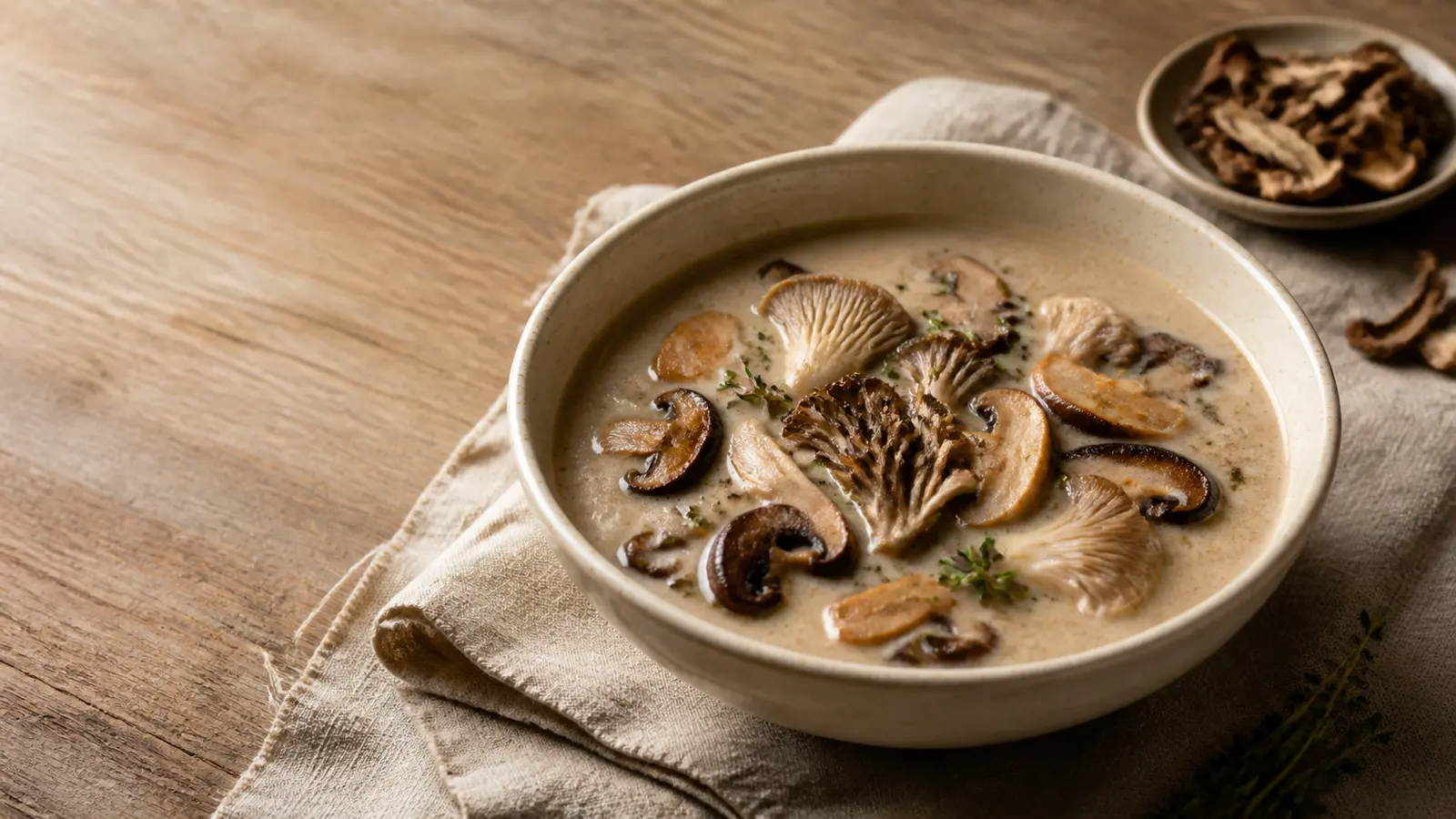
Cremini are the best all-purpose soup mushroom. Shiitake deepen clear broth, oyster mushrooms stay tender, dried porcini concentrate stock, and maitake keep frilled texture when added near the end.
Cremini are the best mushrooms for soup when you need one dependable answer. They brown well, remain affordable in a generous pot, and can stay chunky or disappear into a smooth cream base.
Shiitake are better for a clear savory broth, oyster mushrooms for tender late-added pieces, dried porcini for concentrated stock, and maitake for frilled texture. The useful choice begins with what the liquid and the spoon must become.
Match the Mushroom to the Soup Style
A creamy soup can carry deep browning and a large fresh mushroom load, while a clear soup exposes every dark speck, tough stem, and overcooked cap.
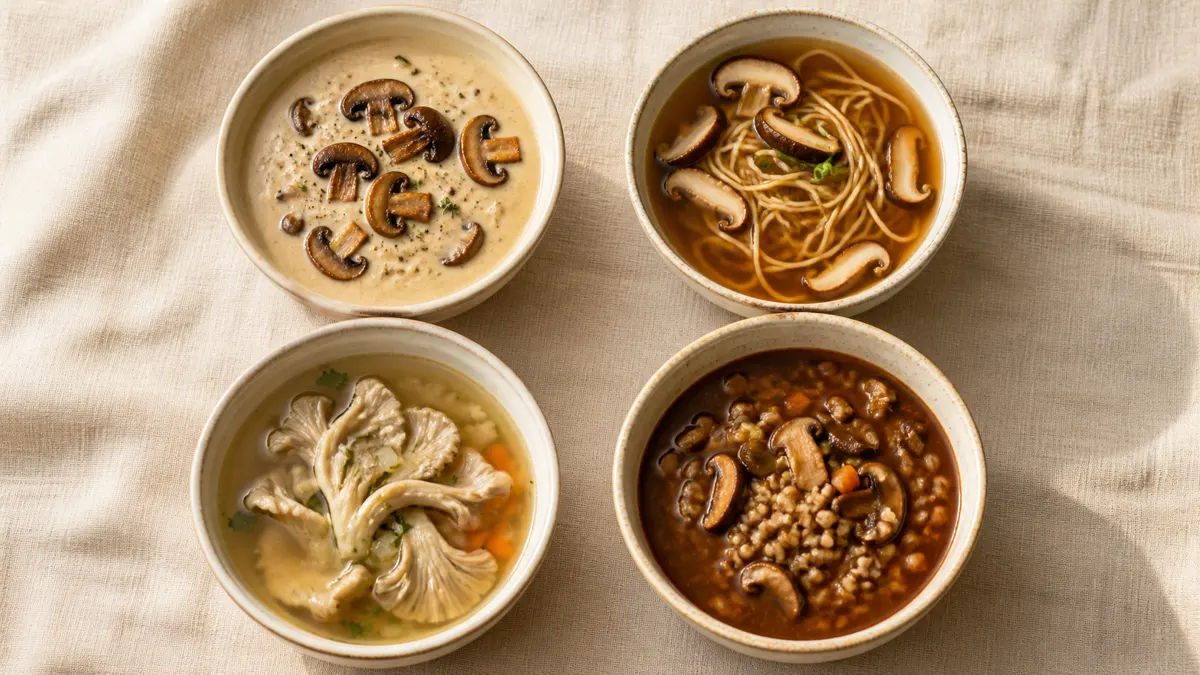
Choose the soup family before deciding which variety deserves first place.
| Soup style | Best first choice | Starting amount for four bowls | Main reason |
|---|---|---|---|
| Creamy or blended | Cremini | 340 to 450 g fresh | Browns deeply and blends into a full body |
| Clear, miso, or noodle broth | Shiitake | 225 to 280 g fresh caps | Strong flavor carries through clean liquid |
| Light soup with visible tender pieces | Oyster mushroom | 225 to 280 g fresh | Broad caps stay soft when added late |
| Hearty barley, bean, or beef soup | Dried porcini with cremini | 10 to 20 g dried plus 300 to 450 g fresh | Concentrated aroma supports substantial solids |
| Broth with frilled pieces | Maitake | 225 to 280 g fresh | Small clusters remain distinct after a short simmer |
That table is a starting map, not a recipe. Stock strength, dairy, grains, meat, and the amount of other vegetables determine whether you use the low or high end.
A blended soup can accept smaller cuts because texture will disappear, while a clear broth needs pieces sized for the spoon. That difference changes preparation before heat ever reaches the pot and prevents a delicate cap from being treated like stock material.
The safest working rule is to let the broth choose the mushroom, since a delicate clear base needs restraint while cream and barley can absorb deeper browning and a larger solid load.
Only use cultivated mushrooms or wild mushrooms identified with certainty by a qualified local expert. Soup removes the field evidence under chopped vegetables and opaque liquid, and prolonged simmering does not make a poisonous species safe.
Warning
Never use an uncertain wild mushroom because the pot will boil for a long time. Most poisonous mushrooms cannot be made safe by cooking.
The four bowls below make the style decision visible before the ingredient ranking begins.
5 Best Mushrooms for Soup, Ranked by Broth Job
The ranking favors usefulness across common soup styles rather than aroma alone.
Each candidate includes an amount for four bowls and a starting ratio. Treat the relationship as an adjustment point because a thin broth and a mushroom stew cannot use the same solid load.
1. Cremini: Best Overall
Cremini can build browned flavor at the bottom of the pot, remain as juicy quarters, or blend into a cream soup without fibrous pieces. Their moderate taste also leaves room for thyme, barley, beef, chicken, dairy, or wine.
Use 340 to 450 g fresh cremini for four bowls when mushrooms are a leading ingredient.
Start near one part mushroom to three parts finished liquid by weight, using the lower mushroom share in a chunky mixed soup and the higher share in a thick mushroom-led base.
Quarter small cremini when you want pieces that survive reheating. Slice larger caps when brown surface matters more than a juicy center.
Their limitation is quiet flavor in a strong stock.
If beef broth, smoked meat, or dark miso dominates, add dried porcini for aroma rather than increasing cremini until the pot becomes crowded.
Brown cremini before liquid when the soup may become tan or brown without looking muddy. For a pale cream soup, stop at light gold or cook part of the batch gently so the finished color remains controlled.
2. Shiitake: Best for a Deep Clear Broth
Shiitake bring more flavor per gram to clear liquid than cremini. Their caps remain recognizable beside miso, soy, ginger, scallion, noodles, greens, or a restrained chicken stock.
A Mushroom Council cream soup uses 225 g of shiitake caps, which is also a practical starting amount for four bowls of clear soup.
Begin near one part fresh caps to four parts finished liquid by weight because their woodsy savor remains clear at a lower solid share.
Remove the tough stems before slicing. Sound stems can simmer in the stock and be strained out, but leaving them in the bowl turns a useful flavor source into a fibrous piece the diner cannot fix.
Slice caps 5 to 8 mm thick for a visible chew.
Very thin slices lose their center during reheating, while thick caps can feel leathery if the simmer stays brief.
Shiitake darken a very pale broth and can cover gentle peas or young herbs. Choose oyster mushrooms when tender texture and a lighter flavor matter more than stock depth.
3. Oyster Mushroom: Best for Tender Pieces
Oyster mushrooms cook quickly, which makes them useful when the soup is already flavorful and needs a tender mushroom at the finish. Their broad folds catch a light coconut broth, clear vegetable soup, or restrained cream base without requiring long extraction.
Use 225 to 280 g fresh oyster mushrooms for four bowls.
One part mushroom to about three parts finished liquid by weight leaves enough broth around the airy pieces and prevents the dish from becoming a wet pile of caps.
Separate the dense cluster base from the thin caps. Slice the base and add it earlier, then tear the caps broadly and place them in the final several minutes.
Long boiling removes their advantage.
The cap edges collapse, the folds break apart, and the mild flavor becomes harder to distinguish from the broth.
Oyster mushrooms are therefore poor first choices for an all-day slow soup. They are excellent when the pot can be finished close to serving time and the visible pieces matter.
4. Dried Porcini: Best for Concentrated Stock
Dried porcini are seasoning, not the full mushroom portion.
Ten to 20 g dried porcini can deepen a pot supported by 300 to 450 g fresh cremini, oyster mushrooms, or maitake.
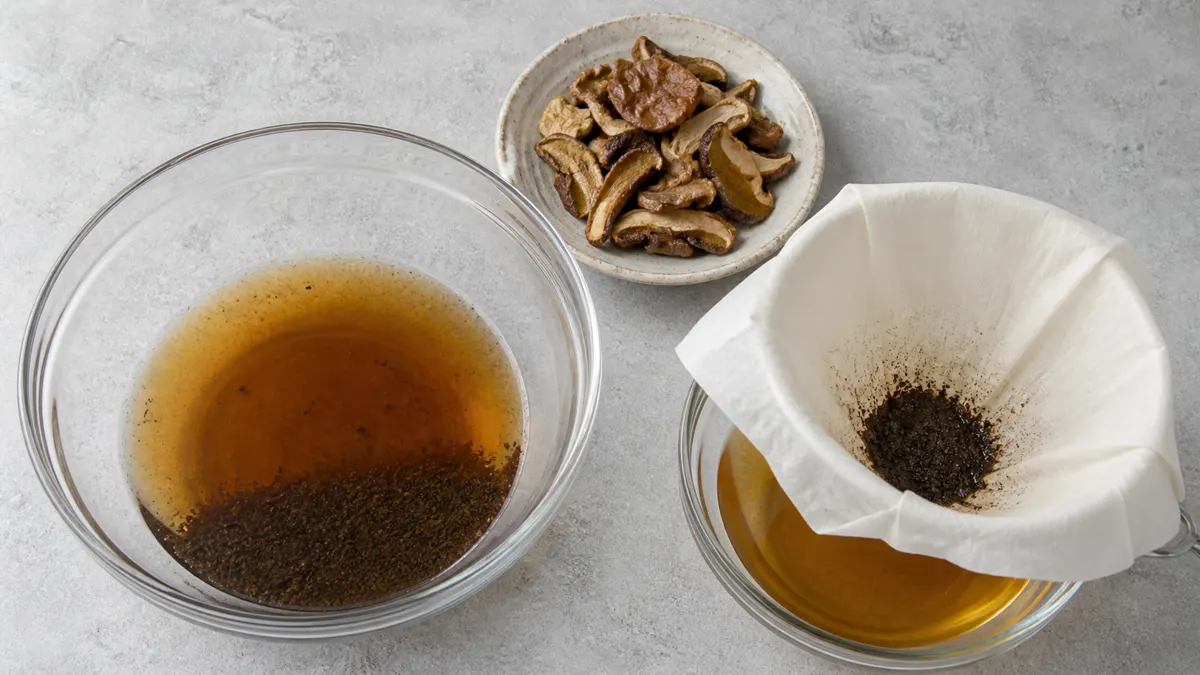
Soak the pieces separately until pliable, then lift them from the bowl instead of pouring everything through a coarse strainer. Fine sediment settles below the mushrooms and can pass through an ordinary sieve.
Filter the soaking liquid through cloth, a coffee filter, or a very fine filter before adding it in measured portions.
Stop when the stock gains a clear porcini aroma because the whole bowl can make a delicate soup bitter or overpowering.
Chop the softened mushrooms before returning them. Large rehydrated strips can remain leathery even when the liquid around them tastes complete.
Use the lower dried amount in clear soup and the higher end beside barley, beans, beef, or cream.
The ratio works because fresh mushrooms provide the body that concentrated dried pieces cannot.
5. Maitake: Best for Frilled Texture
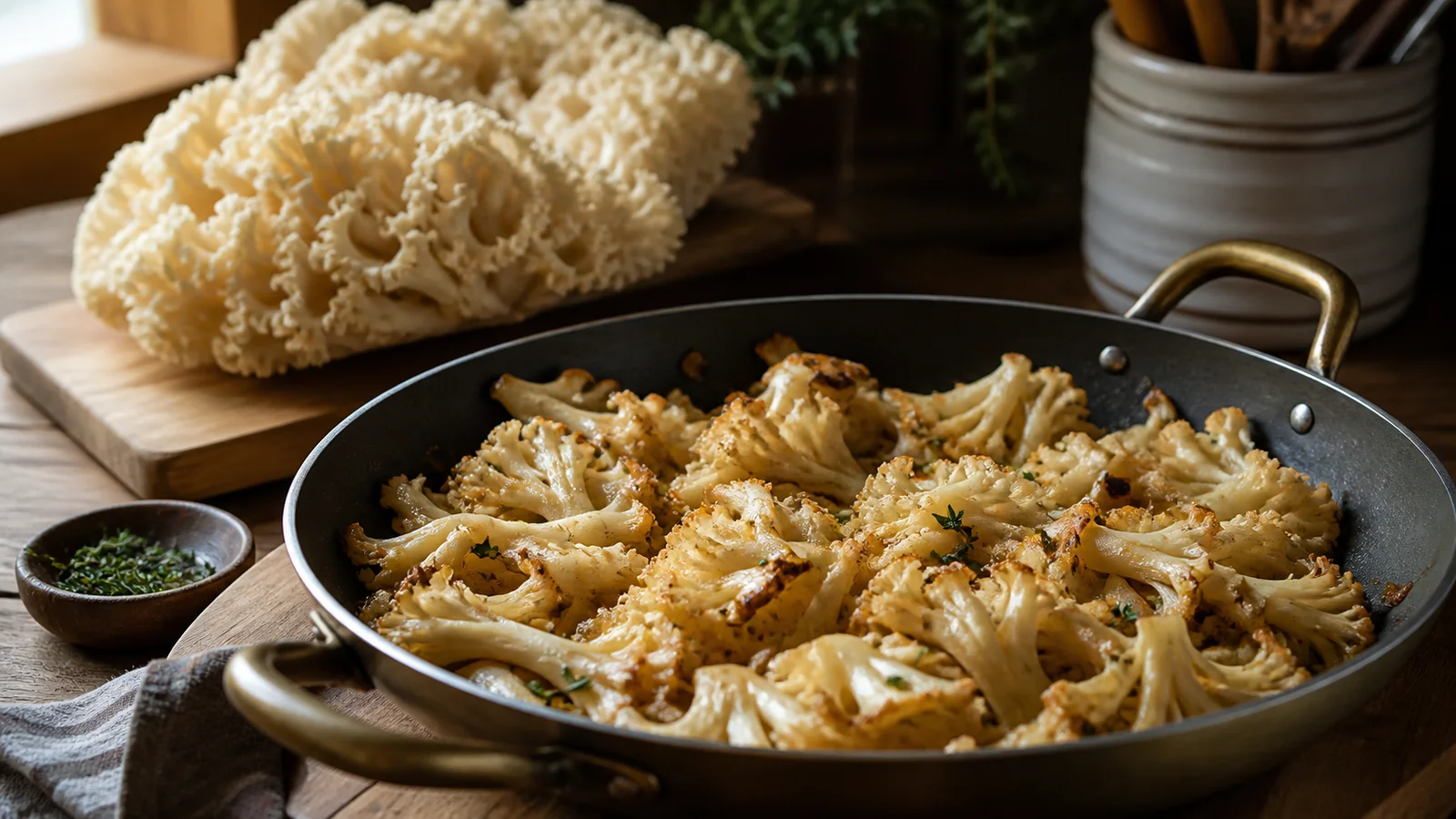
Maitake clusters contain thin fronds attached to denser junctions, so one torn piece carries more than one cooking speed. That structure creates attractive spoonfuls when the pieces enter after the main broth and firm vegetables are ready.
Use 225 to 280 g fresh maitake for four bowls, starting near one part mushroom to three parts finished liquid by weight.
Tear the mushroom into small clusters rather than individual shreds. A compact base keeps the fronds together, while loose tips disappear into the broth and become difficult to pick up.
Maitake suit clear chicken broth, light cream, miso, and deliberate mushroom mixes. They lose definition during prolonged boiling, so a slow-cooked soup should receive browned maitake near the finish rather than at the beginning.
The tradeoff is price and fragility. Cremini are a better choice when the soup must hold overnight and reheat several times.
The lineup below separates four fresh structures from the concentrated dried option.

Brown for Color or Simmer for Clarity
Browning and direct simmering solve different soup problems. A dry pan creates roasted flavor and dark residue, while direct liquid extraction keeps the broth cleaner and the mushroom taste gentler.
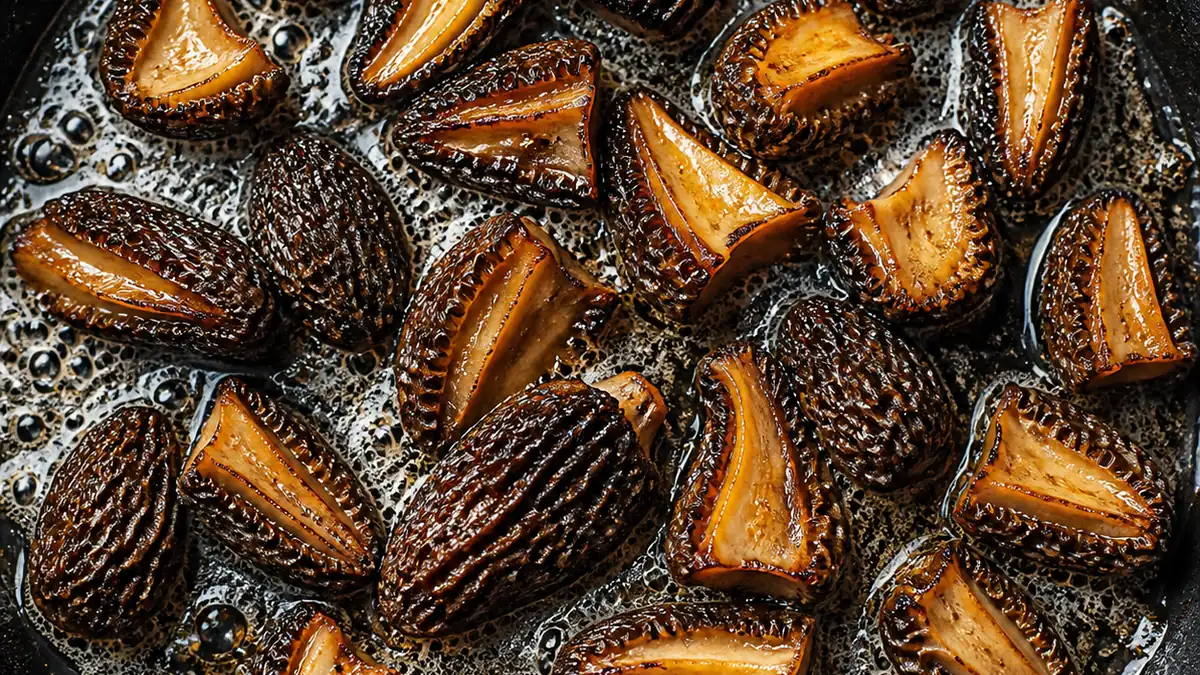
Brown cremini for cream soup, barley soup, and robust meat broths.
Their moisture must evaporate before stock enters or the pot starts as a gray simmer instead of a real brown base.
Shiitake can take either path. Brief browning strengthens the cap flavor, while stems and pale cap slices can simmer directly when clear stock matters more than roasted color.
Oyster mushrooms usually benefit less from a hard first sear when their tender folds are the goal.
Add them later to broth or give only the dense bases an earlier pan treatment.
- Brown first
- Use when cream, barley, beef, or dark stock can carry color
- Simmer directly
- Use when clear broth and gentle extraction matter more
- Split the batch
- Brown one portion for depth and add one portion later for visible texture
A split batch can give soup both dimensions without pretending one technique does everything. Brown the dense portion, deglaze the pot, then reserve tender caps or fronds for the final simmer.
For cream soup, blend only part of the browned cremini with the thickened liquid, leaving enough reserved pieces to build body without making the bowl taste like an undifferentiated puree.
Add milk or cream after the browned residue has dissolved into stock, then lower the heat before the dairy boils hard. This order protects the roasted mushroom flavor and reduces the chance of a separated, greasy surface.
Do not keep browning after garlic or herbs begin to scorch. The dark residue that enriches broth can become bitter if aromatic solids burn before liquid loosens the pot.
The paired vessels show the valid difference between the two starts.

Use Dried Mushrooms Without Sending Grit Into the Pot
Dried mushrooms concentrate flavor and debris together. Proper transfer keeps the first and leaves the second behind.
Cover dried porcini or shiitake with warm water until every piece bends without a hard center. Agitating the bowl repeatedly can suspend sediment that would otherwise settle.
Lift the mushrooms into a clean dish with tongs or a slotted spoon.
Pouring the soaking bowl directly through a coarse sieve sends the final gritty layer toward the soup, so stop before the sediment at the bottom moves.
Pass the retained liquid through a coffee filter, clean cloth, or very fine filter. Clear amber or brown liquid is the useful part, while visible specks mean the filtration job is unfinished.
Add the filtered liquid gradually because reduction amplifies salt, bitterness, and mushroom intensity. A dark barley soup can use more than a pale noodle broth.
Pair dried mushrooms with a fresh variety that solves the texture job. Cremini give body, oyster caps stay tender, and maitake provide frilled pieces that rehydrated porcini cannot imitate.
Stop adding liquid when the stock tastes complete, not when the soaking bowl is empty.
The filtration setup makes the sediment boundary visible.
Add Each Texture at the Moment It Can Survive
Entry time should follow mushroom structure rather than a single instruction to add all mushrooms. Dense cremini quarters and shiitake slices tolerate a longer simmer than oyster folds or maitake fronds.
Add browned cremini after deglazing so their flavor joins the broth, but reserve a portion if you want firm pieces at serving.
Shiitake caps can simmer through noodles or grains, although thin slices soften further during reheating. Remove stock stems before bowls are filled.
Place sliced oyster bases into the pot before the caps.
Add broad cap pieces only after firm vegetables are tender and the broth has reached its final seasoning.
Maitake clusters need a similar late entry, but the dense junction should remain attached to hold each frill together. Boiling individual tips for a long time creates soft fragments rather than recognizable pieces.
Holding time counts as cooking time. A pot that waits thirty minutes before dinner continues softening every cap even when the burner is low.
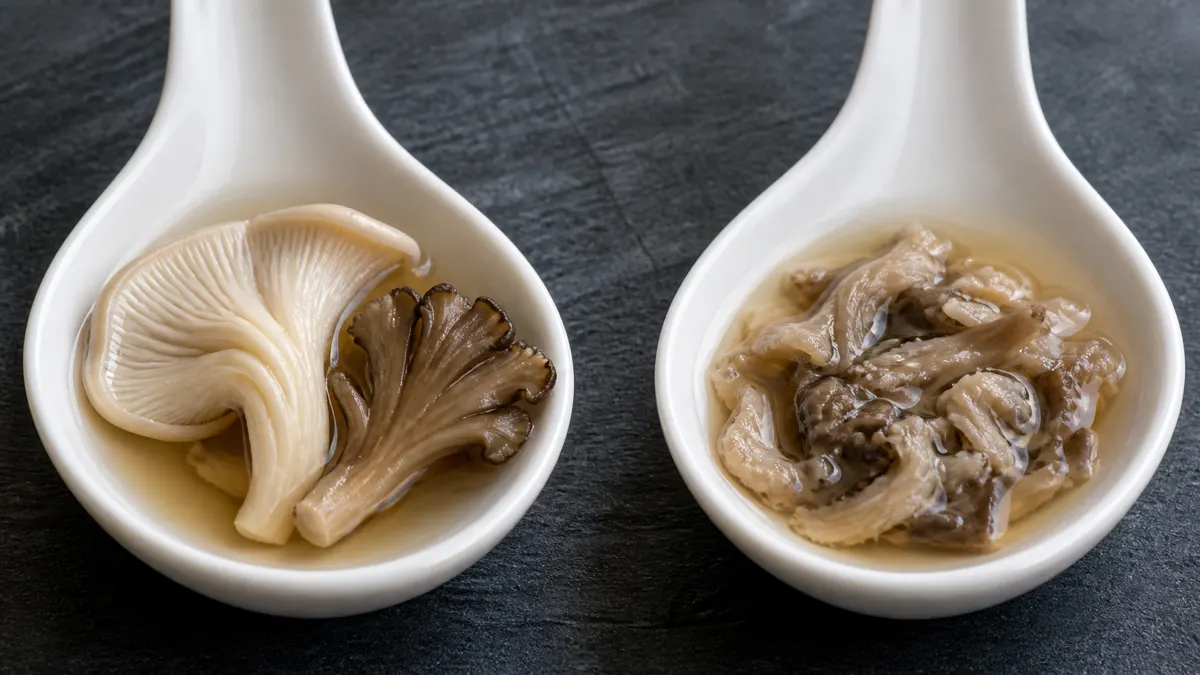
If the soup must wait, stop cooking oyster and maitake pieces while their centers still have slight resistance. Add them to the hot pot shortly before serving, because reheating the full batch tomorrow will soften them again.
The two spoons below compare intact late-added folds with pieces that spent too long in hot broth.
Use the texture summary as a final timing check when the pot will be held or reheated.
For make-ahead soup, build the broth and durable mushroom portion first, then chill it promptly. Add fragile mushrooms during reheating so the second heating cycle becomes their first real simmer.
The finished bowl should contain pieces that still express why you chose them. Once every variety has softened into the same texture, extra simmering has erased the decision the ranking was meant to support.