
Cremini Substitute: What to Use and What Actually Changes
White button, cremini and portobello are all Agaricus bisporus at different ages, so the closest substitute for a cremini is usually on the same shelf for less money. What changes with the swap is how much water the mushroom holds, how quickly it browns and how dark the finished dish looks. If you want genuinely more flavor, that is a different question, and a small handful of dried mushroom does more for a cremini dish than replacing the cremini would.
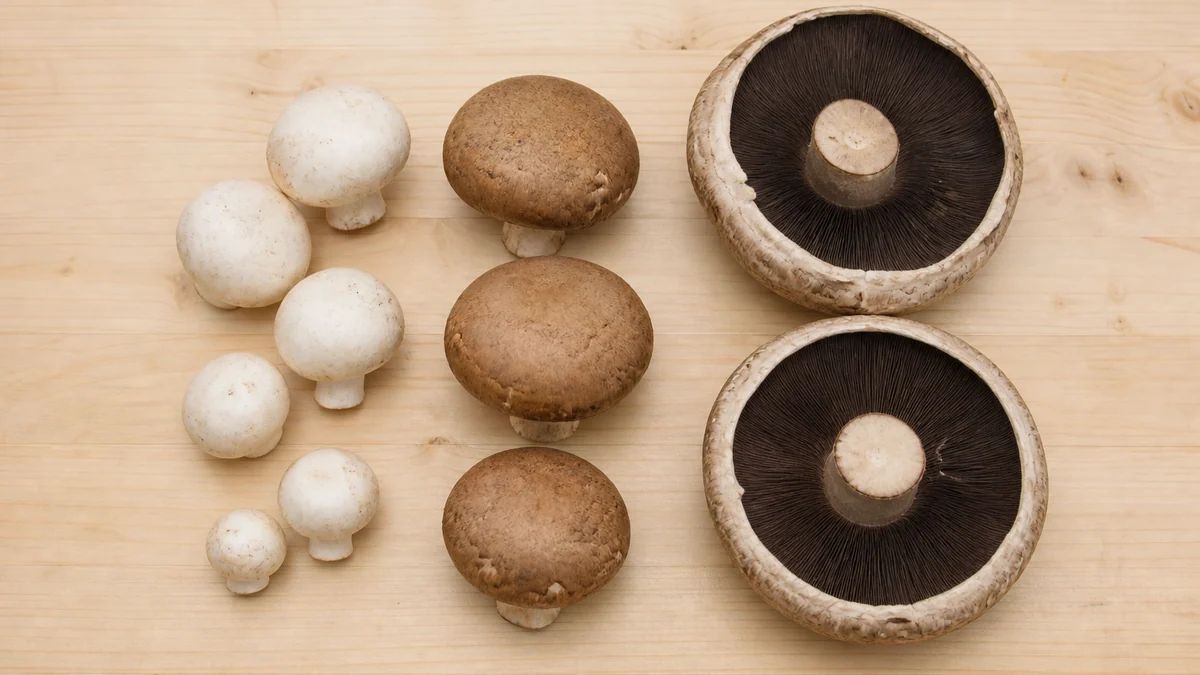
The same species picked younger, so it holds more water, browns later and finishes paler. That makes it the better choice in cream sauces and the one to cook two minutes longer.
The same species fully mature. Better for roasting because size keeps it from drying out, though the open dark gills will gray a pale sauce unless you scrape them out first.
A step up rather than a sideways swap. Markedly more savory depth, and the right answer when a recipe tastes thin with cremini in it.
The cheapest way to more flavor. Fifteen grams of dried mushroom and its soaking liquid lifts a cremini dish further than swapping to any fresh species.
The closest substitute for a cremini is sitting on the same shelf. It usually costs less, too.
White button mushrooms are not a similar species but the same organism, picked younger.
Are cremini and button mushrooms the same?
Yes. White button, cremini and portobello are all Agaricus bisporus.
The last line is the one that matters, because it is the only thing that changes when you swap one for another.
The brown cremini is simply an older button, and the portobello is an older cremini with its cap fully opened. Some strains are browner than others, which is why the color difference looks more decisive than it is.
That settles the substitution question before it starts, because you are swapping maturity rather than species and maturity changes physical properties rather than identity.
Three names, one organism, and the differences run like this:
- White button is picked youngest, with the veil still closed over pale gills.
- Cremini is the same mushroom a few days on, browner and slightly firmer.
- Portobello is the mature stage with the cap flat open and the gills fully exposed.
Does the brown color mean more flavor?
Only indirectly. Certainly less than the price difference implies.
That answer needs unpacking, because the brown is doing two jobs at once: some Agaricus strains are simply browner than others at the same age, and every strain darkens as it matures.
What actually gives an older cap more presence in a dish is that it holds less water. Less water means faster browning, and browning is where most of the flavor in any cooked mushroom is made.
Tip
If the brown cap tastes better to you, the thing you are tasting is browning rather than pigment. You can get most of the same effect from a white button by drying the pan out and giving it another two minutes.
That is worth knowing before paying a premium. The gap between the two is real, small, and largely under your control at the stove.
What changes in the dish?
Water, firmness and how fast the pan browns.

A younger mushroom holds more water and releases it sooner, so the surface temperature stays at boiling point for longer and browning starts later.
Quantity is the other adjustment worth making. A younger mushroom loses more of its volume to evaporation, so the same weight of white button finishes as slightly less food on the plate than the same weight of cremini.
Neither difference is large enough to change a recipe, and two adjustments cover almost every swap:
- Going younger, give the pan two more minutes and expect a paler dish.
- Going older, expect a darker dish and slightly more chew.
The firmness difference is small and real. An older cap has lost some water and gained a little chew, which is why a cremini holds its shape in a long braise slightly better than a button does.
None of that is a reason to leave the shop empty-handed, only a reason to give the pan an extra two minutes and expect a paler finish.
Can you use portobello instead?
Yes, with one caveat that most substitute lists leave out.
A portobello is the same mushroom with its cap fully opened, which means the gills are exposed, mature and very dark. Those gills are where the color lives.

That is the one genuine difference between the stages that a cook has to plan around rather than simply notice.
Key takeaway
Dark gills will gray a pale sauce. In anything creamy, pale or delicate, scrape the gills out with a teaspoon before slicing. You lose a little flavor and you keep the color of the dish, which is usually the better trade.
For anything already dark the gills are an advantage rather than a problem, which is part of why the mature stage is the one sold for stuffing and grilling. A beef stew, a dark gravy or a roasting tray gains from them.
Slicing changes with the stage as well, since a mature cap is wide enough that slices come out long and flat rather than in the neat half-moons a cremini gives.
Size is the other difference and it is mostly in your favour. Large caps hold their moisture through roasting where sliced cremini dries out, so the mature stage is genuinely the better choice for some methods rather than merely acceptable.
What if you want more flavor?
Then you want a different species. Choose the species for the texture and flavor you want in the finished dish.
Swapping between the three Agaricus stages moves you sideways. If a recipe tastes thin with cremini in it, a portobello will not fix that, because it is the same mushroom with less water.
| Option | What it adds | Cost | Best used |
|---|---|---|---|
| Fresh shiitake | Markedly more savory depth | Higher | Stir fries, braises, anything simmered |
| Dried mushrooms | Concentrated depth, plus soaking liquid | Low per dish | Sauces, risotto, soup |
| Maitake fronds | Nutty, firmer, crisps well | Higher | Roasting and pan-frying |
| Mixed cremini and dried | Most depth per pound spent | Low | Almost anything |
The last row is the answer most people should take, since fifteen grams of dried mushroom added to a pan of ordinary cremini lifts a dish further than replacing the cremini with anything fresh.
That works because drying concentrates what fresh mushrooms hold in dilute form, and the soaking liquid goes into the dish as well.
What if you cannot use mushrooms at all?
Then you are replacing two things separately, and no single ingredient does both.
Cremini contributes savory depth and a soft browned texture, which are two different properties. Those come from different properties and there is no non-fungal ingredient that supplies them together.
- For the texture
- Diced aubergine, browned hard, comes closest.
- For the savory depth
- Miso, soy, tomato paste or a splash of Worcestershire.
- For both at once
- Use one of each rather than looking for a single answer.
- What will not work
- Courgette or peppers, which add water and no depth.
The pairing that works looks like this:
- Diced aubergine, browned hard in enough oil, for the texture.
- A teaspoon of miso, tomato paste or soy, for the savory depth.
- Toasted chopped walnuts, if the dish will take them, for a browned bitterness.
Aubergine browned properly in enough oil gives you the texture and none of the savour, and the same browning rules apply to it as to any mushroom. A teaspoon of miso or tomato paste stirred into the same pan supplies the missing half.
Walnuts are the third option and the one people forget, since toasted and chopped small they bring a browned, slightly bitter depth that works in a ragu.
That combination is genuinely close in a stew or a ragu. It is not close in anything where the mushroom is visible and identifiable, and it is honest to say so rather than pretend otherwise.
What should you use in a specific dish?
By method. The right stage changes with the heat rather than with the recipe title.
A cream sauce or anything pale wants white button. It is the youngest stage with the palest gills, so it keeps the color of the sauce where a portobello would gray it.
Roasting wants portobello, because the large cap holds moisture through the oven while sliced cremini dries at the edges.
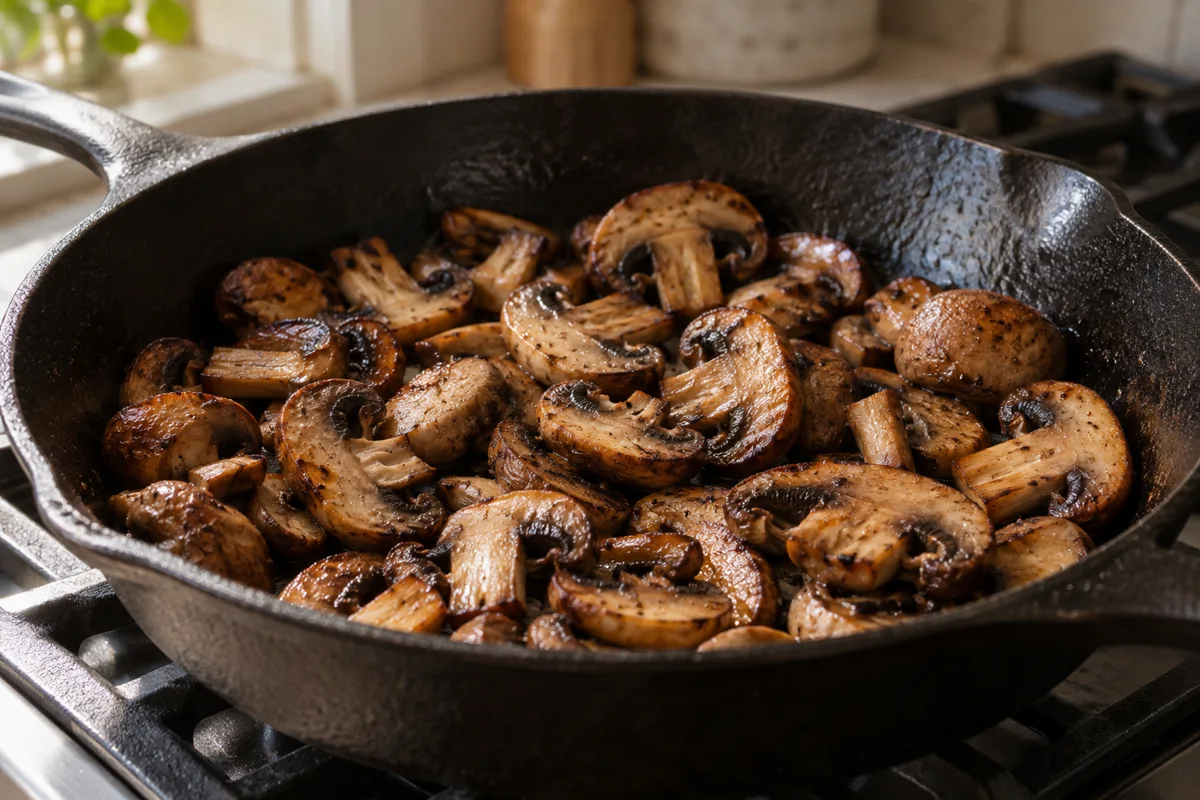
A long braise suits cremini best, which is where the middle stage earns its price. It has lost enough water to hold its shape and not so much that it goes leathery.
If you want the brown stage reliably rather than whatever the shop has, growing them is straightforward and the stage is simply a matter of when you pick.
Anything raw wants the youngest stage available, since the cooking method is not there to rescue the texture and an older cap eats tough.