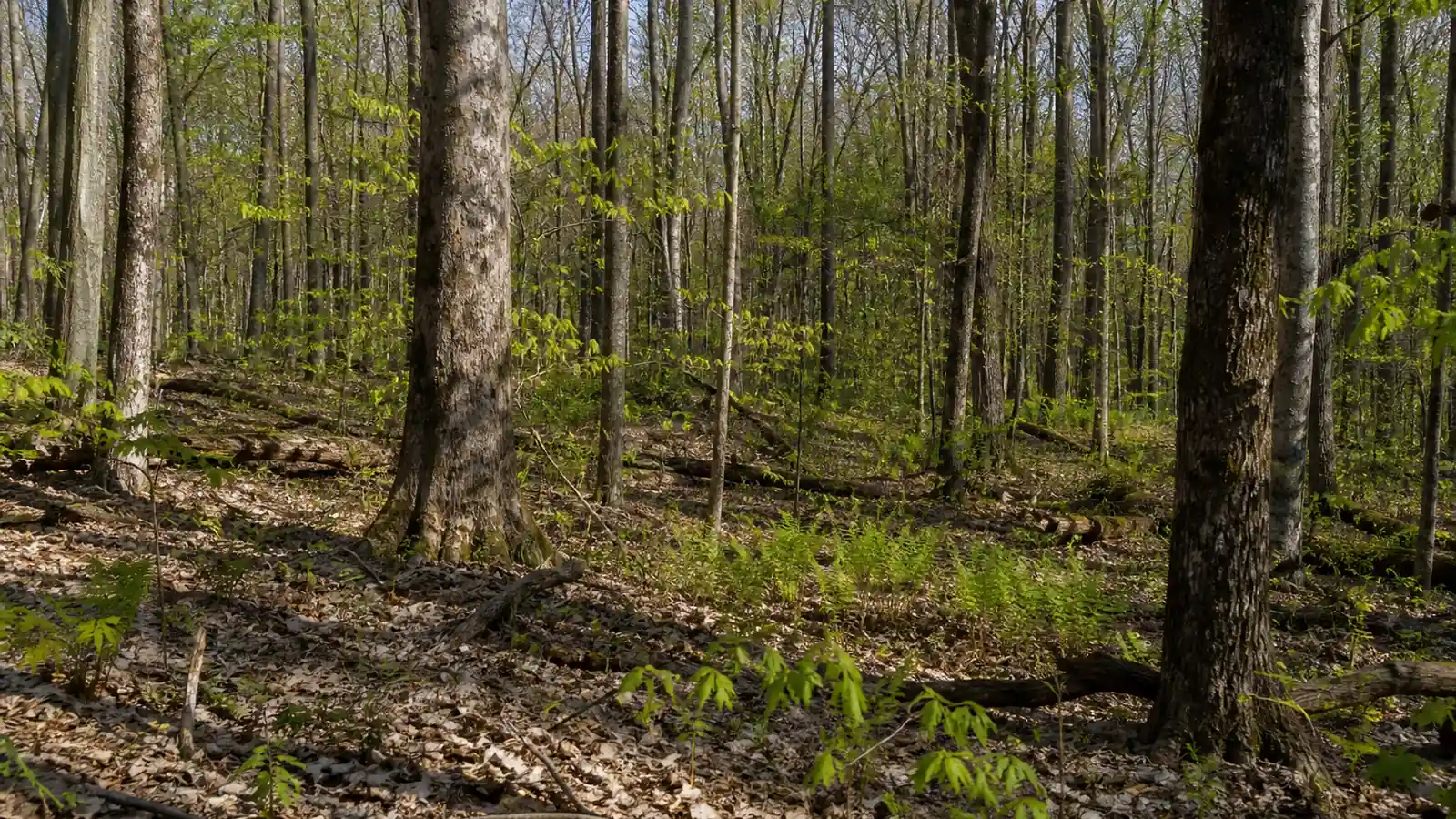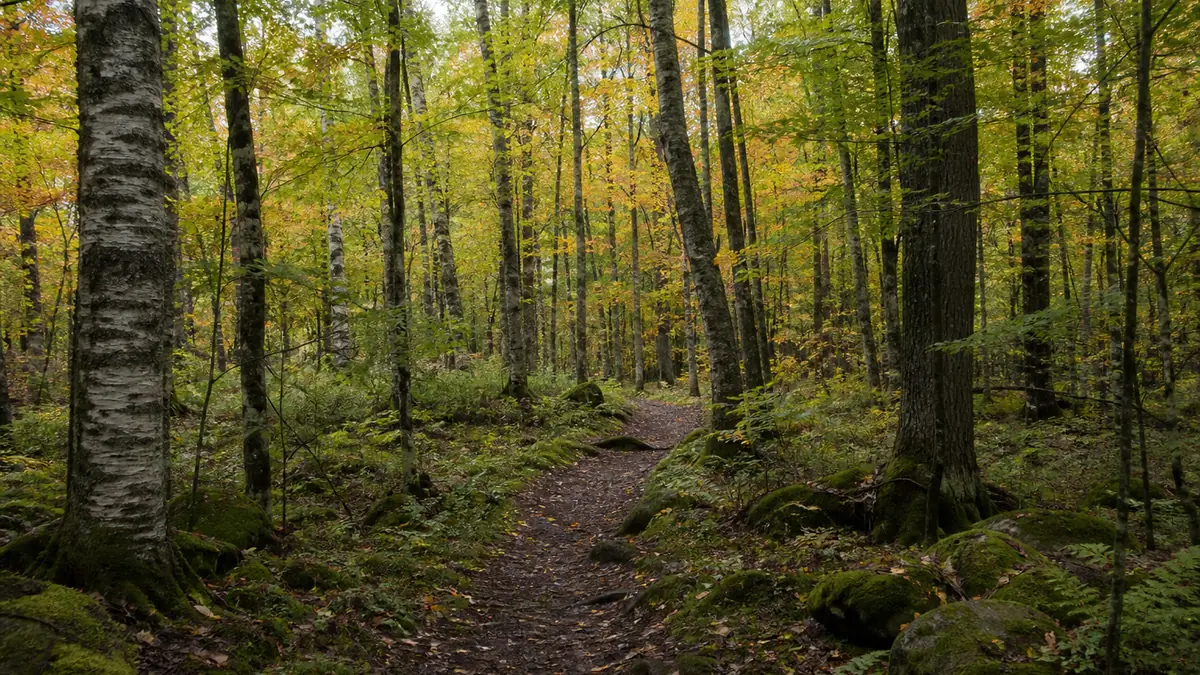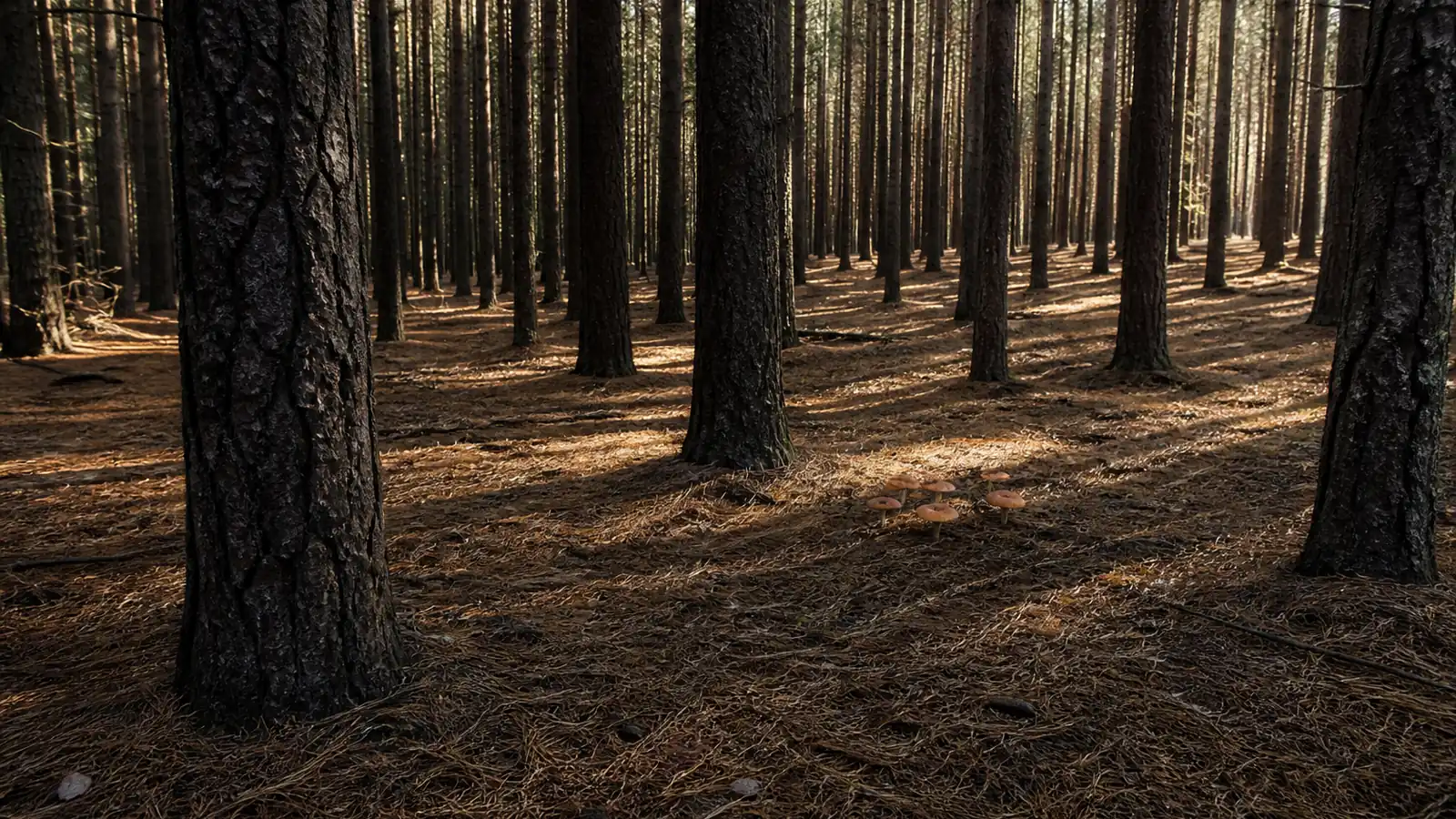
An Australian foraging plan built around introduced trees, covering the inverted autumn season, the plantation and paddock species worth learning, the daylight ghost fungus test, suburban death caps, and access by land class.
Mushroom foraging in Australia peaks between late February and May, which is autumn here, and that inversion is the smallest adjustment a northern field guide needs. The bigger one is that the productive ground is planted rather than native.
The reliable Australian edibles are European fungi living under European trees, and so is the mushroom that kills people here.
That puts the harvest in radiata pine plantations and grazed paddocks, and it puts the amatoxins in suburban street and park oaks. Native bushland, which is where most people expect to forage, sits outside both.
When is mushroom season in Australia?
The main flush runs from late February through May across the southern states, and picking often continues into early winter.
A date on its own does not open it. Each local window turns on warm, wet weather, so a dry March in one district can push everything into April while a valley an hour away is already finished.
- Pine plantations
- March into May in New South Wales, Victoria, South Australia and Western Australia, following autumn rain
- Grazed paddocks
- Field mushrooms after the autumn rains, usually March to May
- Spring exception
- Australian morels appear roughly September to November in mulch, sandy soil and burnt ground
- Cold-season targets
- Wood blewits and oak-associated boletes run through June to August in Victoria, Tasmania and the Adelaide Hills
Latitude and altitude do the rest of the work. Tasmania and the Victorian high country open and close earlier than the Adelaide Hills, and subtropical Queensland has no comparable autumn flush at all.
- Start watching the plantation floor about ten days after solid autumn rain, because needle litter holds moisture long after open ground has dried out.
- Treat one hot, windy week as a reset, since exposed caps dry and the flush that looked imminent never arrives.
- Expect a single forest to stay productive for two or three weeks rather than the whole season, so a district that delivered last weekend may already be finished.
The signal worth traveling for is a week of rain followed by mild, still days, which is a different thing from a month on a calendar.
ForagingMushroom foraging laws in France: what the five liter rule meansWhat edible mushrooms grow in Australia?
Australia's dependable edibles arrived as passengers. When European pine seedlings were shipped in for plantation forestry, the fungi that partner with those pines came with them.
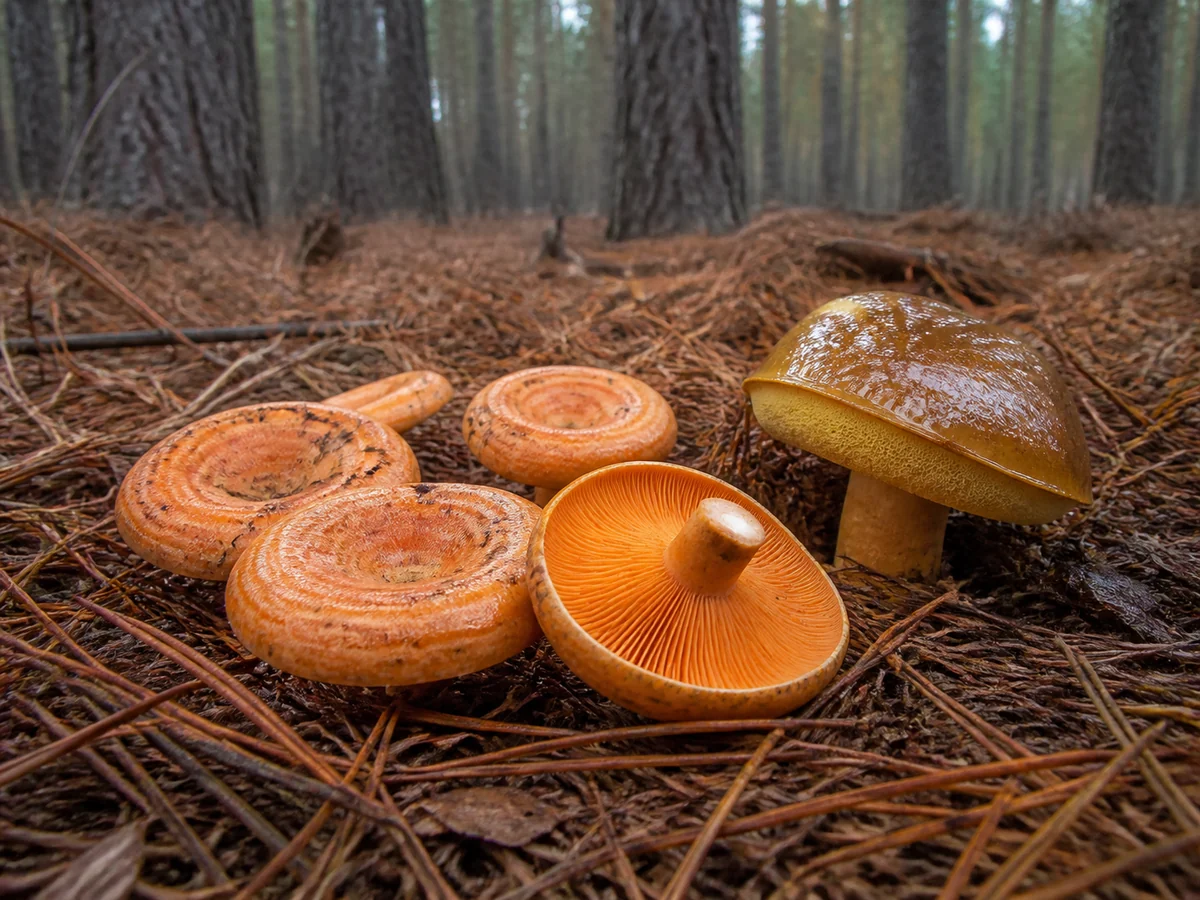
Saffron milk cap and slippery jack now fruit across tens of thousands of hectares of radiata pine, and they are the reason Australian foraging has a season worth planning around.
The same logic runs past the plantation fence. Oak and birch plantings in the Adelaide Hills and parts of Victoria support boletes, and grazed paddocks carry field mushrooms after the autumn rains.
| Target | Host or ground | Where | Working months |
|---|---|---|---|
| Saffron milk cap | Radiata pine litter | NSW, Victoria, South Australia, Western Australia | March into May |
| Slippery jack | Radiata pine, often beside the milk caps | Same plantations, more common at altitude | March into May |
| Field mushroom | Grazed paddock and pasture | Southern states after autumn rain | March to May |
| Boletes | Planted oak and birch | Adelaide Hills, parts of Victoria | Autumn into winter |
| Australian morel | Mulch, sandy soil, burnt ground | Victoria and New South Wales | September to November |
The native flora is a different proposition entirely. Estimates put Australia's fungi at somewhere between 50,000 and 250,000 species, of which roughly 11,846 have been formally described.
Under five percent of the continent's fungi carry a name, let alone a recorded edibility.
That is not a gap a careful forager can work around, because a field guide can only describe species somebody has already studied. For most Australian natives, nobody has.
The Australian honey fungus is among the better-described natives, and it is a tree pathogen rather than anything to carry home.
So the practical Australian target list stays short, introduced, and tied to planted trees.
How do you spot a ghost fungus in daylight?
The ghost fungus is famous for glowing green in the dark, and that fact is close to useless in the field. Nobody decides whether to pick a cluster at two in the morning with dark-adapted eyes.
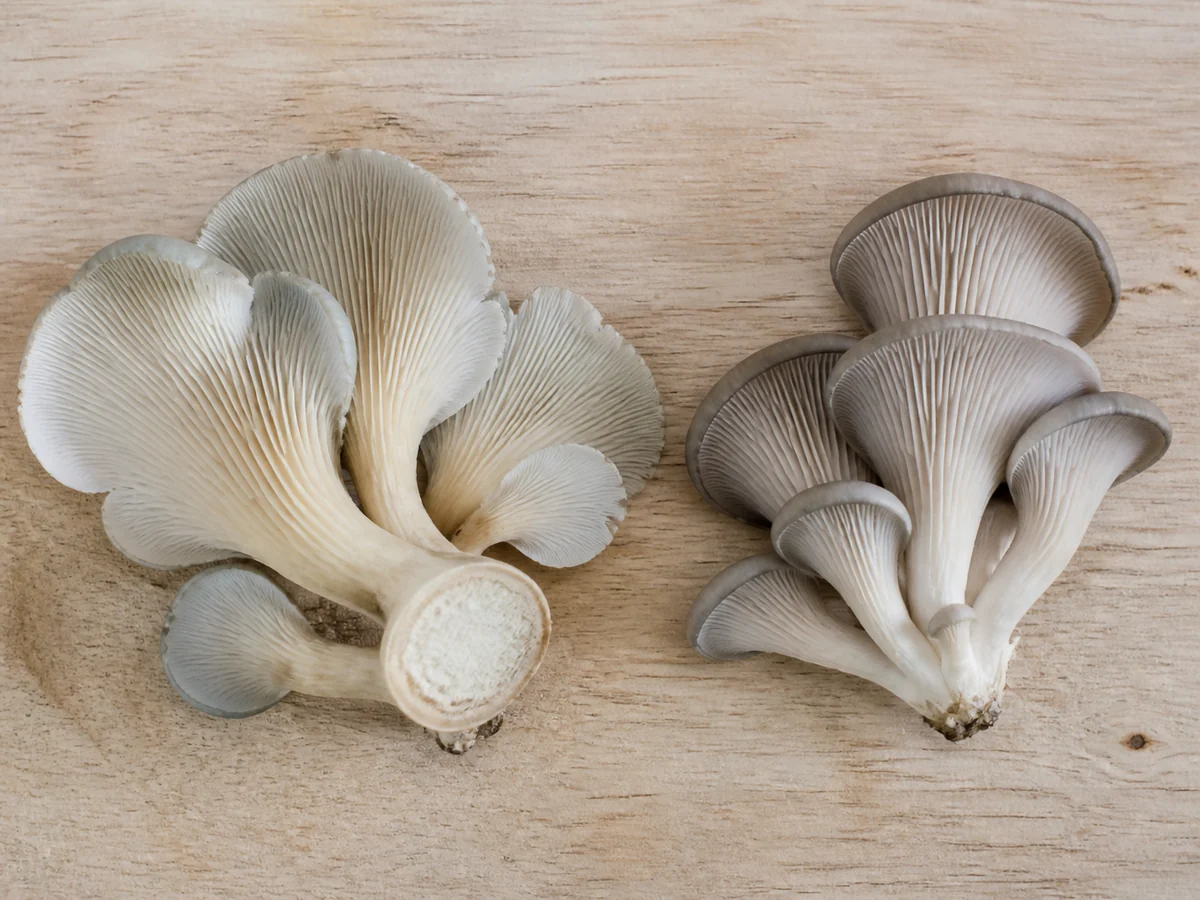
Omphalotus nidiformis fruits in overlapping fans on dead hardwood, usually eucalypt, and it turns up in pine plantations as well.
Its cap runs cream, orange-brown, gray or nearly blue-black depending on the specimen. Color settles nothing, which is exactly why people keep taking it for an oyster mushroom.
The separator that works in daylight is the stipe, and it is tested by cutting rather than by looking.
A ghost fungus stipe stays tough and fibrous all the way through, closer to wood than to mushroom flesh. An oyster mushroom shears cleanly and stays tender to the base.
Getting this one wrong is fast rather than subtle, since vomiting usually starts within about half an hour of a ghost fungus meal. That speed is small consolation, though it does mean nobody spends a day wondering.
ForagingMushroom foraging laws in Germany: protected species and small quantitiesWhere do death caps grow in Australia?
Most people picture the death cap in deep forest. In Australia it lives in the suburbs.
Amanita phalloides arrived with introduced trees and now fruits in city streets, parks and gardens near established oaks, particularly around Canberra, Melbourne and the cooler parts of the south.
ACT Health records sightings across Canberra each autumn and warns that they also appear where no oak is obvious. A lawn under a mature street tree is the real risk landscape here, not a national park.
Every part of the mushroom is poisonous, and a small amount is enough to kill an adult.
None of the usual kitchen defenses touch it, because the amatoxins survive cooking, drying and freezing intact. A death cap that has been simmered for an hour is exactly as dangerous as a raw one.
Children and dogs reach one before adults do, since both meet the mushroom at ground level and both are small enough that a fragment counts.
The timeline is what makes it lethal rather than merely dangerous. Symptoms start six to twenty-four hours after the meal, then ease for a day or two while the liver is being destroyed, and that apparent recovery is the most dangerous stage of the illness.
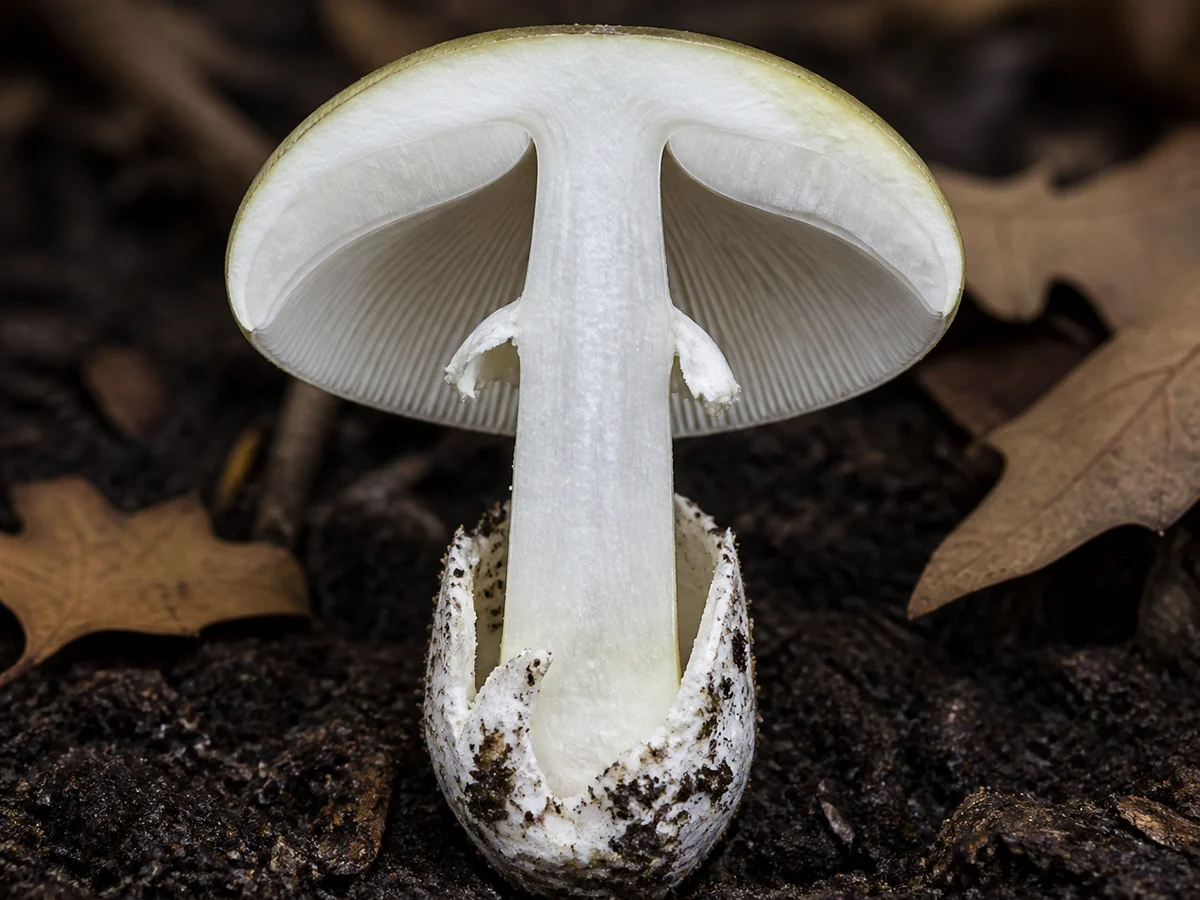
The identifying structure is underground, because a death cap sits in a membranous cup at the base of a swollen stem and carries a skirt-like ring higher up. Snapping the mushroom off at ground level removes the single feature that names it.
Anyone who finds one in a public area in the ACT can report it to Access Canberra rather than handling it.
ForagingMushroom foraging laws in the UK: what is actually legalWhat is the most common Australian mistake?
Not every Australian mistake is a hospital drama. The most common one by a wide margin is a yellow stainer taken for a field mushroom out in a paddock.
Agaricus xanthodermus is a routine cause of mushroom poisoning across southern Australia, and it grows in exactly the grass and pasture where people go looking for the edible one.
Warning
Run the test at the base of the stem, never on the cap. Scratch the very bottom of a white Agaricus with a thumbnail and a yellow stainer turns bright chrome-yellow within seconds, while a field mushroom stays white or flushes slowly toward pink.
Two further checks back the bruise up, starting with the smell. Yellow stainer flesh carries a phenolic or inky note that strengthens in a hot pan instead of cooking away.
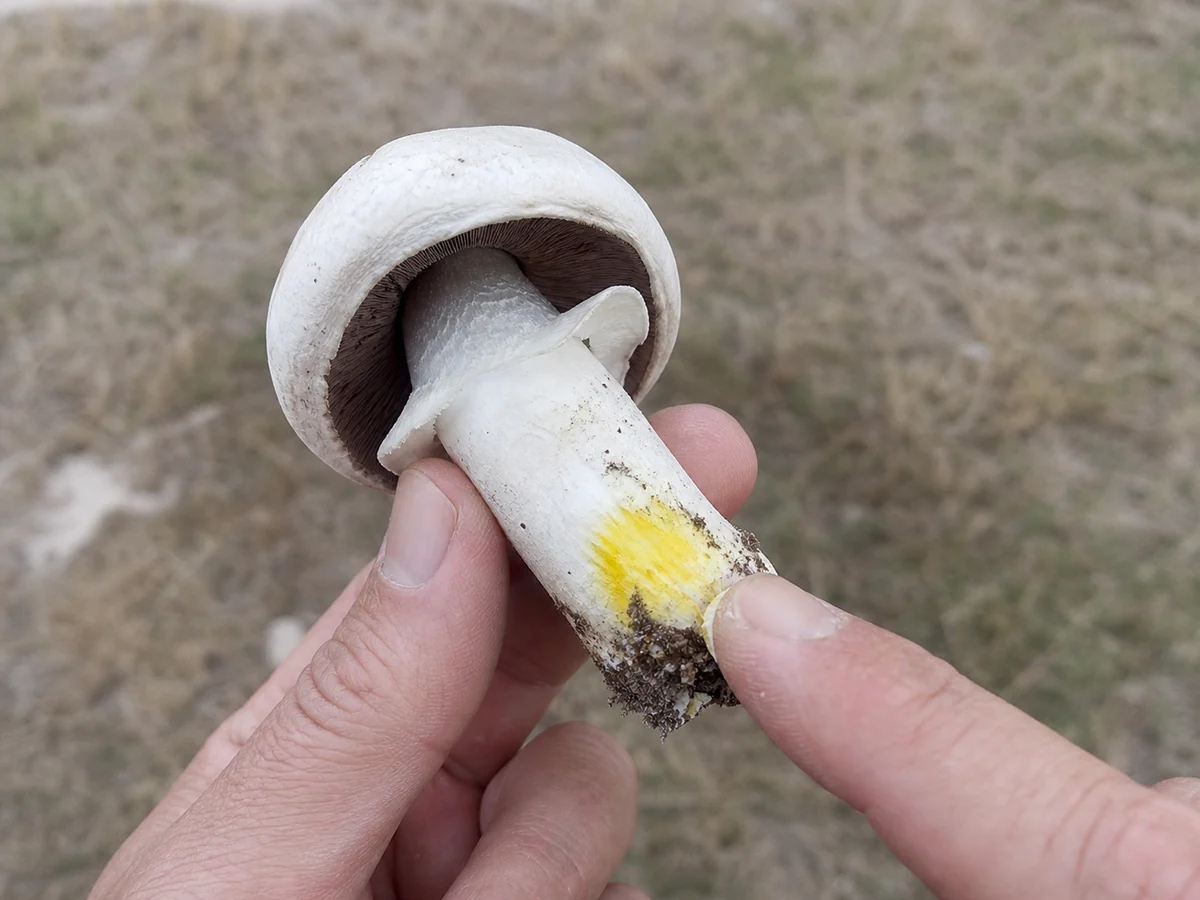
Gill color is the second check. A true field mushroom carries bright pink gills that darken to chocolate brown, while a yellow stainer runs grayer through the same stages.
The consequences sit far below the death cap's, and people recover.
Recovery is not the same as a mild experience, and yellow stainers put Australians in emergency departments every autumn.
Where are you allowed to pick in Australia?
Australian access is easier to answer by land class than by state. One rule holds everywhere, and the interesting variation sits underneath it.
Collecting is prohibited in national parks and nature reserves in every state and territory.
| Land class | Collecting | What to settle first |
|---|---|---|
| National park or nature reserve | Prohibited nationwide | Nothing, the answer is already no |
| NSW state forest pine plantation | Generally allowed for personal use without a permit | Current closures and active harvesting coupes |
| Victorian state forest | Forest produce is licensable, so access is not automatic | Whether the area and the quantity are covered |
| Private land or leasehold paddock | Owner's permission required | Who holds the paddock, since grazing land is rarely public |
| Council park or street verge | Not a foraging landscape at all | This is where the death caps are |
South Australia and Western Australia run their own plantation estates, and picking there is managed by the state forest agency rather than by any general right. The move that works in every state is to find the current rule from whichever body manages that specific forest.
Quantity matters as much as location, because personal-use allowances assume a basket rather than a load. Selling foraged mushrooms moves the activity into commercial harvesting, which carries a separate license in every jurisdiction.
The plantations are the exception that makes Australian foraging work, and they are working forests rather than parks.
Coupes are harvested on rotation, so a track that was open last autumn can be closed with no notice. Log trucks have right of way on plantation roads and do not expect a parked car on a blind corner.
- Check the forest manager's current closure list before leaving home, because plantation access changes with fire risk, harvesting and wet-weather road damage.
- Park hard against the edge of the road with the vehicle fully clear of the running surface, since these roads are built for haulage rather than for visitors.
- Stay out of any coupe carrying signage or flagging, even on a day when the machinery is silent.
Permission and access are separate questions on private land, and a paddock that looks empty still belongs to somebody.
What do you do with a pine plantation basket?
A plantation basket needs less work than most foraged food, though it does need the right work. The two species are handled differently, and both change color in ways that alarm people the first time.
Slippery jacks are peeled, because the slime layer on the cap upsets a lot of people's digestion. It lifts away in one sheet if you start at the cap edge while the mushroom is still fresh.
Leaving it on is the single most common reason somebody decides they dislike the species.
Larvae are the other slippery jack problem, and in an Australian plantation they are routine rather than unlucky. Slice a stem lengthwise before the mushroom joins the basket, because a tunneled stem usually means a tunneled cap.
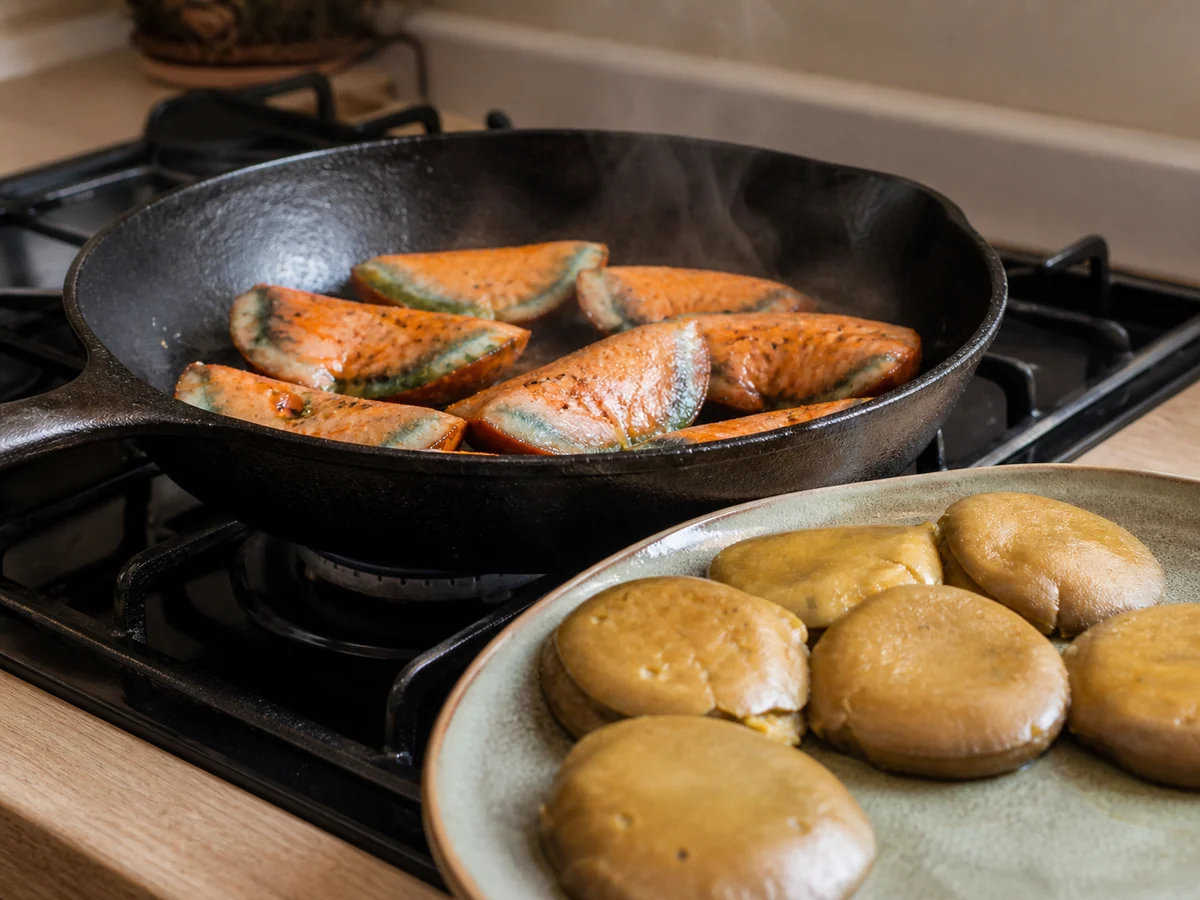
Saffron milk caps need no peeling at all, and they behave in a way that reads as spoilage to anyone who has not met them. They bleed orange latex where cut and bruise green along the edges.
Green bruising on a saffron milk cap is a confirmation rather than a warning, and it deepens as the mushroom sits.
- Cook both species through, since neither is eaten raw and both are firm enough to take a hard sear cut-side down.
- Keep each species in its own container from the forest onward, so one misidentified cluster does not put the whole basket in question.
- Hold back a raw specimen of anything uncertain instead of cooking the lot, because an intact mushroom is what an identification actually needs.
Key takeaway
The Poisons Information Centre answers on 13 11 26 anywhere in Australia, around the clock. Call while symptoms still look minor rather than after they worsen, keep any uneaten mushrooms and raw trimmings, and note the time of the meal, because onset timing changes the treatment.
That number belongs in a phone before the season starts rather than during it.
Sources & References
- ACT Health, public health alert on death cap mushrooms in Canberra Oak association, autumn timing, the 6 to 24 hour onset and the false recovery before liver failure.
- ACT Government, death cap mushrooms information sheet That every part is poisonous, that a small amount can kill, and the Access Canberra reporting line.
- Royal Botanic Gardens Victoria, Death Cap Distribution of Amanita phalloides in southern Australia and its introduced host trees.
- Fungimap, the research and what we don't know The scale of Australia's undescribed fungal flora.
- Forestry Corporation of NSW, visiting state forests Personal-use picking in NSW pine plantations, closures and active harvesting operations.
- NSW Poisons Information Centre The 13 11 26 national advice line and what to keep for identification.