What does a slippery jack look like?
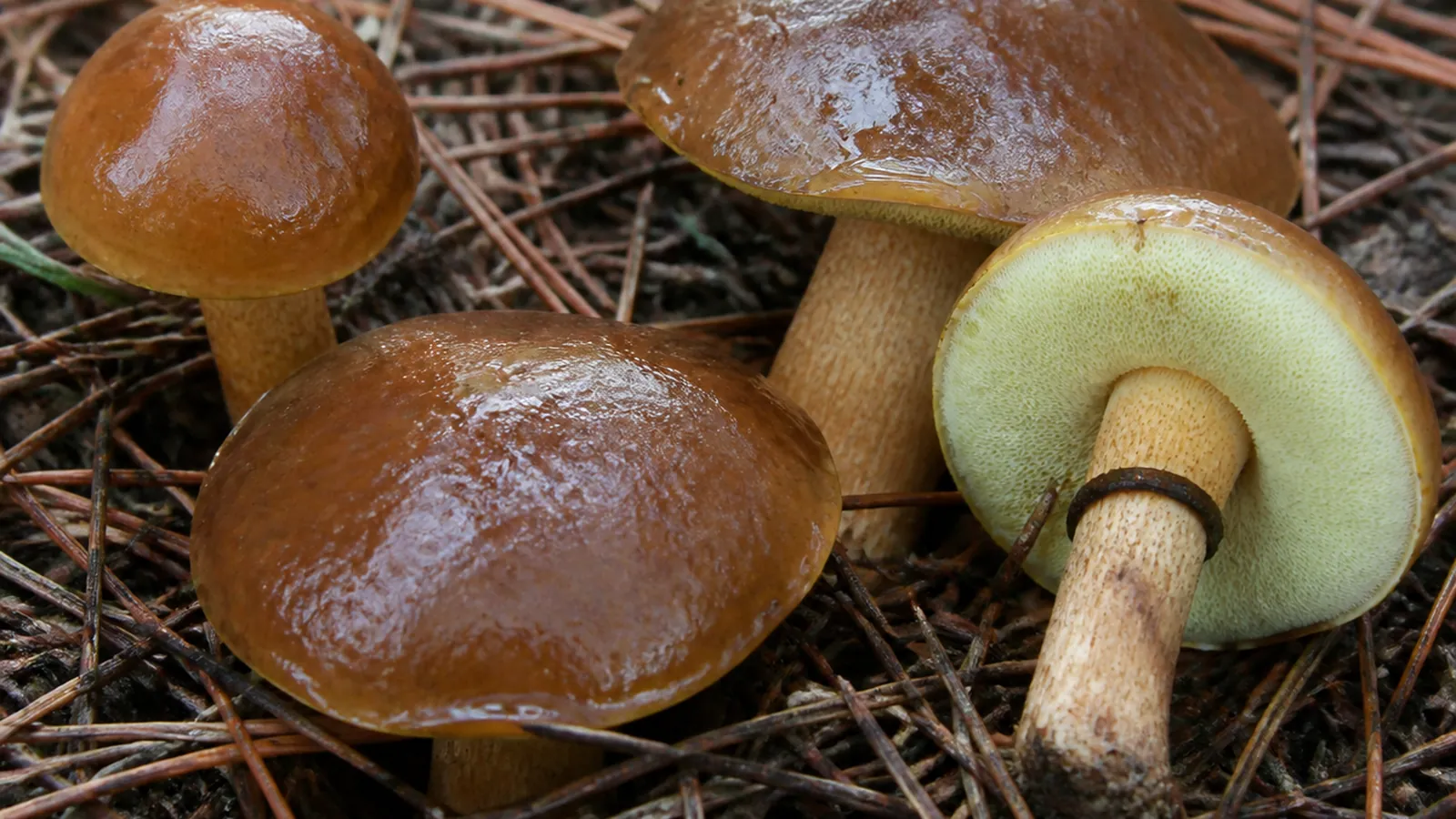
A slippery jack is a chestnut-brown bolete sitting in pine needles, five to fifteen centimeters across, domed when young and flattening as it opens.
The cap is covered in a thick glutinous layer. In dry weather it feels merely tacky and collects needles and grit, and after rain it is genuinely slimy and shines from some distance.
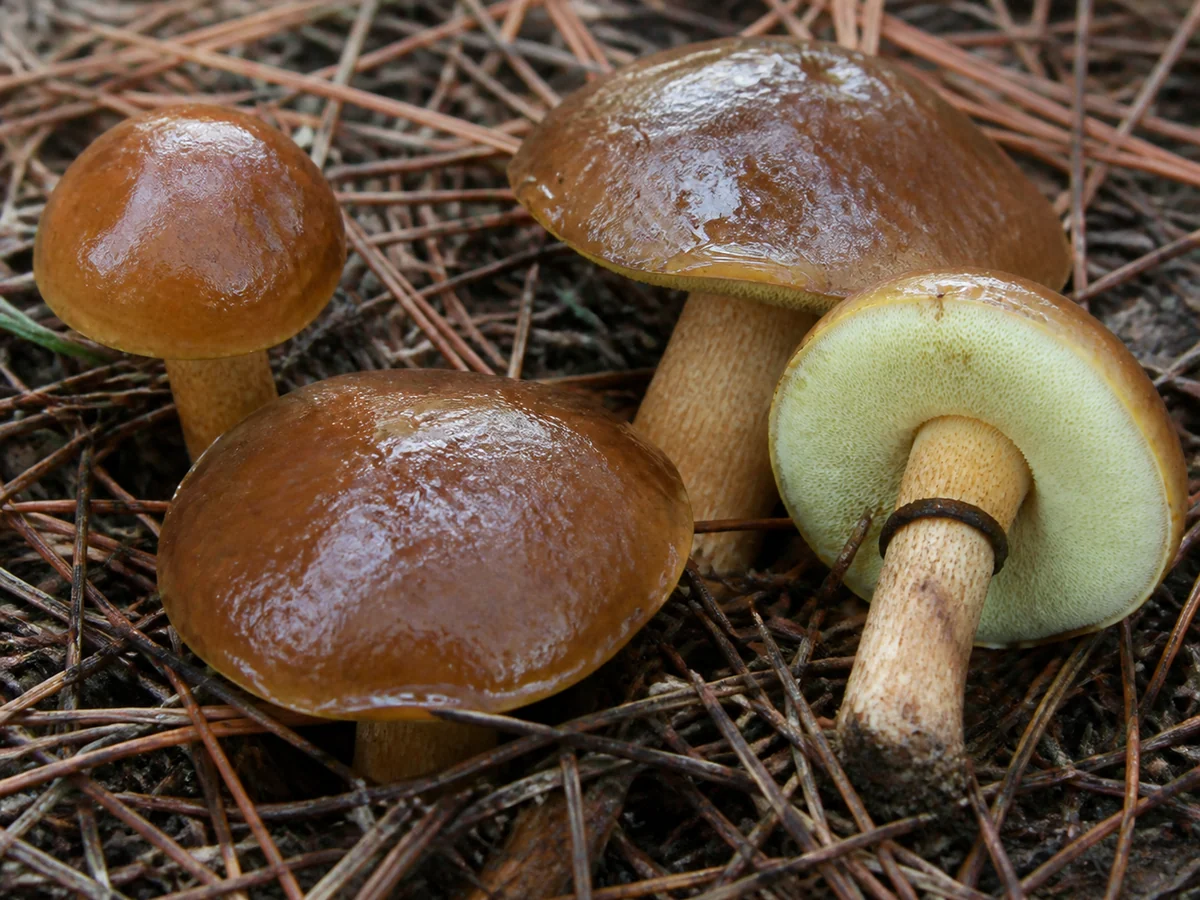
Underneath there are no gills. The surface is a fine pale yellow sponge of tiny pores that darkens toward olive as the mushroom ages, and it does not change color when pressed.

The stem is pale yellow toward the top and carries a distinct ring, which is unusual in this group and worth noticing. The ring is sticky when fresh and often leaves a purplish-brown band on the stem below it.
Above the ring the stem surface is finely dotted.
That detail is easy to miss and it is one of the things that separates this species from its relatives in the same litter.
How do you identify a slippery jack?
Chestnut to dark brown, 5 to 15 cm across, domed then flattening, covered in a thick glutinous layer that is sticky when dry and genuinely slimy when wet, and whose skin peels away in one piece.
No gills. The underside is a fine pale yellow pore surface, becoming olive and duller with age, and it does not bruise.
Pale yellow above and paler below, carrying a persistent sticky ring that leaves a purplish-brown band, with fine dots above the ring.
Pale yellow, soft, and turning watery in older specimens, with a mild pleasant smell and no bitterness.
Three features together settle a slippery jack, and no one of them does it alone. The ring is the character most people skip, and it does the most work.
Boletes as a group mostly have bare stems, so a ringed bolete in pine litter is already a short list. Several close relatives in the same plantations have no ring at all.
The peel test confirms it and is the same action as preparing the mushroom. Lift an edge of the cap skin with a thumbnail and it comes away in a single sheet, cleanly, leaving pale flesh behind.
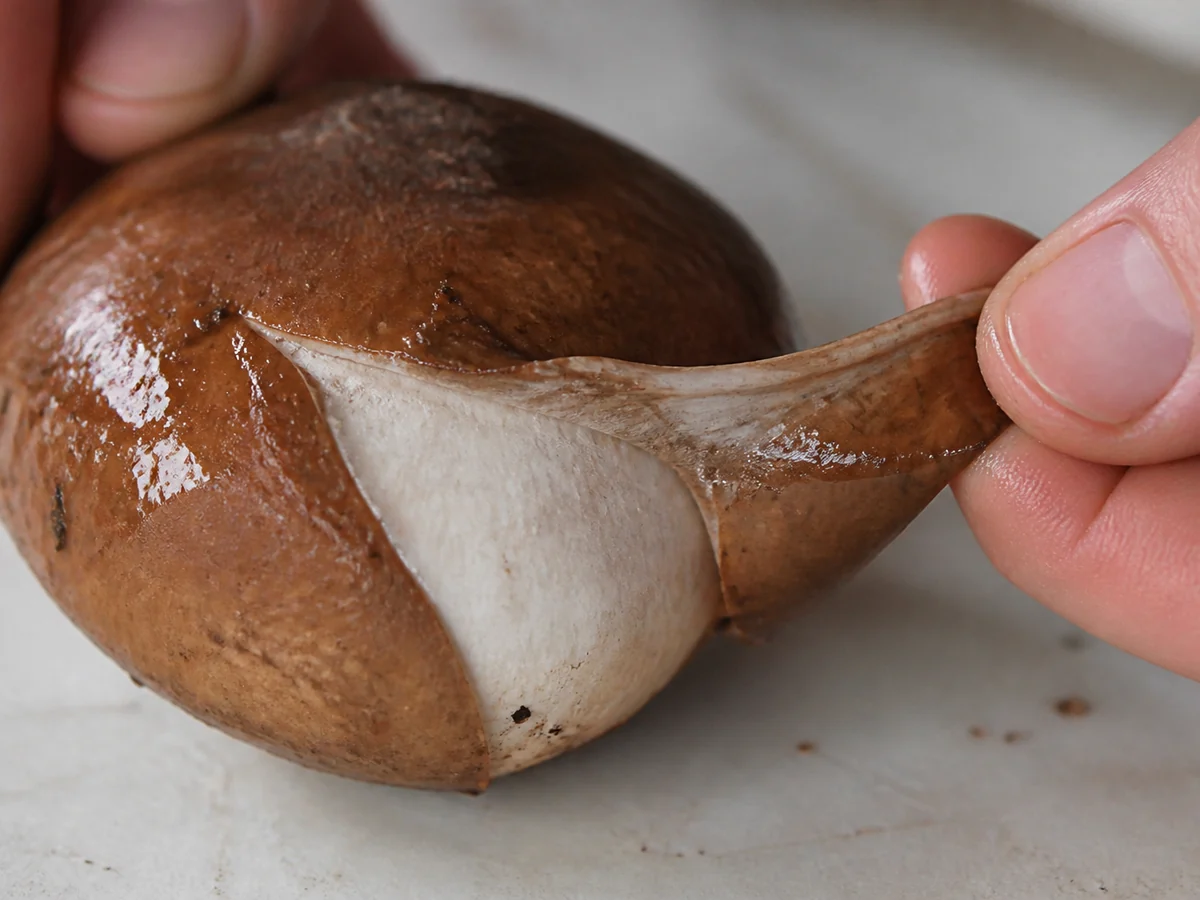
The identification and the preparation are the same movement here, which is unusual and convenient.
Spore print is rarely needed and is a dull cinnamon brown. In practice the cap, the pores, the ring and the pine settle it long before anything is left on paper overnight.
What safety details matter for Slippery Jack?
Cut every specimen lengthwise before it goes in the basket. Larvae are routine in plantation boletes, and a clean-looking cap can sit on a riddled stem.
Cook it thoroughly and keep the first portion small. Tolerance varies between people even when the skin has been removed properly.
Take young firm specimens.
Older ones go watery and soft and the pore layer deteriorates first, so a large old cap is usually a worse mushroom than a small young one.
Collect from plantation interiors rather than from roadside edges, and avoid ground that may have been sprayed during forestry operations.
If symptoms follow a meal, note the timing. Rapid onset after an unpeeled slippery jack is an irritant reaction, and it is a different situation from symptoms that begin many hours later.
What else is a bolete in pine litter?
Everything a slippery jack is likely to be confused with is another Suillus, and none of them is dangerous.
That is the useful headline. This is a genus of pine-associated boletes that ranges from good to indifferent eating, and the consequences of muddling two of them run to texture rather than to harm.
The relatives divide mainly on the ring and on the cap. Some have no ring at all, some have dry rather than glutinous caps, and several are smaller and more yellow than this one.
Slippery jackGlutinous chestnut cap, distinct persistent ring, dots above the ring
Other Suillus speciesNo ring, or a dry cap, or a smaller more yellow fruiting body
What matters more than the species question is the general one. No bolete in pine litter with fine pale pores and no bruising reaction is going to hurt you, and the true bolete hazards are elsewhere in the family.
In Australia the picture narrows further.
Pine plantations are planted rather than native, and the Suillus that arrived with them is a small set, so a ringed glutinous bolete in radiata pine litter is very likely this species.
Warning
The problem with slippery jack is not misidentification, it is the slime. The glutinous cap skin causes nausea, cramps and loose stools in a fair proportion of people, and it is the single most common reason this mushroom gets a bad reputation. Peel every cap before cooking, and discard the skin.
Larvae are the second issue and in a plantation they are routine rather than unlucky.
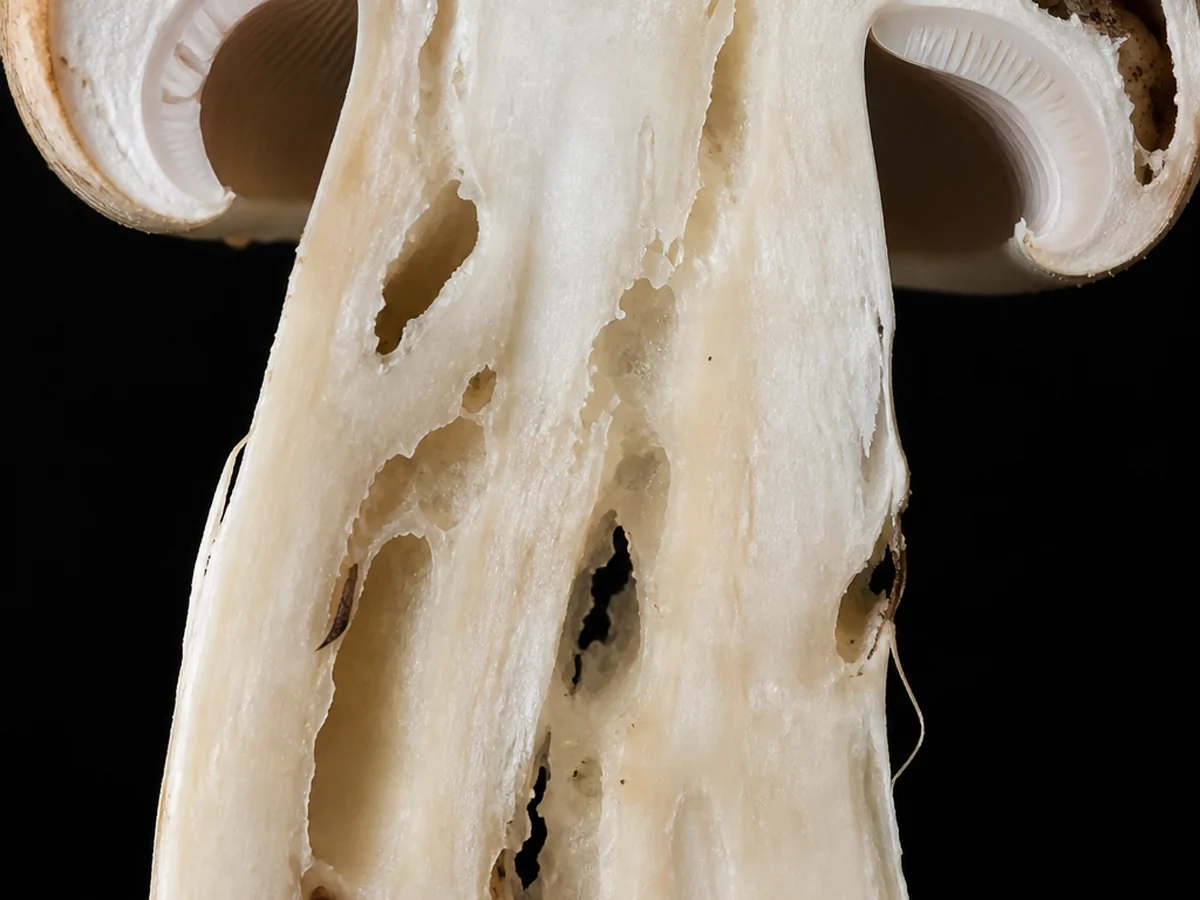
Cut each mushroom from cap to stem base and look. A specimen with a few tunnels can be trimmed, and one that is extensively bored is not worth carrying home.
Some people also discard the pore layer, which goes soft and slippery in older specimens and adds little. That is a texture decision rather than a safety one.
As with any wild mushroom, cook it thoroughly and start with a small portion. Individual tolerance varies even among people who peel properly, and neither pine plantation species is eaten raw.
Why does it grow with pine?
The slippery jack is mycorrhizal with pine, and that partnership decides everything about where it appears.
It exchanges minerals and water gathered from the soil for sugars from the tree, so it cannot fruit without a living pine nearby and it will not grow on dead wood or in compost.
The two species keep company because they want the same thing. Both are mycorrhizal with pine, both respond to the same autumn rain, and a plantation producing one usually produces the other within days.
That pairing is the practical basis of a southern hemisphere foraging season. Pine was planted for timber, the European fungi that partner with it traveled along, and two continents gained an autumn mushroom season that did not exist before.
Neither species is native to Australia or New Zealand, and neither could have established without the plantations. A walk in native forest looking for them is a walk in the wrong habitat.

Because the fungus lives with the trees rather than consuming them, productive ground stays productive.
A stand that fruits this autumn will very likely fruit the next, which is why plantation foragers keep maps.
How do you prepare a slippery jack?
Preparation matters more here than cooking technique, and it starts before the mushroom reaches a pan.
Peel the cap skin off completely. It lifts in one piece from an edge, and it takes most of the collected pine needles and grit with it, which makes the job faster than it sounds.
That is the quiet benefit of the rule. Peeling gets described as a chore, and it is also the fastest cleaning method this mushroom has.
1
Cut each mushroom lengthwise and reject anything extensively tunneled
2
Peel the glutinous skin from the cap in one sheet and discard it
3
Remove the pore layer if the mushroom is mature and the pores have gone soft
4
Slice and cook through in a hot pan, since the flesh releases water readily
The flesh underneath is soft and takes up flavor well, which suits it to dishes with liquid rather than to a hard sear. It will not hold its shape the way a firm-fleshed mushroom does.
That is the honest comparison with its plantation companion. A saffron milk cap wants dry heat and holds together, and a slippery jack wants moisture and goes soft, so the two collected in the same basket belong in different dishes.
It also dries well, and drying is arguably the better use for a large haul.
Dried and rehydrated, the soft texture matters less and the flavor concentrates usefully.
Is there any medicinal use?
No medicinal claim attaches to the slippery jack that is worth reporting. It appears in the literature as a food species and as a subject of mycorrhizal research, which is about forestry rather than about health.
Can slippery jacks be cultivated?
Like every mycorrhizal species, the slippery jack cannot be grown on a substrate in a bag.
It requires a living pine partner, so cultivation means inoculating pine seedlings and waiting for the trees to reach an age where the partnership supports fruiting. That is forestry work on a timescale of years.
The species is also used deliberately in forestry rather than for food. Pine seedlings raised for planting in new ground are sometimes inoculated with Suillus to help them establish, which is how the fungus reached several countries in the first place.
For anyone wanting the mushroom itself, an established plantation in autumn is the entire method.
Is it worth eating for nutrition?
Drying changes the arithmetic slightly. Peeled caps dry well once the skin is off, and drying concentrates everything the fresh mushroom carries by weight.
The nutritional case for eating this species is the ordinary one for mushrooms, and it is not the reason to collect it.
It is mostly water and low in calories, and the peeling and trimming remove a fair proportion of what was picked before anything is cooked.
The practical note is about the soil rather than the mushroom. A mycorrhizal fungus draws from the ground its partner trees stand in, so plantations beside roads or on land with an industrial history are worth avoiding.
Why is the name used for several species?
Suillus is a genus of boletes almost entirely tied to conifers, and to pines above all.
That host loyalty is unusually strict even by mycorrhizal standards, and it is why the genus followed pine plantations around the world rather than establishing on native trees when it arrived.
Within the genus the ring is a useful dividing character. Species with a persistent ring form one group and the ringless ones another, and slippery jack sits firmly in the first.
The common name travels badly. Slippery jack is applied loosely to several glutinous Suillus species in different countries, so the Latin name is worth asking for when a description matters.
Slippery jack preparation and identification questions
Do you have to peel slippery jacks?
How do you identify a slippery jack?
Are slippery jacks safe to eat?
Why are they full of maggots?
Should you remove the pores as well?
Where and when do they grow?
Sources & References
- Suillus luteus, Slippery Jack mushroom, First Nature The glutinous chestnut cap with a skin that peels in one piece, the pale yellow pore surface darkening toward olive, the persistent ring with dots above it, and the mycorrhizal association with pine
- Slippery Jacks: A Beginner's Guide to Identification and Foraging, Mushroom Appreciation That the slime layer causes digestive upset in some people and that peeling the cap is the standard preparation, and that tolerance testing with a small portion is advised