What does a saffron milk cap look like?
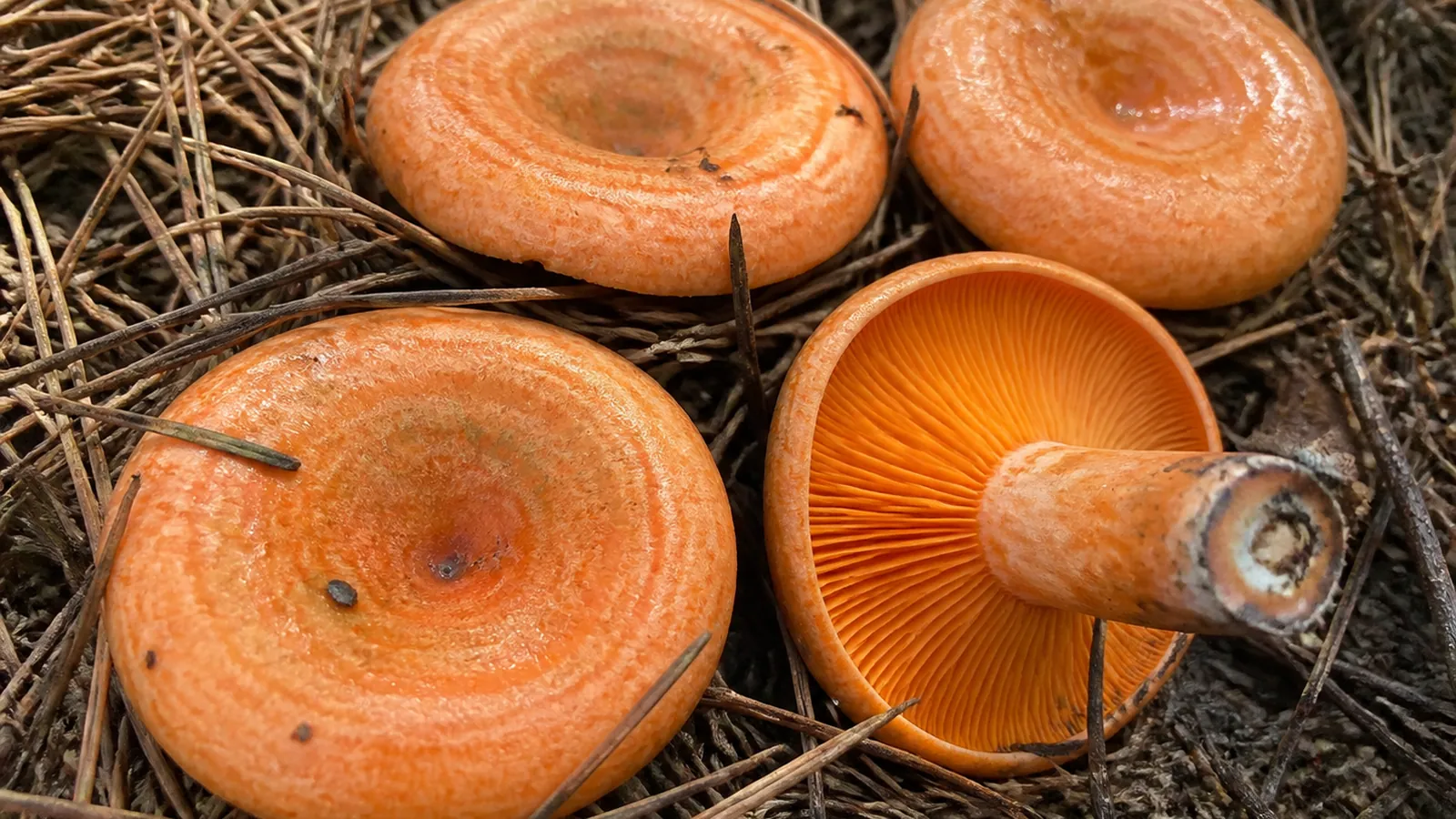
A saffron milk cap is a carrot-orange gilled funnel sitting in pine needles, four to fifteen centimeters across, with an inrolled margin when young that flattens and then dishes as it opens.
The cap carries darker concentric zones, faint in some specimens and obvious in others, and the whole surface dulls toward green as the mushroom ages or is handled.
Underneath, the gills are crowded and run down onto the stem rather than stopping at it. They are the same bright orange as the cap and they bruise green under a thumb within a minute or two.
The stem is short and thick and becomes hollow as the mushroom matures. Scattered across it, usually toward the base, are shallow rounded pits of a slightly deeper orange, and those pits matter more than they look.
Everything about the mushroom is orange and brittle rather than fibrous. Snap a piece of the cap and it breaks cleanly, the way a piece of chalk does, instead of tearing in strands.
How do you identify a saffron milk cap?
Carrot to brick orange, 4 to 15 cm across, funnel-shaped with an inrolled margin when young, marked with darker concentric zones, and staining dull green where handled or aged.
Crowded and decurrent, running down onto the stem, bright orange, bruising green, and releasing carrot-orange latex when cut.
Short, thick, hollow at maturity, orange, and marked with shallow rounded orange pits that are the character separating it from its spruce-loving relative.
Pale orange, firm and brittle, bleeding carrot-orange latex when cut, with a mild fruity smell and no bitterness.
Cut it and watch.
That is the whole identification, and it takes about ten seconds.
A saffron milk cap bleeds latex the color of carrot juice, and it does so immediately and freely from a cut gill surface or a broken stem. The green staining is the second confirmation and the one that unsettles people.
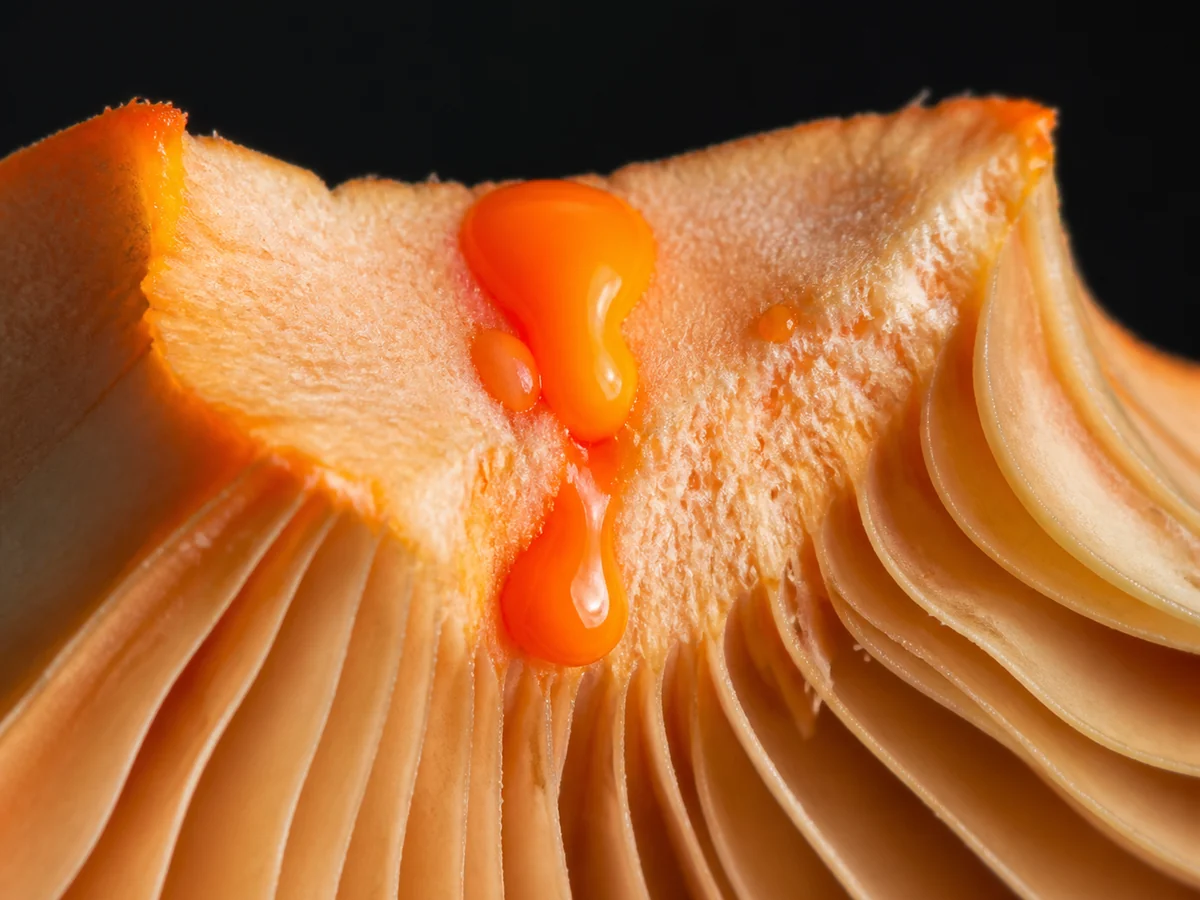

A basket carried home will show green edges and green patches by the time it reaches a kitchen. That is normal, it happens to sound mushrooms, and it is not a sign that anything has gone off.
What is not normal is white latex. Several other milk caps bleed white, some of them bitter and some worth avoiding, and white milk immediately puts a mushroom outside this species regardless of how orange the cap looks.
What safety details matter for Saffron Milk Cap?
Carrot orange is this group. White is a different group entirely, and some of those species will give you a burning mouth or a bad evening.
Do not be put off by green. Green staining on the gills, the cap or a cut face is normal for this species and deepens with time, and it is one of the confirmations rather than a sign of spoilage.
Take firm young caps and leave anything soft, sour-smelling or heavily tunneled by larvae. Warm autumn weather turns these over quickly once they are past their best.
Cook them through and eat a modest portion the first time, because individual tolerance for wild mushrooms varies and this species is no exception.
Collect from plantations rather than from verges, and avoid ground that may have been sprayed. A mycorrhizal fungus draws from the soil its partner tree stands in.
What else bleeds in pine litter?
The confusions here are all within the milk cap genus, and the cost of getting one wrong is usually a disappointing dinner rather than an illness.
The nearest relative is the false saffron milk cap, which associates with spruce rather than pine. It is edible and generally rated as poorer eating, and the two are separated by the tree and by the stem.
Saffron milk capUnder pine, stem marked with shallow rounded orange pits
False saffron milk capUnder spruce, stem smooth and unmarked
That stem character is worth learning because it works when the trees are hard to name. Pits mean this species, a smooth stem means its relative, and neither answer is dangerous.
The group that does matter is the white-bleeding milk caps. Several species in the genus produce white latex and range from unpleasantly hot to genuinely upsetting, and the cut test separates them from this one instantly.
In Australia the question is simpler than in Europe.
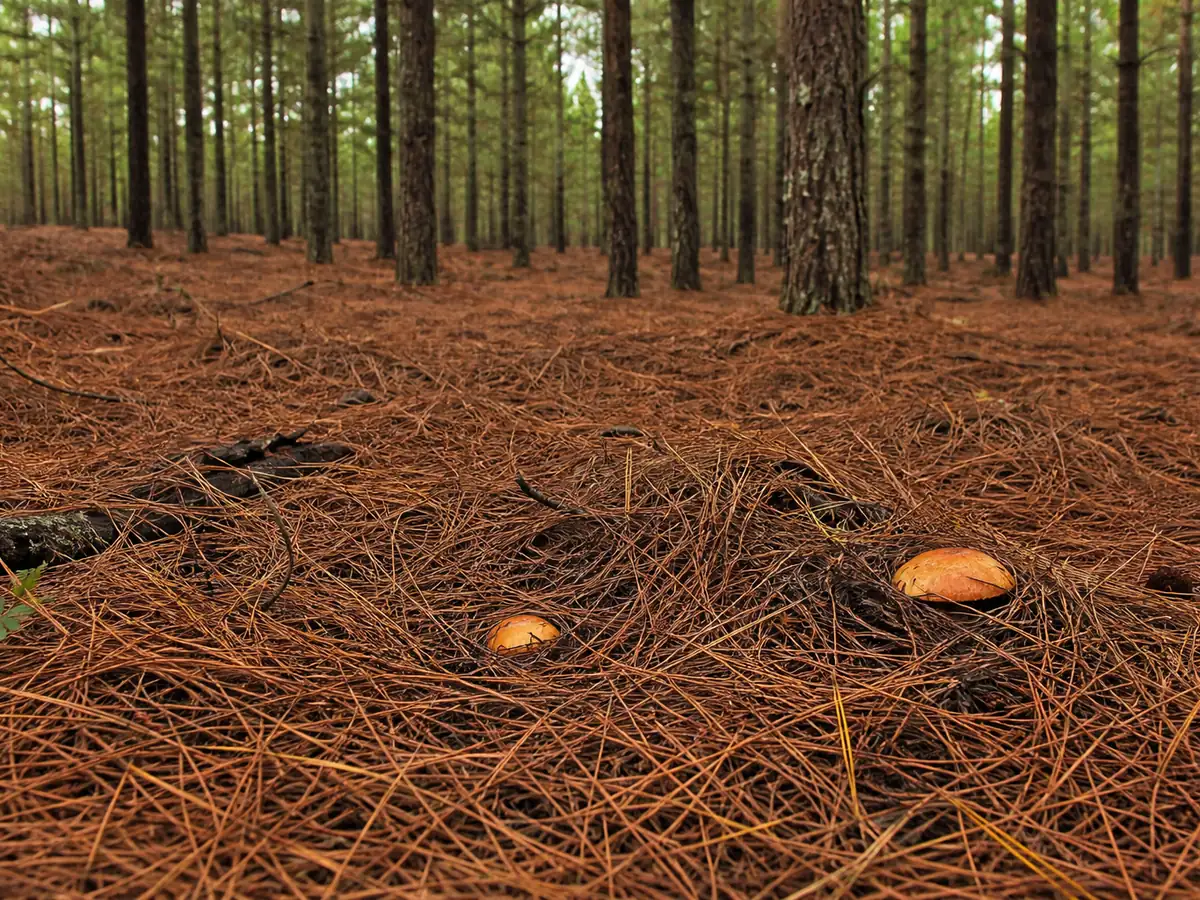
Pine plantations are planted rather than native, and the milk cap that came with them is this one, so a bright orange bleeding milk cap in radiata pine litter has a short list of possibilities.
Warning
Judge the latex before the cap. An orange cap with white milk is not this mushroom, and several white-bleeding milk caps cause burning mouths and stomach upsets. The cut takes seconds and it is the check that actually separates the group.
Beyond that, the honest risks are small and mostly about condition rather than identity. Old specimens go soft, sour and insect-riddled quickly in warm autumn weather, and a mushroom that has been sitting in warm litter for a week is a poor thing to eat regardless of species.
Some people tolerate this species less well than others, which is true of most wild mushrooms and worth respecting on a first meal. Keep the portion small and cook it thoroughly, since neither of the pine plantation species is eaten raw.
Why does it only grow under pine?
The saffron milk cap is mycorrhizal with pine, which is a stricter relationship than most foragers assume.
It trades sugars from the tree for water and minerals it gathers from the soil, and it cannot fruit without a living pine partner. There is no version of this mushroom growing on a log or in a compost heap.

Both fungi arrived with the planted trees and neither lives anywhere else in the country, so the pairing is a consequence of forestry rather than of ecology.
That dependence explains the strange geography of this species. It is European in origin and it now fruits across tens of thousands of hectares of Australian and New Zealand plantation, because it traveled with the pines and could not have arrived any other way.
An entire foraging season in those countries rests on that accident. The reliable autumn targets in a southern pine plantation are European fungi living on an introduced forestry crop, which is a strange thing to be true and a useful thing to know.
The practical consequence is that plantations are the productive ground rather than native bush.
Rows of radiata pine with deep needle litter are precisely the habitat, and a walk in eucalypt forest looking for this mushroom is a walk in the wrong place.
Being mycorrhizal also means the ground keeps producing. The fungus lives with the trees rather than consuming a finite resource, so a productive stand stays productive for as long as the pines stand.
How do you cook saffron milk caps?
This is a firm mushroom that wants hard dry heat, and it punishes the gentle treatment most people give wild mushrooms.
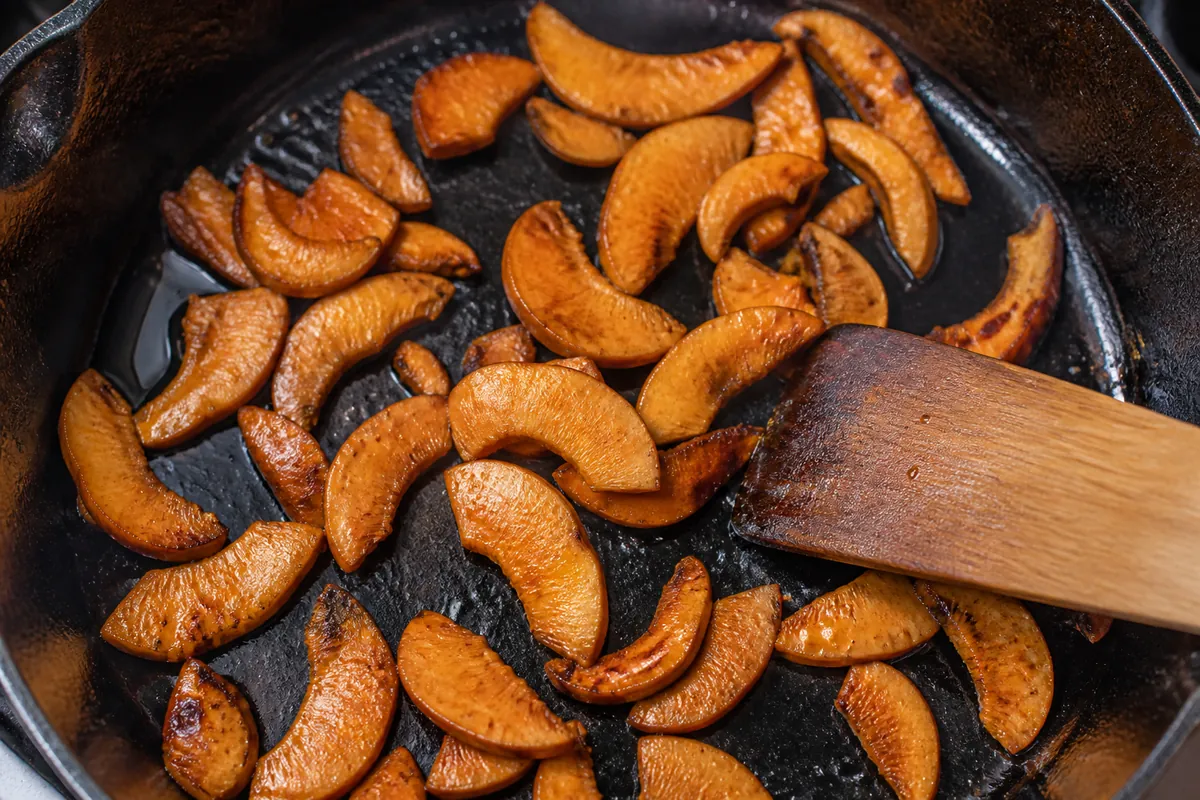
Grit is the real preparation problem here. The funnel shape collects needles and sand, and a dry pastry brush does more than any amount of rinsing.
Rinsing is worth avoiding for the same reason it is with any dense mushroom. Water sits in the gills, and the pan then spends its heat boiling it off rather than browning anything.
The flesh is brittle and low in water compared with a field mushroom, so it browns rather than floods and it holds its shape through a long cook.
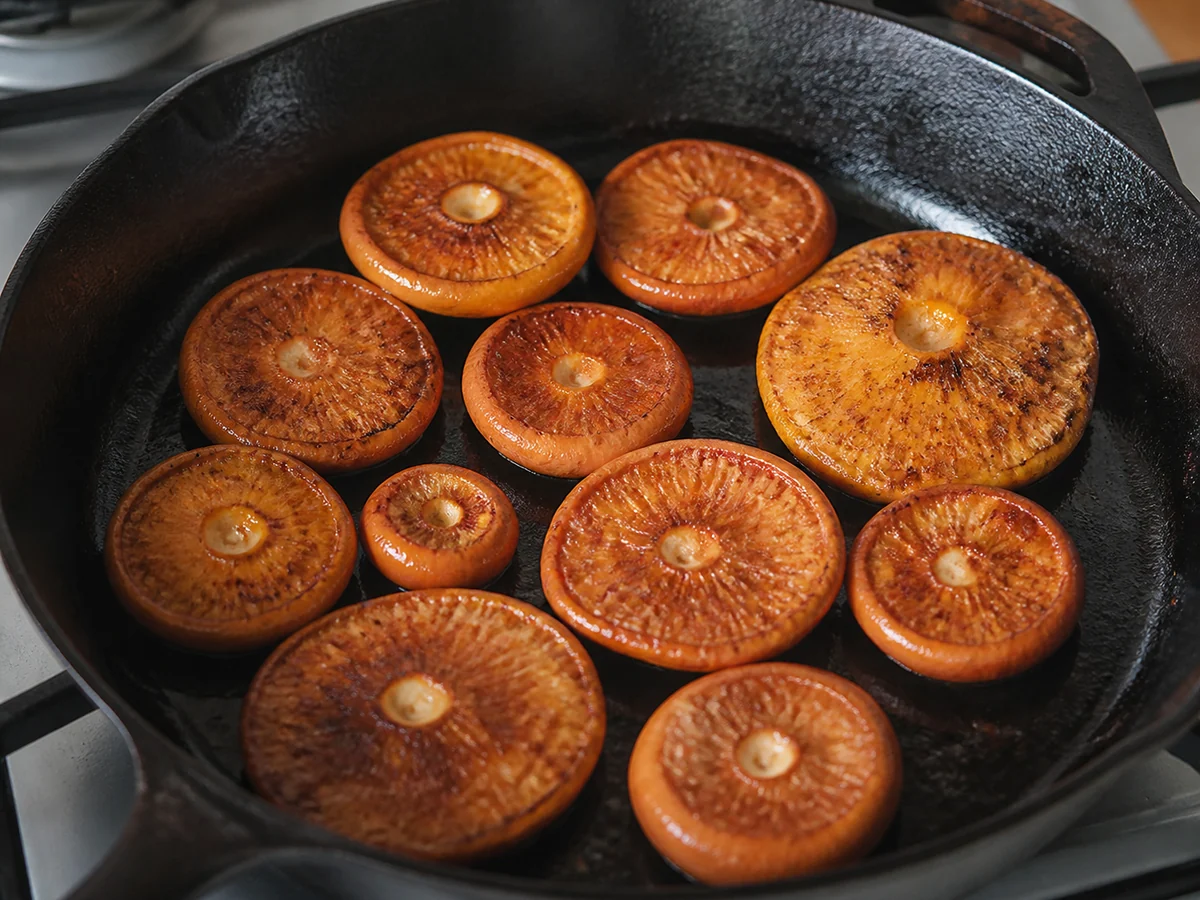
Halve or quarter them and sear the cut faces hard in a hot pan. That is the treatment the texture is built for, and slicing thinly wastes it.
No peeling is needed, which separates it from slippery jack, the other pine plantation species. The cap surface is dry rather than slimy and goes into the pan as it comes out of the ground, after a brush.
The flavor is mild, slightly resinous and a little nutty, and it takes strong companions well. It is a mushroom for garlic, fat and heat rather than for delicate treatment.
Expect the green staining to persist through cooking.
Cooked pieces can carry dull green patches, which look odd on a plate and mean nothing at all about the food.
Is there any medicinal claim?
No medicinal claim attaches to the saffron milk cap in any form worth reporting.
It appears in the literature as a food species, and the compounds behind its orange latex are of chemical interest rather than therapeutic interest. Eat it because it is good, not because it is supposed to do anything.
Can you grow saffron milk caps?
Cultivating a mycorrhizal mushroom is a different problem from growing an oyster mushroom, and the saffron milk cap sits at the harder end of it.
It needs a living pine to partner with, so cultivation means inoculating pine seedlings and then waiting years for the trees to mature enough to support fruiting. That work has been done commercially with some success in New Zealand and elsewhere.
For a home grower it is a forestry project rather than a mushroom project. Planting inoculated pines is possible, and the return arrives on a timescale measured in years rather than months.
Which is why almost everything eaten is collected from plantations that were planted for timber and produce mushrooms as a side effect nobody planned.
Is it worth eating for nutrition?
As food this behaves like other firm-fleshed wild mushrooms, and the nutritional case for eating it is the usual one.
It is mostly water, low in calories, and a source of flavor rather than of any nutrient in quantity. The reason to walk a pine plantation in autumn is the texture and the season, not the composition table.
One practical note does matter. Mycorrhizal mushrooms take up what is in the soil around their partner trees, so plantations beside busy roads or on land with an industrial history are worth avoiding.
Why do field guides disagree about the species?
Lactarius is the milk cap genus, and the name describes exactly the character the identification rests on.
Every member of the genus bleeds when cut, and the color of that latex, whether it changes, and what it does to the flesh are the primary characters used to tell the species apart.
The saffron milk cap group has been split and re-split as molecular work has gone on, which is why field guides of different ages disagree about how many species are involved and which trees each one takes.
None of that matters much in a pine plantation. The orange-bleeding milk caps under pine are all edible, and the species-level argument is one for a microscope rather than for a basket.
Saffron milk cap identification and cooking questions
Why is my saffron milk cap turning green?
How do you identify a saffron milk cap?
What if the milk is white instead of orange?
Do you need to peel a saffron milk cap?
How should you cook them?
Where and when do they grow?
Sources & References
- Lactarius deterrimus, False Saffron Milkcap mushroom, First Nature The separation between the pine-associated saffron milk cap and its spruce-associated relative, and the stem character that distinguishes them
- Saffron Milky Caps: Foraging, Identifying, and Harvesting, Mushroom Appreciation The carrot-orange latex appearing on cutting, the green staining of gills and flesh where damaged, the decurrent orange gills, and the mycorrhizal association with pine