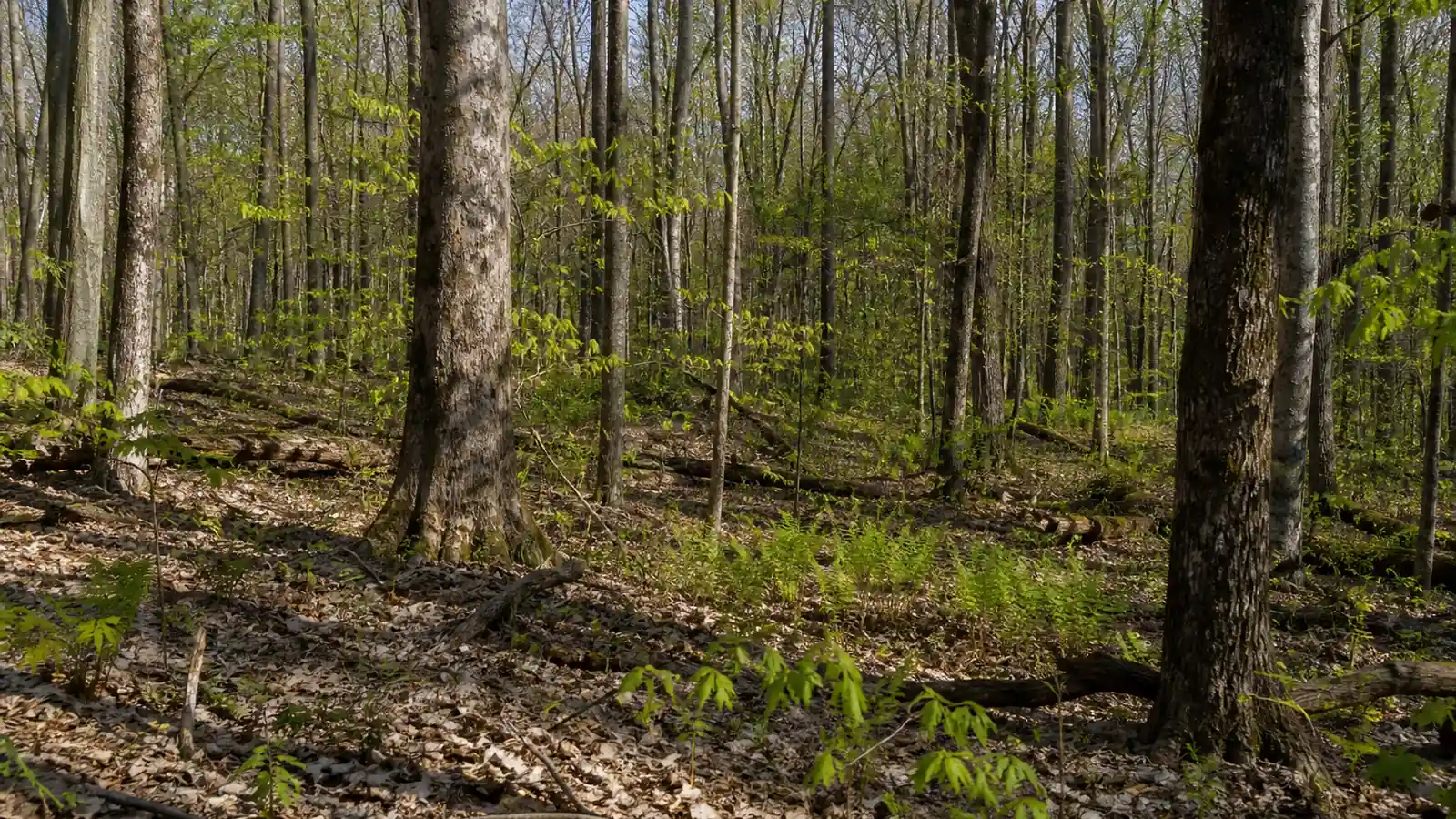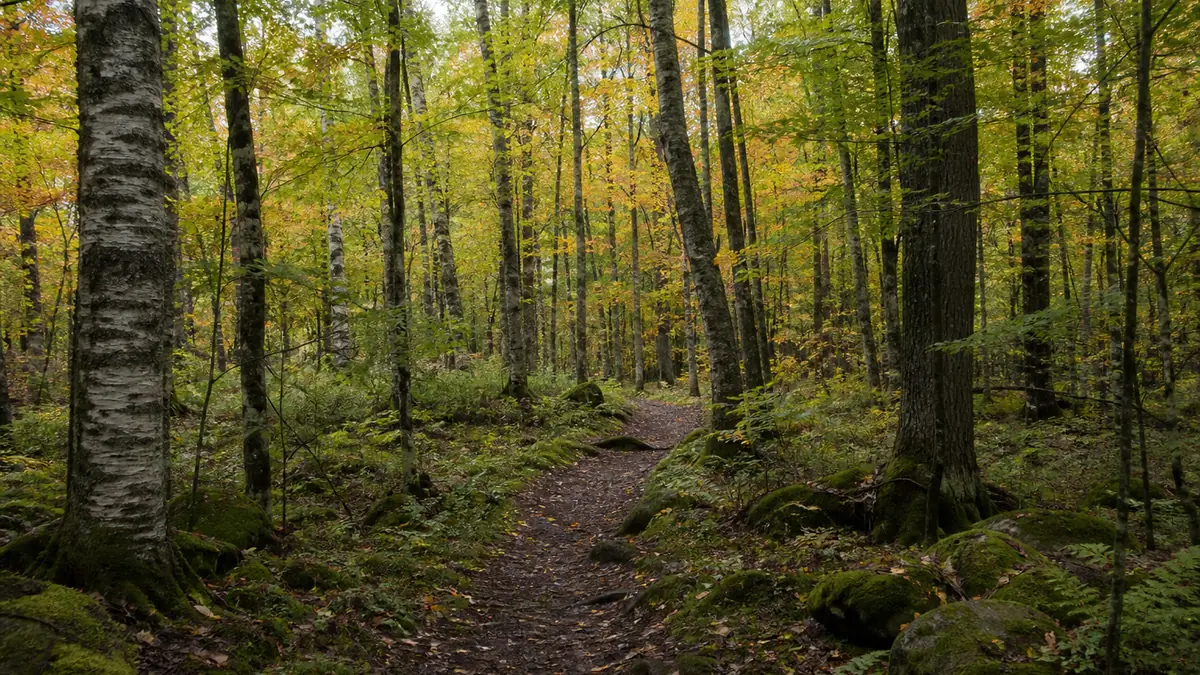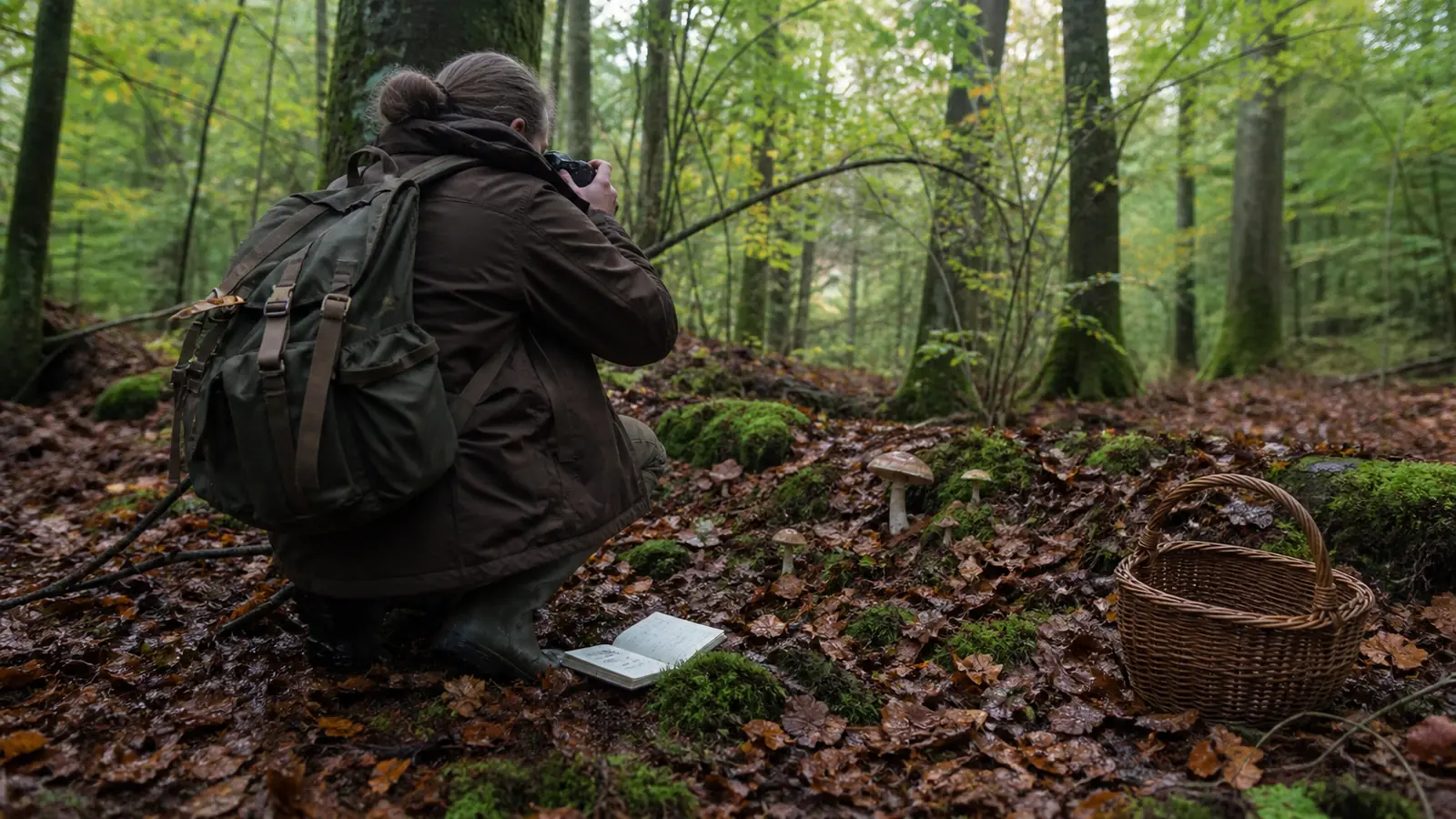
An ownership-first French field plan for regional forest moisture, tree partners, spring altitude, separated specimens, expert review, and poison response.
Mushroom foraging in France begins with the forest owner. Rain, temperature, and tree partners may predict fruiting, but they do not give anyone permission to remove mushrooms from state, communal, private, or protected land.
Autumn is the broadest season for cèpes and girolles in many regions, while spring morels and later mountain fruiting need separate routes. Local orders, sound whole specimens, and expert review control what can move from the forest toward a kitchen.
Do you need permission to forage in France?
French forest collection law changes between parcels even when woodland looks continuous. A path through woodland does not show whether the ground is a forêt domaniale managed by the Office national des forêts, a communal forest, private property, or a protected area with its own restrictions.
Because forest ownership comes before the weather forecast, resolve the parcel and current rule while the trip is still easy to change.
- Use an official map or local land information to name the forest and manager.
- Read current prefectural, municipal, ONF, reserve, and entrance notices.
- Check quantity, days, tools, commercial use, and closed zones.
- Obtain the owner's permission on private land.
ONF guidance commonly describes moderate family gathering in state forests as no more than five liters per person per day unless local regulation states otherwise. That reference is not a universal French allowance and does not override private ownership or a stricter local order.
Five liters is a ceiling in a particular legal context, not a target. Take only a modest amount that you can keep separate, identify, transport safely, and use without waste.
Commercial collection changes the legal category. Gathering for sale, supplying restaurants, organized events, or repeated high-volume removal can require different authorization even where small personal collection is tolerated.
Run the property check again on arrival because signs can show a closure, fire risk, hunting activity, restoration work, or temporary local restriction that was not visible in an older summary.
ForagingMushroom foraging laws in France: what the five liter rule meansWhen do cepes and girolles appear after rain?
Autumn rain can support cèpes and girolles across France, but rainfall becomes useful only where the soil and litter retain it. Atlantic oak or chestnut woodland, continental beech forest, Mediterranean uplands, and Alpine conifers respond at different speeds.
- Oak and beech
- Inspect moist litter and root zones without assuming every bolete is edible
- Chestnut
- Use acidic woodland as a search clue, then verify the entire mushroom
- Pine and spruce
- Record needles, elevation, soil, and tree partner with every candidate
- Wind exposure
- Redirect from dry ridges into sheltered legal hollows
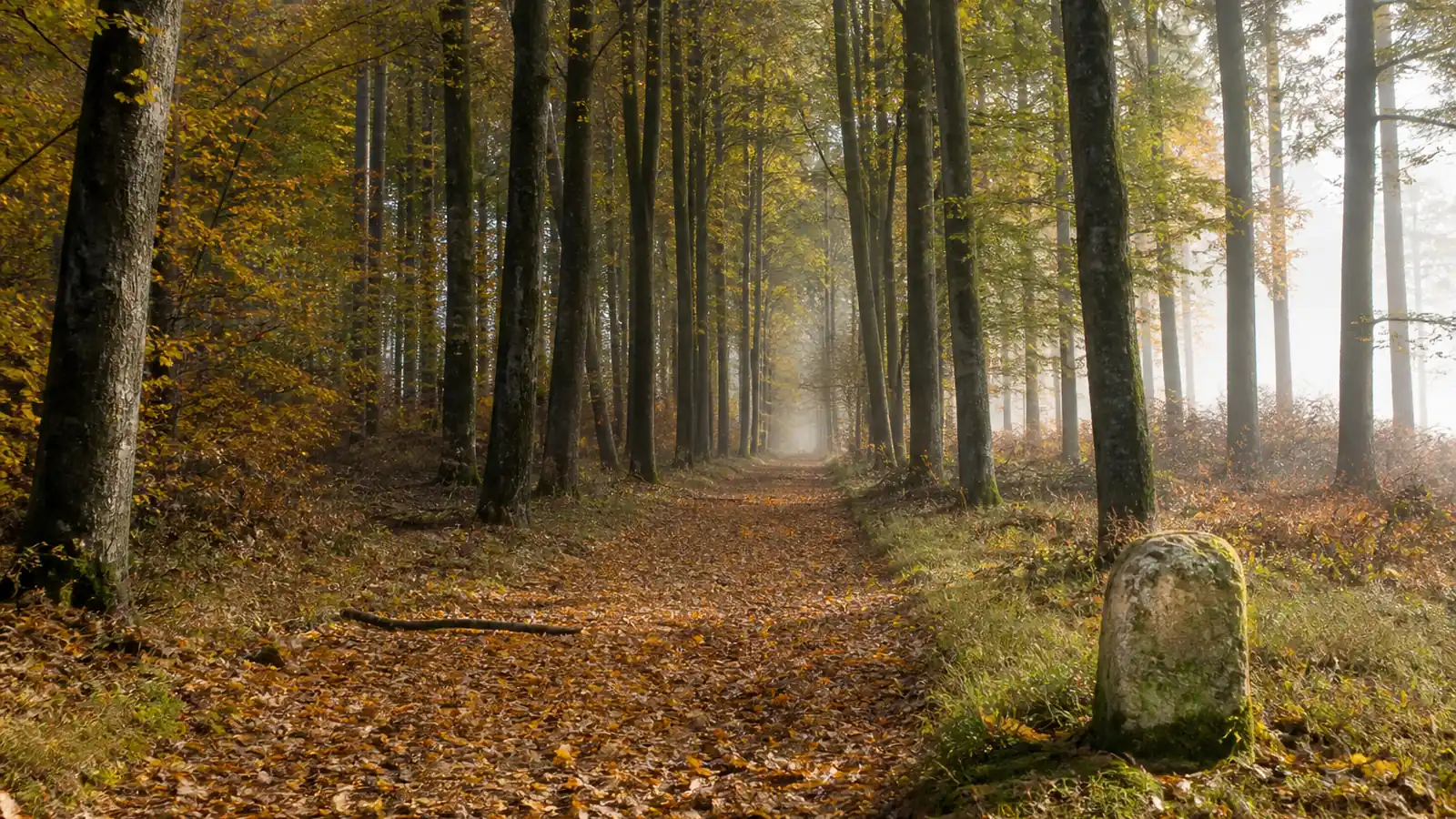
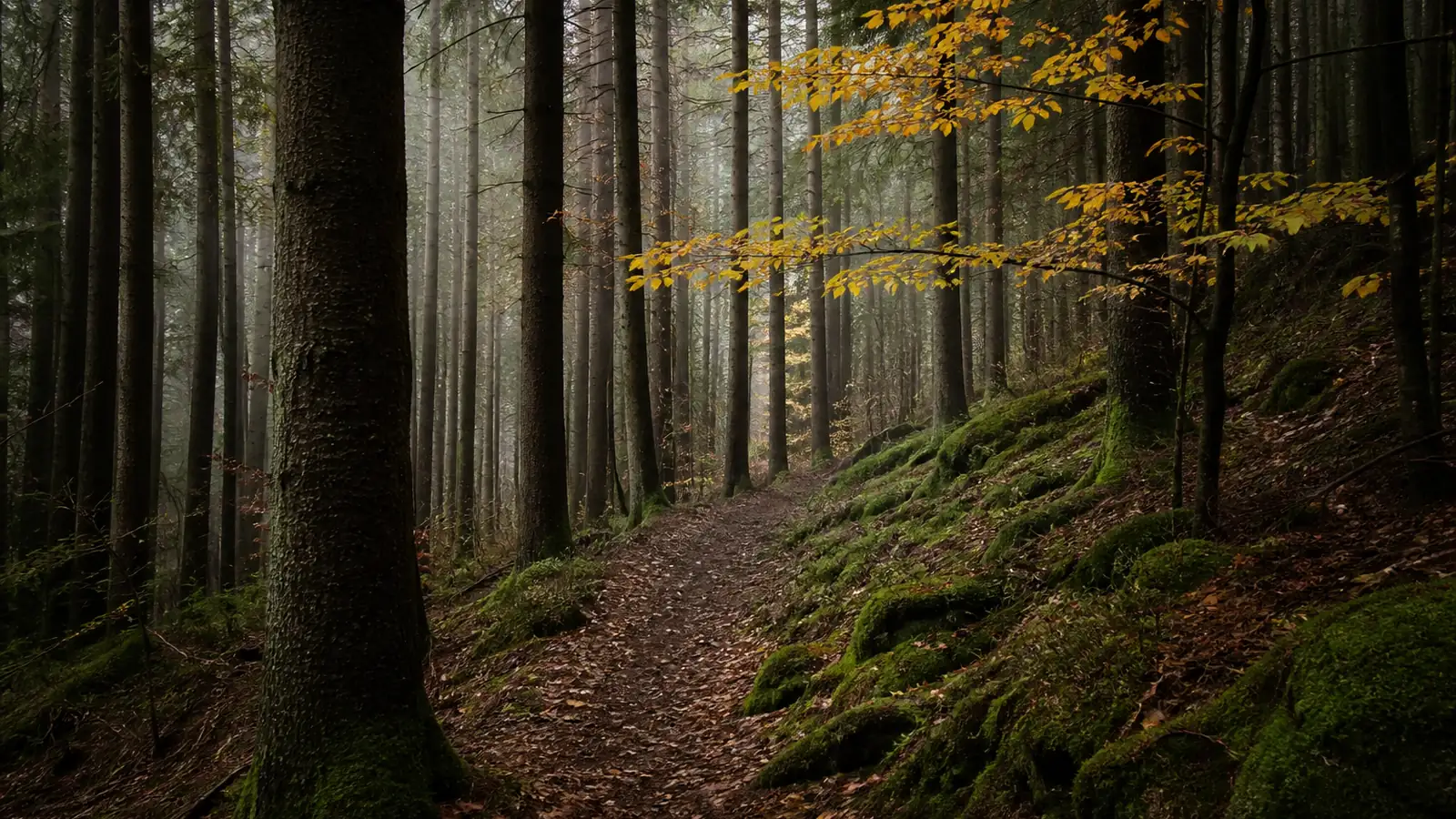
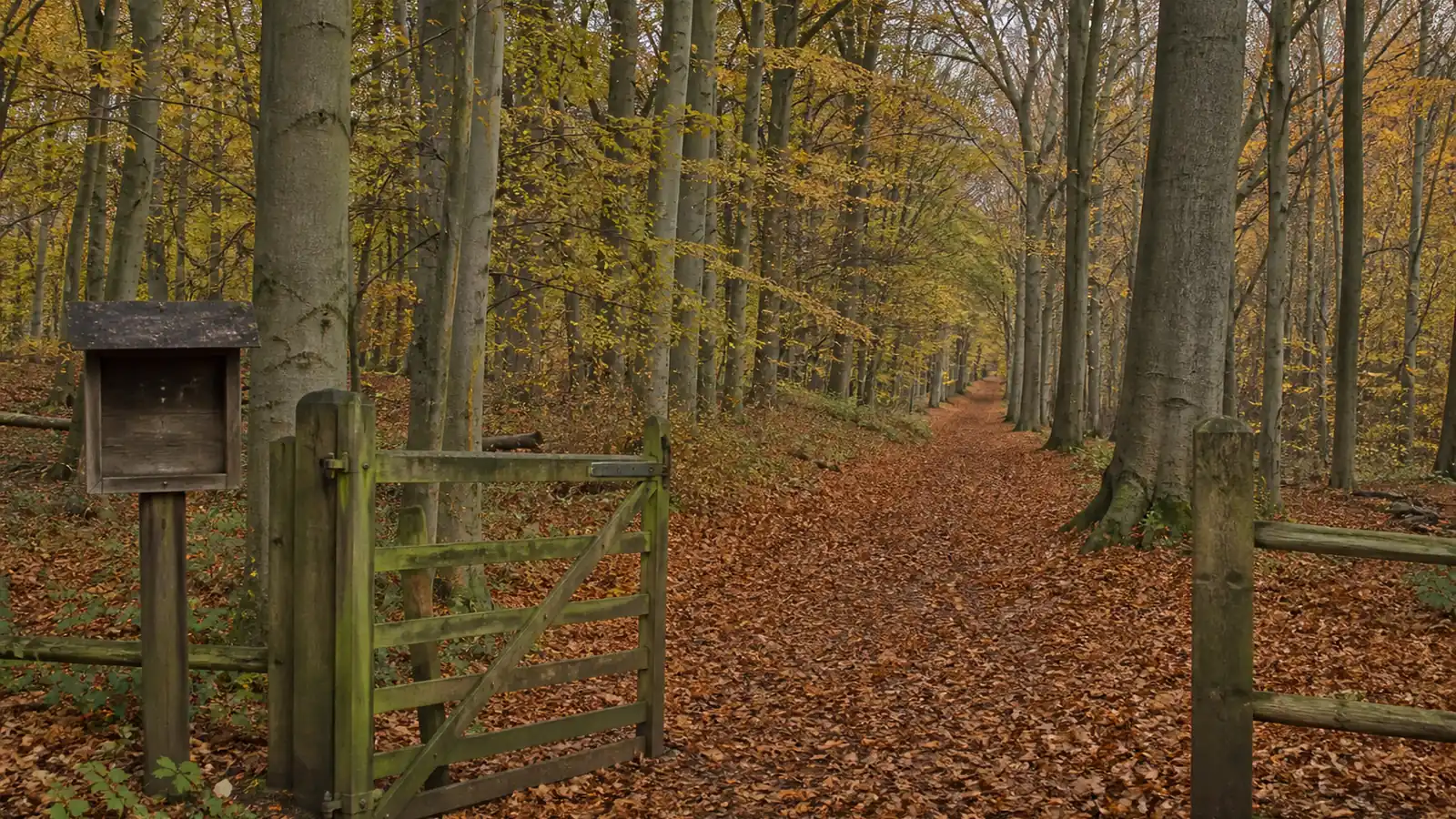
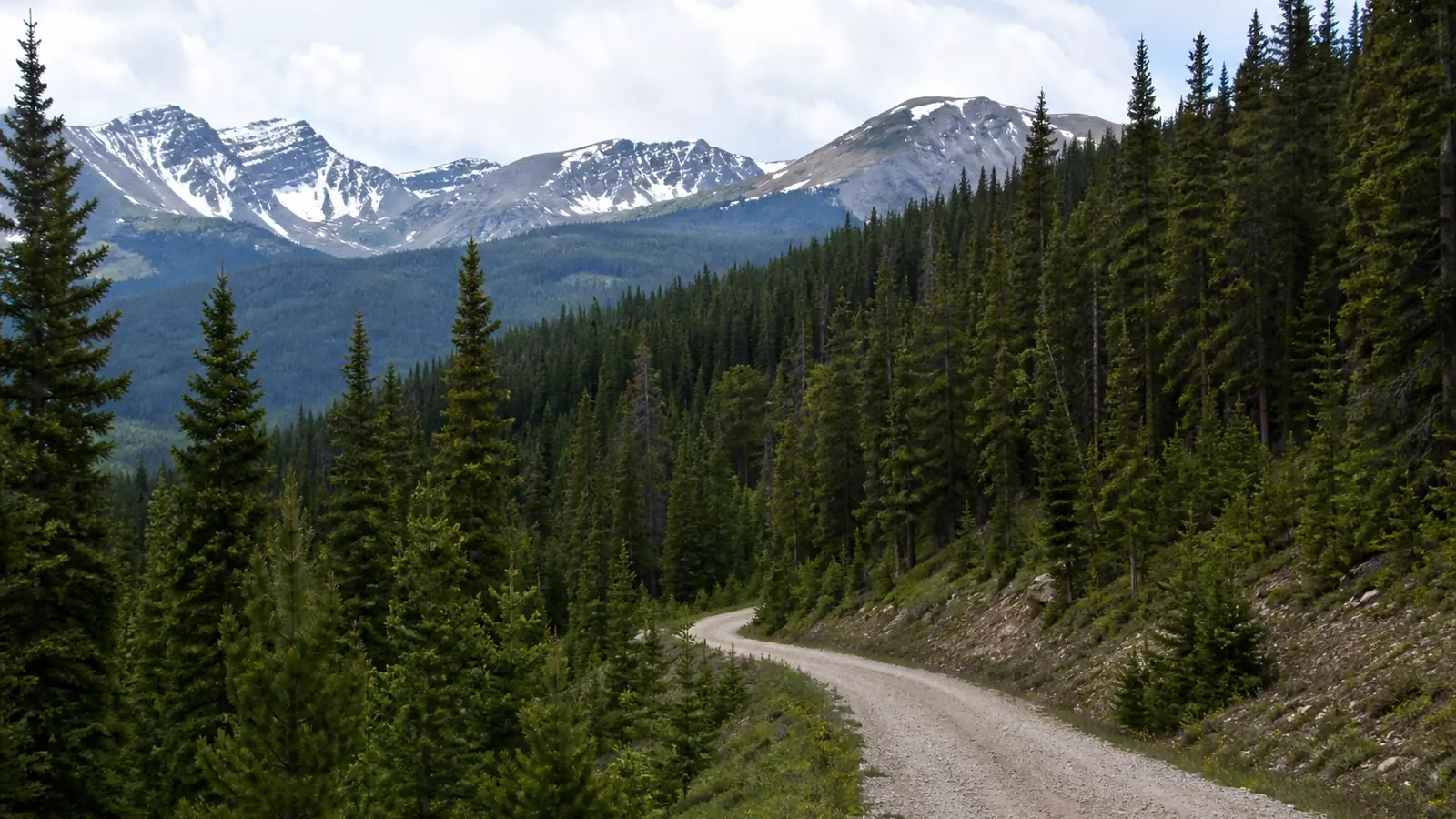
These four facts define the forest contrast shown below without identifying any specimen.
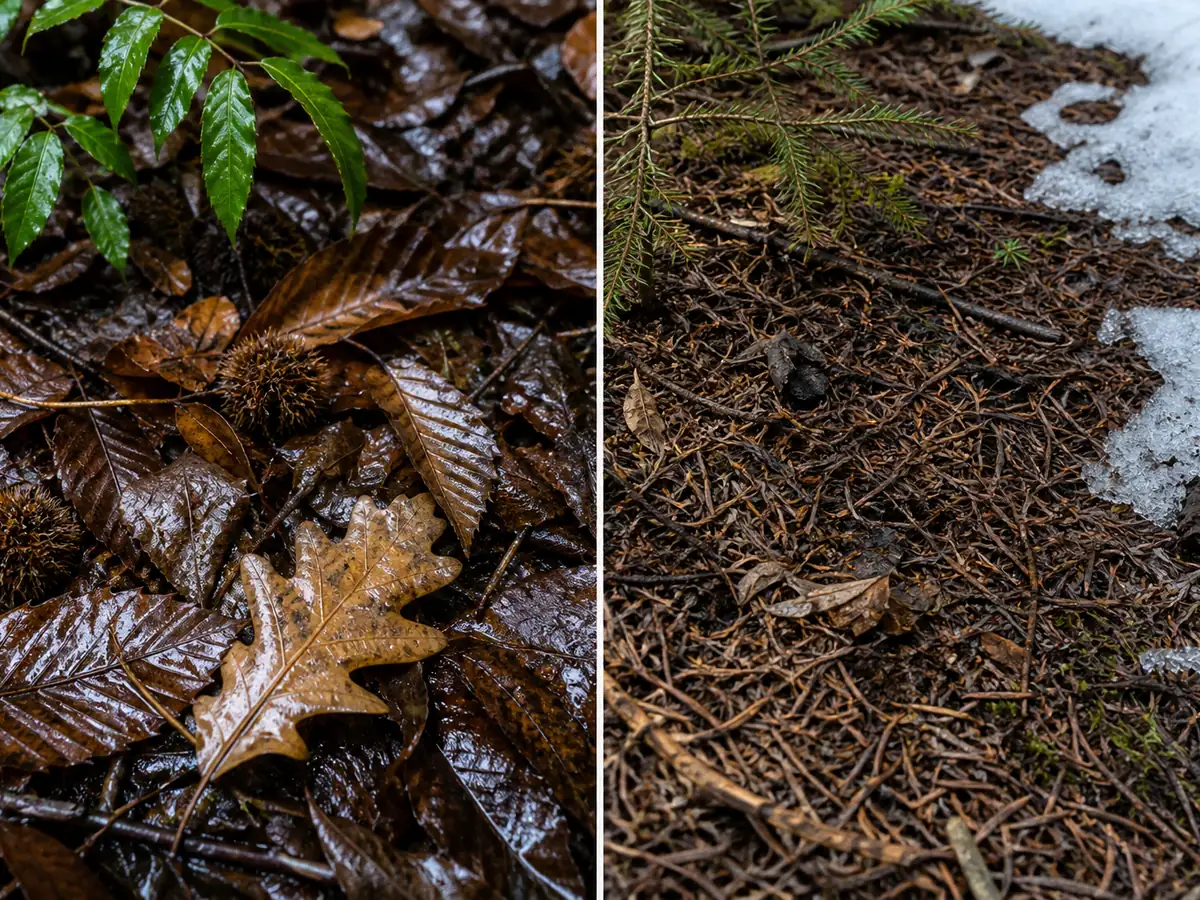
Tree partners focus the walk before characters establish the name.
A porcini-like bolete still needs its pore surface, cap, stem ornament, bruising response, flesh, smell, age, and complete base assessed.
Rain response is rarely immediate or uniform. Deep dry soil may absorb a first storm without supporting fruiting, while repeated rain can waterlog low ground and quickly damage mature mushrooms.
- Check moisture beneath the litter rather than the shine on top.
- Compare a sheltered lower slope with an exposed ridge.
- Inspect soil-associated candidates separately from fungi attached to wood.
- Record empty but moist habitat because it can guide a return visit.
Chanterelle candidates have blunt ridges rather than sharp true gills and usually arise from soil with trees. Jack-o'-lantern and other orange fungi can occur on wood, including buried roots that make the attachment hard to see.
The useful redirect is often between forest partners instead of across a whole département. If oak litter is dry, a shaded beech hollow or higher conifer stand may offer a better test, but the legal check must travel with the new stop.
Translate regional weather into one forest loop
Atlantic influence can provide repeated mild rain, while continental interiors may swing between heat, storms, and faster drying.
Mediterranean areas can remain unsuitable through long dry periods before autumn rain changes upland woodland.
Mountain forests add altitude, snow, and cold nights to the decision.
Do not turn those broad climate patterns into regional guarantees. Use them to choose which official weather record, tree community, and elevation deserves a ground check.
The forest floor confirms whether regional rain mattered.
Push beneath the upper leaves, compare an exposed ridge with a shaded hollow, and note whether roots, moss, and mineral soil retained moisture. A first storm after drought may only begin rehydrating the site.
Repeated rain followed by mild stable days can create a stronger window, while heavy rain may waterlog mature specimens and increase decay. Record the phase rather than calling every wet day productive.
Build a loop with three contrasts such as oak to beech, ridge to hollow, or low forest to an intermediate mountain band. Stop after the contrasts answer the moisture question, even when the basket remains empty.
That disciplined route produces a reason to return.
A moist empty forest after the first mild nights may deserve another check, while dry lower litter after wind calls for new rain instead of more distance.
ForagingMushroom foraging laws in Germany: protected species and small quantitiesWhen is morel season in France?
Morels require a different plan from autumn cèpes. Spring warmth, river woodland, disturbed soil, old orchards, calcareous ground in some regions, and altitude all change the timing.
| FIELD SIGNAL | SPRING INTERPRETATION | ACTION |
|---|---|---|
| Cold shaded soil | Warm air has not reached the ground | Return later or try a warmer legal aspect |
| Thawed moist river edge | Spring habitat may be ready | Search carefully above flood disturbance |
| Dry low ground, snow higher up | The season may sit between elevations | Check an intermediate foothill band |
| Old damaged specimens | Useful characters have been lost | Photograph and leave them out of food |
The field signals show when to change elevation without turning warmth into an identification test.

The spring window moves uphill instead of ending everywhere at once.
A warm valley can close before a mountain forest has thawed, and north-facing ground can lag behind a sunny slope at the same elevation.
- Record soil condition, aspect, altitude, and recent nights.
- Search a defined habitat loop instead of every disturbed patch.
- Photograph the mushroom intact before cutting a representative specimen.
- Compare true morel characters with local false morels.
A continuous hollow interior is an important true-morel feature, but it is one part of a complete identity. Brain-like caps and chambered interiors require careful rejection and qualified review.
Avoid road verges, industrial ground, dumps, treated sites, and other polluted settings. Fungi can accumulate contaminants, so a correct species name does not make every collection site suitable for food.
What should you carry mushrooms in?
ANSES recommends a wicker basket, box, or other rigid breathable container rather than plastic. Plastic traps moisture and heat, speeds deterioration, and lets broken pieces from poisonous and edible species mix.
Together, the four checks preserve a specimen that a qualified reviewer can actually assess.
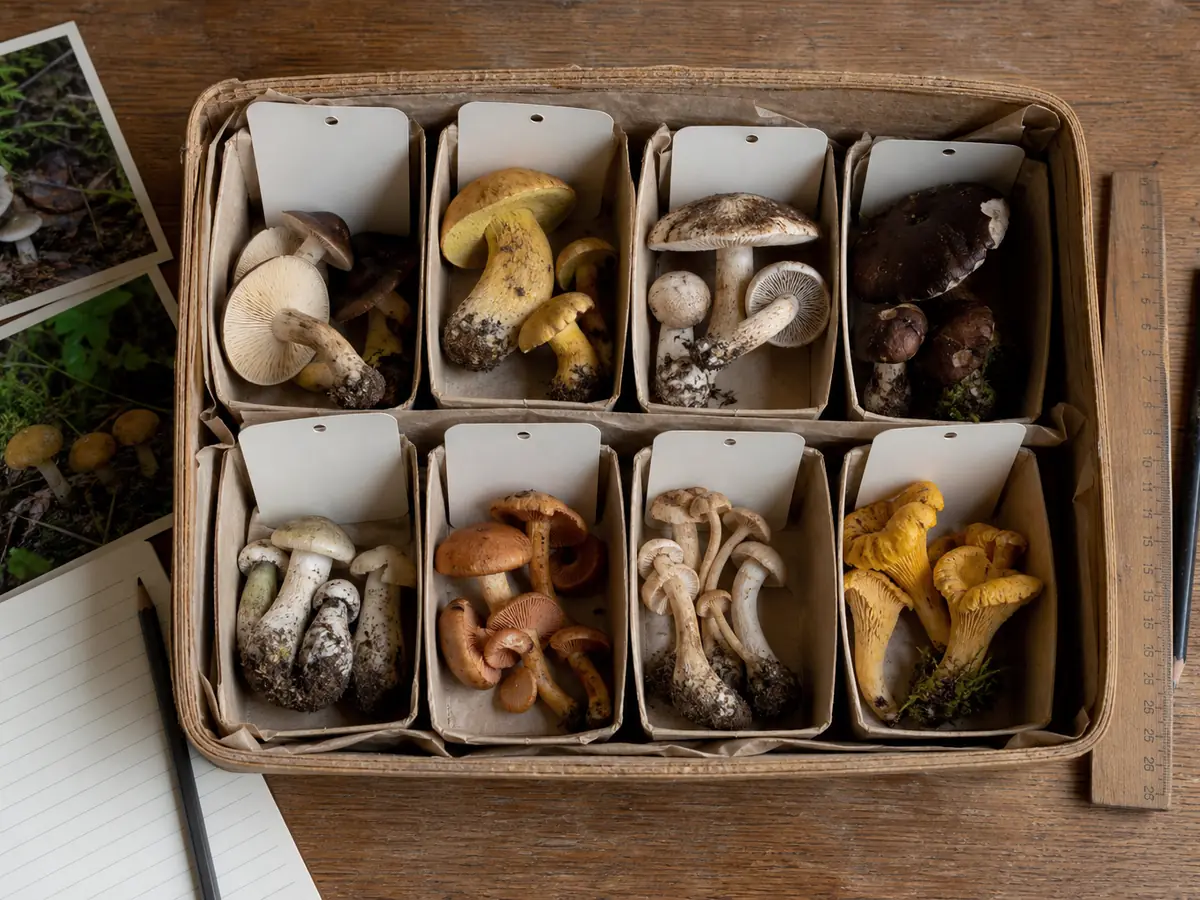
The basket preserves evidence before it carries possible food.
A pharmacy or mycology association can assess only the characters that arrive intact.
- Take an in-place photograph before disturbance.
- Lift the full base where collection is lawful.
- Label the commune, forest, tree, substrate, date, and collector.
- Keep unknown species apart from confirmed material.
- Photograph the complete collection again before any preparation.
Some pharmacists can help and regional mycology associations may offer identification sessions, but availability and expertise vary. Check the service before the trip and never assume that every pharmacy must approve a wild collection.
Prepare for the reviewer before collecting
Confirm the review location, hours, accepted material, and whether an appointment is needed. A Sunday evening basket loses quality quickly if the next service does not open until later in the week.
Collect only enough sound mature material to preserve decisive characters where the property rule permits it.
Keep each species and location separate, and place a field card outside the specimen's paper compartment so wet tissue does not erase the record. The card should name the commune, forest, tree or substrate, date, collector, and photograph numbers.
Reviewer time is most useful when the evidence arrives organized.
Present the whole base and underside instead of cleaning away soil, veil tissue, pores, or attachment features that appear untidy. Ask the reviewer to explain the decisive characters and dangerous alternatives.
Write those points beside the field record, but do not treat one confirmed basket as lifetime approval for similar mushrooms from another place or season. Poisonous species can fruit where edible ones grew in a previous year.
After review, discard every unconfirmed, mixed, damaged, or polluted specimen and keep the edible decision limited to the exact material that was assessed.
An app should not replace foraging safety rules. ANSES specifically warns against eating mushrooms identified only by smartphone recognition because image errors can pair a toxic species with an edible name.
ForagingMushroom foraging laws in the UK: what is actually legalWhere should the final decision be made?
Qualified identification is one gate, and food handling is another. Sound mushrooms from a clean site should remain separate from other food, be chilled promptly at no more than 4 degrees Celsius, and be used within two days under current ANSES advice.
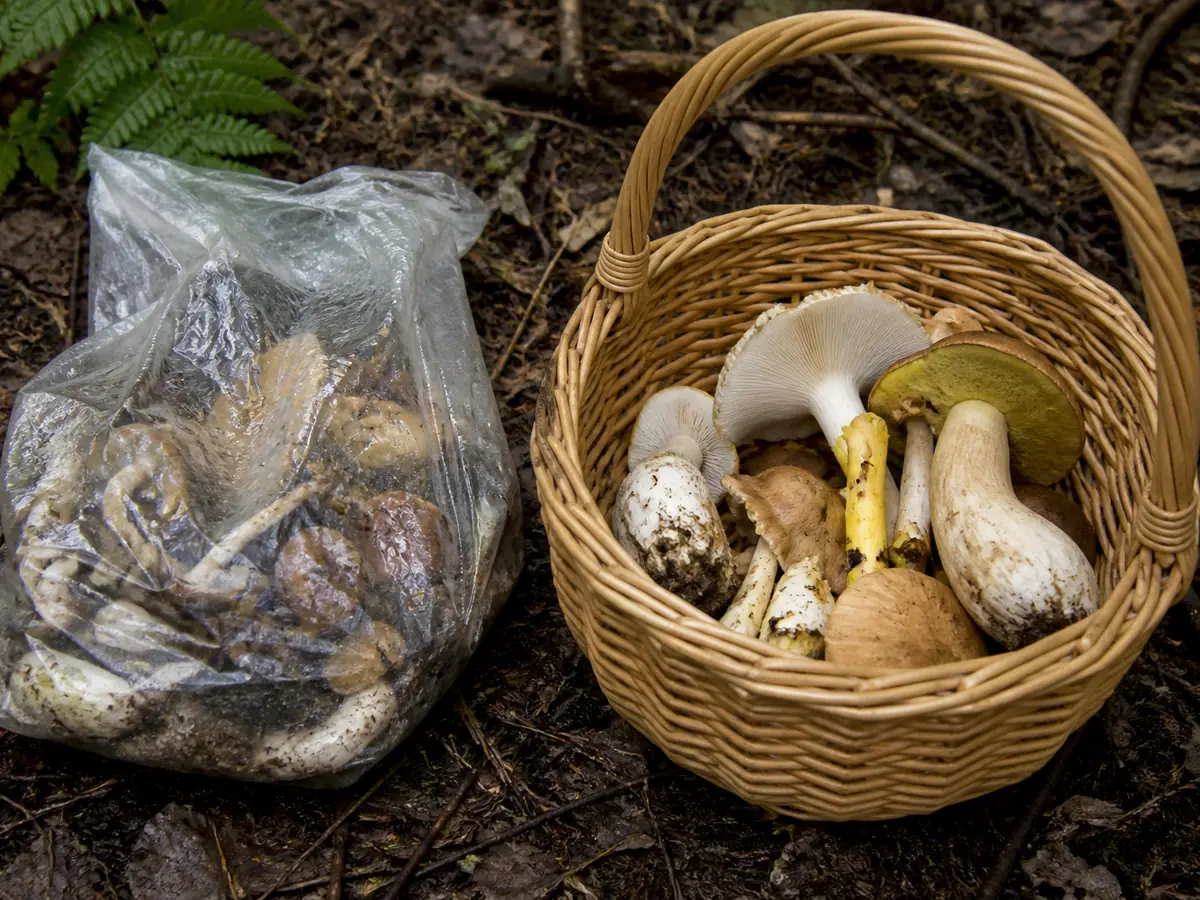
Raw wild mushrooms stay off the plate even after identification.
ANSES advises cooking each species separately and sufficiently, while recognizing that cooking does not neutralize every poisonous mushroom or correct an uncertain identity.
- Wash hands after handling the collection.
- Keep species separate through cleaning, cooking, and storage.
- Discard old, damaged, or doubtful specimens.
- Serve a small amount only after complete confirmation and proper cooking.
- Keep photographs and uncooked material available after the meal.
Children should not be given foraged wild mushrooms under current French safety advice. A food decision also needs extra caution for older adults, pregnancy, health conditions, and anyone taking medicines.
Cold storage slows deterioration but does not correct it. If the mushroom becomes slimy, smells abnormal, loses its attachment evidence, or can no longer be matched to the reviewed group, discard it.
Keep the first serving modest so an individual intolerance does not affect everyone through a large portion.
The honest outcome may be observation or expert review without consumption. A beautiful basket is not evidence that every specimen inside it belongs on a plate.
What should you do if symptoms start?
France records roughly a thousand mushroom poisonings in a typical year, and consequences can include severe digestive illness, kidney injury, liver failure, transplantation, or death. Mushroom poisoning symptoms may appear within hours or be delayed beyond twelve hours.
One symptomatic diner is enough to trigger the call.
Different diners can eat different pieces and symptoms can start at different times.
Give the poison center the common or suspected species name only as a possibility. Describe the forest, photographs, reviewer information, preparation, storage, amount eaten, and whether alcohol or other foods were involved.
Follow the specialist's instructions about transport and hospital assessment.
Do not drive yourself when dizziness, visual disturbance, weakness, confusion, or severe vomiting could impair control. Ask another person or emergency service to manage transport while the evidence travels with the patient.
Keep every diner available for follow-up even when only one person reports symptoms. Different portions can contain different mushrooms or toxin amounts.
The next day's improvement does not cancel medical advice because some dangerous poisonings can include an apparent recovery before organ injury becomes obvious.
Keep the telephone number and address of the nearest poison center with the trip plan before entering forest with poor reception. A prepared contact record saves time when a companion is vomiting, confused, or unable to describe the route.
Warning
Call a French poison center immediately after symptoms following a wild-mushroom meal. For life-threatening distress call 15 or 112, identify the exposure as wild mushrooms, and preserve the evidence for treatment decisions.
Sources & References
- Office national des forêts, Conseils pour la cueillette State-forest quantity and safety guidance.
- Office national des forêts, Les activités en forêt Ownership and moderate collection.
- ANSES, Intoxications liées aux champignons Collection, storage, cooking, and poison-centre advice.