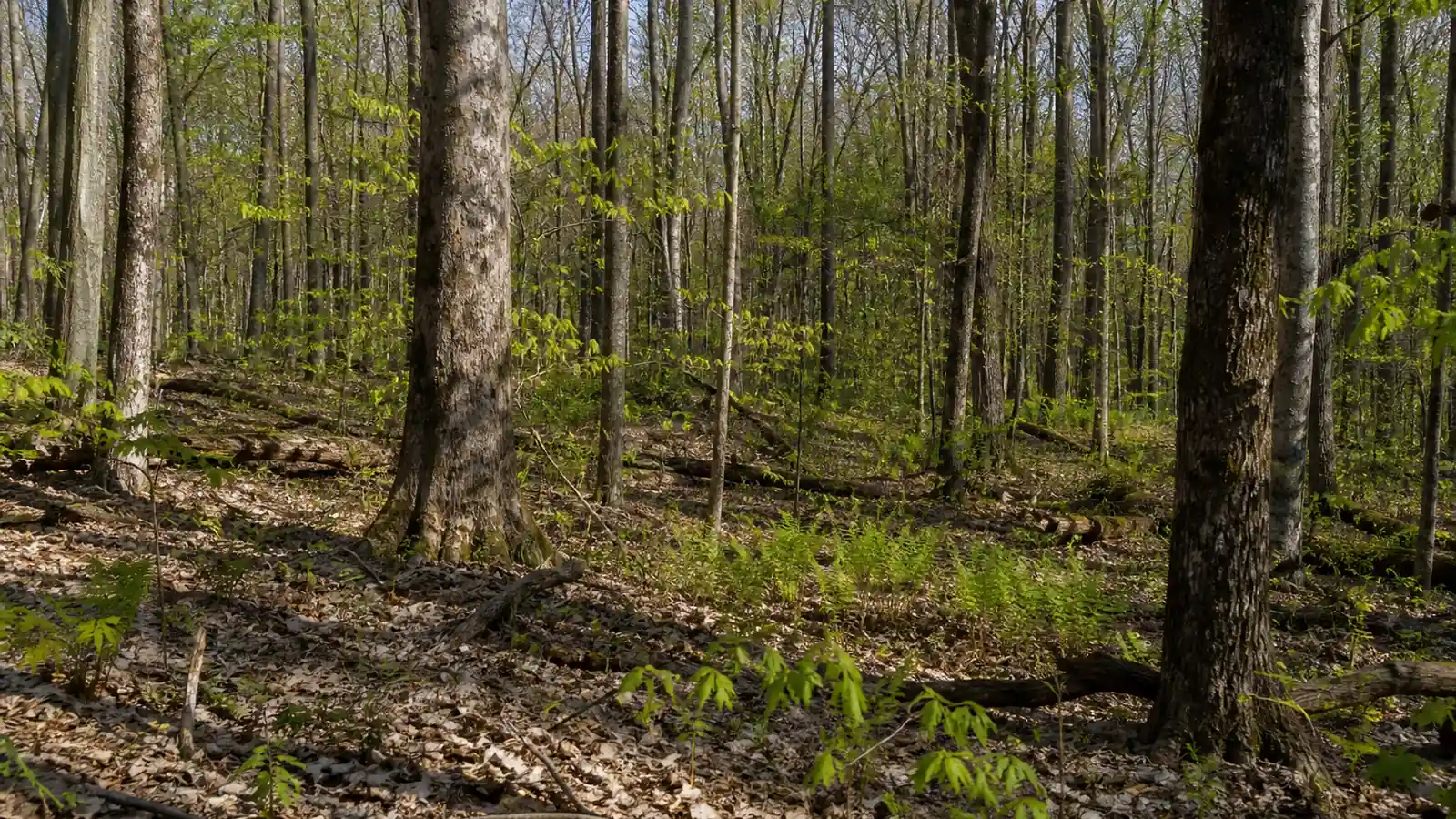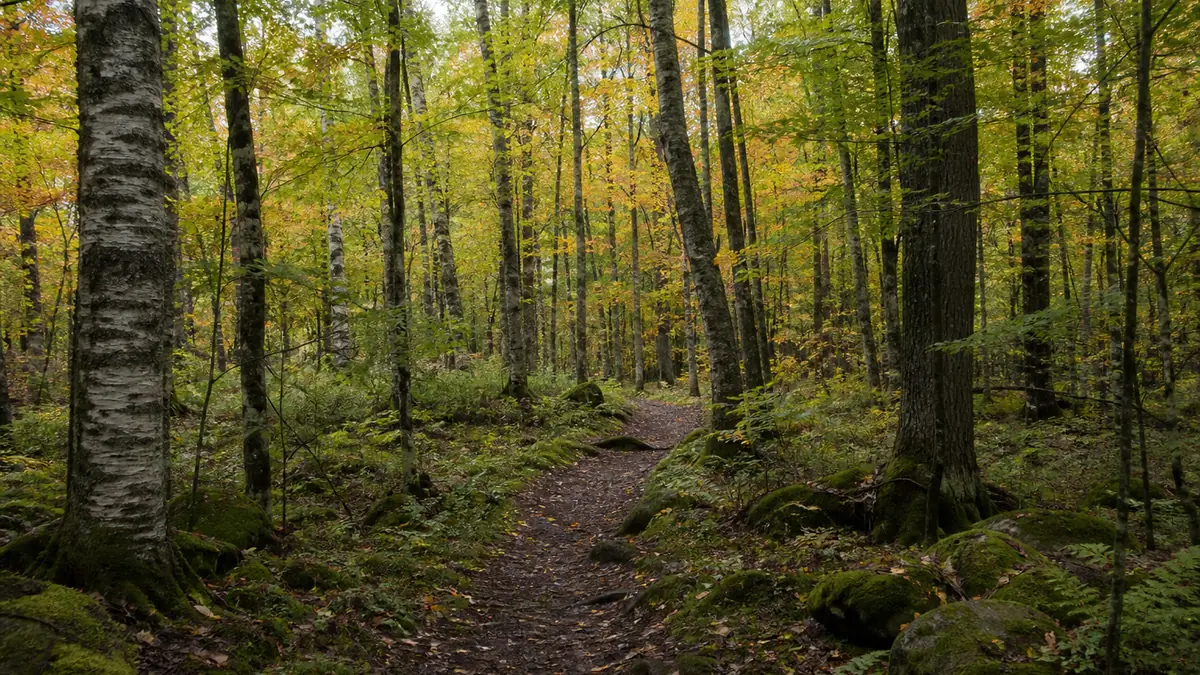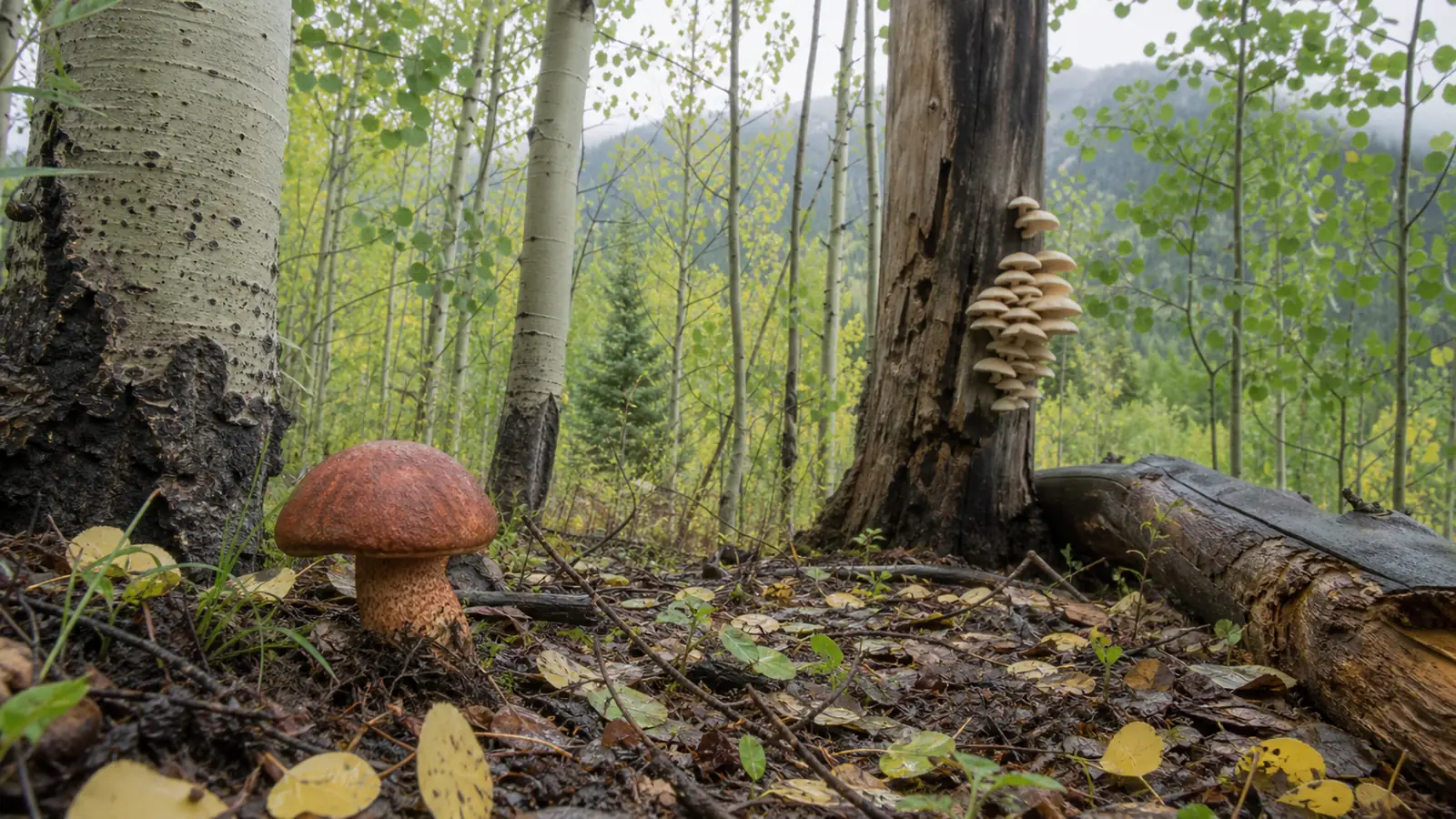
Aspen groves support soil mushrooms that partner with living roots and wood fungi that decompose snags, logs, and buried roots. Aspen bolete and aspen oyster require different attachment evidence.
Confirm the tree, substrate, anatomy, region, elevation, and specimen condition before using aspen as an identification clue.
Aspen groves support two fungal communities that a field observer can separate before attempting a name. Mushrooms scattered in soil may partner with living aspen roots, while shelves and clusters on trunks, snags, and fallen wood are decomposers.
The useful first question is where the fungus obtains its food, because an aspen canopy alone does not prove a host relationship. A bolete beneath the leaves and an oyster on a snag can stand ten feet apart while using the grove in completely different ways.
Quaking aspen often grows as a clone connected by roots. One grove can therefore place living roots beyond the nearest visible trunk, and dead stems remain fungal habitat long after the canopy has fallen.
Key takeaway
The Rocky Mountain field split | Inspect soil mushrooms for a living-root association. Inspect attached fruit bodies for the exact wood, its state, and the point of attachment. Keep both records separate until the evidence supports a species.
Confirm Aspen Before Using It as a Host Clue
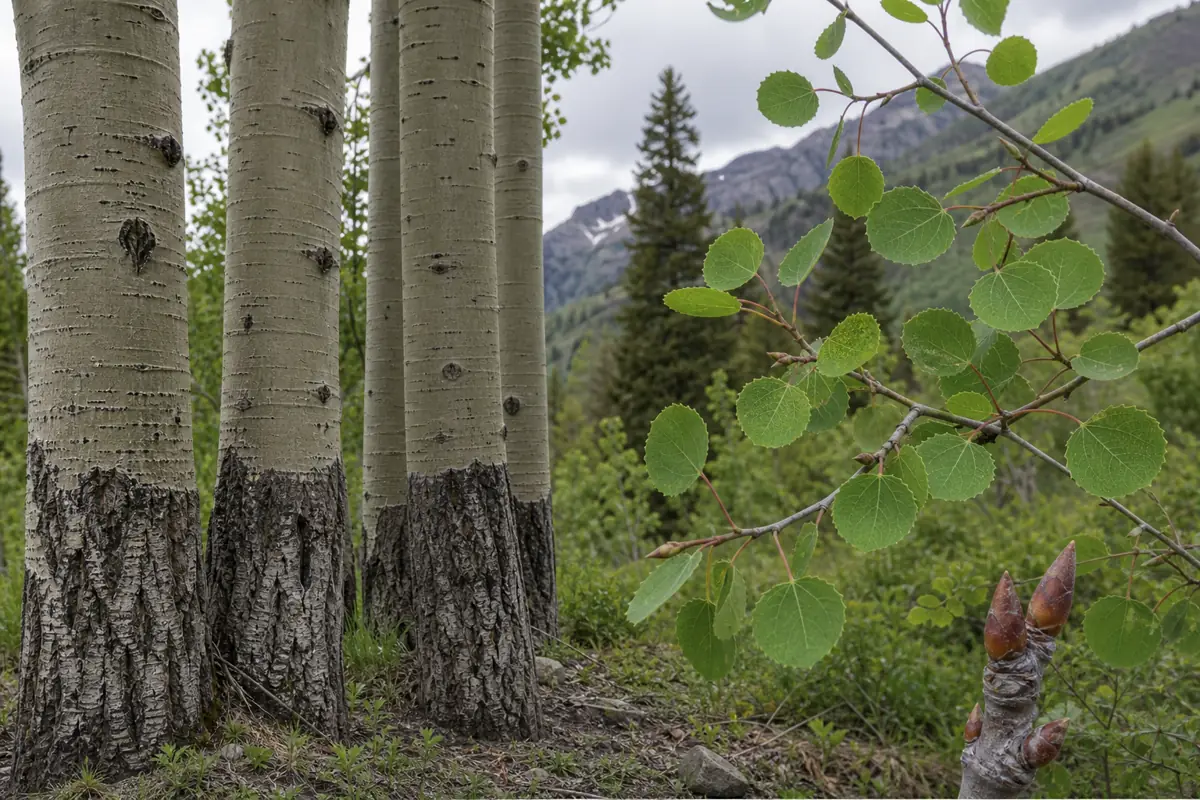
Quaking aspen has pale greenish-white to cream bark on younger trunks, dark rough furrows near the base of older trees, and rounded leaves on flattened stalks that tremble in light wind. Black scars, elk rubs, lichens, and age can obscure the white bark, so one color photograph is weak evidence.
Follow an attached twig to the trunk. The leaves are alternate, finely toothed, and nearly round, while leafless winter twigs carry pointed buds rather than the paired buds of opposite-leaved trees.
| Field clue | What it supports | What still needs checking |
|---|---|---|
| Pale upper bark with dark eyes or scars | A plausible quaking aspen stem | Birch, young poplar, and planted ornamentals can look pale |
| Round leaves on flattened petioles | Strong summer evidence for quaking aspen | Photograph attachment and leaf edge, not one fallen leaf |
| Many similar stems in one patch | A possible clonal grove | Other suckering trees also form patches |
| Cottony seed in spring | A member of the poplar group | It does not separate every Populus species |
The portrait keeps bark, leaf, twig, and grove form tied to the same host.
In mixed mountain forest, spruce, fir, pine, willow, and birch roots may enter the same patch. Record all nearby tree species because a soil mushroom can partner with a less obvious neighbor.
Aspen leaves can travel downslope or collect against conifer logs. Use attached leaves and traceable bark on the actual stem instead of naming the host from loose litter.
ForagingMushroom foraging laws in France: what the five liter rule meansRead the Grove as Living Roots and Dead Wood
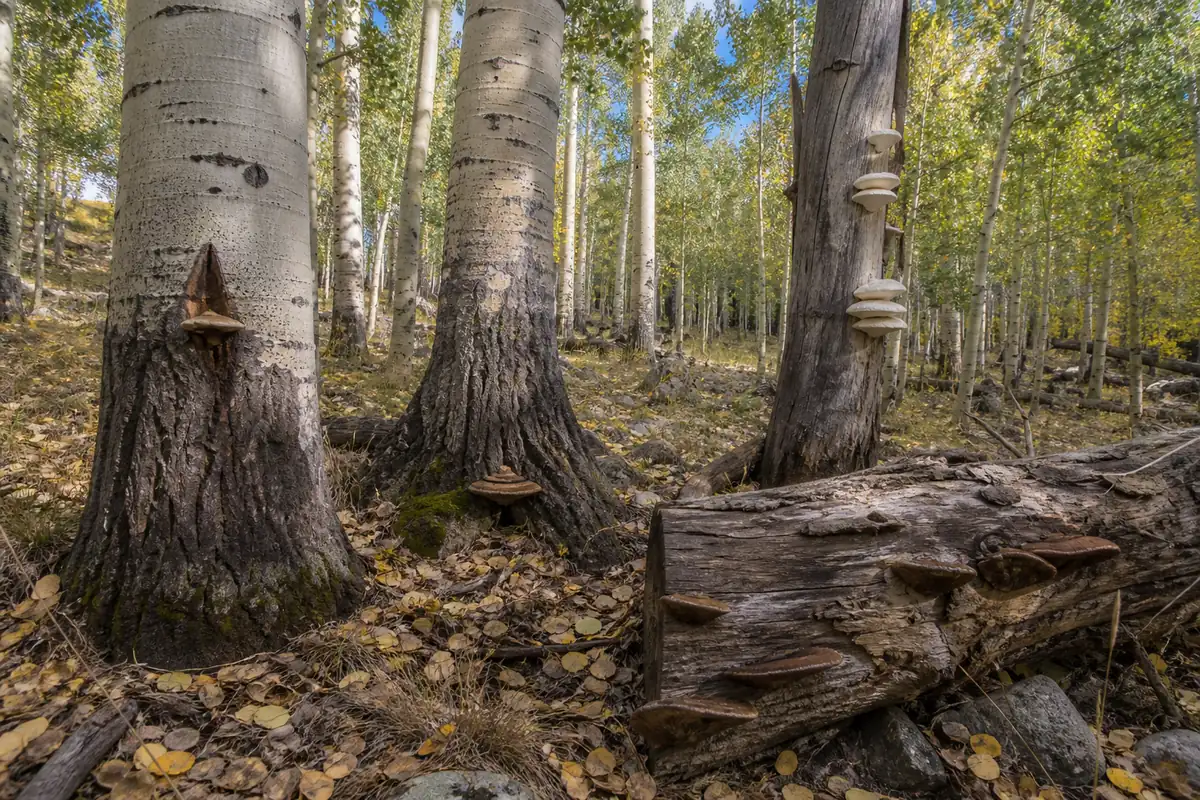
Aspen renews itself through root suckers while individual stems die, snap, and fall. That cycle produces living fine roots, newly dead bark, standing snags, punky logs, and buried wood within one compact area.
The cutaway makes the living-root and deadwood zones visible at the same scale.

Push loose litter aside only far enough to see whether stems meet soil individually or converge on wood. Replace it after the record.
Wide raking damages small fruit bodies and erases the boundary between mineral soil, leaf litter, and buried bark.
Decay stage is field evidence. Firm wood with retained bark, cubically cracked brown wood, fibrous pale wood, and soft waterlogged pulp represent different resources and can carry different fungal communities.
Aspen Bolete Is a Root-Partner Hypothesis
The aspen bolete, Leccinum insigne, is a western and northern root partner reported primarily with aspen. It has pores instead of gills, a reddish-brown dry cap, and a pale stem covered with small scabers that darken brown to black.
This staining sequence may move from purplish gray toward blackish, while the pore surface darkens without a blue phase. Photograph a fresh cut immediately and again after several minutes because those changes develop over time.
The field plate keeps morphology, staining, and aspen context in one hypothesis test.

An orange cap and aspen are not food clearance. Orange-capped Leccinum have been implicated in poisoning reports, taxonomic names vary between field guides, and a host association cannot establish personal tolerance or preparation safety.
Warning
Keep a complete voucher | Photograph the intact specimen, excavate the whole stem base, retain a mature example in paper, and obtain local expert confirmation. Do not eat a collection identified only from cap color, an app result, or the tree overhead.
Aspen Oyster Uses Logs and Snags
Oyster mushrooms in the Pleurotus group grow directly from wood. In western aspen country, Pleurotus populinus is a particularly relevant candidate on quaking aspen logs and snags.
Look for overlapping pale caps, crowded gills running down an off-center or short stem, white flesh, and a white spore deposit. The attachment should lead into aspen wood rather than soil.
| Evidence | Supports an aspen oyster hypothesis | Reason to pause |
|---|---|---|
| Direct attachment to aspen log or snag | Matches the documented substrate of P. populinus | Buried wood can disguise the attachment |
| Whitish fan-shaped caps in shelves | Fits a common oyster form | Several unrelated wood fungi form pale shelves |
| True gills descending toward the base | Separates it from a pore-bearing bracket | Angel wings and other pale gilled fungi require comparison |
| White spore deposit | Supports Pleurotus | Spore color alone is not species-level proof |
The habitat view keeps descending gills and wood attachment together.
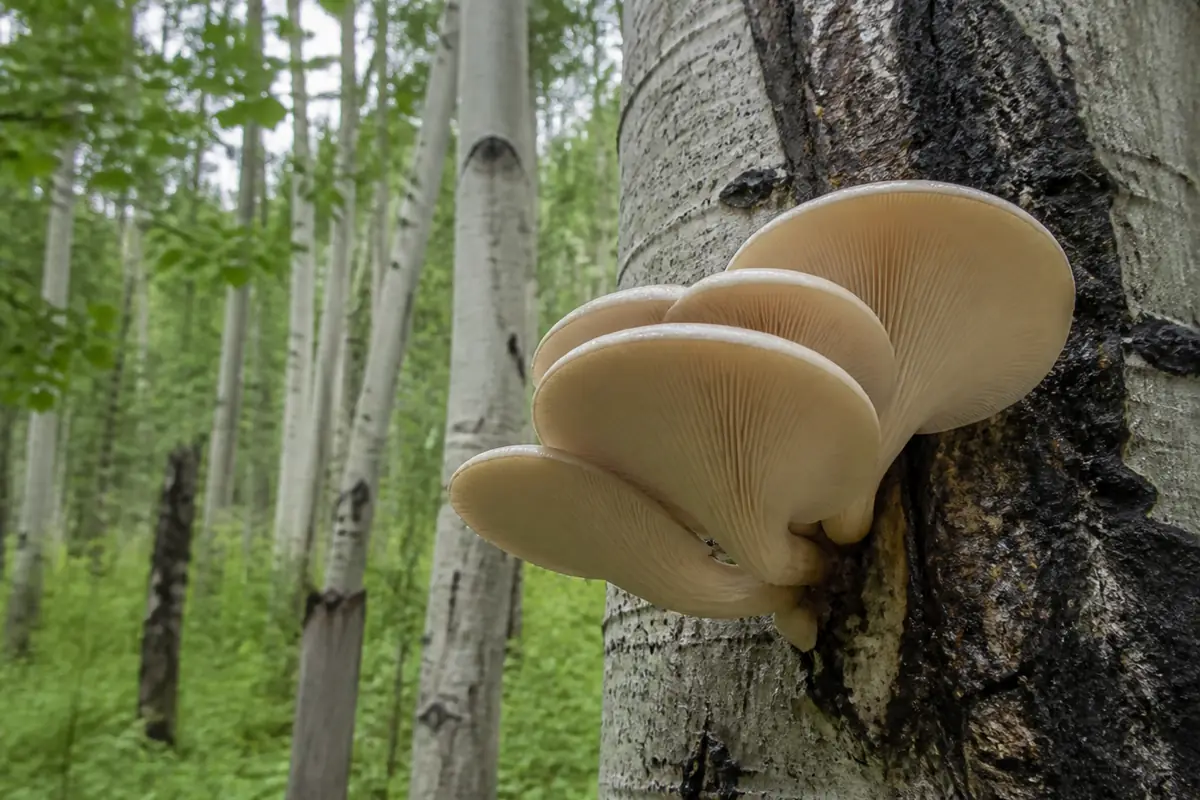
Young, firm oysters and old waterlogged shelves on logs and snags can look like different mushrooms. Record cap texture, gill spacing, odor, insect damage, and the age of the wood before deciding whether several clusters belong to one flush.
Do not wash the cluster before recording it. Water can remove spores, change surface sheen, and hide whether dirt came from splash or from a partly buried attachment.
ForagingMushroom foraging laws in Germany: protected species and small quantitiesOther Aspen-Grove Candidates Fill Different Niches
The two named aspen specialists are useful anchors, but a grove contains far more than two fungi. A candidate grid should therefore preserve ecological roles instead of implying that every cap is an aspen bolete or every shelf an aspen oyster.
These cards guide observation. They do not rank edibility, and a photograph that lacks the underside cannot resolve most of them.
The grove-wide image and close field plates answer different questions. One establishes roots and wood zones; the others reveal pores, gills, scabers, staining, or a shared attachment.
A Mushroom Can Also Be a Tree-Condition Signal
Fruiting on a fallen log is expected decomposition. Fruiting on a living trunk, root flare, or high dead limb can point to established decay where a failure could matter.
| Location | What the fungus may be using | What the observer should decide |
|---|---|---|
| Living trunk wound | Exposed sapwood, dead heartwood, or a column of decay | Whether targets require a qualified tree-risk assessment |
| Root flare or soil over roots | Butt, root, or buried deadwood decay | Whether the root plate or lower stem needs inspection |
| Standing snag | Dead sapwood and heartwood | Whether it can be approached safely or should be observed from a distance |
| Fallen log | Deadwood at a known decay stage | Which anatomy and succession clues can be recorded without dismantling habitat |
The mushroom cannot show how much sound wood remains. Do not kick a snag, climb for an underside photograph, or stand downhill from a leaning stem to improve an image.
Note
Identity and stability are separate reports | A mycologist can interpret fungal characters. A qualified arborist evaluates the tree, its defects, exposure, and nearby targets.
Edibility Needs a Species-Level Record
Aspen association is especially tempting as a shortcut because both the aspen bolete and aspen oyster appear in field guides. That shortcut fails when another root enters the grove, the log is misidentified, or an old specimen no longer shows diagnostic characters.
For bolete-like specimens, record pore color, pore bruising, stem ornament, cap surface, complete base, flesh color, immediate cut response, later staining, odor, spore deposit, and all nearby hosts. A final blackened slice without its timeline loses the most useful part of the reaction.
For oyster-like clusters, show gills from cap edge to attachment, stem position, flesh, spore deposit, the whole cluster, and traceable aspen bark. Compare against the oyster mushroom profile only after those characters agree.
Never use insect feeding, a pleasant odor, white spores, boiling, or a mobile app as food clearance. Follow the site's foraging safety rules and obtain local expert confirmation for any wild-food decision.
Warning
Keep evidence if illness occurs | Contact emergency services or a poison center promptly after symptoms. Save photographs, uncooked specimens, cooked leftovers, and the time of the meal for medical identification.
Timing Changes Across Elevation and Exposure
Aspen groves do not share one calendar. Snowmelt, elevation, slope direction, monsoon rain, soil depth, and overnight temperature can move fruiting by weeks across the same mountain range.
This timing shifts because south-facing edges warm and dry first. Shaded swales hold moisture longer, while compacted trails and exposed ridges can lose surface water before a mushroom expands.
The repeated grove view connects each weather state to the evidence still visible in a specimen.
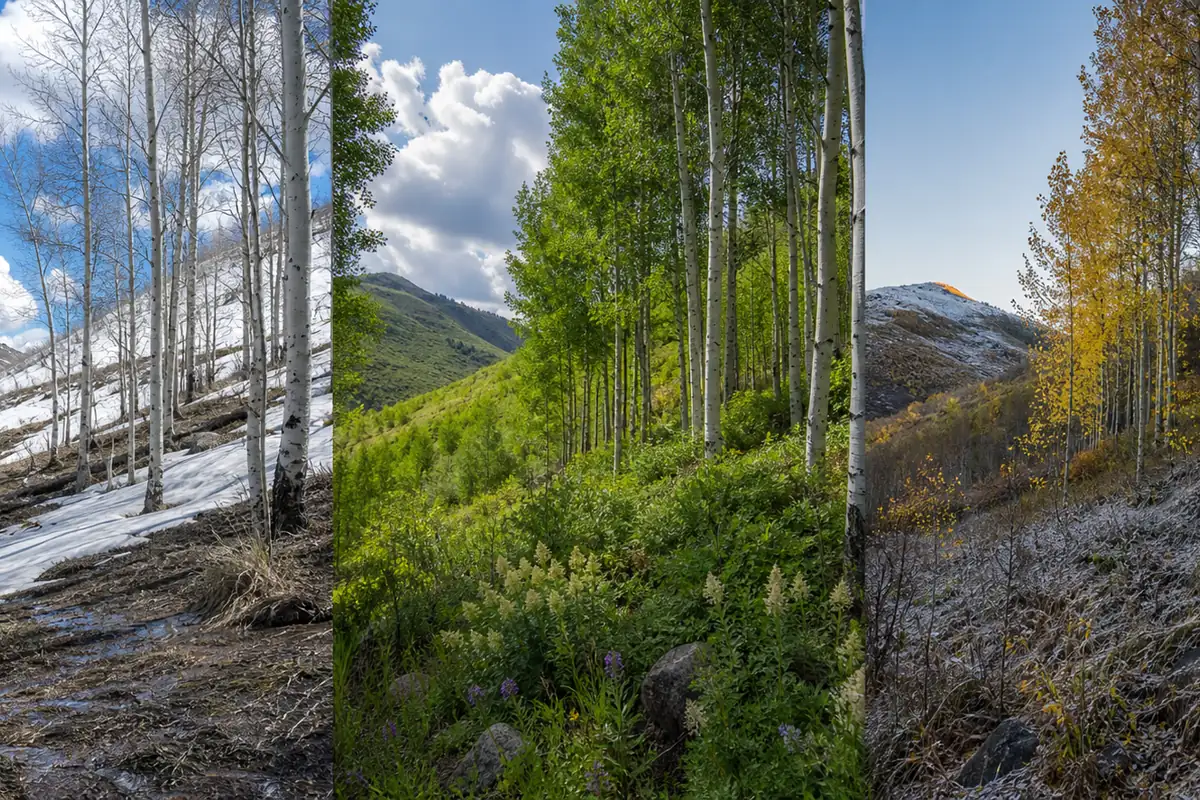
Mark one short route and revisit it. A dated sequence from the same grove reveals more than a single long search because it connects mushrooms to weather, substrate change, and tree condition.
Elevation should be recorded as a measurement, not used as a species filter. The same elevation can contain dry edges, snow-retaining swales, springs, and compacted trail margins with different fruiting conditions.
When a rain pulse follows a long dry period, deadwood may respond before mineral soil. After sustained moisture, root-partner fruiting may appear farther from visible trunks because the living clone extends underground.
A Safe Aspen-Grove Record
Begin with the grove, then move closer. The finished record should allow another person to reconstruct host, substrate, organism, and timing without visiting the site.
- Photograph the canopy, pale bark, attached leaves or buds, and all neighboring tree species.
- Show whether the mushroom stands in mineral soil, leaf litter, moss, a snag, exposed log, stump, or buried wood.
- Capture cap, underside, complete stem base, attachment, bruising, and a ruler in neutral light.
- Note elevation, slope aspect, soil moisture, recent rain, snowmelt position, and first frost.
- Keep soil mushrooms and wood mushrooms in separate paper packets, with each collection tied to its photographs.
For a bolete, record the staining timeline rather than one final color. For a pale gilled shelf, preserve the wood attachment and compare the complete underside before considering the oyster mushroom profile.
Host knowledge narrows the field, but the specimen still has to identify itself through anatomy, development, spores, ecology, and regional expert review.
Sources & References
- U.S. National Park Service Aspen root partners and wood decomposers.
- E-Flora BC Aspen bolete characters, habitat, and caution.
- USDA Forest Service Quaking aspen ecology and identification.