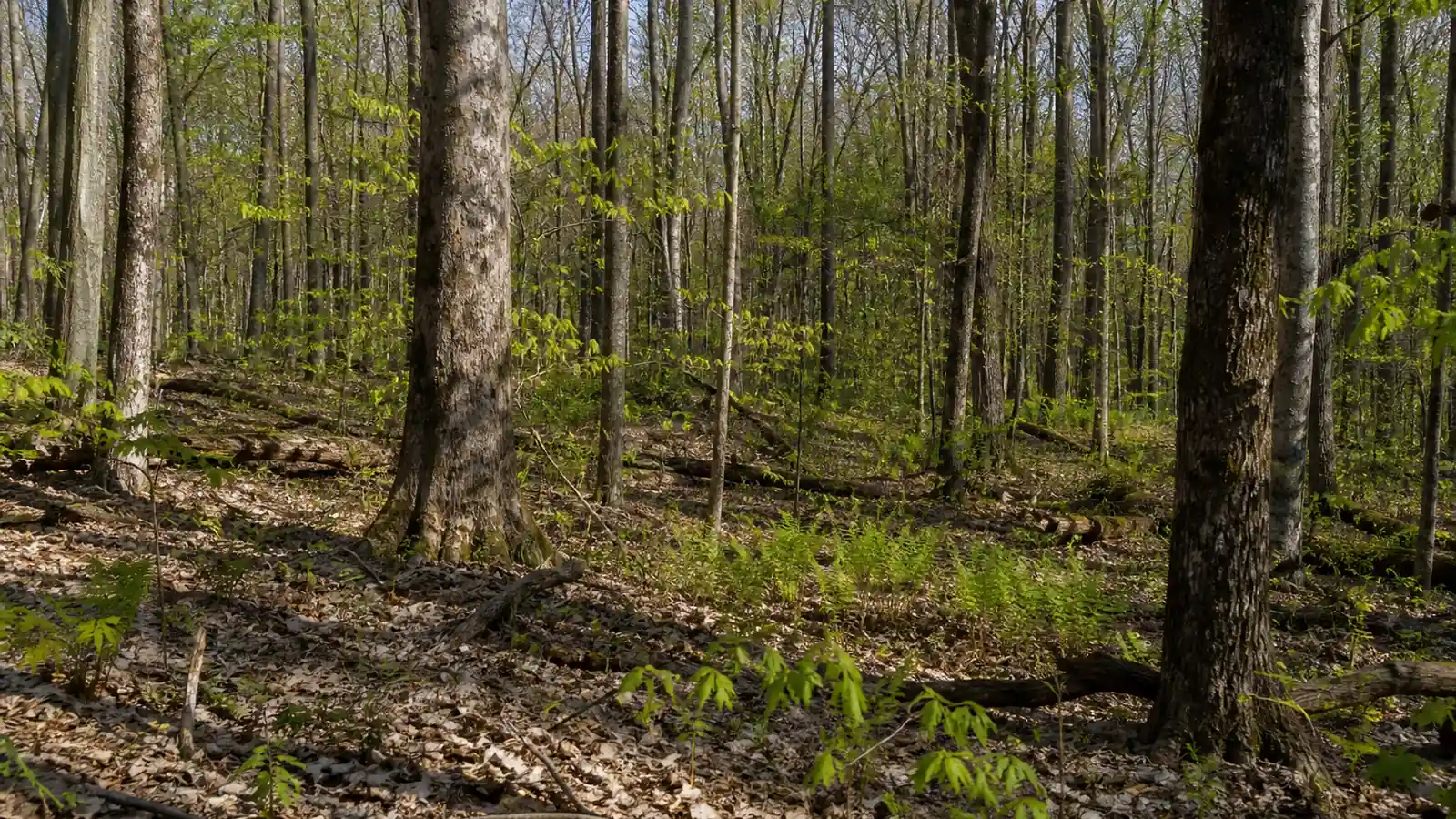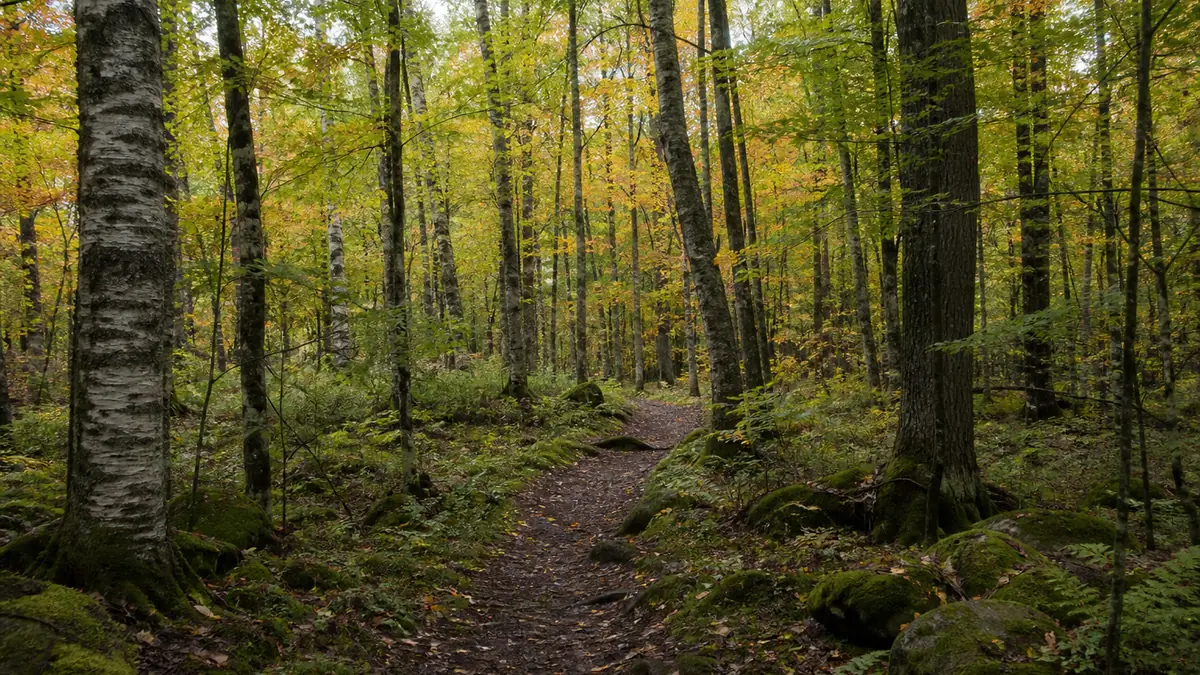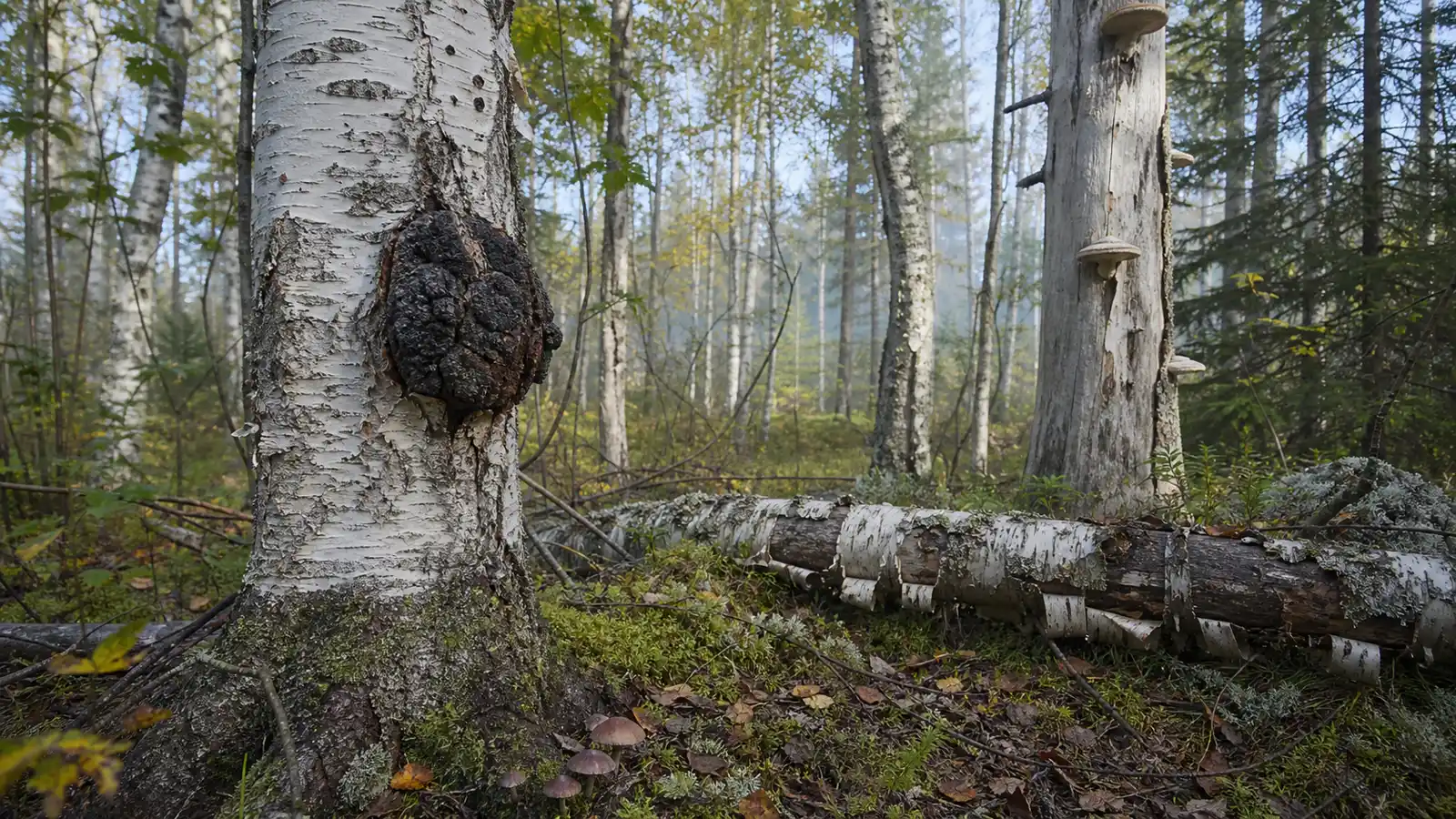
Birch fungi become easier to interpret when you first classify the host as living, declining, standing dead, fallen, or nearby. Chaga typically forms a black sterile conk on living birch, while birch polypore commonly fruits as pale brackets as the wood declines and decomposes.
Mushrooms in soil beneath birch may be root partners rather than wood feeders. Preserve the complete stem base, exact growth point, tree state, region, and underside before considering an identification.
Birch is one of the most useful host clues in mushroom hunting because several fungi strongly favor it.
The clue becomes reliable only after you separate growth on living bark, growth from dying or dead wood, and fruiting in soil with birch roots.
That tree-state sequence matters most for chaga and birch polypore. Both are associated with birch, but they represent different structures and different stages in the life of the host.
Birch Fungi Follow the Tree's Life Stage
Start with the birch's condition. Check twigs, buds, bark, crown density, standing position, and wood firmness before naming the fungus.
White bark alone is not enough because young birches, weathered logs, and other pale-barked trees can be confused at a distance.
Paper birch often peels in broad pale sheets, while yellow birch carries bronze curls and a wintergreen scent in scratched twigs. Regional range and leaf shape help prevent the host from becoming an untested assumption.
A standing trunk without leaves is not automatically dead outside the growing season. Look for flexible twigs, intact buds, recent shoot growth, and living tissue visible only at an existing wound rather than cutting fresh bark.
| Birch condition | Fungal clue | What the condition changes |
|---|---|---|
| Leafing living trunk | Black sterile chaga conk or a parasitic fruiting body may be present | Preserve tree context and do not equate every dark growth with chaga |
| Declining standing tree | Brackets can fruit while decay advances | Record crown dieback, wounds, attachment, and targets |
| Standing dead birch | Birch polypore, tinder conk, and decomposers may use the remaining wood | Wood condition and habitat rules determine collection |
| Fallen birch log | Successive decomposers occupy bark, sapwood, and softened wood | Growth form and decay stage become stronger clues than crown condition |
| Soil beneath birch | Mycorrhizal boletes, brittlegills, Amanitas, and other partners may fruit | Complete stem base and nearby tree inventory remain essential |
The state sequence below shows why the same host name can lead to different fungal evidence.
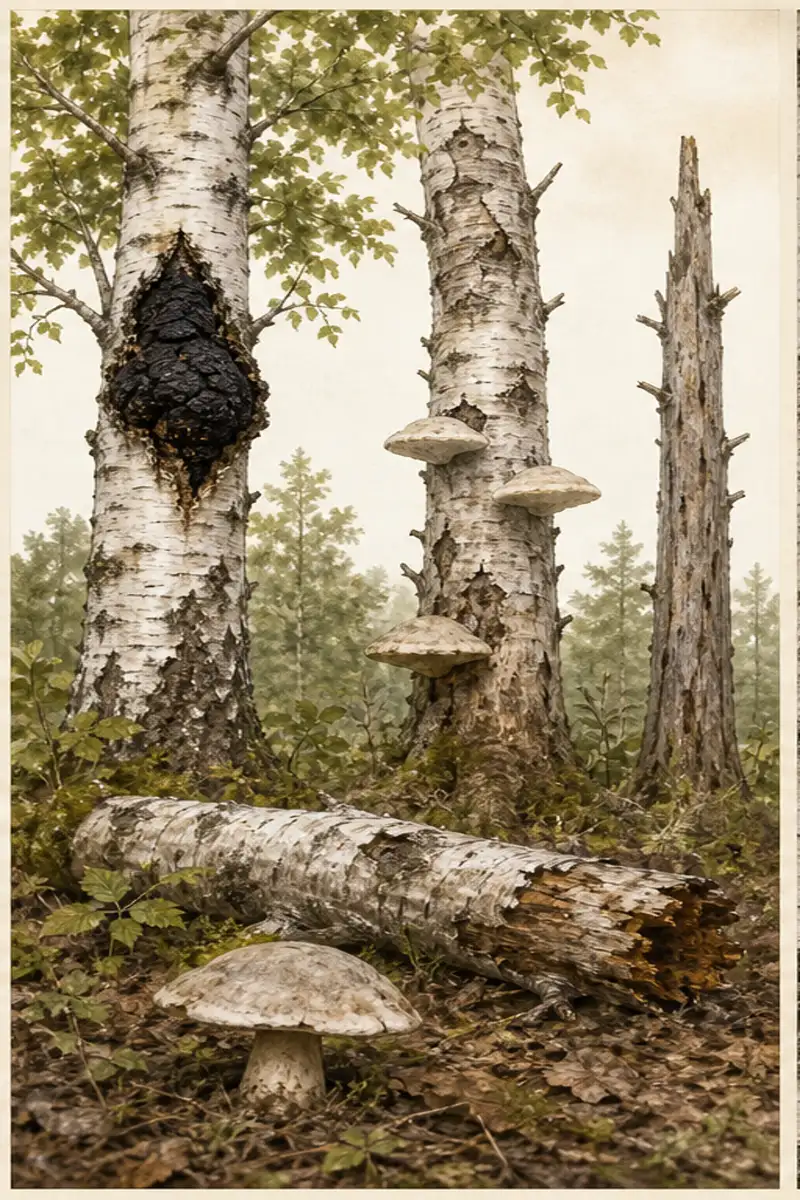
Fallen wood moves through its own sequence. Tight bark and firm wood favor different decomposers from a soft, barkless log that has already supported several years of fungal and insect activity.
ForagingMushroom foraging laws in Germany: protected species and small quantitiesChaga and Birch Polypore Are Different Structures
Chaga appears as an irregular black, cracked sterile conk that usually grows from living birch in cold northern forests. The black exterior resembles charred wood, while a fresh interior is hard and orange-brown.
The conk is not the familiar umbrella or bracket-shaped reproductive mushroom. It is a mass of fungal and tree tissue associated with an infection that persists inside the host.
Position can range from near the base to well above reach. Height does not confirm chaga, but a growth arising through intact birch bark is better evidence than a loose black mass resting on deadwood.
Many burls, cankers, fire scars, and dark crust fungi can imitate one part of that description. Confirm living birch, an eruption through bark, black crust, orange-brown interior, region, and expert identification before treating the growth as chaga.
A burl usually follows the grain and carries bark across much of its surface. Chaga commonly breaks the bark boundary with a deeply fissured exterior, yet damaged burls can still create convincing exceptions.
Check chaga by confirming living birch, a black cracked sterile conk breaking through bark, dense orange-brown interior, and a plausible cold-region range.
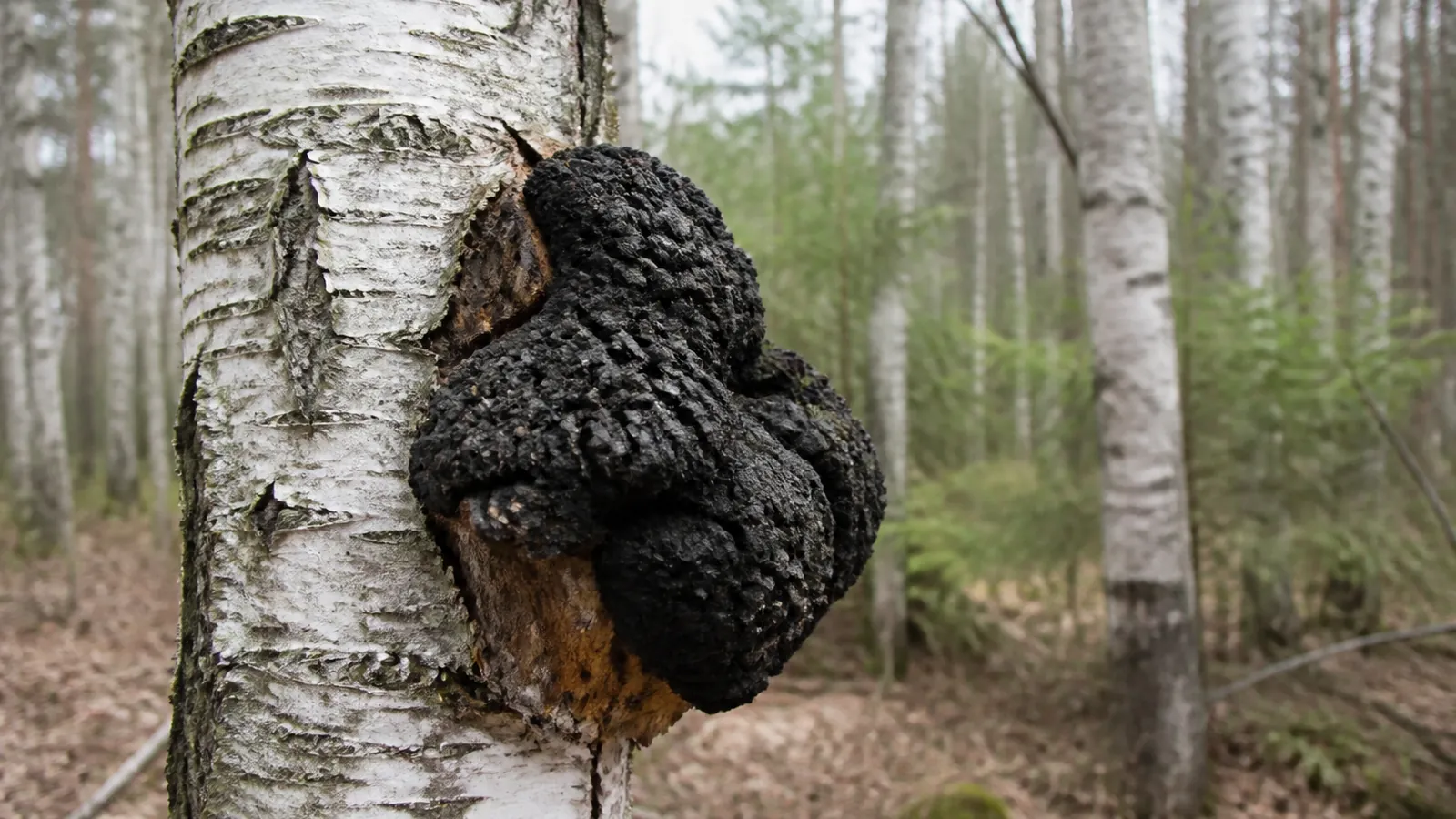 Sterile conk on living birchChagaConfirm the bark eruption, cracked black exterior, orange-brown interior, and regional range
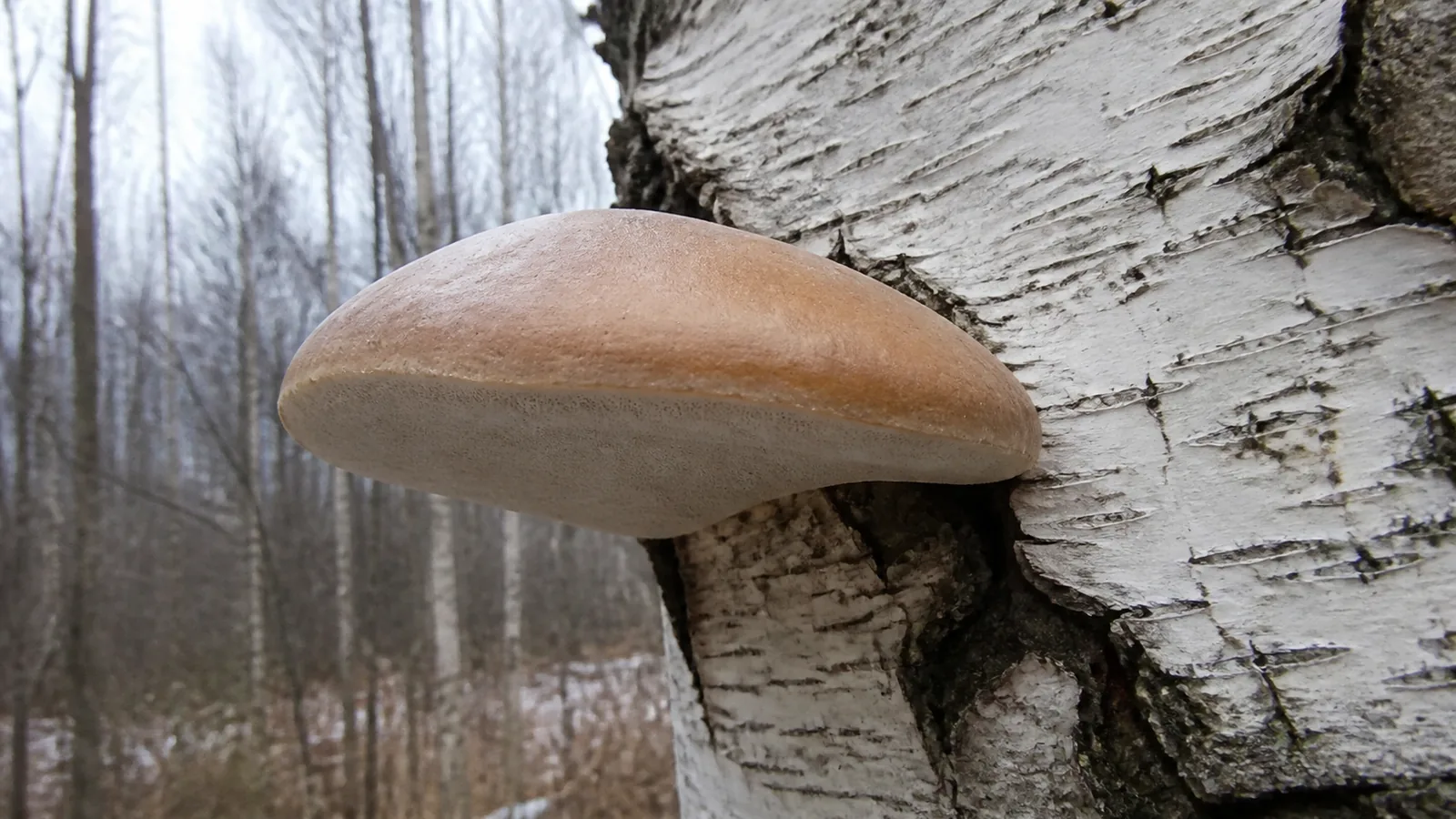 Annual bracket on dead or dying birchBirch PolyporeCheck the pale pore surface, rounded margin, lateral attachment, and host state
Harvesting removes fungal tissue but does not cure the infected tree. Take only where land rules permit, avoid small or heavily harvested conks, and leave enough of the formation and habitat for ecological function.
Do not repeat online claims about dosage, cancer treatment, or immunity from a field identification page. Wild material varies, can accumulate contaminants, and may interact with health conditions or medicines.
Birch Polypore Usually Marks a Later Stage
Birch polypore forms pale hoof or kidney-shaped brackets found almost exclusively on birch. Kew describes it as a pioneer of deadwood breakdown, opening the wood to insects and other fungi.
The cap edge is thick and rounded when young, and the pale pore surface sits beneath one annual fruiting body. Unlike a perennial tinder conk, it does not build a hard stack of yearly tubes.
Attachment often narrows to a short lateral point, leaving the bracket easy to twist in photographs but still firmly connected to wood. Several fruiting bodies can occupy one standing or fallen trunk at different heights.
Young brackets may be smooth, pale, and rubbery, while older ones become tan, tough, and corky. The underside has tiny pores rather than gills, and a narrow attachment distinguishes its profile from flat, layered shelf fungi.
Cutting a specimen exposes white flesh but destroys habitat and is rarely necessary for a confident field record. Use an already damaged edge when internal texture matters and collection is lawful.
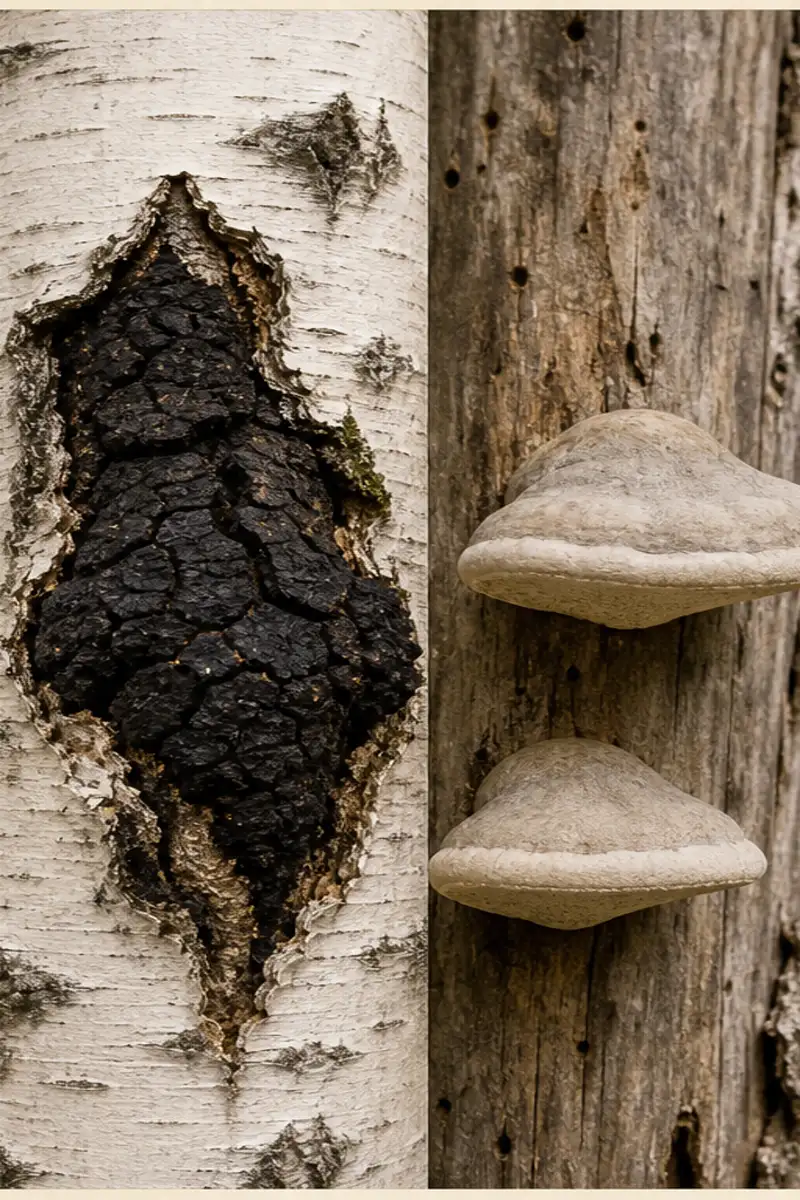
Historical uses do not establish food value or medical benefit. Birch polypore is extremely bitter and tough, and health claims for wild-harvested fungi require a separate evidence review.
Its value in the forest is easier to support. Decayed birch becomes accessible to beetles, other fungi, and cavity-forming processes that continue long after the bracket drops.
ForagingMushroom foraging laws in the UK: what is actually legalWho Else Uses Birch Wood and Roots
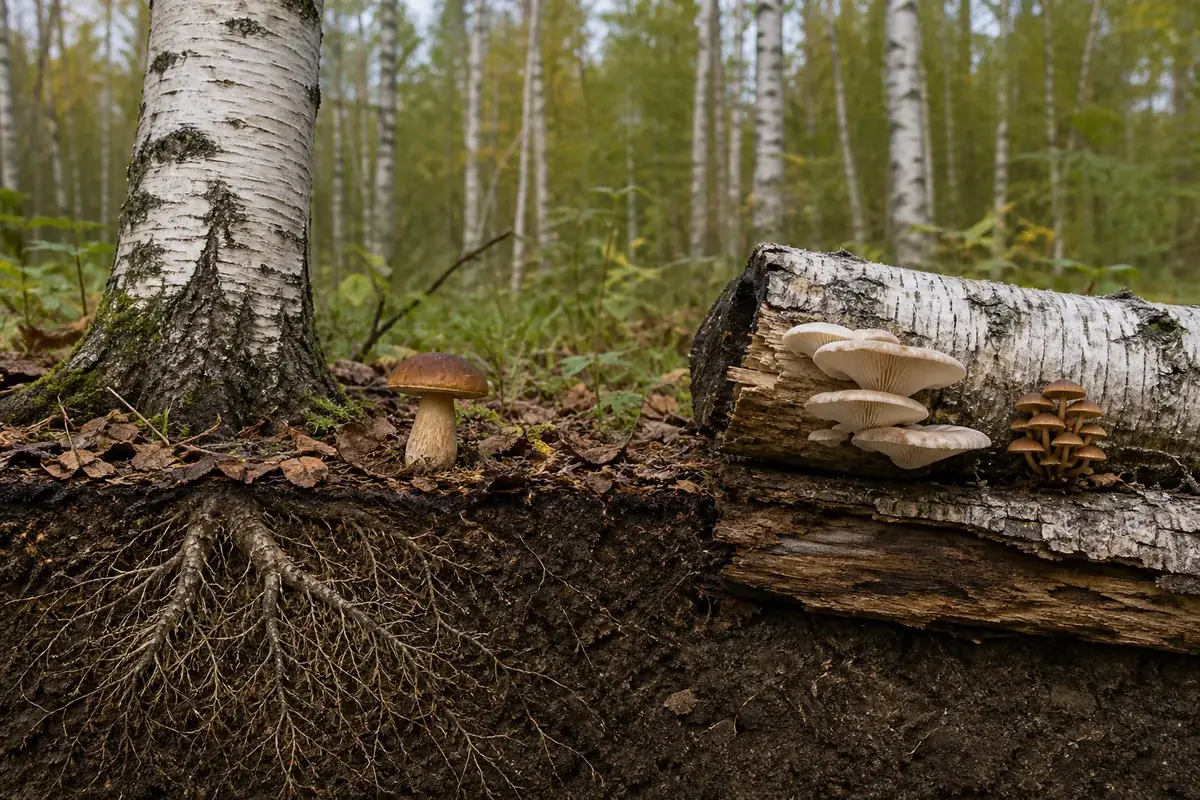
Birch woods also produce fungi that are less host-specific. Oyster mushrooms can fruit in shelves on dead or dying hardwood, while tinder conks persist as hard hoof-shaped brackets on standing or fallen trunks.
Oyster gills run down a short lateral stem or directly toward the attachment. Pale fan shape alone is weak evidence because angel wings and other wood-growing fungi can look similar in photographs.
Tinder conk develops a hard gray hoof with concentric growth zones and a brown pore surface. Its perennial body and woody context differ from the smoother annual birch polypore even when both occupy the same trunk.
The same grove may carry a wood decomposer and a root partner within one meter. Write “on birch wood†or “in soil beneath birch†in field notes rather than compressing both observations into “on birch.â€
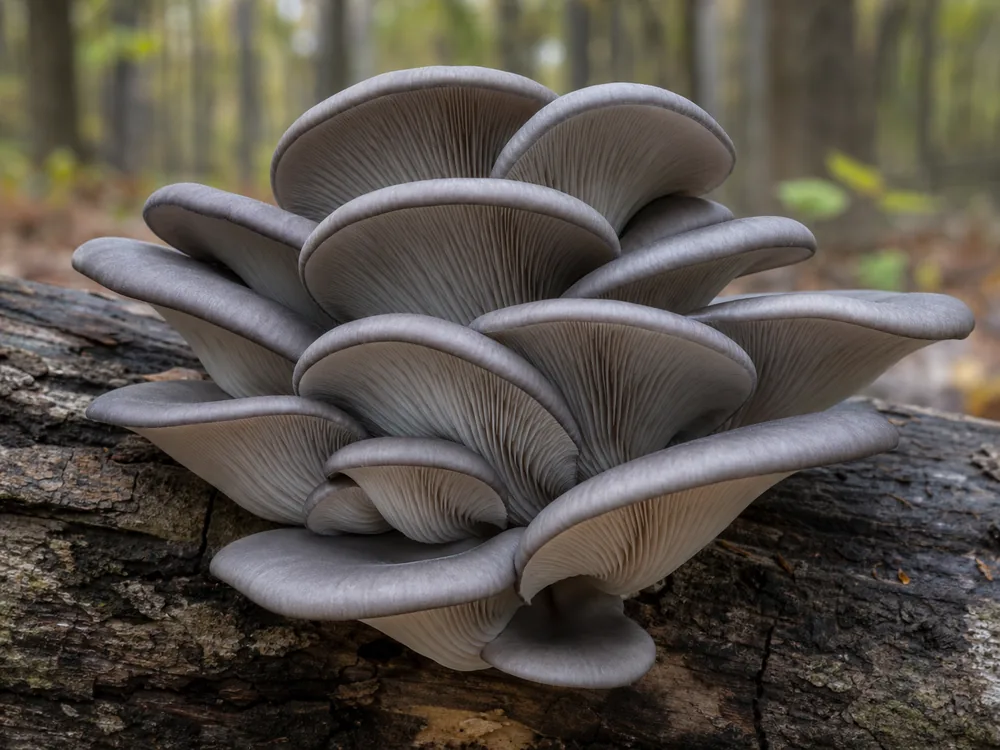 Gilled shelves on dead birch woodOyster MushroomConfirm lateral attachment, decurrent gills, white spore print, and local lookalikes
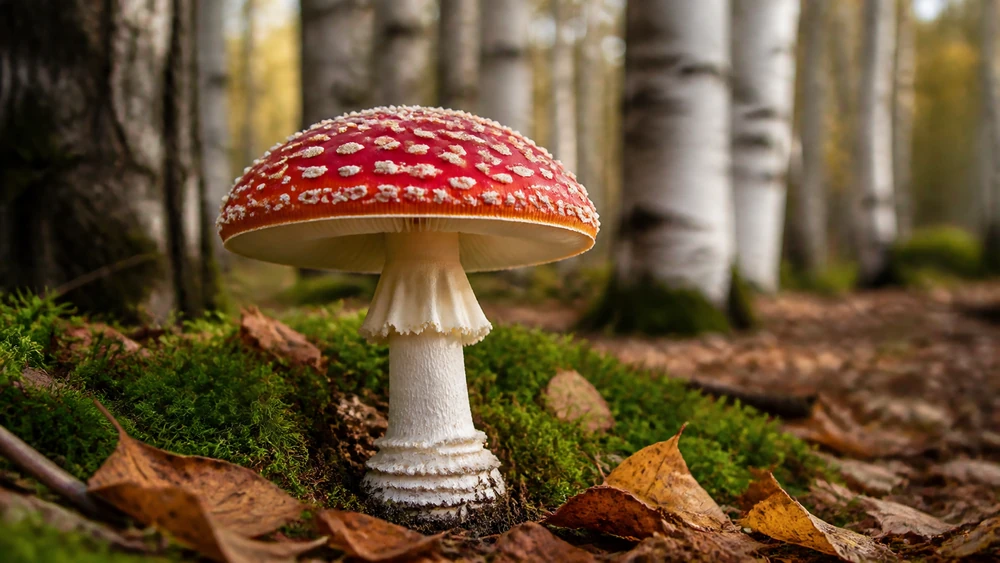 Soil beneath living birchFly AgaricPreserve the bulb and veil evidence because red cap color cannot close identification
Birch boletes fruit from soil and often carry dark scab-like dots on the stem. Current guidance varies across Leccinum species and regions, so older edible labels should not bypass a complete identification and thorough cooking advice.
Fly agaric is easier to notice, but rain can wash white veil patches from a red or orange cap. Preserve the bulbous base and ring because color alone is the least durable character.
Make a Record Before You Harvest
Warning
A birch host does not clear a mushroom for food | Small brown gilled fungi can grow on dead birch and include deadly species, so preserve the complete specimen and use a regional identification before considering harvest.
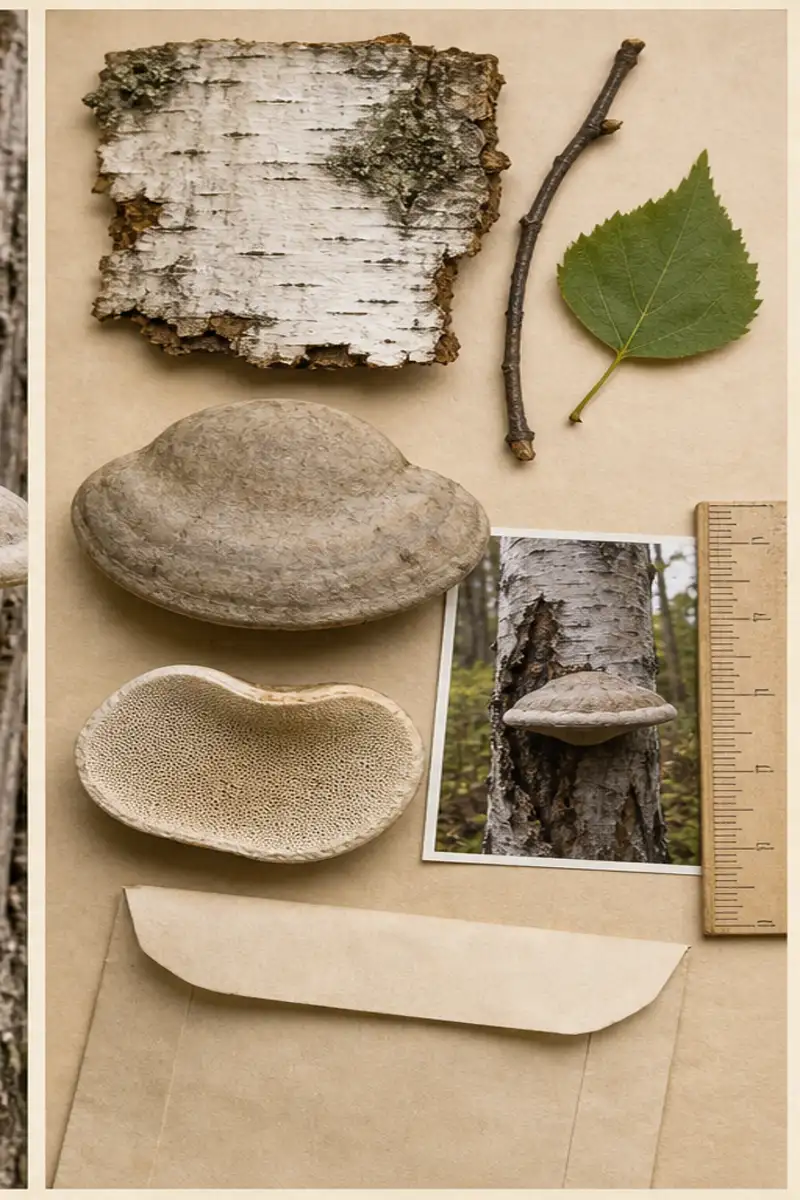
Photograph the full tree or log before taking close-ups. Include bark, crown or deadwood state, the precise attachment point, cap or conk surface, underside, complete stem base when present, and a scale.
For a black conk, add a side view that shows how the growth breaks through bark. For a pale bracket, add a sharp pore close-up and a profile that shows the attachment width.
Coordinates can be sensitive when rare species or heavily harvested chaga are involved. Keep exact locations private when public sharing could increase pressure on one tree.
The field sheet below keeps the host-state evidence beside the detached specimen.
Collection Has an Evidence Cost
Check land ownership and collecting rules before cutting any fungus. Protected areas may prohibit removal, and dead birch is habitat for insects, cavity users, mosses, and later fungal communities.
Standing dead birch can also shed branches or fail at the base. Observe from outside its fall zone during wind, after storms, or when basal decay is extensive.
Take a small representative collection only when identification needs it and permission allows. Avoid stripping every bracket from one log or repeatedly cutting a living birch conk.
Photographs often answer the host-state question without collection. Leave mature brackets to release spores and leave scarce tooth fungi or unfamiliar species until local status is known.
Tree identity and tree state come before the mushroom name. A black conk on living birch, a pale bracket on dead birch, and a bolete in soil beneath birch present three different field problems.
Sources & References
- Royal Botanic Gardens, Kew Birch polypore host specificity, form, deadwood role, and food value.
- USDA Forest Service Chaga development on live birch and wood-decay fungi.
- Northumberland Wildlife Trust Birch polypore identification and birch association.
- British Mycological Society Wood decomposers, mycorrhizal fungi, host trees, and woodland observation.