
Morel Substitutes That Keep the Spring Flavor Close
Fresh true morels are seasonal, expensive, and unsafe unless they are correctly identified and cooked. The best morel substitute depends on what the dish needs most: the hollow bite, the nutty aroma, or the dark broth-like depth.
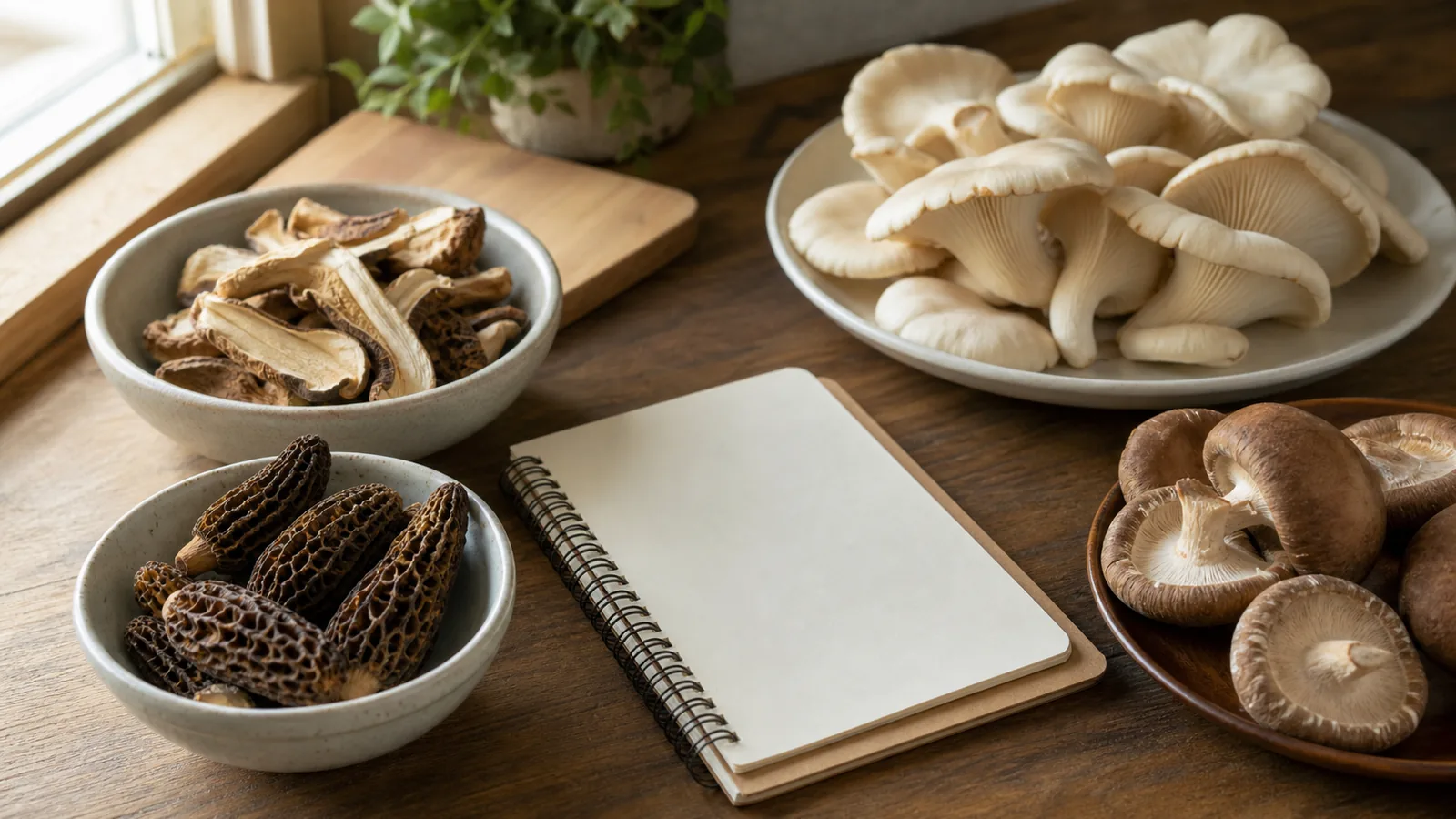
Use when the dish is really about morel flavor. Rehydrate, strain the soaking liquid through a coffee filter, and cook the mushrooms thoroughly before serving.
Use for sauces, risotto, pasta, and pan sauces that need dark earthy depth. Start with less than the recipe weight because porcini can take over a dish.
Use when you need a reliable grocery-store swap with savory depth and a firm cooked bite. Cook shiitake well, especially if using fresh caps.
Use when texture matters more than perfume. Oyster mushrooms sear quickly, stay tender, and work well in eggs, cream sauces, and risotto.
| Substitute | Best use | How to use it | What changes |
|---|---|---|---|
| Dried morels | Cream sauces, eggs, spring pasta | Soak 20 to 30 minutes, strain the liquid, then cook the mushrooms | Closest flavor, softer texture |
| Dried porcini | Risotto, stock, brown sauces | Use a small handful and filtered soaking liquid | Deeper and darker than morels |
| Shiitake | Weeknight pasta, rice, stir-fries | Brown fresh caps or rehydrate dried caps | More savory, less nutty |
| Oyster mushroom | Eggs, toast, creamy skillets | Tear into strips and sear hot | Milder flavor, tender bite |
Start with what the morel was doing in the dish
A morel combines a hollow bite, a nutty woodland aroma, and enough earthiness to complete a simple spring dish, but no substitute copies all three traits at once.
Choose the swap by job in the dish. Porcini gives a sauce more depth, while dried morels preserve the recognizable shape beside eggs or asparagus.
Morels also carry a safety rule because true morels must be cut open, cleaned, separated from false morels, and cooked through. A cultivated substitute is the sounder choice when the only fresh morels available are wild specimens you cannot verify.
When dried morels are worth using
Dried morels are the best substitute when the recipe is built around morel flavor, especially in cream sauce, eggs, pasta, risotto, and pan sauces for chicken.
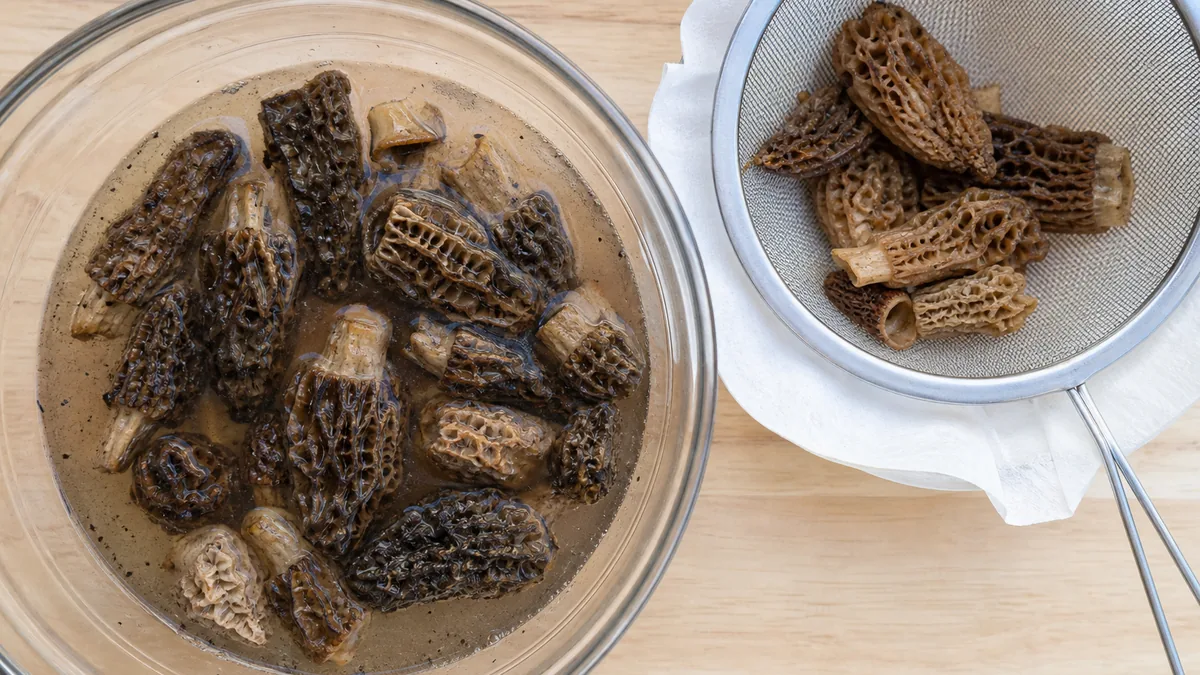
Cover dried morels with warm water for 20 to 30 minutes, then lift them out instead of pouring the bowl through a sieve. Filter the remaining liquid through a coffee filter because the pits can hold enough grit to ruin an otherwise smooth sauce.
Dried morels become softer and darker after soaking, so they are better in sauces than in a dish that needs a bouncy fresh bite. They are not a ready-to-eat garnish.
The same raw-morel warning applies after drying. Raw morel safety is why thorough cooking is part of the decision.
Porcini and shiitake cover different parts of the flavor
Dried porcini is the best non-morel swap for a dark earthy base, but its stronger flavor calls for a smaller starting amount.
Shiitake is the practical grocery-store substitute. Fresh shiitake has a firm cap and a savory cooked flavor that stands up to butter, garlic, rice, soy sauce, and stock.
| Dish | Better swap | Reason |
|---|---|---|
| Cream sauce for pasta | Dried morels | Keeps the spring mushroom character |
| Risotto | Dried porcini or shiitake | Adds depth to stock and rice |
| Omelet or eggs | Dried morels or oyster | More delicate texture beside eggs |
| Stir-fry | Shiitake | Holds shape and browns well |
| Soup stock | Dried porcini | Gives the strongest broth color and aroma |
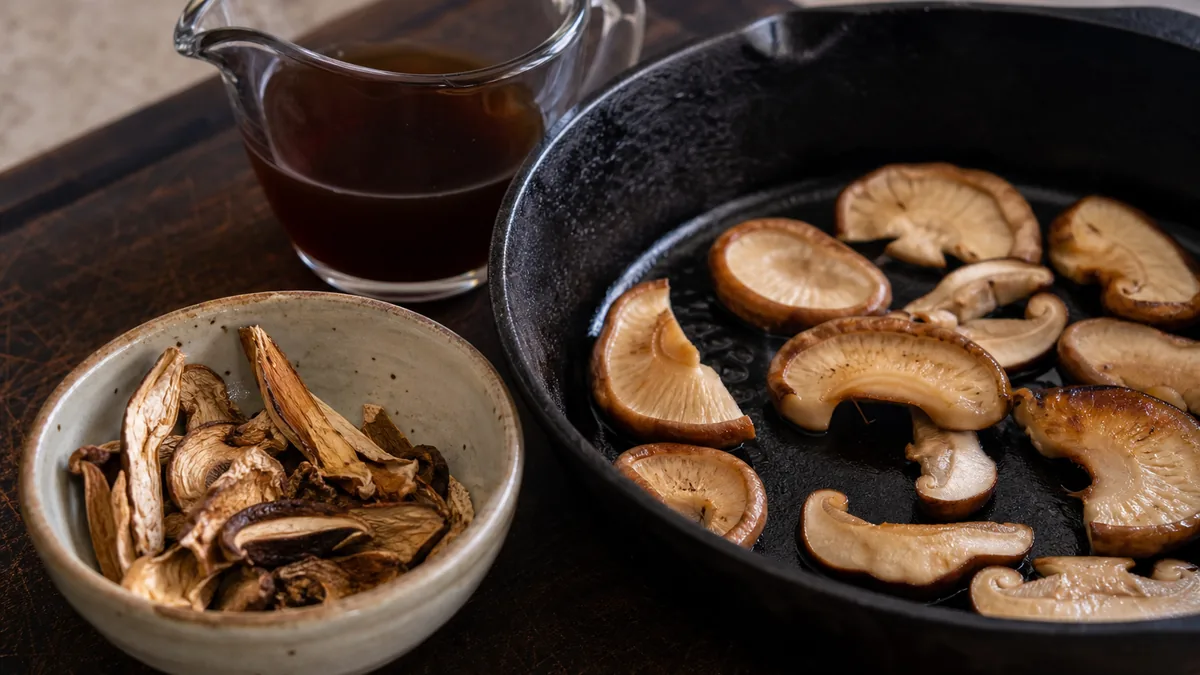
Porcini can push a dish toward dark forest flavor. That is useful in beef, barley, rice, and red wine sauces, but it can flatten gentle spring pairings like asparagus, peas, and eggs.
Shiitake is easier to balance when cream, butter, or stock already carries the sauce. Cooked shiitake texture stays firmer than a rehydrated morel, so shiitake works particularly well when the pieces must remain distinct in rice or pasta.
Use oyster mushrooms when texture matters more than aroma
Oyster mushrooms are not a flavor twin for morels, but they supply tender pieces that brown well without overpowering eggs, cream, or young vegetables.
Tear oyster mushrooms into strips and cook them hot enough to drive off water. That gives crisp edges and a soft center, which works better than chopped button mushrooms in a morel-style saute.
Use oyster mushrooms for eggs, cream sauces, toast, and risotto
Brown them before adding cream, wine, or stock
Pair them with a small amount of dried mushroom liquid when you need more depth
Expect the nutty aroma of fresh morels
Add them raw to a wet sauce and hope they brown later
Use old, soggy clusters that smell sour or fishy
Store-bought oyster mushrooms also remove the wild identification problem. Oyster mushroom field marks matter for identification, but cultivated oysters are the safer kitchen substitute.
Tip
For the closest everyday substitute, combine textures. Use oyster mushrooms for bite and a spoonful of filtered porcini or morel soaking liquid for depth.
When common brown mushrooms are enough
Cremini and white button mushrooms are useful when the recipe needs browned mushroom flavor rather than a convincing morel substitute.
Slice cremini or button mushrooms thickly and cook them in a wide pan until their released water evaporates before adding butter or cream. Crowding these mushrooms leaves them pale and wet, which makes the difference from morels more obvious.
For mushrooms in risotto, mix browned cremini with a small amount of filtered porcini liquid when price and availability matter more than matching the original species.
This combination gives the rice both browned pieces and a deeper stock, but it will taste rounder and less nutty than morels. It works best when Parmesan, herbs, or roasted poultry already supplies another strong flavor.
Avoid using button mushrooms as a visual stand-in beside delicate spring vegetables. Their solid caps and ordinary shape change the plate, so dried morels or torn oyster mushrooms make a more deliberate substitution there.
How much substitute should you use?
Fresh mushrooms lose water during cooking while dried mushrooms gain it during soaking, so a weight-for-weight swap misstates both yield and flavor strength.
For a recipe calling for fresh morels, use about one ounce of dried morels for every eight ounces of fresh morels, then adjust after soaking. For dried porcini, start even smaller because its flavor is stronger.
Drain the rehydrated mushrooms without squeezing them, then compare their volume with the amount of fresh mushroom the recipe expected. Keep extra pieces aside until the sauce has reduced because adding every soaked mushroom at once can crowd a skillet and dilute the more delicate ingredients.
Keep the liquid separate until the sauce needs it. Add a few tablespoons, taste, and reduce before adding more.
A small amount of mushroom liquid can restore depth when rice, cream, stock, or butter can carry it, while a dry saute needs no added liquid because steam would soften the browned edges.
If morel flavor is central and no good substitute fits, change the dish rather than forcing the resemblance. A shiitake risotto can succeed on its own savory character without pretending to be a spring morel dish.
Safety changes the substitute decision
A morel substitute is sometimes safer than forcing the original ingredient. If the only fresh mushrooms available are unverified wild morels, stop and separate identification from cooking.
Cultivated shiitake, oyster, cremini, and button mushrooms still need ordinary food handling. Refrigerate them while fresh, discard specimens with sour odor or slippery decay, and cook the chosen substitute according to the dish instead of treating cultivation as permission to serve it carelessly.
Separating a true morel from a false one comes before heat because normal browning cannot fix the wrong mushroom.
Morel cooking starts only after the ID is settled. Then the problem is cleaning, soaking, and browning without losing the spring aroma.
Let the finished dish name the mushroom you actually used, whether that means shiitake risotto or oyster mushroom risotto.
Back to the Caution Morel profile