Overview
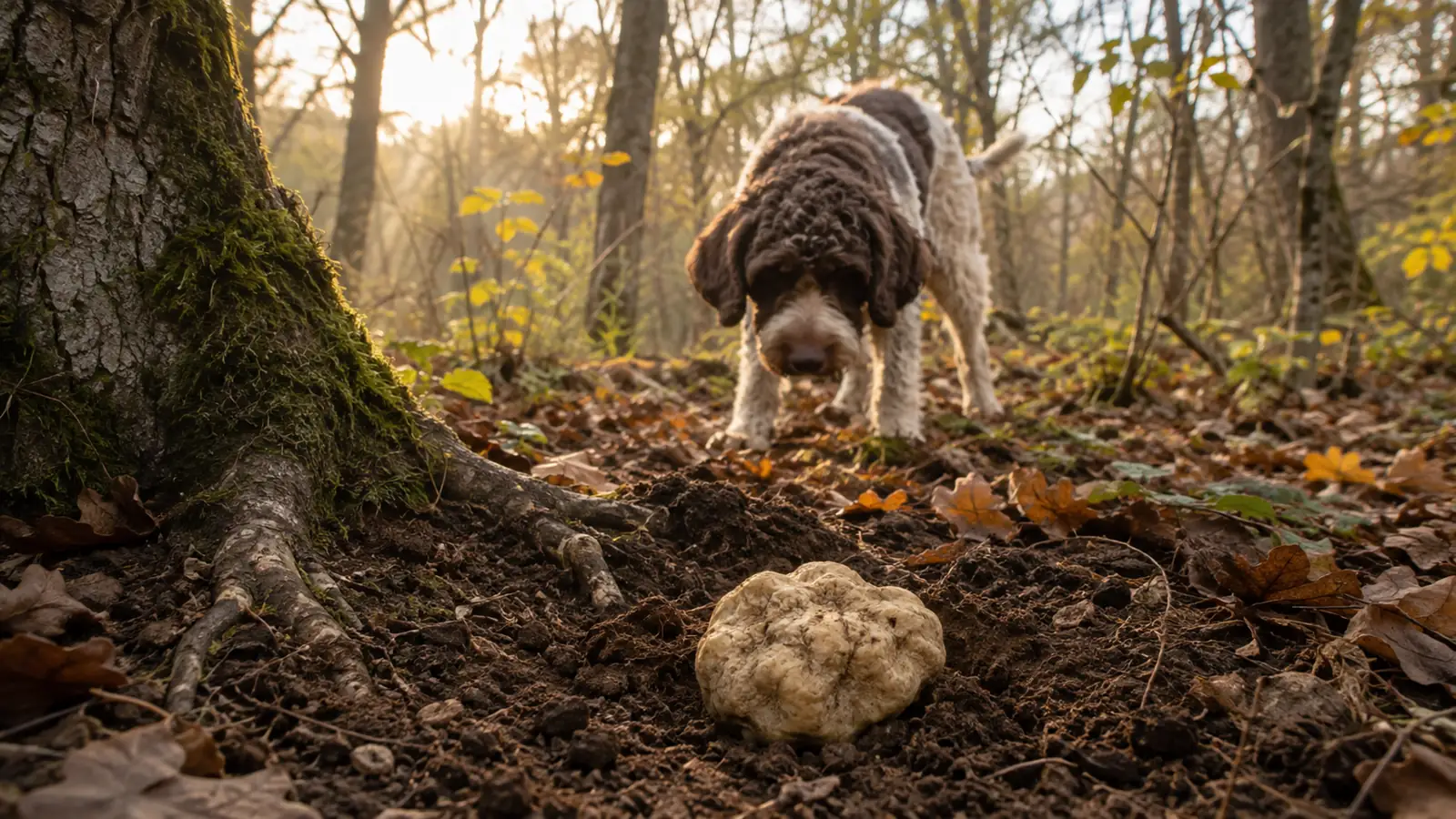
White truffle is a true truffle, meaning its spore-producing tissue remains enclosed underground instead of opening into a cap with gills or pores. The lumpy surface reflects stones, soil density, roots, and the spaces available while the fruit body expands.
The name “white truffle†is also used loosely for other pale Tuber species and truffle-flavored products. Tuber magnatum is the high-value European species associated with places such as Alba, but the geographic name on a menu does not authenticate an individual specimen.
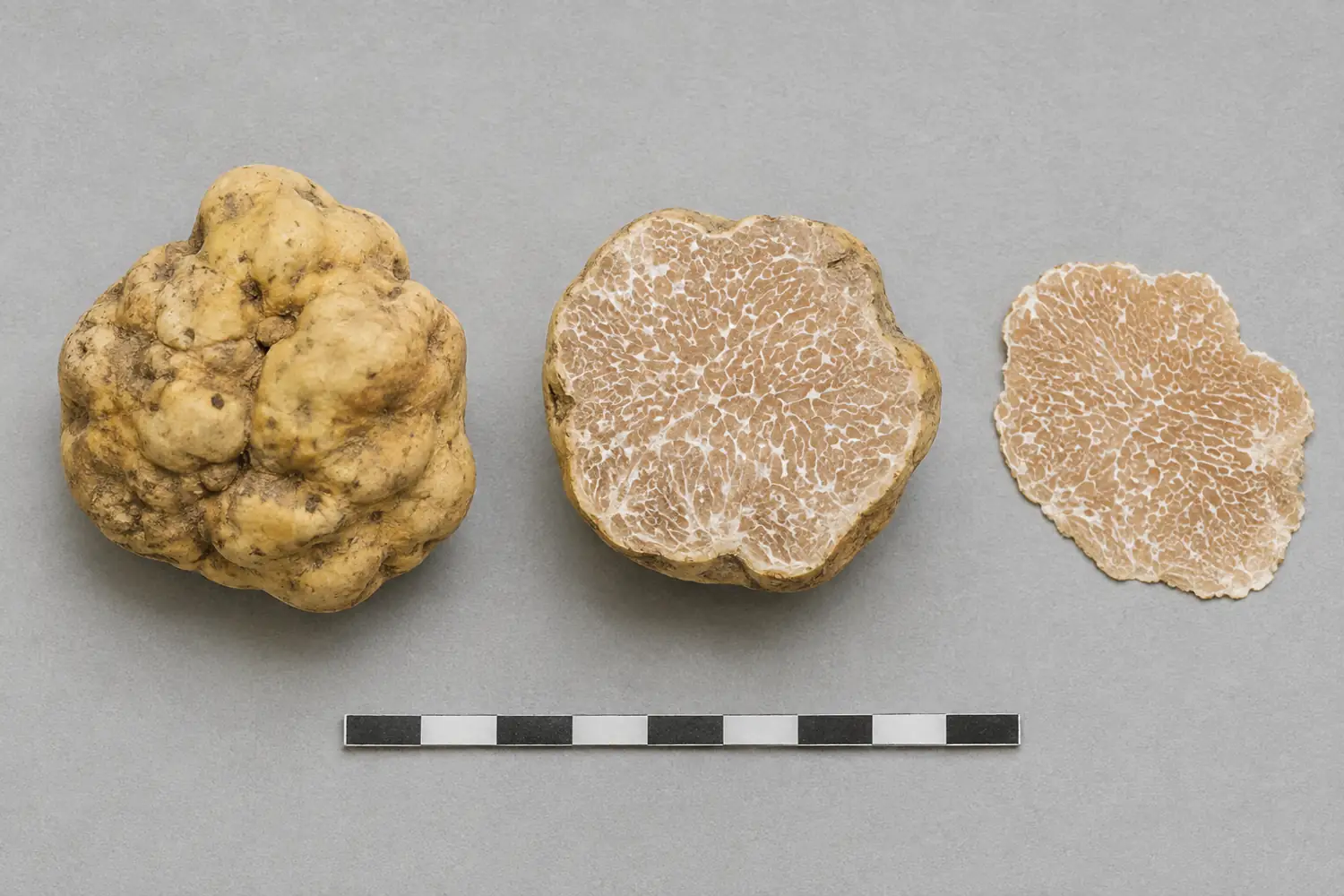
A mature cut surface has a coherent marbled pattern rather than uniform potato-like flesh. The interior can darken from pale cream toward hazel with maturity, while the white branching veins remain conspicuous.
The aroma is strongest near maturity and begins changing as soon as the truffle leaves the soil. This makes harvest date and handling part of product quality rather than background details.
How do you identify Tuber magnatum?
No cap. The edible fruit body is an irregular underground ascoma with a smooth to finely velvety pale cream, yellow-ochre, or light brown outer skin.
No gills or exposed pores. Spores mature inside a firm marbled gleba crossed by fine branching white veins.
No stem. The entire truffle develops below the soil surface among fine roots.
Mature flesh has an intense volatile aroma often described through garlic, fermented cheese, honey, hay, or sulfur notes. Ammonia, sour liquid, slime, or mold indicates deterioration rather than desirable ripeness.
Begin with provenance because an underground lump has few visible field characters. Record the country, collection region, harvest date, host habitat, seller, and lot before cleaning removes the soil context.

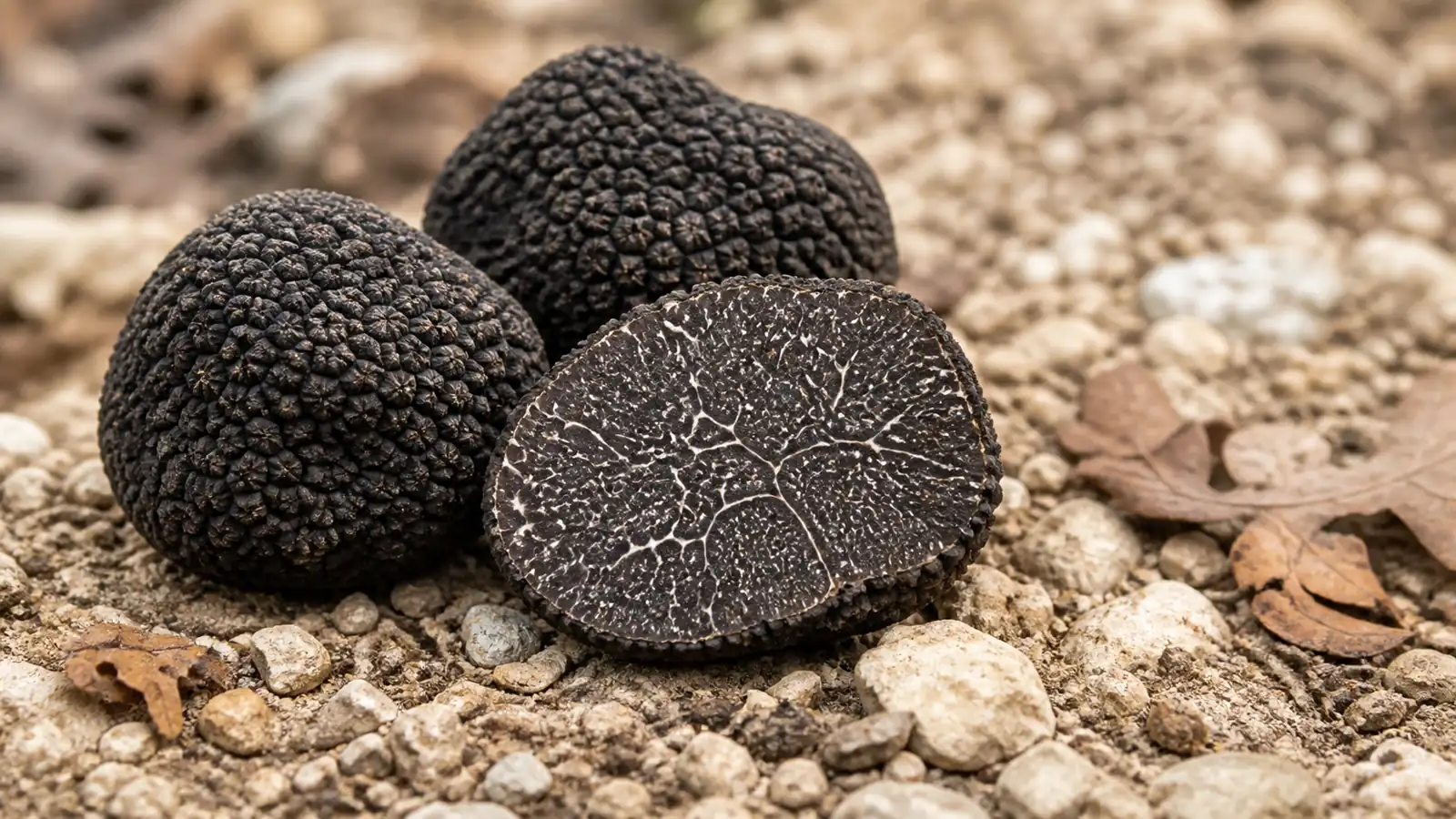
Brush the surface dry and inspect the full exterior for lobes, cuts, insect holes, soft patches, and coatings. A T. magnatum exterior is pale and relatively smooth to finely textured, not covered in the coarse black pyramidal warts typical of black truffles.
Cutting provides the most useful macroscopic evidence. The gleba should be firm and marbled with abundant narrow white veins, while wet cavities, uniform starch-like flesh, strong ammonia, or colored filler changes the assessment.
No home test can prove geographic origin. DNA can support species identity, but origin claims require traceability because the same species may occur across more than one political region.
Is white truffle safe to eat raw?
Discard a truffle that is slimy, leaking, extensively moldy, hollowed by insects, or dominated by ammonia or putrid odor. Trimming a deeply spoiled specimen does not restore the quality of tissue that has already softened throughout.
People with mushroom allergy should avoid exposure, and anyone with food-safety vulnerability should consider that raw truffle receives no final cooking step. Use a reputable food supplier and follow local advice for raw produce.
Never taste a wild underground fungus to identify it. If symptoms follow an unidentified collection, contact the regional poison center and keep the specimen and purchase or collection details.
What can be mistaken for a white truffle?
Tuber borchii, often sold as bianchetto or whitish truffle, can be pale and aromatic but commonly has stronger garlicky notes, different spores, a different seasonal market, and lower commercial value. Other European Tuber species also overlap in exterior color.
Desert truffles belong to other genera and grow in different dryland partnerships. False truffles from several unrelated groups can be white, tan, rubbery, gelatinous, chambered, or unpleasant-smelling, and some are not edible.
Young stinkhorn “eggs†may sit partly underground, but a section shows layered gelatinous structures around a developing stalk and cap. Puffballs develop a uniform spore mass rather than a persistent network of branching sterile veins.
Cut structure separates broad groups, not every white truffle species. Microscopy, DNA, and traceability take over when two true truffles share the same pale exterior and marbled interior.
High price creates non-biological lookalikes too. Pieces can be mixed across species, lower-value truffles can be scented, and oils may contain synthetic aroma compounds without containing T. magnatum.
Read a packaged product's ingredient list literally. “Truffle aroma,†“truffle flavor,†and a truffle illustration do not tell you the species or percentage of real truffle present.
How can you tell whether a white truffle is still fresh?
Firmness, aroma, weight, and a sound cut surface should agree. A fresh specimen feels dense for its size and has an intense complex aroma without free liquid.
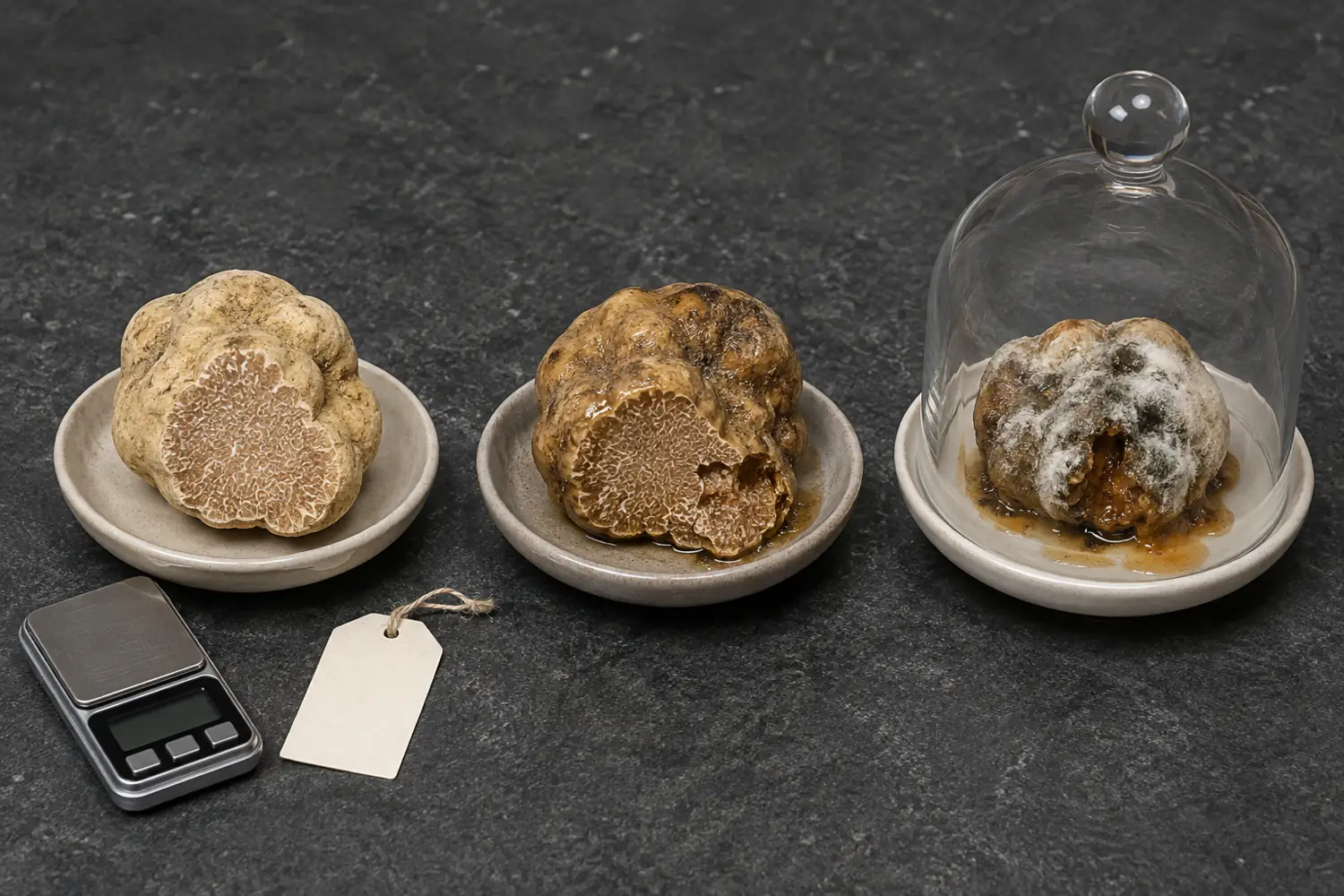
A truffle gradually loses water and volatile aroma after harvest, so an old specimen may feel light, rubbery, or soft before visible mold appears. Ammonia, slime, leaking tissue, and fuzzy growth are rejection signals rather than signs of extra ripeness.
How should white truffle be stored and served?
White truffle aroma contains highly volatile sulfur compounds, so high heat and long cooking waste the feature that justifies its cost. Chefs usually shave it at the table or over a hot finished dish, where warmth releases aroma without cooking the slices for minutes.

Eggs, buttered tajarin, risotto, polenta, and mild cheese are common partners because they provide warmth and fat with little aromatic competition. Paper-thin slices spread aroma and let a small mass contact more of the dish.
Clean with a soft brush shortly before service rather than soaking the truffle. Water held in creases encourages deterioration, while aggressive peeling discards aromatic outer tissue.
Buy for a planned meal, then use it promptly. Keep the truffle cold in a breathable or loosely closed food-safe container with absorbent paper changed daily, and follow the seller's verified handling date rather than assuming long storage.
Where and how does white truffle grow?
White truffle is ectomycorrhizal. Its mycelium forms a mantle around fine tree roots and extends into the soil, receiving plant-derived carbon while helping the host acquire water and mineral nutrients.
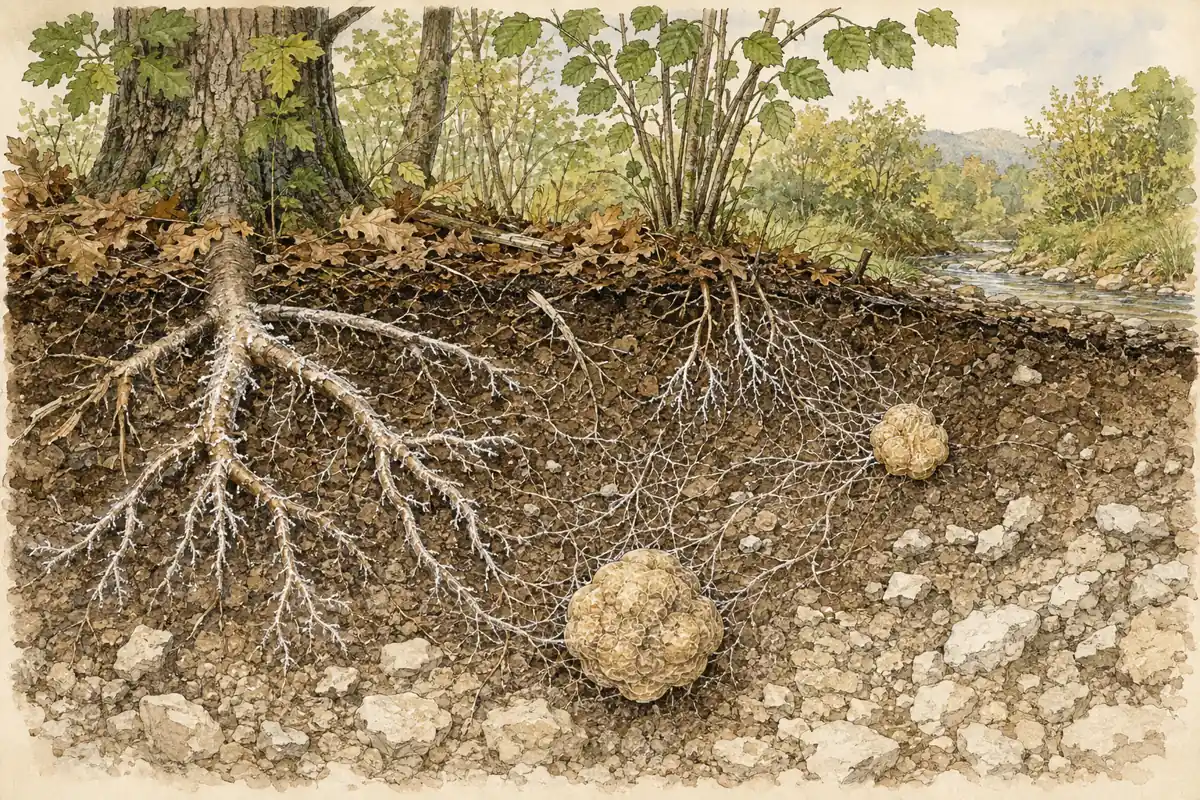
Host lists alone cannot predict a producing site. Soil calcium, texture, aeration, summer moisture, winter temperature, vegetation, microbes, and disturbance interact over years before a fruiting body appears.
The truffle's enclosed spores cannot simply drop into air. Mature aroma attracts mammals and trained dogs, and animals that consume or disturb fruit bodies can move spores through the habitat.
Protecting the soil and host-root network matters more than saving one visible truffle. Deep cultivation, compaction, erosion, drought, and root damage can alter the underground conditions on which future production depends.
Can Italian white truffles be cultivated?
Cultivating Tuber magnatum is difficult because the fungus must establish on living host roots, persist in a suitable soil ecosystem, and eventually fruit under seasonal conditions that remain incompletely controlled. Inoculated seedlings can confirm early mycorrhiza without guaranteeing a future crop.
Unlike block-grown mushrooms, this system has no short indoor fruiting schedule. A colonized seedling is an establishment milestone, not a production promise.
What does the name Tuber magnatum prove?
Tuber magnatum belongs to the ascomycetes, so its spores develop inside microscopic sacs called asci within the marbled gleba. That reproductive anatomy differs fundamentally from gilled mushrooms and basidiomycete false truffles.
“Mushroom†remains understandable in ordinary search language, but “truffle fruit body†or “ascoma†is more precise. The species epithet should not be assigned to white truffle oil or a dish unless actual T. magnatum is documented.
Genetic research can test species boundaries and population structure, yet taxonomy does not replace supply-chain evidence. Species identity and geographic provenance are related claims that require different proof.
Does a white truffle garnish add meaningful nutrition?
Fresh white truffle contains water, fungal protein, carbohydrate, fiber-like cell-wall material, minerals, and trace lipids, but serving sizes are usually only a few grams. It should be treated as an aromatic ingredient rather than a meaningful source of daily protein or micronutrients.
Published composition varies with specimen origin, maturity, storage, and laboratory method. A value measured in a dry sample cannot be compared directly with a restaurant's fresh shaved portion.
The practical nutrition question is often the dish beneath the truffle. Butter, cheese, eggs, pasta, and portion size contribute far more energy, sodium, and macronutrients than the garnish.
Does white truffle have proven medicinal benefits?
White truffle is a luxury food rather than an established medicinal mushroom. Composition studies can identify volatile compounds, proteins, phenolics, minerals, and antioxidant activity in laboratory assays, but those measurements do not demonstrate treatment of disease.
A small garnish also provides a much lower and less standardized exposure than an experimental extract. Species, maturity, soil, storage, and analytical method change the measured profile.
Do not convert antioxidant assay language into claims about preventing cancer, improving immunity, or treating inflammation. The evidence supports culinary use and chemical description, not a therapeutic dose.