
4 Best Cauliflower Mushroom Substitutes by Texture
Maitake is the best overall substitute when a recipe needs branching edges that brown and catch sauce. Oyster mushroom gives a softer sauté, wood ear preserves spring in soup, and king oyster supplies a firm bite when shape matters less.
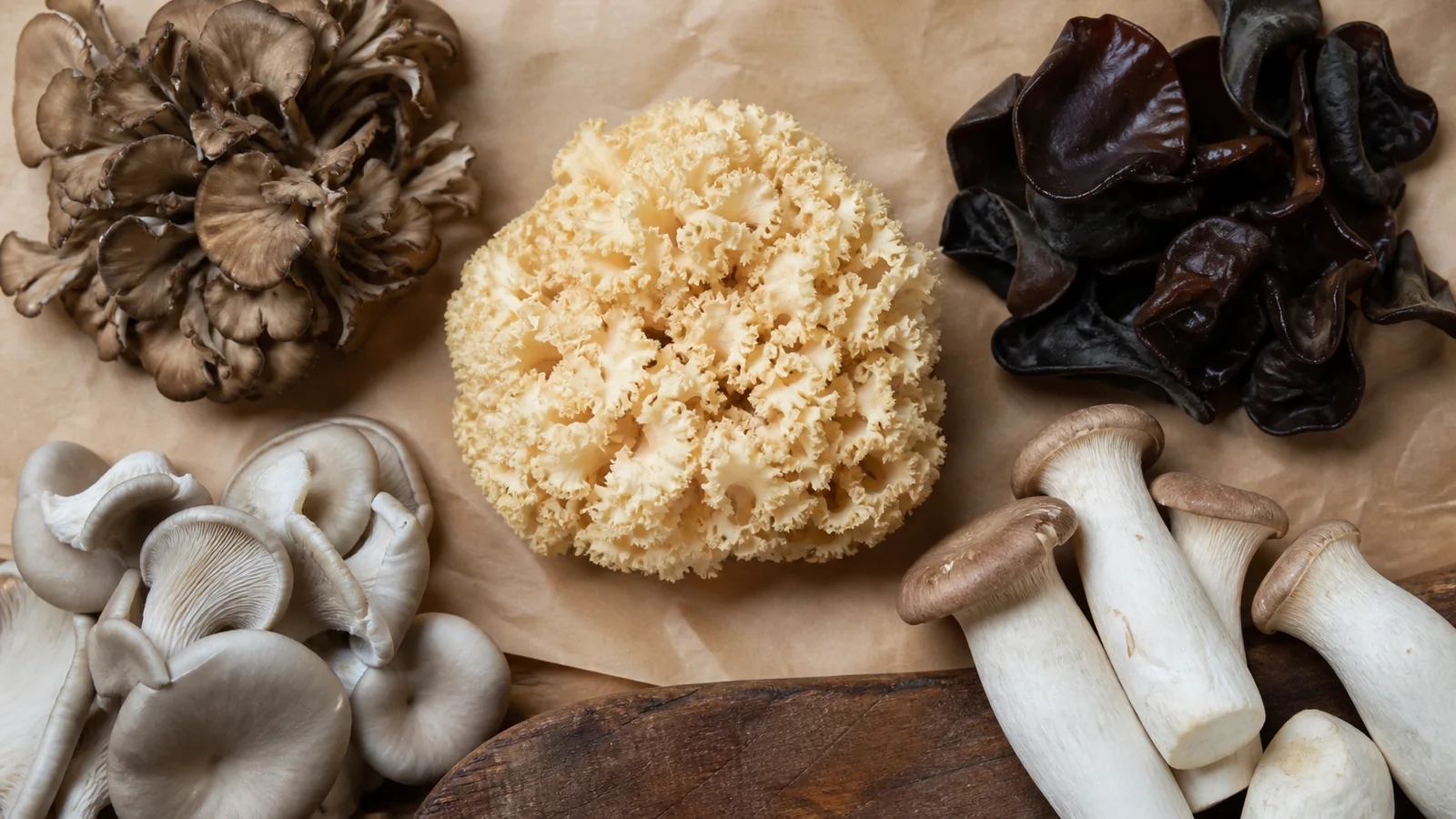
Best overall for clustered fronds, abundant edges, browning, and sauce-holding. Tear it into small frilly pieces and use roughly equal prepared volume.
Best for a tender sauté or pasta when mild flavor matters more than cauliflower-like curls. Tear broad caps into ribbons and start with equal prepared weight.
Best for soups and stir-fries that need springy chew. Slice rehydrated pieces thinly and use less by volume because the sheets pack differently.
Best when the recipe needs a substantial firm bite. Slice or score the stem, but expect solid pieces rather than ruffled sauce-catching edges.
Maitake is the best overall cauliflower mushroom substitute because its clustered fronds create many browning edges and hold sauce, while oyster mushroom, wood ear, and king oyster serve softer, springier, or firmer jobs.
No option copies every feature of Sparassis, so choose the property the dish needs, correct the cut, and compare prepared volume instead of untrimmed package weight.
Match the substitute to the job
Fresh young cauliflower mushroom combines four useful traits. Its branching curls create a large surface, its lobes retain a light spring, its mild flavor accepts quiet seasoning, and its channels catch broth or sauce.
Decide which trait the recipe cannot lose because a dry sauté depends on edges and browning while a clear soup depends more on spring under prolonged moisture.
Maitake covers the largest part of that target as the default answer, although its thin fronds are leafier and less elastic in broth. Oyster mushroom moves in the opposite direction with broad tender caps that preserve mild savory flavor but provide fewer curled channels and a softer final bite.
Wood ear offers spring without the same flavor or frilly surface, while king oyster offers a firm bite through its thick stem but little branching shape.
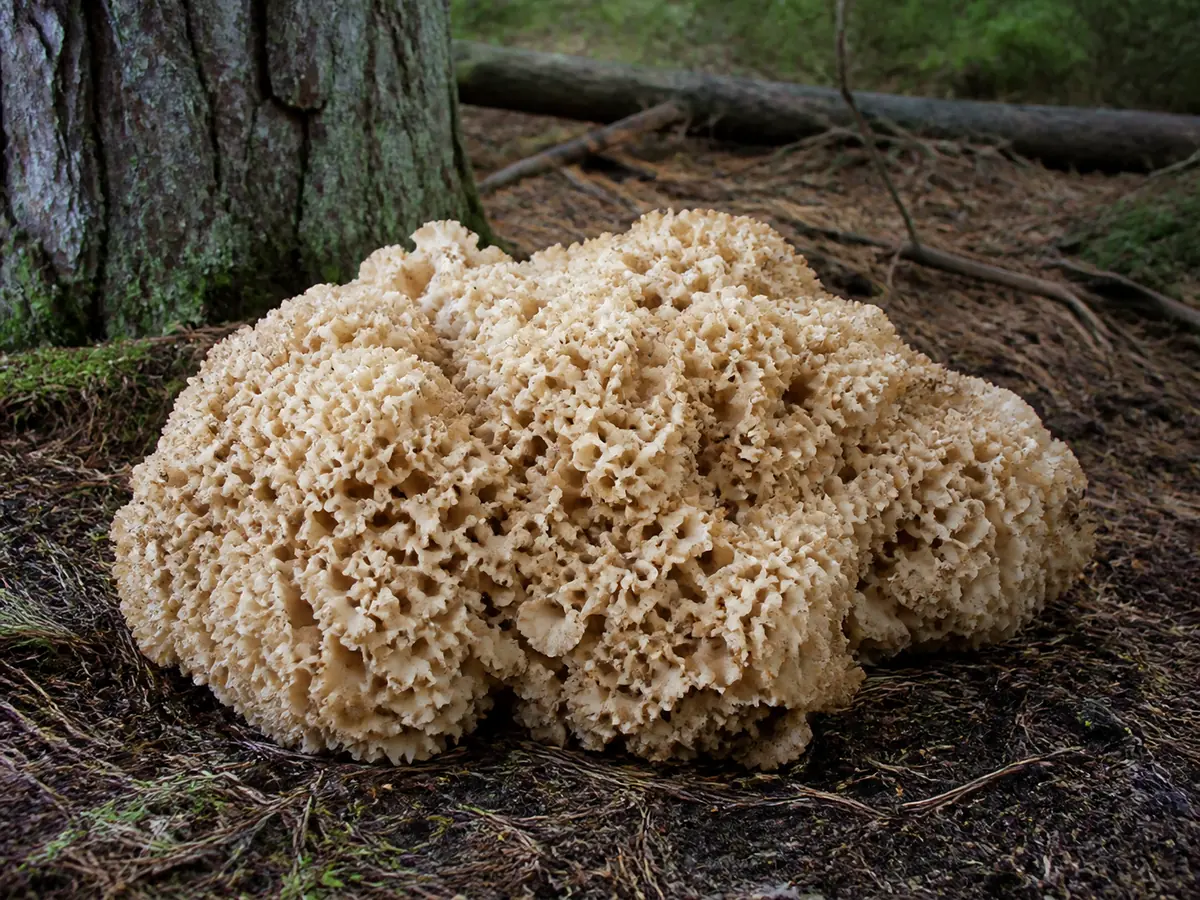
4 Best Cauliflower Mushroom Substitutes, Ranked by Cooking Job
1. Maitake: Best Overall for Frilly Browning
Maitake grows as a cluster of overlapping fronds whose exposed edges brown well and carry butter, glaze, or pan sauce across a serving. Tear the cluster along natural branches into pieces near the expected curl size, avoiding large floppy fans and tiny pieces that become brittle before thick junctions cook.
Start with an equal loose prepared volume, not equal untrimmed weight. Both mushrooms contain branched voids, but the packing density changes with the size of the tears.
Use a wide pan and leave gaps so the fronds brown instead of steaming. Maitake usually develops a more distinctly leafy crisp edge, so stop when the center remains tender enough for the intended dish.
Choose maitake when browned surface matters most, but use another candidate when the recipe depends on noodle-like spring in broth.
Check three features before the pan:
- Fronds are torn near the intended bite size.
- Thick junctions are split so they finish with thin tips.
- The loose volume matches the space the original would occupy.
| Recipe job | Best candidate | Necessary correction |
|---|---|---|
| Ruffled sauté with browned edges | Maitake | Tear into compact fronds and watch thin tips |
| Soft pasta, eggs, or cream sauce | Oyster mushroom | Tear caps into short ribbons |
| Soup with elastic chew | Wood ear | Rehydrate and slice thinly |
| Skewers or thick substantial pieces | King oyster | Score or slice the solid stem |
The structural comparison below explains why one universal ratio would hide important differences.
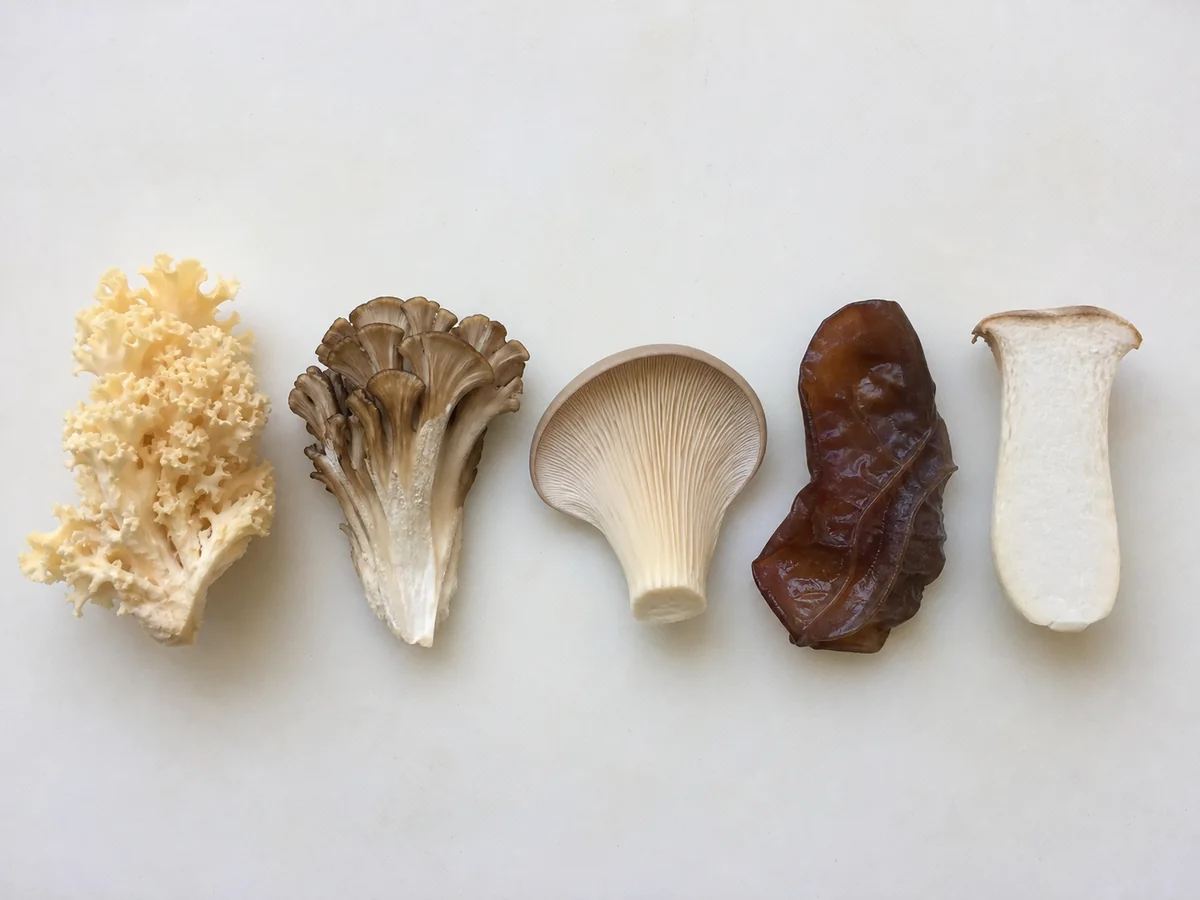
2. Oyster Mushroom: Best for a Softer Sauté
Oyster mushroom is the practical choice when mild flavor and tenderness matter more than dramatic curls in pasta, eggs, cream sauce, or a quick sauté. Tear the caps lengthwise into short ribbons so they distribute through the dish at the visual scale of separated cauliflower mushroom lobes.
Trim a tough stem junction and cook the ribbons in a loose layer. They release water and soften faster than a thick cauliflower mushroom branch, so judge the pan by surface moisture and tenderness rather than copying the original time.
Start with roughly equal prepared weight when mushrooms provide the body of the dish, but use equal loose volume when a sauce or egg filling depends on distribution.
Oyster caps become silky and flat rather than springy and ruffled. That difference is welcome in a creamy preparation but weak in a dish built around chewy curls.
3. Wood Ear: Best for Springy Soup Texture
Wood ear earns its place when elastic chew matters more than aroma because its thin sheets stay resilient where maitake fronds soften or tear.
Rehydrate dried wood ear according to its package directions, rinse it, remove any hard attachment point, and slice it into narrow ribbons. Cook it thoroughly in the dish rather than treating the rehydrated sheet as a ready garnish.
Use less by packed volume at first because flat ribbons settle tightly while cauliflower mushroom curls hold air. Add until each serving gets the desired number of pieces instead of filling the bowl to an abstract ratio.
The flavor is quieter and the surface does not brown in the same way. Pair it with broth, soy, ginger, or other seasoning already appropriate to the recipe rather than expecting a buttery cauliflower mushroom character.
Wood ear replaces movement between the teeth, not frilly browning or the original mild aroma.
Use it only when the dish accepts all three changes:
- Darker color than fresh cauliflower mushroom
- Less mushroom aroma in the finished broth
- More elastic chew after prolonged moisture
4. King Oyster: Best for Firm Pieces
The thick stem of king oyster mushroom provides a dense, substantial bite that holds together under searing, skewering, or braising. Choose it when the recipe needs pieces with physical presence rather than thin curls.
Slice the stem into coins, batons, or scored slabs according to the dish because no smaller cut turns a solid stem into a branching sauce-catching cluster.
Brown the cut faces to build flavor, then finish the center to tenderness. A thick coin needs more time than a cauliflower mushroom lobe because heat travels through solid tissue instead of around many thin folds.
Start with 1:1 prepared weight. Then adjust the number and thickness of pieces in each serving because solid stems occupy the plate differently from branching curls.
King oyster is a firm-piece substitute, strongest in skewers, pan-seared plates, and braises rather than a delicate noodle-like soup.
Use its cooking route for complete method ideas, while keeping the substitution honest about the missing ruffles.
What each substitute fails to copy
Every candidate loses something, and the wrong loss changes the dish more than the mushroom name suggests. Maitake loses elastic spring, oyster loses the branching surface, wood ear loses characteristic mushroom flavor and browning, and king oyster loses the curls entirely.
For a crisp-edged sauté, reject wood ear and thick king oyster unless a different texture is acceptable, then choose maitake for edges or oyster for tenderness.
For a clear soup, reject a large quantity of thin maitake when the fronds would turn soft before the rest of the dish is ready. Wood ear preserves chew, and oyster works when tenderness is the priority.
For a cream sauce, king oyster coins may feel oversized and wood ear may feel too elastic. Torn oyster caps or small maitake fronds integrate more naturally.
A useful substitute preserves the dish's job, so state the tradeoff before cooking rather than mistaking a deliberate texture change for failure.
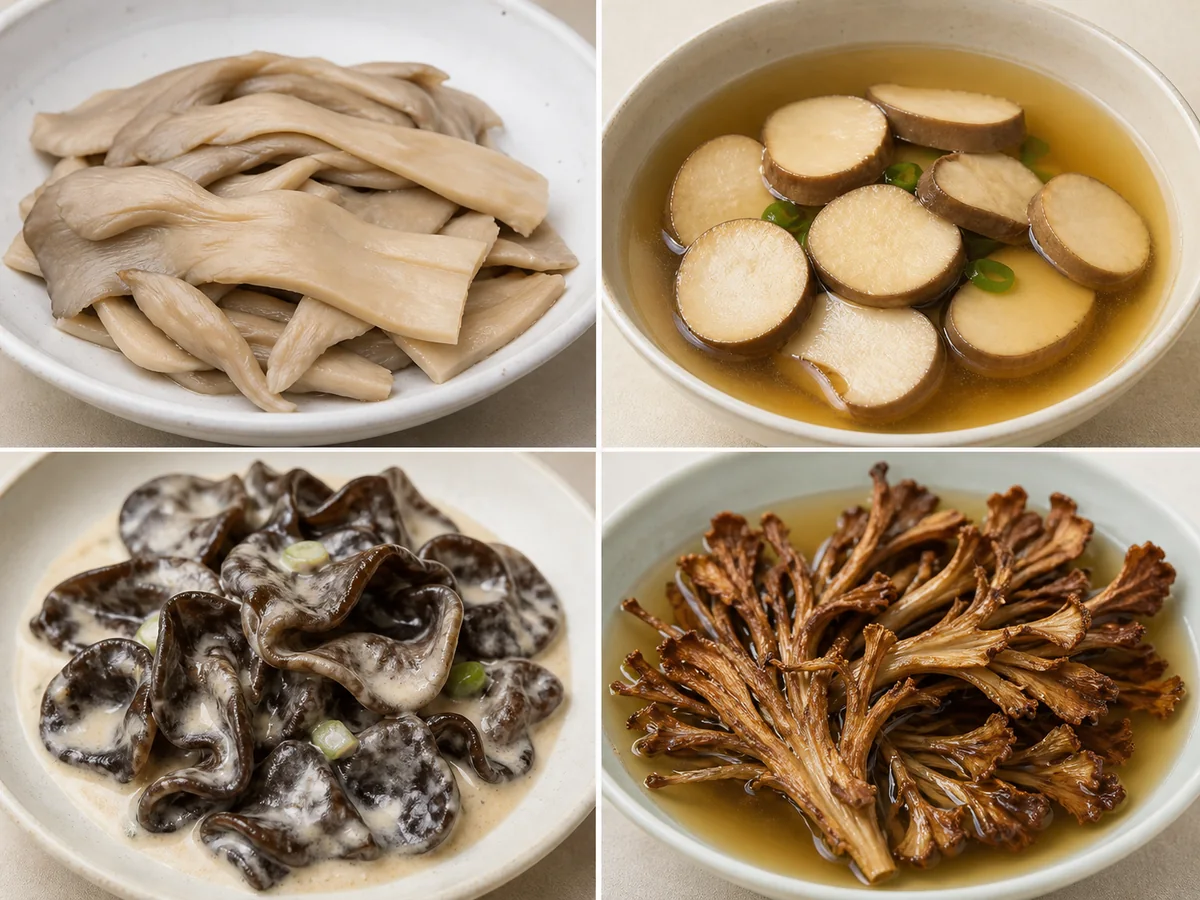
Correct the cut before the quantity
Prepare the replacement before measuring it because stems, cluster cores, dry-to-rehydrated change, and empty space distort package comparisons. Put the corrected pieces in the bowl or pan and compare the volume the original would occupy.
For maitake and oyster mushroom, begin near equal loose prepared volume, use less tightly packed wood ear, and judge king oyster by the pieces in each serving.
Three preparation changes make the volume comparison useful.
- Tough stems and cluster cores are removed.
- Dried wood ear has been rehydrated and drained.
- Every candidate has been cut to the intended serving scale.
Cook a small batch when the mushroom controls the dish's texture. Check whether the pieces brown, soften, or stay springy at the moment the rest of the recipe finishes, then adjust the next batch.

Salt and liquid may also need correction because substitutes release and absorb water differently. Add broth gradually and finish seasoning after the replacement reaches its final texture.
Note
Use maitake first for a general swap, then change candidates only when the dish clearly values softness, spring, or a solid bite more than ruffled browning.