What makes the blackedge bonnet distinctive?
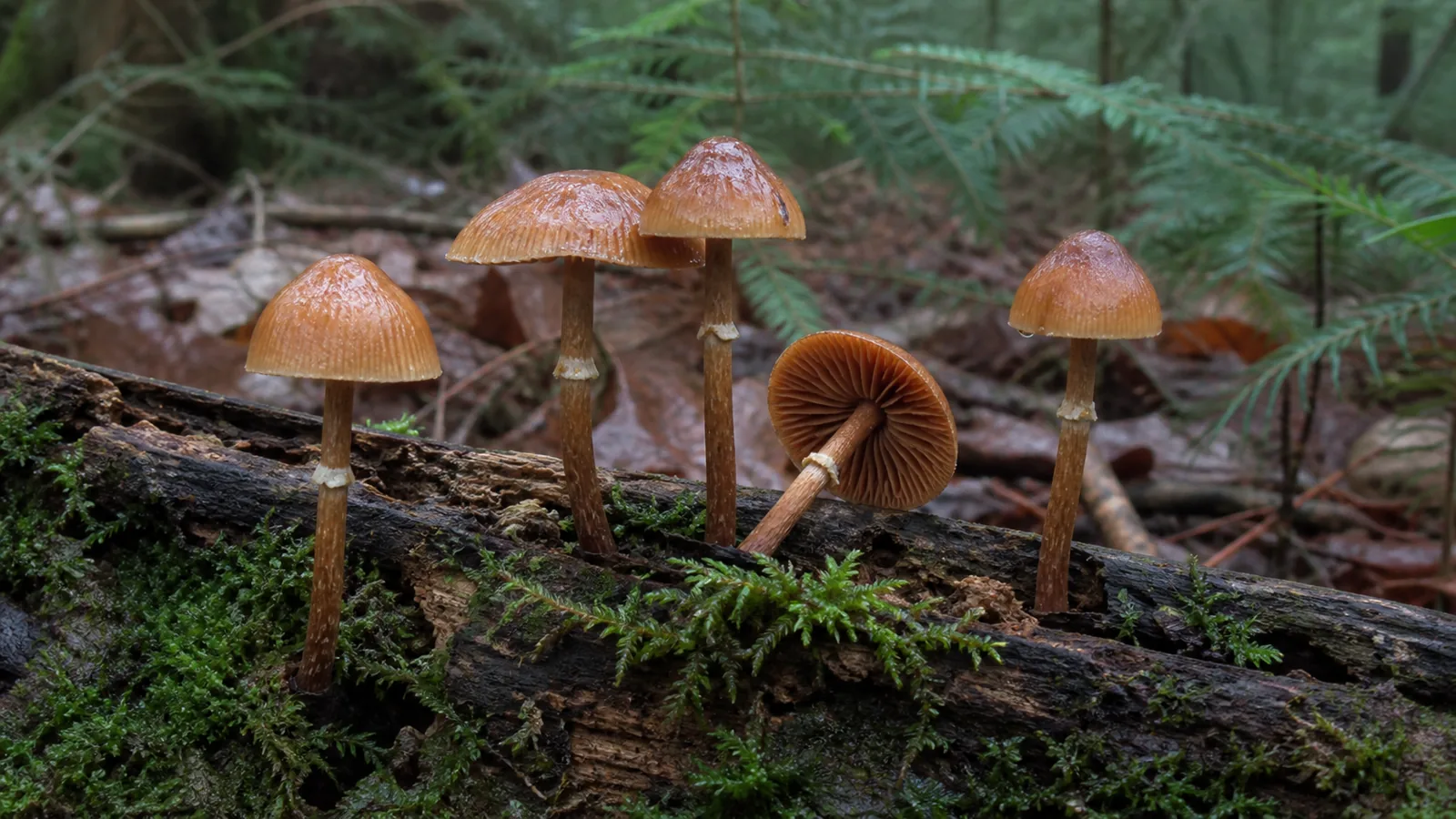
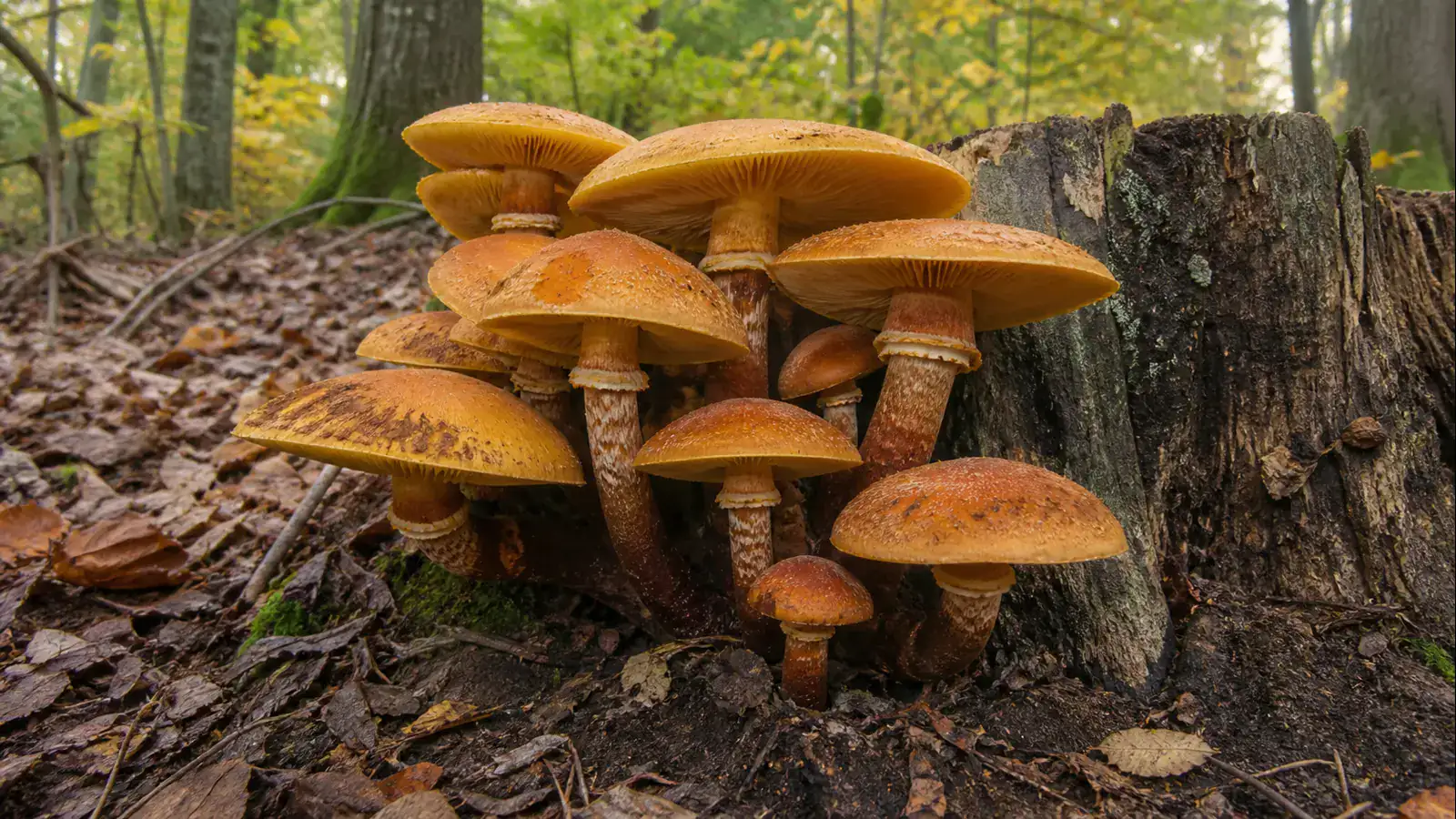
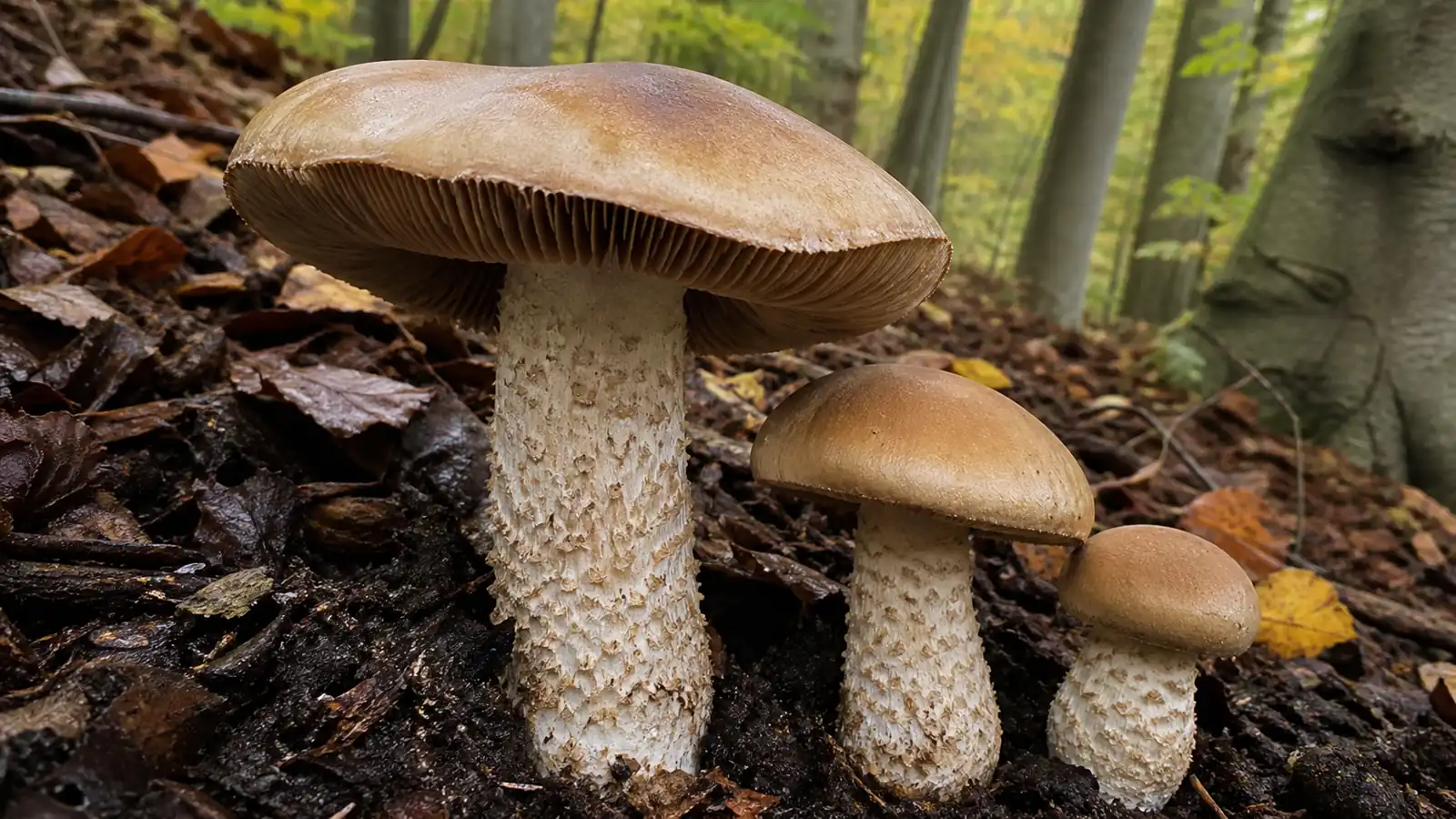
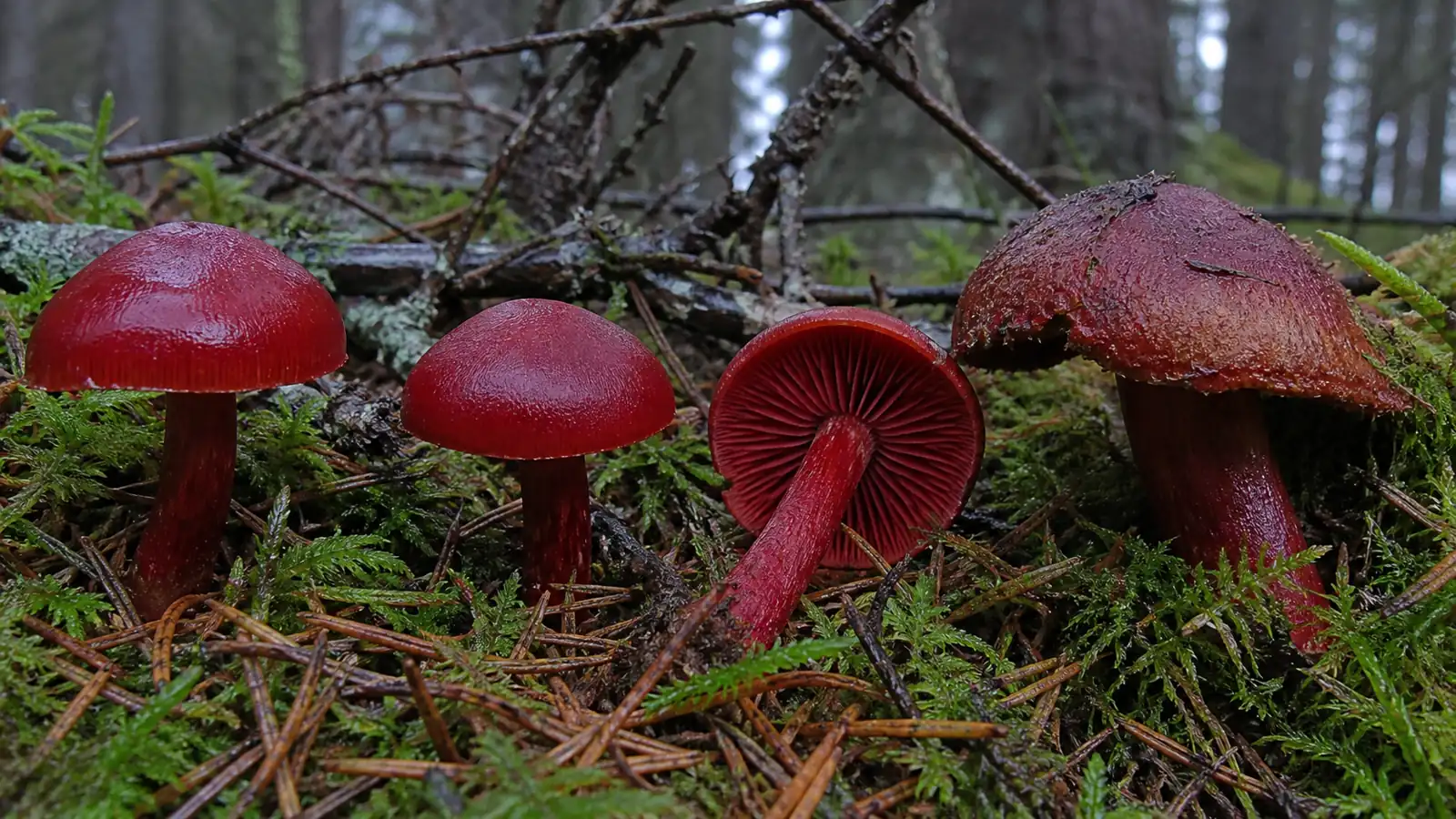
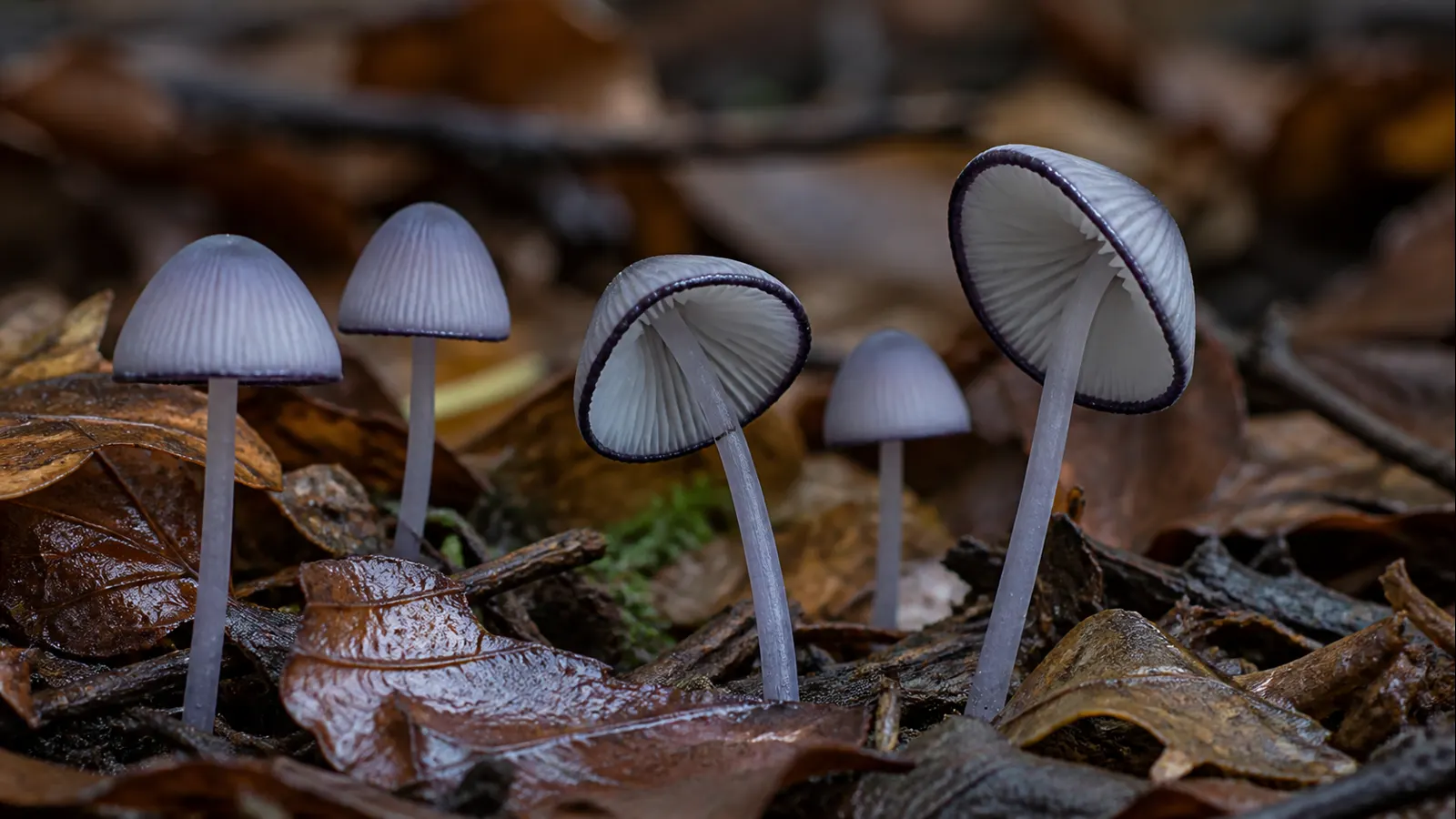
Blackedge bonnet is a delicate litter mushroom with a bell-shaped, radially grooved cap. Fresh caps can show muted violet or lilac-gray tones, then fade toward gray-brown as they lose water.
The English name points to the feature worth examining. Each pale gill is bordered by a fine dark purple-brown line produced by pigmented cells along the edge.
Confirm the dark edge as tissue on several intact gills. A shadow, bruise, or line of spores between gills does not establish Mycena pelianthina.
The cap is often darker at the center and translucent-striate toward the margin. Moisture makes those radial lines clearer because the thin flesh allows the gill pattern to show through.
The stem is long compared with the cap and can disappear into deep beech litter.
Lifting the entire base shows that there is no ring, bulbous volva, or rooting cord that would redirect the identification.
A radish-like odor supports placement near M. pura and related species. Smell a freshly broken cap in clean air, since a bag of mixed mushrooms quickly turns every specimen into the same earthy odor.
This is not a mushroom that can be identified responsibly from a top-down photograph. The underside, continuous gill-edge pigment, stem base, litter substrate, and regional context carry more information than the cap color.
Its small size also creates a sampling problem.
A photograph may contain several bonnet species fruiting through the same litter, so every cap in the frame should not inherit the name from the one specimen examined underneath.
The useful public outcome is recognition without consumption. Learning the edge character can improve observation and recording, but it does not make a fragile Mycena a reasonable food candidate.
Freshness controls whether the defining line can be trusted.
A clean young underside is the preferred teaching specimen, while old collapsed caps should be used to show how the clue disappears rather than to establish the name.
The dark edge can look broader where gills wrinkle or overlap near the margin. Follow one gill from stem to cap edge so perspective does not turn adjacent shadows into pigment.
A small ruler beside the cap and stem keeps scale visible without touching the gills. Size does not identify the species, but it helps reject a much larger lilac mushroom presented through a tight crop.
How do you verify the dark gill edge?
Bell-shaped to broadly conical, usually 2 to 5 cm, gray-lilac to violet-brown with a darker center and translucent radial grooves near the margin.
Pale gray-lilac and attached, with a sharply dark purple-brown edge that is most visible on fresh mature specimens.
Slender, smooth to finely frosted, 4 to 8 cm long, gray-lilac to brownish, without a ring or volva.
Thin pale flesh with a radish-like odor; do not use taste as an identification test.
Photograph the cap before handling because the lilac tone and translucent grooves change rapidly indoors. Then turn over one fresh specimen without crushing the gill edges.
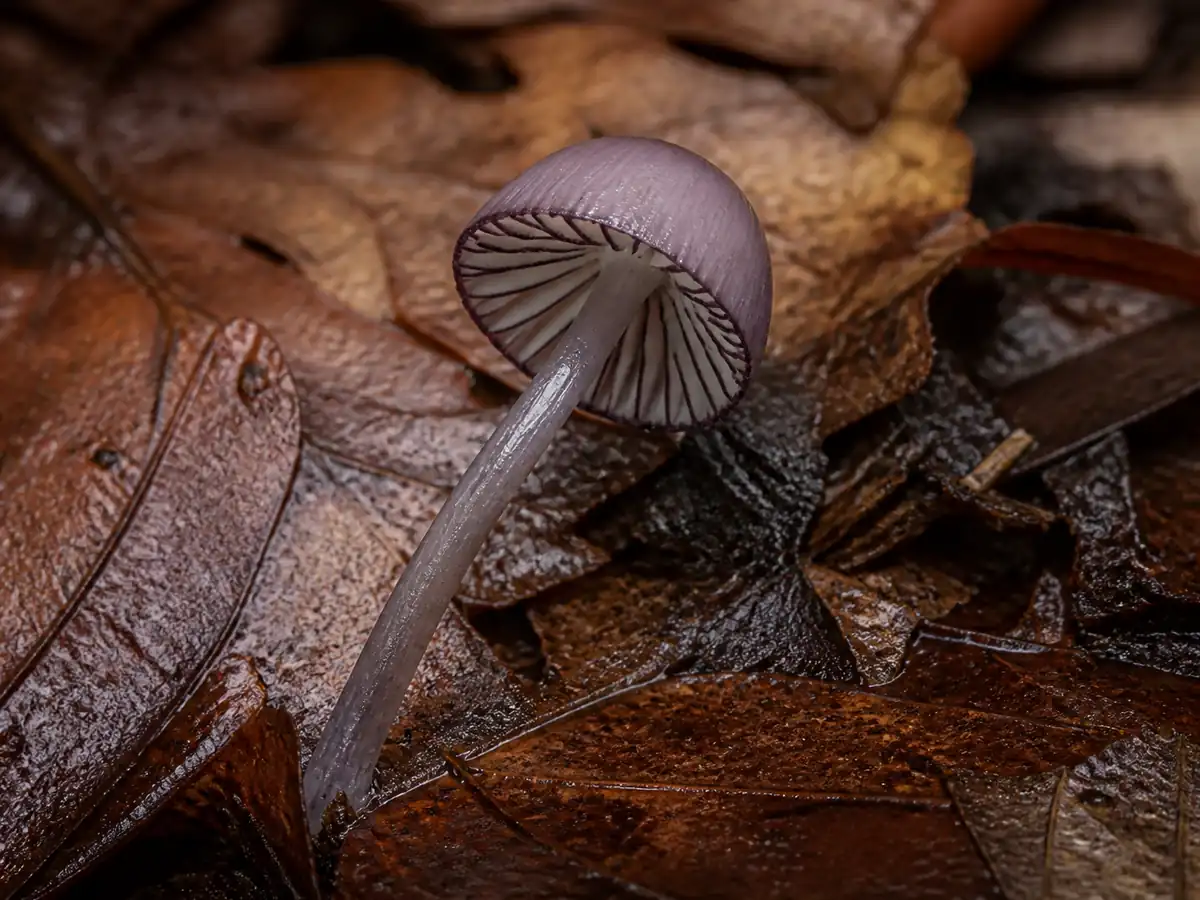
Use a hand lens at an oblique angle. A genuine edge appears as a narrow continuous colored line on the free edge of several gills, including protected gills that have not rubbed against litter.
Make a print from a mature cap on black and white surfaces. The white deposit supports Mycena and rejects brown-spored fibrecaps, but many bonnet species share white spores.
- Record fresh cap color and the beech or mixed-woodland setting.
- Photograph the underside in diffuse light before bruising it.
- Confirm dark pigment on several gill edges with magnification.
- Note odor, produce a white print, and retain a dried specimen for microscopy if a species record matters.

Microscopy examines the shape and size of the smooth spores, basidia, cheilocystidia on the gill edge, pleurocystidia on the gill face, and tissues of the cap surface. Pigmented edge cells explain the visible line but need to be distinguished from contaminants.
Cap color alone is unstable. A drying mushroom can pass from violet-gray through brown-gray during one photography session, while a rain-soaked specimen can look almost colorless except at the center.
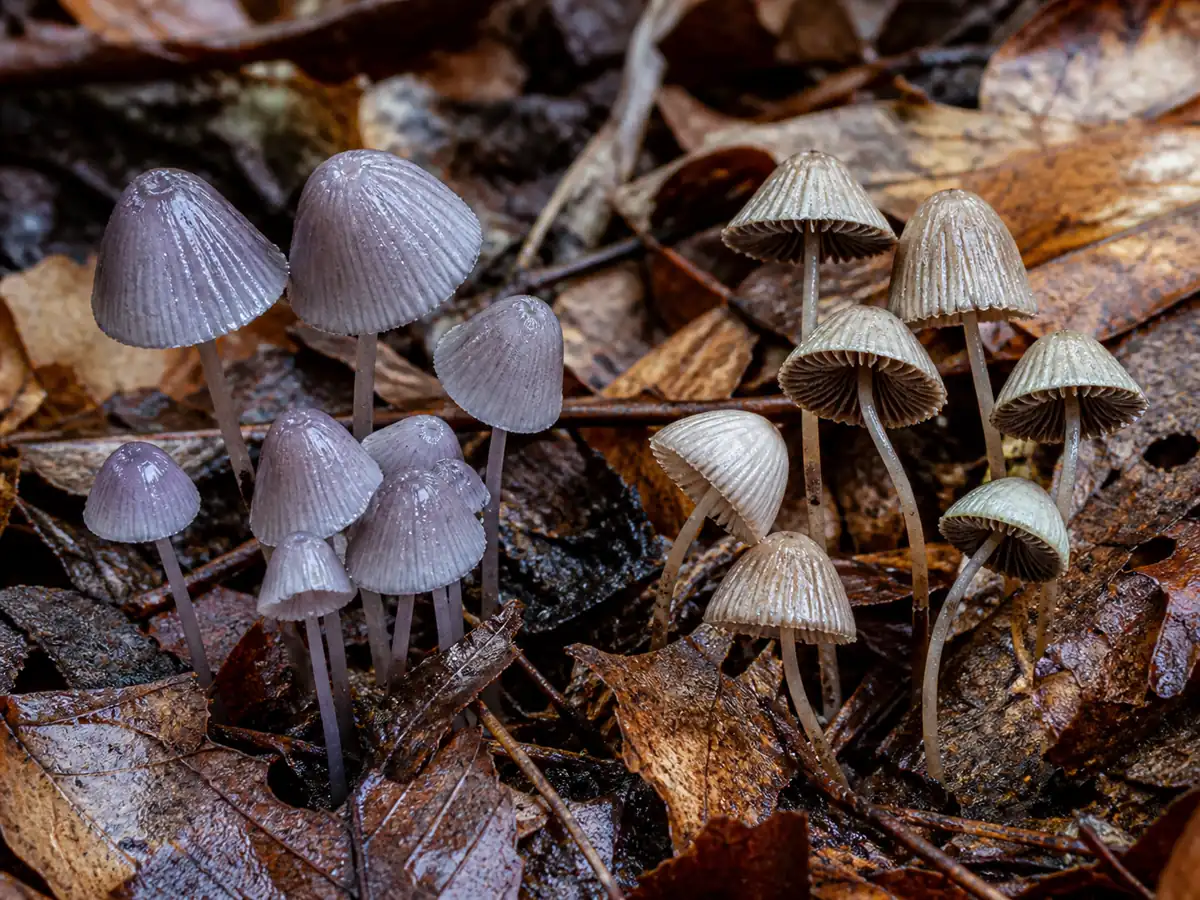
Gill attachment deserves a close side view. The gills meet the stem rather than running deeply down it, and short gills alternate between full-length blades, creating a pattern that differs from widely spaced waxcaps.
Record whether the stem surface is smooth, faintly powdered near the apex, or damaged. A ring zone, cortina, basal cup, or heavy fibrillose cap would conflict with the target and direct the specimen toward another genus.
A formal occurrence should include collection date, coordinates at an appropriate privacy level, host trees, litter type, photographs, spore measurements, and voucher location. That evidence allows later taxonomic reassessment when a name has been applied outside its familiar European range.
Cheilocystidia along the gill edge deserve a separate mount because they carry the pigment that creates the public field mark.
Record their shape, dimensions, wall character, and pigment distribution rather than reporting only that dark cells were present.
Pleurocystidia on the gill face may differ from edge cells. A thin section taken across a whole gill keeps each location visible and prevents a mixed squash mount from erasing that distinction.
The white spores should be measured from a mature print with a calibrated microscope. Reaction strength and size ranges must follow the selected regional key rather than a number copied from an image caption.
The dark edge must survive magnification. If the visible line resolves into soil, mold, bruised tissue, or shadow instead of pigmented cells, the specimen no longer supports M. pelianthina.
Photograph color beside a neutral gray reference because phone processing can exaggerate violet. Save an unedited original alongside any corrected field image.
Dry the mushroom promptly with gentle moving air. A specimen sealed wet in plastic collapses, molds, and loses the exact gill edge needed for later review.
If someone may have eaten this mushroom, act now. Call Poison Control at 1-800-222-1222 (US) or emergency services before symptoms appear, and save a piece of the mushroom for identification.
Which lilac bonnet mushrooms look similar?
Many Mycena are small, radially grooved, pale-spored woodland mushrooms. The blackedge bonnet stands out through the dark sterile gill edge, but that clue must be checked on several fresh gills and combined with cap color, odor, substrate, and microscopy.
Warning
Do not eat a bonnet mushroom. Small Mycena are difficult to separate, edibility is poorly established for many species, and close relatives have documented toxins.
| Candidate | Shared characters | Most useful distinction |
|---|---|---|
| Mycena pelianthina | Lilac-gray cap, radish odor, white spores | Dark purple-brown gill edge |
| Mycena pura | Lilac to pink-gray cap and radish odor | Gill edge remains the same pale color as the gill face |
| Mycena rosea | Pink cap, white spores, woodland litter | Larger pink form without the sharply dark gill edge |
| Mycena diosma | Purple-brown bonnet and colored gill edge | Strong perfume-like or cigar-box odor and microscopic differences |
| Inocybe species | Small brownish or lilac woodland caps | Fibrous caps, brown spores, and often different gill attachment |
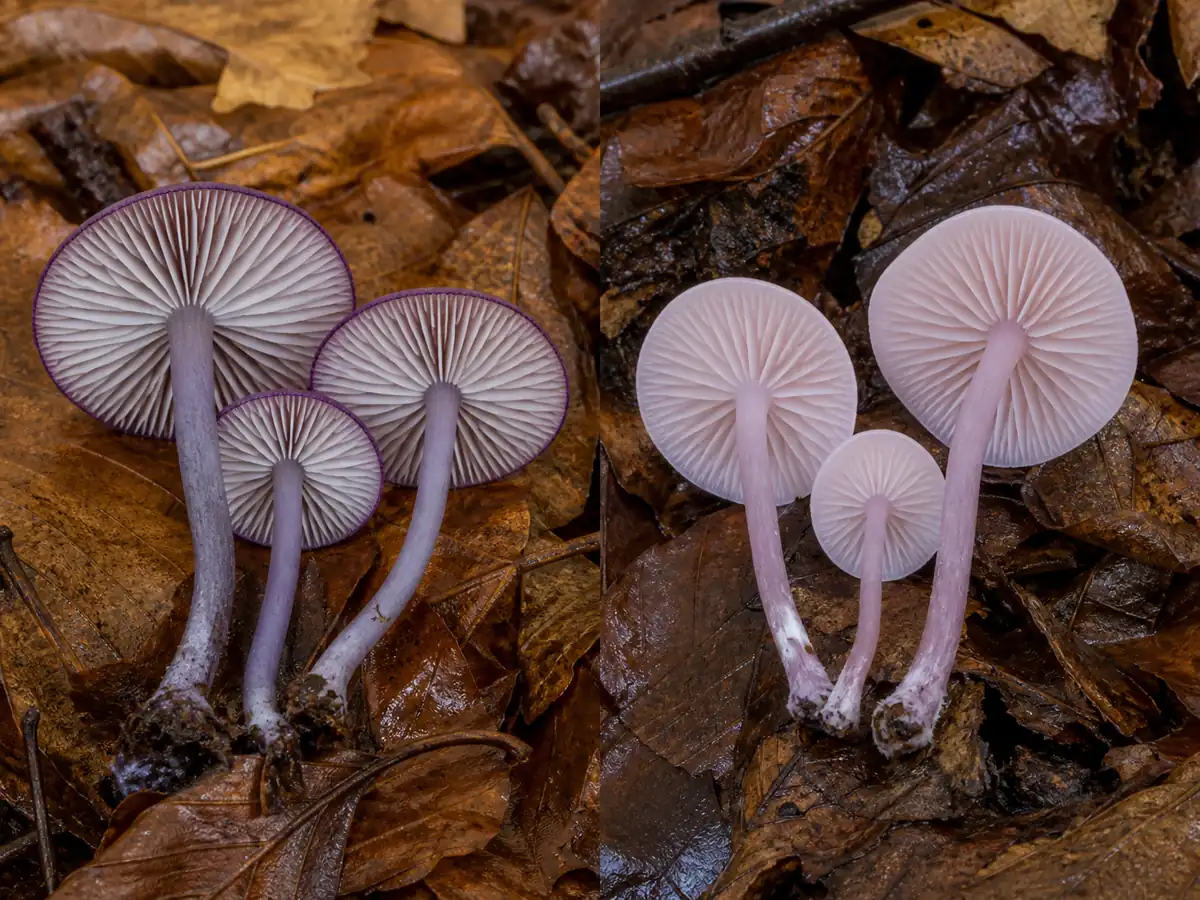
The gill edge can be lost to age, rain, frost, or insect feeding.
Inspect protected gills near the stem and compare several fruiting bodies before deciding the feature is absent.
A dark line created by shadow is not enough. Tilt the cap under diffuse light and use a hand lens to confirm that pigmentation lies in the tissue along the gill edge rather than between gills.
Mycena pura is the everyday comparison because it shares the radish odor and variable lilac-gray cap. Its gill edges are not outlined in the same deep purple-brown, but microscopy may still be needed when colors are weak.
Mycena diosma can also carry purple tones and a darkened edge. Odor is useful when fresh, yet human descriptions vary, so spore size and cystidia should settle a scientific record.
Lilac cap aloneSeveral bonnet mushrooms change from violet to gray or brown as they dry.
One damaged gillBruising and decay can create an artificial dark margin.
Repeated edge colorConfirm the same continuous dark line on multiple intact gills.
White spore depositUse it to reject brown-spored Inocybe, not to separate every Mycena.
Mycena rosea can be larger and more clearly pink, but faded fruiting bodies overlap with lilac-gray bonnets. The gill edge, odor, microscopy, and complete color record must carry the comparison.
Inocybe adds a higher-risk genus-level alternative when a small cap is fibrous rather than translucent-striate. Brown spores, attached earth at a bulbous base, and a different gill color reject Mycena even when the cap has violet tones.
Mixed litter can support several small white-spored mushrooms at once. Keep every stem with its own cap and never build a composite identification from the darkest gill edge in the group and the prettiest cap elsewhere.
One intact underside is worth more than ten top views. The defining edge, gill attachment, short gills, and stem apex all disappear when the camera stays above the cap.
A conservative genus-level record is useful when the edge is damaged. Calling the mushroom Mycena species preserves what is known without turning a missing character into a false species claim.
Why does it appear in beech litter?
Mycena pelianthina fruits among decomposing leaf litter, with beech particularly prominent in European accounts. The visible mushrooms draw attention to a much larger community breaking down fallen leaves and returning nutrients to woodland soil.
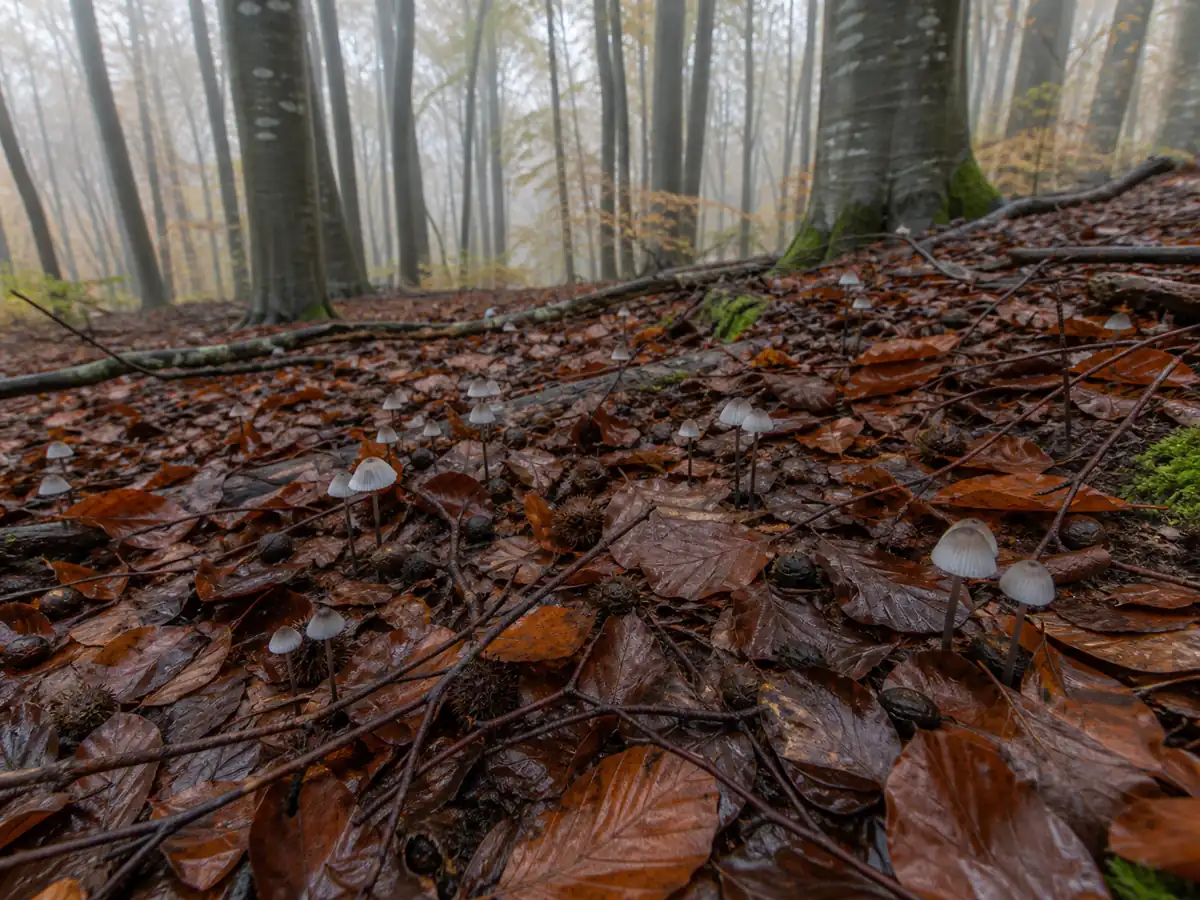
The species is saprobic rather than a pathogen of the tree. A fruiting beneath beech indicates litter and microclimate preference, not proof that the fungus is killing roots or trunk wood.
Moist shaded hollows help the thin fruiting bodies avoid rapid drying. Caps may appear after rain and collapse or fade within days, which explains why site records are often brief and clustered in late summer or autumn.
Note
Photograph the litter layers instead of clearing them away. Raking removes the moisture buffer and damages the small fruiting bodies that make a useful colony record.
Beech leaves are slow enough to create persistent litter, while bare mineral soil usually lacks the same protected microhabitat. The fungus can also occur in other broadleaf or conifer settings, so host association narrows rather than proves identification.
Small bonnet mushrooms are eaten by invertebrates and contribute spores to the woodland air. Leaving most fruiting bodies intact preserves those ecological functions and avoids needless disturbance for a mushroom with no food value.
A repeat survey should note rainfall, canopy cover, litter depth, slope position, and nearby Mycena species. Those observations can show whether the same tiny patch returns or whether similar caps are being assigned the name without checking their gill edges.
Leaf identity can be more informative than a distant trunk.
Note whether the fruiting base sits in intact beech leaves, mixed humus, conifer needles, buried twigs, or moss because these microhabitats separate decomposer niches.
Litter moisture changes across a few centimeters. A hollow, log edge, or compacted path margin can retain enough water for fruiting while the surrounding woodland appears dry.
The colony may consist of scattered single stems rather than one tight cluster. Map the spacing and avoid assuming that every nearby lilac bonnet belongs to the same mycelium or species.
Small fungi need wide habitat photographs. A macro image preserves the gill edge, while a wider frame preserves the ecological evidence that makes the record interpretable.
Where the species is locally uncommon, submit the record to a regional fungus group with voucher details. Public image platforms are useful for discovery but do not replace specialist examination of a difficult Mycena.
How reliable is the name outside Europe?
Mycena pelianthina was originally described in Agaricus, as happened with many early gilled fungi, and later transferred to Mycena. The accepted combination places it in Mycenaceae.
The species belongs near the M. pura complex in traditional morphology, which explains the shared lilac colors and radish-like odor. Modern work across Mycena continues to reveal that visual similarity does not always match evolutionary boundaries.
- Stable clue: The black-edged gills inspired the English name and remain the most accessible field character.
- Unstable clue: Cap color varies with age, hydration, and light, so it cannot carry the identification alone.
- Record quality: Microscopy and a preserved voucher matter when the name is reported beyond its well-documented European distribution.
Older literature may use different author citations or broad regional concepts. Search the accepted name together with its basionym, then evaluate whether the record included the dark gill edge and microscopic evidence.
Is blackedge bonnet edible?
Do not collect blackedge bonnet for food. The fruiting body is small and fragile, the species sits among difficult lookalikes, and no culinary gain justifies uncertainty around potentially toxic Mycena.
Cooking, drying, or pickling is not a validated detoxification method. Processing also erases the gill-edge feature and makes an accidental mixed collection harder to reconstruct.
If small bonnet mushrooms enter an edible basket, discard the affected mixed material rather than trying to sort cooked or broken pieces by cap color.
Blackedge bonnet field questions
Is blackedge bonnet edible?
What is its key identification feature?
What color is the spore print?
Does it always have a purple cap?
How is it separated from Mycena pura?
Where does it grow?
Sources & References
- Biota of New Zealand Names Database Accepted name, basionym, family, and common name.
- British Mycological Society checklist via NHM Regional name authority and recording context.
- First Nature field account European macroscopic characters, habitat, season, and comparison with M. pura.
- Robich, Mycena d'Europa Specialist European Mycena treatment referenced for microscopic context.