The clustered scaly chestnut mushroom is Pholiota adiposa, not a cremini, and it is grown for a crisp stem rather than flavor alone. Cut only the compacted base, do not rinse it, and cook it three to four minutes over high heat with nothing wet in the pan until the very end.
Two quite different mushrooms are sold as chestnut mushrooms, and the advice for one of them is wrong for the other.
This page is about the clustered one with small scaly cinnamon caps and long pale stems, so if yours came loose in a punnet and looks like a brown button mushroom then you have the other one.
Which mushroom this actually is
The name is doing double duty and nobody selling either one bothers to say so.
In British greengrocery, chestnut mushroom almost always means a brown-capped Agaricus bisporus. That is a cremini, it grows singly, it has a smooth cap, and our page on cooking cremini mushrooms is the one you want.
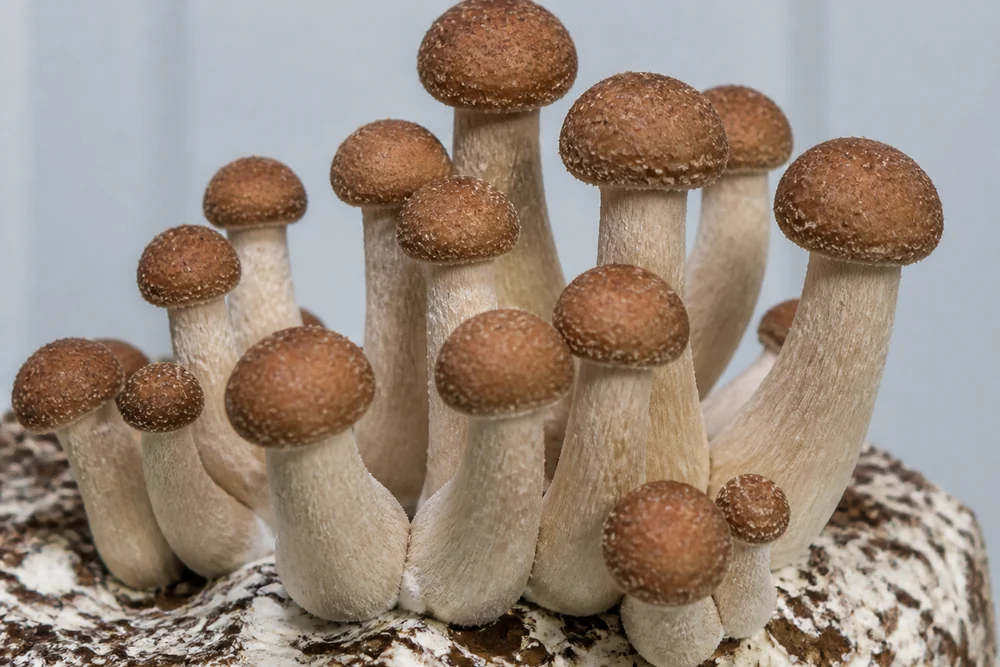
Specialist growers mean something else entirely, namely Pholiota adiposa, a clustered wood-rotting mushroom with a scaly cinnamon cap and a long firm stem that is sometimes sold as cinnamon cap.
Three things separate them at a glance:
- Clustered growth, which the Agaricus never shows.
- Small dry scales on the cap, which a cremini does not have.
- A long pale stem, where a cremini stem is short and thick.
The visual test takes a second. Clustered means Pholiota, single means Agaricus, and no other check is needed.
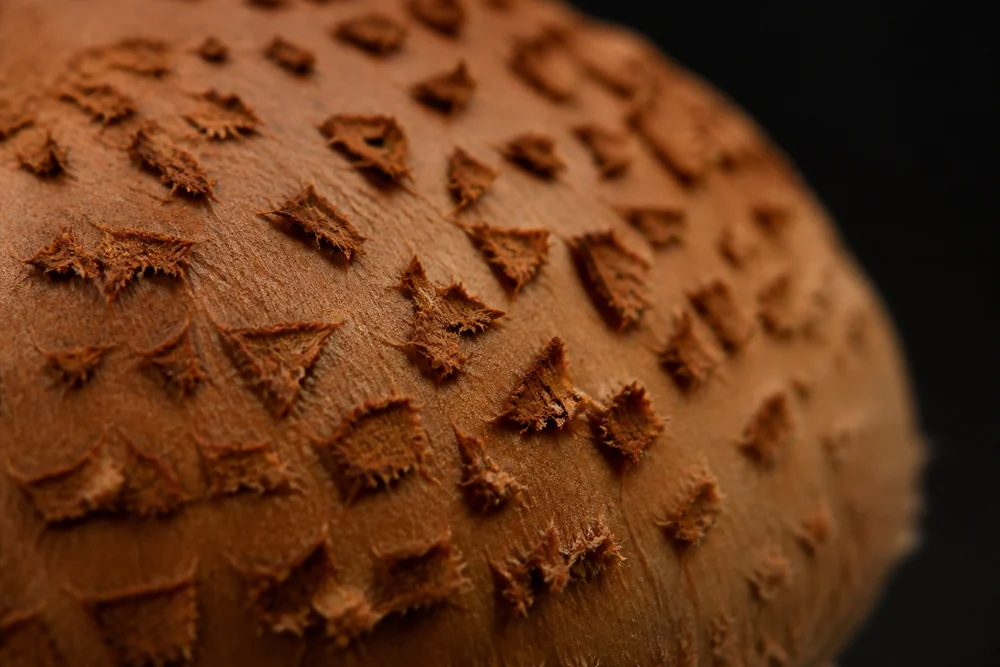
Those scales are the second half of the test, and seeing both mushrooms together settles it faster than any description does.

Neither name is wrong, which is the annoying part. Both mushrooms are brown, both are commonly eaten, and the word chestnut was applied to each of them independently by people who had no reason to check what the other trade was calling things.
Learn the culture and growing conditions for this species in the chestnut mushroom growing guide.
The two mushrooms want opposite treatments, which is why the name confusion matters beyond pedantry. A cremini rewards slow browning and a chestnut mushroom rewards speed.
Cooking MushroomsHow to Cook Cauliflower Mushroom Without Trapping GritEverything nameko does, in reverse
Put a chestnut mushroom next to a nameko and the family resemblance is obvious.
Key takeaway
Both are Pholiota, both arrive as tight clusters, and their cooking rules invert. Nameko is grown for a gelatinous coating that thickens liquid. This one is grown for a crisp stem that liquid destroys.
The visible difference is the surface. A nameko cap is wet and glossy where a chestnut mushroom cap is matte and faintly scaly, and that dry surface is the whole story.
Everything on our page about cooking nameko mushrooms flips here. Add them late to a simmering broth and you get soft threads instead of a thickened soup, because there is no coating to disperse and nothing left of the crunch.
Put the two rules side by side and the pattern is almost comic: the same genus, the same shape, the opposite instruction.
That is unusual enough to state plainly rather than leave a reader to discover it in a pot.
There is a reason the two ended up so different despite the relationship. Nameko fruits on wet wood in cool weather and produces its coating as protection against drying out, and the chestnut mushroom fruits in conditions where that investment would not pay.
Whether that explanation is complete does not matter much in a kitchen, since the surface you can see tells you which set of rules applies.
Dry heat is what this one wants. High, fast, and nothing wet in the pan until the mushrooms are already browned.
The stems are the point
Most recipes for cluster mushrooms say to trim the stems. Here that is exactly wrong.
| Caps | Stems | |
|---|---|---|
| Texture cooked | Soft, similar to any small cap | Crisp, distinctly firm |
| What they contribute | Flavor and appearance | The reason to buy the species |
| Cooking time | Slightly less | Slightly more |
| What to remove | Nothing | Only the compacted base |
The second row is the one worth arguing about, because it reverses a habit most cooks brought with them from other species.
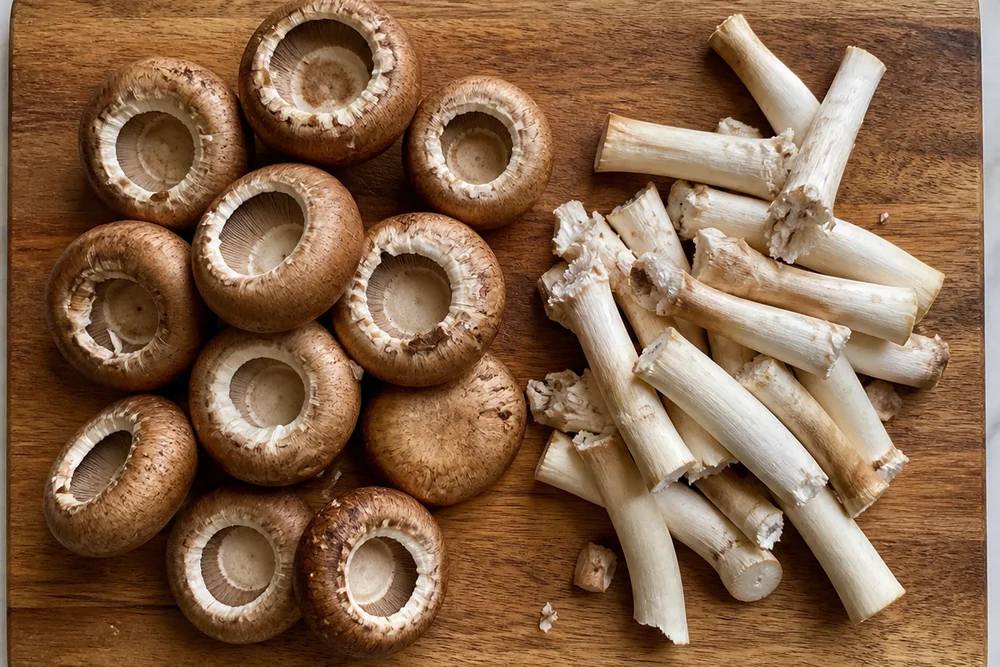
A chestnut mushroom stem is long, pale and considerably firmer than the cap above it. Cooked properly it keeps an audible crispness that almost nothing else in the aisle offers.
Cut across the very base of the cluster where the substrate was compacted, which is a centimetre at most, and leave everything above it.
Size is worth a note because the clusters vary. A pack usually holds mushrooms from thumbnail to thumb-sized on one base, and they all cook in roughly the same time, which is a convenience most mixed baskets do not offer.
Cutting higher is the mistake to avoid, because the cluster comes apart into loose individual mushrooms and you lose both the appearance and the convenience of cooking them in small groups.
Our page on eating chestnut mushroom stems works through the question in more detail. The short answer is that they are better than the caps.
Cooking MushroomsHow to Cook Black Morels: Halve Them, Never Slice ThemCleaning a cluster
Almost nothing. The reason is the same as for every mushroom grown indoors on a sterile block.
The scales are the part people worry about, and they are not debris at all but the cap surface breaking up as the mushroom expands.
Water is the specific thing to avoid rather than a general fussiness, because a rinsed cluster carries liquid into the pan, the temperature drops below browning, and what comes out is soft.
Our guide to cleaning mushrooms makes the general case. Here the cost of ignoring it is specific and immediate.
Drying them on a towel is not needed either, which is unusual for this site. There is nothing to dry, and the ten minutes most of these pages ask for is time the mushroom spends softening on a counter instead.
If a cluster genuinely arrives dirty, that is worth a word with whoever sold it to you. Cultivated Pholiota has no reason to be muddy.
High heat, short time
Three to four minutes in a properly hot pan, and nothing wet until the end.
Ninety seconds of stillness in the third step is what most cooks cut short, and it is where the color comes from.

They brown more readily than most cluster mushrooms because the surface is dry to begin with. There is no coating to drive off and very little surface water, so color starts almost immediately.
Batch size matters more than with a soft mushroom, because a crowded pan drops below browning temperature and the mushrooms sit in their own steam.
Six or seven minutes is where it goes wrong. The stems soften, the crispness goes, and it does not come back however you finish the dish.
Wet cooking is the other failure and it is faster. A splash of stock at minute two turns the whole pan into something closer to a nameko dish, which is a fine dish made from the wrong mushroom.
Three signs say the pan is going the wrong way:
- Gray rather than brown after two minutes, which means it was not hot enough.
- Liquid pooling, which means they were wet or the pan was crowded.
- Stems bending rather than snapping, which means the crunch has already gone.
If a recipe needs them in a sauce, brown them separately and fold them in at the very end. That keeps most of the texture and costs nothing but a second pan.
Cooking MushroomsHow to Cook Black Truffle Without Losing Its AromaWhat they taste like
Nutty, faintly sweet, and stronger than most small cluster mushrooms.
The third and fourth of those pull in the same direction, which is toward heat and away from liquid.
Flavor is a real part of the appeal here, which is not true of every mushroom on this site. Where nameko contributes texture and almost no taste, this one contributes both.
Whole clusters look better on a plate than separated ones and cook just as well. Three or four mushrooms still joined at the base brown as a unit and arrive looking like something rather than like scattered pieces.
The comparison worth making is cooking shimeji mushrooms, the other firm-stemmed cluster in the same aisle. Shimeji is milder and needs longer heat to lose its bitterness, and a chestnut mushroom is more assertive and needs less.
That difference in assertiveness decides where they belong, and speed decides the rest:
- Stir-fries, where high heat and short time are already the method.
- Scattered over rice or noodles at the last moment.
- Roasted hot and fast, in a single layer.
- Alongside a steak or a piece of fish, cooked in the same pan afterwards.
Anyone eating them regularly will find the figures on our chestnut mushroom nutrition record.
Do you have to cook them
Yes. There is a specific reason beyond the usual one.
Pholiota species are not eaten raw, and this one is no exception. Raw the stem is tough rather than crisp, and the flavor that makes it worth buying has not developed at all.
Two minutes of real heat is the minimum, which is less than most mushrooms need and enough here because the pieces are small and the surface is dry.
The upper limit matters more than the lower one, which is unusual. Most of this site is written about mushrooms that need more cooking than people give them, and this is one of the few that needs less.
That reversal is worth holding on to, because everything a cook learns from other mushrooms points the wrong way here.
Undercooked is therefore a rare complaint about the species. Overcooked is the common one, and it looks like soft gray pieces sitting in a pan that has gone quiet.
There is no toxin involved and nothing to be careful about. The instruction is entirely about getting the texture and the flavor that you paid for.
Buying and keeping them
Dry caps, firm pale stems, no water anywhere in the pack.
Condensation is the thing to look for and the thing most people ignore. A pack that has sat in a warm shop has been quietly steaming itself, and the stems will already be softer than they should be.
Price sits between the everyday and the specialist. They cost more than cremini and less than most wild mushrooms, and a pack goes further than it looks because almost none of it is waste.
Availability is the real constraint rather than price, since they turn up in Asian grocers and at farmers markets and almost never in a supermarket.
Color is a weaker signal than it looks. Cap color varies from a light tan to a deep cinnamon with growing conditions rather than with age, so a dark cluster is not necessarily an old one.
They keep well for a cluster mushroom, with a week in the fridge realistic.
The dry surface that makes them brown well also makes them slower to spoil.
Buying more than you need is safer here than with most cluster mushrooms, since the week of fridge life is real and the crunch survives most of it.
Nothing on that list is about spoilage. The mushroom stays perfectly safe for longer than a week and simply stops being the thing you bought.
Two habits carried over from other mushrooms cost the most here:
- Salting early, which pulls water to the surface exactly when you want it dry.
- Adding stock or wine to deglaze, which is the right move for a cremini and the wrong one here.
Neither is a serious error with any other mushroom in the aisle, and that is what makes them easy to make. The instinct is correct and the species is the exception.
Our page on storing chestnut mushrooms covers the container question and what freezing does. The short version is that freezing costs the crunch, so cook them first and accept that what you freeze is a different dish.
Sources & References
- Pholiota adiposa, the chestnut mushroom (Fungi Atlas) Species reference used for the clustered wood-rotting habit, the scaly cinnamon cap, the long firm stem and the relationship to Pholiota microspora, the nameko.
- Specialty Mushroom Production: Pholiota (Penn State Extension) Extension reference used for indoor block cultivation of Pholiota species, which explains why the clusters arrive clean and carry a compacted substrate base.
- Agaricus bisporus and the chestnut mushroom name (Mushroom Expert) Reference used to separate the brown Agaricus bisporus sold as chestnut mushroom in British shops from the clustered Pholiota sold under the same name by specialist growers.