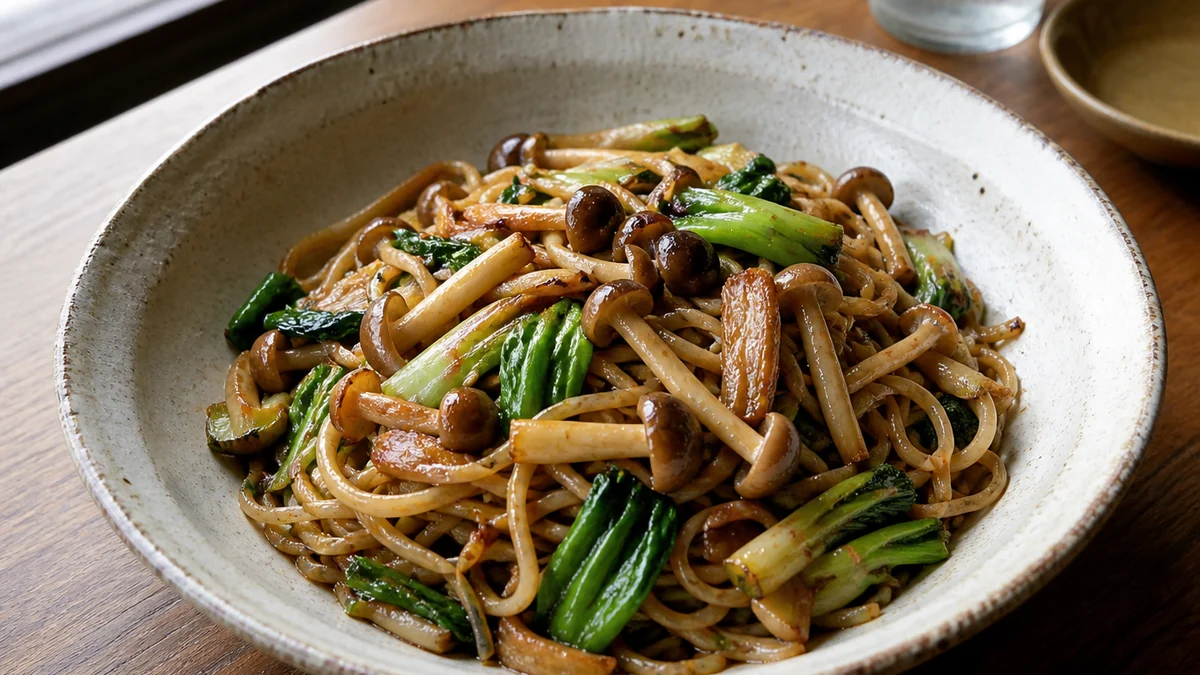
Shimeji is genuinely bitter raw, and a fast pan leaves the bitterness intact. Cook them five to seven minutes over medium-high heat until the edges are golden-brown, cut only the compacted base off the cluster, and add fat and salt late rather than at the start.
You cooked them the way you cook every other small mushroom, two minutes in a hot pan, and they came out bitter.
Nothing was wrong with the pack: shimeji is bitter raw, it stays bitter through a quick sear, and the only thing that removes it is several minutes of real heat.
Raw shimeji is bitter, and heat is the only fix
Taste one raw and you will not want a second.
Key takeaway
The bitterness is not a fault and not a sign the pack has turned. It is how the raw mushroom tastes, and it breaks down with sustained heat rather than with high heat.
That distinction between sustained and high is the one that costs people a meal. Cranking the heat gets you a browned outside and a stem that is still raw in the middle, which tastes exactly as bad as an undercooked one at low heat.
This is the part most recipes leave out, because they tell you to add shimeji at the end so the mushroom keeps its shape, which is good advice for texture and terrible advice for taste.
The other small cluster mushroom in the same aisle has the opposite problem, since our page on cooking enoki mushrooms argues for cooking them properly on safety grounds while here the reason is flavor alone.
A shimeji given thirty seconds in a pan is still a raw shimeji as far as your tongue is concerned, because the heat has to reach the middle of a stem that is denser than its thinness suggests.
The advice to add them late is not stupid, incidentally, and it comes from somewhere real. Shimeji caps do shrink and darken with long cooking, so a cook who cares about how the bowl looks has a reason to hold them back.
That reason is simply outweighed by the taste of an undercooked one. Darker caps in a good bowl beat pale caps in a bitter one every time.
Compare it with a cap-and-gill mushroom of the same size. A sliced cremini is a few millimetres of flesh and cooks through almost on contact, while a shimeji stem is solid all the way to its center.
There is no toxin in play and no special preparation to learn, which is the point our page on eating beech mushrooms raw makes at more length, so cook them for taste and the rest takes care of itself.
Cooking MushroomsHow to Cook Cauliflower Mushroom Without Trapping GritWhat is actually in the pack
Shimeji is a word about shops, not a word about species. Three quite different mushrooms travel under it.
| Sold as | What it is | How it cooks |
|---|---|---|
| Brown shimeji, buna-shimeji | Beech mushroom, the standard pack | Firm stems, nutty when browned |
| White shimeji, bunapi | The same species, a pale cultivar | Slightly milder, otherwise identical |
| Hon-shimeji | A different mushroom entirely | Rare in shops, richer, cooks the same way |
The first two rows are what you will actually meet, and although the labels differ by shop and by country the mushroom under them is the same one.
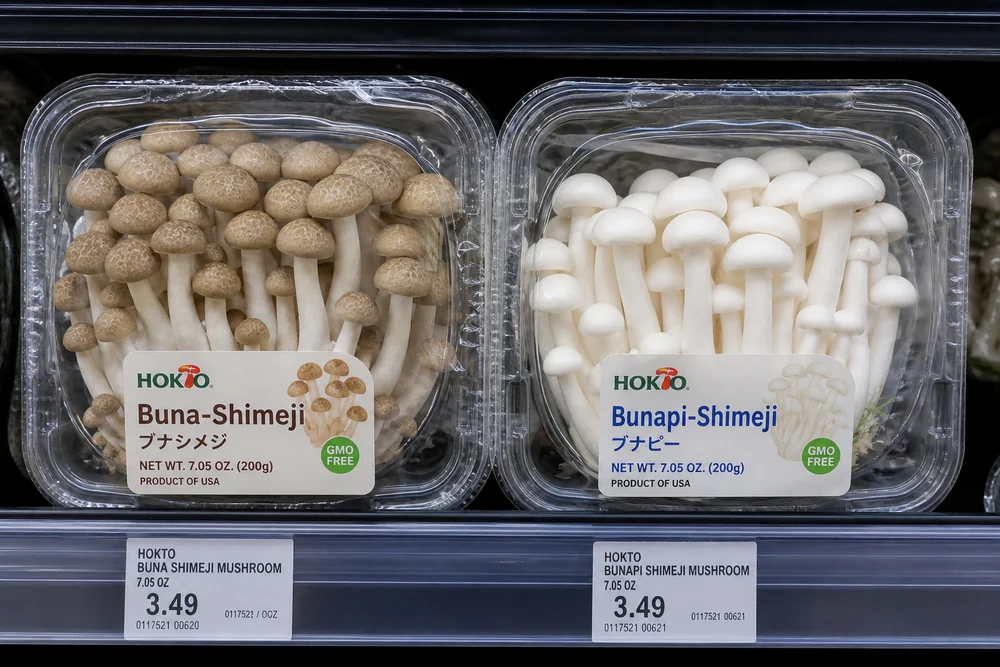
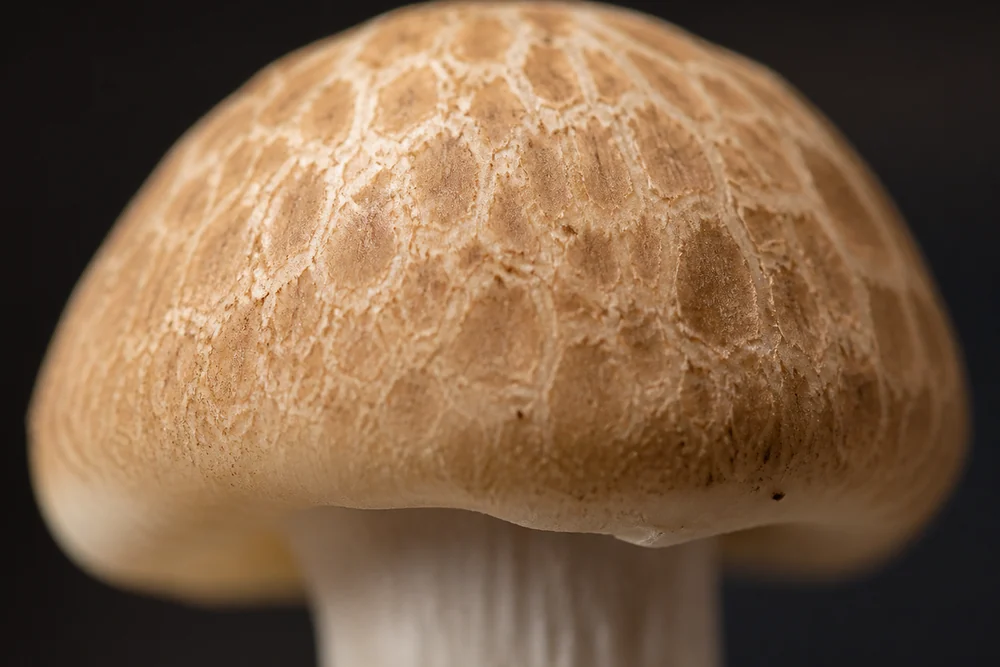
Almost everything sold as shimeji in a Western shop is beech mushroom, brown or white. Those two are the same species and you can treat them identically in the pan.
Hon-shimeji is the one worth knowing about because of a Japanese saying that gets quoted at it, matsutake for aroma and shimeji for flavor, a line written about hon-shimeji rather than about the pack in your fridge, which is why the pack can feel like a disappointment against its reputation.
The reason it is rare comes down to how it grows. Hon-shimeji lives in partnership with tree roots rather than on dead wood, and that partnership is hard to reproduce in a growing room, so almost nothing reaches shops outside Japan.
None of this changes what you do next, because every mushroom sold under the name wants the same treatment and the differences between them are matters of degree rather than method.

The base you cut off is not entirely waste. It is compacted substrate bound together with mycelium rather than mushroom, so it is not worth eating, but simmered with the trimmings from anything else it gives a light stock with the same nutty character.
White bunapi behaves identically in every way that matters, with one small difference worth knowing. The pale cultivar is a shade milder and a shade less bitter raw, which shortens the safe window at the low end by perhaps a minute rather than changing the method.
Growing them is a different subject with its own page, and growing beech mushrooms covers the long postripening stage that makes them slower than most species. What matters here is that the bottle is why your cluster has a hard shared base at the bottom.
How long is long enough
Five to seven minutes over medium-high heat, not two and not thirty seconds at the end of a stir-fry.
The gap between the first row and the second is where almost every complaint about this mushroom lives. Three extra minutes is the entire difference between a dish people push around the plate and one they finish.
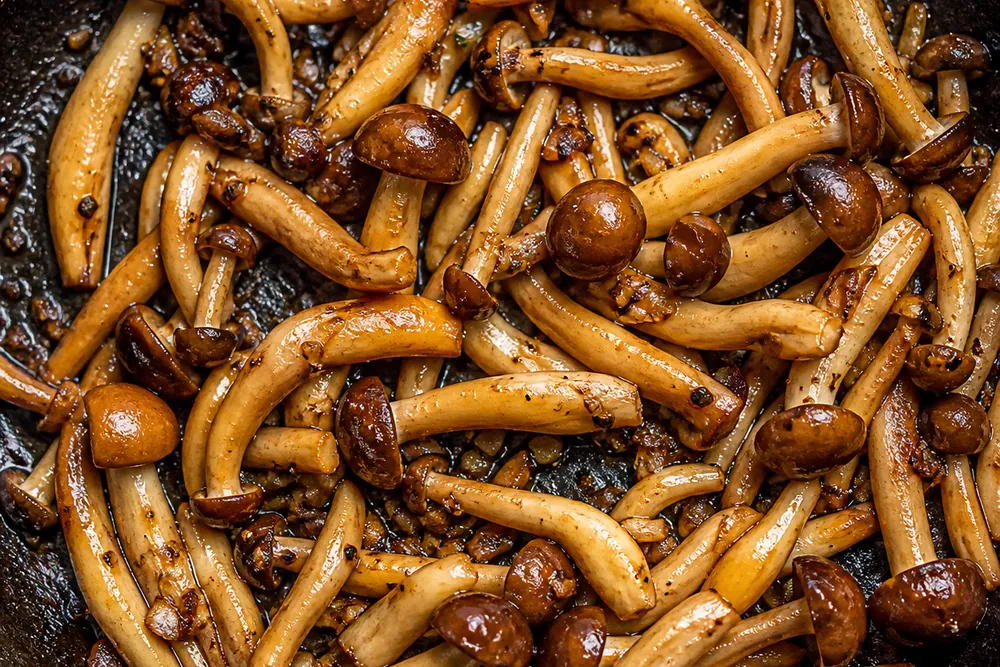
The numbers are a guide and the color is the instruction. A crowded pan takes longer, a wide pan takes less, and the mushroom tells you where it is.
The fourth step is the one people get wrong in the other direction. Fat added at the start sits between the mushroom and the pan, and the surface never gets hot enough to color.
There is a second variable behind that one, and it is the pan rather than the mushroom.
- A wide pan with the clusters in one layer browns them in about five minutes.
- A crowded pan traps the water they release and holds them at boiling point instead.
- Two batches in a wide pan beat one batch in a narrow one every time.
- A lid at any point undoes all of it, since the water comes straight back.
All three points come back to the same instruction, which is that color decides and the clock only advises. If they are still pale at seven minutes the pan was too full or too cool, and the answer is more time rather than less.
Cooking MushroomsHow to Cook Black Morels: Halve Them, Never Slice ThemCutting the base off
The cluster comes with a hard shared foot at the bottom where the bottle was. That is the only part you remove.
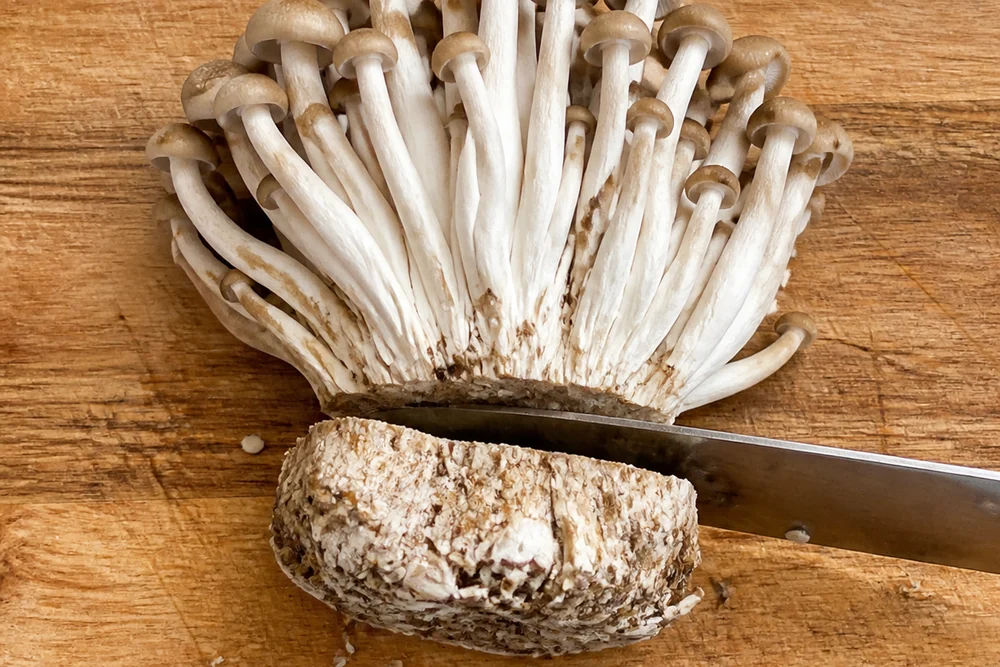
Cut low, right at the top of the compacted base.
Cutting a centimetre too high separates every stem from every other one, and the small clusters that make shimeji look good on a plate stop existing.
There is a reason the cut matters more here than on a loose mushroom. Shimeji is sold and cooked as clusters, and the cluster is the only thing holding the small caps in a shape that survives a pan.
Grown indoors in a sterile bottle they arrive clean, so there is no grit to chase and a rinse only adds water that the pan then has to drive off before browning can start.
Our general guide to cleaning mushrooms sets out where that rule tightens and where it loosens. Shimeji sits at the loose end, and a dry brush is usually the whole job.
Keep every bit of stem. The question of which mushroom stems earn their place comes up constantly, and our page on shimeji stems puts this species firmly in the keep column.
Why they hold their shape
Firm stems, and they stay firm.
Most small mushrooms give up their structure in liquid within a few minutes. Shimeji stems hold a slight bite through a bowl of soup, and that is the main reason they are worth buying rather than substituting.
Hotpot is where this matters most, because the pot sits on the table for an hour and everything in it keeps cooking.
Put shimeji in at the start of a nabe and by the second helping they are soft strings, so the usual practice is to add a fresh handful partway through rather than loading the pot once.
The caps go before the stems do. If you are simmering something for half an hour, add them in the last ten minutes and you get both the cooked flavor and the texture.
Freezing works on the same principle as reheating and for the same reason. Cook them first, cool them, and freeze them in portions, and what comes out is close enough to fresh that the difference shows up in appearance before it shows up in the bite.
That durability carries past the meal itself, which is the quiet advantage of the species.
A portion of cooked shimeji goes back into a pan the next day and comes out about the same, which is not true of oyster mushrooms or enoki. That makes them worth cooking deliberately in excess when you are making something you will eat twice.
The reason is the same low water content that makes them brown well, since there is less liquid inside to migrate out and leave the structure collapsed, so the stem keeps its bite through a second heating.
Cooking MushroomsHow to Cook Black Truffle Without Losing Its AromaWhat they taste like once the bitterness goes
Nutty and savory, with a clean finish. There is none of the earthy heaviness people expect from a brown mushroom.
Tip
Salt them late. Salt early pulls water out and the pan floods before any color develops, which on this species also means the bitterness is still there when you serve.
The texture is doing more work than the flavor, because what a spoonful of cooked shimeji actually gives a dish is a slight resistance worth more in a soup than another savory note would be.
That texture also decides what to put with them. They pair well with soy, butter, garlic and anything acidic at the end, while heavy cream buries them completely and wastes the one quality they have that other mushrooms do not.
Browning rather than the mushroom itself is where the savory flavor comes from, so an undercooked shimeji has nothing to speak of past the bitterness while a well browned one tastes like something you would order.
For anyone eating them often rather than occasionally, the shimeji nutrition record has the numbers. As a cooking matter they behave like a low-water mushroom, which is why they brown rather than boil.
What they suit
Dishes with a few minutes in them. That single rule sorts almost every case.
- Stir-fries, as long as they go in early rather than as a garnish.
- Hotpot and miso soup, added in the last ten minutes.
- Rice dishes and takikomi gohan, where the twenty minutes with the rice suits them exactly.
- Pasta and cream-free sauces, browned first in a separate pan.
- Anything reheated, since they survive it better than most.
- Omelettes and fried rice, where a few extra minutes are already built in.
The failure case is the thirty-second one. Tossed into a finished dish for appearance, they arrive raw, bitter and worse than nothing.
That failure has three common forms, and all three are the same mistake wearing different clothes:
- Adding them at the end for looks, so they never cook.
- Crowding the pan, so they steam instead of browning.
- Adding fat or salt first, so the surface never gets hot enough to color.
Takikomi gohan lets the mushrooms cook with the rice and contribute flavor to it.
The mushrooms go in with the raw rice, cook for the full twenty minutes, and come out nutty rather than bitter without anyone having to think about a pan at all.
If the shop has none, the substitution is not a straight swap because of the texture. Our page on shimeji substitutes works through which mushrooms come closest for which dish.
Buying and keeping them
Look at the stems before the caps. Firm, dry and pale is what you want, and any darkening at the cut base means the pack has been sitting.
Only the third line is a real problem. Wrinkled caps and a bit of moisture are cosmetic, and a well browned pan hides both of them completely.
A good pack also lasts longer than you would guess from the size of the mushrooms, about a week in the fridge, which beats enoki and most oysters.
The pack they come in is part of that, so leave them in it until you need them. The film keeps humidity steady around the cluster, and a shimeji moved to an open bowl dries at the cut base within a day or two.
Freezing works on the same principle as reheating. Cook them first, cool them, and freeze them in portions, and the difference from fresh shows up in appearance before it shows up in the bite.
Cost is worth a line, because shimeji is one of the cheaper specialty mushrooms and a pack costs less than most oysters by weight while shrinking less in the pan.
Treating them as a garnish is the version of this that goes wrong most often. A handful scattered over a finished bowl for color has had no heat at all, and the bitterness that follows gets blamed on the pack rather than on the pan it never met.
Our page on storing shimeji covers freezing and what happens to the texture. They freeze better cooked than raw.
Sources & References
- Hypsizygus tessellatus, the beech mushroom (Fungi Atlas) Species reference used for the identity of buna-shimeji and the white bunapi cultivar as the same species, and for the dense stem structure that underlies the cooking time described here.
- Specialty Mushroom Production: Hypsizygus (Penn State Extension) Extension reference used for bottle cultivation, the compacted substrate base the cluster is cut from, and the long postripening period that distinguishes this species from oyster mushrooms.
- Lyophyllum shimeji and the shimeji name (Mushroom Expert) Reference used to separate hon-shimeji from the cultivated beech mushroom sold under the same market name, and for why hon-shimeji rarely reaches shops.