Is fool's conecap poisonous?
Fool's conecap belongs to the little brown mushroom problem, a broad field category in which many unrelated species converge on small caps, thin stems, and brown spores. That similarity makes casual photo identification especially unsafe.
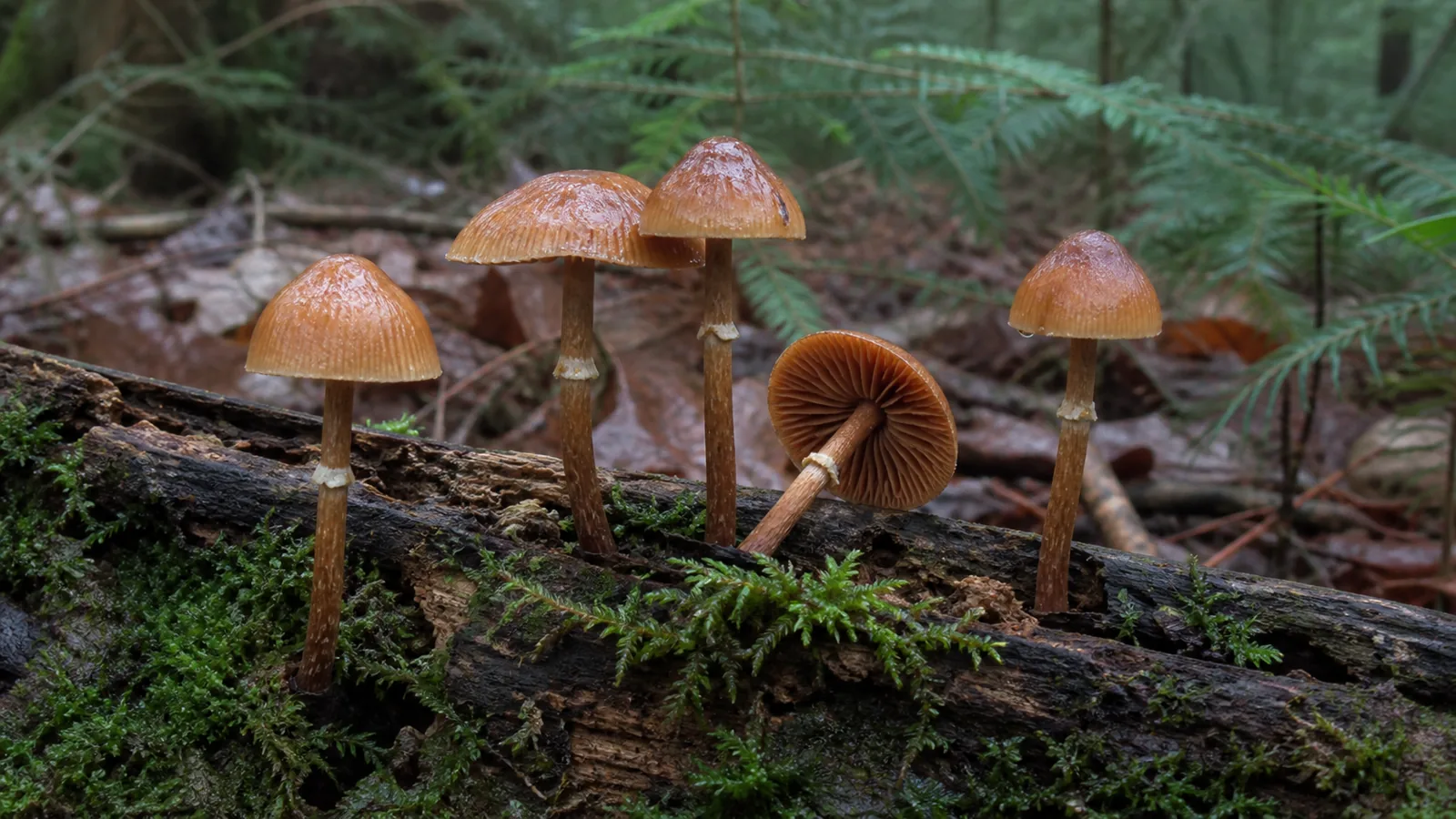
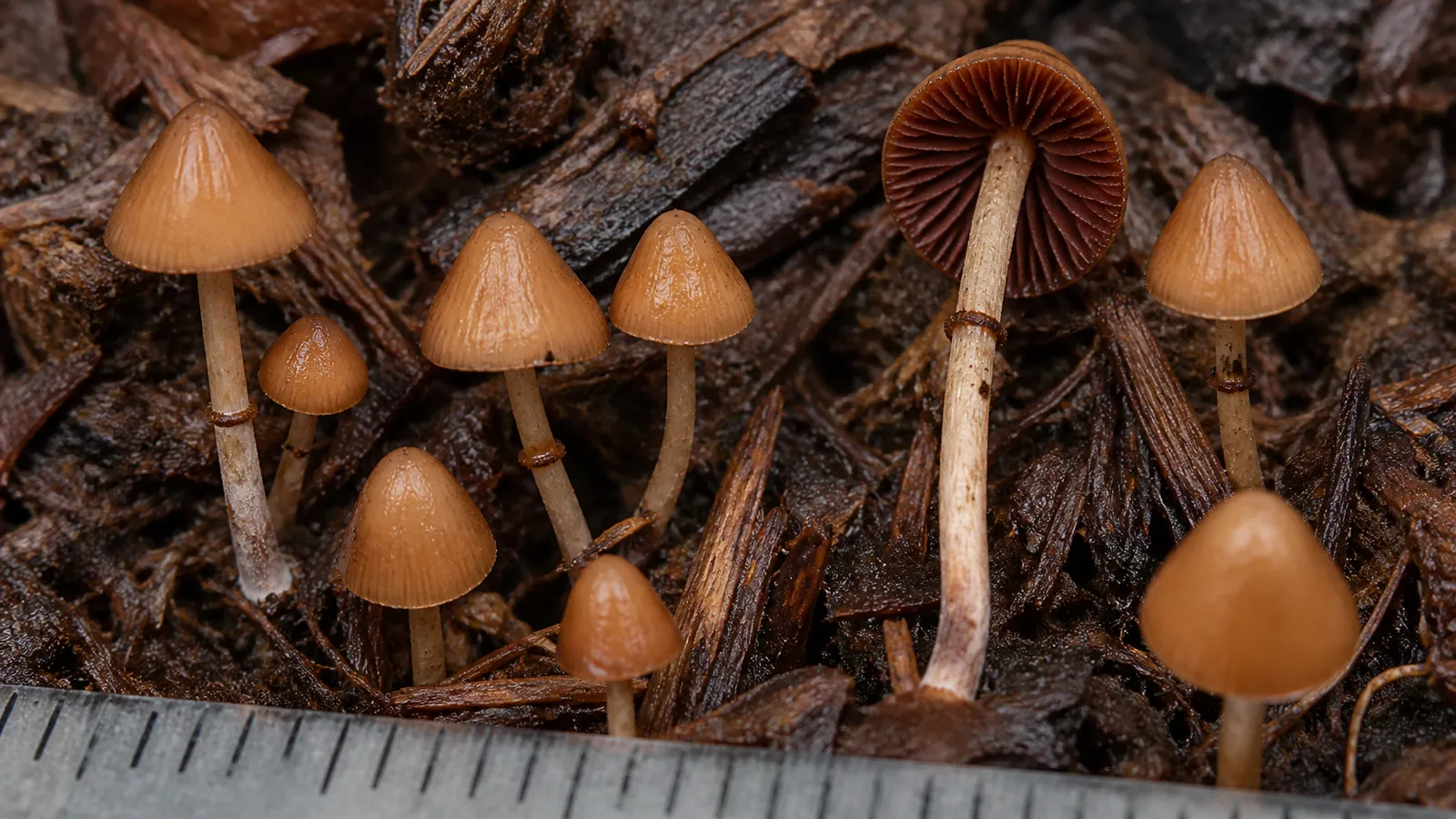
The fresh cap is cinnamon, ochre-brown, or warm tawny and often conical. As it expands, it becomes bell-shaped to nearly flat, sometimes retaining a modest central bump.
Moisture changes the cap rapidly.
A wet cap looks darker and may show a translucent striate margin, while drying produces paler tan zones that move inward from the edge.
The gills begin pale and mature to cinnamon or rusty brown. They attach to the stem rather than remaining free, and falling spores can dust the ring and lower cap margin.
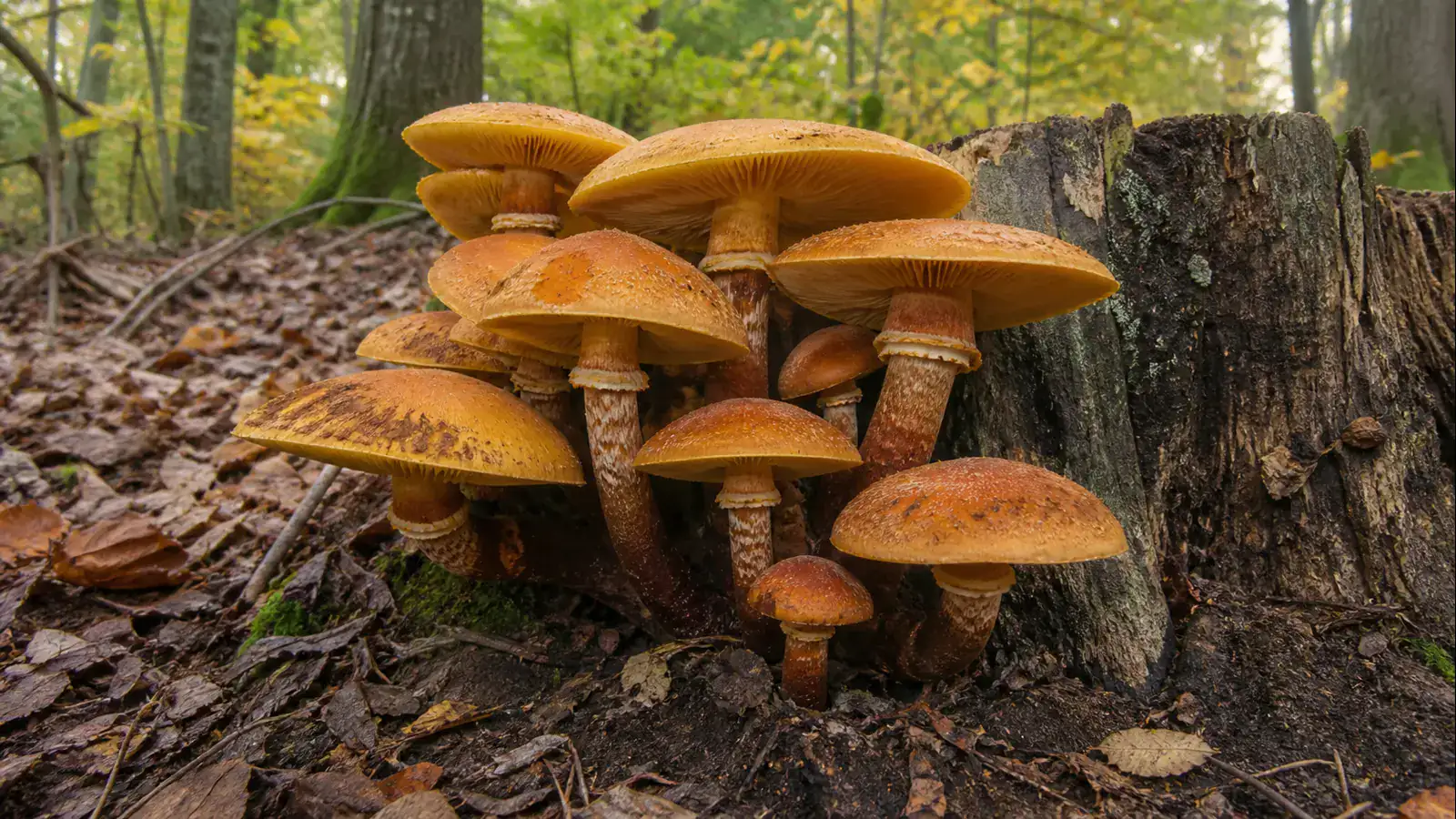
A thin membranous ring encircles the upper stem in fresh specimens. It may hang like a small skirt, collapse against the stem, tear during expansion, or disappear through weather and handling.
An absent ring cannot clear the mushroom. A damaged fool's conecap may look like many other ringless brown species while retaining the same amatoxin risk.
How do you identify fool's conecap?
Usually 1 to 3 cm across, cinnamon to ochre-brown, conical or bell-shaped when young, later broadly convex to nearly flat with a low umbo, smooth and strongly moisture-changing.
Attached, close, pale buff at first, becoming cinnamon or rusty brown as spores mature.
Slender, fragile, pale to brown, with a persistent membranous ring that may become stained by rusty spores, and no volva.
Thin brownish flesh with little or no distinctive odor. Never taste it.
Start with a colony view that shows whether the mushrooms rise from chips, buried wood, thatch, or soil. Then preserve intact stems from base to cap and compare several ages.

A mature rusty-brown spore print supports the conecap pattern but overlaps Galerina and other brown-spored genera. Microscopy evaluates smooth spores, germ pores, cystidia, and tissue structures.
Record the cap at wet and dry stages when possible. Hygrophanous zones can look like fixed markings in one photograph even though they move as moisture evaporates.
DNA and current keys may be necessary because names in Conocybe and Pholiotina have shifted.
Field uncertainty among wood-chip little brown mushrooms is a final rejection decision for food.
If someone may have eaten this mushroom, act now. Call Poison Control at 1-800-222-1222 (US) or emergency services before symptoms appear, and save a piece of the mushroom for identification.
What happens if you eat fool's conecap?
If anyone may have swallowed it, call Poison Control or emergency services immediately. Do not wait for nausea, and do not induce vomiting unless directed by a clinician.
Save fresh and dried specimens, substrate fragments, meal or tea remains, and photographs. Tell clinicians whether the mushrooms were eaten as food, taken intentionally for psychoactive effects, or mixed with another collection because that context guides identification without changing care urgency.
A tea bag, grinder, dehydrator tray, storage envelope, or capsule can retain fragments even when no whole cap remains. Do not clean equipment until Poison Control explains what evidence may help.
Online purchase records, collection messages, geotagged photographs, and the original package can establish source and timing. Preserve them without assuming a seller's species label is correct.
Amatoxin symptoms are delayed and can briefly improve before liver failure becomes apparent.
The symptom-free interval is part of the danger.
Intentional psychoactive use does not rule out a deadly contaminant. Little brown mushrooms can be mixed during collection, and bluing, substrate, or a seller's confidence cannot exclude a ringed amatoxin species.
Dried material can contain several stems and caps from different sites. Separate obvious forms into clean paper packets, photograph the full mixture, and let a mycologist decide which distinctions are meaningful.
Do not estimate risk from the number of tiny caps alone. Drying changes weight, portions vary, toxin distribution is uncertain, and the consumed material may not match the remaining sample.
Warning
Gastrointestinal symptoms beginning more than six hours after eating a little brown mushroom require urgent evaluation, serial liver tests, and toxicology consultation.
Why does the little-brown-mushroom category fail?
Deadly galerina is the most serious parallel because it also contains amatoxins, produces rusty-brown spores, can have a ring, and grows with decaying wood. Confusing the two changes the name but not the emergency response.
Hallucinogenic Psilocybe species are another real-world source of mistakes in wood-chip beds. Blue bruising, a different veil, and microscopic traits may help, but an amatoxin mushroom must never be ruled out by the collection goal.
Deadly galerina often fruits directly from logs or woody debris and may have a more fibrillose stem below the ring.
Fool's conecap can be smaller and more delicate, yet both vary enough that those tendencies do not prove species.
Some Agrocybe and Conocybe species share brown spores and managed-ground habitat. Ring presence, cap moisture, spores, cystidia, and substrate need a current key.

| Candidate | Shared evidence | Why the distinction remains difficult |
|---|---|---|
| Deadly galerina | Rusty spores, ring, wood association, amatoxins | Size and stem texture vary |
| Psilocybe species | Small brown cap, wood chips | Collection intent can bias interpretation |
| Agrocybe species | Brown spores, ring in some species | Young gills and cap colors overlap |
| Other Pholiotina | Small conical cap and brown spores | Microscopy or DNA may be necessary |
Key takeaway
Never consume a little brown mushroom from wood chips on the basis of an app, overhead photo, blue-looking shadow, or presumed psychoactive habitat.
Why do older reports say Conocybe filaris?
The species has traveled through several names, including Conocybe filaris, Conocybe rugosa, and Pholiotina filaris. Current sources often use Pholiotina rugosa, though databases and poison reports may retain older combinations.
The move reflects changes in how brown-spored conecaps are divided by veil, spores, cap structure, and molecular relationships. Searching only the current name misses older clinical and field records.
Synonym awareness is a safety tool because toxin evidence may be filed under a former genus.
It does not imply that every named conecap contains the same compounds.
How do irrigation and wood chips extend its season?
Fool's conecap is saprotrophic and feeds on decomposing plant material. Wood chips, bark mulch, buried wood, compost-rich beds, and thatch create the moist carbon-rich microsites where it fruits.

The fungus may appear in spring, summer, or autumn and persist into mild winters. Irrigated landscapes can generate flushes when nearby wild ground is dry.
Small groups can be sparse enough that one toxic cap is collected with another species. Search the substrate around every find and keep clusters from different pieces of wood separate.
Removing visible mushrooms limits immediate access but leaves mycelium within the chips. Refreshing or replacing mulch is a landscaping decision, while prompt fruiting-body removal is the direct child and pet safety action.
Edible plants beside the mulch do not absorb amatoxin from the fungus.
Risk comes from eating the mushroom or contaminated prepared material, not from harvesting a nearby tomato.
How should separate wood-chip clusters be mapped before collection?
A wood-chip bed can hold several small brown mushroom colonies at once, and loose caps from different clusters become indistinguishable in one container. Record the site before lifting anything so each specimen keeps its relationship to substrate, irrigation, neighbors, and maturity stage.
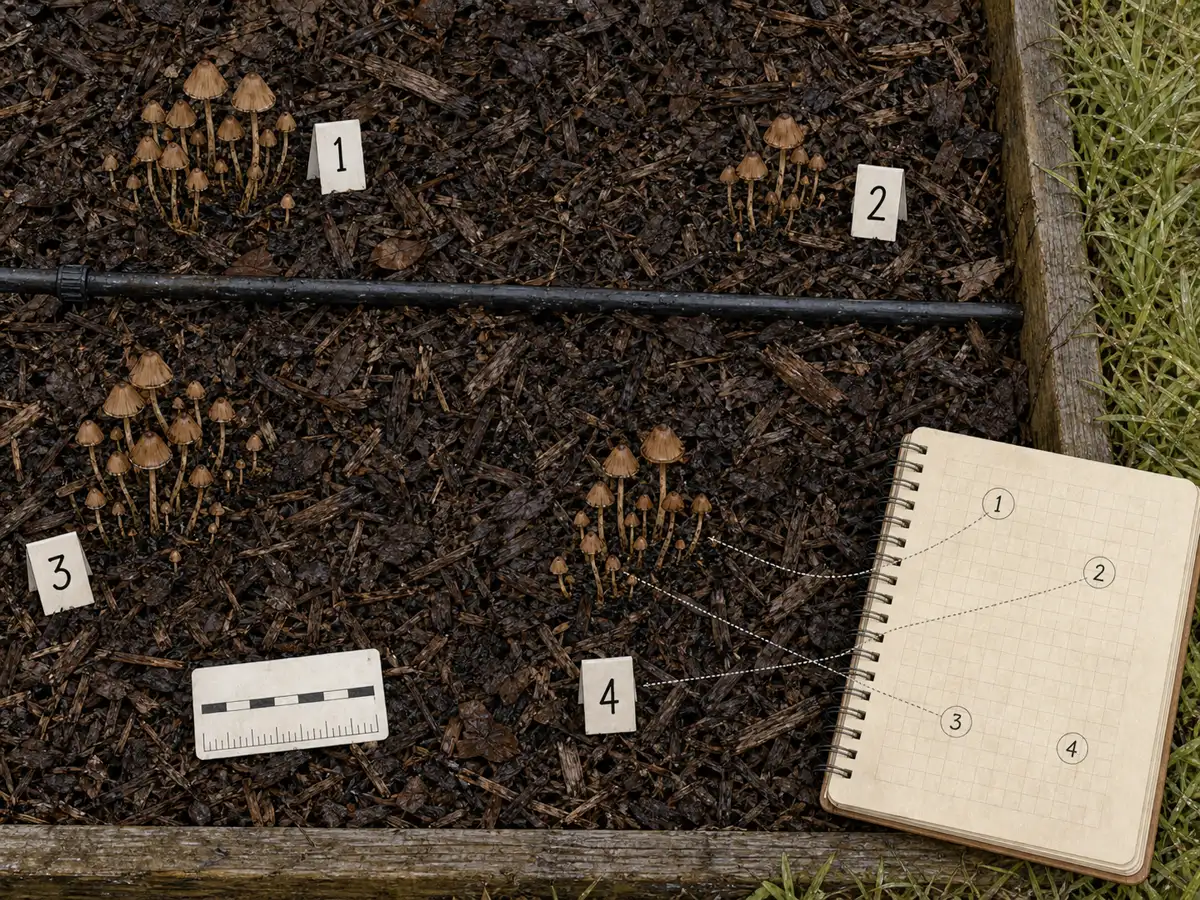
Distance alone does not prove that two groups are different species, and close neighbors do not prove they are one species. The record preserves those competing possibilities for someone who can examine gills, spores, veil tissue, microscopy, and substrate attachment.
A useful collection keeps identity evidence connected from ground to packet. A mixed bag of tiny brown caps may retain toxin but lose most of the information needed to explain an exposure.
What should you record before the fool's conecap ring disappears?
The partial veil is strongest on young fool's conecaps and can leave a small ring or fragments on the stem. Expansion, rain, handling, and age can tear that evidence away, so an older bare stem does not prove the mushroom was always ringless.
Rusty-brown gills and spores become more evident as the veil disappears, while the hygrophanous cap may also fade. These changes can make one patch look like several little brown mushroom species across a few days.
A mixed-age series is useful only when every specimen remains tied to its own cap, stem, base, and location. Loose caps, cleaned stems, and a pile of ring fragments remove the sequence an identifier needs.
Absence of a ring on one mature stem is missing evidence, not contrary evidence. Treat the whole small brown wood-chip collection as unsafe when its veil history cannot be reconstructed.
Why are teas and powders especially risky?
Fool's conecap has no culinary use. Its tiny size does not imply a small risk because amatoxins are potent and the mushroom can be swallowed whole.
Tea, drying, powdering, and capsule preparation destroy nearly every visual feature needed for identification while preserving toxin.
That makes retained fresh specimens and substrate photographs especially valuable after exposure.
Do not pick suspect pieces out of cooked food or a brewed liquid. Fine fragments and dissolved material cannot be recovered by visual sorting.
Discard the intended meal and keep a sample for Poison Control. No flavor, odor, or cooking response can establish safety.
How does amatoxin injury continue after stomach symptoms?
Amatoxins inhibit RNA polymerase II and stop essential protein synthesis. Liver cells take up the toxin, and enterohepatic circulation can prolong exposure.
After a silent interval, severe vomiting, abdominal pain, and watery diarrhea may begin. Apparent gastrointestinal recovery can follow while liver enzymes, clotting abnormalities, kidney injury, low blood sugar, jaundice, and encephalopathy progress.
| Evidence to preserve | Clinical value |
|---|---|
| Fresh cap, gills, ring, and base | Supports morphological identification |
| Dry material or powder | Can support microscopy or chemical testing |
| Wood-chip substrate and site photos | Narrows ecological candidates |
| Meal and symptom timeline | Helps distinguish early and delayed syndromes |
Medical care can include decontamination decisions, fluids, serial laboratory monitoring, toxicology-directed therapies, intensive care, and transplant evaluation.
There is no home antidote and no medicinal use for the mushroom.
Fool's conecap questions
Is fool's conecap deadly?
Does it always have a ring?
Where does it grow?
How is it different from deadly galerina?
Can drying or tea preparation destroy amatoxins?
Why are there several scientific names?
Sources & References
- Occurrence and chemotaxonomical analysis of amatoxins Broader amatoxin chemistry and lethal small-mushroom context.
- CDC MMWR Amatoxin phases, delayed liver injury, and urgency.
- Utah Poison Control Amatoxin mechanism, timeline, and management.
- NCBI Bookshelf Clinical course and poison-center consultation for amatoxin toxicity.