What is tremella?
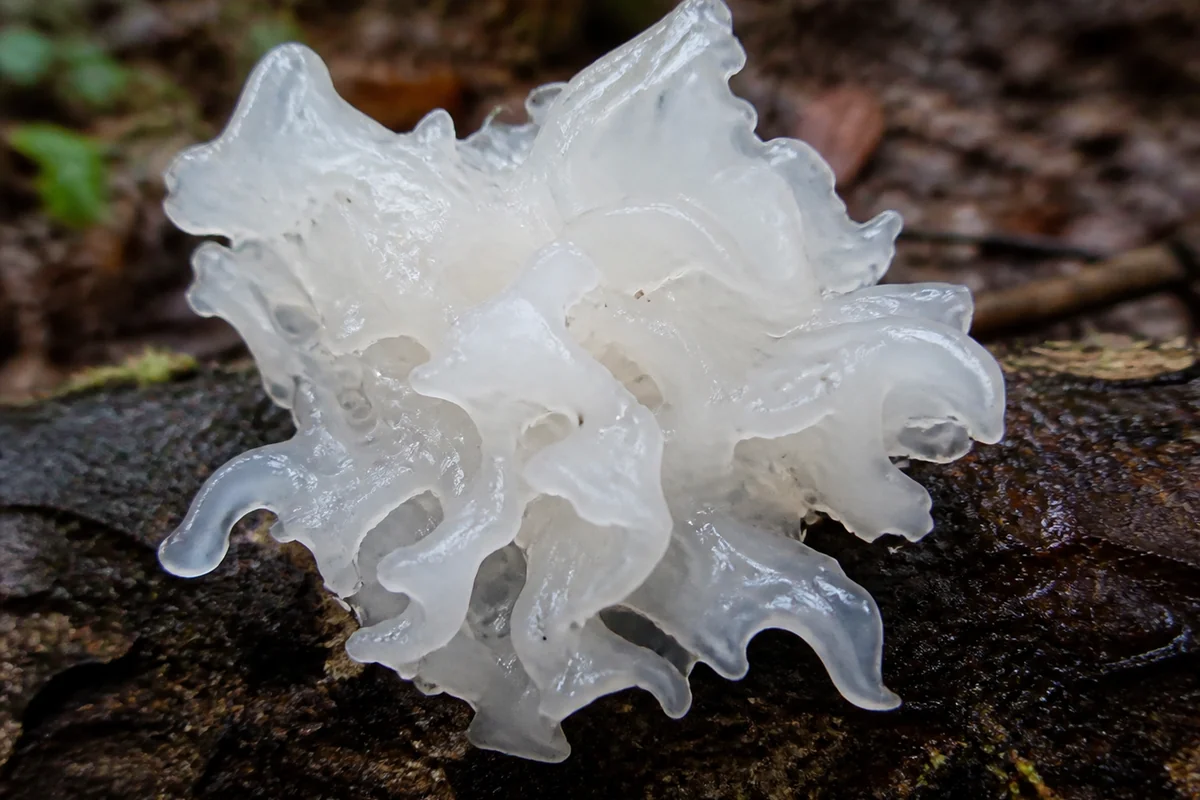
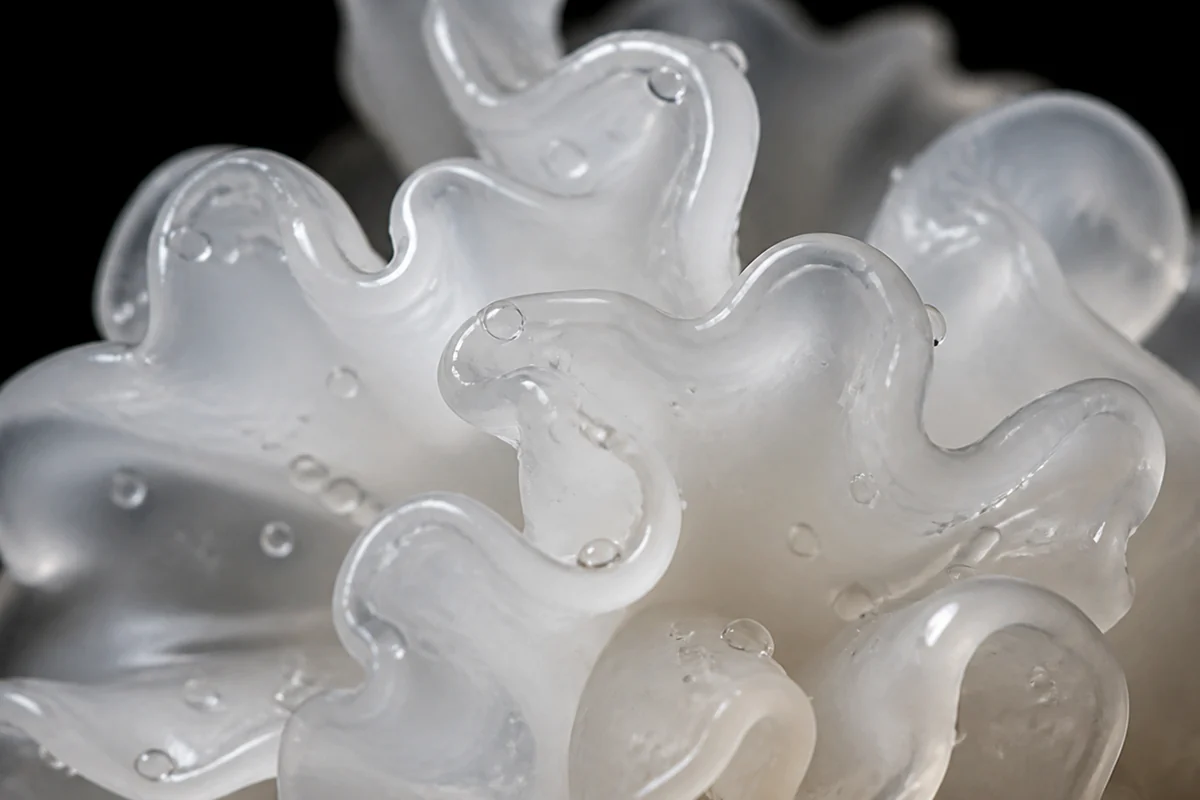
A tremella fruiting body is a rosette of thin translucent white lobes, crimped and folded like a wet frill, growing straight out of bark with no stem and no cap.
It is gelatinous rather than fleshy. The structure is largely polysaccharide and water, which is what makes it translucent and what makes it collapse to almost nothing when dried.
Wild specimens reach about 7 cm across and cultivated ones grow considerably larger, which is a useful thing to know when comparing a photograph with a packet.
The common names all describe the same impression from different directions. Snow fungus, snow ear, silver ear and white cloud ear are each trying to name something white, folded and not quite solid.
Almost nobody buys it fresh. It is sold dried, in a form that has shrunk to a fraction of its size and looks more like a piece of crumpled paper than a mushroom, which is why the first encounter is usually confusing.
How do you identify tremella?
No cap. The fruiting body is a rosette of thin translucent white lobes up to about 7 cm across in the wild and larger in cultivation, crimped and wavy at the edges.
No gills. Spores are produced over the surface of the gelatinous lobes.
No stem. The rosette emerges directly from bark, attached at a narrow point.
Gelatinous, watery white and translucent, with almost no smell and almost no taste.
There is very little to identify and one thing worth looking for.
A white gelatinous frilled rosette on dead hardwood is close to unmistakable, and the useful check is what is growing beside it.
The host is the character that makes this identification interesting rather than merely easy.
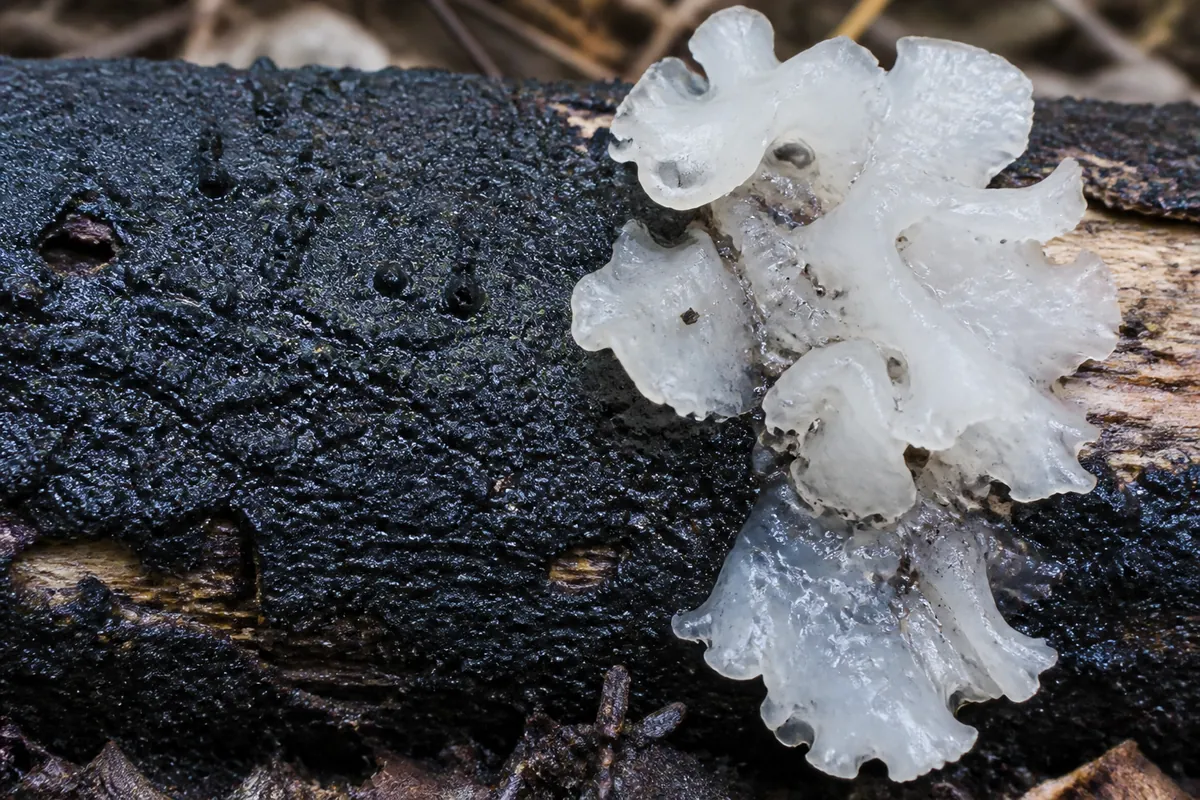
Other jelly fungi share the texture and differ in color and shape. Texture alone puts a specimen in a broad group and settles nothing inside it.
Yellow and orange brain-shaped jellies, brown ear-shaped species that sit flat against bark, and firm black ones are all common on dead wood. None of them is a white frilled rosette, and shape separates them before color does.
None of the temperate jelly fungi is dangerous, which makes this a low-stakes group to learn, and it is still worth being right about what a specimen actually is.
What else looks like a white jelly fungus?
The confusions here cost nothing, which is unusual on this site. Several white or pale jelly fungi grow on dead wood, and the frilled rosette shape narrows things considerably.
Note
No dangerous white jelly fungus grows on hardwood branches in the regions this species occupies. That makes tremella a reasonable one to learn early, and it does not make every white jelly worth eating.
The practical caution is about the wood rather than the fungus. A jelly growing on treated timber, on a roadside branch or on wood that has been sprayed is carrying whatever the wood carries.
Most people meet this species dried in a packet rather than on a branch, and there the question is a supply question rather than an identification one.
Dried tremella is sold widely and is usually exactly what it says, since nothing else looks like it once rehydrated.
Note
Nothing about identifying a white jelly fungus is difficult. The judgement worth making is about the wood it grew on and where the packet came from.
How is tremella cooked?
Tremella is bought for texture, and it has almost no flavor of its own. It is sold dried, as a hard crinkled cream-colored ball that looks nothing like the fresh fungus, and it rehydrates into a large soft white rosette in about half an hour.
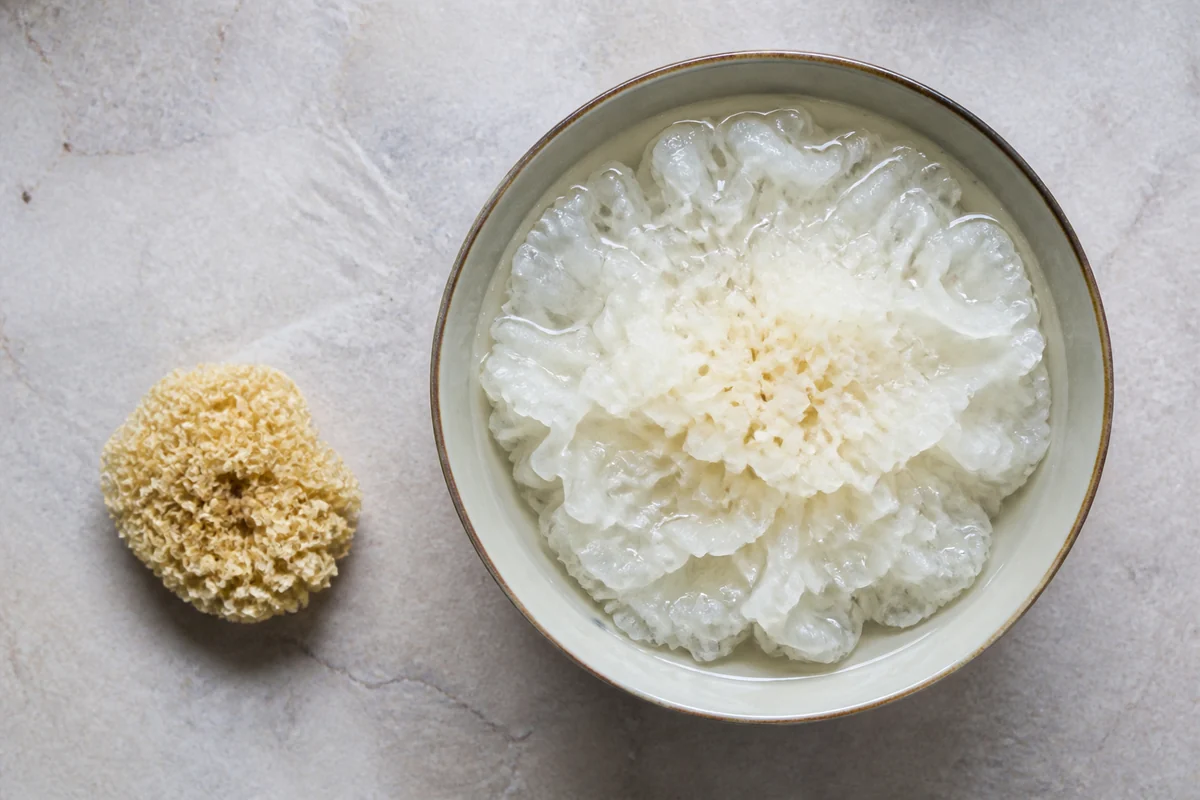
The traditional Chinese uses are sweet rather than savory. It goes into dessert soups with rock sugar, jujube, lotus seed and dried longan, simmered long enough for the lobes to soften and give the liquid body.
Tip
Trim the hard yellowish base after soaking. That part stays tough however long it cooks, and everything above it turns silky.
Long simmering is the point rather than a risk. The polysaccharides that make up most of the fungus dissolve slowly into the liquid and thicken it, which is the whole reason for its place in a dessert soup.
The texture is worth describing properly because it is the entire product.
Cooked tremella is slippery on the outside and slightly crisp where the folds are thickest, so a spoonful gives way and then resists.
It works in savory cooking too and is much less used that way. Shredded into a soup or a cold dressed salad it adds crunch and a slippery bite without changing the flavor of anything.
Dried weight is the thing to watch when cooking from a recipe. A small handful opens into a bowlful, and the usual mistake is soaking far more than the dish needs.
How is tremella farmed?
This is where the parasitic habit stops being a curiosity and becomes the entire production method. Early attempts to farm tremella were unreliable because growers were doing what works for every other cultivated mushroom, which is to inoculate a sterilized substrate with one fungus.
Reliable production arrived with dual culture. Both the tremella and its host go into the same sawdust substrate, and the tremella fruits once it has something to feed on.
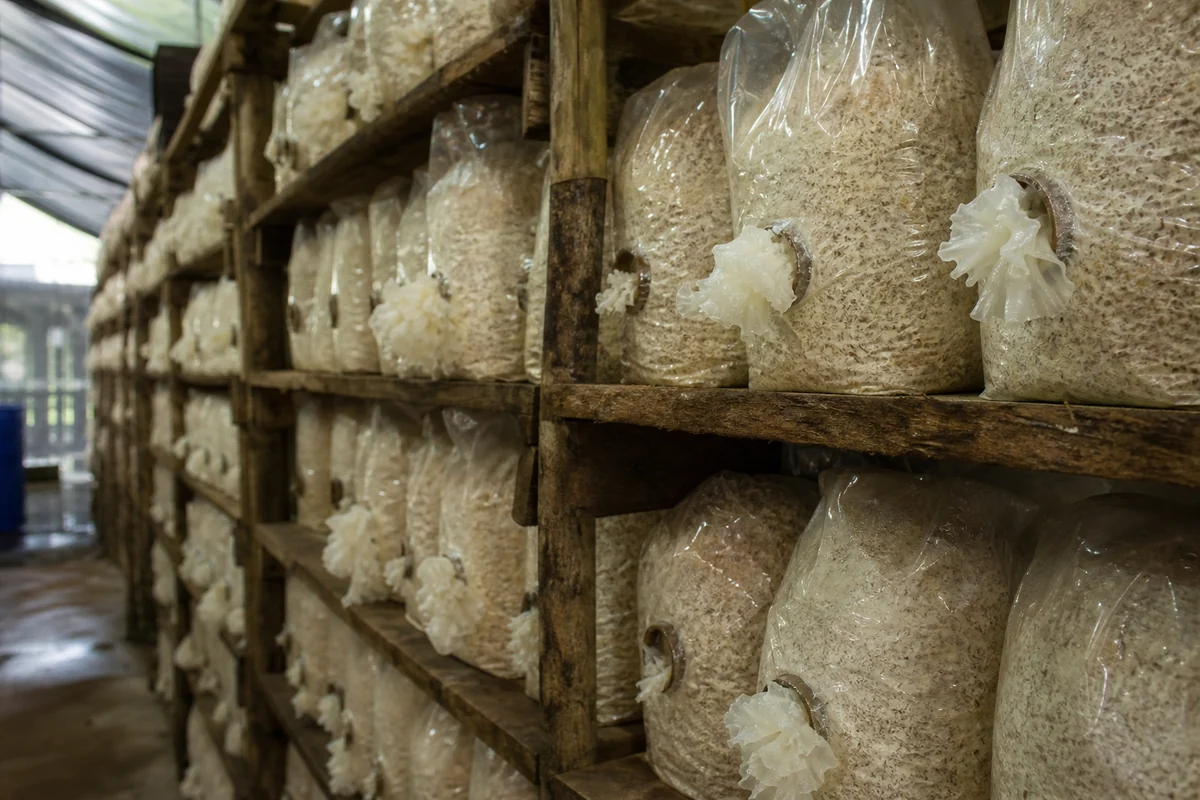
Annulohypoxylon archeri is the host used most often, because it is the one this species prefers. Home kits exist and behave less predictably than oyster or shiitake kits do, which follows directly from there being a second organism whose health nobody is monitoring.
Contamination also reads differently here. On an ordinary sawdust block any unexpected fungus is a problem, and on a tremella block one particular unexpected fungus is the entire point.
That makes quality control a stranger job than it sounds. A grower has to keep everything out except the one organism they deliberately put in alongside the crop, and the two have to stay in balance rather than one overrunning the other.
Get the balance wrong in one direction and the host takes the block without producing anything worth selling.
Get it wrong in the other and the tremella runs out of food before the fruiting bodies reach size.
Cultivated fruiting bodies also grow considerably larger than wild ones, which is worth expecting when a packet looks nothing like a photograph taken in a forest.
Is there anything in it nutritionally?
Tremella is mostly water and polysaccharide, and the dried form is largely fiber by weight. That composition is the reason it behaves as it does in a pot, since the same material that thickens a dessert soup is the material a nutrition table records as fiber.
It contributes very little protein, fat or energy. A dessert soup made with it takes its calories from the sugar rather than from the fungus.
What does tremella actually feed on?
Tremella is a parasite of other fungi, which is the fact this whole page rests on.
Its hosts are wood-rotting fungi in the genus Annulohypoxylon and its relatives, the rough black crusts and hard black lumps that spread over dead branches.
- Host
- Annulohypoxylon and related wood-rot fungi
- Substrate
- Dead branches of broadleaf trees, via the host
- Climate
- Mainly tropical and subtropical, into temperate Asia and North America
- Trigger
- Contact with a host, which starts the fruiting growth
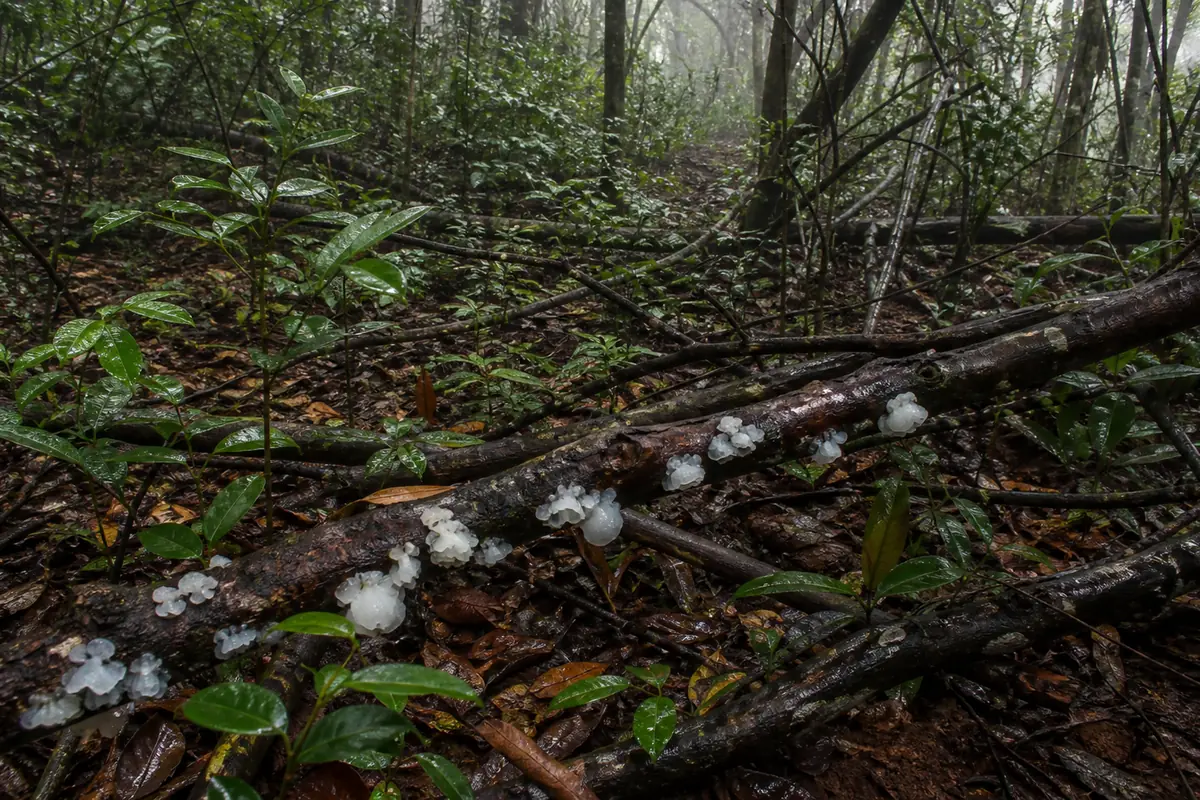
This is a parasitic habit sitting on top of a wood-decay one. Establish both the fungal host and its wood substrate when checking a find. Most profiles here can treat habitat as background, and this one cannot.
Until it finds a host it does very little. Tremella grows as a slimy yeast-like film that persists without producing anything anybody would recognize as a mushroom.
Meeting a host changes that completely. It invades the other fungus, and the invasion triggers the vigorous growth that produces the frilled fruiting body.
So the branch is not really the substrate.
The host fungus is digesting the wood and the tremella is digesting the host, which puts two organisms between the tree and the thing on the plate.
Does tremella do anything for skin?
Tremella has a long record in Chinese food traditions and a large modern presence in skincare, and those are two different claims. The skin health page sets out the cosmetic side properly, including what tremella polysaccharide actually does at the skin surface and how the comparison with hyaluronic acid holds up.
Note
The short version is that it is a working humectant with a plausible structure, which is a reasonable thing to buy and a much smaller claim than most marketing makes.
Eaten, there is no clinical evidence base worth reporting.
It is a food with a pleasant texture and a long history, and that is enough to be going on with.
Why do sources use two different names for its host?
The host relationship has left a mark on the naming that is worth following.
The hosts were placed in Hypoxylon for a long time and many were moved to Annulohypoxylon in 2005, including the species used in commercial cultivation.
Key takeaway
A reader looking up how tremella is grown will meet both genus names depending on when the source was written, and both are describing the same group of black wood-rot fungi.
The genus Tremella itself is large and almost entirely parasitic on other fungi, which makes this species typical of its relatives rather than an oddity. Several Tremella species parasitise crust fungi and lichens, and most of them are small, obscure and nobody's dinner.
The white frilled edible one is simply the member that grew big enough and tasted neutral enough to be worth farming, which is a common way for a mushroom to become famous.
Its placement in Tremellaceae has been stable, and the family is defined on microscopic structure rather than on the jelly texture that several unrelated groups share.
That is worth a moment, because jelly is a way of being rather than a relationship. Several quite separate lineages have arrived at a water-filled gelatinous fruiting body, for the good reason that it survives drying out and revives when it rains.
Frequently Asked Questions
What does tremella feed on?
Is tremella edible?
How is tremella grown?
How do you prepare dried tremella?
Is tremella good for skin?
Are there poisonous white jelly fungi?
Sources & References
- Tremella fuciformis General account used for the gelatinous white fruiting body reaching about 7 cm across with larger cultivated specimens, the parasitic relationship with Annulohypoxylon and Hypoxylon species including the preferred host Annulohypoxylon archeri, the yeast-like growth phase before it meets a host, the mainly tropical and subtropical distribution on dead broadleaf branches, the dual culture cultivation method, and the traditional use in Chinese sweet dessert soups.
- Annulohypoxylon Used for the 2005 reassignment of many Hypoxylon species to Annulohypoxylon, which is why cultivation sources written at different times use different genus names for the same host fungi.