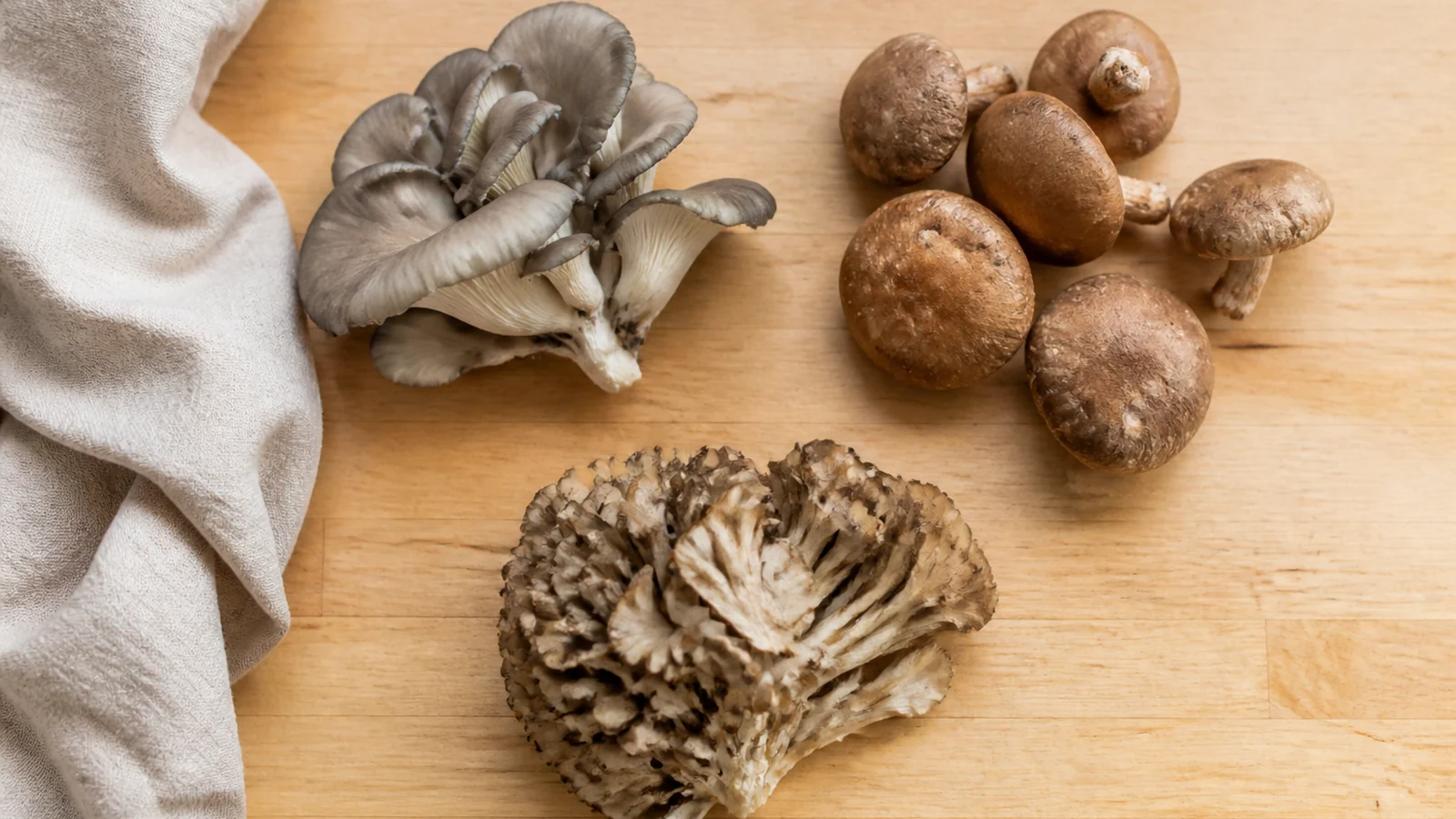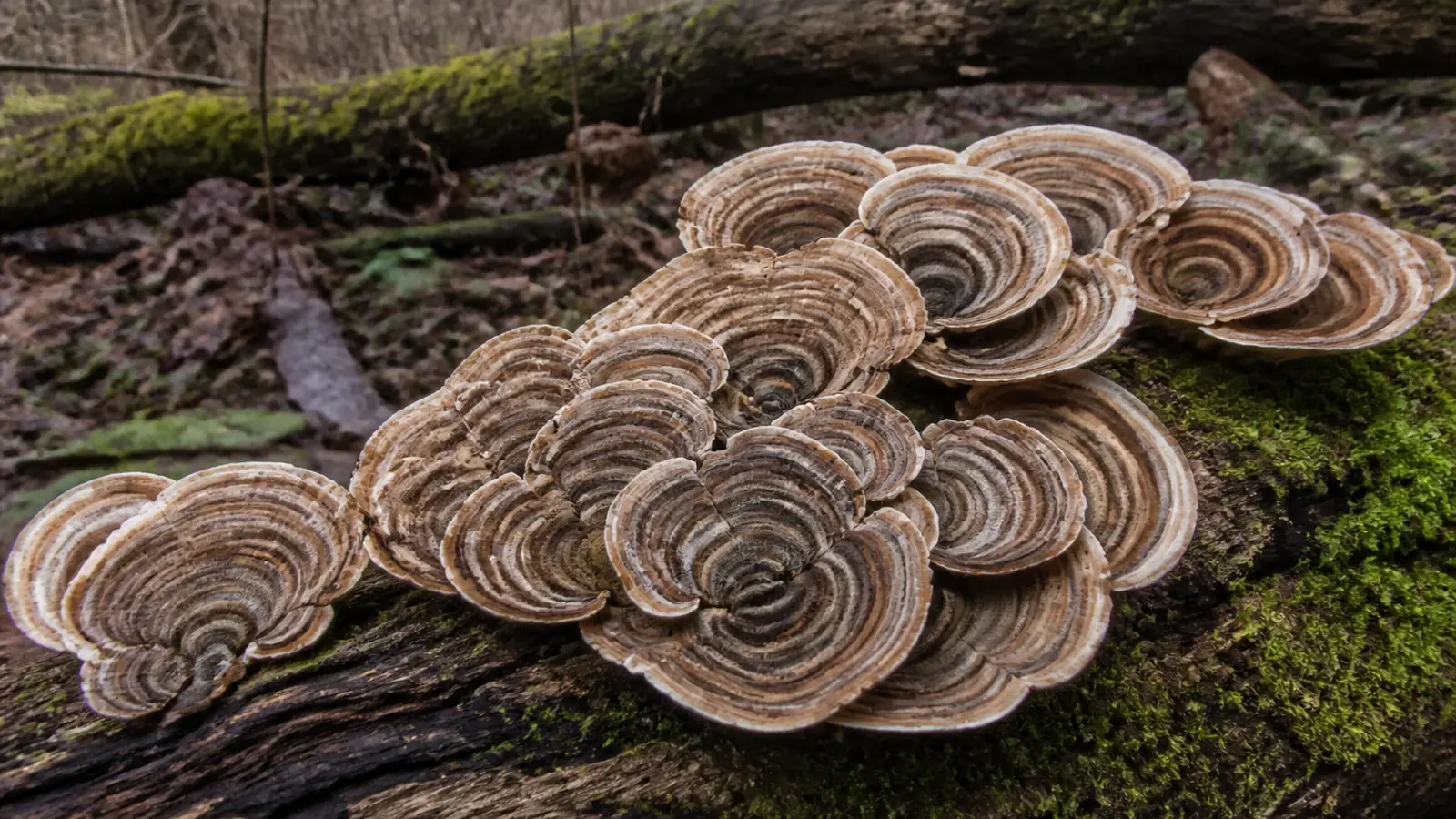
An ingredient-level audit of mushroom skincare, separating topical cosmetic materials with recorded composition from oral supplements with no skin outcomes, and covering shiitake flagellate dermatitis, the best-documented mushroom skin effect in the medical literature.
The best-documented connection between mushrooms and skin in the medical literature is a rash, and it comes from eating them rather than applying them.
Separate benefits claimed for skin from documented adverse reactions.
Mushroom skin claims split three ways, and almost nothing transfers between the three. Sorting a claim into the right one does more work than any species name on a front label.
What the evidence actually covers
Three separate bodies of information get blended together whenever mushrooms and skin appear in the same sentence.
The first is cosmetic ingredient science. A mushroom-derived material used in a formula is a raw material with a known composition, a stated concentration and a defined function, and that is a real if modest kind of evidence.
The second is oral supplementation, where the trials measure immune markers, fatigue, cognition or blood lipids. Skin outcomes are measurable, and almost nobody in this literature measures them.

The third is the adverse literature, which is where the best-documented mushroom-skin relationship actually sits.
None of these three transfers to the others. A humectant that binds water at the surface has nothing to say about a capsule, and a capsule with no skin trial has nothing to say about either.
The practical consequence is a sorting question you can run in a few seconds. Is this claim about something applied, something swallowed, or something documented as a reaction?
Check whether a result concerns the skin, a laboratory model, or an ingredient used for a different purpose.
Medicinal MushroomsLion's Mane Benefits: What Human Trials Actually FoundWhich mushroom ingredients do real work in a formula
Only a short list of mushroom-derived materials appears in cosmetic formulation with a defined job.
- Tremella polysaccharide
- A humectant, used to bind water at the skin surface
- Fungal beta-glucans
- Film-forming and soothing agents, used for feel and barrier support
- Ergothioneine
- A sulfur-containing antioxidant, with mushrooms as the richest dietary source
- What none of them are
- Treatments for a skin condition, and none is regulated as one
Humectant, film former and antioxidant are formulation categories rather than clinical claims. Each has a well-understood ceiling, and each is doing something genuinely useful inside a product that is mostly water, oil and emulsifier.
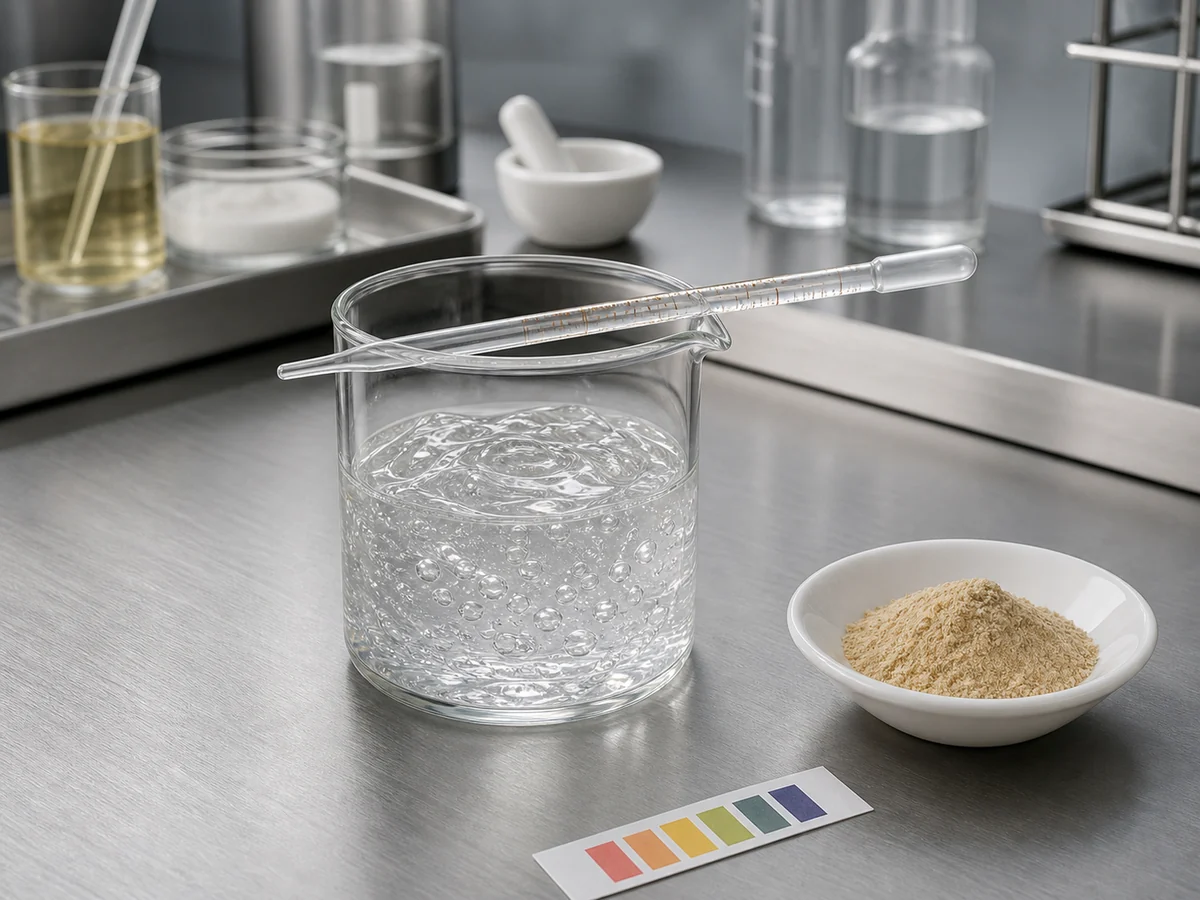
A humectant pulls water into the outer layer and holds it there. It makes skin feel and look better while it is present, and it stops doing that when you stop using it.
Ergothioneine is the most interesting of the three, because mushrooms genuinely dominate it as a dietary source rather than merely containing some.
Estimates put mushrooms at the overwhelming majority of typical dietary intake, with other foods carrying only traces.
It is also a compound the body treats as worth keeping. Human cells carry a dedicated transporter for ergothioneine, which is unusual and is the main reason researchers took an interest in it at all.
That is a real distinction, and it is a nutritional one. Being the richest dietary source of a compound is not the same as that compound changing skin, whether it arrives in a meal or in a serum.
- A humectant claim is about water at the surface, which is why its effect fades and returns with use.
- A film-forming claim is about feel and barrier support, which is measurable and modest.
- An antioxidant claim in a cosmetic is about the formula and the skin surface, not about a systemic effect.
Read an ingredient list for these functions rather than for species, and most of the category resolves quickly.
What tremella does that a moisturizer needs
Snow mushroom is the one mushroom ingredient with a genuine following, and it is sold almost entirely on a comparison.
The claim is that tremella works like hyaluronic acid, or better. It is worth taking that apart, because the underlying material is real and the comparison is doing more work than it has earned.
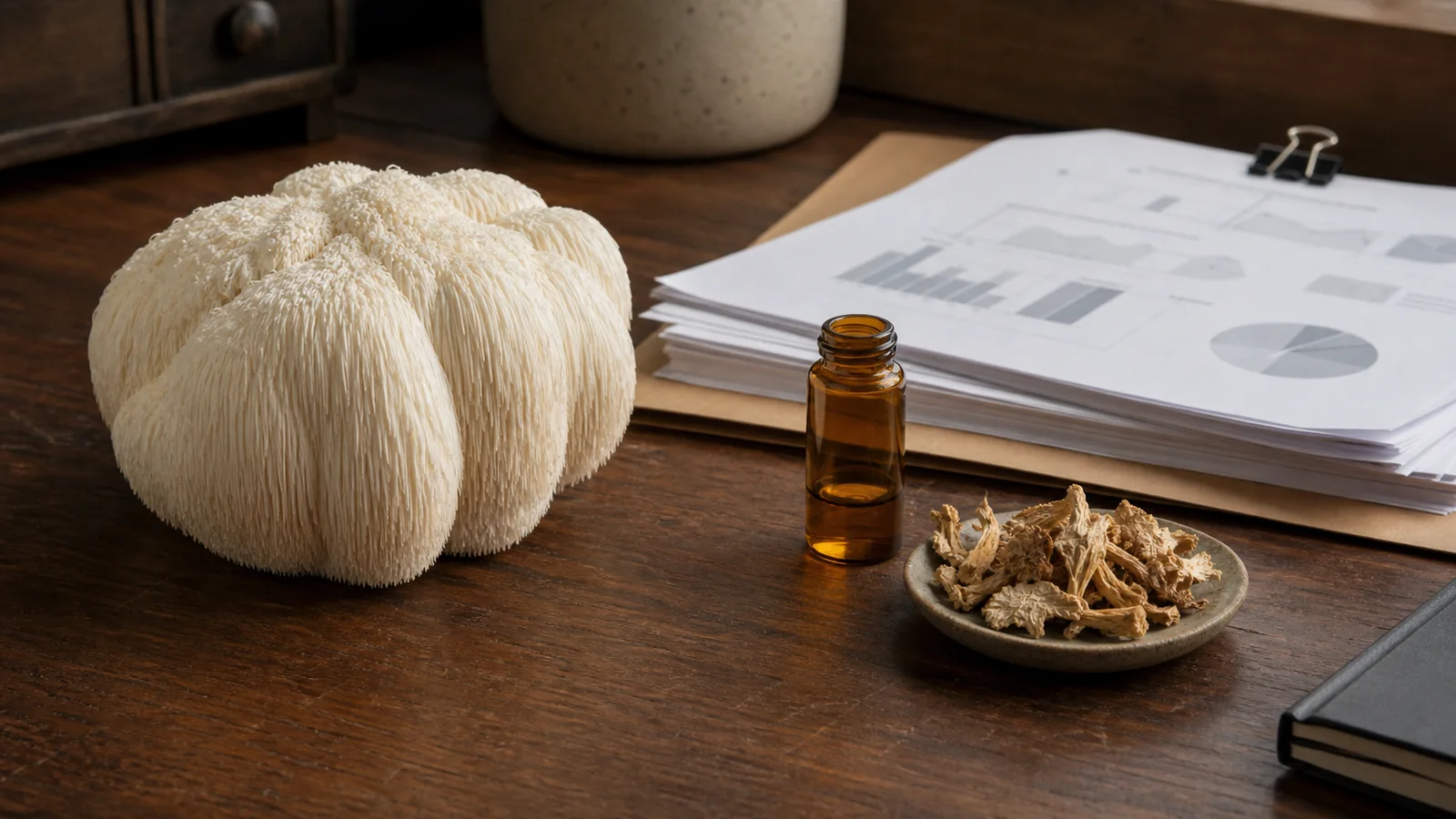
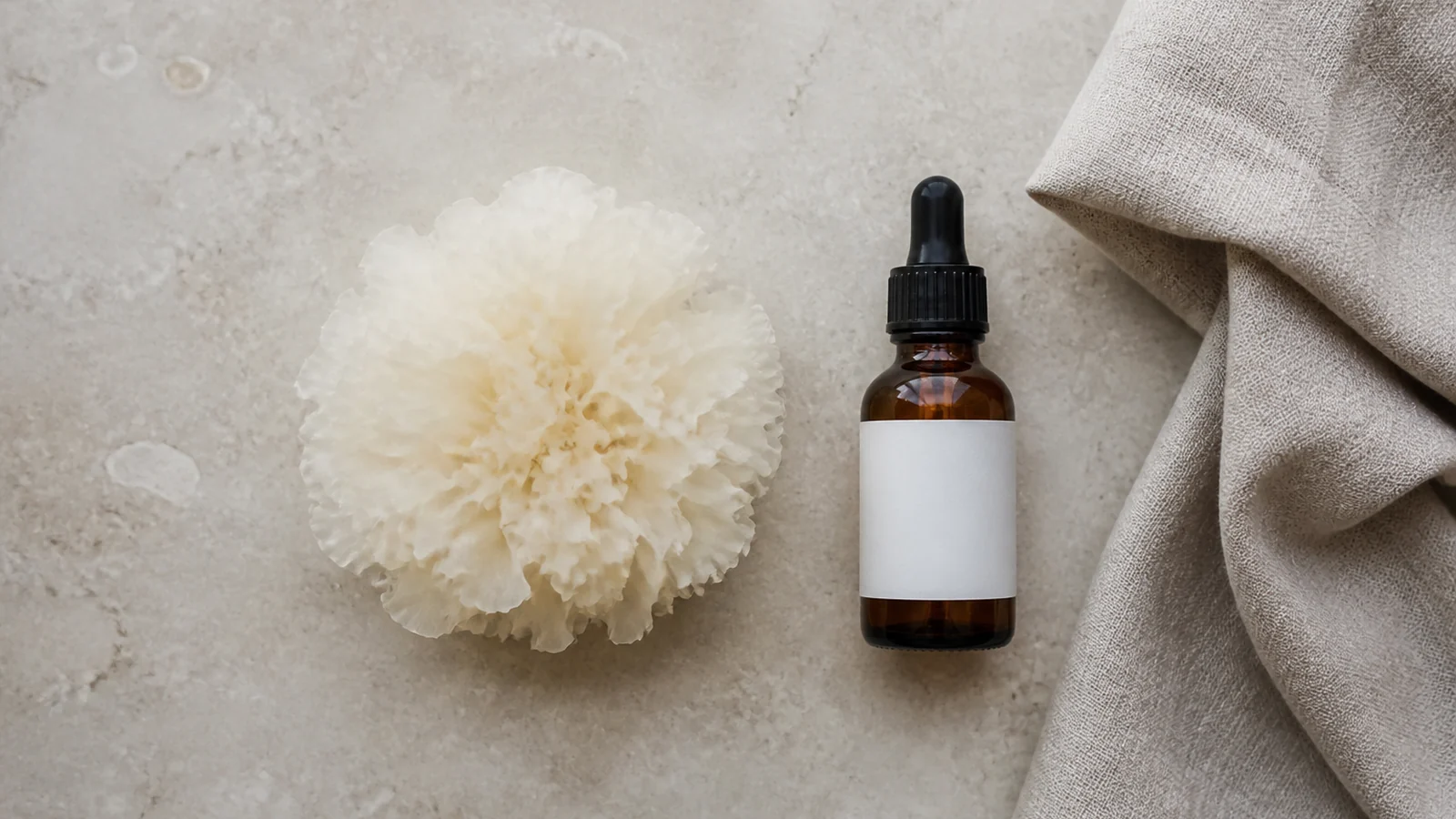
Tremella fuciformis is a jelly fungus. Its fruiting body is largely polysaccharide and water, which is exactly why the frilled, translucent structure looks the way it does.
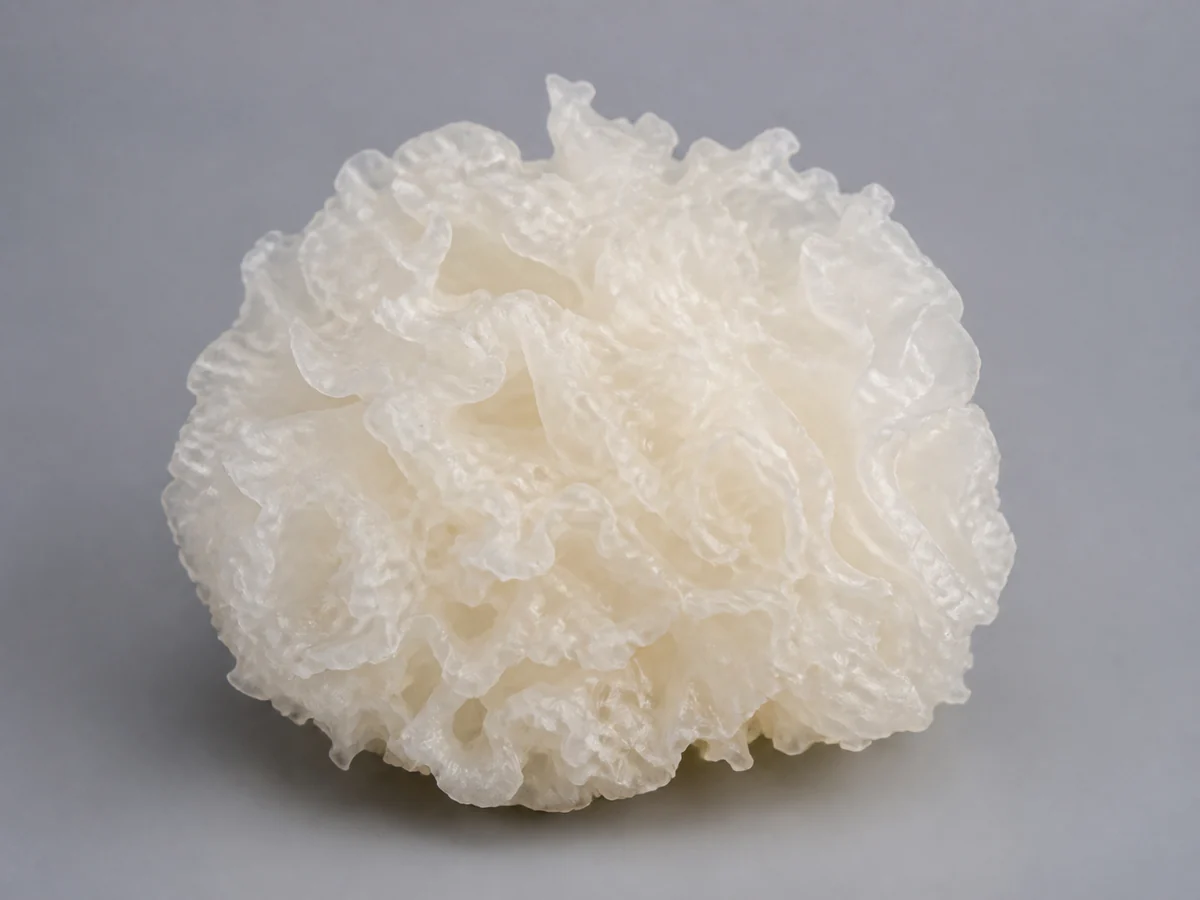
The polysaccharide contains glucuronic acid, which hyaluronic acid also contains, and that shared building block is where the comparison started.
| What is compared | Tremella polysaccharide | Hyaluronic acid |
|---|---|---|
| Material type | Fungal polysaccharide, mixed sugars | Glycosaminoglycan, repeating disaccharide |
| Shared component | Glucuronic acid, roughly a sixth of the polysaccharide | Glucuronic acid, half of every repeating unit |
| Function in a formula | Humectant | Humectant |
| Head-to-head evidence | Supplier and manufacturer literature | Decades of cosmetic and clinical use |
Shared chemistry is not equivalence. The two are different classes of molecule that happen to overlap in one component and in one job.
The comparative numbers that circulate online, including the water-holding multiples and the claims of outperforming a hyaluronic acid control, trace back to ingredient supplier literature rather than to independent trials.
That does not make tremella a bad ingredient. A working humectant with a plausible structure is a perfectly reasonable thing to buy, and it is a much smaller claim than the marketing makes.
The honest summary is that snow mushroom is a competent humectant sold as a breakthrough. If you like how a product feels and it costs what a moisturizer costs, that is a sound purchase on its own terms.
Why kojic acid keeps getting called a mushroom ingredient
One of the most widely sold ingredients in this category is not a mushroom ingredient at all.
Kojic acid is produced by Aspergillus fermentation, the koji mold used to make sake, miso and soy sauce. Aspergillus is a fungus, which is where the slippage begins, but it produces no fruiting body of the kind the word mushroom describes.
Only the last of those five rows is about the ingredient itself, and the four above it are about a mix-up.
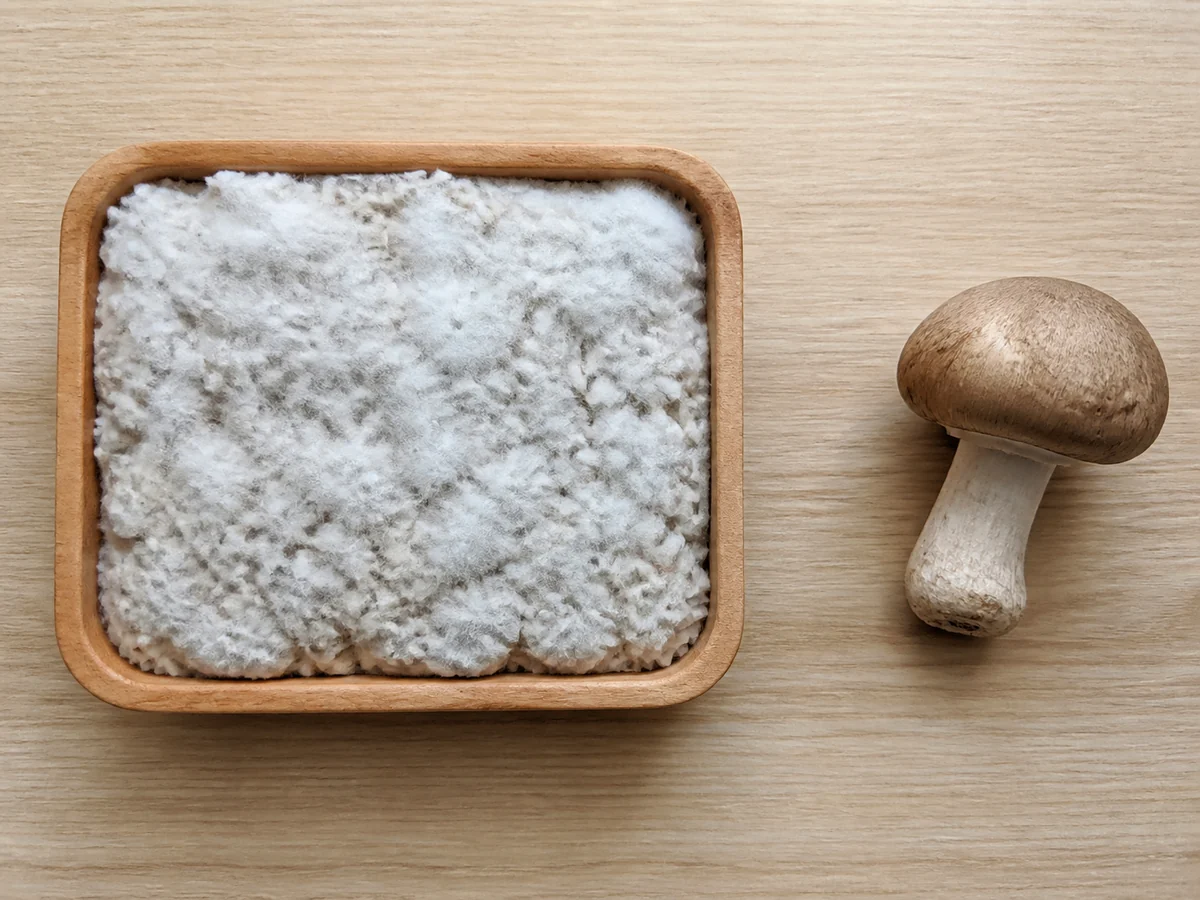
The laboratory detail is the interesting part of the mix-up. Tyrosinase for enzyme assays is conventionally sourced from mushrooms, so a great many papers on kojic acid contain the phrase mushroom tyrosinase in their titles and abstracts.
Read at speed, that reads like a paper about mushrooms, and it has been repeated into an ingredient origin story that was never true.
None of this makes kojic acid ineffective. Tyrosinase inhibition is a real mechanism with a long record in pigmentation products, and the concentration limit exists because the activity is genuine enough to warrant one.
It does mean a kojic acid product should not be counted as mushroom skincare, and that the number worth reading on it is the percentage rather than the origin story.
Medicinal MushroomsWhich Reishi Benefits Hold Up in Human Studies?What chaga and reishi extracts are sold on
Two species dominate the premium end of this category, and both are sold on the same kind of evidence.
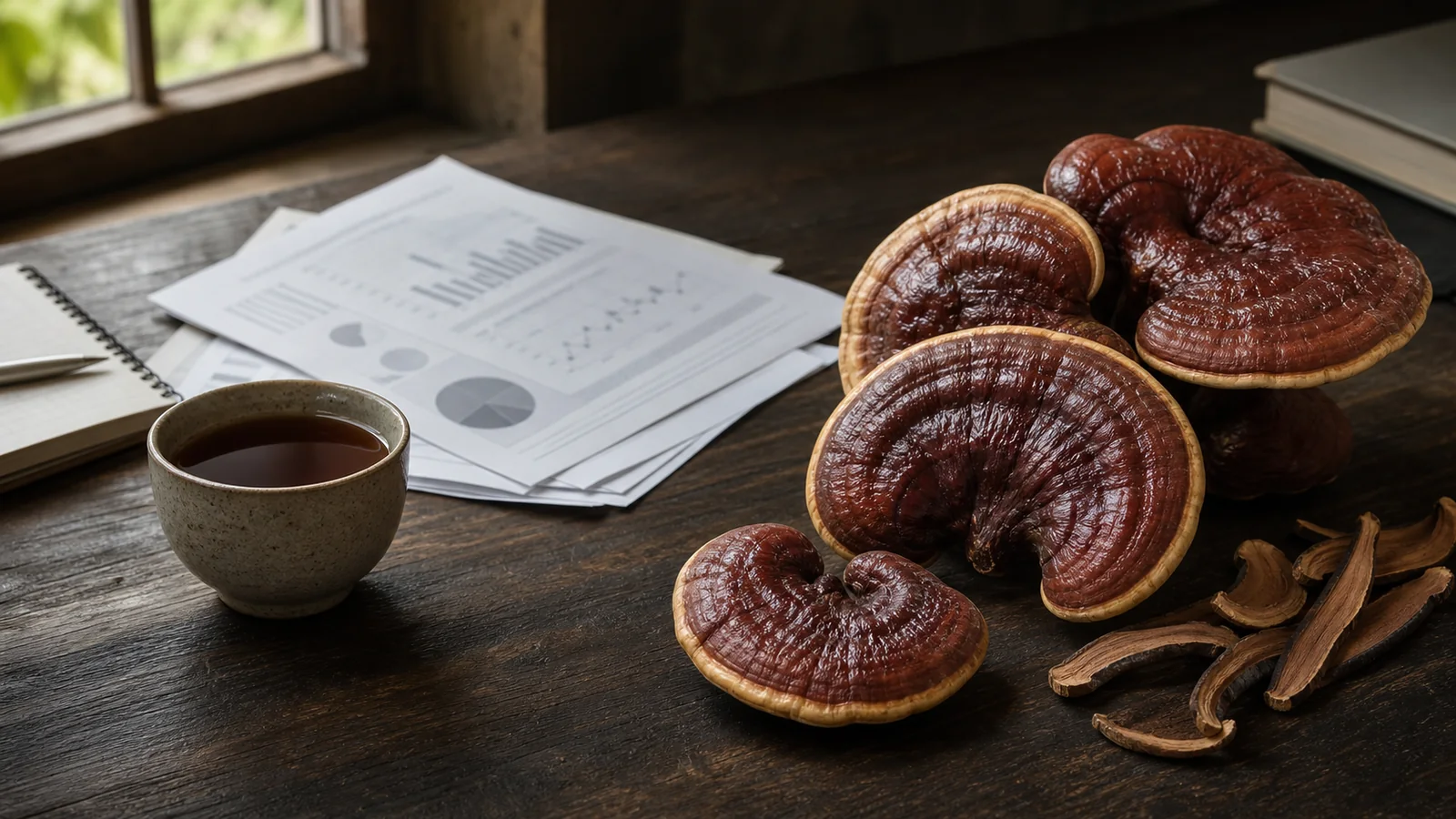
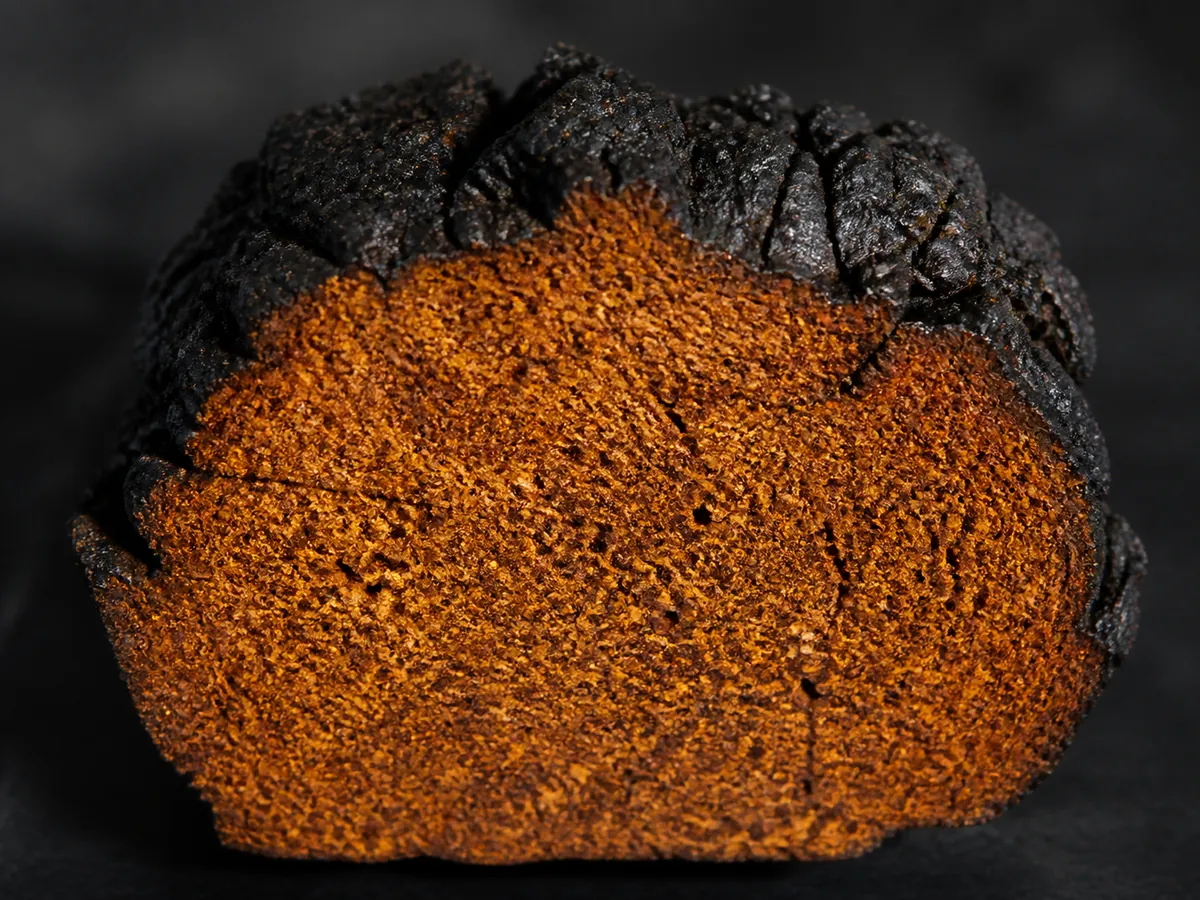
Chaga is not a mushroom in the ordinary sense either. It is a sterile mass that grows on living birch, dense and cork-like, and it is harvested from the tree rather than picked from the ground.
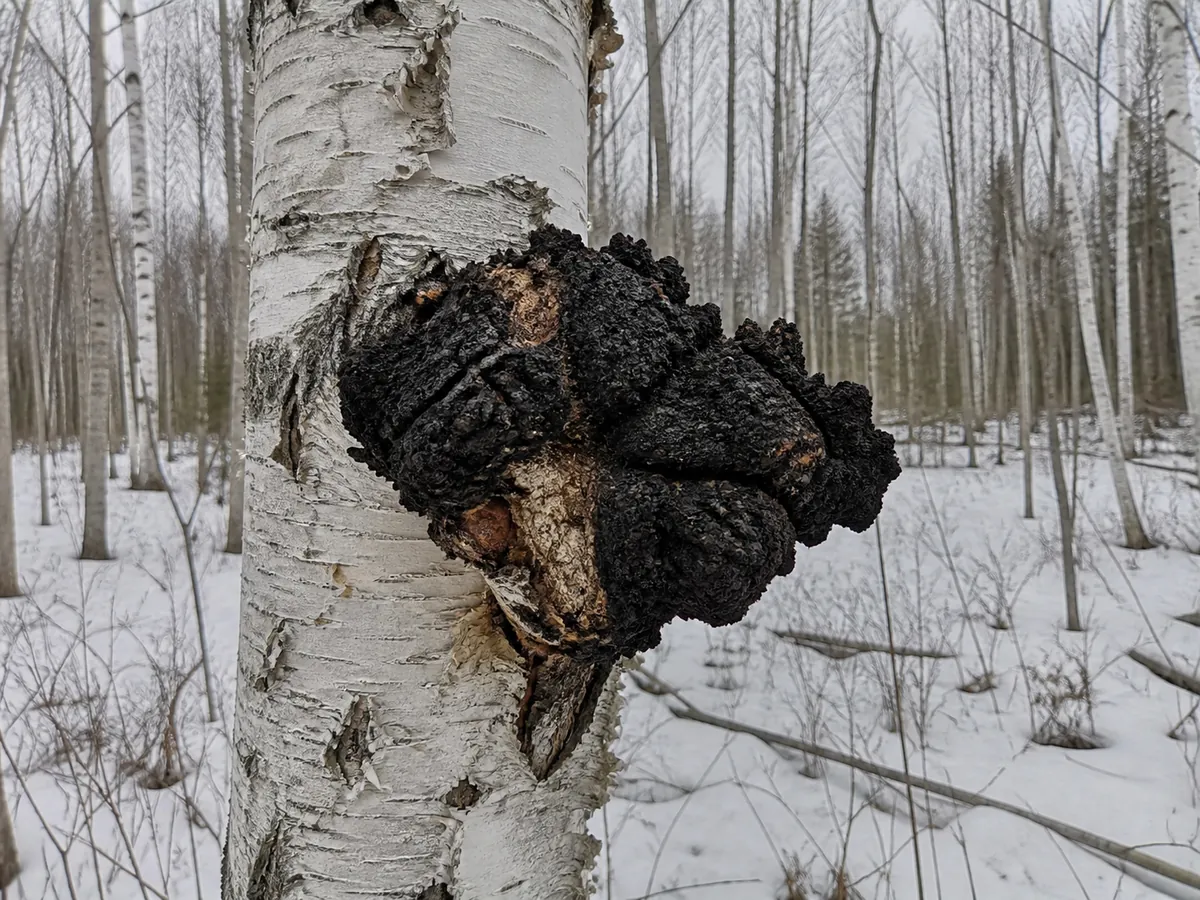
Its skincare claims rest largely on antioxidant capacity measured in a tube.
Reishi extracts appear in cosmetics on much the same basis.
An antioxidant measurement in a laboratory assay tells you what a material does to a chemical reaction in a dish. It does not establish that anything happens in skin, at the concentration a formula uses, through a barrier designed to keep things out.
It is worth knowing what those assays measure. A tube test scores how fast a material neutralizes a specific reactive molecule under laboratory conditions, at concentrations and in a medium that have no relationship to a formula sitting on skin.
Cosmetic science has largely moved away from treating those scores as predictive, and food regulators dropped the equivalent food-antioxidant scores years ago for the same reason.
Neither species has a body of controlled human trials with a skin outcome. That is not a claim that they do nothing, and it is a claim that nobody has shown they do anything.
The premium is worth noticing. A high-antioxidant marketing story reliably supports a higher price than a humectant story, while resting on a weaker kind of evidence.
What is actually inside the jar
Two products can name the same species on the front and contain almost nothing in common.
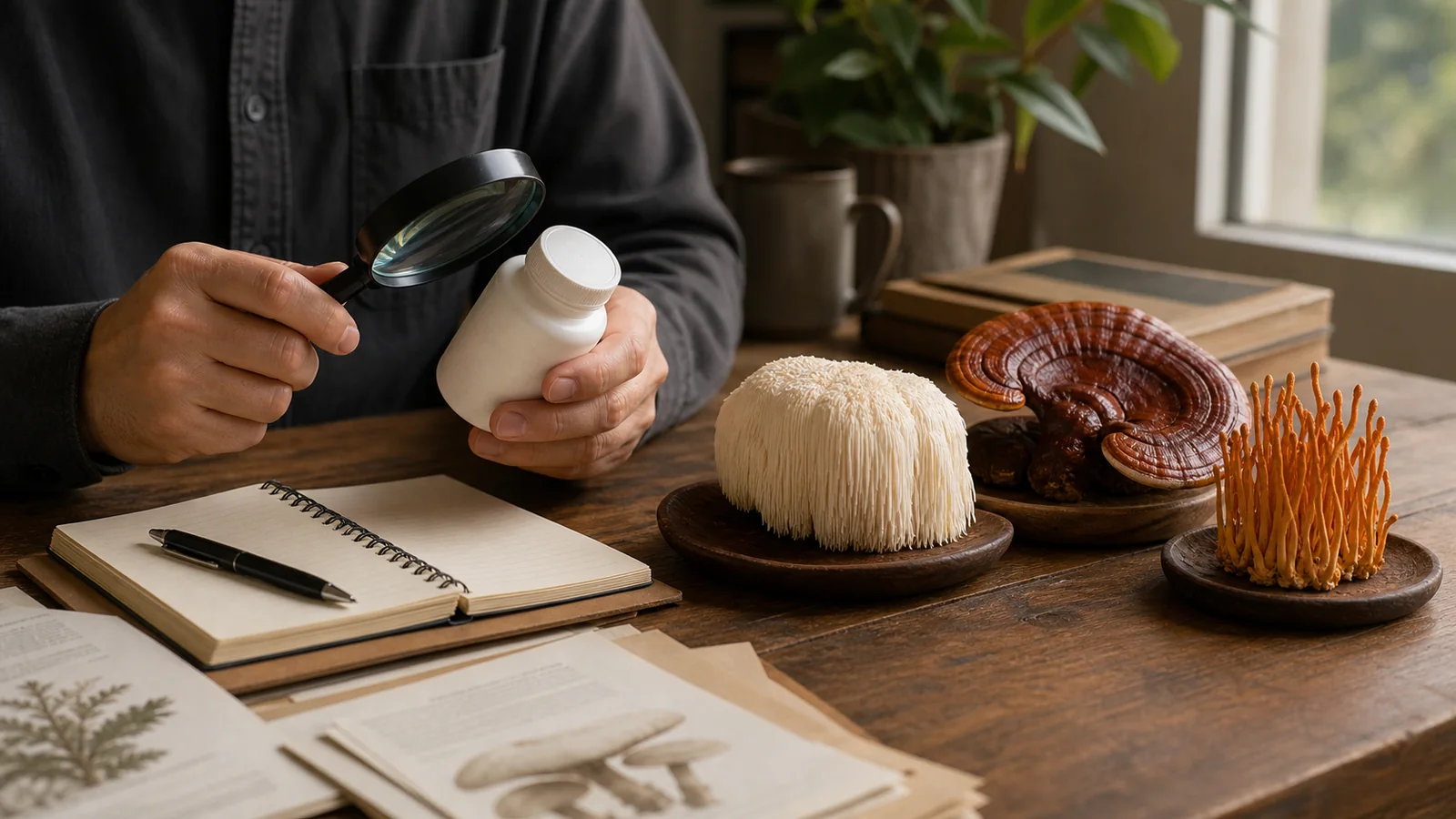
The species name is not the ingredient. Extract, ferment filtrate and powder are different materials, made by different processes, carrying different compounds.
The extraction solvent decides what carries over. Water pulls polysaccharides, alcohol pulls a different set of compounds, and the solvent is rarely stated anywhere a buyer can see it.
Concentration is readable, if indirectly. Cosmetic ingredient lists run in descending order of concentration down to one percent, and below that threshold the order carries no information at all.
An ingredient sitting near the end of a long list is usually present at a fraction of a percent, which is worth knowing before paying for its presence.
- A percentage on the front of a pack normally refers to the extract input, not to any measured compound inside it.
- A ten-to-one extract ratio describes starting material, so two products carrying the same ratio can differ substantially.
- A ferment filtrate is a culture broth product rather than an extraction of the mushroom, despite sharing the species name.
None of this is hidden exactly. It is simply written in a format that rewards knowing how the format works.
Medicinal MushroomsMushrooms for Brain Health, Ranked by EvidenceThe oral side has almost no skin outcomes
Swallowing a mushroom supplement is a different question from applying one, and it has a much shorter answer.
The functional mushroom trials that exist use immune markers, fatigue, cognition or blood lipids as their outcomes. Skin appearance, hydration and elasticity are all measurable in trials, and almost nobody in this literature measures them.
That absence is not evidence of failure. It is an absence, and it means an oral product making a skin claim is making it without a trial that looked.
The reason is partly cost. A skin trial needs instrumented measurement of hydration or elasticity, a controlled washout, months rather than weeks, and enough participants to see a small change, and no supplement seller needs that result to keep selling.
So the studies that get run are the cheap ones, and the claims that get made are the ones nobody has to defend.
There is one genuine oral effect worth separating out, because it is real and it is constantly misfiled.
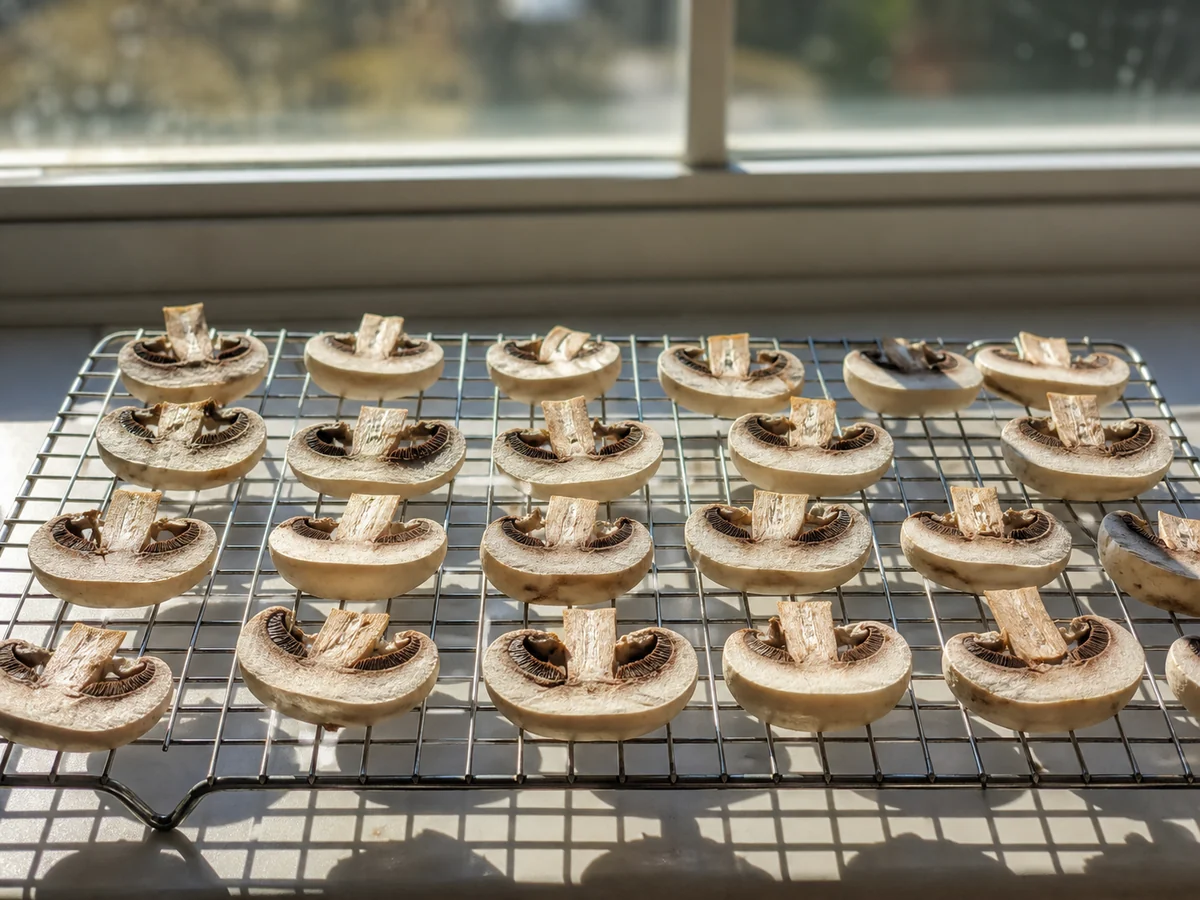
Ultraviolet light converts ergosterol in mushrooms into vitamin D2, and mushrooms exposed to sunlight or a UV lamp carry substantially more of it than mushrooms grown in the dark.
That is a well-established food science finding and a useful one. It is a vitamin status question rather than a skin question, whatever a supplement label does with it.
Eating mushrooms remains a reasonable thing to do for entirely ordinary reasons. As a skin intervention it is simply untested, which is a different sentence from ineffective.
The best-documented skin effect is a rash
Shiitake can also cause a documented skin reaction.
Shiitake flagellate dermatitis is a reaction to eating shiitake raw or undercooked. It produces a distinctive eruption of raised, itchy red streaks in overlapping linear patterns, usually across the trunk and limbs.
Warning
The rash typically appears around 24 hours after the meal, with reported onset ranging from a few hours to about five days. It is self-limiting and resolves over one to several weeks, but a widespread or severe eruption, or any difficulty breathing, is a reason to seek medical advice rather than to wait it out.
Most people who get it have never heard of it and go looking for an external cause, which is why the pattern is worth recognizing.
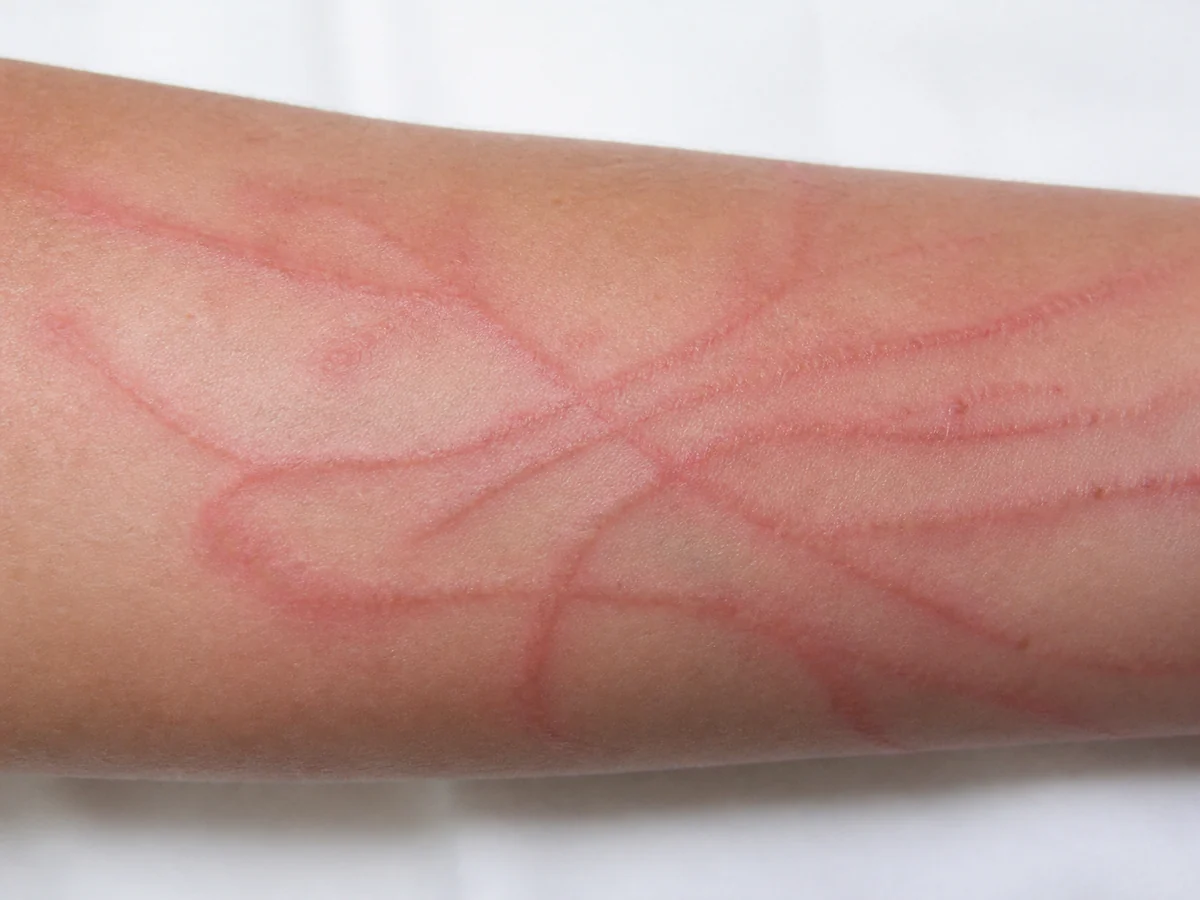
The reaction is attributed to lentinan, a polysaccharide in shiitake that breaks down with heat. The response involves inflammatory signalling and vasodilation, which is what produces the streaked appearance.
Two features make it easy to miss. The delay separates the rash from the meal in most people's minds, and the pattern looks like it was caused by something external rather than by dinner.
The prevention is straightforward, which is the useful part.
Thorough cooking breaks down the compound responsible, and the reaction is not seen with properly cooked shiitake. Raw shiitake in a salad, a barely warmed garnish, or a quick sear that leaves the center raw are the situations that produce cases.
What to do with a skincare shelf
Pull all of that back to a purchase, because that is the decision most people arrived with.
A tremella-containing moisturizer is a reasonable humectant purchase. It is an unreasonable treatment purchase, and the price difference between those two framings is usually large.

The ingredients with the largest measured effects on skin are not mushroom-derived, and no honest reading of this literature puts a mushroom extract near the top of that list.
A mushroom ingredient does not automatically improve an established skincare routine.
- Patch test anything new on a small area before using it regularly, since a novel botanical extract is a novel exposure.
- Treat an existing skin condition as a reason to ask a dermatologist rather than to read an ingredient list.
- Raise any oral medicinal mushroom product with a prescriber before adding another, because those carry documented conflicts that a cosmetic does not.
Key takeaway
Buy a mushroom skincare ingredient for what it demonstrably does, which is bind water, soften feel or add an antioxidant to a formula. Do not buy it as a treatment, do not pay a treatment price for it, and do not expect a capsule to reach your skin at all.
Shiitake-associated rash has a documented evidence base. Follow the preparation precautions for shiitake. That is a smaller conclusion than the category promises and a more reliable one than anything else in it.
Sources & References
- DermNet, shiitake flagellate dermatitis Trigger, appearance, onset window, course and the role of thorough cooking.
- Flagellate erythema, a case of shiitake dermatitis and review of pathogenesis The lentinan mechanism and the inflammatory pathway behind the eruption.
- Review on the use of kojic acid as a skin-lightening ingredient Aspergillus origin, tyrosinase inhibition by copper chelation, and the concentration limit in leave-on products.
- Kojic acid inhibitory activity on tyrosinase from mushroom and in cultured cells Mushroom tyrosinase as the standard laboratory assay enzyme for this activity.
- Mushrooms, a rich source of the antioxidants ergothioneine and glutathione Mushrooms as the richest dietary source of ergothioneine.
- Non-animal hyaluronic acid from Tremella fuciformis, structure and chemical profile Tremella polysaccharide composition, including its glucuronic acid content, and its relationship to hyaluronic acid.