An evidence audit of mushrooms against clinical anxiety, separating the trials that used a validated anxiety scale from the ones that measured mood or stress, and explaining why the strongest result belongs to a controlled compound delivered inside a supervised protocol.
Shelf availability and evidence strength run in opposite directions on this question.
The mushroom with large, durable, measured effects on clinical anxiety is a controlled substance delivered inside a clinical protocol.
The ones sold for anxiety have barely been measured against an anxiety scale at all. That is the whole shape of the topic, and neither the supplement aisle nor the psychedelic coverage tends to say it plainly.
Why almost nothing sold for anxiety was tested on anxiety
Start with what the studies recorded, because it is rarely the thing printed on the label.
The functional mushroom trials that exist report mood, subjective stress or general wellbeing. Almost none report a validated anxiety instrument.
Those are not interchangeable measures.
A person can report feeling less stressed on a Tuesday afternoon without any movement in the symptom cluster a clinician would call anxiety.
The scales themselves are not mysterious. GAD-7 asks seven questions about the past two weeks and produces a score out of 21, with roughly 10 as the threshold where clinicians start treating.
A change worth acting on is usually several points on that scale, sustained over weeks, in somebody who started above the threshold.
The enrollment problem is quieter and does more damage. If a study recruits people who are not anxious, a null result tells you almost nothing and a positive one is measuring something other than relief.
- Anxiety trials carry an unusually large placebo response, often a third of participants or more, which is exactly why uncontrolled and single-arm studies mislead.
- A four-week study cannot separate a real effect from the natural drift of a symptom that fluctuates week to week anyway.
- Reporting an average change across a group hides the possibility that most people moved not at all while a few moved a lot.
None of this proves the products do nothing. It means the question a buyer is asking has mostly not been put to a test that could answer it.
Check whether a study measured anxiety with a validated scale. Every claim below is judged on whether the study measured anxiety, or something adjacent to it.
Medicinal MushroomsLion's Mane Benefits: What Human Trials Actually FoundWhy the strongest result belongs to a mushroom you cannot buy
There is one exception, and it is not a small one.
In 2016 a randomized double-blind crossover trial gave 51 people with life-threatening cancer either a high dose of psilocybin, 22 or 30 mg per 70 kg of body weight, or a placebo-like low dose, with the two sessions five weeks apart.
Those are not the effect sizes this field usually produces. Response rates in the high seventies and eighties, still holding six months after a single high-dose session, are larger and more durable than anything the functional mushroom literature has reported for any outcome.
The work did not stop there either. Related trials have followed cancer patients further out, with measurable effects still present years after a single session, and regulators have taken the field seriously enough to grant breakthrough therapy designations for psilocybin in depression.
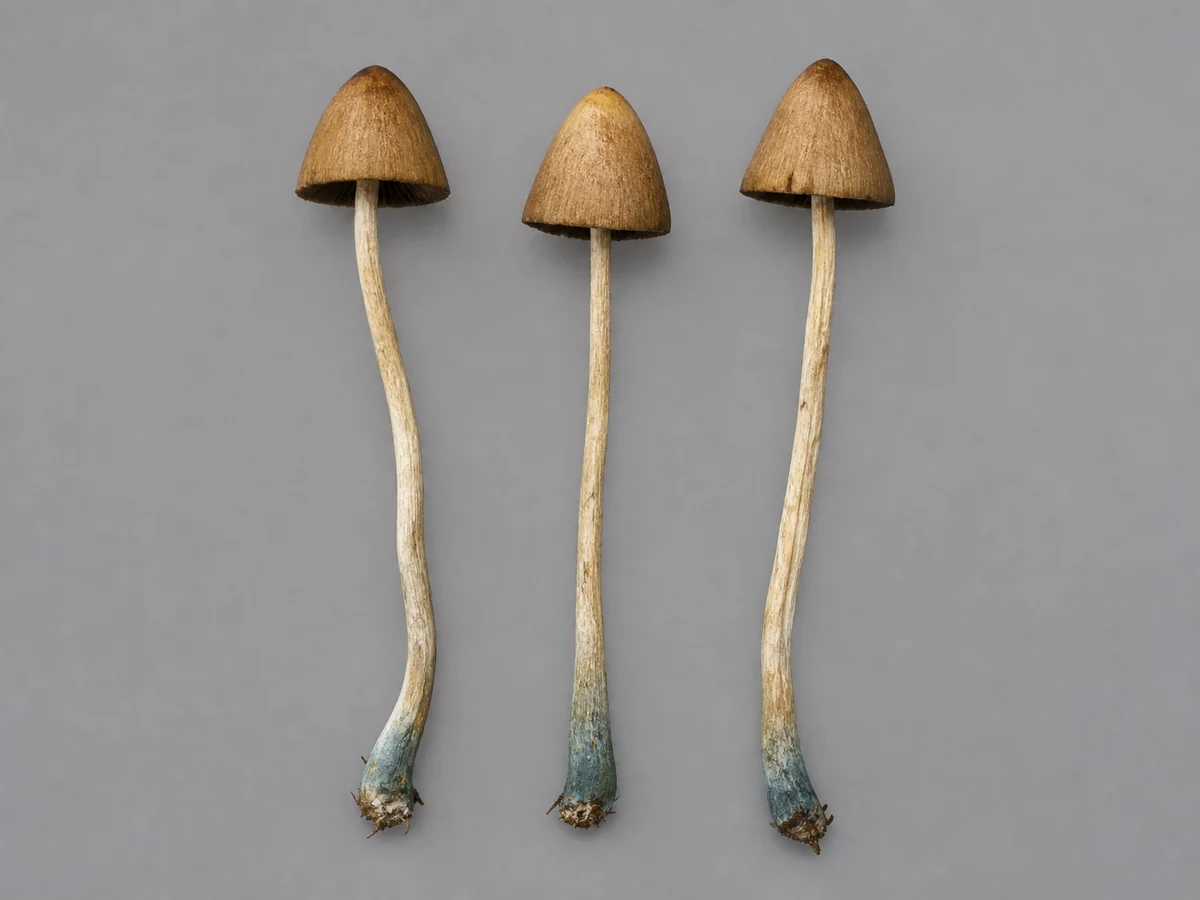
One distinction gets lost constantly, and it matters more than any of the numbers above. Those trials did not give anybody mushrooms but synthesized psilocybin, weighed to the milligram against body weight from a batch of known purity.
A mushroom is a variable quantity of several compounds, and psilocybin content differs between species, between specimens and between parts of the same specimen.
The trial material and the thing people picture are not the same substance, which is the first reason the results do not travel.
The regulatory track reflects that. What is moving through trials is a defined compound with a defined dose, aimed at approval as a medicine administered under supervision, rather than a plant-style product anybody would take home.
So the honest summary has two halves.
The effect is real and large in the population studied, and the population studied is not most of the people reading this.
The obvious next thought is also the wrong one. Psilocybin remains federally controlled in the United States, with legal access limited to clinical trials and a small number of state-supervised programs.
Clinical research on a controlled substance does not establish that a retail mushroom supplement treats anxiety.
What the supervision is actually doing
Ask the blunt version of the question. If somebody obtained the same compound, would they get the same result?
The trials do not support that inference, because the compound was never the whole intervention.
- Participants were screened first, for personal and family psychiatric history, and people at elevated risk were excluded before anything was administered.
- Sessions ran in a prepared room with two monitors present for the entire duration, typically six or more hours.
- Preparation sessions came before, and structured integration sessions came afterwards, both inside the protocol rather than around it.
Warning
Reviews reporting that supervised psilocybin administration was not found unsafe are making a claim about supervised administration and about nothing else. They are not a safety finding about the same compound used alone.
The distinction is easy to lose because both sentences contain the same compound name, and only one of them contains a clinic.

That structure is what the safety findings rest on, and outside it the picture changes sharply. Unsupervised use carries documented adverse events including panic, self-harm and suicidal ideation, and nothing about the fact that it grew in a field prevents any of them.
It is worth knowing what those hours contain, because the phrase set and setting has been worn smooth by repetition.
A monitor stays in the room the whole time, awake and sober, doing very little unless something is needed. The eyeshades and music are there to keep attention inward rather than to entertain, and the follow-up sessions exist so that whatever surfaced gets processed rather than left.
That is a labor-intensive, expensive piece of clinical care, and it is the part nobody replicates at home.
Of everything in that list the screening step matters most, and it is the easiest to skip. Somebody with a family psychiatric history nobody asked about is precisely who a trial would have excluded, and they have no way to know that from a website.
Dose is the second gap, and trial doses were weighed against body weight and delivered from a known quantity of a known compound, which is not a description of anything picked or bought informally.
None of this argues the research is wrong. It argues that the result and the protocol are one object, and acquiring half of it acquires none of it.
Medicinal MushroomsWhich Reishi Benefits Hold Up in Human Studies?Which mushrooms you can actually buy have been tested
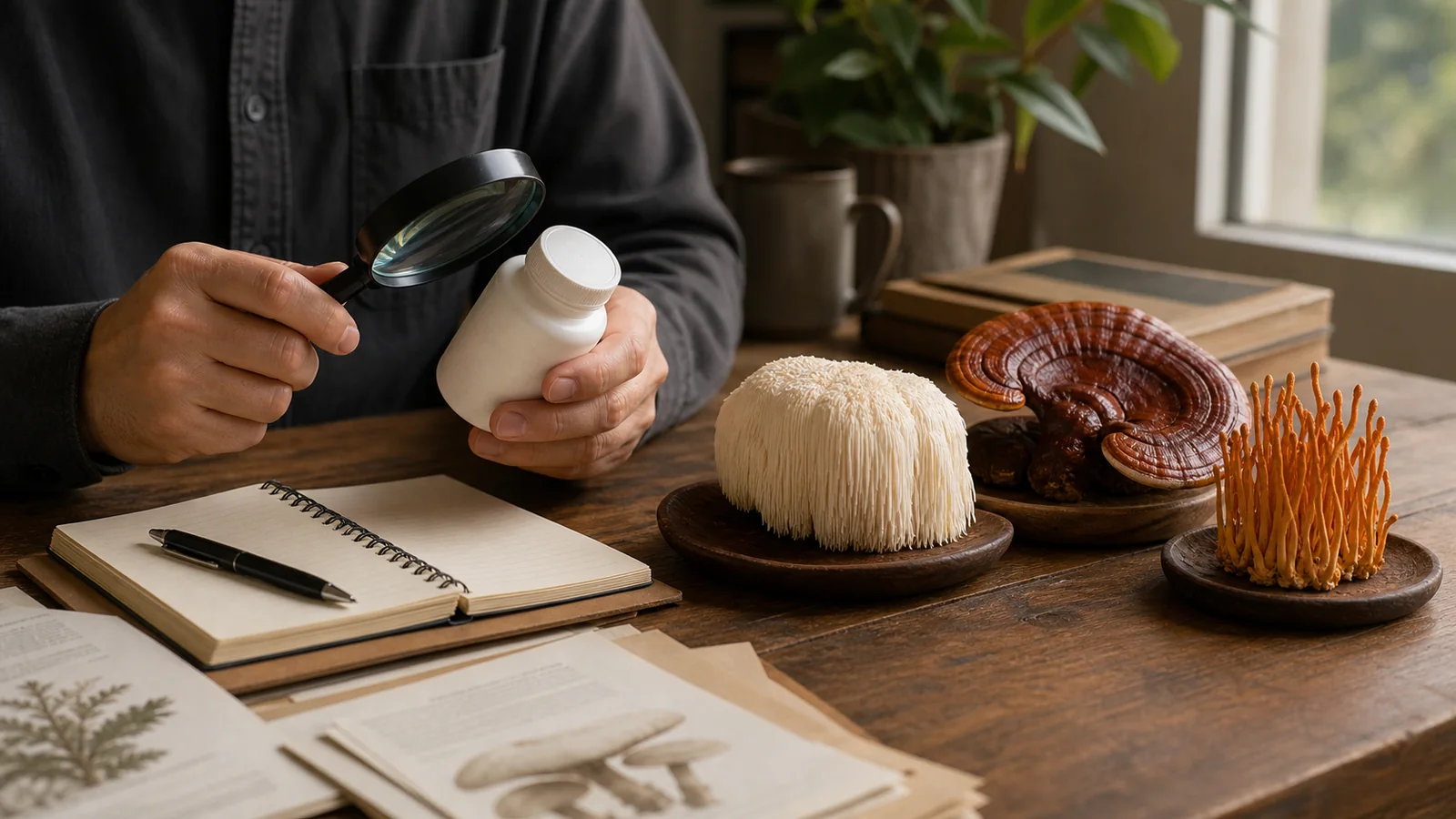
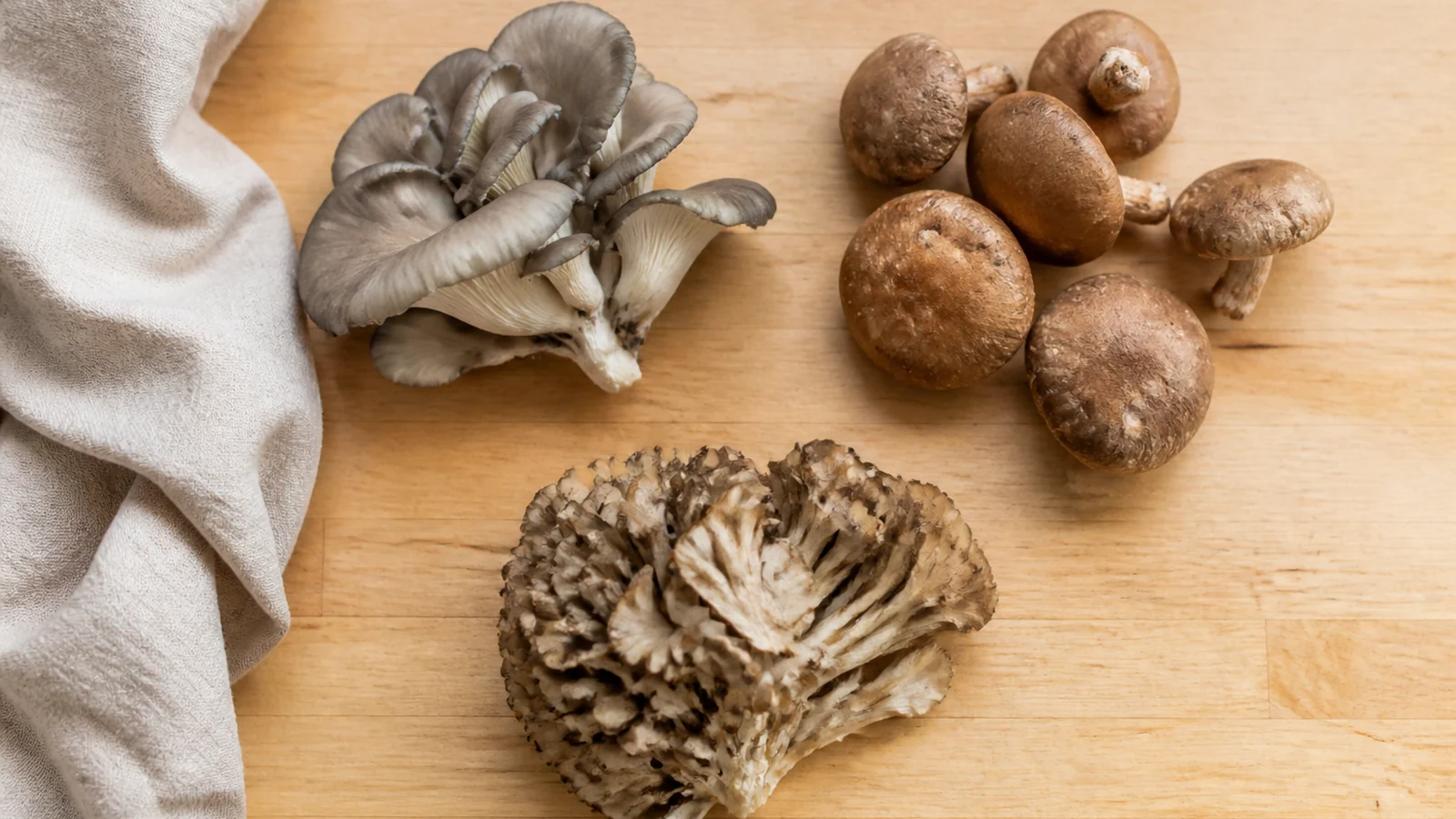
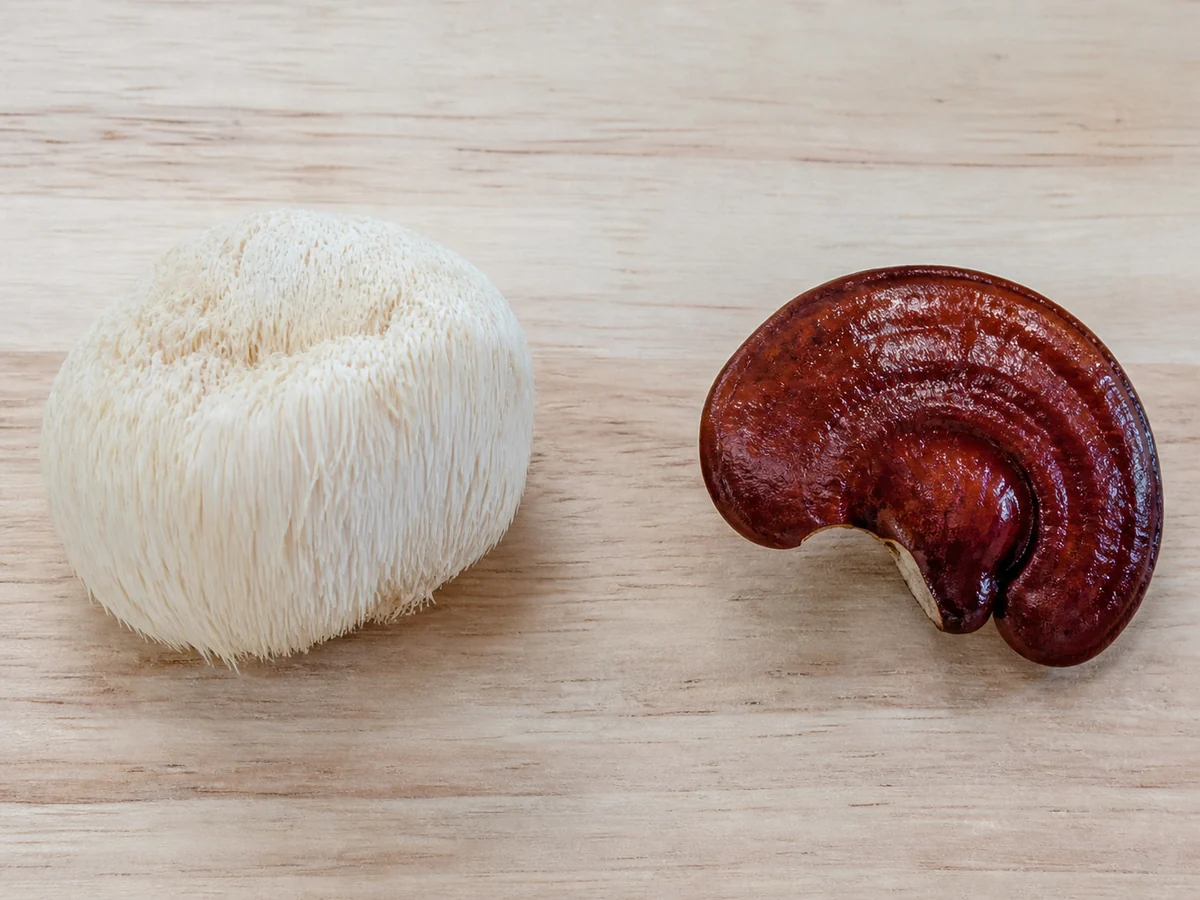
Now the shelf. Three species carry most of the marketing, and they sit at three different evidence levels.
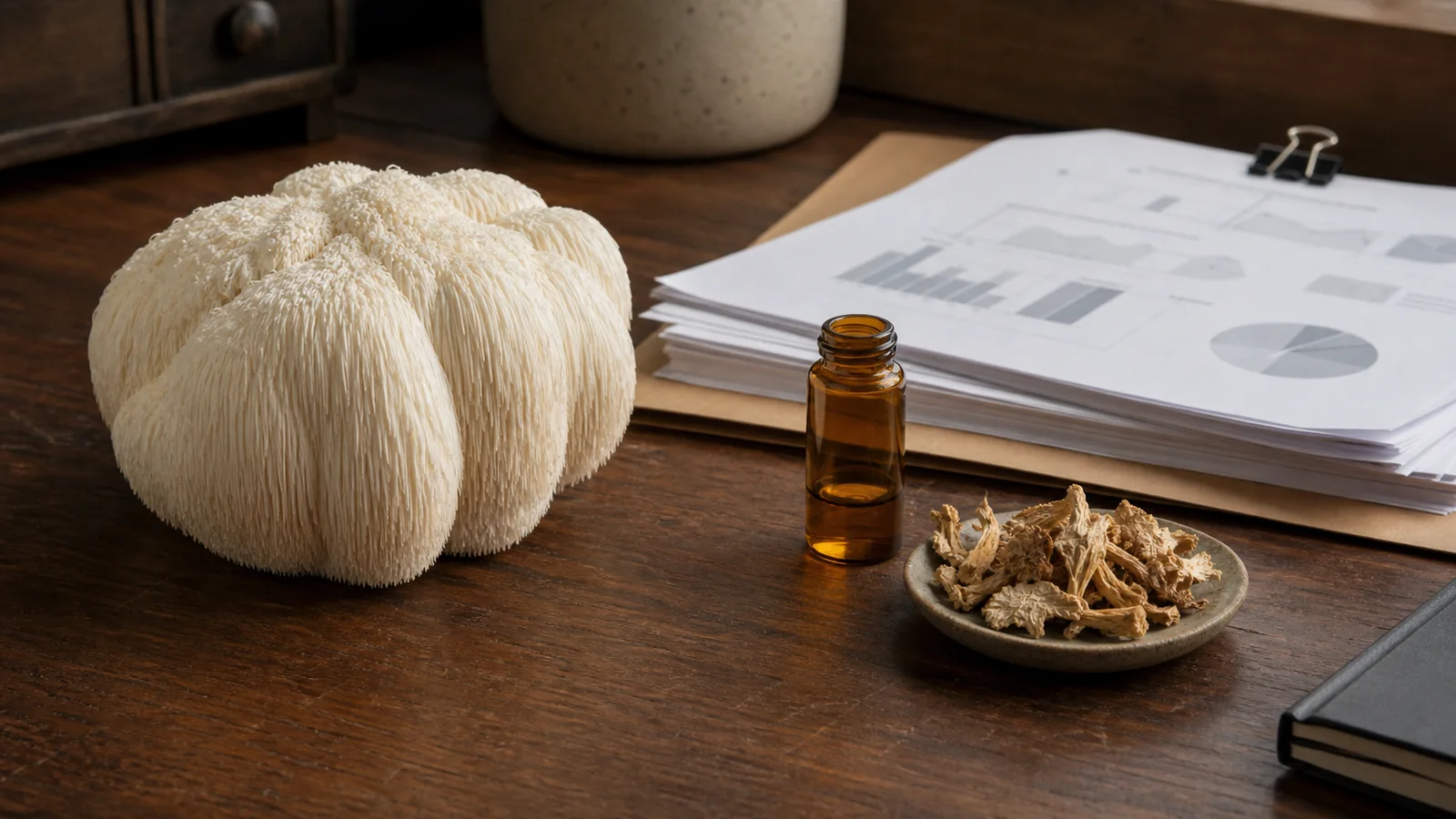
The most-cited lion's mane mood study is a good deal smaller than its reputation.
It gave 30 women four cookies a day, each carrying 0.5 g of fruiting body powder, for four weeks, and reported reduced scores for depression and anxiety.
| Species | The study people cite | What it actually measured |
|---|---|---|
| Lion's mane | 30 women, cookies, 4 weeks | Depression and anxiety items inside a menopause-focused questionnaire set |
| Lion's mane | Young adults, chronic dosing, 2023 | A trend toward lower subjective stress, not a measured anxiety effect |
| Lion's mane | 18 participants, single 3 g dose, 2025 | No significant change in positive or negative mood on the PANAS |
| Reishi | 132 patients, 8 weeks, 1800 mg three times daily | Fatigue and wellbeing under a neurasthenia diagnosis |
| Cordyceps | No human anxiety trial | Nothing to place |
Read that middle column before the species name, because it is the column that decides what the row is worth.
The word trend in that middle row is doing real work. In a results section it means the difference did not reach statistical significance, which is a finding reported honestly and then quoted as though it were a positive one.
The 2025 result is the one worth sitting with. A single 3 g dose of a standardized extract, in a placebo-controlled design, produced no significant change in mood at all.
That does not overturn the cookie study, because a single dose and four weeks of daily intake are different questions.
It does mean nobody should expect a capsule to do something noticeable this afternoon, which is how a great deal of this category is sold.
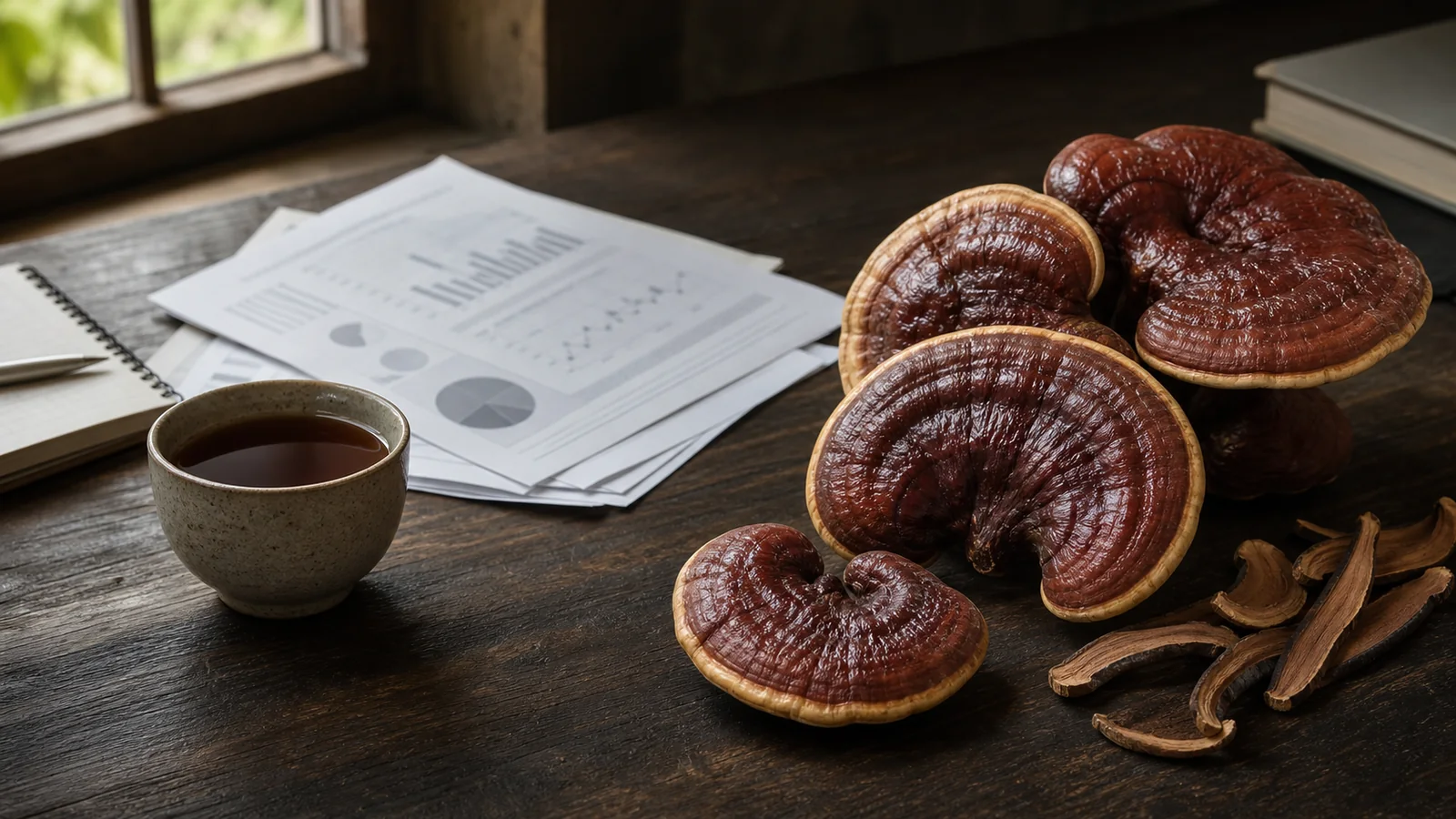
Reishi's best trial is genuinely a decent piece of work, and it is not about anxiety. Its participants carried a neurasthenia diagnosis, and its outcomes were fatigue and a sense of wellbeing.
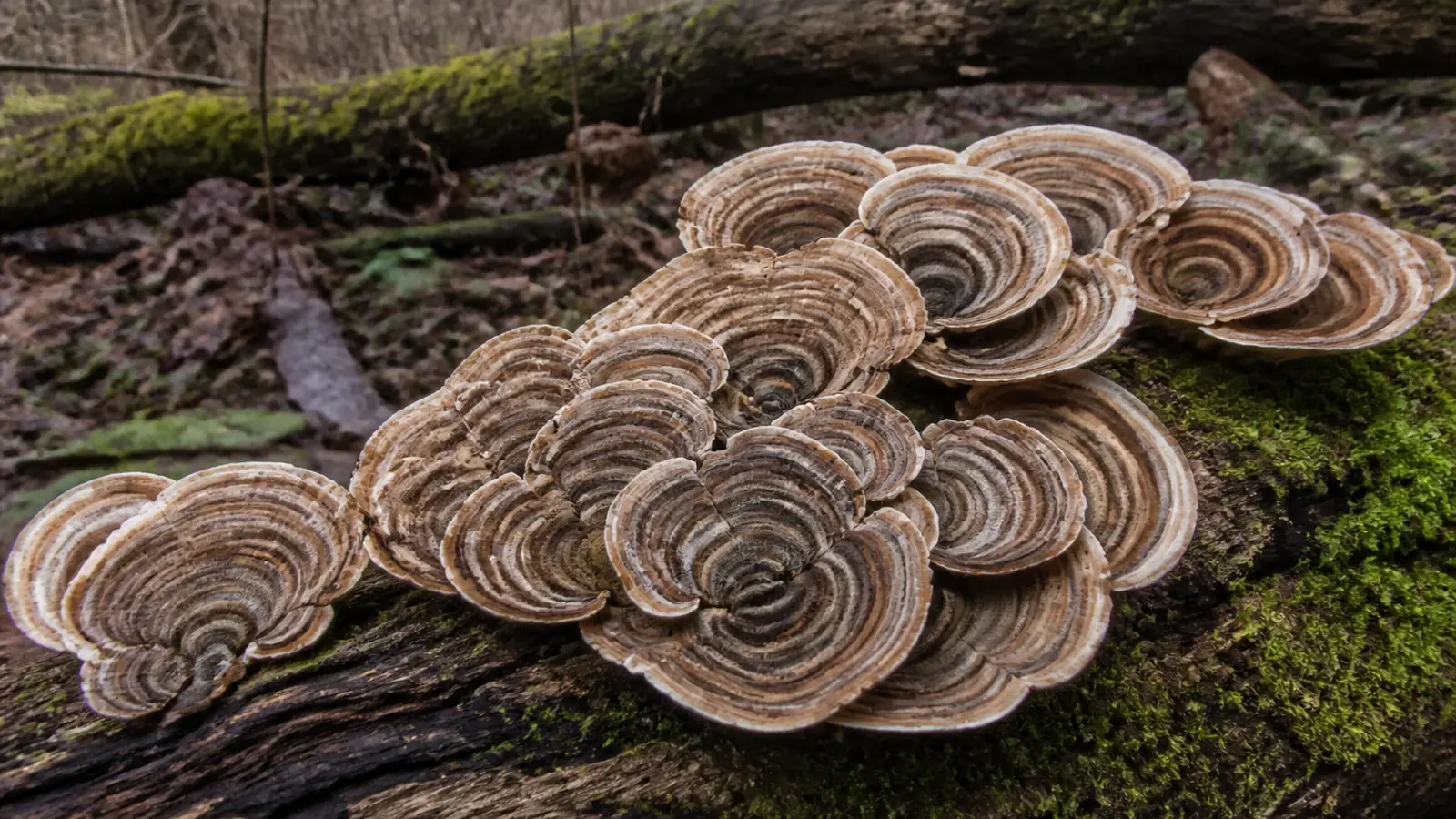
Cordyceps is simpler to summarize, because there is no human anxiety trial to place at any level. The marketing rests on tradition and on animal work.
The pattern behind all of this is structural rather than sinister. Nobody who sells a supplement has a commercial reason to fund a large trial with a validated anxiety scale, because a positive result would not let them change the label and a negative one would be published.
So the literature fills with small, short, mechanistic studies that are cheap to run and easy to quote.
A trial that would actually answer the question needs a few hundred anxious people, a real control arm and several months, and almost nobody in this category has run one.
Ranking these three by promise would imply they differ by effect size. They differ by what somebody thought to measure.
Medicinal MushroomsMushrooms for Brain Health, Ranked by EvidenceWhat a calming claim on a label means
Read the sentence on the jar closely, because it was written to a legal template rather than to a scientific one.
Supports, promotes and helps maintain are structure-function phrases. They do not require a trial in people who have the condition, and they are chosen precisely because they do not.
A claim to treat or reduce anxiety would make the product a drug and pull it into a different regulatory system entirely. That is why no label carries one.
Adaptogen is the other word doing heavy lifting, and it is worth knowing where it came from.
It is a mid-century term for substances said to help the body resist stress non-specifically. It is not a regulatory category, not a pharmacological class, and not a claim any regulator evaluates.
A product can call itself adaptogenic without a single trial behind it, because the word carries no legal definition to breach.
That does not make every adaptogen claim empty. It means the word tells you about a marketing tradition rather than about evidence, and it should be read the same way as the structure-function sentence beside it.
Underneath that sentence, the product varies more than most buyers expect.
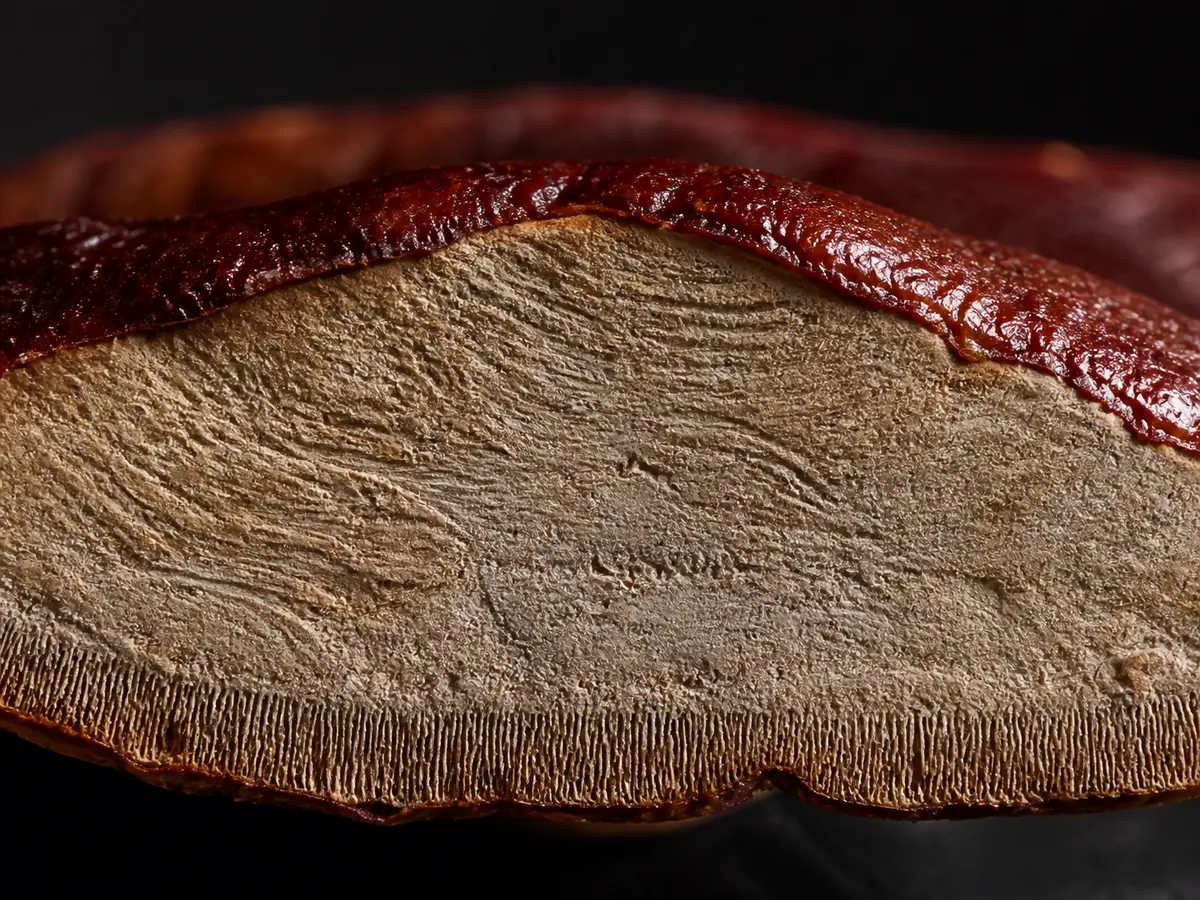
Reishi is a woody bracket rather than a vegetable, so nobody eats it. Everything sold is an extract, and the extraction method decides what actually reaches you.
Fruiting body powder, mycelium grown on grain, and a concentrated extract all appear under one category name with substantially different compositions.
The study amounts bear no fixed relationship to a capsule either. Four cookies carrying 0.5 g of powder each is a food quantity, and 1800 mg three times daily is a clinical trial regimen.
A buyer cannot verify most of this, but a few things are checkable before paying.
- Whether the label names fruiting body or mycelium, since a product that declines to say is usually saying something.
- Whether an extract ratio is accompanied by an actual measured compound percentage, rather than standing alone.
- Whether the manufacturer will state, in writing, what was tested on the finished product rather than on the raw material.
So the useful reading of a calming claim is regulatory rather than scientific. It tells you which sentence the manufacturer was permitted to print.
When this stops being a supplement question
Distinguish clinical treatment from the claims made for retail supplements.
Anxiety that persists, or that interferes with sleep, work or relationships, is a clinical problem. It has treatments that were tested against anxiety scales in anxious people, which is the standard this whole page has been applying to everything else.
The documented harm in this area is not a mushroom hurting somebody.
It is somebody delaying or replacing an effective treatment while working their way through a shelf.
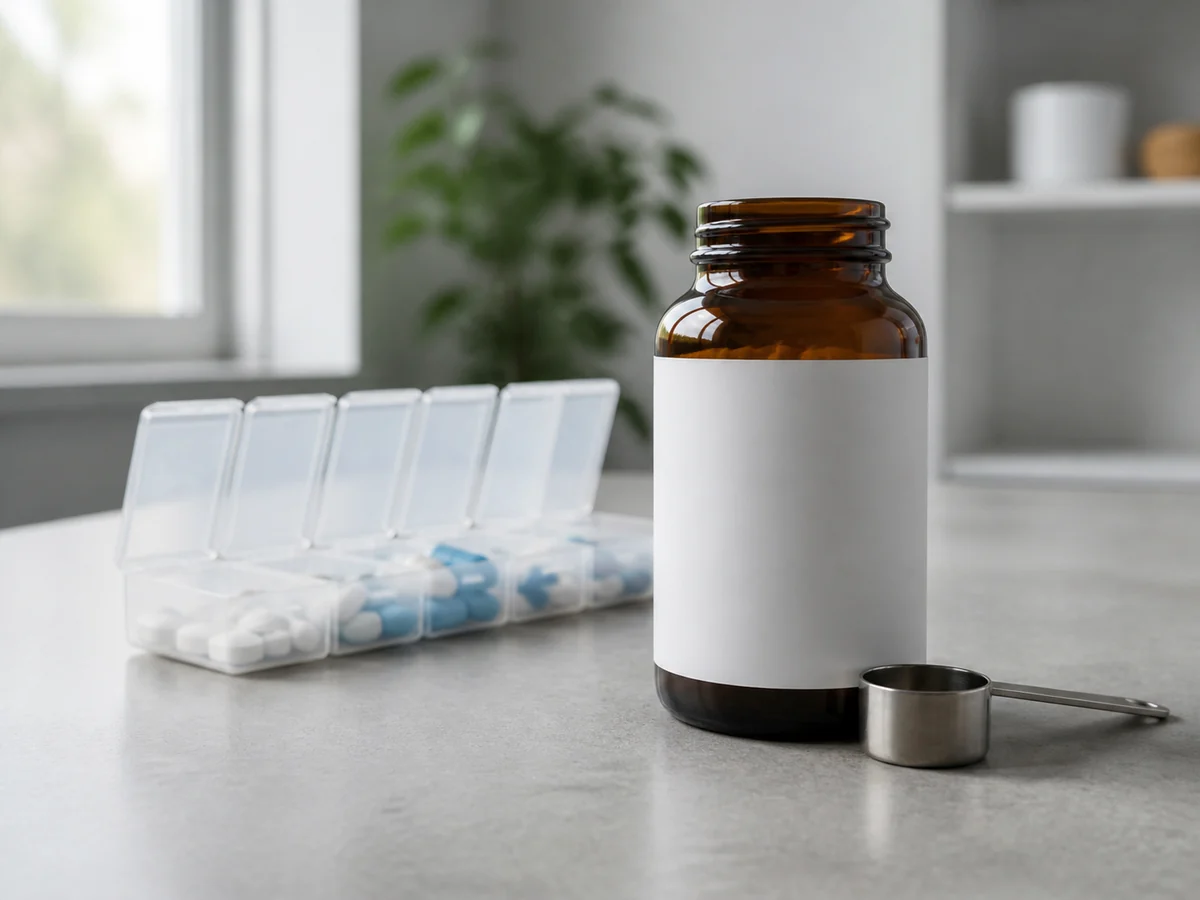
Compare supplement claims with treatments that have been tested in people with anxiety.
Talking therapies and prescribed medication for anxiety have been studied using validated scales in people with anxiety, including trials with hundreds of participants. That evidence is why professional treatment deserves consideration from the start.
Psychiatric medication and mushroom products also carry documented conflicts, which belong in a conversation with a prescriber before a purchase rather than after one.
Some signals move this out of the reading-and-deciding category altogether. Panic symptoms, intrusive thoughts of self-harm, or an inability to get through an ordinary day are same-week reasons to contact a clinician rather than to keep researching.
Supplements are not required to demonstrate efficacy before sale. On a shelf, a product that does nothing and a product that conflicts with your prescription look identical.
What to do with the next fortnight
Suppose you want to try something anyway, with any prescription untouched and the prescriber told. There is a way to run that so the answer means something.
- Readout
- A validated self-report anxiety scale, completed weekly on the same day at the same time
- Length
- Four weeks, which matches the longest of the lion's mane studies
- Hold steady
- Sleep, alcohol and caffeine, all of which move anxiety scores harder than anything in this literature
- Record
- The exact product, form and amount, because a result you cannot attribute is not a result
Change one thing at a time.
A month spent altering three variables produces a number nobody can interpret, which is the usual way a personal trial gets wasted.
A flat score after four weeks is a real answer, and the correct response to it is to stop rather than to increase the amount.
If you are already taking something for anxiety, the order of operations changes. Add nothing without asking first, keep the existing treatment exactly as prescribed, and let the prescriber decide whether a four-week experiment is sensible at all right now.
If the score does move, that is worth telling the prescriber too, because it is information about you rather than about mushrooms in general.
Sources & References
- Griffiths and colleagues 2016, psilocybin produces substantial and sustained decreases in depression and anxiety in patients with life-threatening cancer 51 participants, crossover design, 83 percent clinician-rated anxiety response and 57 percent remission at six months, delivered in a supervised setting with two monitors.
- Nagano and colleagues 2010, reduction of depression and anxiety by four weeks of Hericium erinaceus intake 30 women, four cookies daily carrying 0.5 g of fruiting body powder each, four weeks.
- Acute effects of a standardized extract of Hericium erinaceus on cognition and mood in healthy younger adults 18 participants, a single 3 g dose, no statistically significant improvement in positive or negative mood on the PANAS.
- Randomized placebo-controlled study of a Ganoderma lucidum polysaccharide extract in neurasthenia 132 patients on 1800 mg three times daily for eight weeks, with fatigue and wellbeing outcomes under a neurasthenia diagnosis.
- Roscoe and Lozy, systematic review of adverse event reporting in supervised psilocybin clinical trials Safety findings that apply to administration under medical supervision and to nothing else.
- Use of Hericium erinaceus as a potential therapeutic of mental disorders, a systematic review Context for the size and design of the lion's mane mental health literature.